Most of them are seedless, and I am sure it’s a Bearrs lime, ar at least the original OGW tag said it was. The fruit are quite green, too.
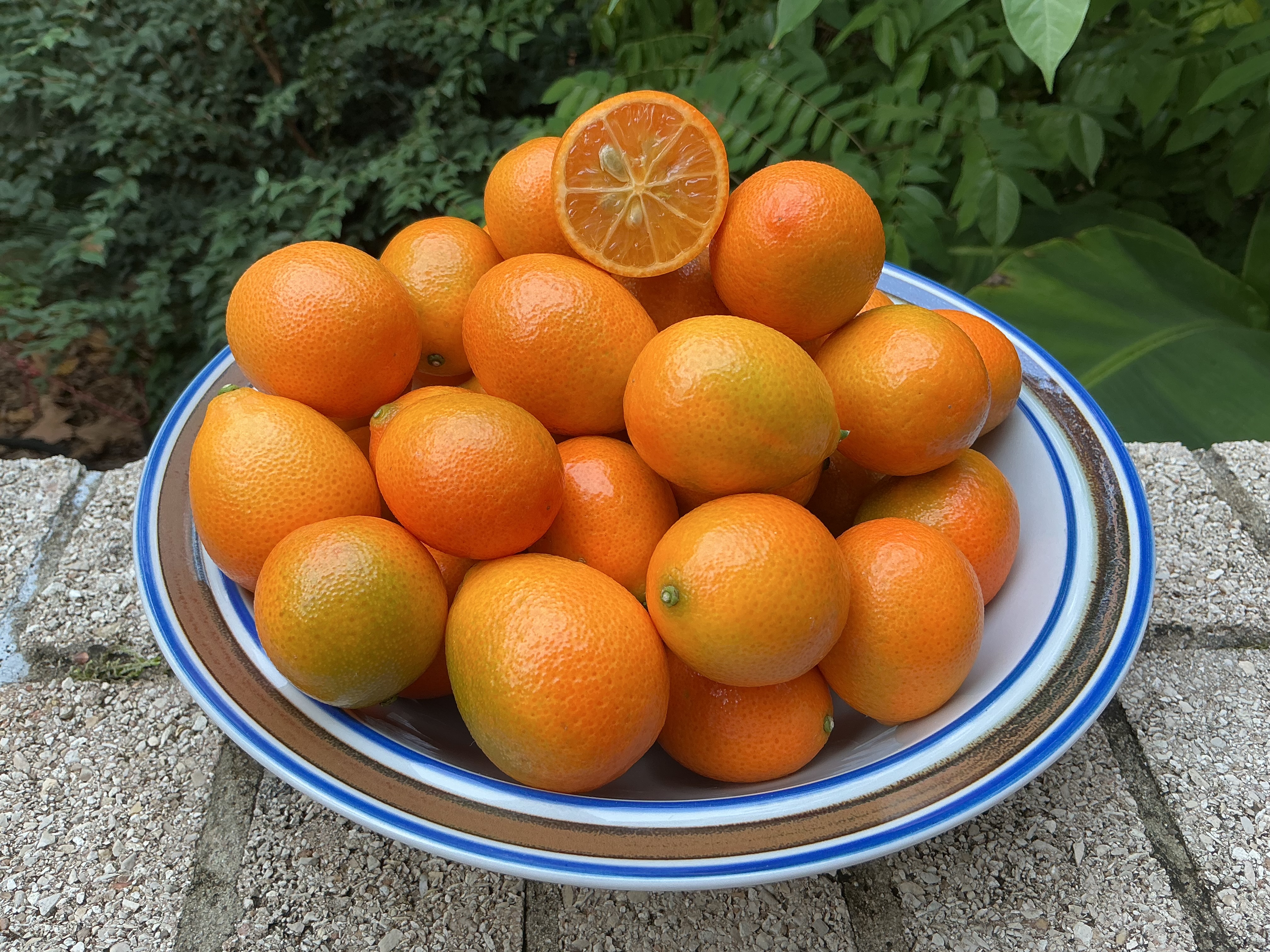
On Thursday I picked a couple pounds of Indio Mandarinquats from our in-ground tree (see post above Show off your homegrown Citrus fruits - #255 by Johnsgard, there are still perhaps 20-25 pounds of fruit on the same tree!):
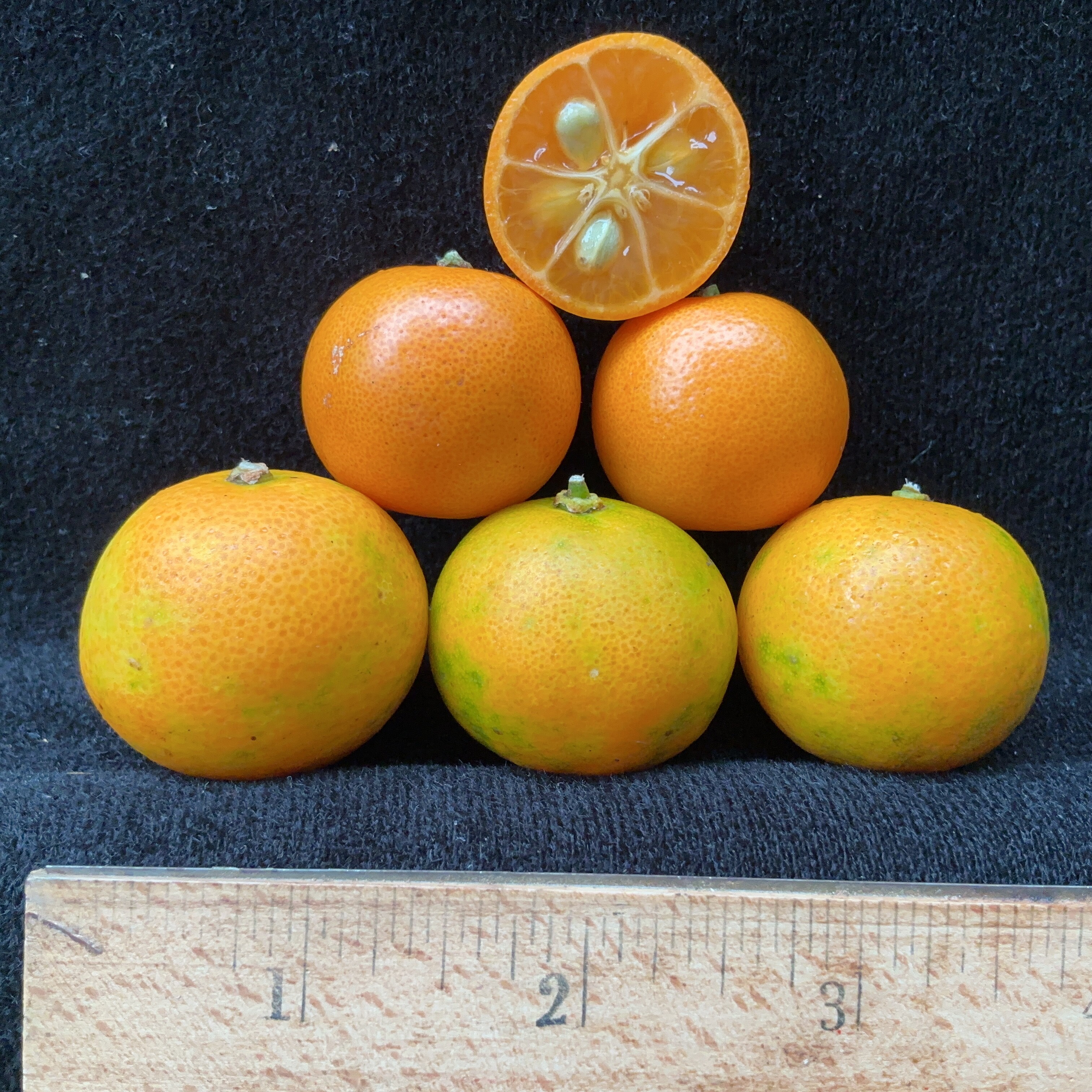
I also harvested the last pound or so of calamondins (about 30 fruits) from our container-grown tree. Here are a few of those:
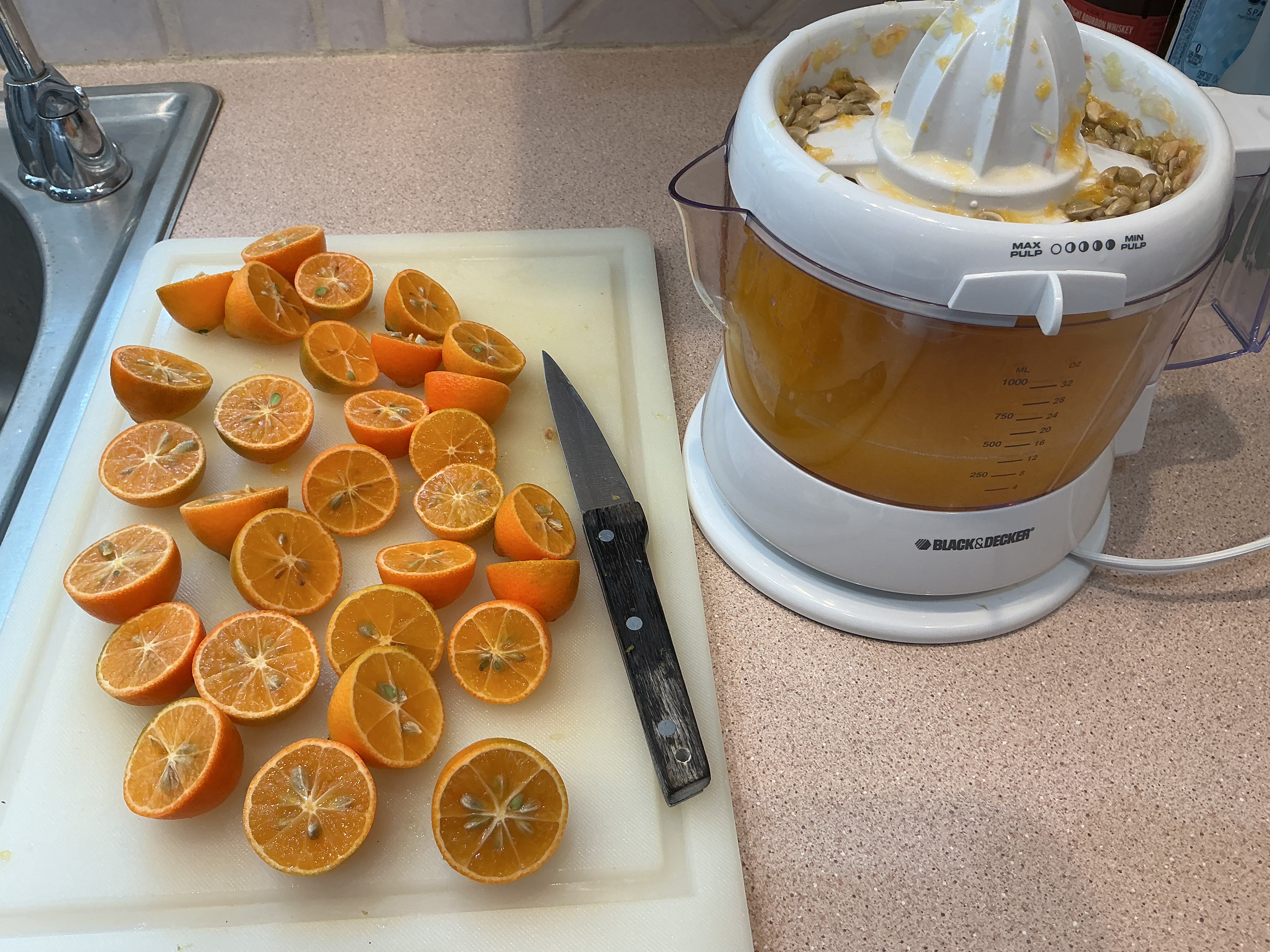
I juiced the Indios and calamondins separately:
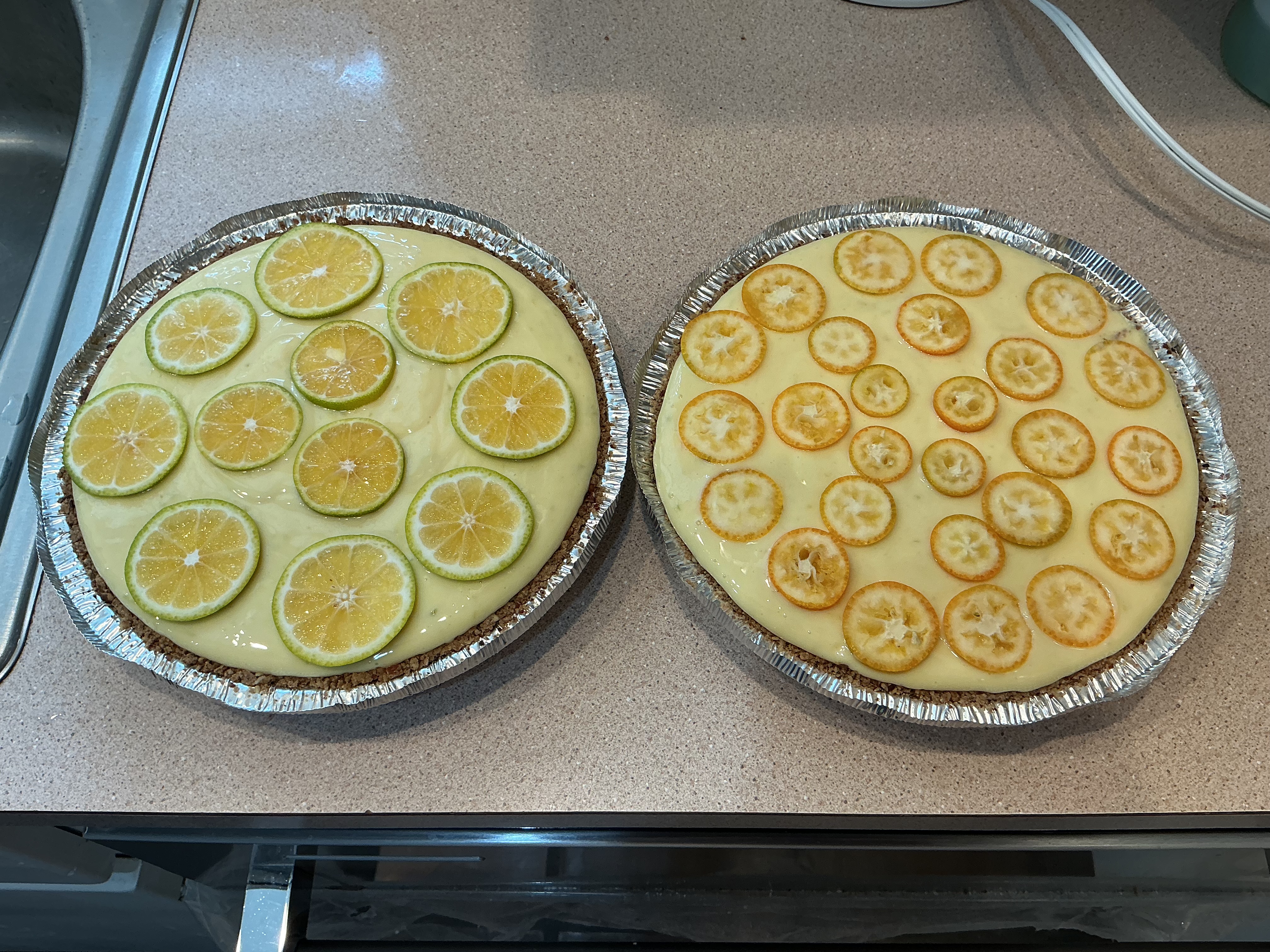
Then I made a mandarinquat pie (topped with sliced and deseeded Meiwa kumquats), and a calamondin pie (topped with sliced and deseeded Lemondrop lemonquats). Before baking:
After baking:
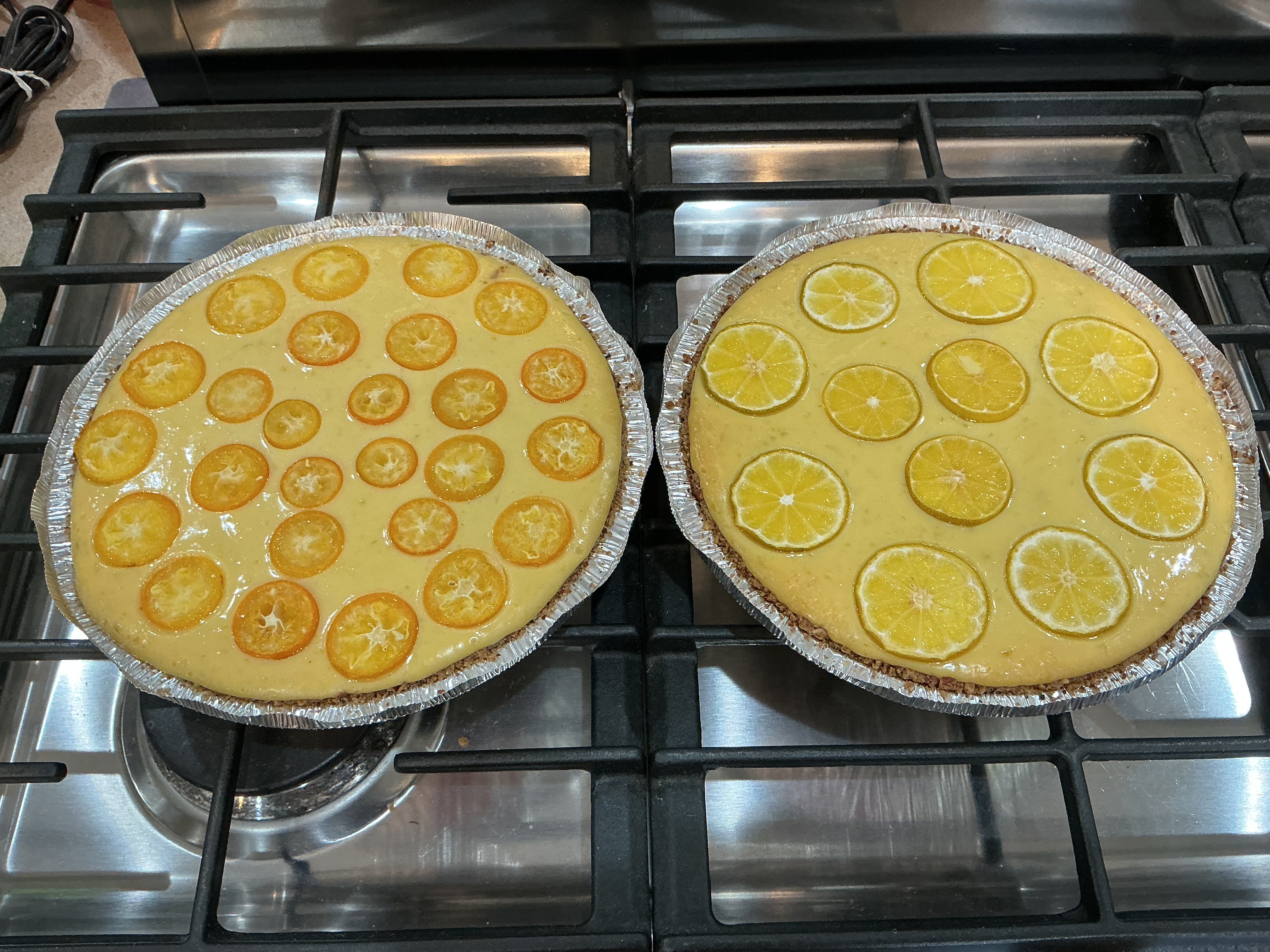
Oh yum, this is a key reason I grow citrus! Both pies have excellent flavor, but are less tart than the 2 Persian Lime pies I made a few weeks ago using the same recipe (see Show off your homegrown Citrus fruits - #251 by Johnsgard) above.
10 Likes
How many years has that tree been in the ground?
1 Like
deleted
1 Like
It has been in the ground for 5 years on a Kuharske Citrange rootstock and was close to dead when I planted a Flying dragon rootstock and approach grafted and removed the kuharske trunk. It has been on the Flying dragon now for 3 years.
Of the roughly 120 citrus cultivars we are growing (mostly in-ground, near Houston, TX), one of our favorites is New Zealand Lemonade lemon (NZL). It is tasty, productive, and very reliable at fruiting in SE Texas, ripening early enough to avoid our freeze risks. Some of my fellow gardeners here have complained about poor growth, but I have been very pleased with its performance.
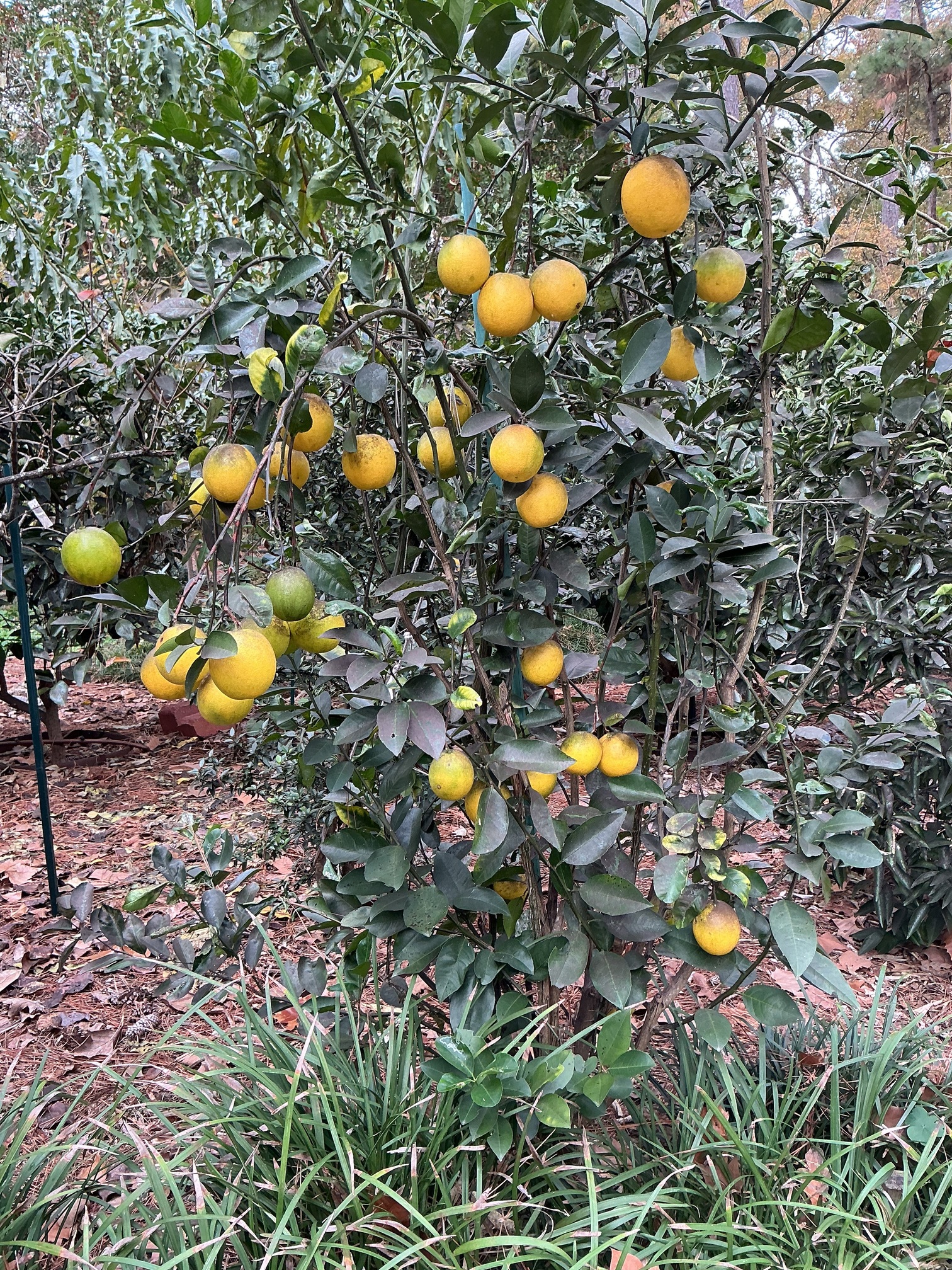
The NZL lemon is widely grown in backyards and gardens in New Zealand (although it is apparently not grown commercially there). It was first imported (probably illegally) to California in about 1980, budwood was given to UC Riverside in about 2007, and finally cleared for legal propagation in California through the CCPP. A Houston-area citrus grower and some friends jointly-paid to have a Texas phytosanitation certificate issued for the NZL cultivar in about 2015, and it is now available for legal purchase in the state. I got a single budstick of that first batch of Texas-legal budwood and T-budded about 8 trees on trifoliate rootstock for our orchard. I also put a single NZL bud on an in-ground sour orange rootstock (left over after our in-ground Makrut lime tree cratered completely in the 2017 freeze). Here is that in-ground top-worked NZL tree a couple days ago, staked up to prevent the trunk from snapping off under the weight of the fruit:
Here is a close-up of some of our NZL fruits:
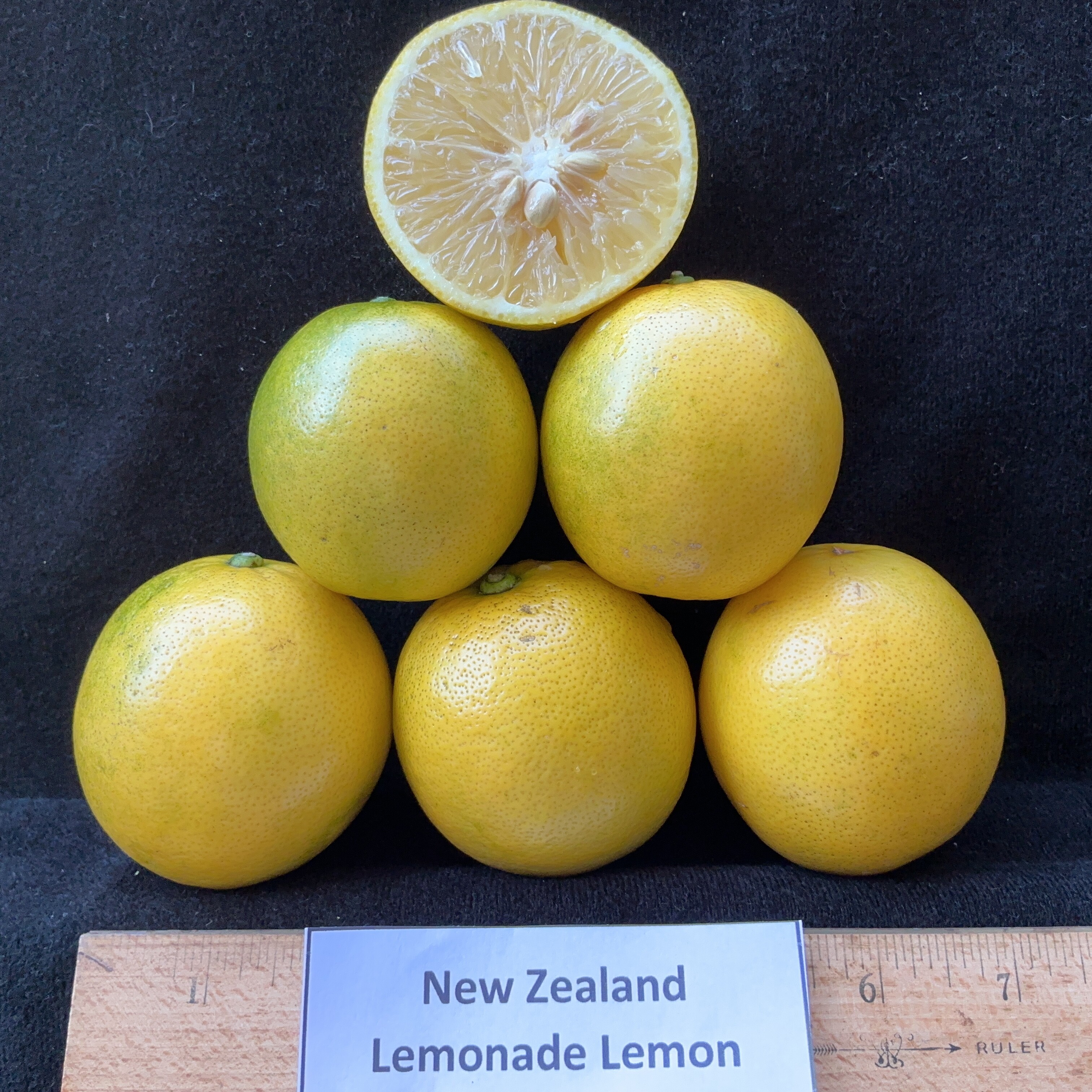
Although the foliage and floral morphology are definitely lemon, the flavor is not distinctly lemon and fruits (bright yellow when ripe) are nearly spherical (lacking nipples). It is pleasantly sweet, thin peeled, somewhat difficult to peel, contains few seeds, and firm-fleshed (similar to Ponkan texture). It is very different in flavor to Ujukitsu, and the various low-acid lemons/limes. I have never tried juicing NZL for fresh-squeezed lemonade, but will do that this year. I place NZL on my list of 3 recommended lemon varieties for Texas (along with Improved Meyer and Variegated Eureka).
11 Likes
I need to check my kumquats and lemons to see if they made it through our 20 degree low the other day. My guess is the kumquats should mostly be fine as I had them protected, but the lemons on the tree are likely shot. No damage to any of my unprotected citrus, Owari, Okitsu, Meyer, Glen and Arctic frosts
2 Likes
Interesting. Can you eat them like a sweet orange or are they too tart? Are they more cold hardy than a Meyers Lemon?
Yes, you peel and eat them just like an orange. Supposedly they make good lemonade without any added sugar (hence their name). I think Meyer is a little more cold hardy than NZL. On the downside, like most lemons here in SE Texas, they want to wake up early and push flower buds in January. Bad news with hard freezes.
3 Likes
I agree, lemon fruit is ruined by a 20 F freeze. If you harvest and juice them immediately they may be salvageable. Kumquat fruits will freeze solid in just a few hours below freezing. Inexplicably, I have had a few very-green Meiwa fruits freeze solid and recover sufficiently to mature a few months later. Those are the exception, not the rule.
3 Likes
I had the kumquats covered with lights on, I don’t expect many of them to be ruined. I don’t harvest mine like you, I just eat a few each day until they are gone, and share with friends. I actually think the lemons are okay, they are all low hanging and close to the house. Plus the passionfruit growing above it shielded it quite a lot.
3 Likes
Many years ago (1940s) a citrus seedling was discovered in a garden in Beeville Texas that produced large kumquat-like fruits with edible peels that tasted somewhat like a lemon. The plant was provisionally declared to be a Lemonquat, and was subsequently propagated at the Rio Farms citrus research coop facility in south Texas for potential commercial uses. It received the name “Rio Grande Valley Lemonquat” and it, along with other similar Texas hybrids named “Sunquat”, “Lemondrop”, and “Marmaladequat” had become fairly common Texas dooryard fruit trees by the 1980s. Subsequent evaluations suggested most or all of these are probably mandarin x kumquat hybrids, with no actual lemon parentage after all. For many years the Texas citrus budwood program offered Lemonquat budwood, and several commercial tree producers sold trees wholesale into the consumer market, usually as rooted cuttings. Alas, the Texas budwood program dropped this hybrid from its offerings about 10 years ago, and these very popular trees are no longer sold (legally) in Texas. If you are lucky enough to own one of the above mentioned “lemonquat” trees, consider yourself fortunate.
We have two own-root “Lemondrop” bushes in our SE Texas orchard that I planted about 10 years ago. They are very sprawling, distinctly thorny bushes, each about 8’ high and 8’ wide. They are moderately, but reliably, productive. Lemonquat is probably about as winter hardy as Improved Meyer lemons (more hardy than other lemons, but somewhat less so than pure kumquats). Unprotected they freeze back badly in the low 20s F. If grown from rooted cuttings, they will regrow true-to-type. The fruit is golf ball to tennis ball sized, nearly spherical, lacks a nipple, and bright yellow when ripe (in mid-December here in SE Texas):
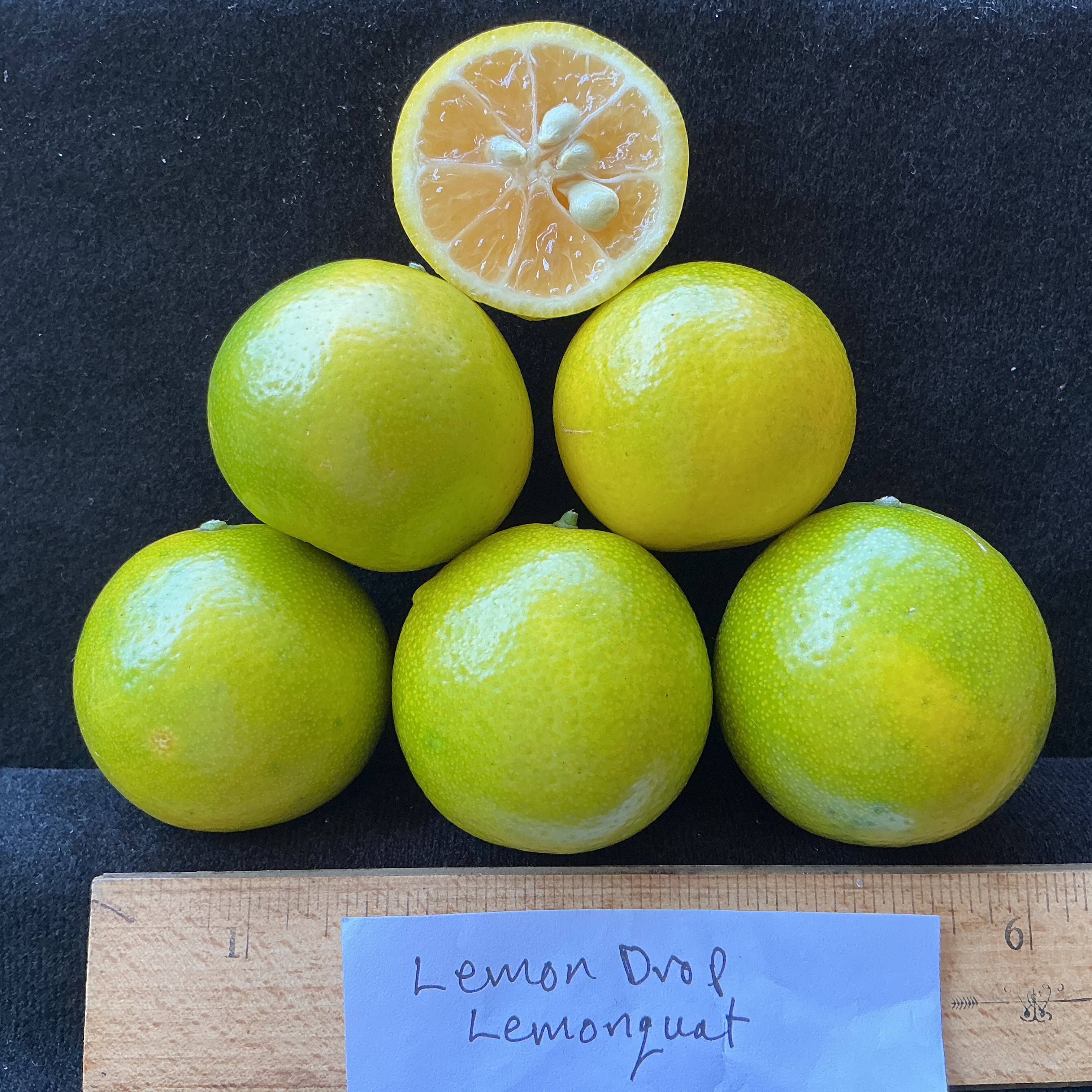
The crunchy peel is sweet and eaten (like kumquats), along with the exceedingly juicy sweet-tart flesh. Each fruit contains 6-12 strongly polyembryonic seeds (making reliable propagation from seed possible). I eat these fruit whole straight from the trees while working in our orchard, but they are so juicy that doing so risks making a dribbled-juice mess of my chin and shirt. Supposedly the juice makes good “lemon” pies, but juicing these would waste much of the fruit in my opinion. I sometimes add slices of these to the tops of homemade citrus pies (see calamondin juice pie on right):
The heirloom “Lemondrop” lemonquat is a real winner in my book!
10 Likes
At the nursery I work at, we have a couple “Sunquats” for sale. I am not sure which variety they are though because we also call them “Lemondrop” on our website. Typically means the wholesaler calls it both, and it could easily be neither.
We also sell a key lime × kumquat called “Lakeland Limequat” that I have been interested in getting. If my meyer-key lime multi-graft doesn’t fruit this year, I will probably replace it with the Limequat in a pot. A good contrast with my calomondin.
3 Likes
I have tasted Sunquats previously (and have some seedlings of them growing), but prefer Lemondrop. Limequats are very different animals. I have Lakeland limequats. Too tart to eat whole and very small for juicing. My Lakeland trees (2 of them) were completely unfazed by our 20 F freeze last January. Not even a wilted leaf. They did suffer some twig die-back at 17 F in 2024 however.
1 Like
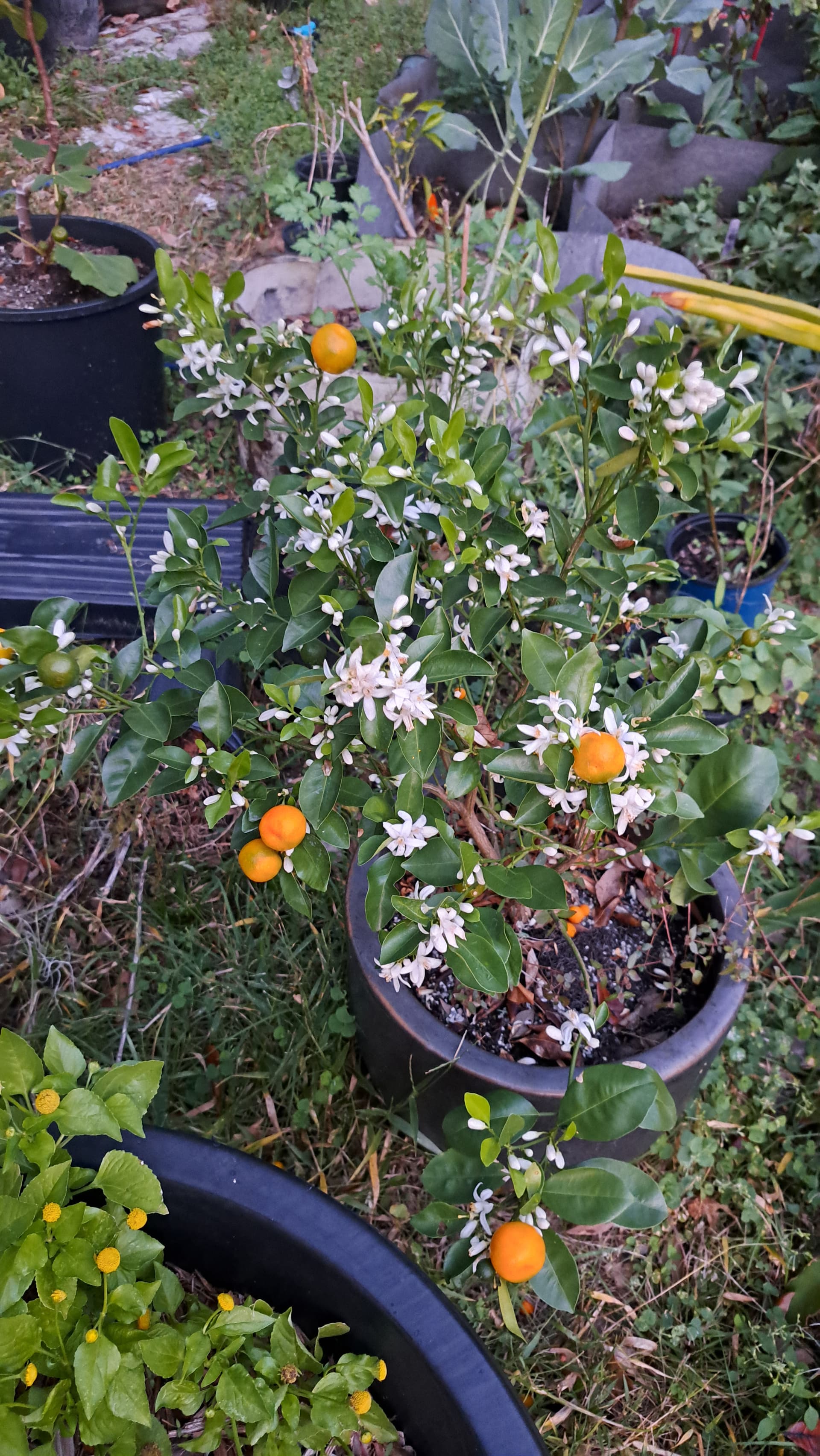
I imagine they are similar in size to key limes, which we use to make pies and desserts with usually. Are they about that size or a little smaller? How tart are the compared to a calamansi? Those are my favorite citrus, I eat them right off my bush, pictured below.
3 Likes
Lakeland and Eustis limequats are very similar in size and appearance, about the size and shape of Nagami kumquats (smaller than a Mexican lime), and roughly as tart as Mexican lime (one of their “parent” varieties). I have eaten them whole, but they are far from being tasty like a ripe calamondin, which I do eat straight from our tree. With enough of them, a dedicated person could potentially juice enough of them to make a pie, but they can’t be zested like a Mexican/Key lime. They are good for squeezing a few drops of lime juice onto a cooked dish (or fresh homegrown papaya!).
4 Likes
Here is a montage of my citrus fruits from 2014 that shows Lakeland limequat, Calamondin and Nagami (among many others) so you can see their relative sizes.

6 Likes
Among the roughly 120 citrus varieties we are growing (mostly in-ground, in The Woodlands, north of Houston, TX) is a heirloom variety called “Golden Grapefruit.” Golden Grapefruit was discovered (probably as a limb sport) by Mr. Leon Whittaker in Edinburg, TX many decades ago. This unique variety was formally evaluated at the Rio Farms Co-op and eventually released through the TAMU-run Texas Certified Citrus Budwood Program in Weslaco. Although it was never grown commercially for its fruit, for many years Golden Grapefruit trees were produced by wholesale growers for the Texas home gardener market. Unfortunately the Texas budwood program removed it from their cultivar offerings and Brazos Citrus Nursery in West Columbia produced their last Golden Grapefruit trees about 8 years ago. I managed to buy one of those very last trees locally on clearance. I do see that Madison Citrus Nursery has recently added it to their amazing list of over 500 citrus variety offerings (of no use to many citrus gardeners since they will not ship to Texas, California, Arizona, etc. by law), but perhaps of interest to gardeners in non-citrus growing states.
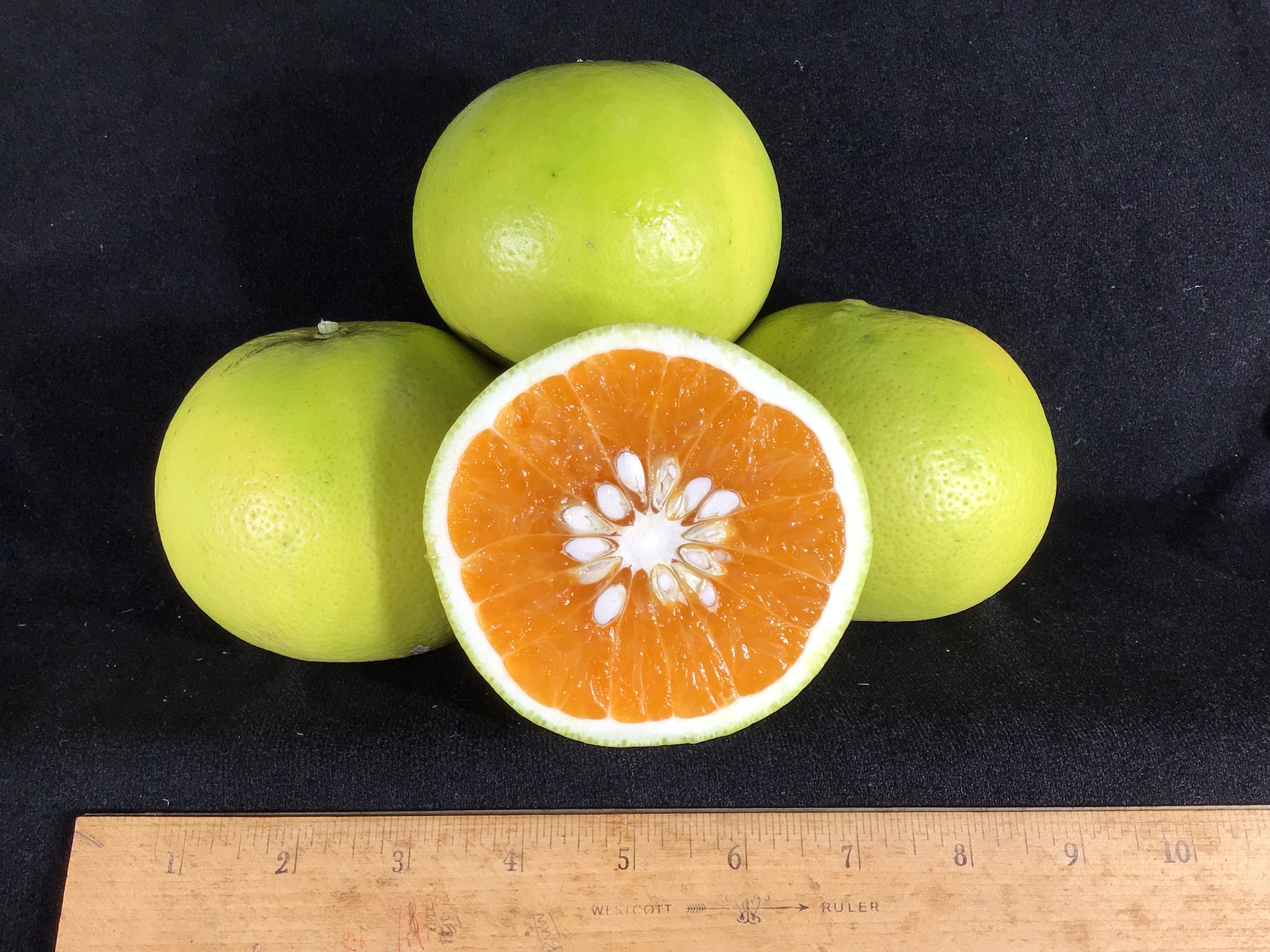
Golden Grapefruit looks like any other grapefruit, but it is an outrageous bright orange color inside. It is quite seedy (about 40-50 seeds), exceedingly juicy, difficult to peel, and very sweet. It lacks the typical grapefruit bitterness/aftertaste and has a “melting” flesh (rather than firm like other grapefruits). Most people that taste it rave about the unusually sweet flavor. It ripens very early (October-November), so easily avoids our potential hard freezes in SE Texas. The seeds are strongly polyembryonic (I.e. genetically true-to-type clones), so growing it from seeds is viable. For many years Terry Matherne had a Golden Grapefruit seedling tree that produced larger fruit with much paler yellow flesh (suggesting that it may not always produce 100% clonal seeds), but he lost that tree entirely in the 2021 freeze. Texas citrus expert Dr. J. Stewart Nagle speculated that Golden was actually 1/4 mandarin and 3/4 grapefruit genetically. It would be nice to know if genetic testing could confirm this.
Here is a photo of a few of our Golden Grapefruits from a year ago (we didn’t get any fruits this year, probably due to excessive chilling under just a tarp and moving blanket during a 20 F freeze last January).
12 Likes
What are the red skinned citrus in there?
Wow, that’s beautiful! Thank you posting about this. It’s great to hear about an early, sweet grapefruit.
2 Likes