Noordman seedless nagami sport is anatomically seedless. Even if bathed in pollen it won’t have seeds
5 Likes
My wife doesn’t mind the seeds in the Meiwa quarts since she thinks it’s sweeter, but I can’t stand the seeds once I’ve eaten the Nordman Seedless quats.
3 Likes
Getting up to 7 seeds in each of my Meiwa kumquats.
1 Like
We grow Nagami, Meiwa, Changshou/Fukushu, and Golden Bean/Hong Kong (plus a bunch of different ‘quat hybrids). My wife and I both crunch up the seeds in Meiwa as they are fairly soft and few in number. I often eat the Nagami and Changshou while out working in our orchard, and spit those harder and larger (respectively) seeds out. Golden Bean is barely edible, so I usually just let them rot on the plants.
5 Likes
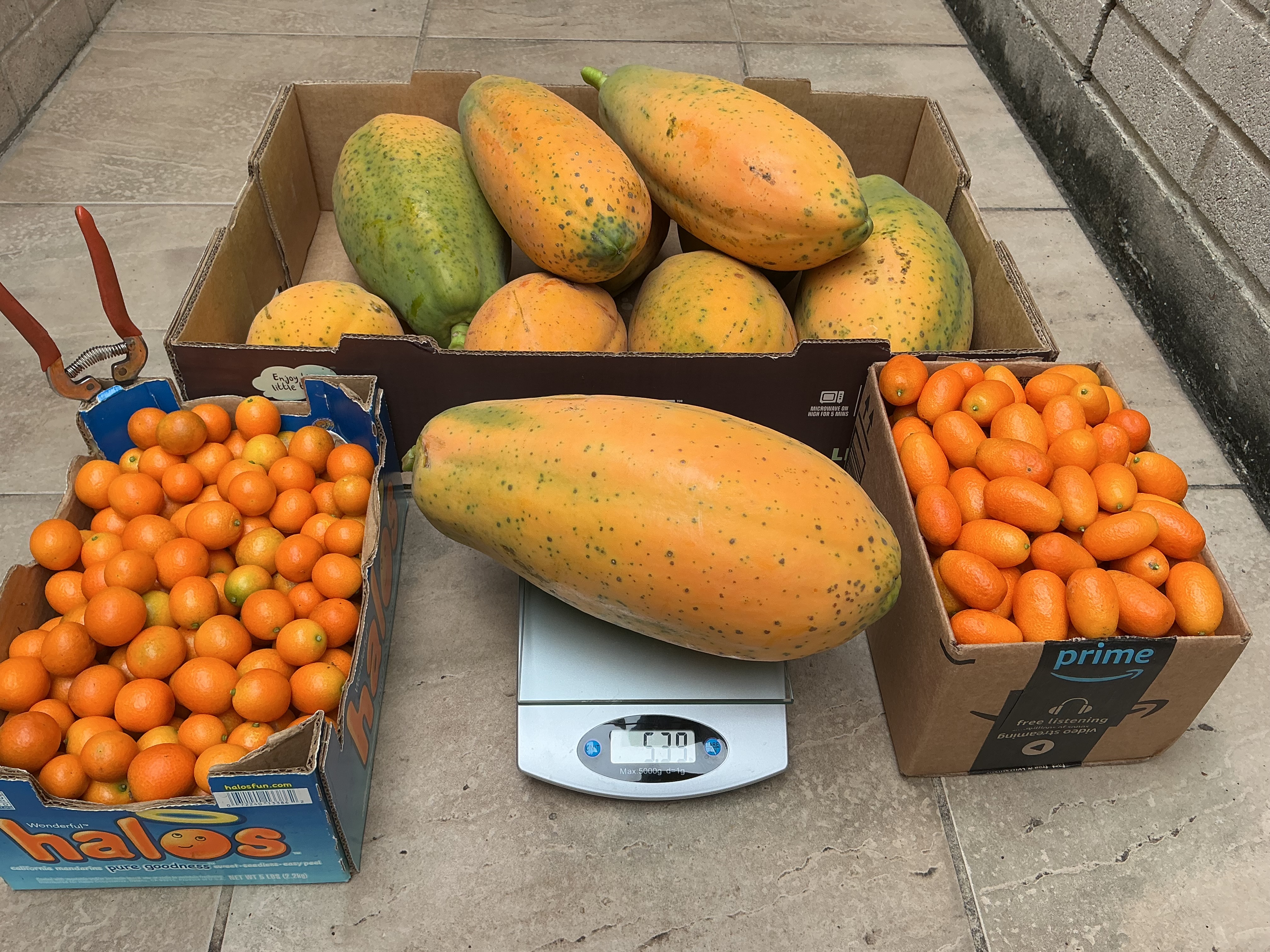
I picked another 34 pounds of ripe papayas (including several weighing over 5 pound each) from this one volunteer plant yesterday, along with another 12 pounds of kumquats, Nagami (tart) on right and Miewa (sweet) on left. The Woodlands (Zone 9B), near Houston Texas.
11 Likes
I tried crunching the seeds on my Meiwa like you said. Not going to work for me. It affects the flavor too much for me.
I suspect that the seeds may actually have some nutritional benefits (besides the fiber they add), so for Meiwa at least, we eat them. Most kumquats are monoembryonic (not Changshou however), so intentionally planting the seeds from a highly-mixed citrus orchard like ours is a valuable experiment in citrus breeding to see if any interesting hybrids arise. I have a number of volunteer kumquats scattered around the orchard where I have spat out seeds and they sprouted. Who knows…
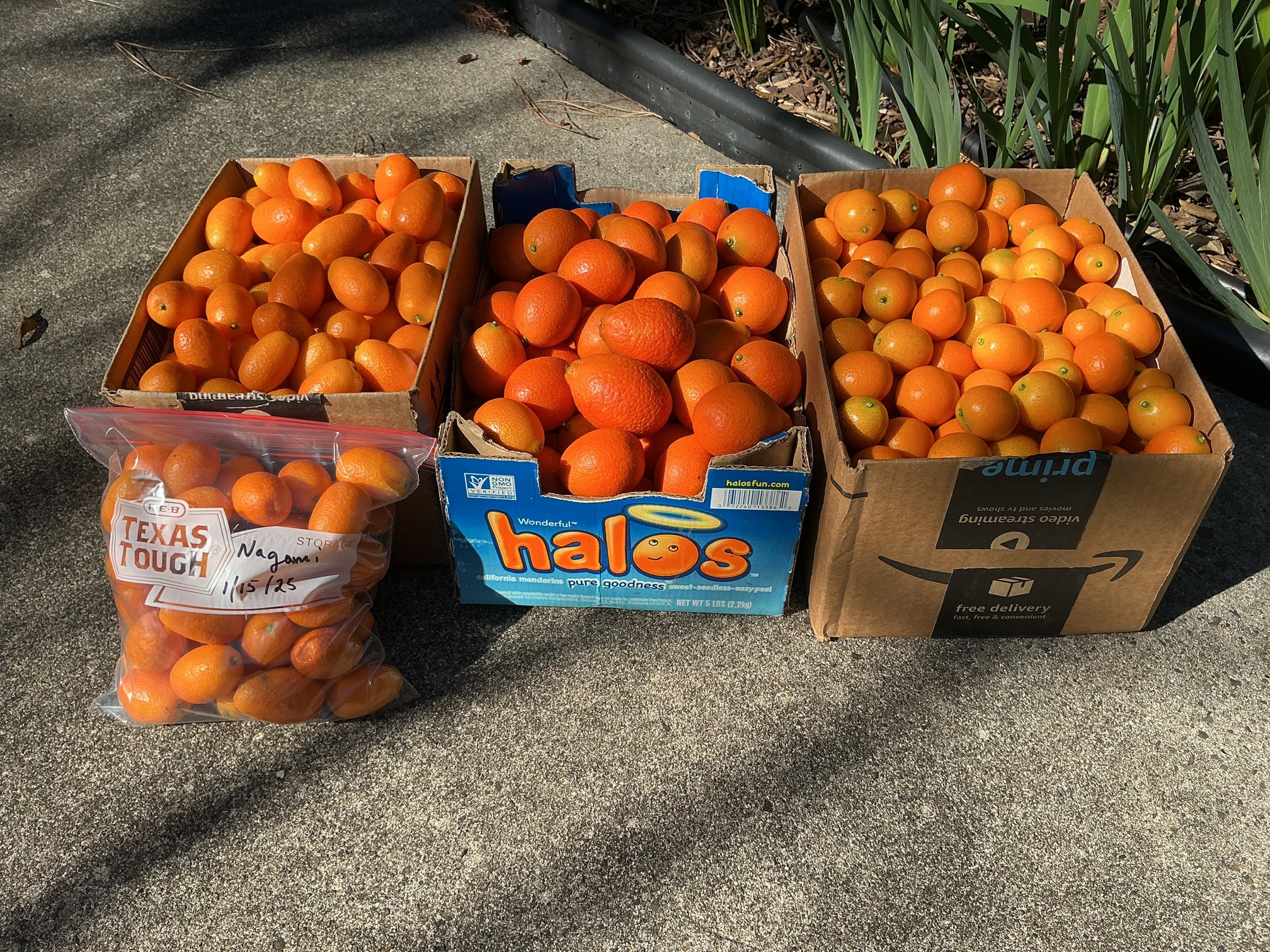
BTW, I picked another 5 pounds on Indio Mandarinquats on Thursday and gave all these fruits (papaya, Meiwa, Nagami, and Indio) away later that day. Here are the Indio, along with the Meiwa and Nagami:
10 Likes
Petey. I have 5 or 6 Shiranui trees in large containers, each with several fruits in them (SE Texas). I sampled one poorly-colored fruit in late November (we hadn’t had any cold weather yet then) and found it still quite tart. They have colored up nicely since (we finally got some overnight lows in the mid-30s and low 40s) so I will sample another one today and let you know what I think. I usually wait until January to harvest our Shiranui fruit, so for us at least, they should be almost ready now. Stay tuned…
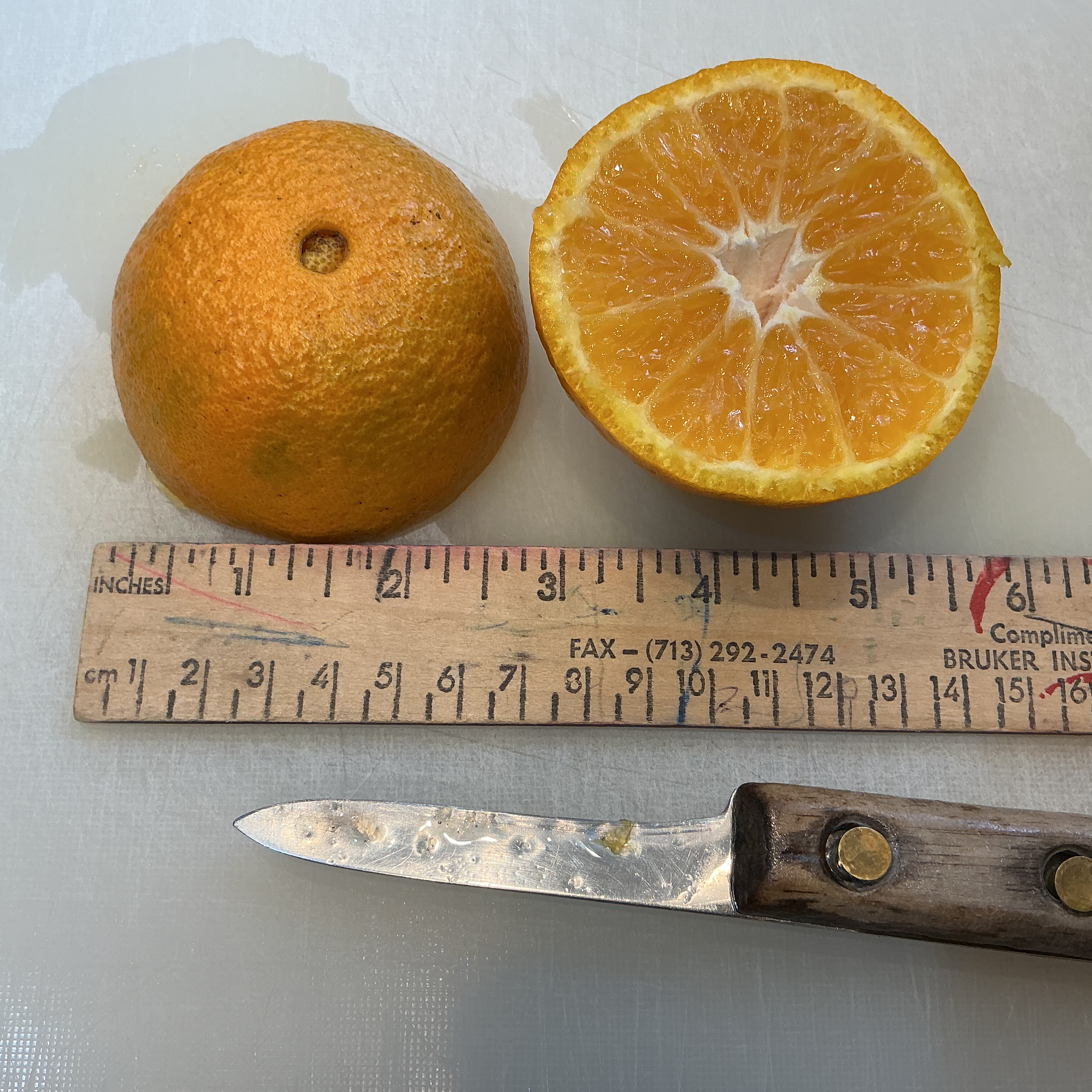
OK, so I picked a Shiranui a few minutes ago and sampled it. Still fairly tart, but very rich flavor and quite juicy. Note the small navel, hollow core, moderately-thick peel, and absence of any seeds. Most Americans would probably say this is a little too tart for a Mandarin (compared with a syrupy sweet low-acidity California “cutie”), but I do not find it at all objectionable. I’ll ask the “official fruit taster” of the family for her feedback later this morning and post an update.
5 Likes
Thank you!
I bought my shiranui 2 years ago. Last year, it created several poorly colored fruit in the summer that all had visible problems and dried up. I’m hoping that was just early nonsense and this big one is the ticket. I’ll go check in the basement later and see if it’s coloring up.
Do the low temps help with the ripening? My basement ranges from low 40s to low 50s most of the winter, depending on how cold outside.
Yes, early fruits of citrus trees are notoriously poor. They usually get better as a tree matures. Low temperatures help with peel coloring (they cause breakdown of chlorophyll). Ripening (decreasing acidity and build-up of sugars) is a more complex process, largely studied under in-field or carefully-controlled greenhouse conditions. Probably shorter day length, dropping soil and air temperatures, and possibly other factors play in. Ultimately a taste test is the only reliable way to gage “ripeness.” Once you have a timing benchmark for your growing conditions, you can use it as a gage for future harvests.
1 Like
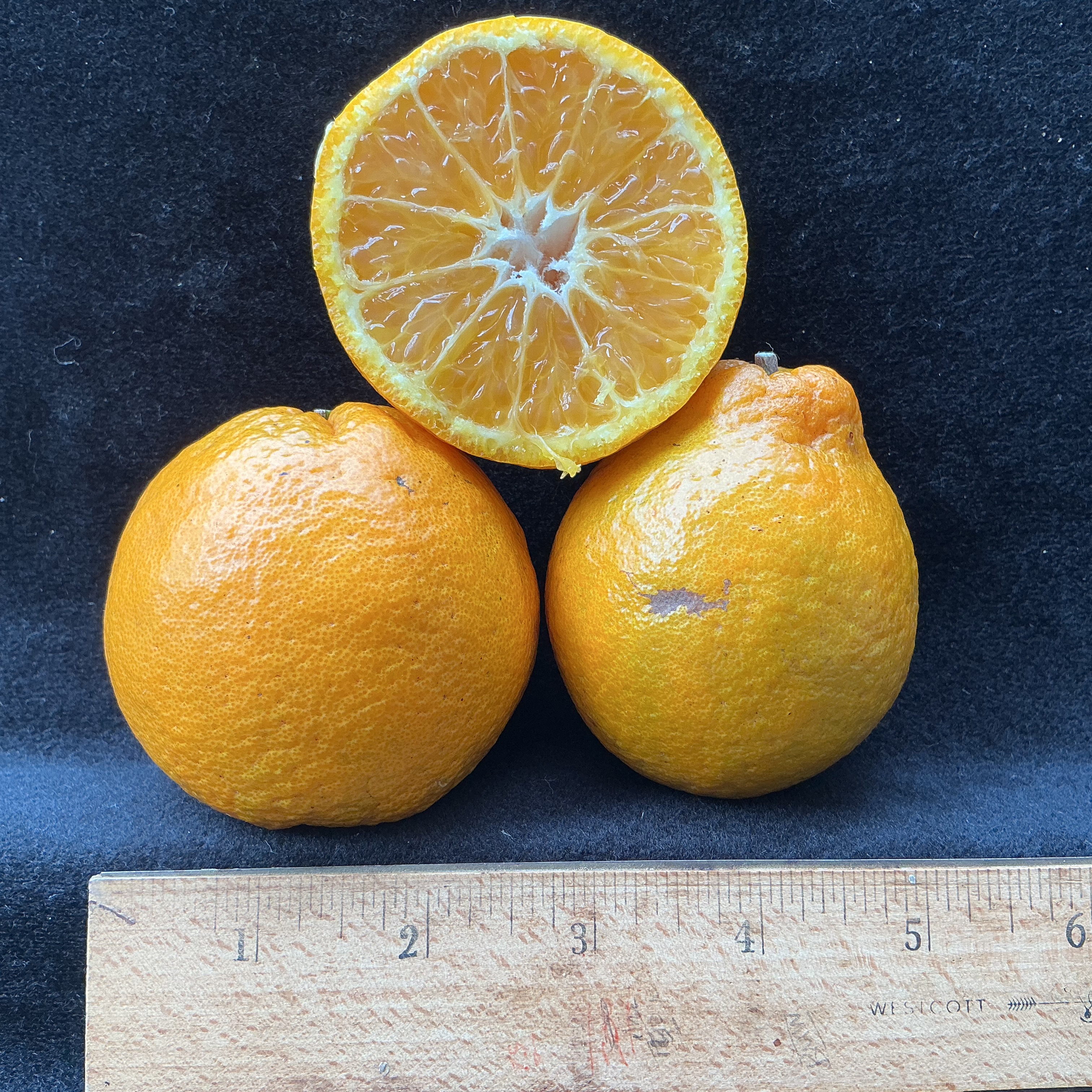
Here are a few Shiranui I just harvested this morning. The flesh of these are much lighter orange color than typical Mandarins, reflecting their mixed orange x mandarin parentage. The peel is also somewhat more adherent, and breaks more readily during peeling than most Mandarins. Also note that the top-knot is quite variable: sometimes very pronounced, sometimes essentially absent.
4 Likes
Got it. I wonder if the day length of my artificial lights are factoring in.
re: your second post — interesting. Sumo citrus, in the stores, is so easy to peel on one of the big fruit. I’ve been hoping I can grow an approximation at home.
Here’s my one baby. Color changing slowly. A bit of a top knot. About the size of a baseball. Basement temp 50F today.
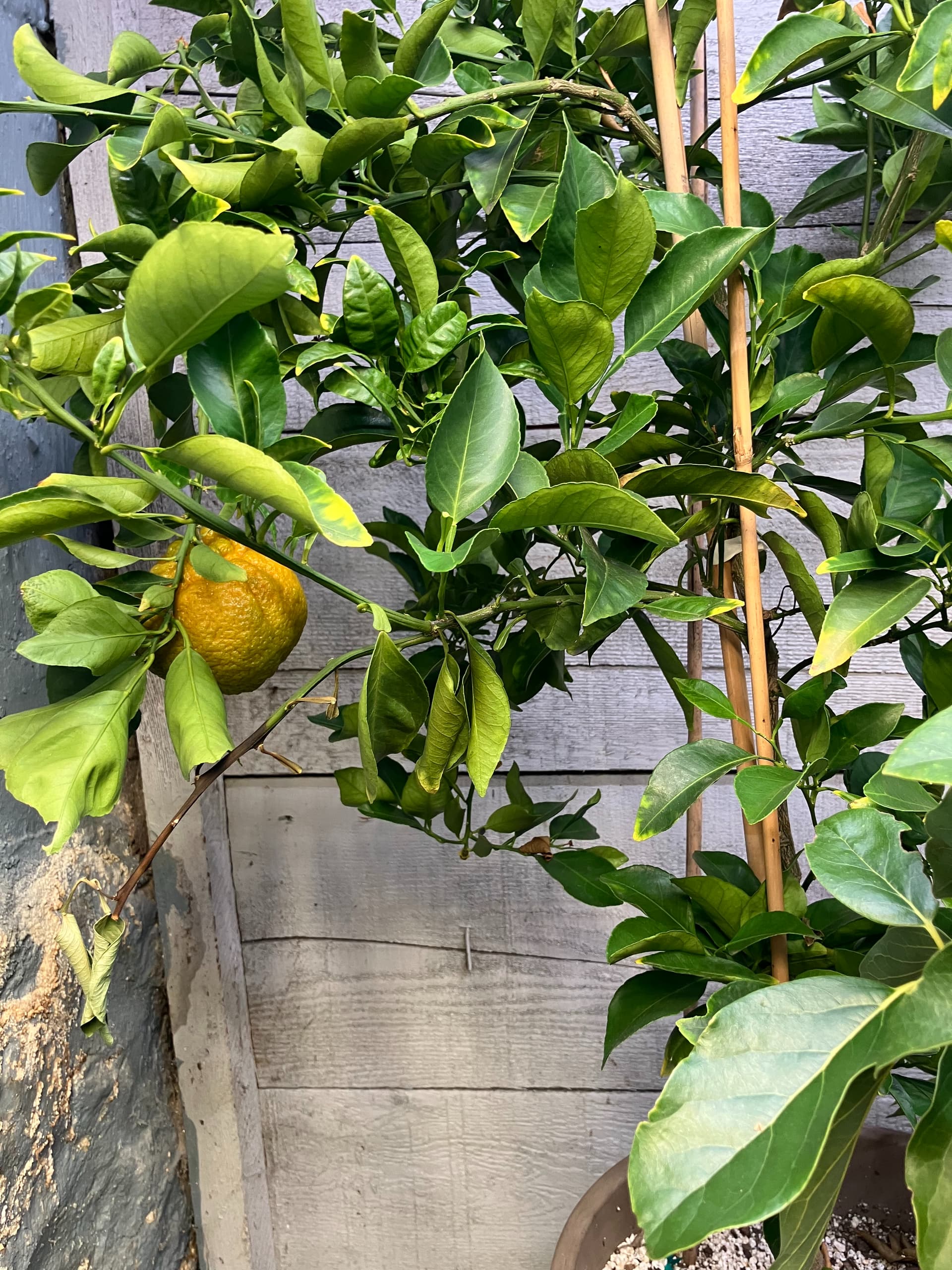
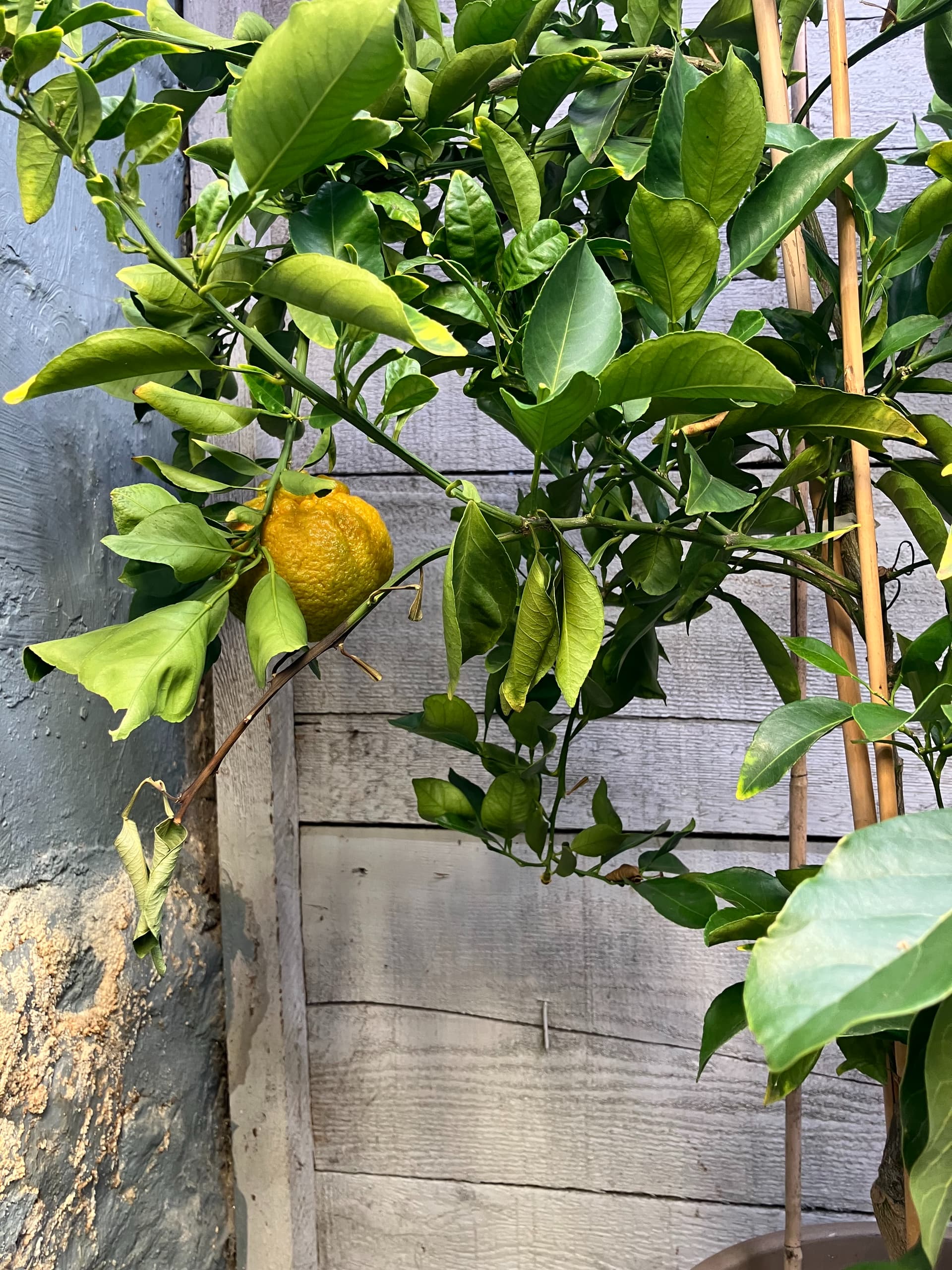
4 Likes
I’ve managed to fruit my potted meiwa the last two years. Completely bare this year, though 
Late last week, just before the “big freeze” (fyi, we ended up dropping to a low of 23 F with 28 continuous hours below freezing) hit our orchard in The Woodlands (30 miles north of Houston, TX), I picked most of the remaining fruits: 150 pounds of green papayas:

I also picked a few purple passionfruit, about 20 pounds of assorted ‘quats (Meiwa, Nagami, Changshou, Indio, Lemondrop, and Thomasville), and about 30-40 pounds of assorted other citrus (Sarawak pummelo; Oroblanco “grapefruit;” Salustiana orange; Gold Nugget, Shiranui (aka Sumo), and Tango mandarins, Seville sour orange; and New Zealand Lemonade, Improved Meyer, Eureka, and Variegated Eureka lemons. I also gathered a 5 gallon bucket full of sugar cane and a bunch of Chaya (Mexican Tree spinach) to give away at the upcoming Houston Chapter of the Texas Rare Fruit Growers’ annual free scion exchange on Feb. 7:
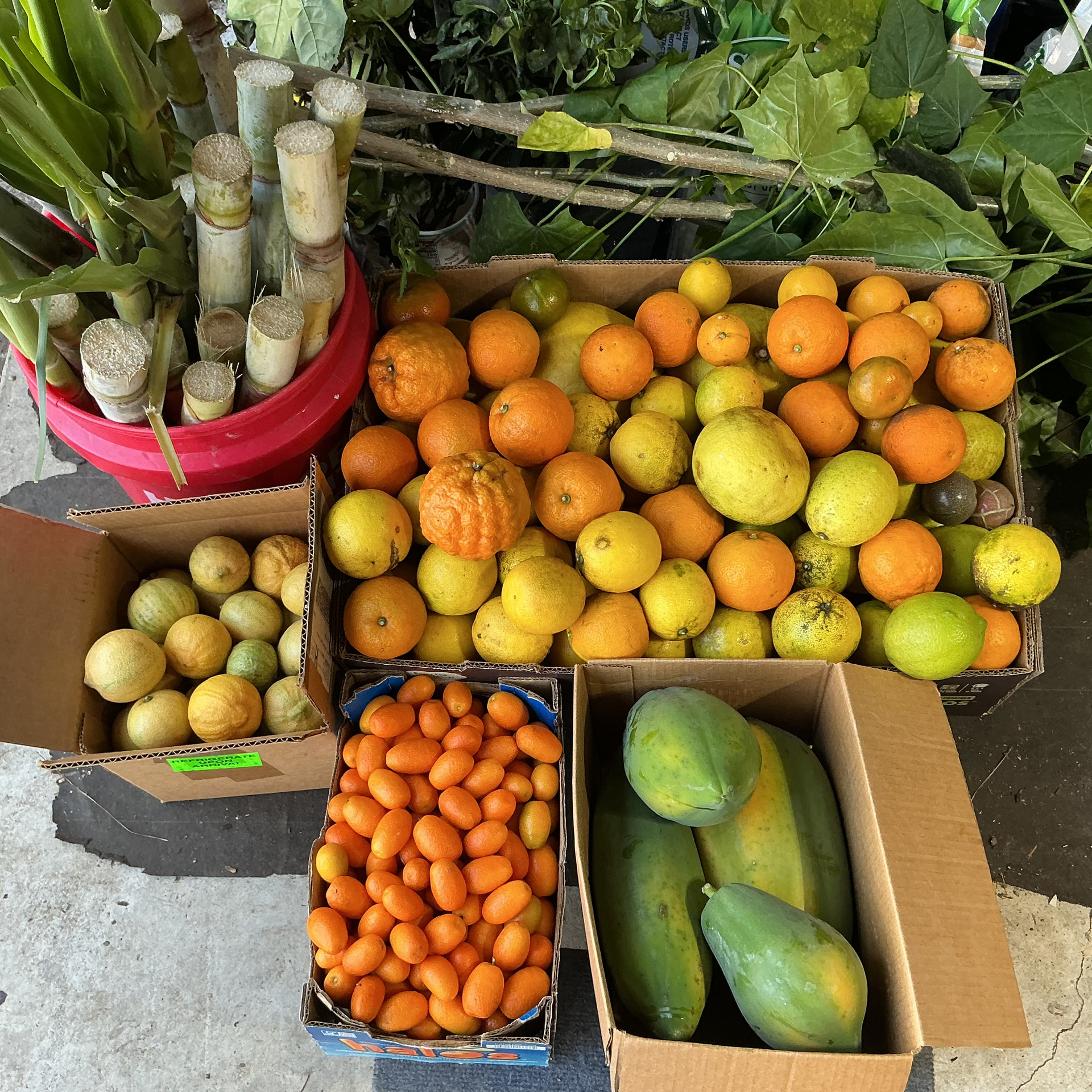
Here are many of the ‘quats:

And I selected out a few of each for @kinghat:

15 Likes
That’s really incredible. Is all extragiven away at the scion exchange? Do you process all the green papaya and freeze it?
1 Like
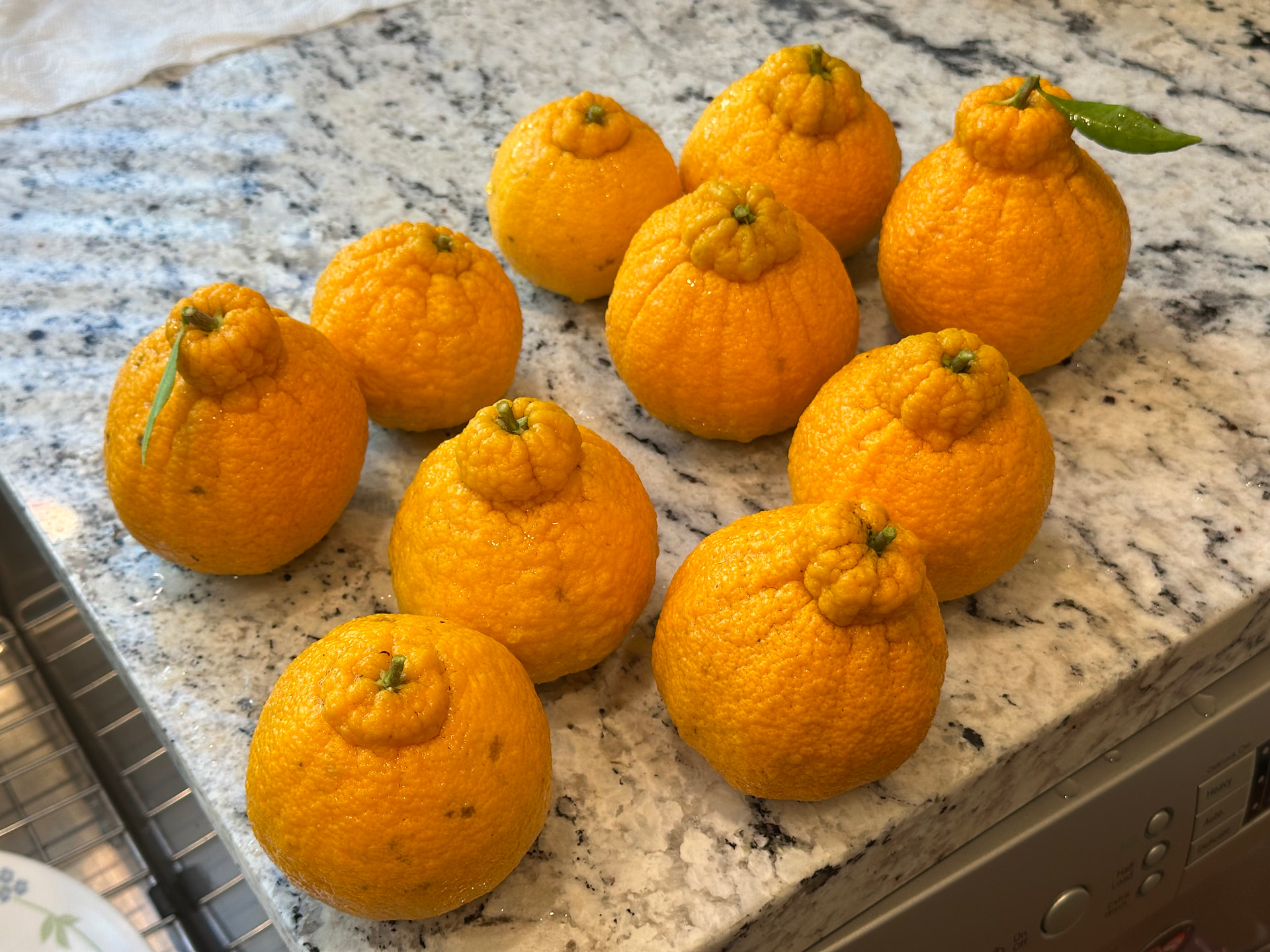
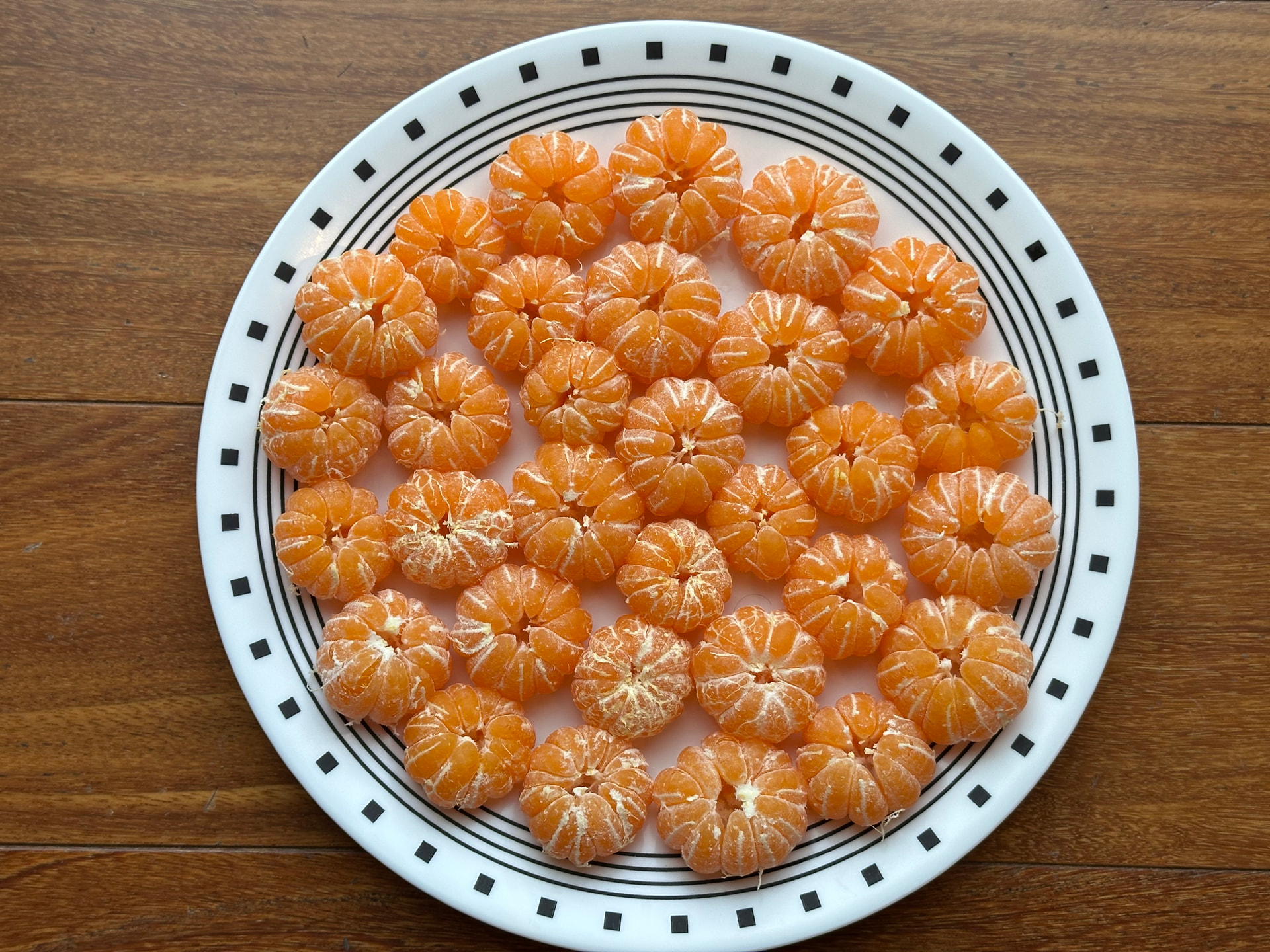
My Shiranui still haven’t developed the best flavor. I think the trees need a few more years. Kishus are out of this world!
10 Likes
Do any kumquats fruit multiple times a year? Or are they like oranges? I recently had some meiwas and marumis, they are pretty good, though the meiwas weren’t very juicy.
Did you do any cold protection for your trees before the freeze?