I’m about an hour from D.C. BK is kind of random here with no rhyme or reason as to variety. The pressure is not bad and can be controlled with usually just the loss of a branch or two.
If BK is hitting all your plums, I wouldn’t sweat Methley. Condider it just part of the process of growing plums. I’m not a big fan of Methley, but like Shiro it’s reliable and sets tons of fruit. I have SS also and outside of those 3 there is just not much else in that ripening bracket. Those are just warm ups for the better ones.
I only have a few plum trees so can’t be sure if Methley is worst than others. I do know my Methley is only average in taste and has so much black knot I’m removing it. Santa Rosa, and pluots also have some black knot. Toka grafted to Santa Rosa for 7 yrs has not had black knot.
I wonder if you are letting Spring Satin ripen to its best state. I know that Scott considers it a high quality plum, and to me it is in class with the best, including the pluots I grow, Emerald Beauty and Elephant Heart. Of course, my taste buds are not jaded that early in the season, but I love that plum. You have to let it get soft, it colors very early. Maybe it just isn’t you cup of tea, but it has a growing fan base.
The American varieties seem to be immune, I believe.
Yeah, it is a magnet for BK, but not quite like Methley for me. A customer of mine is having to cut down an EH tree I planted 10 years ago, but he didn’t stay on top of it and didn’t ask us to. In its last throws he’s getting his first really big crop. I had that happen with my last full tree as well (not death by BK but from cambium kill, it isn’t the most cold-hardy of plums). Now I just manage it as grafts on other less susceptible trees- that seems to help a lot. That might work with Methley too, but I won’t bother to try it.
Wait, I thought it was the opposite, that he has escalated his evaluation of Spring Satin, and didn’t much like it at first because he was harvesting it too soon. I haven’t read his recent general reports though and maybe I’m misremembering. I know he used to reject Sugar Pearls cot. as nothing special but now has altered that perspective.
What I do know is that, as I grow it here, folks who have tasted a wide range of my plums are very impressed with SS. But my conditions are different than yours and my SS is growing against an Airstream trailor. It loses some PM sun but gets a lot of reflected light when the sun is hitting it from the east. I’ve only been planting it at other locations for a year so I don’t have that much experience with it, beyond my one tree.
Why don’t you just tag @scottfsmith so Scott could tell us where he stand now with Spring Satin. In case you forget, to tag someone, you use @ followed by their handle name. Like @alan
I found SS was not ripening evenly, the tops were overripe and the bottoms were underripe. Sugar Pearls I didn’t keep long so I may not have given it a fair shake but the ones I had were not as good as my other white apricots.
In place of SS I find Laroda somewhat similar but more even in ripening, and a bit more tasty as well. I am just finishing the last few I put in the fridge, plums don’t get any better!
For the white apricot I think White Knockout is going to be the best, it was the only apricot with any fruit at all this year so I’m hoping that will be a standard. I didn’t get many taste samples but it looks like it will be a great one. I only made one limb of it but it will be a huge tree soon.
I originally went with it because Raintree Nursery’s description starts with “Methley is the most reliable and easiest-to-grow fruit tree we offer.” And I do not doubt that is their experience, but I learned the climate of western Washington is quite different from western Ohio. Requiring only 150 chill hours, it was my first tree to bloom, a couple weeks before frosts were done.
Despite frosts, two years ago it had a crop on it as a three year old tree (probably 40 to 60 plums). One evening I sampled a couple fruits and decided I’d pick the softest fruits the next morning. I found a mess of plum skins, pits and leaves on the ground, a few broken branches in the tree and just a handful of plums still hanging. My only consolation was in hoping the sorbitol in the plums works as well in raccoons or opossums as it works in humans.
Last year I had a good harvest. I found them quite soft and very cling stone. The flavor must not have stood out to me as I only remember them as juicy/watery. Neither cling stone, soft or overly juicy are conducive to pie making, which is what I primarily do with my fruit. I don’t have another plum to compare it to.
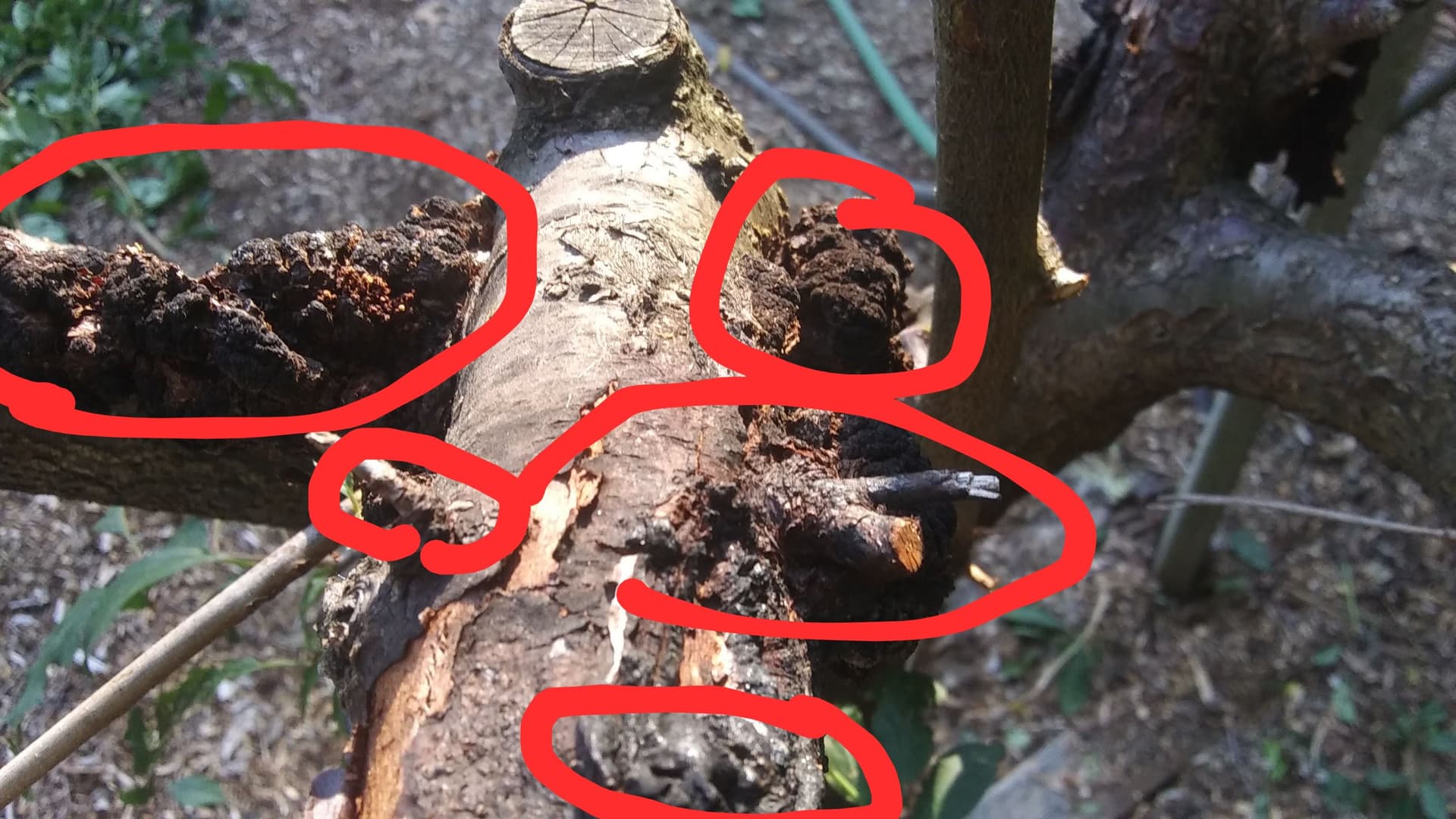
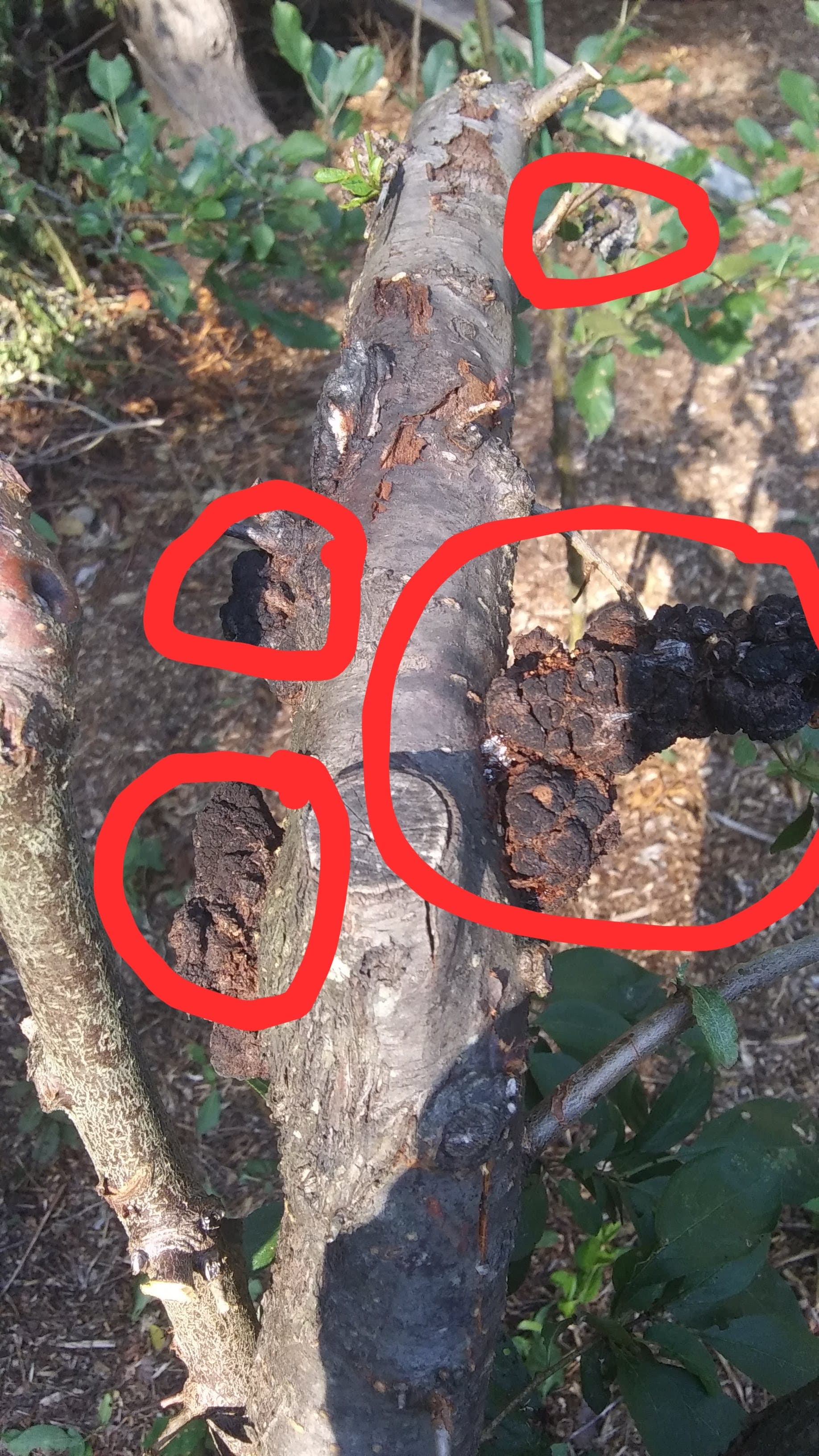
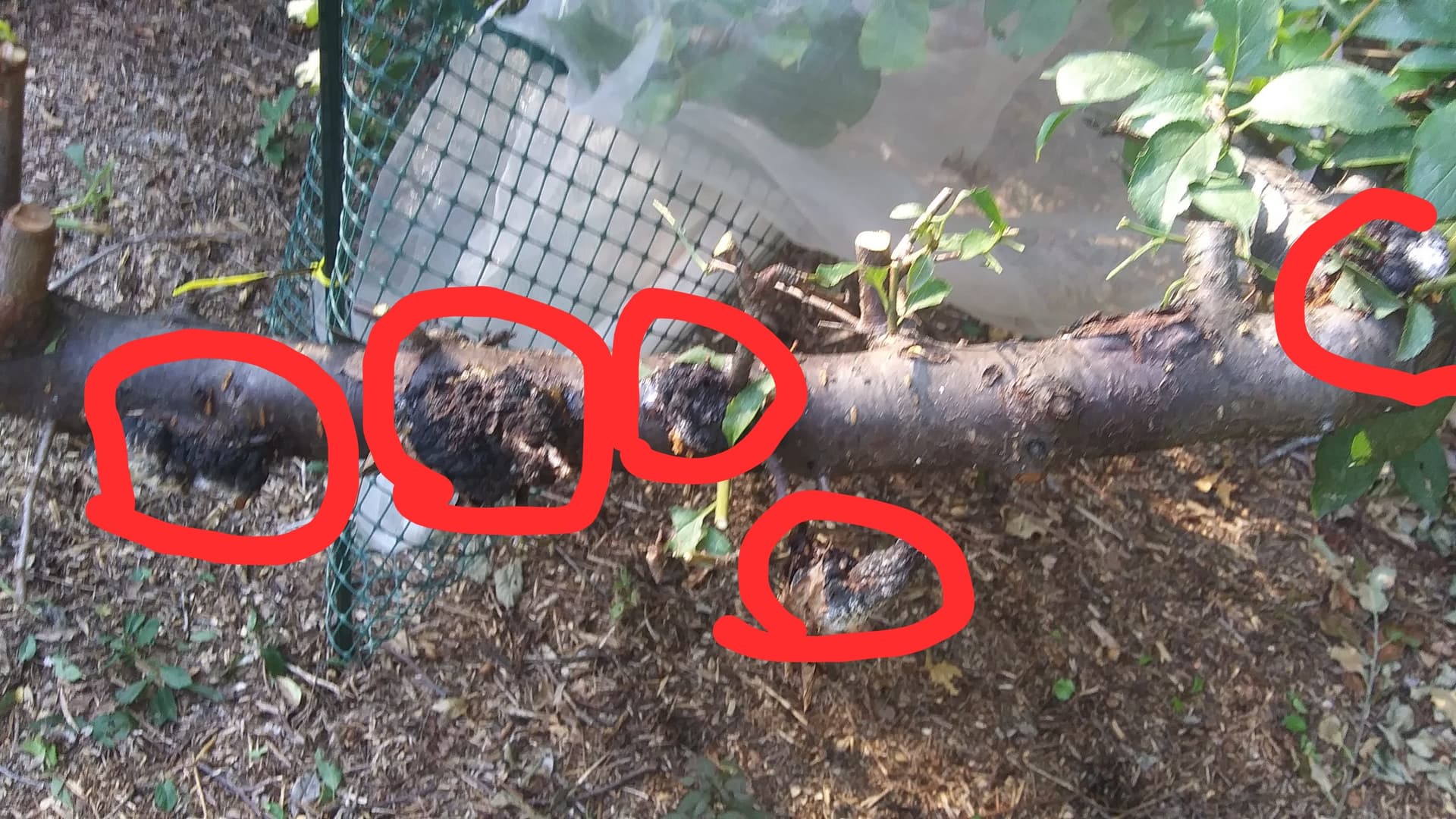
This year, it has taught me what black knot is. From its curious red-brown beginning in mid May to its summer blackness that inhabits nearly every limb and twig. Despite the disease, the leaves are still green. There were a few plums set this year.
This coming spring, I hope it will teach me grafting as I plan to cut back all limbs to near the trunk and top the trunk to remove any black knot infection and try another variety or two better suited to my climate, disease pressure and taste.
I agree that ‘Methley’ is quite juicy/watery which would make them a pain to process (I wouldn’t bother), but absolutely refreshing to snack on while out working in the heat of summer.
Weather makes so much difference and I’m guessing that is the case with SS between where you are and where I am. I’ve never had any problem with uneven ripening on SS, or any plum I’ve ever grown that I can recall. I get that from very wet springs on early nectarines, but never plums. Nectarines can get a lot of split pits from unfavorably cool and wet springs and that seems to lead to uneven ripening as well as a lot of black and brown rot. There’s no controlling rot that begins in a split pit. Rot and birds wiped out most of my early nectarine crop this year, while my later ripening varieties were OK.
Of course, peaches get them a lot too, especially early ripening ones and TangO’s. For the last two seasons I’ve lost most of my TangO’s to rot impervious to fungicide.
Ratings (overall eating quality) of varieties are strongly affected by location, a fact that can be hard to accept. We love our exceptional children.
I actually bought methley because my local nursery advised it was good for this region (I’m not far from Alan) though they’re probably just going based on what the label says. I also figured it being an American Japanese hybrid should have some disease resistance.
The truth is since I’ve discovered pluots I’ve found plums to be very bland. Are there varieties that are more flavorful? Besides the methley I also have a young spring satin as well as a flavor king and flavor grenade. I bud grafted lavina (myro/plum hybrid) this season. Too early to know if any took
Not having a plum tree at all would be my choice as having black knot covered tree is very unsightly. While have severely diseased tree on your property
Better have a plum tree with more black knot resistance than Methley would be my choice.
Under 3 conditions, yes. !. it has to have a crop. 2. It probably needs to be the only plum you have in its season. 3. You have no susceptible plum trees nearby that might be infected by it.
I have a customer with an Elephant Heart loaded with black knot, but also, for the first time, a heavy crop. Supposedly the inoculum completes its dance in spring and it is dormant in hot weather so the plan is to cut the tree down after harvest. He has 6 other varieties of plums on his property, none as susceptible as EH. It is, by far, his favorite plum.