I received confirmation by mail of my sweet potato order yesterday. The receipt says that they received my order on 2/22 and there are 151 orders ahead of my order. It will be interesting to see what that means for me as far as receiving my order goes.
Sand Hill Preservation Center is very clear about their business model being more of a passion to protect and preserve food sources rather than a means of making a buck. I appreciate their dedication to slowing the system back down to a reasonable pace and asking their customers to be patience.
Does anyone have particular experience getting the purple-skinned, white-fleshed sweet potatoes, ones oftentimes labeled “Korean sweet potatoes” like a Murasaki, to produce slips? I’ve been trying a different method each year and they take absolutely forever for me. This year I started mine in early January, and I still barely have sprouting to speak of. Years ago I created slips from the usual orange-fleshed sweet potatoes and it took almost zero time whatsoever. I’m wondering if there is a particular method that works best for this family of Asian sweet potatoes.
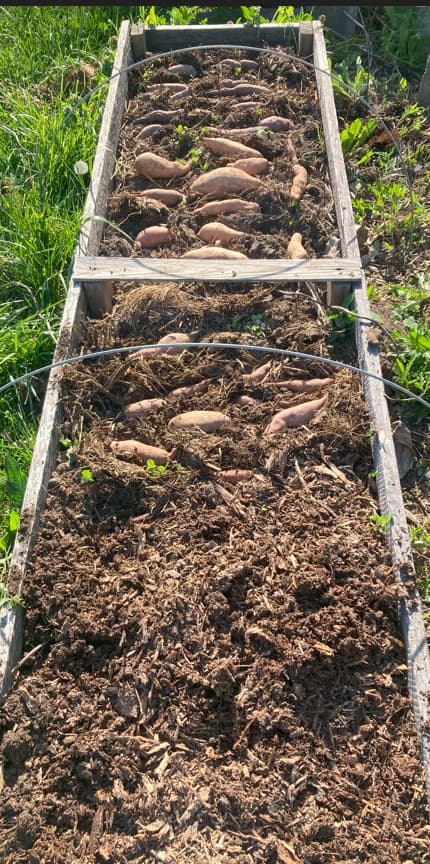
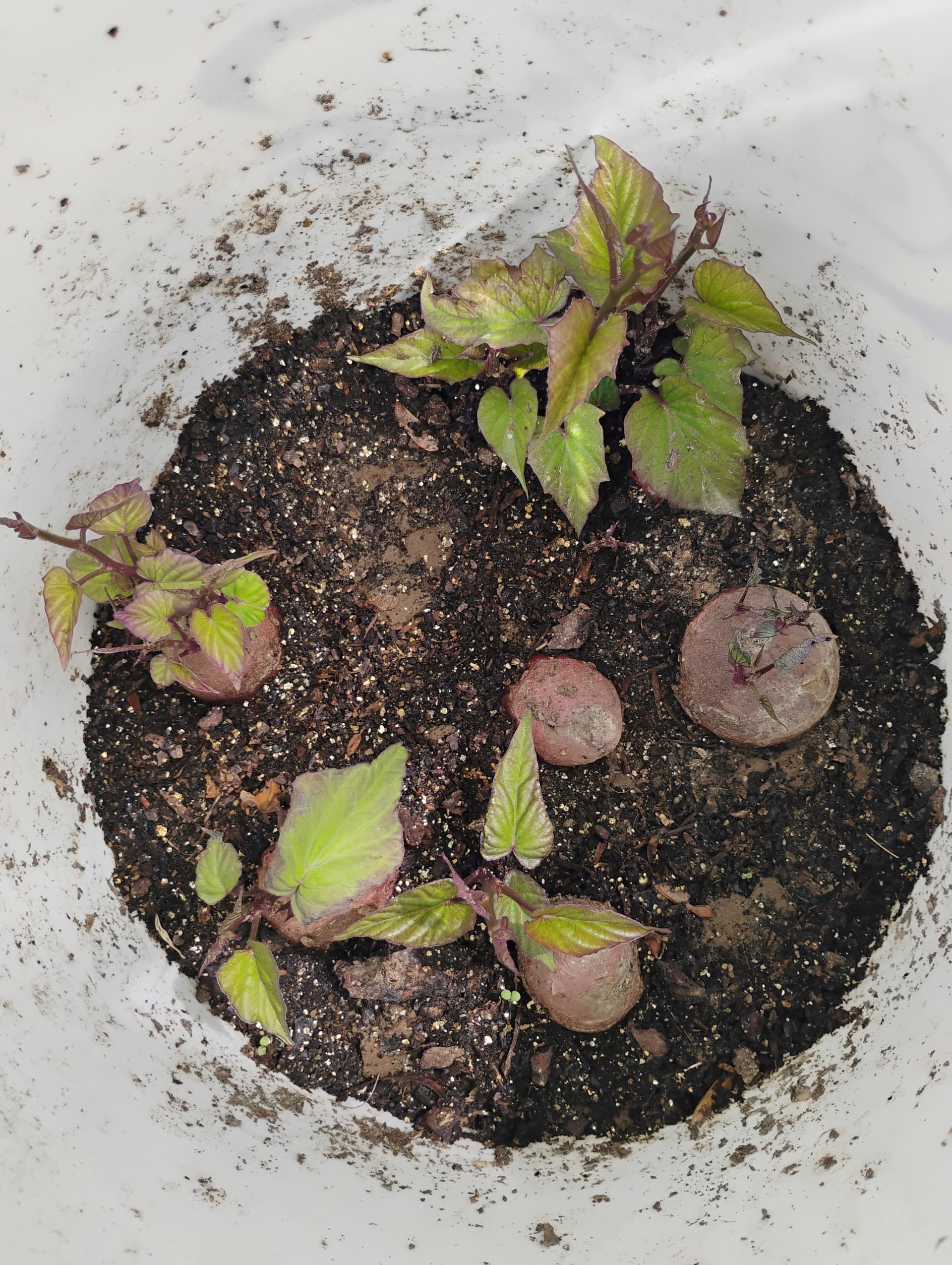
I have only started the purple variety outside in a raised bed dedicated to starting slips. I planted the potatoes just below the surface and then covered them with a thin layer of wood chips. I watered them in and covered the hooped bed with plastic. On hot days, I vented the bed and I made sure that the bed didn’t dry out. I had no issues at all with them putting out slips. There didn’t seem to be as many slips as the orange fleshed potatoes, but there were still plenty.
I’ve learned that they like warm water. My okinawa sweet potatoes i got last year loved warm water but i had to change it out every day because of the warmth
I found this pic from a few years ago, but I can’t seem to find any of my follow up photos. And now come to think of it, I didn’t actually bury the potatoes, I just laid them on the bed as shown and then I covered them with wood chips so that they were buried about an inch deep. This entire bed is planted. You can see how I covered them at the bottom of the photo.
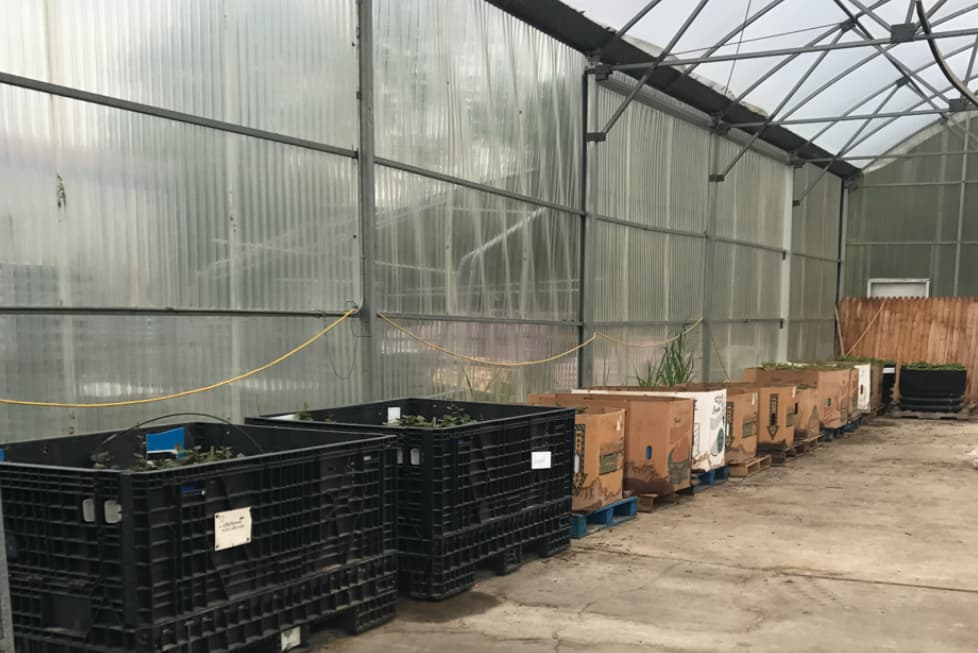
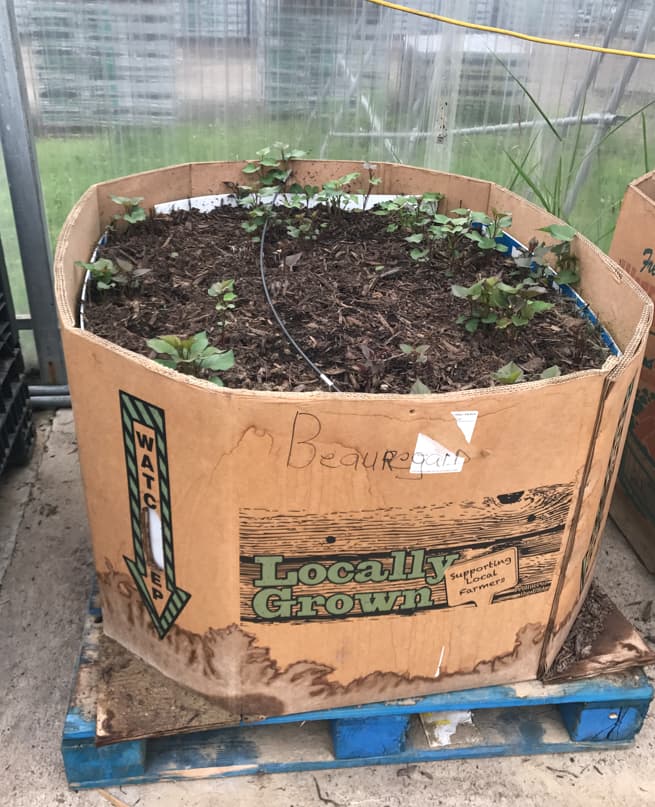
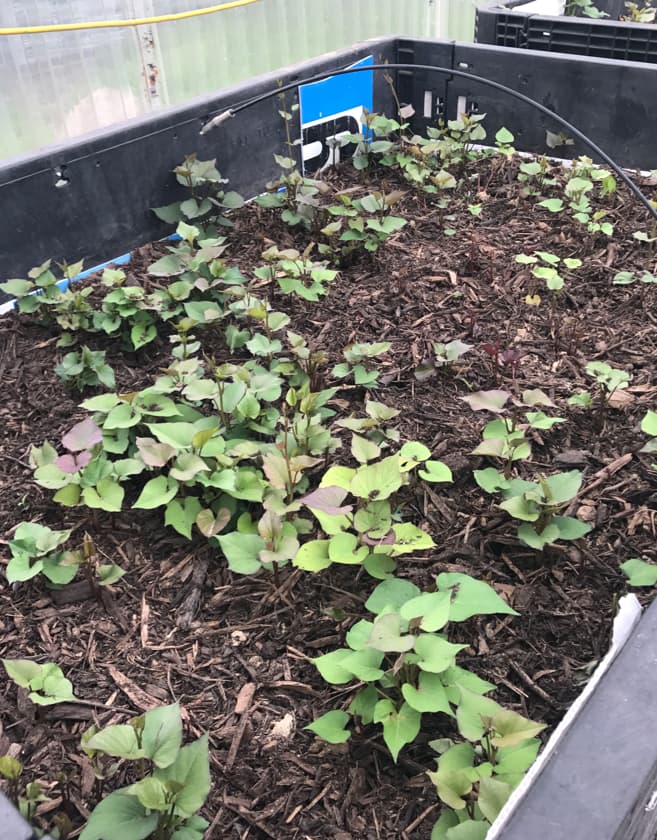
I got this idea from a local nursery who sells about 9 varieties each year. Here’s a few photos from his setup:
He has these on pallets because after last frost he moves these outside of his greenhouse.
Even though I have nearly 1,000 slips on order for my trial, it’s always fun to me to start slips, so I am planning to start a few of my own from at least one potato that I bought locally a few months ago. It actually happens to be a purple variety. I bought it from an international grocery store. They gave no specific name for it, which is common and the reason that I don’t prefer to buy them from the store.
I grew Purple Passion Sweet Potatoes last year. I saved a sweet potato and am growing slips from it. Very dark purple flesh; and medium sweetness which we liked, just baked them and ate with some butter—really enjoyable and healthy due to the anthocyanins!
This has been really interesting to read- I’ve been growing purple sweet potatoes for years, but all from the local organic market (I think purple passion and this year also kotobuki). I pan roast them as fries all the time and the purples being more dry, crisp and caramelize beautifully.
Just throwing this out there for any other small backyard growers (I have an 8x4 sweets bed) - planting 1” slices of sweet potato directly in the ground works better. We do still make water slips because they’re fun for the family to watch, but the slips produce noticeably fewer and smaller potatoes than just directly planting 1” slices 5-6” deep- as one would imagine given that a potato can easily make 50 slips for me. So, if you’re not in need of 100+ plants, consider just slicing and planting.
I started wondering a bit more about the method that you mentioned. When you slice the sweet potatoes, do you plant them immediately or do you hold them for a period so the cuts have time to callus up a bit?
We have always planted immediately, no issues. You could also just cut it in half. There’s no rule here. This year, I only had room for a few slices because my slip potatoes (grown mostly for fun in the kitchen) went bonkers, and I just ended up planting them whole. Everything went in the grown a few days ago because I was sick of seeing them. Here’s hoping the blanket protects them from the random 40 degree night.
Just know that just as it takes a few weeks for the sweet potatoes to start to sprout when you make slips, it can easily take a month before the greens make an appearance when you plant directly in the ground. I’ve never actually planted the sweet whole with half of its slips still on and going crazy, but It’s certainly not uncommon to just plant whole sweet potatoes. This is my year of experimenting with what less effort in some areas of my gardens can yield. Nothing like becoming obsessed with fruit to make you stop fretting about vegetable gardens! On a daily basis I look at them and say, oh veggies, you got this.
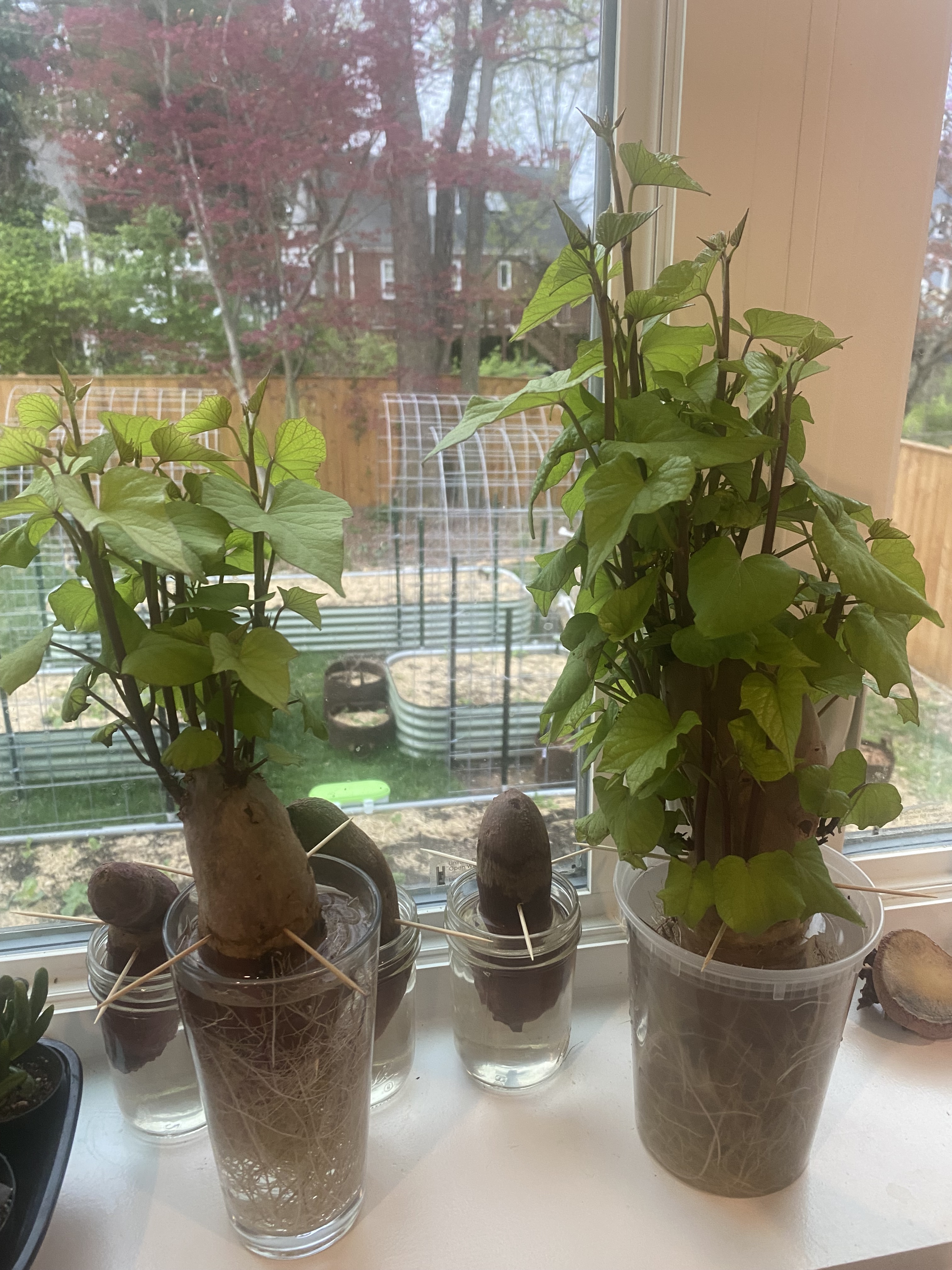
No worries on me having patience, with each year I start my slips from store bought sweet potatoes earlier and earlier. These were started indoors in January:
Wow that’s 2-3 months of growth? You are patient! This is what 2 kitchen ones looked like after 5 weeks and I had already removed 10-15 slips each. Is that variety you have just very slow growing?
These are just the white fleshed, purple skinned sweet potatoes that are labeled as Korean sweet potatoes at Asian grocery stores and “farmers markets” grocery stores in this area. In multiple years of trying I have never gotten these to slip quickly or well, no matter what sprouting method I’ve tried.
Does anyone have anything beyond anecdotal evidence that sweet potatoes may be treated with a chemical to reduce their likelihood in sprouting during storage? I’ve heard people voicing their personal beliefs but never proof of anything concrete, although I am inclined to believe it given my experience with ginger, turmeric, taro and this sort of sweet potato. I wish that I could source ones labeled as “organic.”
I’m sorry you don’t have access to organic sweets- I have a great organic grocery store nearby. If you can’t find any next winter, message me, and I can easily ship you a few of those (they call them “Japanese”) purples, jewel or whatever else they have.
I started one of those purple skinned white fleshed ones (they’re labeled Japanese sweet potatoes here) about six weeks ago and mine are growing at a similar rate to yours.
I used an organic one, cut it in half horizontally, and set it in a partially covered container of moist potting soil. Within a few days it wrinkled and got some mould in a few places, but after a week or two it started to sprout. Now it has a couple of small, but nice looking slips coming off one end.
Sometimes when I store an orange sweet potato for too long I’ll get slips forming in the cupboard, but the purple skinned ones just go mouldy. I think this type just lacks vigour—I wonder if the sugar:starch:moisture ratio favours the growth of microorganisms that take energy away from the tuber, or maybe they just don’t cure the same way as the orange ones. In any case, using organic ones still results in slow growth in my experience, but the flavour and texture make up for it.
Also, re:anti-sprouting treatments, the only semi-reliable source I’ve seen suggesting that conventionally grown sweet potatoes might be treated with a sprout inhibitor was a university of Maryland garden extension article, which then said that washing them would remove it. Some conventional sweet potatoes are coated with carnauba wax to preserve moisture—organic ones are never coated as far as I know. The wax doesn’t contain any growth inhibiting chemicals. Beyond being a mechanical barrier it shouldn’t have any effect on sprouting, so as long as you buy unwaxed sweet potatoes—or wash the wax off—it shouldn’t be a problem. I think maybe the sprout inhibitor thing is something that people repeat because potatoes are very frequently treated with sprout inhibitors and most people don’t know the difference between a potato and a sweet potato.
I know exactly what you mean, which was why I was so surprised by my experience the very first time I bought this type with the intention to sprout for slips and try to grow them myself. I forgot about two of the sweets on a shelf in a cool room that has good air movement, and when I rediscovered them many months later those ones had actually sprouted but without leaves, just like I’ll sometimes see happen with old potatoes that don’t get slimy but actually sprout.
For me it was storing them in a paper bag near the dishwasher. The regular steam probably made it like a tropical jungle in that bag. That has only ever happened for me in December though and then when I think I’ve found an extraordinarily easy new sprouting method I try it again in February when I actually want the sprouts and it fails. I’ve had that experience with sweet potatoes, ginger and turmeric.
I’ve pulled them up early before only to get long stringy potatoes without alot of flesh. In the latter half of the year, I could probably do like smaller harvest from September to November, but since I usually harvest in October, thats not quite what your look for.
 And now come to think of it, I didn’t actually bury the potatoes, I just laid them on the bed as shown and then I covered them with wood chips so that they were buried about an inch deep. This entire bed is planted. You can see how I covered them at the bottom of the photo.