Thanks
1 Like
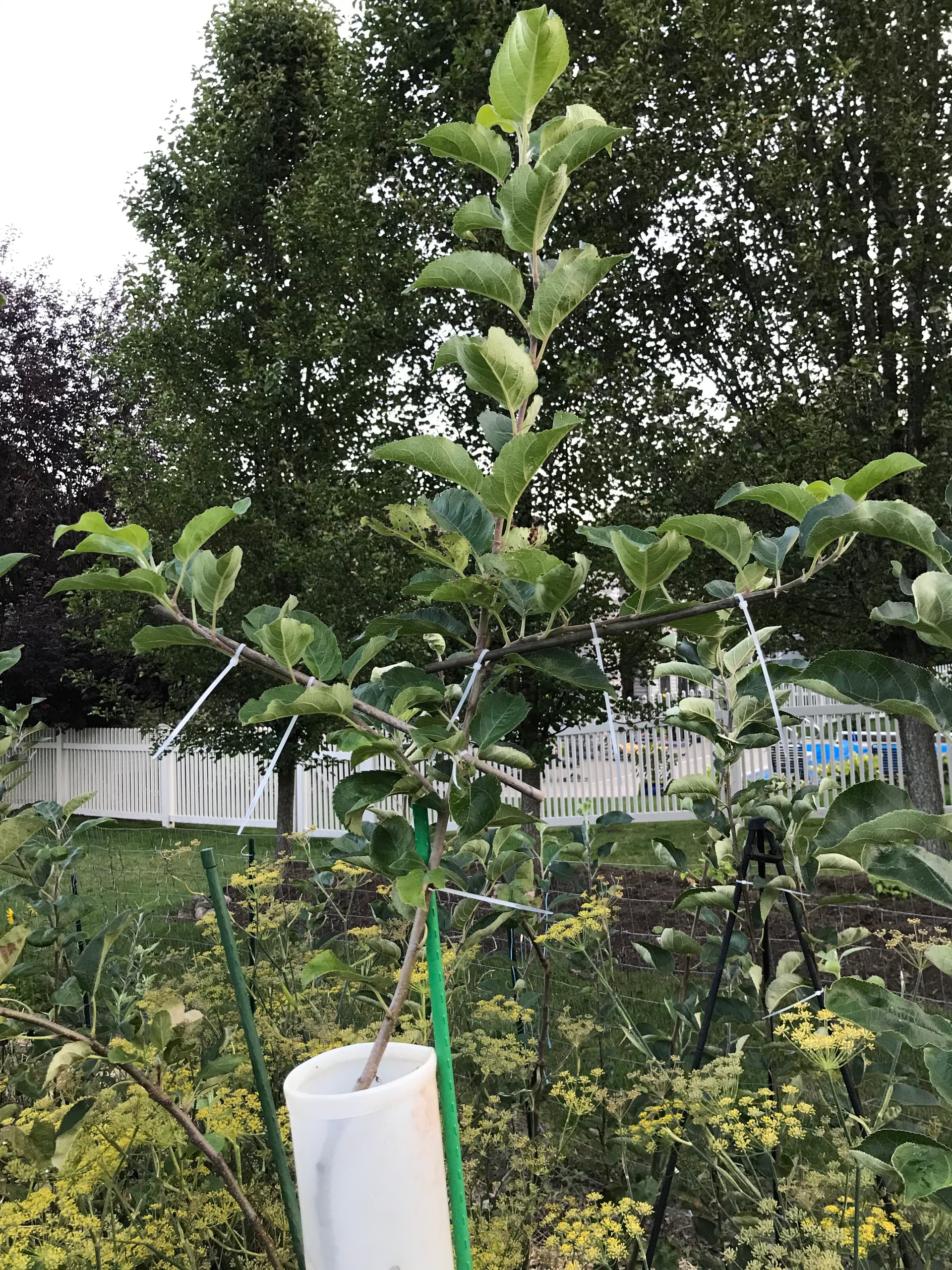
Watch out for girdling with those cable ties.
1 Like
Good point. I plan to remove as soon as they start to fill up the gap. I didn’t pull them tight.
2 Likes
I’ll have to try out the 'hinge". I have an image of one of those wooden toy snakes that are cut along its body to allow them curve and flex. What caliper of branch works for these? How thick is the saw you use?
1 Like
I have used spreaders for branches up to 4" diameter- spreaders I make with a strong sapling with a y at one end and held by electric tape at the other or at both ends. Mostly I do it for much younger and thinner branches- 1.25" or less.
Interestingly, I have seen huge scaffolds gradually lowered by the weight of fruit over the years as a result of the trees being pruned to a weep and heavy crops.
I just use my Silky Gomtaro but any decent pruning saw or even a buck saw could work. A thicker blade might even be helpful, come to think of it, but a finer blade and more cuts would accomplish the same thing. On very thick branches I might use as many as 10 cuts.
It is an acquired skill and every once in a while you will break a branch you are trying to spread- unless you are better than me… or do it a lot less.
3 Likes
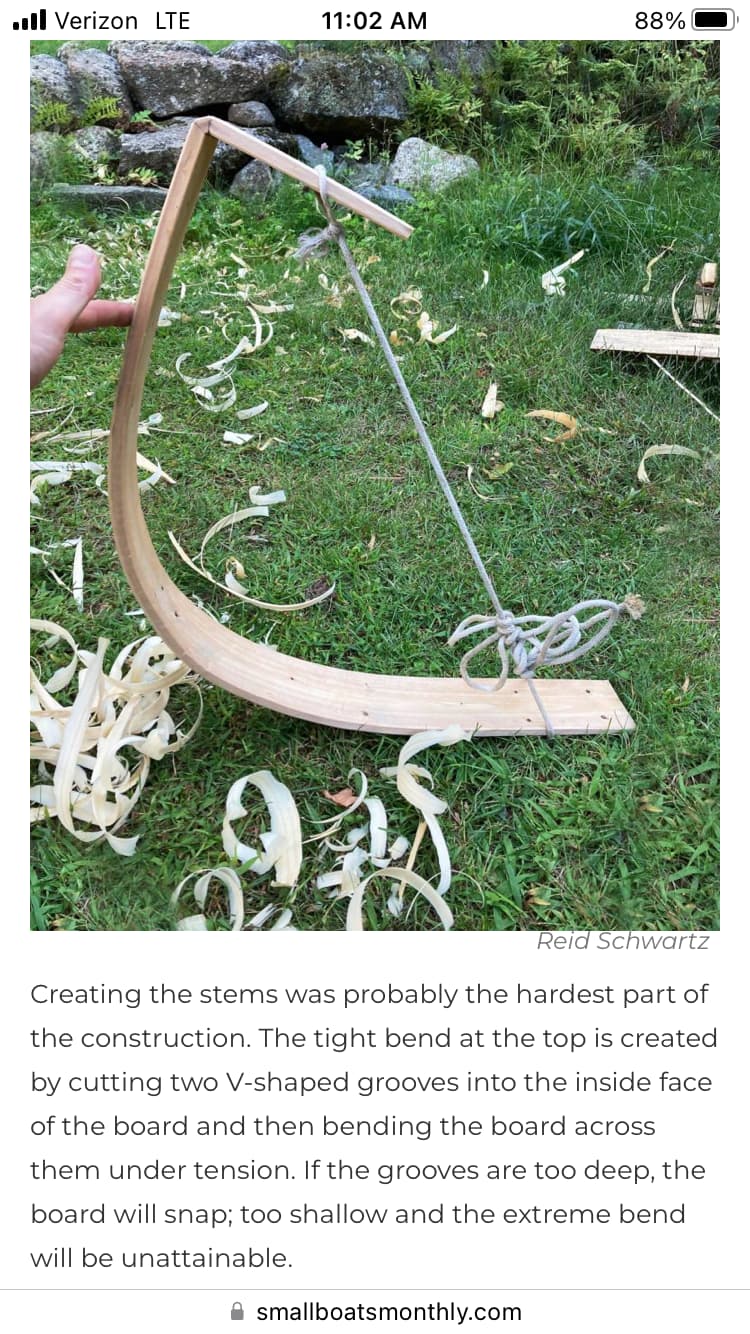
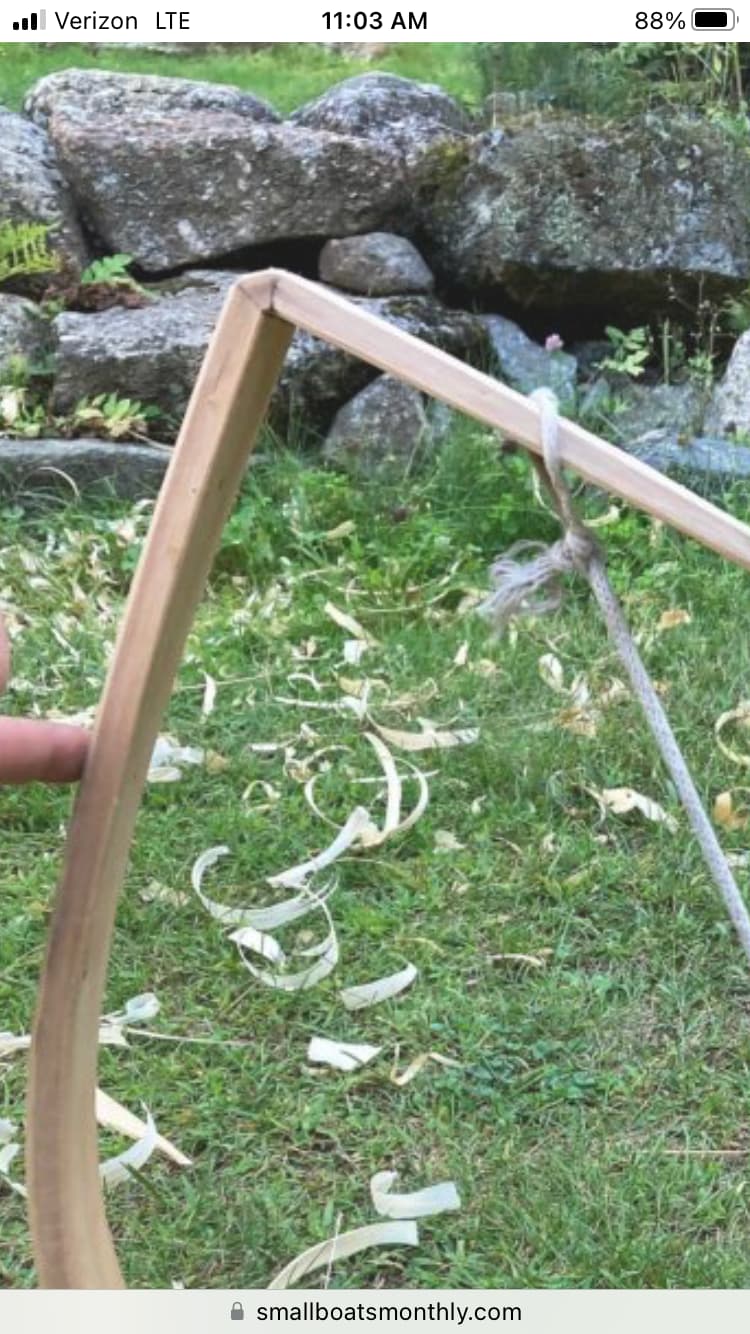
I saw a great article recently about a birch bark canoe maker. he uses a very similar technique to make the frames of his canoes. One difference if Im understanding your technique. @alan , is that you use a series of kerfs. Tgis guy makes 2 cuts in a “v” to define the angle of the intersection that he wants
3 Likes