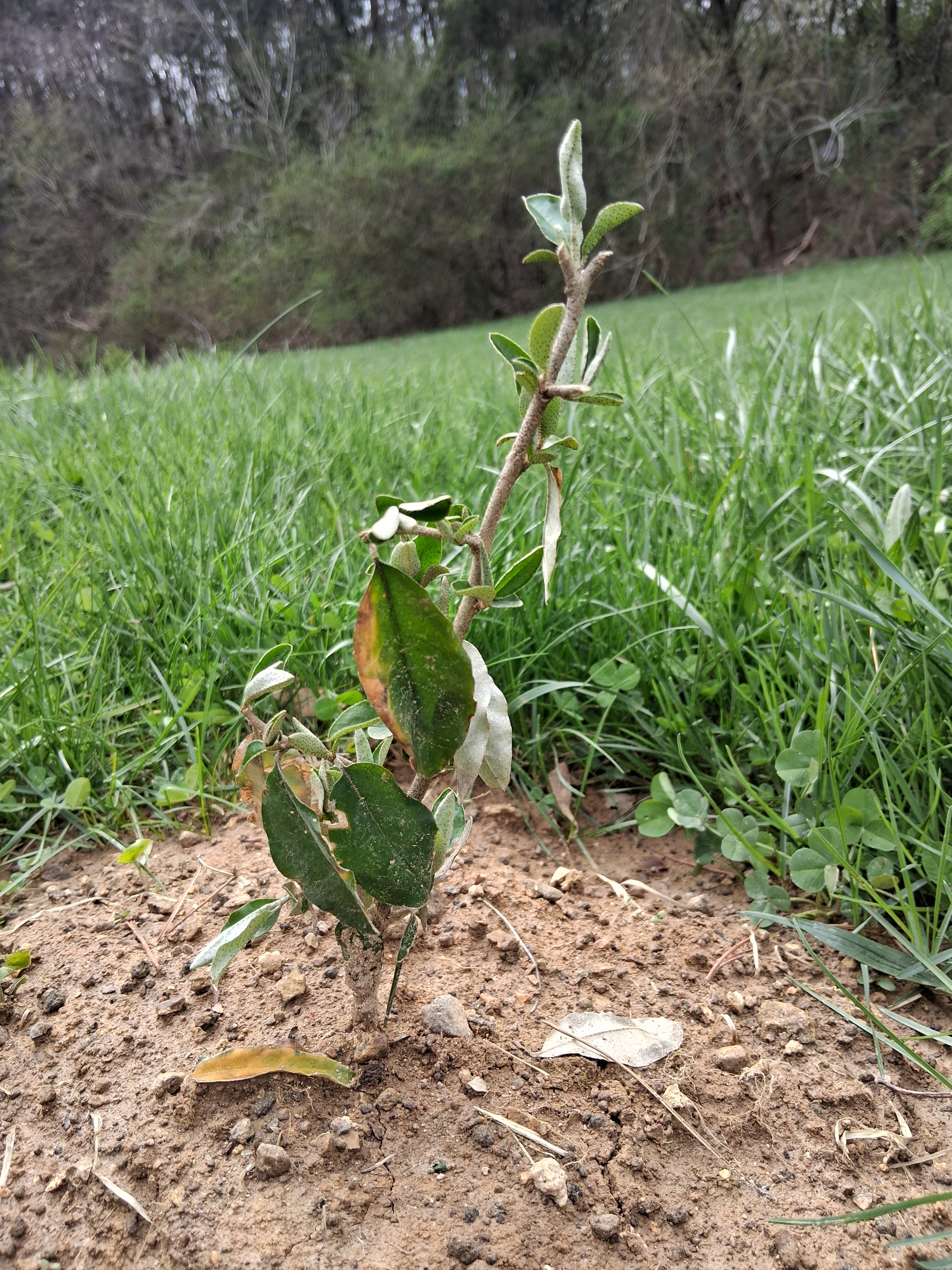
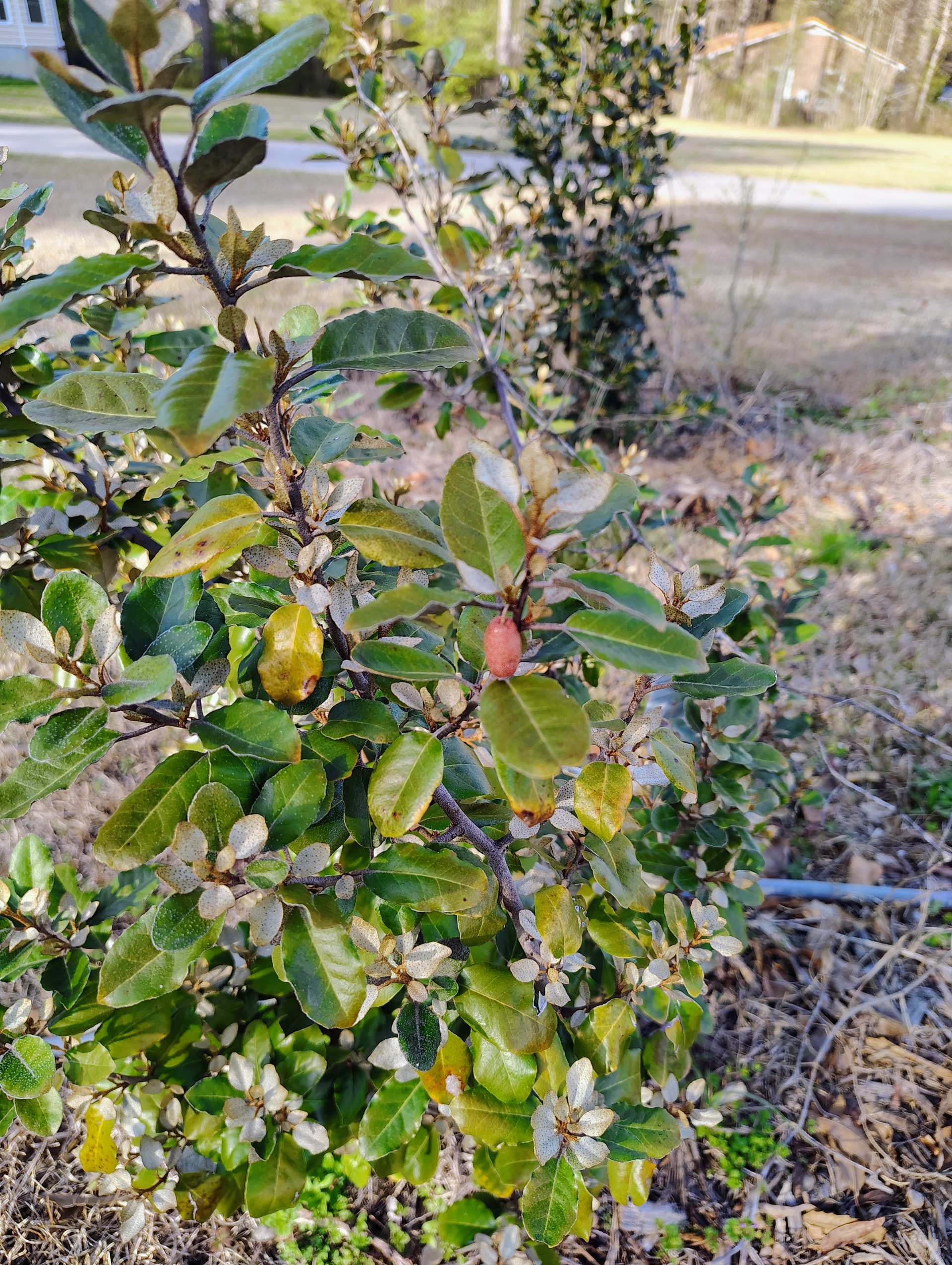
@So_Cal_Mike How did your plants do last year. @ediblelandscaping.sc was looking for Latifolia also.
as always my potted ones grew nicely until squirrels came and ate them to the ground. They seem to find them delicious.
@So_Cal_Mike How did your plants do last year. @ediblelandscaping.sc was looking for Latifolia also.
as always my potted ones grew nicely until squirrels came and ate them to the ground. They seem to find them delicious.
@lordkiwi @ediblelandscaping.sc
See this thread https://growingfruit.org/t/scion-shop-annual-sale/58925/3 and try this link https://reallygoodplants.com/ there are scions of Elaeagnus latifolia of named varieties (chuck and mimosa) which is exactly what you are after. By named i mean they named them Gardening : Elaeagnus latifolia . For those who are not familiar Elaeagnus latifolia - Wikipedia . Think you could use Elaeagnus multiflora or Elaeagnus umbellata for rootstock during your experiment.
Russian olive used to be around here, also, back in the 1960’s/70’s when I tasted some. Rather tasteless, very mealy, small and fairly dry. These were always windbreak trees that were never watered or taken care of.
Picked some ornamental E. pungens today out of curiosity. Some were fairly astringent, others less so. Astringency is very forward on the palate, which is interesting and probably a good thing. Big seed, small fruit. Very pretty though, mild flavor and sweet enough, not tart. Wet scar which would be an issue for anything other than immediate fresh use. Extremely early, most other fruits and berries haven’t even bloomed or leafed out, let alone produced fruit, with the exceptions of chinaberry and Carolina laurel cherry (both poisonous) and glossy privet.
Bringing in the fruit quality of E. latifolia or goumi while keeping the ripening time would be a surely difficult but definitely interesting breeding project.
Cliff England says that the ‘Wang Bo’ goumi cultivar he got from Korea is about that size. I bought some seeds from him, and they’re huge imo. The photo below shows a Wang Bo seed coated in vermiculite, just starting to sprout.
I hope you have luck and would be interested in hearing about how the seedling turns out!
Thank you! I’ll keep y’all posted about how these seeds turn out.
Any updates?
Thanks fort prompting me back to this, @NateConn ! Most of the seeds from 2024 sprouted too soon in my fridge. I read that you can just plant them 2” deep and let them grow roots until spring, so that’s what I did. Sadly, those early-sprouting seeds all got frost-killed. When the weather warmed up, I planted the seeds that didn’t germinate early. All of those (12, I think) grew about 18” in 2025.
All the seedlings behaved similarly during the summer and fall, but 2 never lost their leaves through the whole winter. The leaf stems did become flaccid, almost as though those plants weren’t getting enough water (water was not lacking, though), but the plants hung on to their leaves just as tightly as they did during the summer. Those seedlings still have last year’s leaves, and fresh ones are coming in at each node. Last year’s leaves will probably fall off once this year’s leaves get large enough.
I gathered more seed from Cliff’s orchard last year. So far none of those seeds has germinated during stratification like last year.
One seedling Goumi I planted last year is blooming now, crazy how fast they can be.
More on topic, an Ebbings elaeagnus I planted last year bloomed and set fruit in late fall. The small fruit hung all winter and survived some a week of below freezing days and lows to 10 F or slightly below. Very impressive how a berry can handle that much cold. Should be ripe sometime next week by the look of things. Definitely the earliest spring fruit in this region–ripens when the other “early” fruits like goumi and plum are only just blooming.
I’m really curious to hear how the fruit turns out when you finally get to taste them—I planted one last year. Do you remember roughly when it bloomed in the fall? I’m thinking of trying to save some goumi pollen this year for a possible cross.
I’ve had them before from some plants growing down the road, once ripe they taste like fruit punch. Incredibly astringent until fully ripe, and the birds don’t mind astringency so much so they often get them first.
Ultimately these things get 20-30 feet tall and wide, at which point there will be more than enough for the birds and me haha
I don’t remember the bloom time exactly, I think it’s very late fall into early winter.
Please do. I’m hoping to do the same but I don’t think I’ll get enough pollen this year. Going to try to make some crosses with E. latifolia as well. It’ll be really helpful if someone else is working on these so we can share tips and genetic material.
I tried making a hybrid couple years ago, but the flowers are so tiny that I couldn’t hack it with the tools I had available.
Yeah, that seems like it would be difficult. Self-fertility is an amazing trait to have, but it definitely makes crossing much harder—emasculating flowers that small is a real challenge.
@a_Vivaldi I’m in the same boat with pollen—my goumi was new last year. E. latifolia could make for some really interesting crosses.
Yeah the flowers are a pain to work with. They’re not as bad as some, but I’m most used to passion fruit and blackberries which are way easier to work with.
Fine tweezers and very small, very sharp scissors are a must.
That’s what I’m hoping. Hardiness will be a challenge I think, as will just making the crosses given how nothing in this darn genus blooms at the same time haha
Lot’s of difficult hybrids in the hosta world came about 20+ years ago, mix of spring and fall bloomers. It was an uncommon weather pattern that year, tricked hosta to bloom around same time. And hosta breeders took full advantage of it. 
Would autumn olive be able to hybridize with regular goumi? I think a yellow fruited goumi would neat.