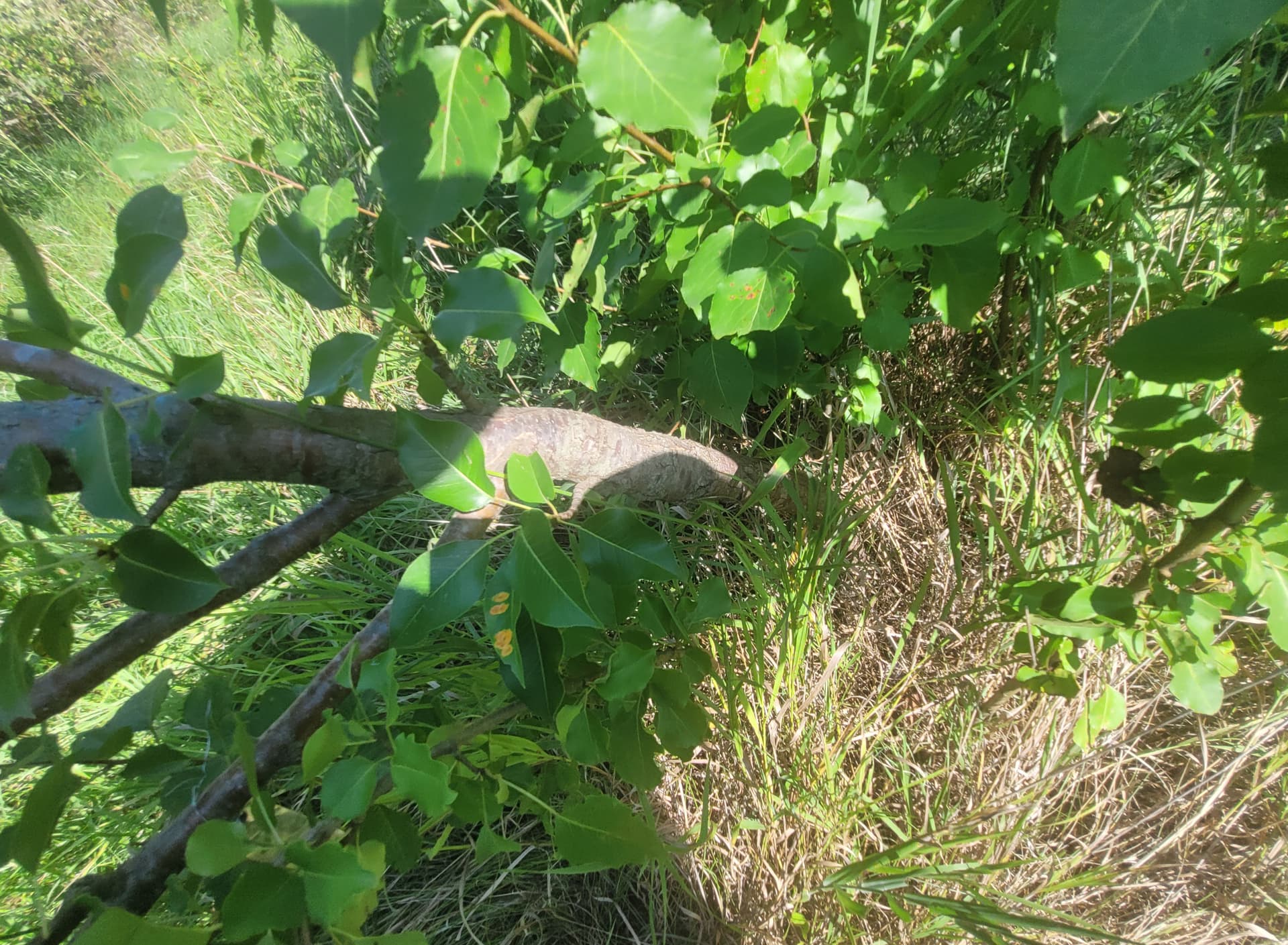
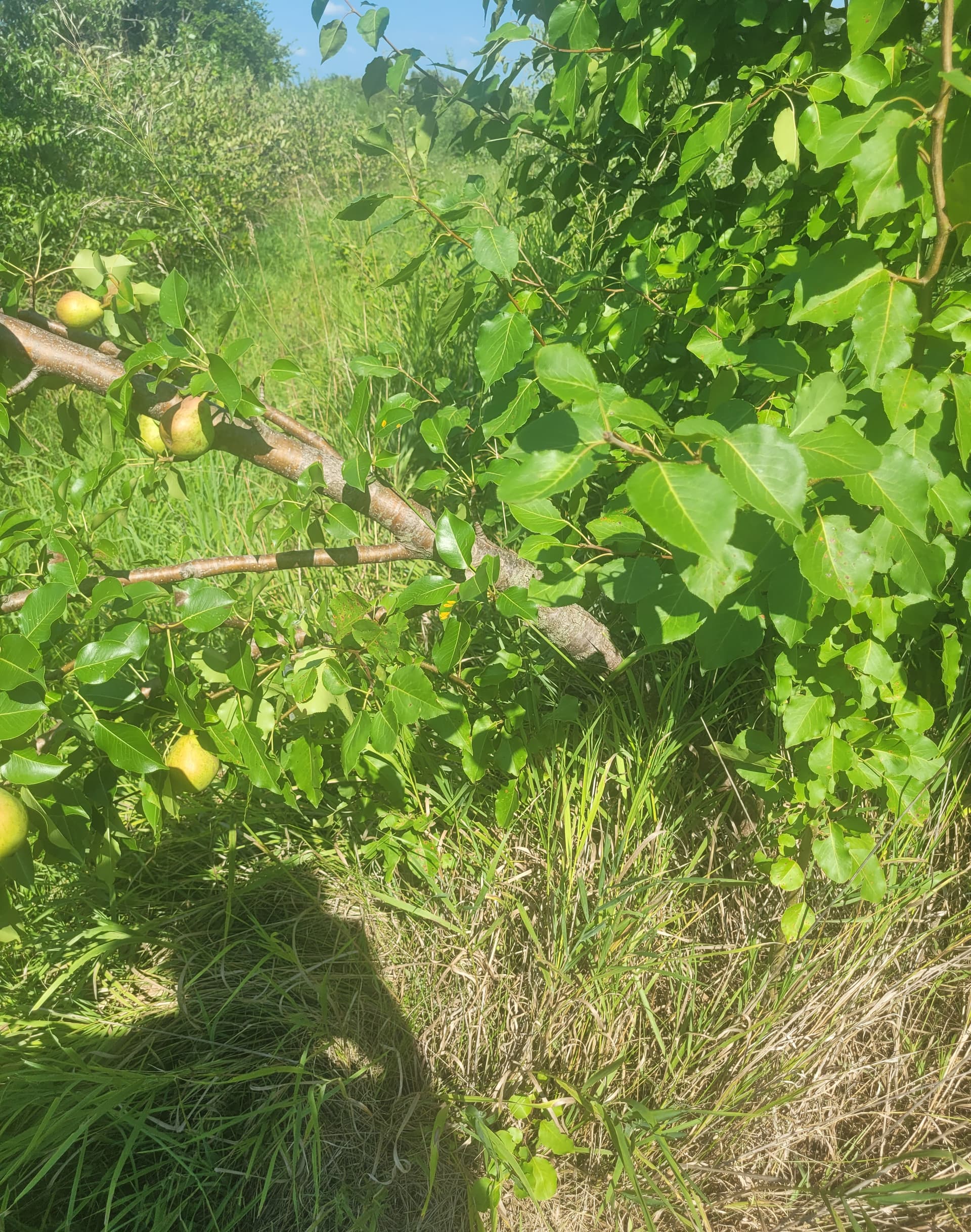
This year, I have 4 pears that I will have to remove due to fireblight. The rootstock doesn’t seem to be affected, so I may try to cut below the graft and graft a resistant variety on to a couple of them (I believe all of these trees are Chojuro).
I dig them up in my back yard. Or I graft them in place and dig them up later. My seedlings were seed spread by birds from a Bradford tree my neighbor had across the road. Birds collected the fruit and left seed all over the place. I could dig up another 40 or 50 that I have spotted this year.
Probably not saying much because its just the initial grafting season growth. But I had two grafts on 333 that were hit by fireblight, Seckel XL and Ayers. Seckel XL was hit so hard it killed the rootstock. Ayers was hit but not very hard. It has since resprouted from the scion but looks weak. I probably wont plant ayers out, but i probably will prune off the scion and regraft the root stock next spring. That is if the root stock survives winter.
On a positive note, all other scions you sent me are growing well on 333. I purposely haven’t sprayed them with anything but insecticide. Only because I want to try and get a idea what pear varieties will do well here in fire blight country.
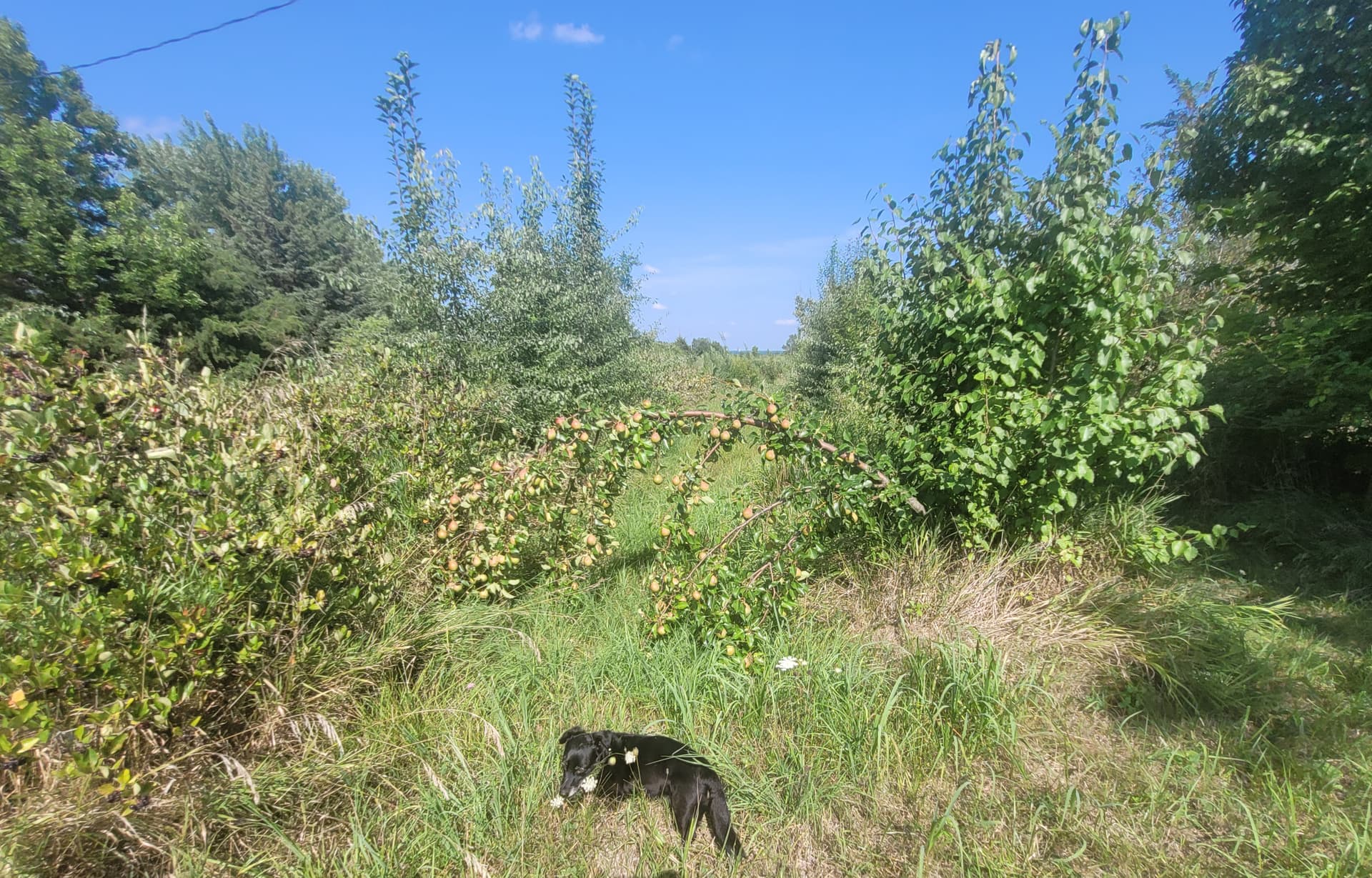
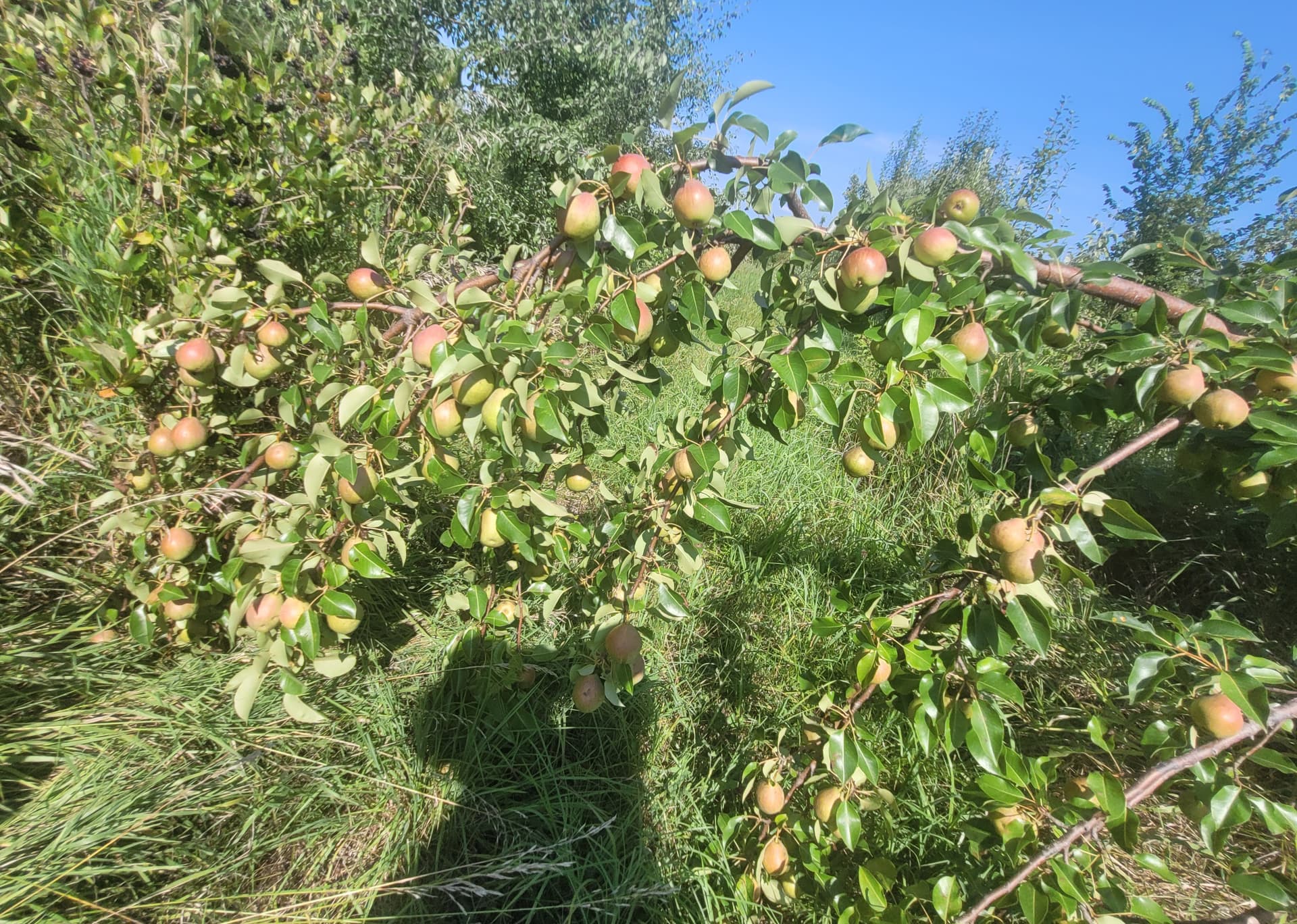
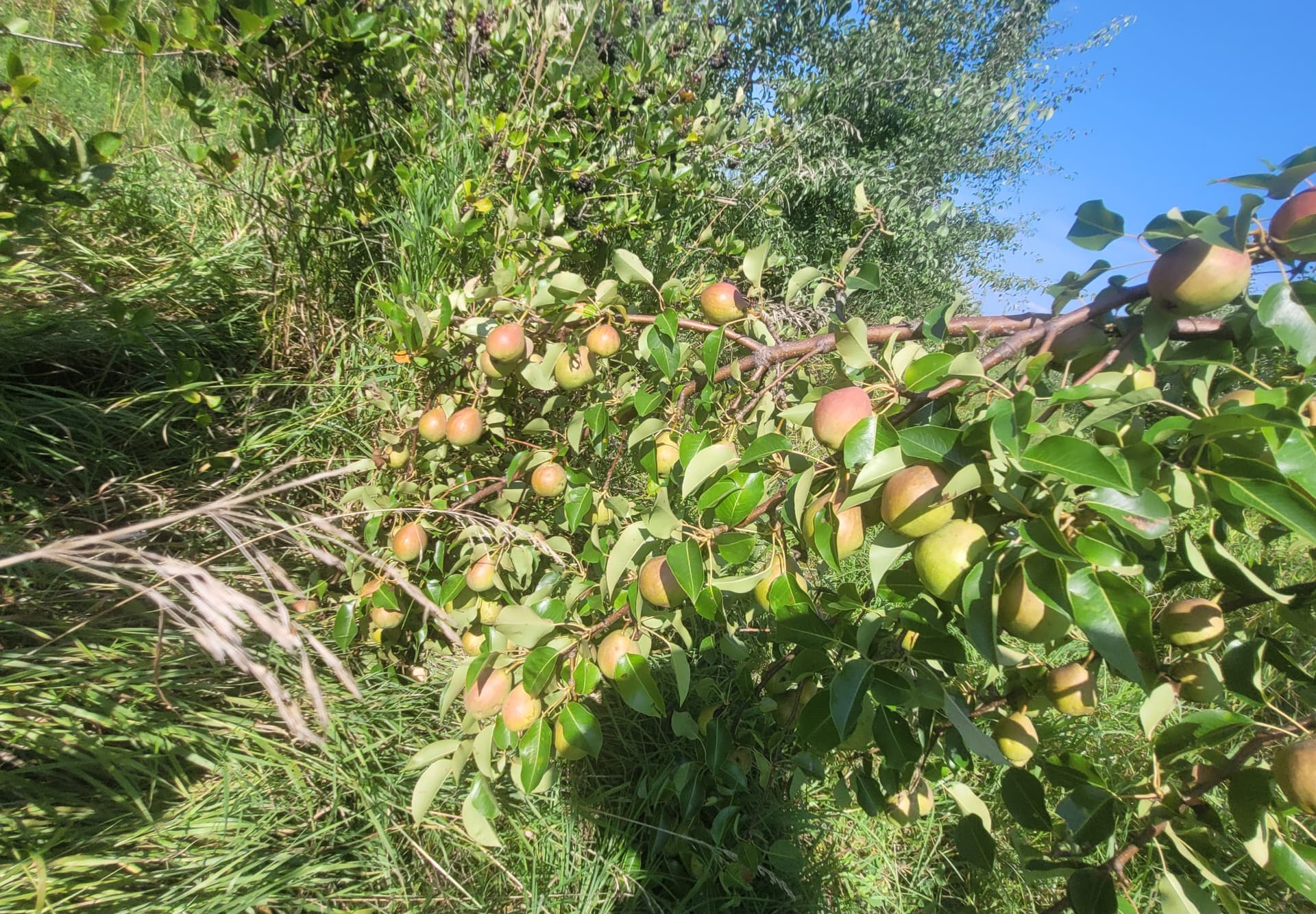
The callery rootstocks i use are very tolerant or resistant to fireblight. This rootstock in the picture is very hardy. I have some like this one that are so genetically different they are very hard to graft. Fireblight will not kill those rootstocks. They force very heavy fruiting. This is the rootstock in action interstemmed with Clarks small yellow pear. This is a 12 foot tree with 3x the normal fruit load in half the time.
I’m going to lay off pears and stick to the apples. I packed away a great deal of pear scions. But I think they are higher chill pears I might try bud grafting pear rootstock that survived. But there were not a lot of those either. Maybe a dozen lived.
Is there a particular reason not to do pear on quince? I ended up using Provence for my pear and medlar grafts this year, mainly because I wanted to order a single bundle of rootstock to use for pear, medlar, and quince (which I didn’t end up grafting anyway cause I thought they’d work as cuttings) I didn’t want to order too much cause I’d never had a successful graft before this year.
It’s not FB resistant and I’m generally of the philosophy to use semi-dwarf trees because the root systems make them so much more resilient and can be relatively easily managed at a ladderless height
Well, guess I may pay for that one down the road. At least it was only 10 rootstocks. I did graft most of the varieties to a callery volunteer also, so I should have a scion bank to pull from if I lose all. Most of the grafts on the callery have underperformed though. I’m hoping it’s just because I didn’t remove all of the natural branches yet. I’m planning to fully remove the rest of the callery some time this week and hope it throws energy to the grafts. Some are only a few leaves still…but I feel like it’s had enough time. I grafted in late march or April.
I could definitely use a FB resistant pear RS. OFxH series is said to be FB resistent but FB was really bad here this season. We had two flood events and super wet with lots of high winds during planting season. My neighbor had to replant two corn fields because the seed rotted in the ground. I lost one plum and two cherry trees, they basicly drown. The plum tree was on high ground and so were the two cherries. It was sad to see them leafed out then die from to much rain. Oh well… replant and carry on I suspose, not much I could do about it.
The good years are very deceptive but its the oven like heatwaves and floods or windstorms that are the normal every 5 year events we have to factor in. Late freezes or early winters tell us much about what we are growing.
Reading the USDA ARS history of breeding with Calleyana; the buyers of the original seedlot back in 1919 knew Calleryana was not fireblight resistant as they hoped.