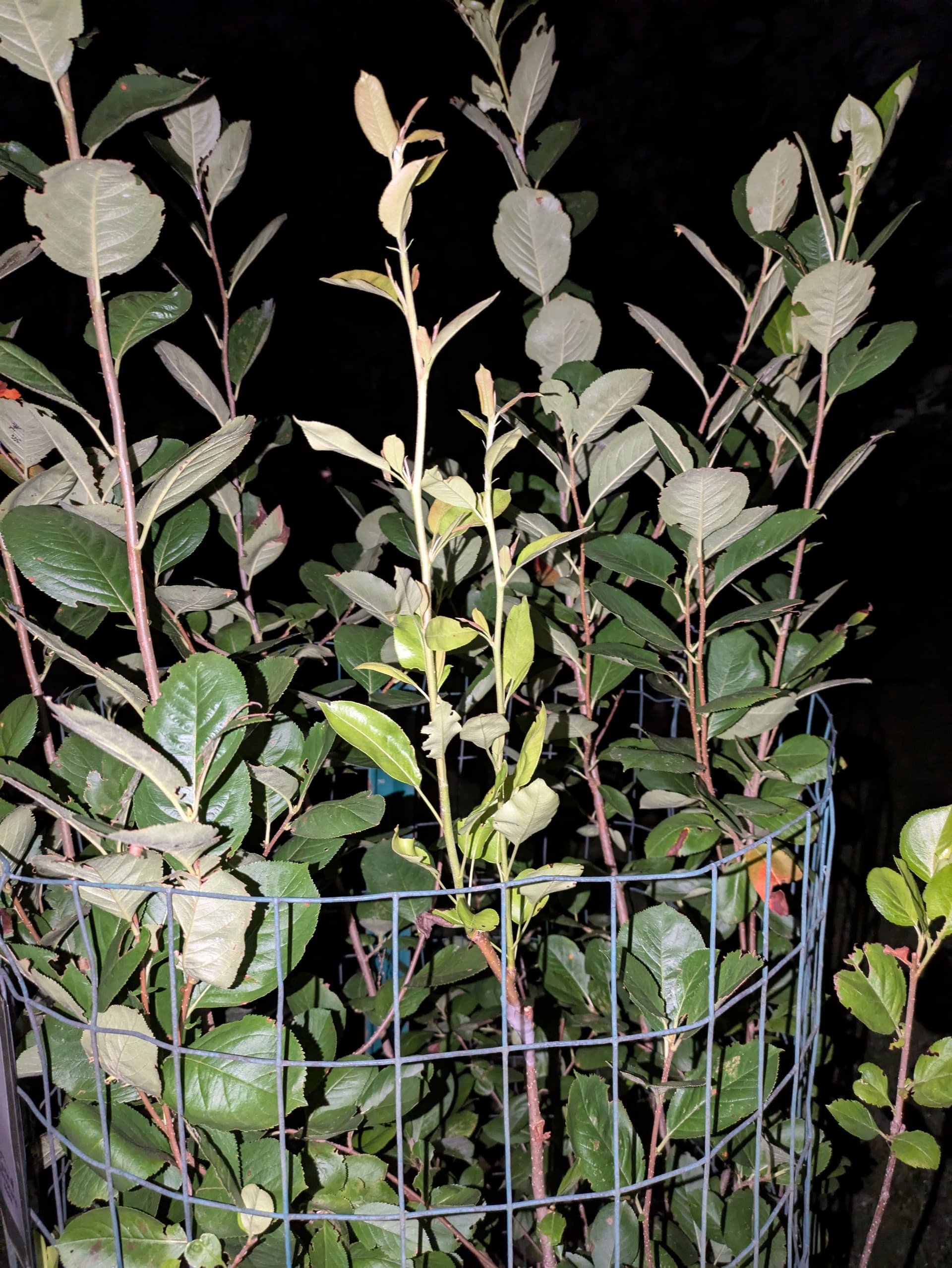
Maybe I’m thinking of a different species, but the pear on hawthorn I’ve seen all had dramatic size differences at the graft union? Like the pear was six inches in diameter and the hawthorn was maybe four.
Aronia and cotoneaster are both dwarfing and pear compatible. We have a thread or two about both, with mixed results. My guerilla grafted pear on cotoneaster was either removed by people or deer. Probably the latter. The one on Aronia is still doing OK.
I believe a nurse branch left on the graft will prevent this from being so dramatic. But either way it’s a short lived tree (compared to a own roots pear especially)
I wonder what rootstock they use when producing trees in mass for the box stores, like Lowes.
I ran a search through AI and it told me that in Texas they most likely use Calleryana, which would be good news for me
back to the question about hawthorn for european/asian pears and medlars, is there a specific species that does best here(z5ab iowa)? perhaps Washington Hawthorn(crataegus phaenopyrum)?
im marking a bunch of wild mountain ash seedlings for grafting to pear next spring. i have about 20 in the yard that are just the right size. i researched it and found out itsactually rated as good rootstock for pear with a average life of 30-40 years. i always thought they were a short lived tree but i guess that isnt the case. its also a very forgiving rootstock and tolerates wet soil well. no disease issues either. suprised more people dont use them over others. mine started fruiting last year, 2 years after grafting. the tree grew from seed to 6ft in 3 years. its about 8ft. with nothing but pear wood on it now. my ivans bell hybrid mtn. ash is on european mtn. ash rootstock and its even more vigorous with 4 pear varieties on it as well.
When I read this, I think of a dark haired guy with bushy eyebrows looking furtively each way, then doing something illegal like spitting on the sidewalk.
@clarkinks How are you controlling the height on your pears? I’ve got some that are approaching 40 foot and that’s after chopping them back to 20 foot for years. Each year that goes by it gets harder to get up there with the chainsaw and there are 50 to saw on. Any tips?
Something more for the threads intent is the misconception that quince dwarfs pears. After fighting the bulk of my pears height I tried a few on quince. They are now going on near 30 foot. Nothing dwarf about them if you were thinking in terms of a small tree.
Now the mystery. While the other pears are monsters, Seckel just seems to stay in the golden zone of size.
@Robert I’m a bit jealous!!! I do have a few really big pear trees, but I think they’re on seedling or some 1970s or 1980s rootstock that’s big. Also, they’re old.
Most of my pear trees on “newer” rootstocks are RUNTY (around 15-25ft). I think they just don’t like my soil. I imagine @clarkinks has a similar issue since I know my soil is similar to his.
Mine were also planted too close together and had lots of weeds. Some have started growing better since I thinned them out and weeded.
In summary:
Get some cruddy clay soil that somehow drains too well while also being clay.
Make sure the soil is alkaline with limestone base so you can’t lower the pH.
Plant your pear trees close together and add some weeds around the base for good competition.
Be sure they get pear leaf blister mite a few times so they lose all their leaves in July.
I use callery pears which are naturally dwarfs unlike bradford callery. I also have heavy clay soil which is also dwarfing. Around 30 feet is about as big as they get. My best secret is my trees fruit heavy which reduces growth.
Many of mine are on callery in clay/rock soil and fruit well. That secret isn’t working here. I have a lot of natural springs on the property. I think they are dipping into that making them monsters. I guess the yearly chainsaw ritual is my fate.
On the upside though. My house water comes from a shallow well fed by the spring water.
Has anyone tried espalier or step over with pear trees? Also I thought Quince Eline is the only genuine dwarf pear tree. Which still has no USA dealer.
I had one for a while. I didn’t much like it for the amount of work it took to maintain it. It would constantly put out six foot shoots if you were not standing next to it with clippers. Plus it had limited fruit output. It was real popular with the deer and eventually died. Not looking for any more of them. A better version would be the ones they call fans. They basically look like peacock feathers on the side of a building, lattice, or something. At least that would put our more fruit with less risk from animals.
i have 6 varieties grafted on mountain ash rootstock. mtn. ash rarely get to 30ft. here. so im assuming if you grafted onto them they would be significantly smaller than on pear rootstock. also since grafted over the tree puts out very little growth yearly. maybe a ft. or less. was covered with blooms last spring but maybe a frost zapped them as i got no fruit.. the year before out of 12 blooms i got 6 fruit. its also growing in the wettest part of the yard in acidic soil. pear rootstock probably would have died if planted there. i grafted it over at 6ft. 4 yrs ago and got fruit 2 years later on a 6ft. tree thats now 8ft. it hasnt bloomed yet but theres a ton of fruit buds on it again. longevity of mtn. ash is about 50 yrs. before they decline but i figured ill be pushing daisies long before that tree dies anyway. its also a very sturdy growing tree.
That’s a good idea for others, but mine are already here and I’m stuck with them. I am curious if the top pear part is out growing the ash rootstock? I’ve seen other combos like that where the top part would be twice as thick as the rootstock.
its a little bigger but not much. maybe about a 1/8in. bigger. ive read some russian publications on this before doing it and its supposed to be stable long term. euro mtn. ash supposed to be even more compatable but i havent found a cheap source for them state side. whitebeam supposed to be good for a dwarf rootstock also. same problem sourcing them. i had a seedling coming up from a old spruce stump with some soil on it so i decided to graft it over. free rootstock. we work with what we have.