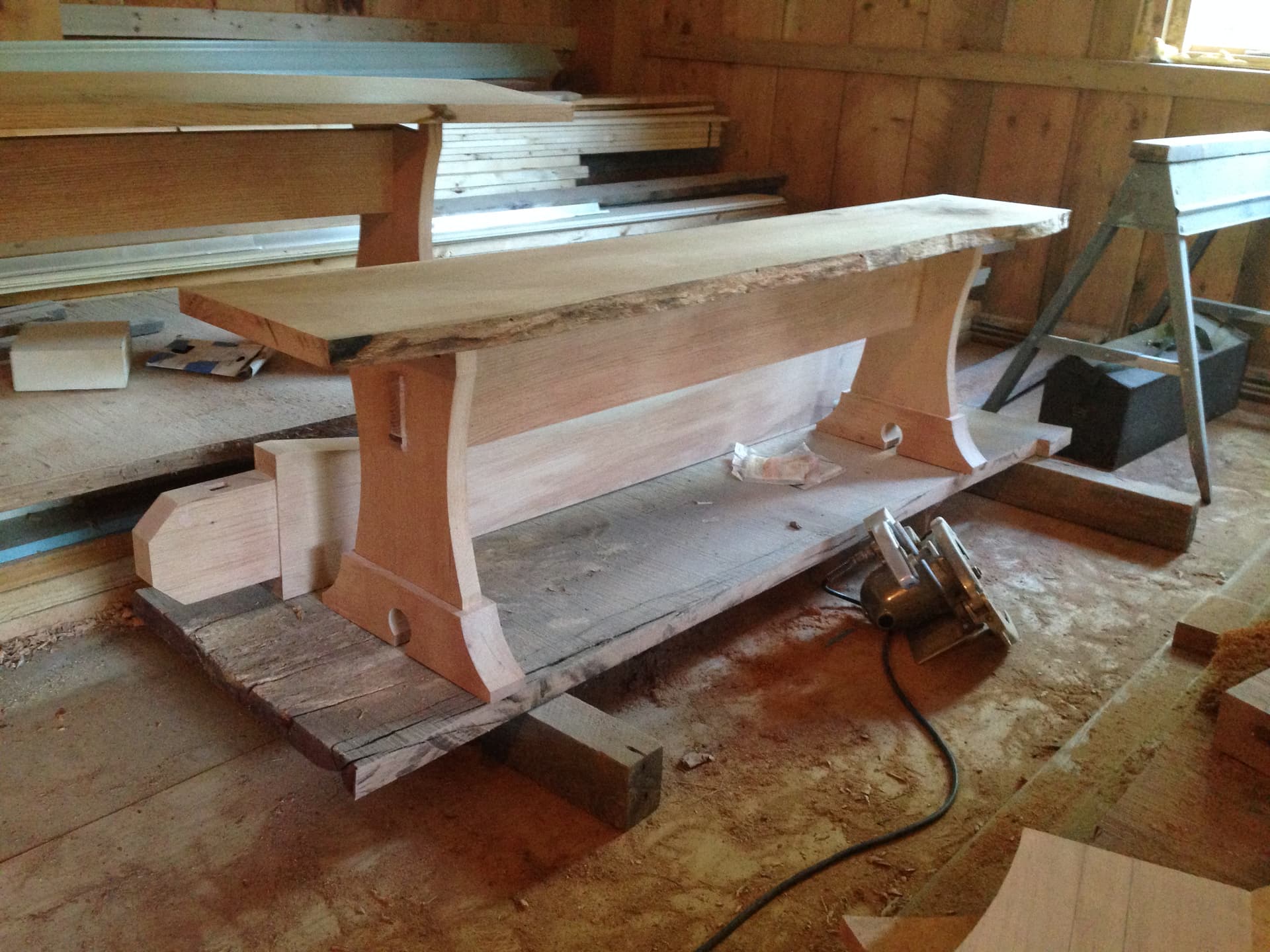
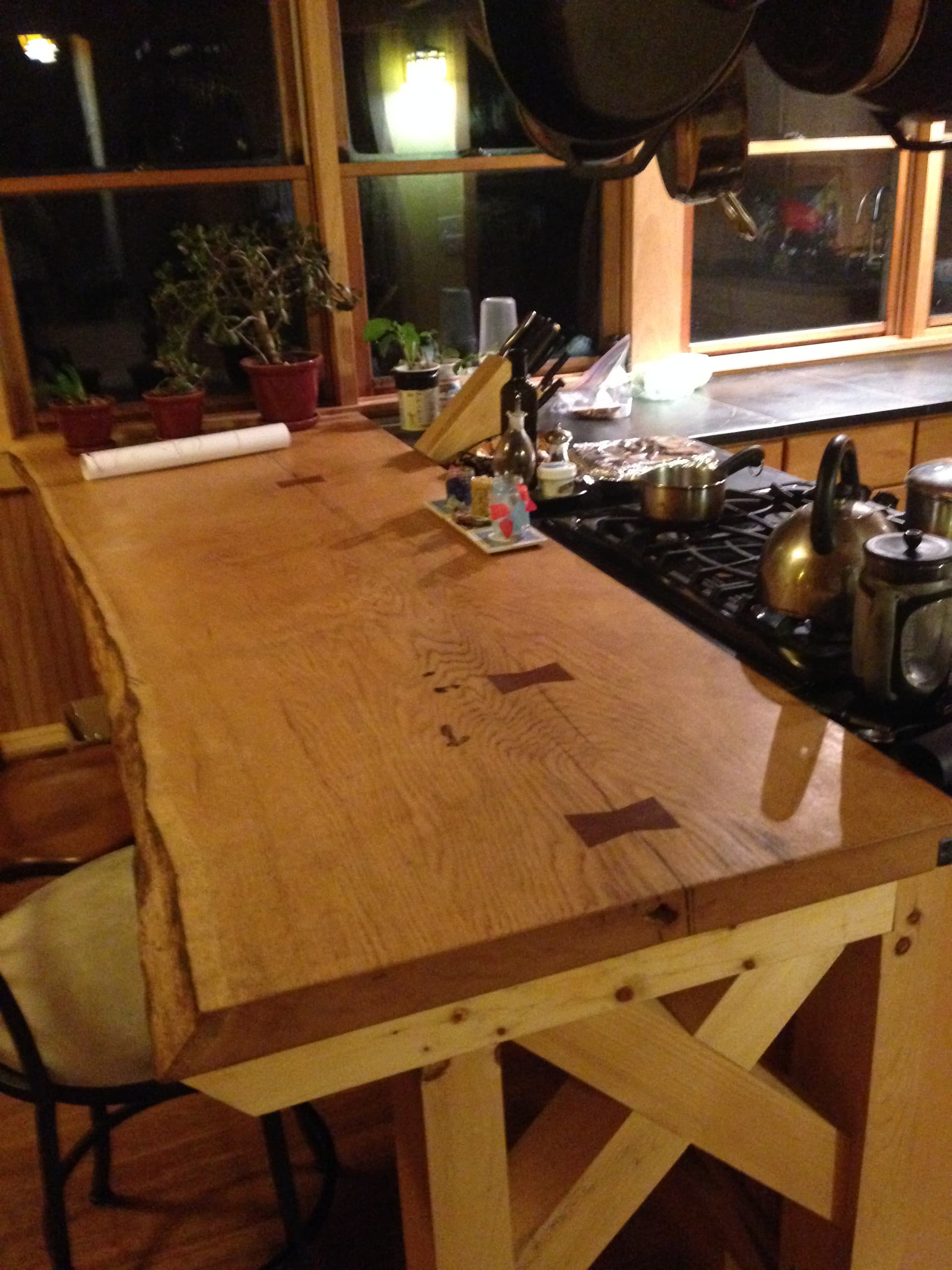
sounds like alaskan mill material. years back i slabbed up a ~3 ft. dbh red oak with a friend’s twin powerhead 6 ft alaskan mill. It was a lot of work, but the slabs it produced are/were beyond beautiful. Theyre almost totally clear with much of their width either quartersawn or rift sawn, revealing the amazing Quercus ray fleck. Even the plainsawn portions have so much figure that theyre full of character.
The section we slabbed up was a little over 12 ft long. We found it was best to sharpen the chain lightly after each pass, otherwise the cutting time would go way up. Our quickest pass was around 8 minutes, slowest was over 20 min!. Around 9 board ft of wood was getting made into chips with each cut after all.
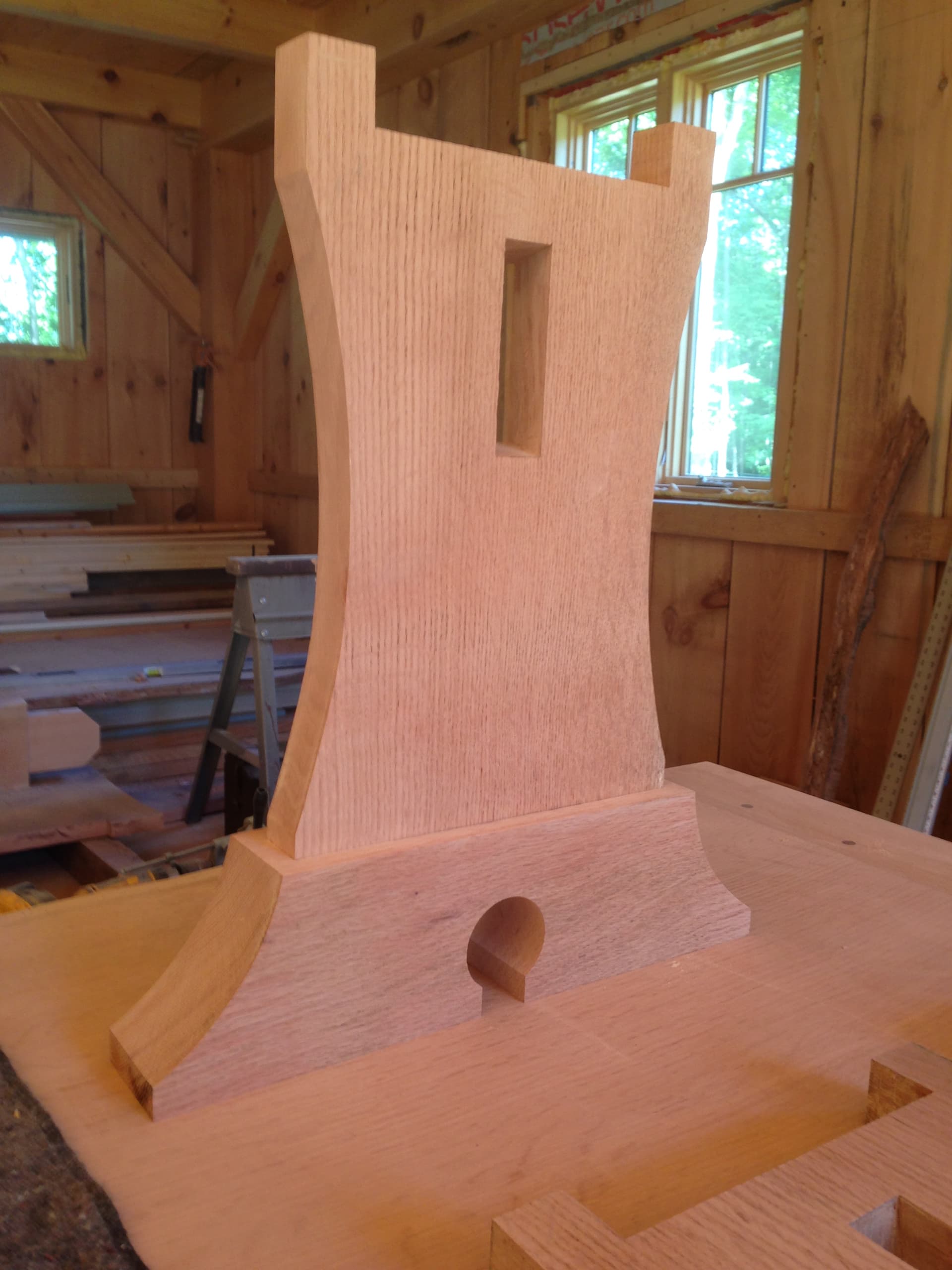
I made a bunch of it into a trestle table and benches for a commission.
Thanks for the replies. Based on what I saw this evening, it’s not looking like we’ve got much WO to be worth messing with. There’s still quite a bit of the property to inspect, but I’m not too optimistic.
Looks like our cuz hit the WO mother lode on their little 5 acre plot they bought a few years ago.
I agree with Andy, @subdood_ky_z6b
When I lived in MO, we had the MDC (Missouri Department of Conservation) Forrester come out and look at our timber stand.
We had about 5 timber acres surrounded by grass pasture. He walked the entire area, did an evaluation, marked trees for removal, wrote up a clear and concise management plan, and gave us a list of reputable loggers in our area for us to choose from to do some timber removal.
Every state should have a Forrester(s) on staff as part of your conservation department. Usually they have a multi-county area they cover. My experience with them is that they are very well trained, conscientious, and unbiased. They help you improve the health and quality of your stand, and help you plan for the future to know how to manage it going forward. Timber stand quality tends to decline without proper management, and you could be missing out on present or future profits if you don’t evaluate it now to see what you’ve really got (or could have with good management!).
I am sure that the current owners of that property have been benefitting from our management of the timber. Taking out less desirable species to make more room and light for the desirable ones helps you grow better (taller, straighter, healthier) trees.
A neighbor had their 100 A. Farm logged years ago.
They hired a logger with a bad reputation, of making a mess of farms .
The logger said he would give the check from sale of each load of logs directly to the farmer, and split the money ,giving the logger cash for his half. Seemed fair at the time.
After a year of logging, and many thousands dollars,
Tax time came around.
The land owner had to pay taxes on “ all “ the timber sold.
Of which he only got half the $.
Logger half was cash. Likely unreported as income
Some shady loggers out there !
The nice think about trees is that they grow.
I’ll echo what some of the other people have said and say get someone who’s not paid by a logging company and preferably working with a state or county conservation or forest service. They might be able to tap in to resources to help the trees you do grow in a way that benefits you (scout for pest and disease issues, the right way to train some of the smaller trees to make good timber trees et cetera)
I had two white oaks at our lakehouse property, 20 miles away, that were declining and almost dead last year. Had my friend/neighbor who is a logger with his own sawmill look at them, but they were so close to our house and the neighbor’s that he declined to make any attempt to cut them. Got a local tree service guy to take them down… he charged $400 and hauled away three 16+ ft saw logs; I cut up the tops for firewood. Maybe he made out like a bandit… IDK, but I didn’t have to worry about those falling on my house, and I have friends in town who paid thousands of dollars to have some large silver maples removed from their urban lots… so I feel like I came out OK.
There had been a major ice storm here in 1994, just before we moved here… lots of damage to some 35 yr old stands of planted pines that the consulting forester said had ‘stalled out’. We had them clearcut - all pines and whatever hardwoods (mostly tulip poplar and sugar maple) that had come up in those three 5-10 acre pine plantations (mostly pitch & Virginia pines). I know that timber harvest is not a pristine activity, but those b@st@rds tore up so much ground and never came back to repair my farm roads, etc., like they said they would.…I’d want to shoot the lying b@st@rds if I saw 'em again.
My hardwood forest (80+ acres) is about 35 years out from the last timber harvest, which was probably a ‘high-grade’ cut, but IDK if I’ll let anyone back in here… it may fall to the next owner to harvest any timber. There are some really nice red & white oak and black walnut, but I’m in no hurry to be stolen blind, and few trees here are so old that they’re headed for decline.
Sorry you had to go thru that ordeal. I was over at the cuz’s yesterday and it’s quite a mess, but those were some big trees, and it’s not going to be pretty. But I think they wanted it cleared out just so they could get some sun in there, it’s really woody. Whether they knew they had what looks like a virgin stand of WO, I don’t know. The logger said that it looked like it hadn’t ever been harvested. I’m sure he got very excited when he saw all those WO… I know they’ll have more than enough firewood when this is all done.
My wife and I went up the hill behind our house yesterday, and it was disappointing to not see hardly any white oak, mostly some massive tulip poplars which grow like weeds here. There is actually an old logging road that cuts across that hillside all the way to our in-laws about quarter mile away. I’m guessing the prize timber was taken decades ago from that hillside. My wife said that her mom had it selectively logged many years ago. So, I doubt we’re going to find much in that location, but there are other areas we haven’t looked at, we have about 50 acres.
There’s a couple species of white oak in East Kentucky…are you counting both? They resemble but are definitely not the same. They do seem to prefer a bit higher pH…so hills that have sourwood and sassafras galore my not have a lot of white oak. It’s common for white oak to be located on a southern facing slope…and tulip popular on either. Beech is more common on the north slopes. Typically neither inhabit the very top of a hill/mountain…even those only 400 or so feet taller than the valleys.
Are you talking about swamp white oak and regular white oak?
Regarding pH, I’ve had soil samples done for various locations on the farm. Up here where our newer house is, the soil is substantially more acidic than just a couple hundred feet down the hill. Maybe that would explain why there’s not many WO, but lots more poplar.
That also may explain why the apple trees I’ve planted have done much better down below the barn as opposed to up here behind the pond, which is next to this house.
That stand of WO over at our cuz’s place faces mostly east, and is just above the valley floor. We have similar terrain just below where our pasture is where it slopes down to the flats. I’ve seen three or four WO below the orchard where that area starts to the north but haven’t had a chance to inspect the hillside further to the south.
I would be interest in a couple bushels of white oak acorns. Are there any local boy scout troops that might be interested in gathering them up for cash this fall?
Sounds like you are verifying. And, yes, your fruit might very well do better if you added calcium, and probably magnesium around/under your fruit trees drip line.
And, yes, the swamp whiteoak thrives in more wet places,though I’ve seen it quite a lot in the Bluegrass…so it doesn’t require “swampy” soils, but tolerates them.
I watched some vids on the swamp and regular white oaks, and their leaves are quite a bit different. The ones around here are definitely not swamp WO.
There are some red or black oaks on the hillside above our house, but not enough to pursue or tear up the property to get to. We have lots of black walnuts, but they’re not big trees, trunk wise. Those things grow like weeds around here, too bad I can’t stand the taste of the nuts.
@ansayre, we had a big crop of acorns a few years ago (don’t know if they we white or red oak), haven’t seen many the last few years tho. I harvested some of that big crop then to see if I could make them edible, namely boiling them and rinsing them several times to get the tannins out, well, it didn’t seem to make them taste much better.
They’re definitely a love 'em or hate 'em nut for many. They’re to me oh so good, and I’m a very picky eater. In chocolate or peanut butter candy or in a plum cake, etc… Mmm, good stuff…
Luckily we have a half dozen or so mature BWs which most years produce. Not so many the last few years but 5 or so years ago we harvested numerous 5-gallon buckets worth (in hull).
Yeah my wife loves them, but I just can’t deal with the bitterness. Plus, they’re a pain to shell. I’ll eat just about any kind of nuts, even English walnuts, but BW, no thanks.
We have a couple multi trunk BW’s next to our old house, they actually had sprouted from some sizeable stumps that were from much larger trees cut down many years ago. I bet they’re well over 20ft high now. I recently had to climb up in the house roof to cut away some limbs that had started to drag back and forth across the shingles.
@subdood_ky_z6b
Boiling ‘sets’ the tannins.
Acorns of white oak species are best processed fresh…hulled, chopped/ground and leached - soon after they drop. Red/black oak acorns store well, and can be hulled, pounded/ground to meal, them leached. Cold water leaching for acorns of both subgroups.
White oaks in the Eastern US are a varied group - at least a dozen major species, several lesser or relict species, and hybrids are not uncommon.
Eastern White Oak , Q.alba, is preferred for whiskey barrel staves, but IDK if other ‘white oak’ species work as well.
The white oak species have structures called tyloses which allow cooperage(barrels) to hold liquids. Red/black oaks lack tyloses (except for Blackjack oak), and as such red oak barrels were only for dry goods, like nails, shot, etc.
I’ve never lived anywhere (AL, TN, MO, KY) where SWO was a significant component of the local timber stand. Virtually all SWOs I’ve ever seen were purposely planted as landscape specimens or wildlife mast sources.
Native white oaks on this farm, exclusive of my cultivated collection, are pretty much limited to Eastern White Oak, Chinkapin oak, and a rare Post oak here or there.
I have 130 acres of land that was last cut for timber about 30 years ago. There are quite a few large white oaks ranging up to 3 feet diameter. At some point, I’ll sell the timber but will definitely have a forester mark the trees to harvest first.
Today they hauled out 2 log truck loads of WO from our cuz’s place, with another loaded on site ready to go in the morning. Each load was about 20-24 logs of 8-12ft sections of the cut up trees. They have maybe two more loads to load up and haul out from what I understand.
Can’t remember the exact amount of board feet per truck load, or the exact price per load, but I also don’t want to reveal too much info either.
I will say that I’m impressed by how much weight those trucks can haul. The one there had about 24-28 logs, each one about 10-12ft long, most maybe 15-20in in diameter. Logger was saying one typical WO log could weigh about 2,000lb? So, each truck load is hauling about 40-60K pounds?? Truck had 16 tires on the trailer, which is about 16ft long, rack is about 10ft high.