Totally understand… but just saying in case there is anyone like me i would just put a timer on the spigot… they have mechanical and digital and all kinds of options.
I have a three-zone timer already. I don’t want to have to run three hoses all the way down, though. I can’t put it all on a single zone due to lack of well yield. I suppose I could put TWO timers, one at the top that overlaps the ones on the three-zone so it shuts off both areas but that seems like overkill. haha.
It can do very gentle curves, but is nowhere near as flexible as garden hose.
I would think if it’s at least 4" or more deep driving a lawn tractor over wouldn’t be a issue.
I don’t really think any smaller diameter plastic water pipe will fare too well if the soil is very rocky.
It certainly can, at least up to 60 - 70 lbs of normal household pressure I would expect. Different size poly will have different pressure ratings. Up to 60 lbs pressure shouldn’t be a problem at all I would expect.
There are sections of the property where black poly was used as conduit and it was fine.
Yeah, this quickly turns into $1000 backbreaking project and I’m really trying to avoid that. Maybe I’ll just turn the damn hose on at the house and leave a hose laying in the grass all summer like I’ve been doing. I can just turn on the spigot on on my “watering days” and still use the programmable timer for those days.
In my admittedly less than exhaustive experience PEX tubing is so durable when driven over by automobiles on the roadway that I would have zero concern for the wheels of a riding lawnmower running over it on grass or earth. A spinning blade of the mower could cause damage, and I haven’t researched what the UV stability of PEX is, but it might be best to just run it across the top of the ground.
Here at the farm I run anywhere from 300 to 500 foot of garden hose. To water the cattle it’s 150 foot alone, I water them daily. Our garden is 300, the furtherest furit tree is 400 foot, the last grapevine is 500 foot. I have a trencher and could run a trunk line and install hydrants. But i’m waiting in line for the well digger, he is obviously very popular lately. After the well is dug and we are cut over. I plan to build a pump house and and run water lines. But i’ll always need a hose, maybe just not so much of it.
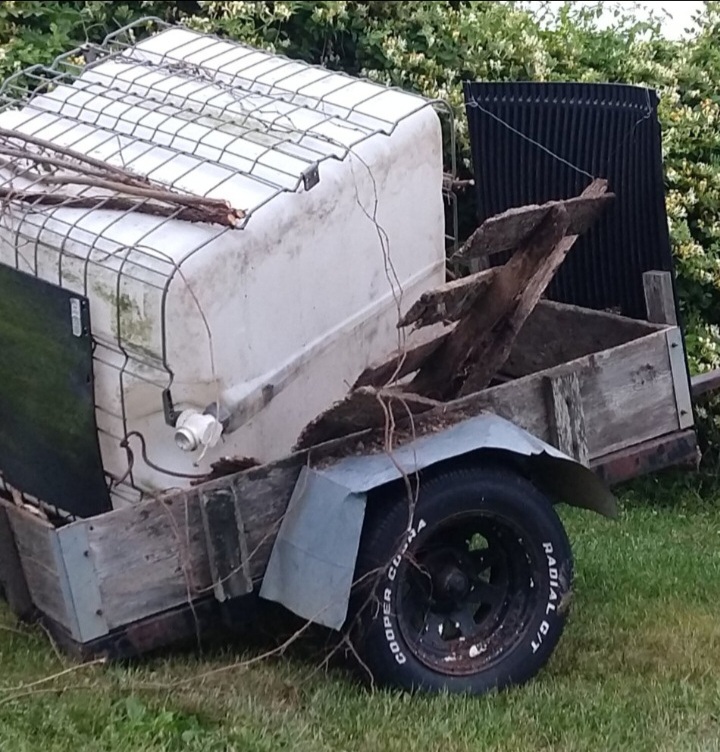
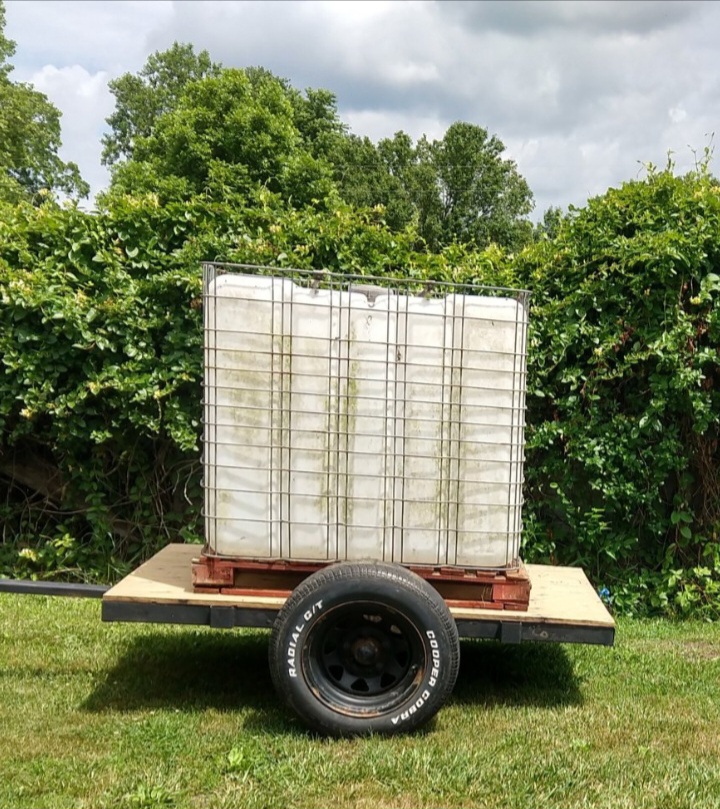
Sometimes I dont feel like dragging hoses around, especially when its blazing hot outside. So i’ll either pump water out of one of the two cisterns or the pond to fill what my wife calls the water buffalo and use that to water.
You can also build a water buffalo pretty cheap. Mine was pretty much free, minus the 3/4" treated plywood deck, fittings to hook up a garden hose and paint. My neighbor was going to scrap it and asked me if I wanted it. Yep I’ll take that. A water buffalo is very handy to have.
Sure, they can last a long time, but I’m talking about probabilities. Looking at service life and breaks over thousands of water lines, black polyethylene is clearly much less suitable for normal household pressures. Zonal irrigation systems usually reduce the pressure going in. And in any case, most of the cost on this is going to be the installation, so why cheap out on materials?
Sounds as if your only going to use the line during the growing season. I would use black poly. Lay it on the ground. Run it between faucets. Depending on your water pressure you might need a pressure regulator by the source faucet. Use it during the growing season. Disconnect it during the fall. Pick it up and coil it for winter storage. 1/2 inch poly is cheap. Less than 70 bucks for 500 ft. For areas where you might drive over it, lay a 10 ft 2x4 on both sides. Drill a hole in each end of the 2x4 and drive a short piece of rebar to pin to the ground. 1/2 poly will flow about 300 gallons an hour. Poly has carbon black and can withstand several years of sun.
I have thousands of ft of black poly ran on my property. All is above ground. I have hundreds of trees on drip. I can get 5-6 years of use with N Az sun exposure.
The following linked page is from a ‘frugal’ dairyman in OH, and his philosophy on developing pasture water systems… not all pertinent to this discussions, but there may be some ‘nuggets of wisdom’ that you could appropriate. http://24.154.167.53:8888/owenlea/sub09.html
When we built this home, I had a friend who owned a big ride-on trencher; he came out and trenched the 1000 ft or so from the water meter to the house; I think our utility required it be at least 29 inches. He advised us using Schedule 40 PVC, as waterlines ‘shift’ with changes in pressure, and a rock up against the ol black poly plastic lines will eventually cut through. Probably took us less than an hour to glue & drop in the 1.5 inch Schedule 40 PVC waterline.
Several years ago, I ran about 150 ft of 1/2" black irrigation line from a point just below an outdoor spigot to the azalea/rhododendron bed. I buried the line essentially just below the sod… Probably nowhere it deeper than 6 inches. I put hose fittings on each end. Only use it occasionally and I don’t even bother ‘blowing it out’ - running downhill, most of the water drains out on its own, but since it’s open on both ends, there’s plenty of room for expansion of whatever water is left in the line when freezes arrive.
The thing you guys fail to take into consideration is that if you’re old, working by yourself, have a bad back, bad knees, and/or arthritis hopping in and out of a trench, and bending down constantly to glue pipe joints really isn’t going to work out well.
I save schedule 40 pvc work for above ground jobs where working in a trench is not required. Maybe when you get a little older you’ll appreciate what I’m talking about. I’m sure you can see why simply rolling out a line of black poly has a great attraction compared to working in a trench using pvc piping if you’re not young and spry.
To do schedule 40 joints properly each end section of pipe requires reaming and being held together for 30seconds after gluing. All while bending over in a narrow trench. Maybe not a big deal for a young guy, but when you get old believe me that becomes a major obstacle, (when doing a long stretch of piping).
I didnt get in the trench… Maybe 6" wide, max.
Glued the 20 ft sections of PVC, above ground, and dropped it into the trench when it was all assembled.
Dropped the telephone landline in (this was 1994), and backfilled the trench. Dropped in an occasional red spider lily bulb, so that i could sort of tell where the waterline/ phone line was most of the year.
I definitely understand the age thing. I’m 47 and I can still do pretty much what I could do when I was in my 20s, but my body loudly reminds me of it after I’m done.
Biggest problem for me is that I have about 80 pounds to lose, and I would honestly probably be fine to do most things if I could accomplish that.
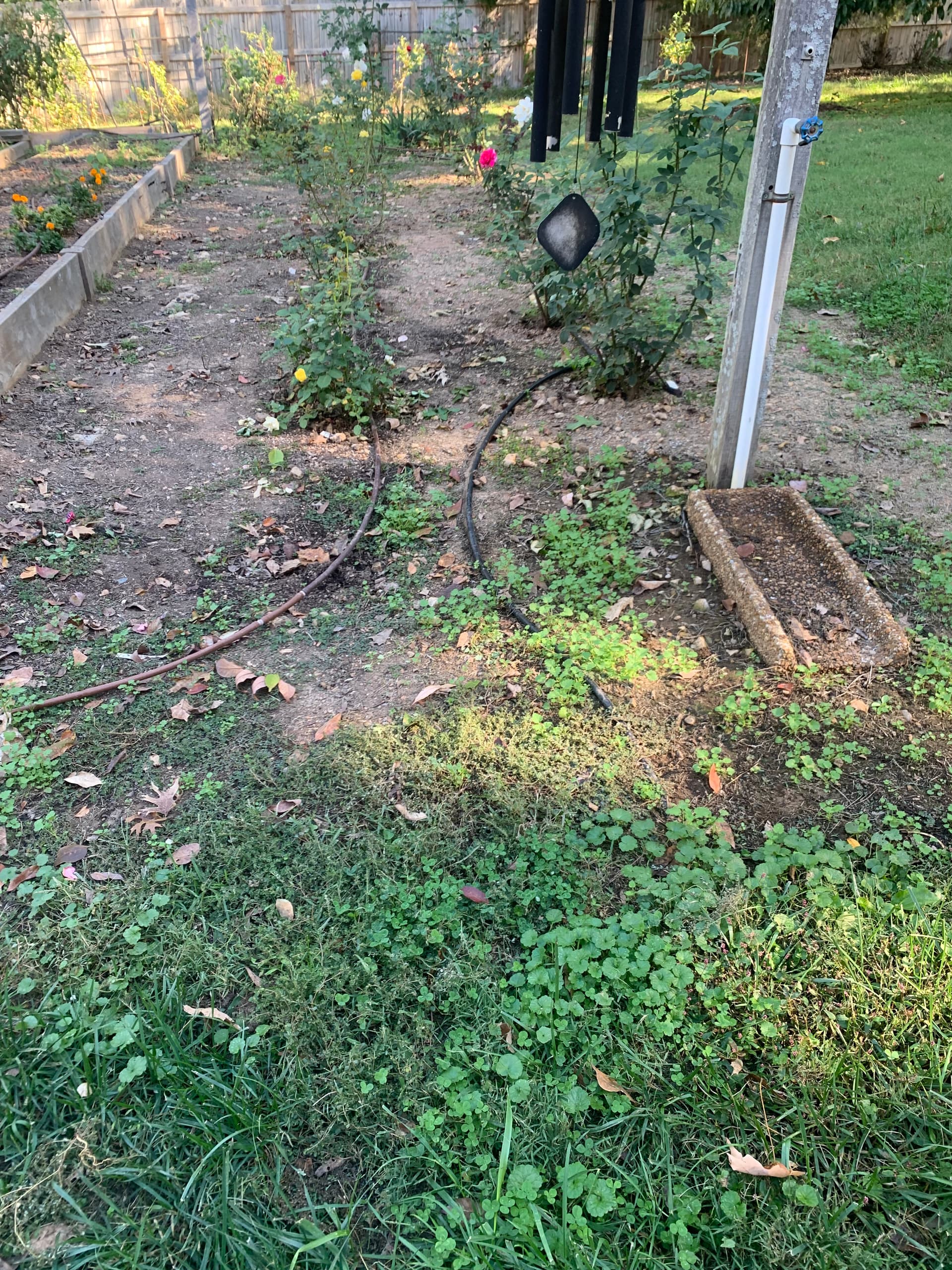
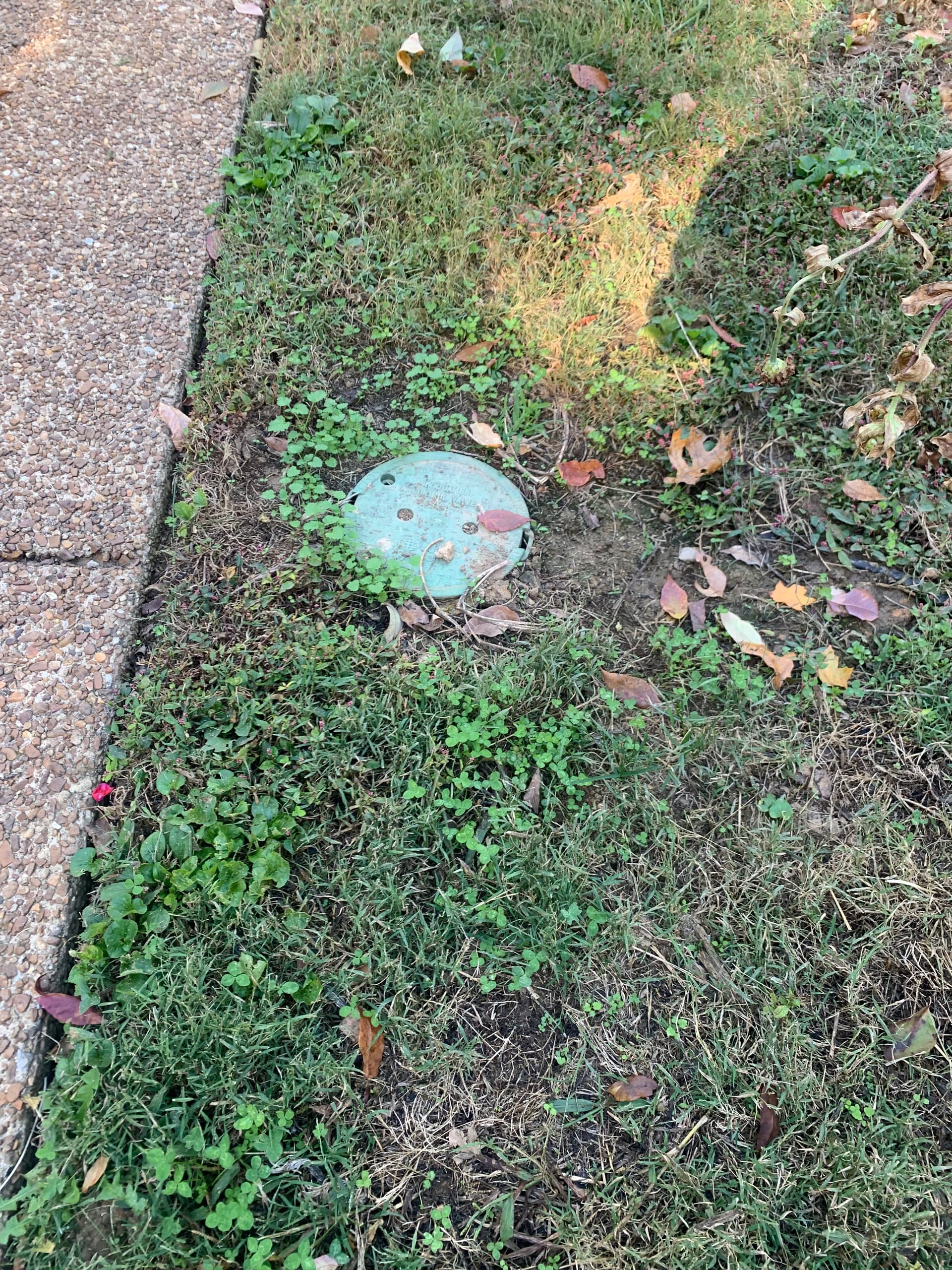
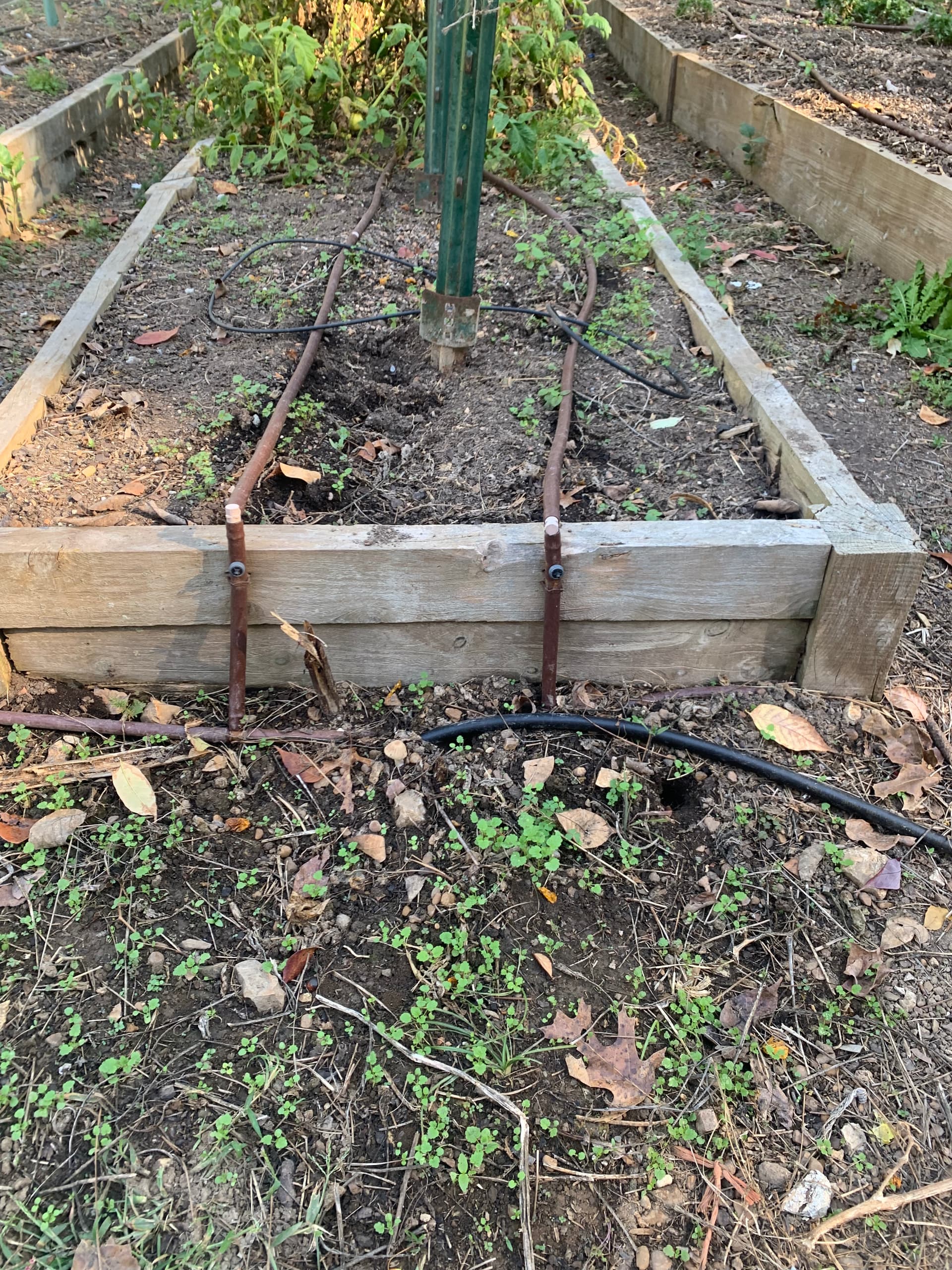
I can only tell you what I did when I first started with my current garden iteration. I will include a few photos so you get the up close view of what I’m writing about. This garden plot started about 36 years ago with a level ground garden. I went through a lot of trials to get water to my veg garden on a regular schedule. My plot is not as far from my house as your 200’. It’s much closer. But I first put in some soaker hoses that used a lot of water and watered the weeds as well as the producer plants like tomatoes. I then tried hooking everything up to a timer attached to my house spigot. Not enough flow to do the job. Then I heard about the half inch pvc hoses with every-12 inch emitters. Again, not enough flow so I had to go to multiple timers hooked up to the spigot. Very expensive and the result was lackluster. My cousin is a professional plumber and he told me that the flow ratios would not allow for a good output. So after about 10 seasons or so and a couple of thousand dollars I came to the conclusion that I needed a larger bore plumbing trunk in my house and an automatic sprinkler system like your $4,000 plumber wants to put in. I think his quote is largely appropriate given the amount of work it takes to get a permanent, expandable in-ground watering system put in complete with an anti-flowback valve. I got three irrigation company quotes which gave me a wallet attack (a little like a heart attack). Finally I found a guy who was very professional and offered to do the job for $3300. I asked if he would charge less if I paid in cash and he said yes, he could do it for $2800. About one week later he had put in the anti flowback valve and extended the one inch main out and along the face of the garden, put in the satellite valves, and I started hooking up the garden hoses that you see in the photos to go to the places that I wanted to program water delivery to. The only negative was why I didn’t do this to begin with. I have not looked back. I even have water to my blue berries, peaches, apples, figs, an
d kiwi. Now the only added cost is the expansions and the replacing of leaky pipes out in the yard. I go around two or three times a year to make sure there are not cracks or damage from wildlife. I also went to a raised bed veg garden about ten years ago. I hope you find this windy message helpful. Given that I did this upgrade about fifiteen years ago I don’t think that your plumber’s cost estimate is really out of bounds. I don’t know your age but if you’re young and committed to gardening and have a lot of gardening years ahead of you I think it will be worth your while to get your irrigation plan right. That way you will have a lot of seasons to amortize the cost.
You can run poly pipe easily. I would put it at least 12"-18" below grade just to keep it out of the way. Just an inch leaves it vulnerable to rodents and damage. It would probably also heave out of the ground in the winter. You should blow the line out in the winter if possible otherwise put it 36-42" deep below frost line.
I think you said 400’ of line. You should be able to buy it in 250 to 300’ rolls. Also 100’ rolls. You would have one barbed splice in the line.
Use steel or brass/bronze barbed couplers. Dont use plastic. Use double band clamps on each end of the fitting. Use a torch very lightly on the pipe prior to inserting the barb fitting. LIGHTLY IS KEY. You just want to soften the poly. Tighten the band clamps while still warm. Do the same for elbows and what other fitting you need.
I have literally put in miles of these type lines in the nursery and my farm but below frost level in central Ohio. No issues.
1" poly is good for long runs as you dont have much friction loss. You should easily move 10 gpm if needed. One hose usually used 3-5 gpm.
I would use 160-200 PSI rated or greater pipe. Pex is 160 psi. It will be an IPS pipe. Iron pipe size. CPS copper pipe size is used for residential settings and is much more durable and you use bronze compression fittings. Cost a lot more. You just need water to your garden.
I will service my orchard like this for next spring. I have zero need for water during the winter. I will blow it out in the winter. About 500’ into 3 zones. I will simply hook it to one of my frost free hydrants with hose fittings to supply the water in the summer. It will be drip irrigation.
I will plow in the line as a prevoius poster showed which was a good post. You could also rent a small trencher. Or even a sneaker plow.
I dont think you will have leaks. If you do you will see it when buried 12"-18" deep in most cases. You could also install a pressure guage above ground as a barometer to indicate a leaking line. If it loses pressure when not running, it has a leak.
I installed over 1600’ of line this way last July servicing 25 frost free hydrants. Very small chance of leaking.
You should be able to get the poly at a good box store or farm supply.
I like using polyethylene water pipe (blue). Last year, I upgraded to 1 inch poly, rented a large walk-behind trencher and trenched the 300 feet between my pond and garden. I usually bury water pipe 30 inches deep, but the ground was so dry and hard that the trencher would only hold 24 inches deep which is ok for this project. I much prefer the “rider” trenchers as they are much stronger with less effort on my part.
Makes watering the garden much eaiser and faster. Since I have very little pressure loss with the 1 inch pipe, I can use 3 hoses in the garden at the same time and still have pressure. By the way, I’m 81 yo this year.
My total cost of pipe from Menards and trencher rental was about $300.