What's the Best Technique to Get an Apricot Graft to Take?

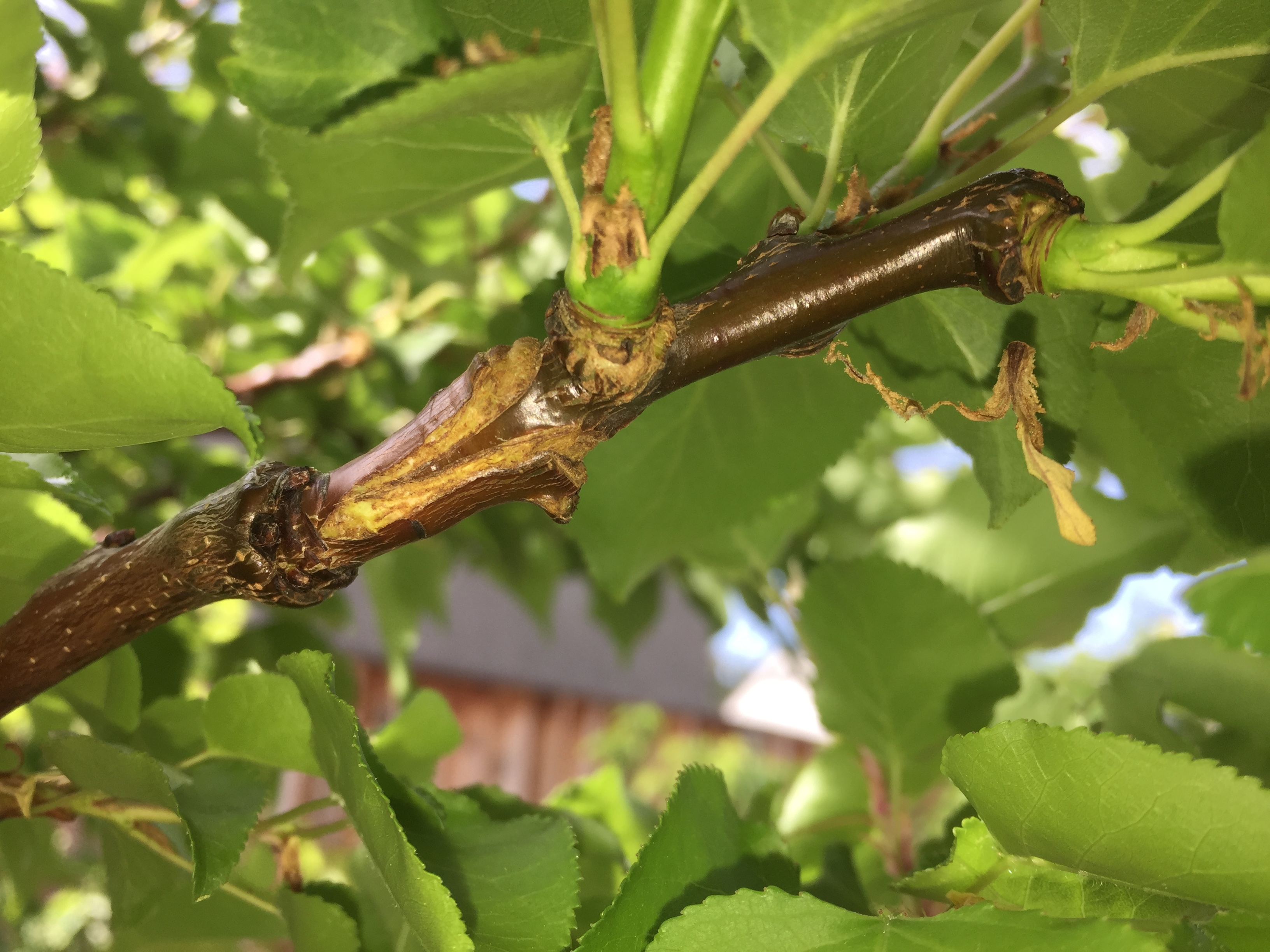
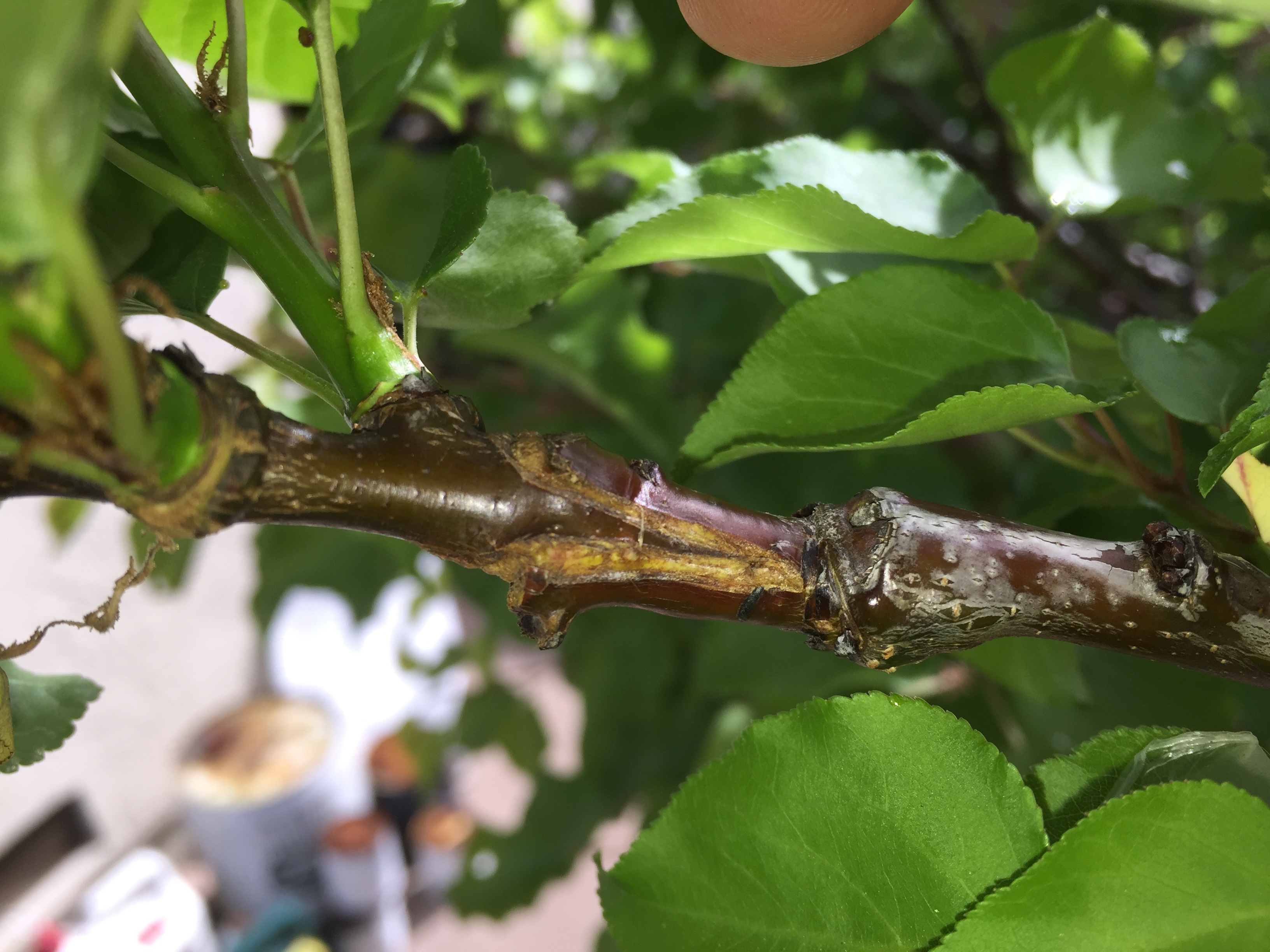
The Afghanistan has fused nicely into the Blenheim!
9 Likes

I think that is a very nice looking graft.

Mike

1 Like

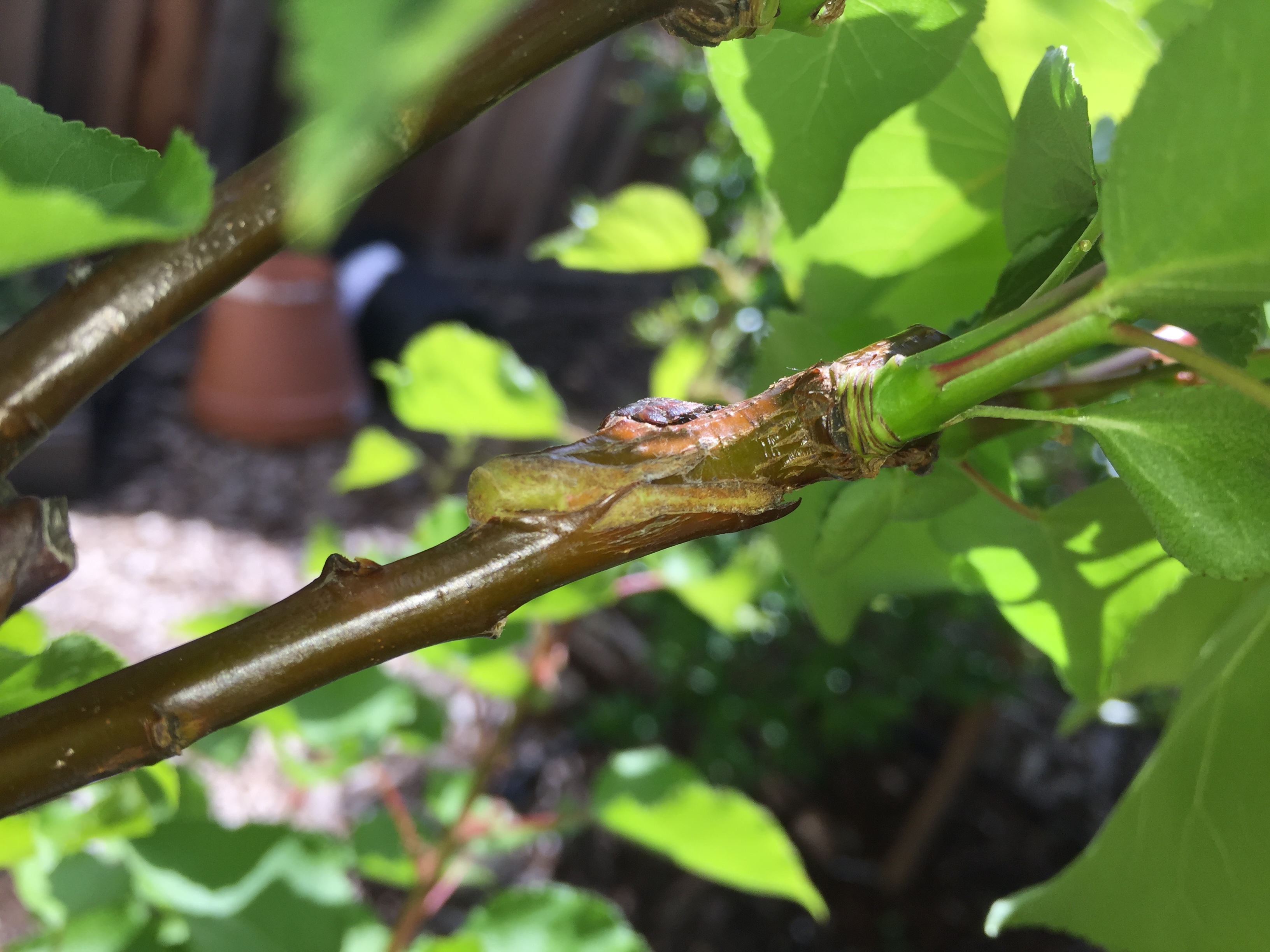
These ones are for @murky. The graft I opened up earlier made it, phew!
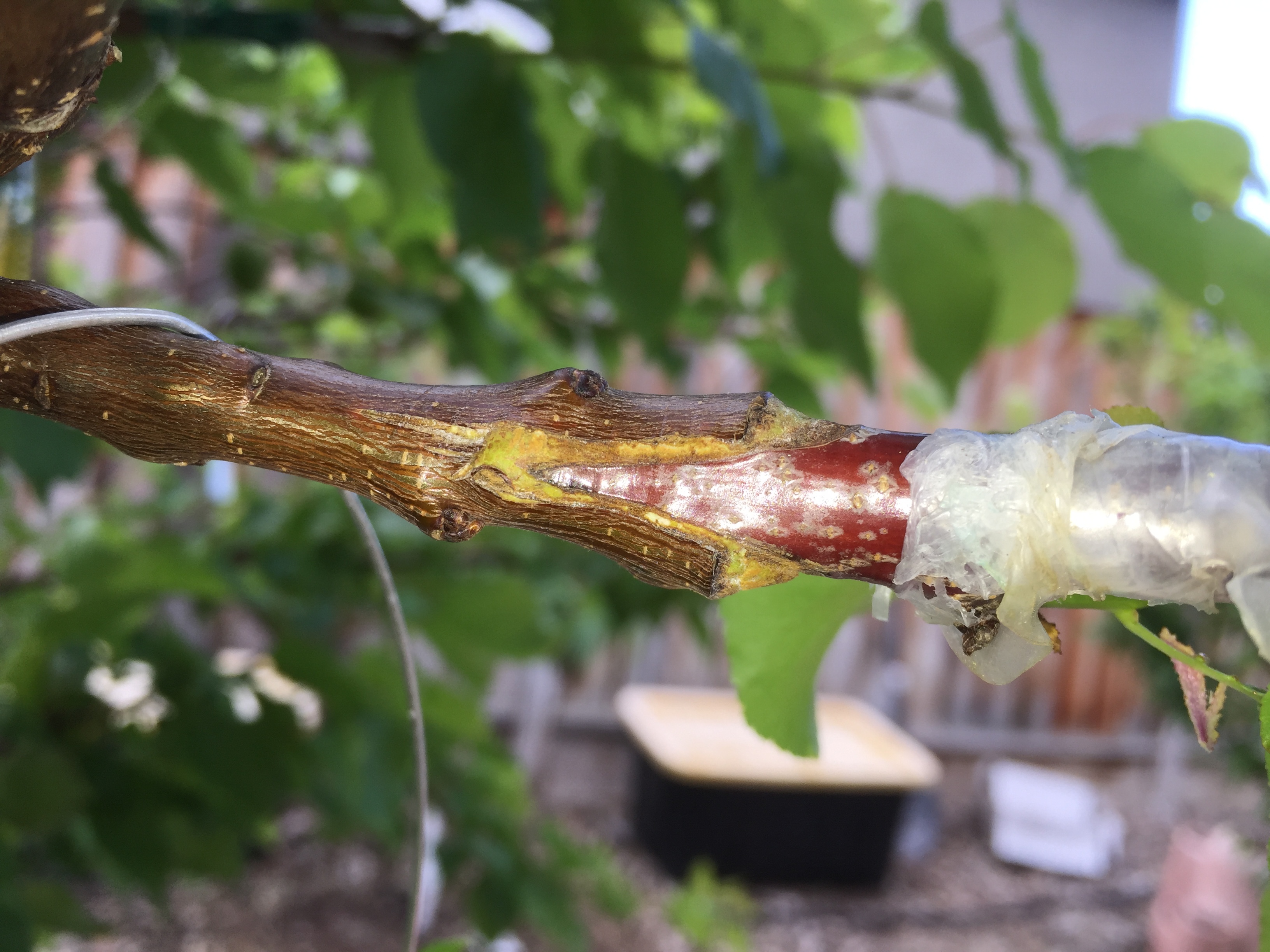
And I tried a W&T as you suggested. Looks ugly but it took! The tongues were locked but then they probably slipped out as I was typing them up.
8 Likes

Looks like you are all set. Sorry if I added unnecessary concern.

Don’t be sorry. I could have fried it in the hot, afternoon sun. Thankfully, it was a humid, cloudy, cool day!

If i have older rootstocks for apricot i cleft graft them with good success.

This is one video how to cleft graft apricot (with english subtitles) :smile:.

http://www.youtube.com/watch?v=sVW3lZSK2Nc

2 Likes

I hear so many things. I got some scion wood in my fridge. I’m trying to graft multiple stone fruit on to my apricot tree. Everyone around me has different ideas on timing. It’s 70’s now. Is it time?

2 Likes

Maybe try a few.I did most of mine about a week ago,with temp averages,55-65F and see that some are pushing buds now.bb

1 Like

I have been wondering about growing Mandshurian apricot rootstock from seeds, as though there are no very hardy apricot cultivars available within EU, there are some reasonably cold-hardy apricot cultivars (Harlayne, Harogem, Hargrand, Harcot) available from within EU but unfortunately all are only available as crafted onto somehing like USDA zone 6 hardy rootstocks, so I am planning to sow Mandshurian apricot seeds within a next few weeks. Obviously even in the best case scenario it will take a few years before I am ready to graft anything. Yet, after reading some guides about apricot grafting I am getting a bit concerned about the viability of this plan.

The guides of apricot crafting seem to suggest that

  1. in general grafting apricots has lower success rate than apples or pears
  2. preferably dormant scions should be used, and they should be crafted in the spring when they are about to break dormancy (so probably like in late May or for apricots possibly early June here)
  3. non-dormant grafting is possible but has poorer success rate
  4. for the graft join to heal the temperatures should optimally be 21–27°C
  5. the initial healing takes 2–4 weeks, and structural stability is achieved in 2–3 months.

As I see it, the grafting in the spring option would require me to purchase a tree of the desired cultivar the previous year, then collect the scions in late winter/early spring like in March or April from the tree whose zone 6 hardy rootstock has by that point been dead for months, hope that the wood is still viable, keep the scions moist in a fridge (or freezer and just cut a fresh surface before grafting?) for about two months when it will be very difficult to avoid mould (I am a bit baffled why the advice is to keep the scions in fridge where scions are difficult to keep mould-free rather than in a freezer that is still warmer than the winter temperatures outside), then graft those in late May/early June and either hope that there will an exceptional hot period or hope that the more typical day highs of 12–24°C and night lows of 3–16°C will be enough for the graft to heal, or possibly use a miniature greenhouse / coldframe in an effort to get higher temperatures for better graft healing. So, this would be the first option.

The second option is that I could order the cultivar the same summer for non-dormant grafting, and collect the scions and graft them onto rootstocks in the beginning of July to utilize warmer July temperatures for graft join when day high temperatures are typically 15–30°C and mostly 20–25°C, and night lows mostly 8–18°C. Then I would just hope that the graft join has achieved enough structural stability to withstand thebsnow burden by late September/early October when the tree will probably go dormant (or keep it inside at room temperature as a potted plant for the first winter).

The third option is that instead of grafting the scions I could just put a large number of them in rooting cubes with strong rooting hormone and hope that at least some will generate roots.

I could essentially cut the whole cultivar I get into scions as it would have no chance of survival otherwise, and perhaps I could even try all three approaches with a single tree, the latter two same summer and the first the next summer with the remainder of the tree.

Does any of the options sound like there is anything more than an infinitesimal chance of success, and if yes, which in your experience might be the most likely to work, and which are near hopeless? What are the most critical issues?

1 Like

Rooting apricot cuttings is not a good option. Even with perfectly controlled conditions, the take rate is very poor.

Manchurian is probably the best rootstock option for your climate. The seeds are inexpensive, so I would recommend growing more than you will need because northern apricots die randomly for all sorts of reasons. I prefer to feild graft after the rootstock is two years old, grafting about a meter above the ground, leaving a strong hardy stalk that will survive if the graft fails.

It sounds like the unique issue you have is that your spring temperatures don’t reach apricot callousing temperatures. You can partly counteract this by grafting with black electrical tape or tempex in a sun-exposed position. The sun will heat the black tape substantially above air temperature. But don’t wrap the buds in electrical tape, wrap them in buddy tape or parafilm, otherwise they will dessicate. Consider over-wrapping the buds in aluminum foil to prevent greenhouse effect in the parafilm, but leave the black tape sun-exposed.

If you have access to good budwood, summer budding is probably your best option. Use expedited shipping to get the budwood while it is still fresh. Fall grafts should survive the winter and leaf out in early spring.

2 Likes

Thanks for the advice!

I don’t think it’s nearly as bad as you think it will be. You do cut a fresh surface for grafting- but you’d do that no matter what.

Most of us who are hobby grafting are keeping dormant scionwood in a home fridge for months. It’s not so hard. Your spouse may get annoyed with your fridge sticks!

I had some Apricot in my fridge 4-5 months this spring. I got it when it was available in early Jan, then due to work and weather it didn’t get grafted till late may.

Lots of people have posted advice for storing scionwood. Apricot is a bit fragile but my fridge is not amazing and I just had it in a plastic bag in a fridge drawer.

I am sure there are places where you can order dormant scionwood in the EU since others do it. or you can find someone who has the tree you want and ask them to send you some. They’ll likely send it earlier than you need it but, You shouldn’t have to buy a tree.

Also, yes, fresh budwood and fall budding may have higher takes, but that stuff has to be shipped quickly and can’t be stored. Probably not as useful.

If you decide to graft in fall- because of your short season, you wouldn’t want the buds to grow till the following spring. Then you’d force them or they’d grow on their own.

Re temps- wait it looks like you’ll have a week where you’ll reach 25C most of the days. If it’s early July then that’s when it is.

You can also bench graft in your house by digging up your rootstock or having them in pots and then you can do the grafting earlier- but the scion wood will still be dormant and from the fridge.

You don’t need to worry about the graft supporting a load right away because you will support it with a stake or stick. Often birds like to land on new grafts- so a support stick is a good idea anyway.

It really just needs to grow enough to set some new buds and be able to harden off. Not be a self supporting full branch.

You may want to provide a windbreak or wrap the trees for the first few winters since a lot of young trees seem to desiccate in the cold wind-
especially on the newest growth. I don’t know that from experiencing it but there are a bunch of threads where people try to grow peaches in zone 3 and 4 and that seems to be an issue they talk about.

I have to protect young fig trees and brambles or they die where I am, but after a few years they get bigger and can withstand more.

This got long! Finally, you should practice on something easily available like apple. You should be able to get some cold hardy rootstocks and scionwood. Or if you have some apple trees around you can practice grafting sticks of one to another and try collecting wood this winter and storing it in the fridge, etc. I did this with my trees since it was cheap and lower stakes than stuff I’d ordered. the biggest difference with apple is that the callus temps are lower.

Hope something I said is helpful. I have really enjoyed grafting and I hope you do try it!

1 Like

I’ve chip budded apricots with success. Budding onto peach stock is probably the easiest way to do it. I’ve also budded onto plums without many problems. What i do is place 3 buds on one branch (given you have enough budwood). Something will take. Sometimes all 3 and you just prune off what you don’t want.

2 Likes

Thanks for the advice. The reason I thought I might not need to a new fresh surface was that in non-dormant graft I would do it right away from one tree to the other.

From your comment it seems that the proper callousing temperature is quite critical. Choosing a week when most days are above 25°C is a bit tricky. This summer the records of a weather station about 25 km south of my place shows that we had ten days when the day high temperature was 25°C or higher, three in June, six in July, and one in August. We had no days when the daily mean temperature would have reached 21°C, but three days when daily mean temperature was 20°C or above. We had one ten day period in July when every day the day high reached at least 21°C, and this includes five of the days with temperatures reaching 25°C, and two of the days with daily mean temperature reaching 20°C. The last time we had a week when every day the day high was over 25°C was in 2021 when we had 13 days in a row in July (with up to 30.7°C), and for nine of those days daily mean temperature was at least 21°C. Whenever there is an extreme heatwave in the rest of the Europe, it tends to be associated with hot air remaining in the south and a polar vortex of cold air sitting over Finland and Northern Sweden and Norway so that whenever you hear there is an extreme heatwave in Europe you know we in Finland are experiencing a cold, lousy summer. So, I probably need to use all the tricks I can to get the graft joint warmer.

But anyway, to my surprise I noticed that Fruitwood Nursery in the US provides scionwood with phytosanitary certificate for EU delivery, and they have scionwood for several sufficiently hardy apricot cultivars available. I checked some EU sources for scionwood but the problem is the availability of cold-hardy cultivars. Outside of Finland and Sweden only about 10,000 people in the rest of the EU live in conditions comparable to USDA zones 1–4 (and about 7,000 of those in Poland), so cold-hardy cultivars are not a big priority for large nurseries in EU, and smaller Swedish and Finnish nurseries often buy much of their stock from big nurseries in the Netherlands, Germany, France, and Poland, and l think they mostly propagate local cultivars and a few others, though a few are more ambitious. I have seen webpages mentioning that some Finnish nurseries have acquired some cold-hardy apricots (incl. Brookcot) for testing, but their tests will probably take years if not a decade, and they might rely on (non-hardy) rootstocks commercially available from EU. (They often do a lot of testing with different rootstocks and with respect to hardiness, since even cold-hardy cultivars that tolerate as cold or even colder winter temperatures as those over here are a bit of a gamble, since some require a long summer to successfully enter domancy in the autumn, and when this fails, they retain a lot of water when the cold weather comes, and die when that water freezes and the tree cracks. Though e.g. Cornus kousa is reported to be hardy to USDA zone 5, a nursery on an island in Gulf of Bothnia where it rarely gets colder than -25°C mentioned that despite trying they have never managed to overwinter Cornus kousa outdoors and recommended it as a potted plant brought indoors for the winter with the exception of southwestern tip of Finland where it has been reported to survive outside.)

I also found a nursery in France that has been selling Prunus mandshurica trees, though now out of stock, so perhaps I get to try next year already, if they will become available next year and not rely on one or more of the 100 Prunus mandshurica seeds I have to germinate and make it all the way into a small tree.

The best use I have this far found for Chat-GPT is to ask it to check all online EU nurseries for different cultivars and the rootstocks they have been grafted to and to collect data and evaluations about the cold-hardiness and taste of different cultivars.

1 Like

So it looks like the best callus temps for apricot are around 20 degrees C. Temps that are lower will slow down callus, and you may have lower success rates but I still think this is possible.

You can also use dark tape for grafts and not protect them from the sun which can increase the temperature at the graft by quite a bit.

It might be that you also try some bench grafts.