I like tulsi as a tea and have used it in cooking laarb one time (in combination with Thai basil) it was good that way. The smell is very strong and distinct. I had it self sow last year, so we will see if it comes up this year too! I have not had much success with other basil, sadly. I really enjoy basil! Supposed to be easy to root cuttings and grow but has never been so for me!
2 Likes
i think it really likes cool summers. i have it growing on my steep ditch near the road mixed with other weeds and it dominates. lemon balm growing under my pear tree does equally well. i need to cut it back hard to control it. try growing it in shade like i suggested above.
4 Likes
So many herbs. I keep starting more and more basil every year. Maybe 24 this year. Purple is my staple, but I also love spicy globe for shoving into little spots. I don’t actually like genovese… I think once you taste purple and the other ones, there’s just no reason to ever grow it. Trying a darker purple as well (opal?) and Thai holy and Thai sweet this year. Oh and lime basil.
Oregano is an intense weed that I regret spreading around years ago. I spend so much time pulling it out and any little bit I pull that touches the ground regrows. We use it and dry it, but omg I’m getting so close to removing all of it and just keeping 2 clumps in containers.
Parsley I finally figured out last year by putting it in shaded areas. Had it all through winter and already lush and huge in places.
Thyme I’m still working on finding a good variety. They stay small and scraggly. I like French for flavor but not growth. Have a lot of English and Orange started this year.
Lovage I planted last year, it did super crappy, 100% forgot about them and then spent weeks this year trying to figure out what was sprouting and only just tasted it and dawned on me it’s the lovage. Looks great this year!
My celeriac never gets very big. I forgot to seed them this year until a few weeks ago, will be even tinier this year. I think this is my fourth year trying. I need to figure them out bc love in my soup base.
Sage I started for first time last year solely as a companion plant. Survived winter and is thriving. I don’t cook with this, so don’t know how long I’ll keep them.
Rosemary takes forever to sprout. I have 3 I think remaining from last years endeavors.
German chamomile was dinky last year first time seeding as a companion plant. But, it’s looking good and green now. Not sure that’s technically an herb..
Cilantro is my favorite with Basil. Always bolts, shade helps, but still bolts. I seed it everywhere and is just starting to come up.
Cumin! My cooking seeds didn’t sprout, so I bought some from a seed store and they did! I use cumin daily, so super excited to add this.
My goal this year is to remember to heavily pick before everything flowers in order to dry herbs and make extra batches of pesto for the freezer. This is an annual goal and is annually forgotten. I generally get to January and am lamenting the fact that I didn’t manage to harvest properly and have run out of herbs. Every. Year. But not this year!!!
I forgot to add green onion, if that counts. I use it like an herb…I exclusively buy and plant these from the grocery store bc it’s inexpensive and near effortless. They multiply, get transplanted all around and bloom year 2. Love. Oh and of course dill and fennel! Too many to remember. Who knows what else.
8 Likes
I too have grown seeds from cooking stock herbs.
Started growing fennel last year and it is awesome.
You can eat pretty much consume the entire plant, it grows easily, and the plant makes an excellent “backdrop” for other herbs and flowers.
It’s a semi large plant that is vibrant green and is very feathery, so it contrasts well with flowers and is nearly maintenance free.
It works well in spaghetti sauce, meatballs/ and other meat dishes, etc.
4 Likes
I just bought a sage (hybrid, the tag tells me) and will put it in ground this week. I hope it will feed both pollinators and me. It is time to cut the Irene rosemary that dwells under a grow light indoors and get ‘em rooted. Also, it’s time to trim back perennial savory. It became a low bush 2’ x 2’ and has become a staple in cooking. (Focaccia! along with rosemary); pollinators flock to it all thru summer.
The big job will be to dig up saffron, remove turf, turn in compost, re-plant 6” deep & cover with mulch. Since saffron has already got full length leaves, I will wait until they go dormant in a couple months. It must be done every couple years.
@Sven: is fennel biennial?
3 Likes
Mine was not, it grew and went to seed its first year.
I believe there are two cultivars one which is cultivated for its seed, the other for the bulbs
I thinly sliced the stems for cooking, the tops can be used in cooking or as a garnish in salads, and of course the seed for seasoning.
1 Like
For us Oregano has not been like a weed. I wonder if that has to do with our hard clay soil, or with it being in the shade.
2 Likes
Interesting. I have some in clay and some in raised beds. Some in large clumps on the mulch pulled weeks ago and still growing. Happy to send you some should want yo see if it’s more vigorous than what you have! I think I got the original plant from a nursery years ago. Don’t know what type it is. Has been divided and pulled at least 100 times. I’ll send to anyone who want some! I go crazy when I hear people spend money to get oregano…
4 Likes
I have to move 1/4 of my saffron for the 3rd year in a row. I can’t find a good spot for this clump. It keeps ending up very shaded by other plants. The other 3/4 are at the base of a serviceberry and do well. Where do you have yours?
4 Likes
Plenty of sunshine in my yard. so saffron has done well. I have to be more deliberate in caring for it this year, since its yield has diminished with neglect.
2 Likes
i grow fennel as a vegetable, 3 kinds. the bronze is my favorite, i like it roasted with lamb. the bulb base. the leaves are good dried
I’ve tried to plant saffron bulbs multiple times and though my regular crocus are always happy, those will not survive ever and i don’t know why
3 Likes
There is a certain variety that I want to try propagating, for at least now. Thank you for the offer!
2 Likes
Anyone grown Lovage before? How long did it take to establish? Mine never got very big last year but it’s starting to sprout back and I’m hoping it takes off better this year.
2 Likes
my friend has a patch that’s massive, it’s at least ten years old that was there when she moved in. it’s taller than me. I’m planting it the first time this year to see how it goes at my place.
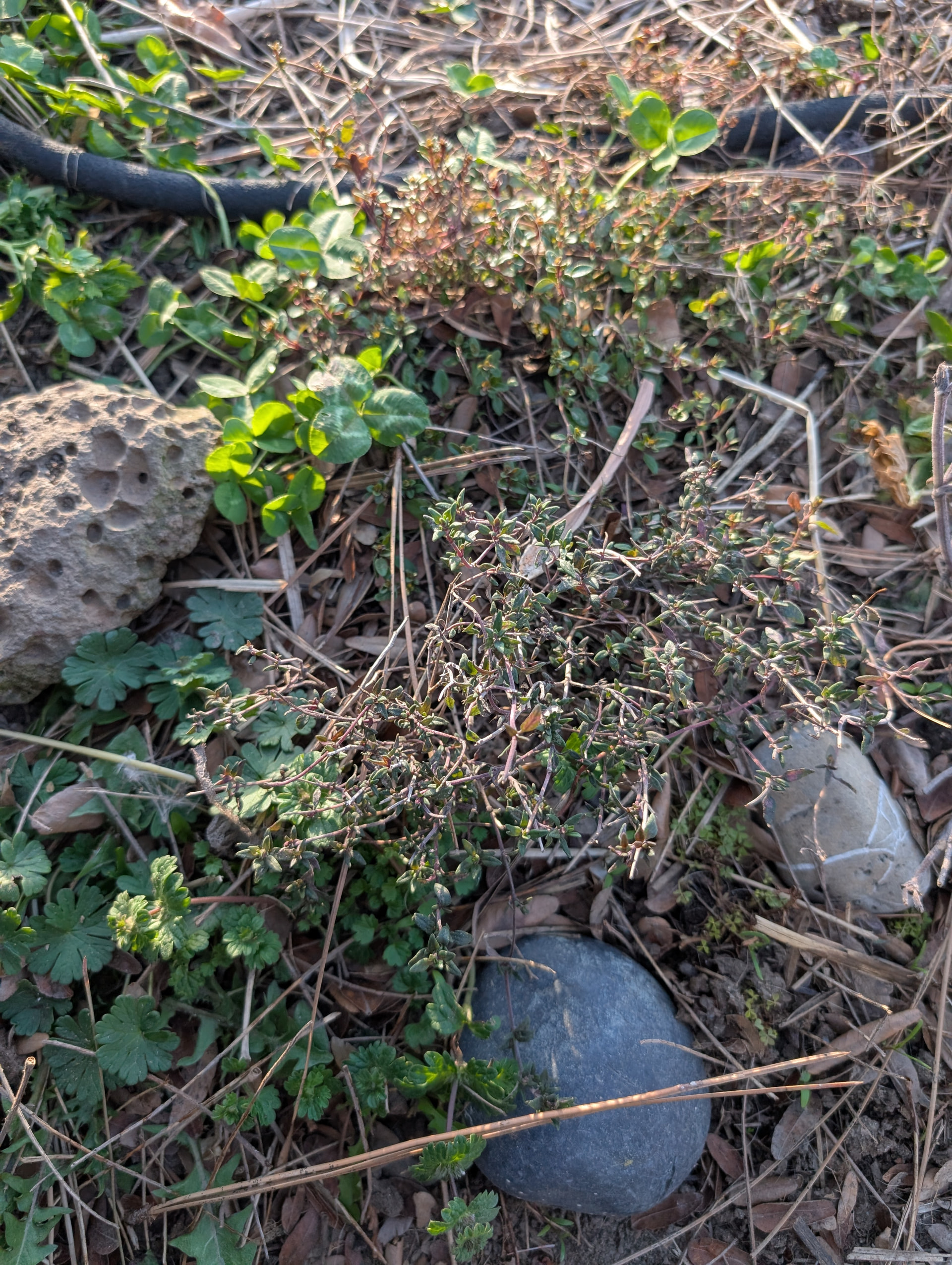
winter thyme and lime thyme both coming back from being somewhat dormant
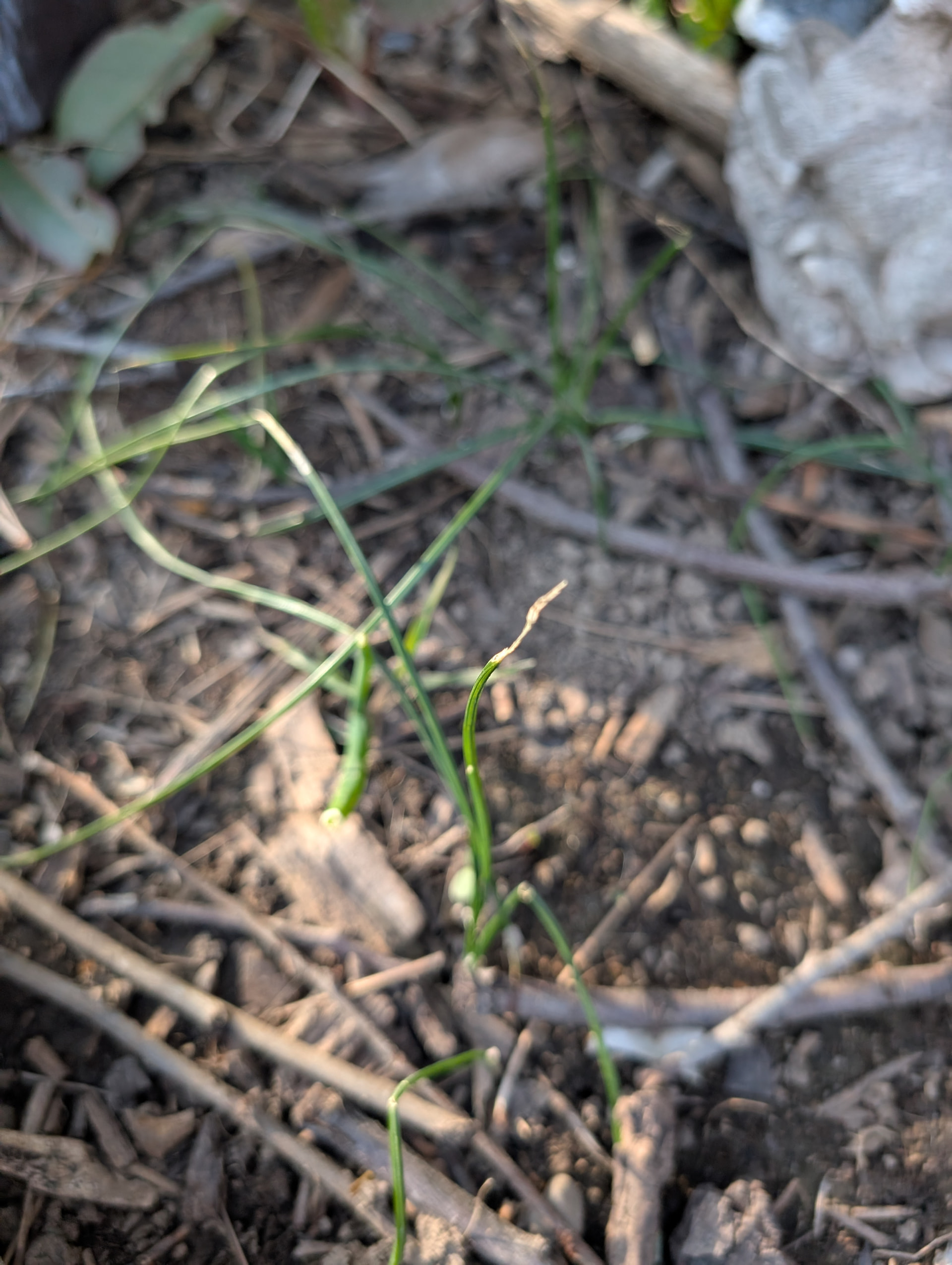
the pathetic remains of the saffron crocus i put in last year. it’s the third place I’ve tried to get them going
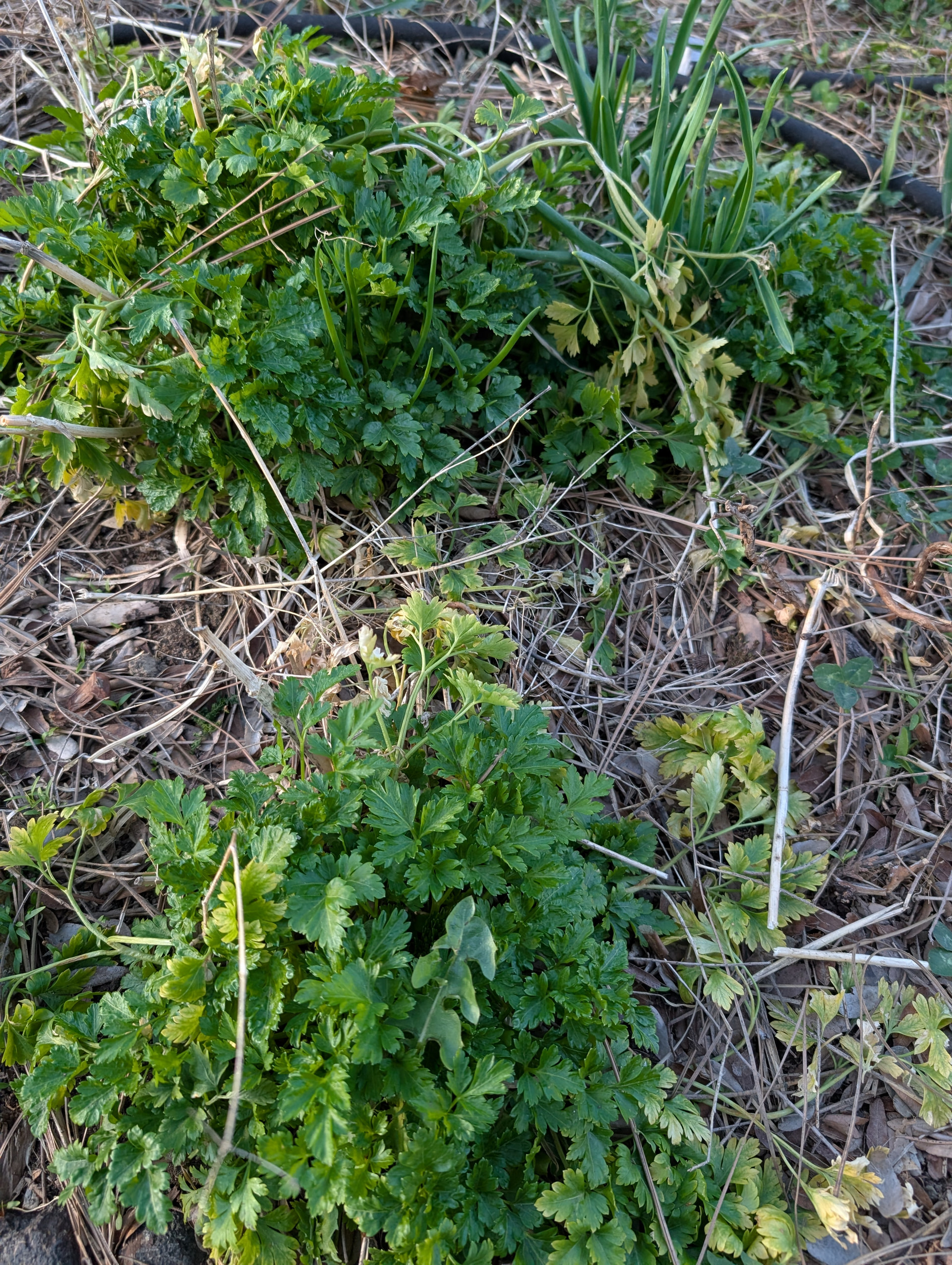
the parsley patches (with garlic, waking onions and celeriac mixed in there)
6 Likes
Same. Mine stunk last year to the point I forgot the 4 plants existed, but is growing in really lush this year.
@resonanteye the lovage is taller than you?!! I think I underestimated these plants and they’ll be transplanted out of my veg gardens this fall!!
I have to say, it is so nice to be picking fresh herbs again. Food is so much more flavorful and enjoyable. I eyed my basil seedlings making dinner and nearly sacrificed one for pesto…it’s hard to wait! I hope to have the energy end of season to seed a few to grow indoors now that I have citrus/lights in winter.
5 Likes
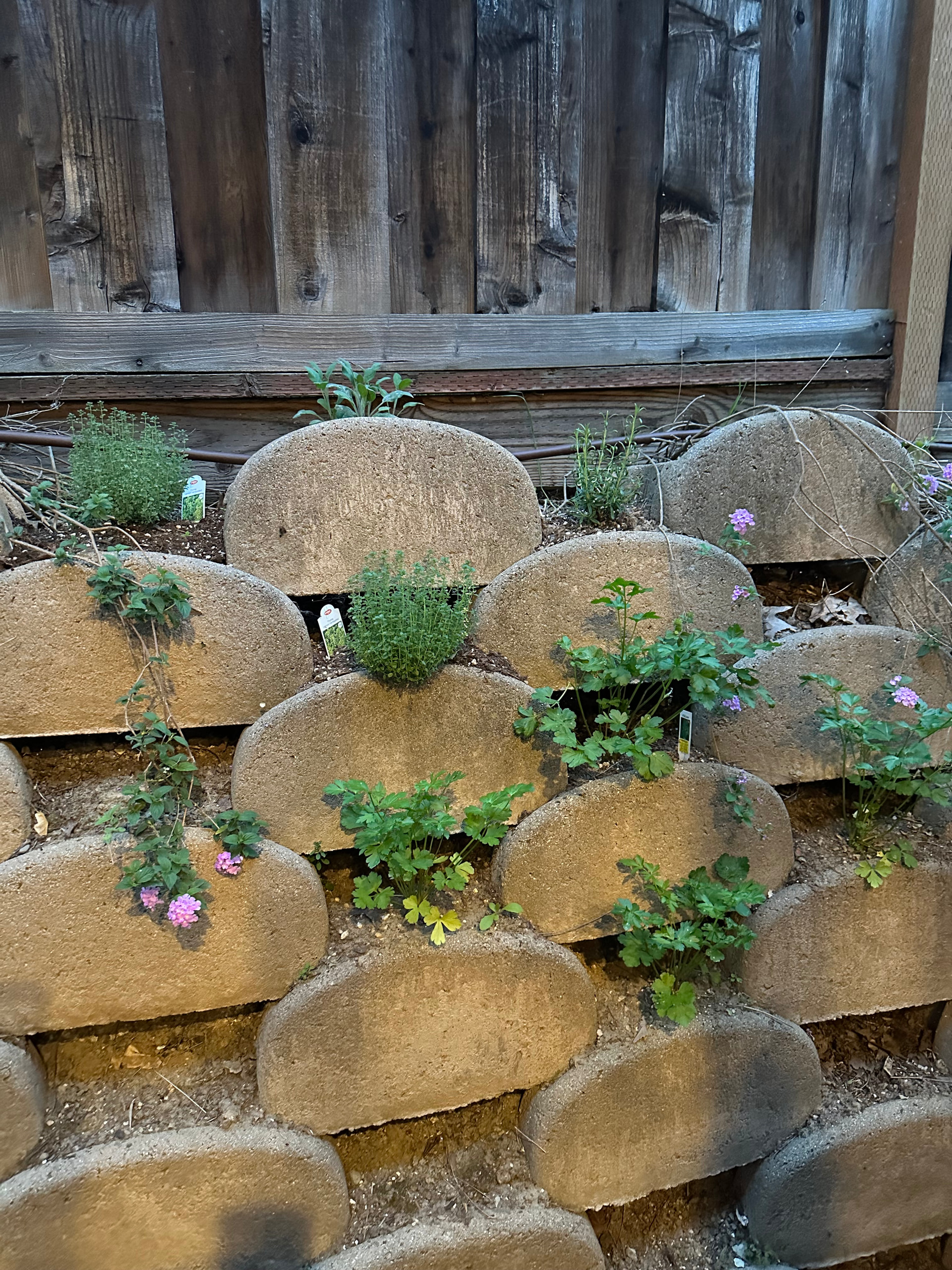
Snagged a quick picture of the retaining wall with the current state of herbs. Have a 4-cell of chives sizing up, they’ll join the wall soon enough. Just a pair of healthy ones in a pot right now, which is not enough. Basil seedlings are thinking about emerging. Will have to resow some dill as I only got 2 to emerge and they died (don’t leave the dome on during a 90+ degree heat wave). Want to start more green onions too
7 Likes
I try to grow a lot of what we cook with, so sages, rosemaries, thyme, oregano. Our sage bush got so big last year. It’s convenient that many herbs are perennials.
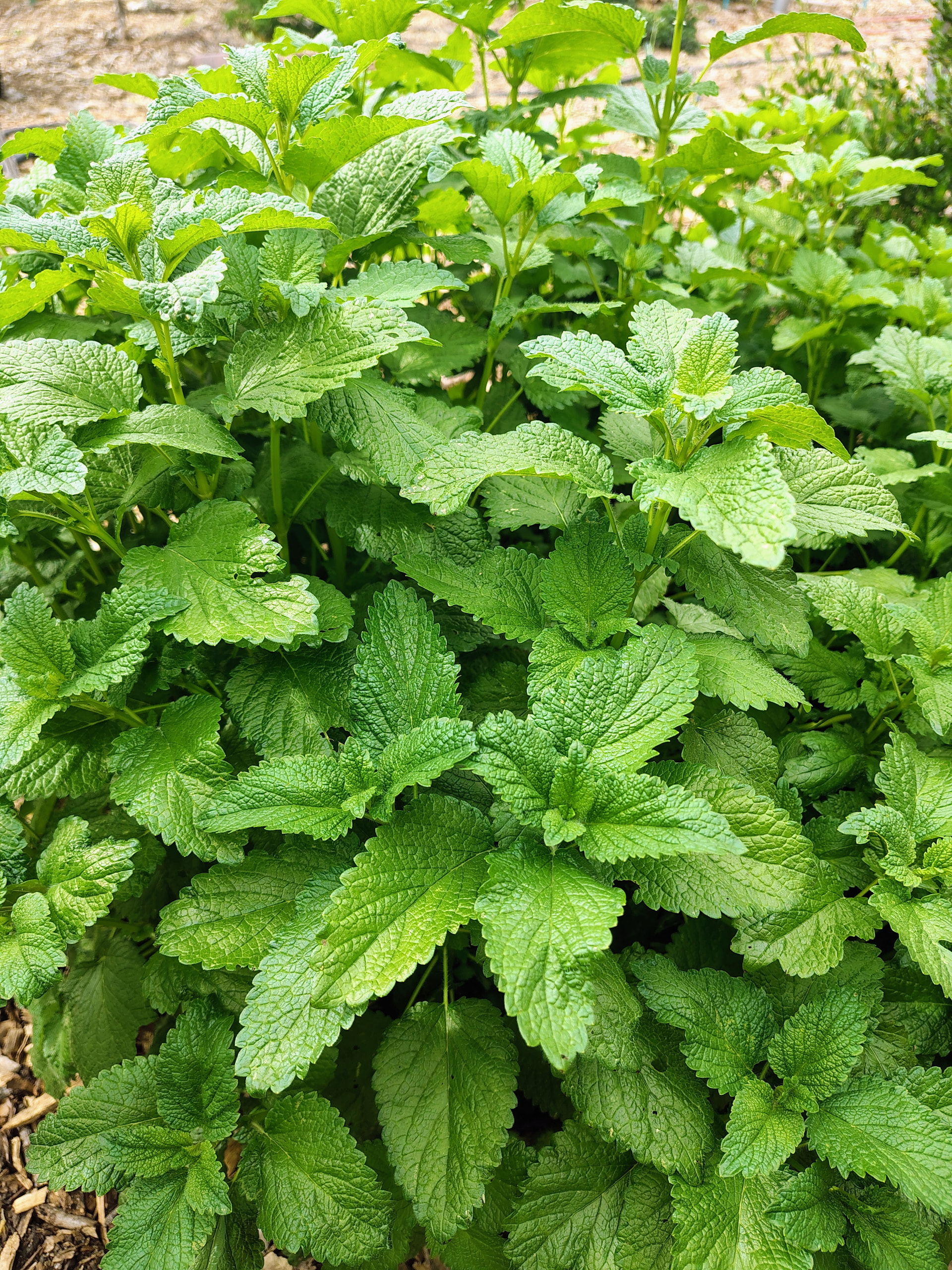
Also things like lemon balm(pictured), lemon verbena, mints, epazote, basil, etc. I’m wanting to try a few more but I don’t always have luck with them(the tarragon I tried to grow died pretty quickly).
5 Likes
a friend of mine aunt whos sort of a herbalist gave me a root of elecampne 2 years ago. it was in a cardboard amazon box. i was short on time so i scrapped away the mulch near a cherry placed the box on the ground and burried the whole thing in wood chips. in mid june the plant started growing so t threw a handful of 10 -10-10 around it and watered it well. by late july/ early aug. that thing was 6ft. tall and starting to bloom. by early sept. it was 7ft with 10 flowers. that things near invasive. supposedly edible and medicinal. its in the sunflower family.
5 Likes
I’m in Zone 7a, in western high desert climate where the soil is quite alkaline. I love to keep perennial herbs, for the appearance, smell, and occasional culinary use. Here are perennials that do well here:
Oregano–Looks mangy in winter but after a severe trim bounces back in spring, flower heads need to be trimmed off in summer.
Greek oregano–low to the ground with spreading habit, makes a good ground cover, bears white flowers, can be used much like oregano, though flavor is a bit different. Leaves redden in winter.
English thyme–After a nursery-purchased variety tended to get huge and mangy, I purchased a dwarf variety from an online distributer, and it has behaved itself nicely. I since planted some regular thyme in a place where I needed erosion control and could let it sprawl.
Lemon thyme–Put in a sunny place without too much water, and has spread into a beautiful clump with a heavenly smell. Some leaves turn colors in winter. We use this in cooking quite a bit.
Orange thyme–Tiny elongated very green leaves, have survived a winter nicely and begun to flourish with spring weather. Mild orange scent which I like.
Caraway thyme–Low, spreading habit, can be a bit aggressive, but is a good ground cover with a strong but pleasant smell. We use it on a bed with a retaining wall and it spills over the wall, nice bloom of pink flowers. We had a grasshopper plague a couple years ago, and this was their favorite–they wiped it out, and we had to replant.
Rosemary–Zone 7a is too cold for most varieties, but we planted the hardy “Arp” variety and it does fine. Grows very vigorously, so I cut back most of the foliage bonzai-style in early spring, which keeps it manageable.
Lavender–Many types, I prefer English. Tends to get ugly over winter and requires some pretty vigorous pruning, but bounces back in spring. Not my favorite to care for. Flowers of some varieties have a good flavor and can be used as garnish.
Chives–miniature onions grown for their tops, which make a mild, oniony, slightly bitter garnish. If you don’t cut off the flowers, they tend to spread seeds and form clumps all over the place in our climate. I avoid garlic chives–they are invasive and hard to remove once they get going.
Anise Hyssop–Beautiful growth, smell, and flowers, dies back completely here in winter, and resprouts vigorously in spring.
Rue–Middle Eastern plant with a strong scent that not all find agreeable, but interesting plant. Like most perennials, gets ratty in winter but greens up nicely in Spring. I don’t care for the flowers, and trim them off as they come, keeping the plant small and herbaceous.
Sage–Culinary herb, flavoring for poultry seasoning. In our climate it tends to get too big and requires constant pruning to keep it in line, so I replaced with a dwarf variety which has the nice smell but behaves itself.
Bee balm–I love this plant, but it is a mint and some varieties are very aggressive. I planted a dwarf variety that is not. Beautiful flowers, different by variety, and nice scent.
Day lily–Not sure this counts as an herb, but flowers and other parts are edible, with a really nice beany taste. I have it interplanted with the bee balm.
Lovage–A tall, self-contained, celery-like plant with a strong fragrance, used as a food spice in some areas of eastern Europe. I thought it died this last winter, but it roared back in spring.
Santolina–I have a low mounding variety “grey santolina” with a wonderful olive scent.
Dittany of Crete–An interesting, low herb for dryish rocky areas, with interesting roundish pubescent leaves, a strange-looking inconspicuous flower, and a strong oregano-like scent. Has a romantic history.
Roman Chamomile–sweet apple-scented herb that forms dense herbaceous mats, and given enough water, can get a bit invasive. I have to trim it back to keep it from overrunning my alpine strawberry plants. Look ugly after winter, but easy to cut back and revive.
Wintergreen–I amended the soil with a lot of peat to give it some acid, and it formed a small clump which seems to do well here in nearly full shade with adequate watering. Has born flowers but no fruit, but the leaves also have the wintergreen flavor and scent.
Lemon Balm–Vigorous plant that looks and acts like a mint, but does not seem to take over the whole yard here like it did at a previous residence in warmer California. Wonderful appearance and lemon-lime fragrance.
Spearmint and Peppermint–both extremely invasive here. I planted in what I thought was an isolated bed bounded by a concrete walk and a retaining wall, but the plants sent rhizomes all over, including under the walk and through fissures in the retaining wall. Finally eliminated with great effort, and now my mints are contained in two nice pots on a patio, where they can’t escape. Commercially sold mints have a wide variety of flavors, some with off-scents, so make sure you purchase plants you like the smell of, or get permission from a neighbor to pull up a rhizome to plant.
Arugula–A great peppery salad herb, which I let grow (within reason) as a weed in various spots in the yard. We have a white flowered variety with slightly sweeter and milder flavor, which is a bit more cold-tender; also a yellow flowered variety known as “wild arugula” which is similar in taste but more pungent. I let both go to seed and they produces offspring reliably, but is not really invasive.
Garlic–I have this planted in specific places, and scattered about as desirable weeds. Our favorite is elephant garlic, which makes large plants and saves all winter long. Once established, they come back year after year. Elephant garlic will sometimes produce large bulbs, which taste the same but provide a huge amount of garlic.
Topset onions–so called “Egyptian” or “walking” onions. I grow these as weeds under the trees. They propagate by division and make excellent green onions, and are the first thing to appear in the spring. They also produce small bulbs in the tops in lieu of flowers, which fall to the ground and grow as part of next year’s crop. These can get out of hand if you let them, but they are a useful herb.
I also grow some annuals, chiefly basil and cilantro. Both do well indoors in the winter. Cilantro seeds itself well here and is allowed to grow as a weed, until it goes to seed, which is pretty early in summer. Thereafter, it must be grown indoors to produce leaves. Basil we grow indoors in the winter, then just plant out in the spring. I just get a live plant with nice smelling leaves from a grocery store, and use that.
11 Likes
Great rundown. I appreciate the thyme notes
1 Like