Thank you
All the quince I’ve had from a few trees in the Bay Area is pretty similar. People sell them around November. My tree is small so I’ll buy extra to make a large batch of membrillo. Sometimes the fruit has a hint of green and sometimes not. All have a nice smell and are pretty rock hard. Maybe I need to wait another month for fresh eating?
i usually wait till they get completely yellow on the counter with a nice smell. Although sometimes they just never completely yellow up. It would be nice if they were picked off tree when full yellow.
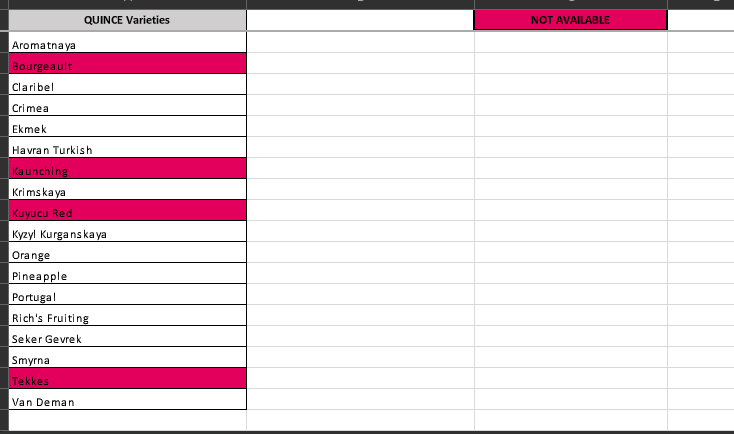
I had some local PA quince last week and it was picked early half-green looks like (maybe not picked last week persay, but I’d guess picked a month ago and put into storage from a local food re-seller) and it became kinda a bit more yellow on counter … but instead of becoming full-yellow it just started developing brown spots so i cut out those parts and used it asap. Maybe try the Pineapple variety (main variety 99% of the time in grocery stores thats grown in CA i heard). As they usually pretty yellow in stores and taste pretty good (although they aren’t considered fresh eating variety, i still enjoy them cut in thin slices fresh).
Maybe try growing Crimea aka Krimskaya, thats a good fresh eating one one (although I tried Aromatnaya at same time and they both good fresh).
I just I bought some Aromatnya Quince grown in San Diego county. I am actually able to eat it raw as slices and chunks. It has a strong aroma that’s different from the other quinces I’ve purchased imported from South America, which I’ve always assumed were cultivar Pineapple. I do like the Aromatnya better raw. The other quinces I get are pretty sticky to your throat even when sliced on a mandolin. Aromatnya has a bit stronger flavor profile of something that doesn’t compare to anything else I’ve eaten.
A potential drawback is the other quince I’ve bought was as flavorless as Wonderbread, so I could eat it without getting tired of the flavor. This one has a flavor, so I can tell I would get tired of it like anything else. All the more reason I’ll want to multigraft.
The only reason I might be convinced to start with a different variety as a base tree is if this one’s ease of eating made it prone to Coddling Moth or other diseases. (I currently have both Pineapple and Aromatnya started, but I only have space to keep 1).
I can tolerate eating aromatnaya raw, which is better than most quince. I have found Pineapple to be the most disease free here in the PNWet. Kuganskaya and Crimea are the two that I think taste really good and I eat them raw. They are both called Krimskaya in Russian apparently. I have heard that Krimskaya means “pineapple-like” in Russian, although I don’t speak Russian, so I can’t confirm that.
JohN S
PDX OR
Yes I remember them too. Because I have them quoted in my 1 page cheat sheet on Quince.
In the USA, Crimea = Krymskaya, which we think is transliterated as “Krymskaya Rannyaya” from Russian (Крымская ранняя), meaning Crimean Early. The Aromatnayas at the store approximated either of these appearances: https://nbgnsc.ru/node/9 https://nbgnsc.ru/node/10
… which is to say they had no neck, looking approximately like lumpy apples.
In contrast, photos of Kuganskaya and Smyrna often show a neck like a pear.
The earlier varieties are more likely to be harder and more astringent and require cooking to the edible. And you have to check the storage duration with each variety. One Green World likes the variety Van Deman, but it definitely requires cooking and it looks like it turns purple when cooked. When raw it should be so hard like a raw potato that Coddling Moths would be less likely to target it. However in the YouTube videos I’ve seen with it, the leaves showed more Cedar Apple rust than other varieties. However in these videos they were harvesting the fruit, so I don’t know that the fruit was badly affected.
My ‘Pineapple’ quince (planted 1992) has had a minor rust infestation in random years, while nearby pear and apple trees are badly affected. About half of the quince fruits are affected by a fruit fly larva. The raw potato hardness comparison is a good one, but in a side-by-side test, my money would be on the quince.
Requested edit complete (see below).
P.S.: Apples in this neighborhood have multiple (sometimes many) worm holes per apple; the quince seldom has more than one per affected fruit.
Could you please edit your post to make it explicitly stated which trees get fruit fly larvae and which do not? I’m known for misreading things, and I think our non-native English speaking colleagues could have difficultly.
One Green World has some small quantities of varieties I don’t see listed anywhere else under “Special Collections - Quince.” And Feralwood nursery has some seedlings that came up wild in North Carolina, from a mother reportedly not showing any signs of blight.
How different is a quince from the grocery store vs home grown? I’ve heard quince is easier than apples and maybe even pears to grow and was considering a tree,
99% of what you see in stores (minus farmers markets) is probably the variety called Pineapple from small farms , read it was all mostly from about 300 acres in California.
I think it’s still pretty good fresh (if it’s very bright yellow and aromatic/ripe), but most people cook or make jams with quinces.
There are ones that are considered more tender/sweeter for fresh eating that you can get from nurseries. And ones that are kind of experimental that might be more disease resistant. Mine would get a lot of Quince cedar rust and more recently fireblight.
I don’t think they’ve gotten them completely disease resistant (like I think I’ve heard people say on the forums their Bobevs Triumph or Claribel still got some diseases), I might be best to just choose for flavor like Crimea/Krimsksya, Aromatnaya. I’ve tried both and they’re very good… A thinly sliced Pineapple from store that’s ripe (yellow and skin smells aromatic) is also to me really good fresh still (If you can handle a little astringency).
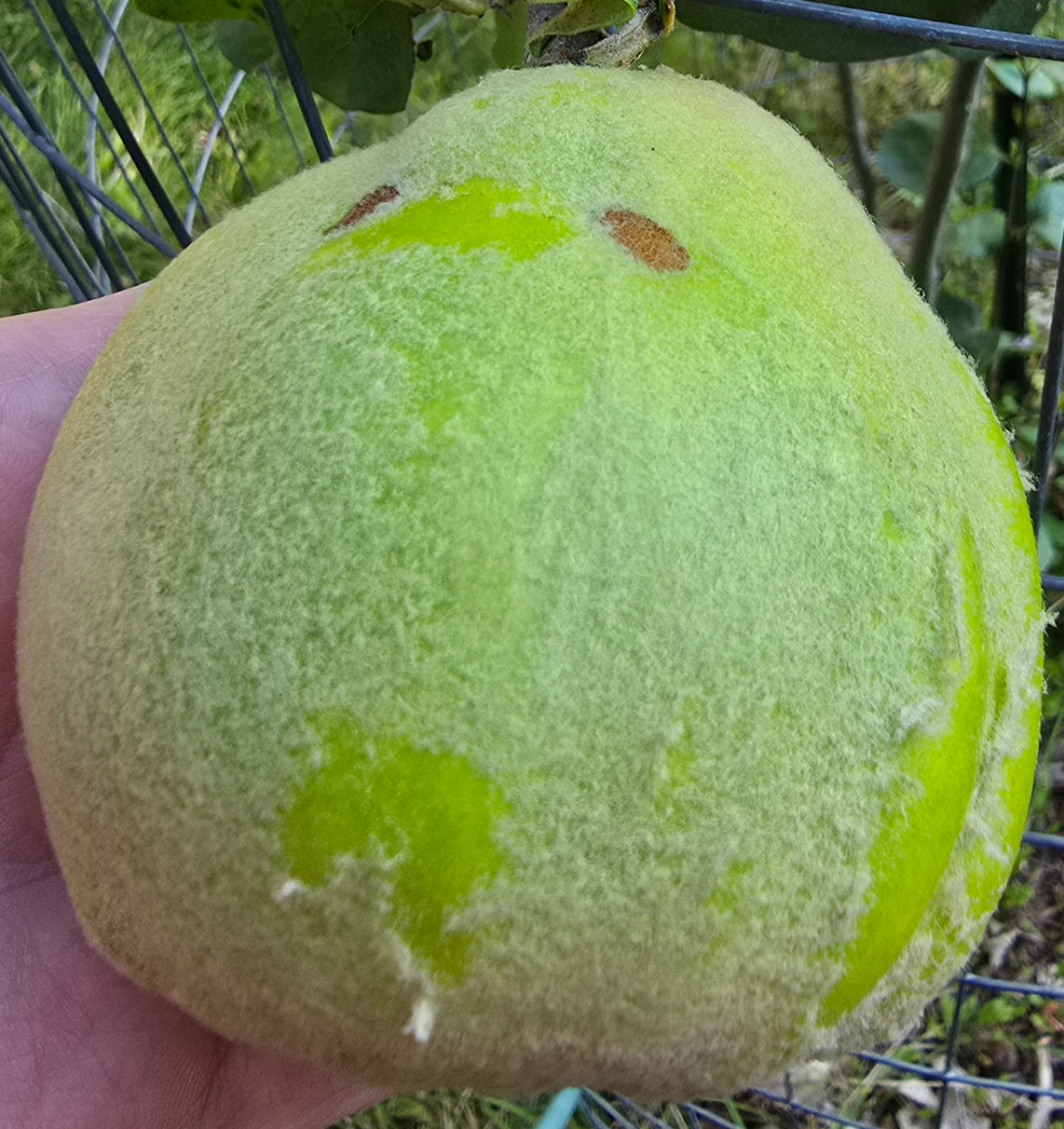
Bobev’s Triumph. The trees are still very young, and the late freeze toasted a lot, but this one held onto 3 nice specimens. I unwrapped a clemson bag to take a look. I did not spray this year. Didn’t see much fireblight.