Im not sure about the next generations of seeds that folks are selling from her efforts… and how that will change the genetics.
Her original trees i think also could be the ‘Navaho’ that Reagan is studying… its a theory.
Not much has been said about this and i think some folks are turned off by ‘white peach’…but Indian Free and Blood are also white peaches… that turn red when they lack water.
So for those folks growing Iowa white… maybe try one tree by restricting water and putting down a barrier if needed…to get the full flavor profile… as they are grown in the reservations.
I have no doubt that pre colonization that seed was traded from West to East and South to North by Native Americans. This is a pretty good history of Indian peaches in the South… as ship captains often had very thorough journals.
Rising Star, Blushing Star, Glowing Star, and Galaxy have given me little to no PLC. On top of that, I’ve lived in Olympia/right next to the only rainforest in America and it rained more there than anywhere else in the PNW according to my daily weather reports and me wishing it would stop raining. I’ve moved from there and have a little less rain but so far, those 4 varieties I’ve observed have had almost no issues in the rain here.
I’m growing more/other peach leaf curl resistant varieties by the looks of it however, I’m still in the process of doing inventory on everything at the moment.
Elberta as well, has had very minimal PLC for me. This is everyone’s second year in the PNW with me.
Big D also has had next to no PLC, HOWEVER it has suffered branch die back from whatever got into its blossoms but it’s already put on over a foot of growth per new limb.
I agree, the Stellars are excellent quality peaches. I have Blazingstar and Coralstar. Both are great quality and excellent producers although I dont share your luck with PLC resistance as both of these are very susceptible.
Of course you and I do have quite a climate difference…
I decided there is no pattern. Silly peaches. I have about 20 now if you count nectarines. The first 10 trees have been planted 6 seasons now. I keep journals for all my fruit including weather and frosts. Anyway, the same tree will have 20 fruit no curl. Then next spring catch curl so bad it completely defoliates and regrows all its leaves.
While its neighbor peach, does the opposite curl pattern. Or one that gets curl every year is clean now, while all my better resistant ones get wiped that year. Silly peaches.
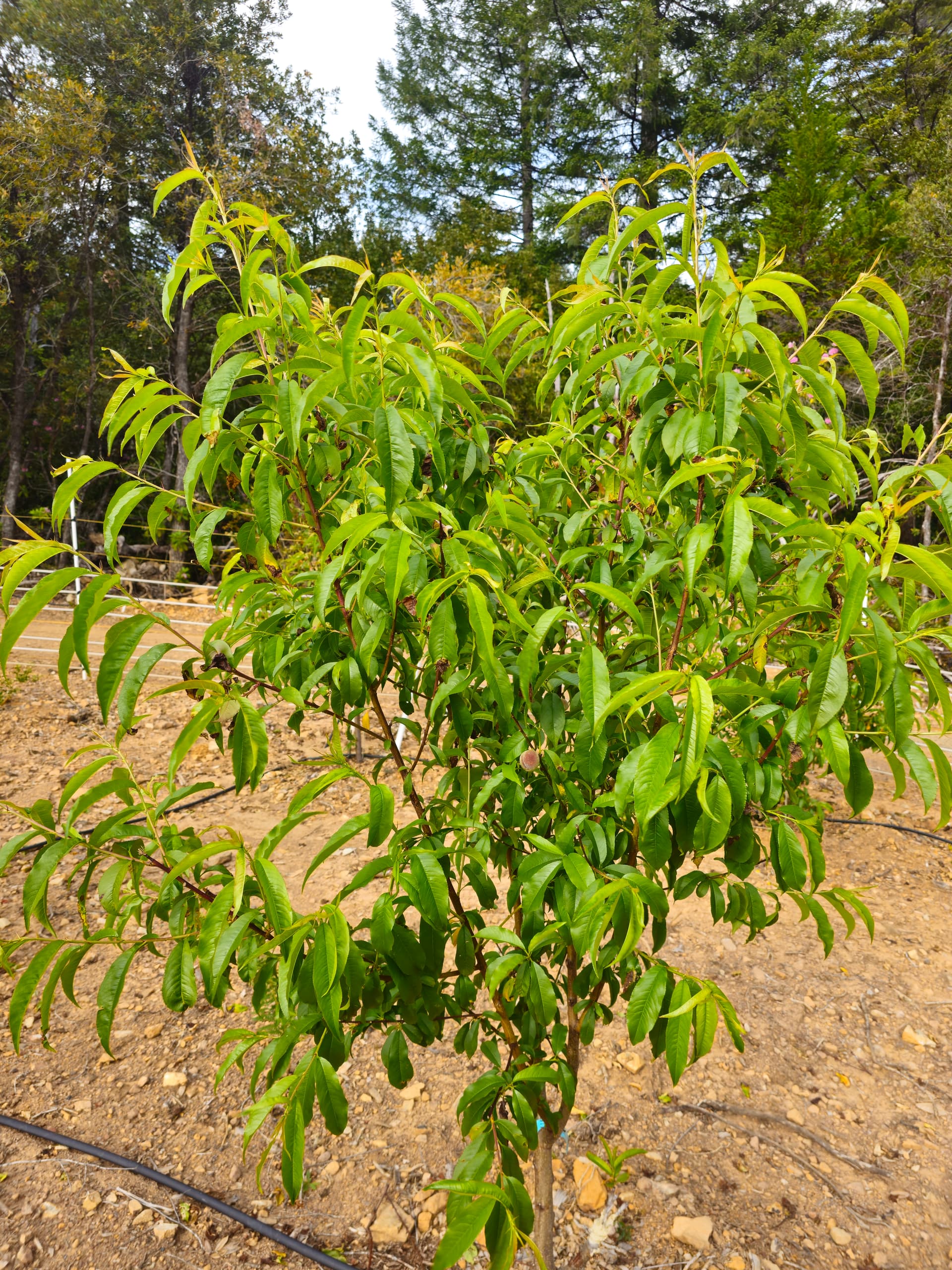
This is the first full winter that my newest peaches have experienced, and thus the first decent test of PLC tolerance for my Oregon Curl-Free.
It did much better than my elbertas (future rootstock trees). The elbertas took a serious beating and were heavily defoliated, only just coming out of it now. Meanwhile, the Oregon Curl-Free appears to have gotten hardly any curly leaf, and has grown out of it in strive.
Oregon Curl-Free:
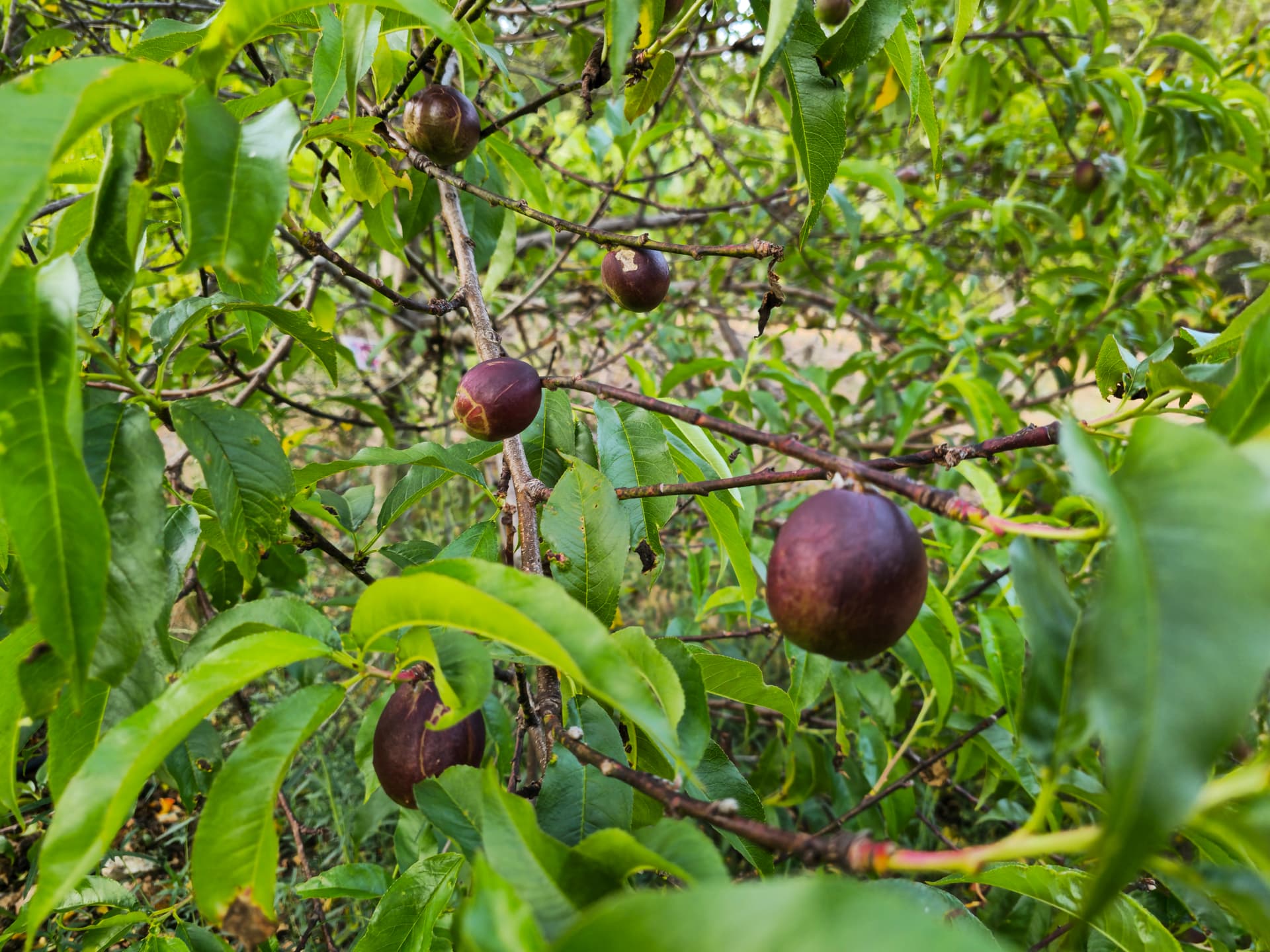
My Curl-Free set some fruit this year, so I’m hopeful that I’ll get a decent taste of it. I also just grafted Frost peach onto it to see how that compares in the future.
Of course, my Fantasia nectarine got hammered by PLC, as always, but set a suprisingly good crop this year.
I noticed that your Elberta is closer to the tall pine trees. I’m wondering if they have anything to do with PLC because the side of my Elberta facing then had a tiny bit of plc but the side that isn’t facing is, doesn’t have any.
Same with my other varieties. I even turned one around to see if it would happen more and it did.
I’m wondering if my stellar ones don’t have any because they’re far away from the run off rain is the pine or other trees
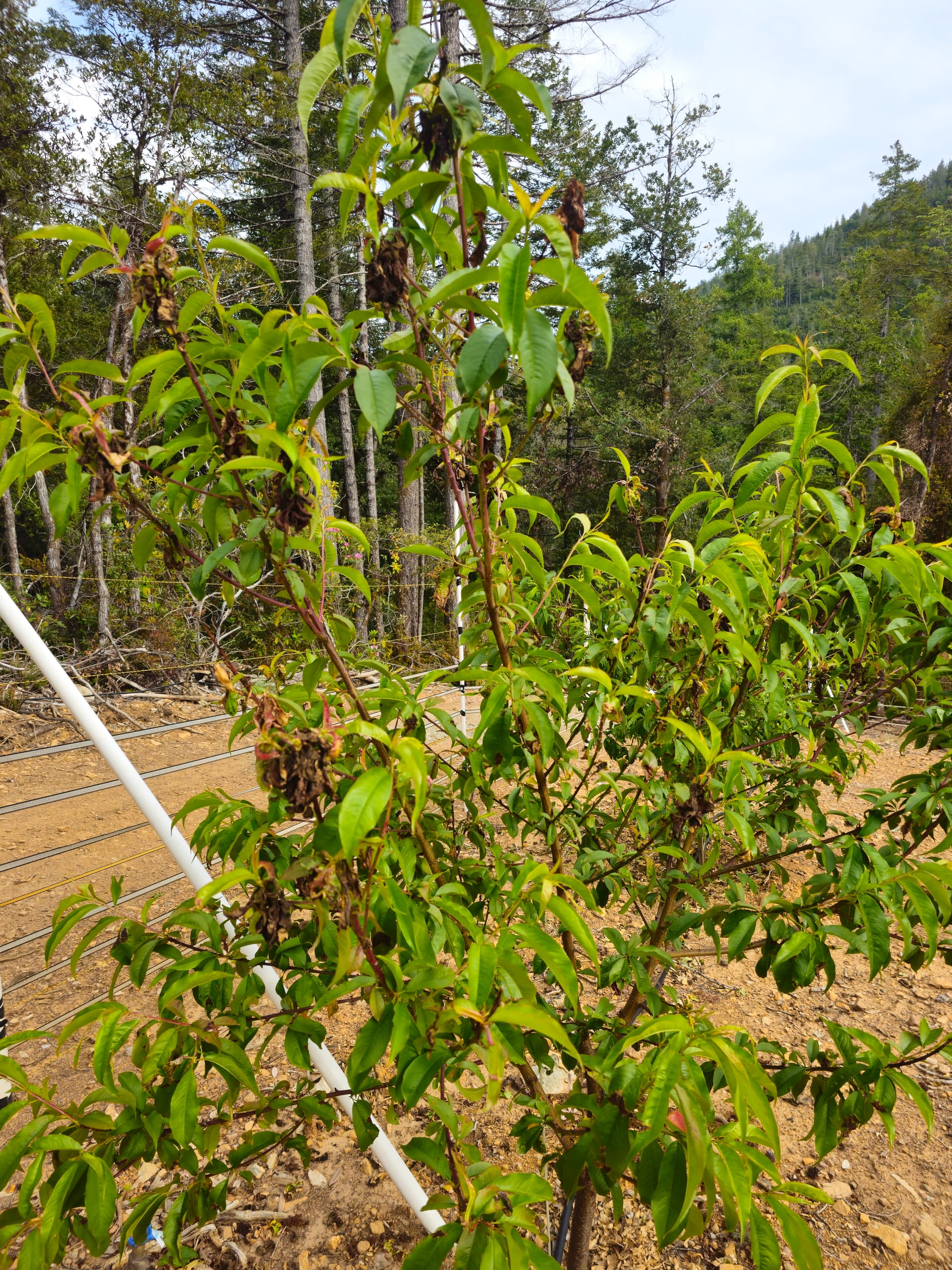
That elberta is about 20 feet from the nearest Douglass Fir. It is one of five, and among the elbertas, I haven’t noticed any correlation between distance from forest and PLC so far. The worst off Elberta is actually the most exposed, furthest peach tree from the Doug Firs, but I didn’t take photo of it because I also pruned/grafted it heavily (without success,) so it was already sort of beat back from the start. Currently, it looks very bad, with nearly 100% PLC on its remaining branches, and it hasn’t shown any signs of trying to grow out of it yet. Perhaps that is due to pruning stress, but another elberta by it that I hacked even more severely has come back great (and most my grafts took).
My garden is oriented so those Douglass Firs don’t provide much shade or general influence on my garden/orchard. Maybe your problem had something to do with the Doug Firs being on the shady side of your trees, which, in turn, was a little cooler and damper, facilitating a more favorable environment for PLC?
IME typically the first year of planting they don’t show any curl or very little and it starts showing up. This year most of my trees showed a handful of curl even after sprayed with LS twice during the dormancy. At my FIL’s property I sprayed once and Betty peach probably had 15% curl. Only exception is Salish summer peach which showed no-curl in both locations but the fruit-set is dismal and I might remove it after observing another year.
My Morton Nectarine has definitely seen leaf curl… Very minimal, probably under 15% foliage affected and did not appear to hurt the tree. Halehaven peach 10ft next to it did not seem to fare any worse however.
It is likely somewhat resistant to PLC as claimed but I have seen it lose leaves to it with my own eyes. In fairness this tree was not fertilized or sprayed. Seedling peaches from local pits grown a few feet away got the leaf curl real bad however.
This is the 3rd year that I’ve had them. I got them in Colorado a bit ago. Last year i let them grow out and we were moving so the ones i wanted to try fruit from got knocked off anyways. And i had to do a full systemic and spray heavily before i stuck them in the trailer in July.
In 2020 i started my new planting area of peaches. 9 varieties, 4 trees each all from Adams C. and Cummins. They looked to be 2 year trees. Do to very poor planning on my part I was out of the country during most of the ideal spray window for PLC. I did manage to get one late spray on them but they had already swollen buds by that time.
The PLC was bad enough that the trees could not recover. I lost 3 Blazingstar, 2 Coralstar, 2 Klondike White, 2 PF 13, 3 PF 15, 2 PF 17 and 2 White Lady.
I also lost half of 2 Redhavens. The only variety to come through with all 4 trees intact were the Contenders. I would surmise that was due to the late bloom.
I sprayed first week of January and around valentines day, in my case lime-sulfur being a contact fungicide might not have been effective for buds already infected. If using copper or systemic fungicides I think one spray timed 2nd or 3rd week of February will be effective.
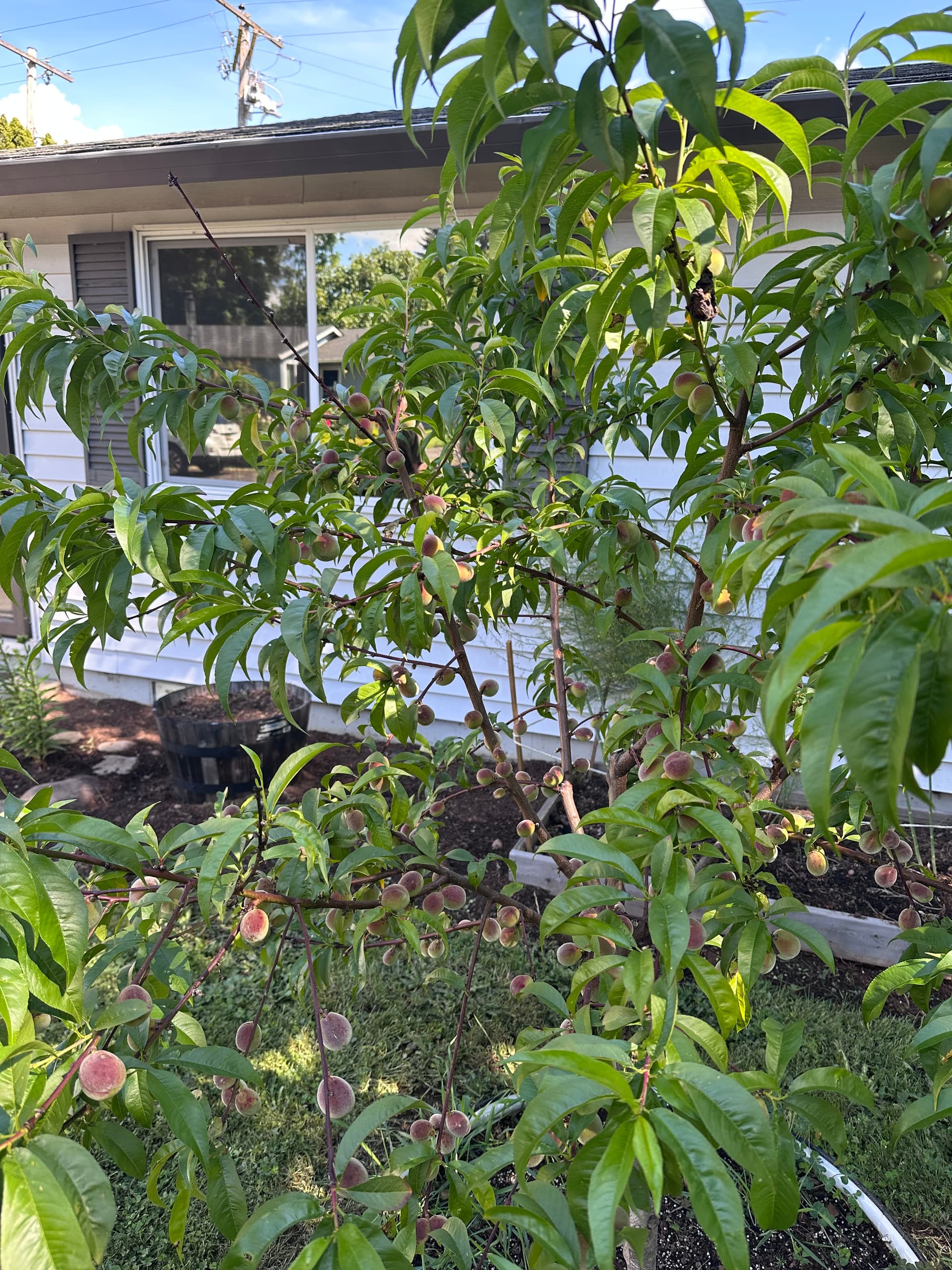
Picture from the Betty peach which had the most curl with a January spray, yet but managed to set really well.
After trials and tribulations I have concluded spraying is the way to get good quality peach/nectarines in Western PNW. Of all the resistant varieties Frost is still the best.
I think that a good spray schedule is the conclusion that most people come to that have been at it for a while. The so called curl free peaches dont exist in this neck of the woods.
I used to grow Frost many years ago not for any curl resistance but for its real standout capability for our area which is to always set fruit.
Over 30 years ago, with my first peach row, i would not get peaches every year. In fact on average i would say i would get some peaches every 3-4 years. This was true for all varieties except Frost. Every year, without fail there would be a crop on the Frost. I never liked the quality of it though and quit growing it long ago once climate change blessed me with being able to grow any peach.