Looks like the herbicide 2,4-D mixed with Clopyralid can be absorbed by the roots of shallow-rooted trees and shrubs and does affect them.
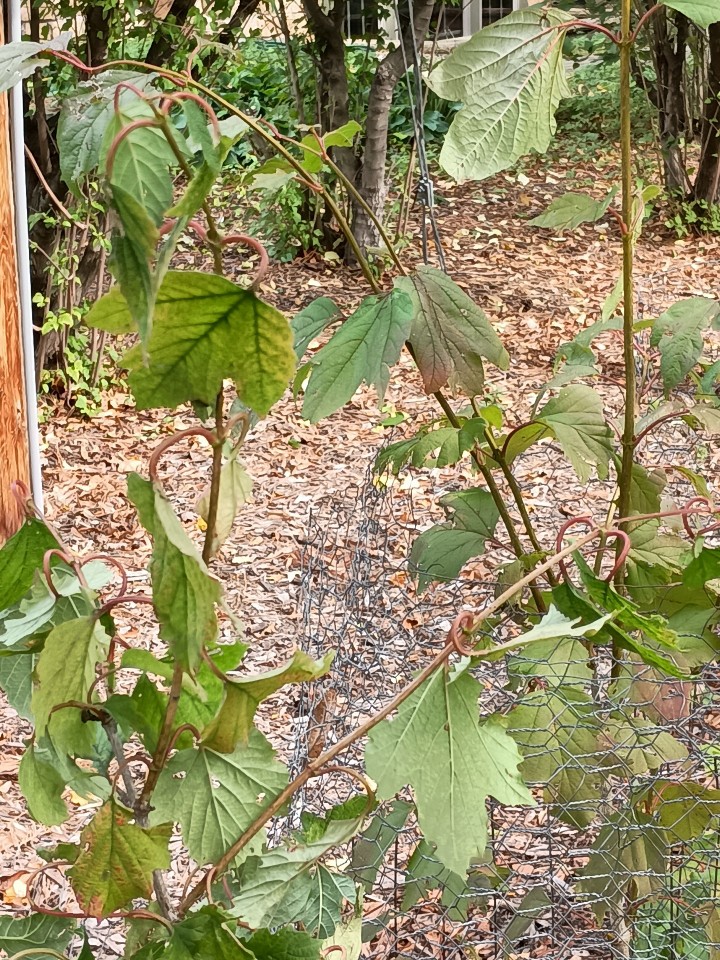
This picture shows 2 Highbush Cranberry (Viburnum trilobum) 14 days after the ground cover weed Creeping Charlie was sprayed with lawn herbicides 2,4-D and Clopyralid around the base of the shrub in the foreground. Note the curling and spiraling of the leaf stems in the left foreground but relatively straight arc-shaped leaf stems on the shrub in the right background. Weeds were present from a distance of 2 inches to 36 inches from the trunk. The concentration used was 0.4% Clopyralid mixed with ~0.37% 2,4-D Amine – the latter approximately the same as the concentration out of lawn weed and crabgrass killer bottles attaching directly to a garden hose. Highbush Cranberry’s root structure is shallow and spreading.
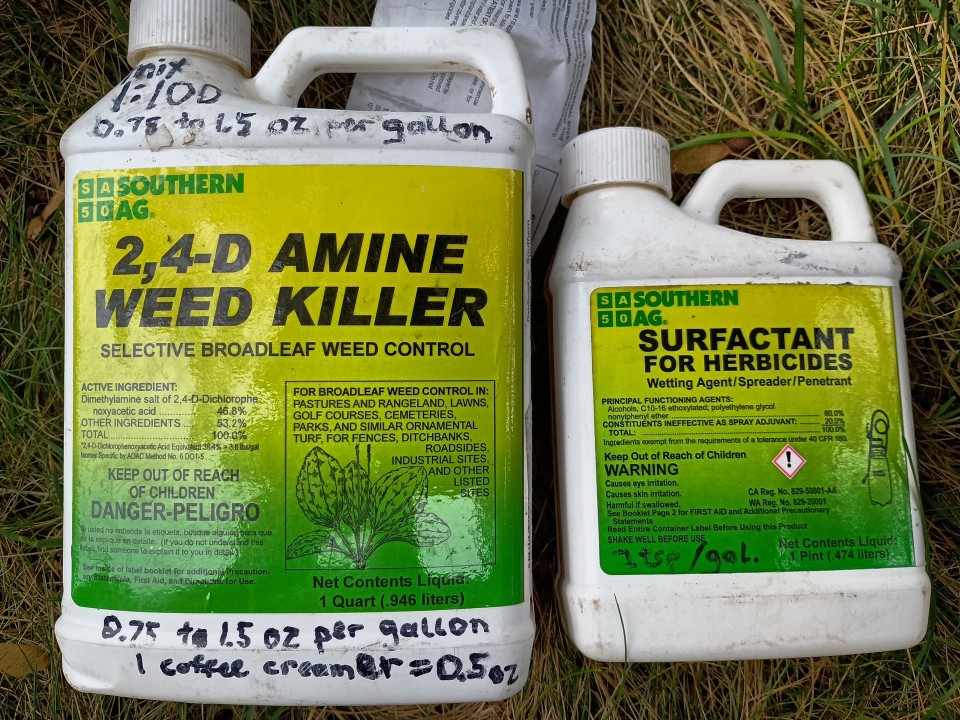
I found a couple gardening-related posts stating that shallow-rooted shrubs can absorb 2,4-D through their roots, and that the half-life is 10 to 14 days in soil. I also found posts that the combination of Group 4 herbicides (auxin inhibitors) (such as 2,4-D and Clopyralid) has synergistic effects on weeds. Even though Clopyralid is supposed to be the more targeted herbicide that I use in prairie restoration, I see that it can be taken up by shallow rooted shrubs as well, especially if surfactant is used. I had seen my Creeping Charlie be practically unaffected by 2.4-D already, so my notes for that day would suggest I was trying to overcome what I thought was chemical resistance. I use the surfactant because my first treated weed for prairie restoration was Crown Vetch and it needed surfactant.
(Methods Section: 1.25 ounces of 41% Clopyralid and 1.5 ounces of “46.8% Dimethylamine salt of 2,4-D-Dichlorophenoxyacetic acid” was combined and mixed per gallon (128 ounces) water => ~ 0.37% active ingredient, along with a little surfactant “Alcohols, C10-16 ethoxylated; polyethylene glycol”. Application was via narrow fan nozzle from a backpack sprayer, aimed below leaves of the shrubs. Shrub height is ~ 5 feet; image shows top of shrubs. Application date 2026-09-11 during the the last 2 hours of sunlight, daytime temperature ranged 62-86°F, with temperature decreasing from high in hours surrounding application time.)
In prior years while doing prairie restoration, I’ve observed browning and dropping of spruce needles after weed forbs were sprayed around their base using the woody herbicide Triclopyr ester (“Garlon 4”). In that case the spruce trees own natural mulch had prevented forbs from growing within a foot of the trunk; trees were about 10-15’.