Bob, I have been using those aluminum tags for a few years, they get the job done at a pretty low cost. One thing I think Bill recommended and I have started doing is using something like 17 gauge fence wire or thin electrical wire in place of the thin wires than come with the tags. I have found these thin wires to rust and break after a couple of years causing the tags to drop off the trees.
This is what I use for wire. 17 gauge Aluminum
You can get 250’ of it from Home Depot for under $5. It sused for underground pet fences. Its heavy gauge but since it’s aluminum it’s easy to bend and twist. It won’t rust either.
1 Like
I’ve had a few homemade tags (aluminum cans/ballpoint or brass or copper strips/stamps) blow off because I didn’t have to loop tight enough. Last year I nailed a few on with a six penny nail. I put the nail in the trunk next to the grafted branch, not into the branch itself. Well see how that works.
It would be highly vexing to prune off a grafted branch because I’ve forgotten what it was.
1 Like
Aluminum wire is a good idea. I use copper wire which is even more long-lasting but its more expensive. I attach the wire with a staple gun, load it with the long staples and fire away!
I used many of those thin wire tags over the years and found the thin wire has about 5 years max in it. They also start growing into the wood; if you are replacing them with real wire make it 6" from tree to tag to avoid this. The aluminum on the tag itself can start to degrade in 5-10 years so I switched to copper tags, same idea of impressing with a pen but copper instead of aluminum. My copper tags are now 5 or more years old and are still highly readable. Solid aluminum also works well, but most of those tags are thin aluminum wrapped around cardboard.
speedster1, just make the grafts good  , clarkinks, I like to leave a lot more loop in my wire so there is room for many years of growth before risk of girdling.
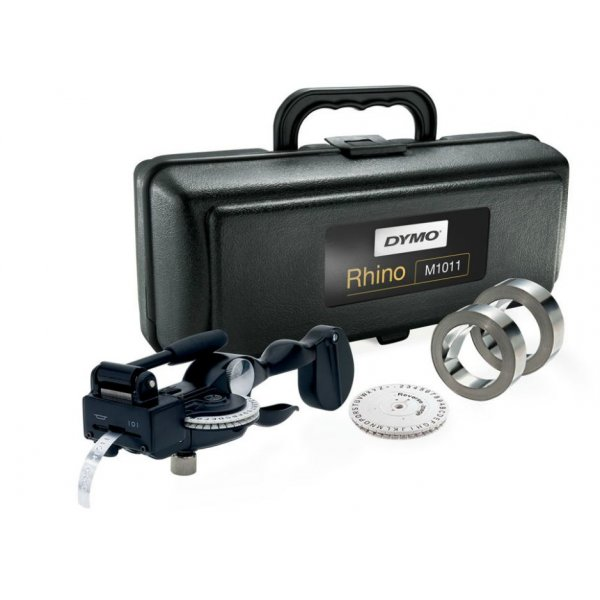
I use a Dymo embosser that can imprint on aluminum or stainless tape. I’ve learned that I prefer the stainless. It seemed like an extravagance when I was more frugal, but I’m liking it.
Based on a suggestion, probably from this group, I tie it with stainless safety wire, a spool of which should last me at least 10 years. They sell it at Harbour Freight for like $6. I usually make a 5 or 6" loop for new grafts and then pinch it, or twist it 180 degrees so it is tight enough to not come off, but will open up, instead of girdling, as the limb thickens. Maybe I’ll try Scott’s idea and staple some.
The labeler includes a hole punch.
2 Likes
I have a few unknown pears from leaving the tag a little loose to account for girdling once and I came back and they were all blown off.
By nailing or fastening alloys to a tree you are making contact to the ground with water. This will make a sacrificial anode out of the tag if there is ferrous material in the ground. In that process the tag is transferring the alloy through the tree to protect the ferris material in the ground by electrolysis. Just like a zinc anode on a boat motor, or an aluminum trailer on a steel frame. The lower the metal on the periodic table always takes the electrolysis and decomposes first thus saving the higher one on the table. It actually traveled to it in some form and changes color in some cases. I’m not sure if the extent would be toxic, but if you cut a mature tree you can see the bleed marks. Steel nails turn wood blue. If you cut a big oak down and see a lot of blue at the trunk it means there is iron or steel up higher and you might not want to mill it. aluminum will last a long time if it doesn’t make contact with water to ferrous material. It may be best to strap it to the tree from the outside.
2 Likes
I’m fairly new to grafting but am an incurable documentor, so I keep this kind of info inside, safe and dry.  I draw a rough graphic in my gardening/orchard journal and label it w/ copious notes that may be of interest or importance later. If I did a lot of grafting on one tree (not there yet
  ) I’d take a picture and print it and label it, again with copious notes and future tips. This has served me well in gardening and other endeavors.
It may sound difficult but when you think about it, it takes less time, doesn’t rust or girdle, or blow away or electrostatically plate anything.
2 Likes
John, that sounds like the explanation of why the thin aluminum wires and tags break down, the thin wires get embedded in the trees in a few years and contact water in the sap, so the metal oxidizes. Not only does this break down the wires but it also affects the tags since they are also “connected” to the circuit. I have witnessed this on some of these aluminum tags, they get a white patina which I assume is some form of aluminum oxide.
If you are using thick aluminum wire I’m not sure its that bad, it seems like it would take 20-30 years to break down? But copper should be even better - other than the patina on the surface (oxidation with atmosphere) I have seen no oxidation on any of my copper wires or tags.
Note I used to know this stuff a lot better, I have a Chemistry degree from 30+ years ago which I have not really used since…
Scott, any aluminium you would encounter outside of a chemistry lab is covered by a very thin layer of aluminium oxide. Metallic aluminium is extremely reactive with oxygen and the oxide layer is formed momentarily when an aluminium surface is exposed to the air. This oxide layer is actually what makes aluminium products weather resistant.
I made a bunch of pop can aluminum tags in 2012. I folded the aluminum along the edges and used electric fence aluminum wire to hang them. Most are still there but the ones that dangled freely to the winter winds ripped off.
Stan, I’m not talking about the dull layer on the outside. Some of the aluminum tags basically turned to white dust over time, it was like something was eating them.
Johnny, I also had some of my tags getting ripped off by sustained blowing about. I am now using pliers to squish the wire on tightly so the tag is held firmly by the wire.
That’s strange. Aluminium is known to be “highly resistant to weathering, even in industrial atmospheres that often corrode other metals.” Among few things corrosive to aluminium are strong alkali since they can eat through the protective oxide layer. But contact with alkali is unlikely in normal conditions.
Another possibility, as discussed above, is galvanic corrosion:
“Economically, galvanic corrosion creates the largest number of corrosion problems for aluminum alloys. Galvanic corrosion, also known as dissimilar metal corrosion, occurs when aluminum is electrically connected to a more noble metal, and both are in contact with the same electrolyte.”
This probably was caused by connection to non-aluminium wires in wet conditions.
Interesting, I read the article linked above until the end, and it mentions another thing I never heard about before: Microbiological Induced Corrosion. If aluminium surface is in contact with an organic material, fungi which consume that material may excrete an acid that will corrode the aluminium.
1 Like
Jason,
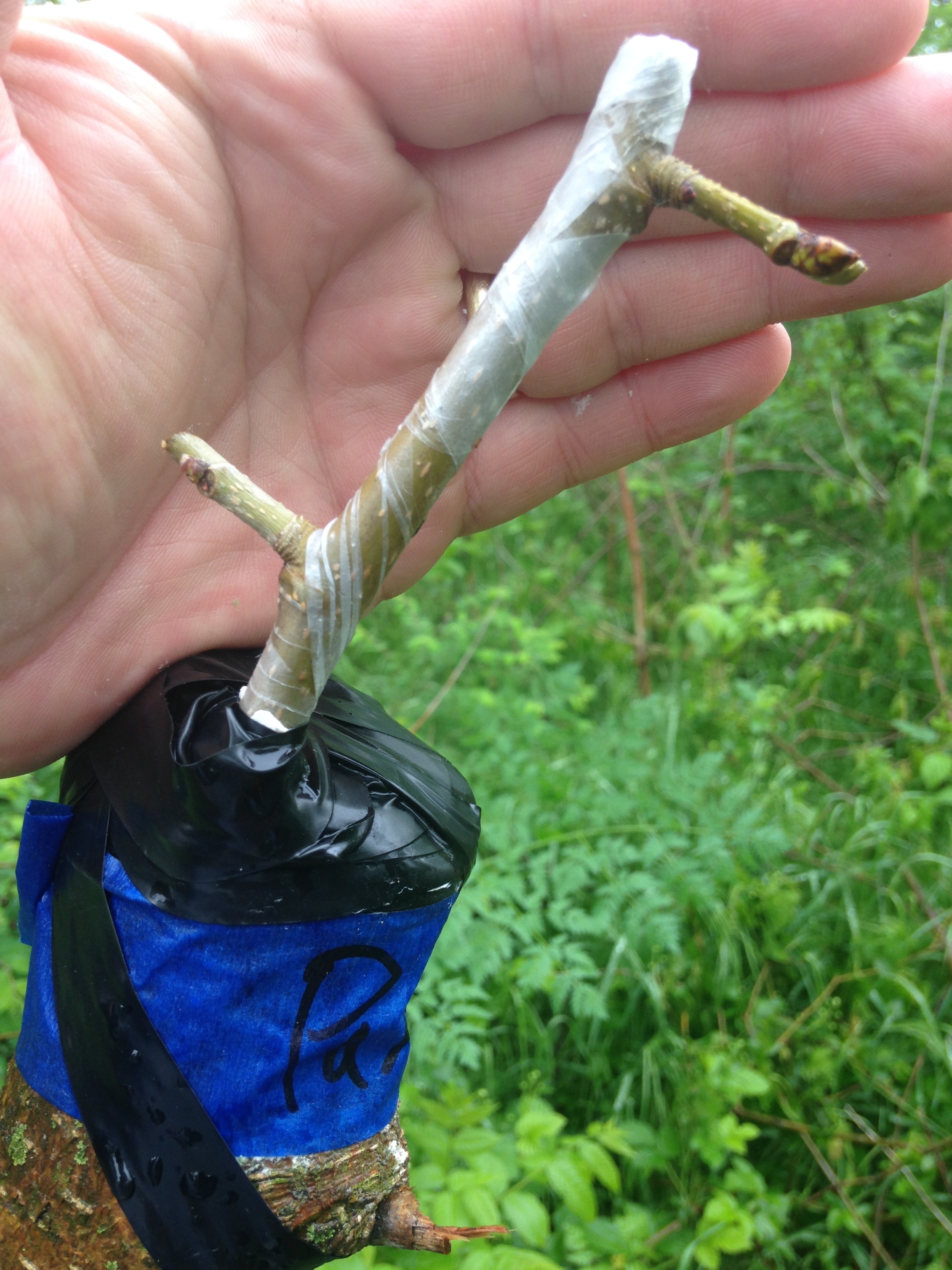
I hope they take for you.
Tony
Yes, I am very hopeful, I would love to have some mulberrys from these trees. One is by where I pile up my brush and I have burned it many times in hopes it would kill it since it did not make fruit. Grafting may save its life.
1 Like
Scott that’s what aluminium does when it becomes a sacrificial anode. The water acts like an electric wire connecting the aluminum to the ground and when wet electrolysis bonds it with any element higher on the table. Than the higher element is protected from corrosion and the lower element corrodes. Look up sacrificial anode. You will see what I’m talking about. Aluminum like zinc is low on the table and corrodes into white powder. They bolt zinc to boat motors so the engine doesn’t corrode. The zinc is lower on the table so it is sacrificed. We have an aluminum trailer that is all corroded where it is riveted to the steel frame. The steel frame is being protected by aluminum that is corroding instead because steel is higher on the table. The aluminum looses all its integrity and turns to a white powdery substance. That’s what galvanized metal is all about. They coat steel with zinc to protect it from corroding till the zinc corrodes away then the metal will start to rust. It’s not just a cover to the metal. I studied this when I built my wind turbine tower to protect the iron parts from rusting I hooked zinc to #6 copper wire and the wire to the iron that is underground. I put the zinc under ground as well and salted it.
Yes, I agree that’s probably what it is. I mentioned that above already after your first post on It, maybe you didn’t see that reply of mine. I was always puzzled why some alu tags would degrade fast and other would not.