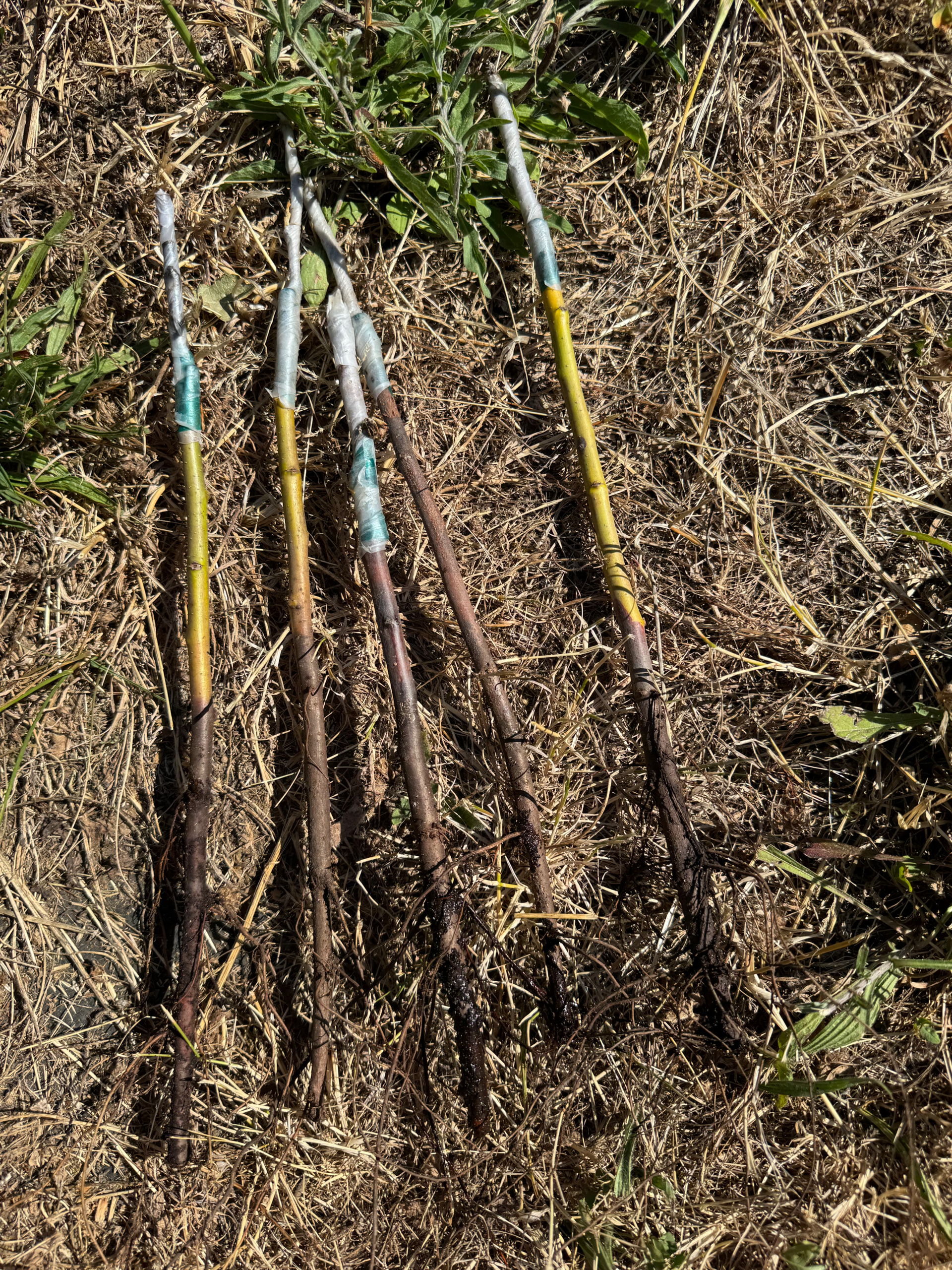
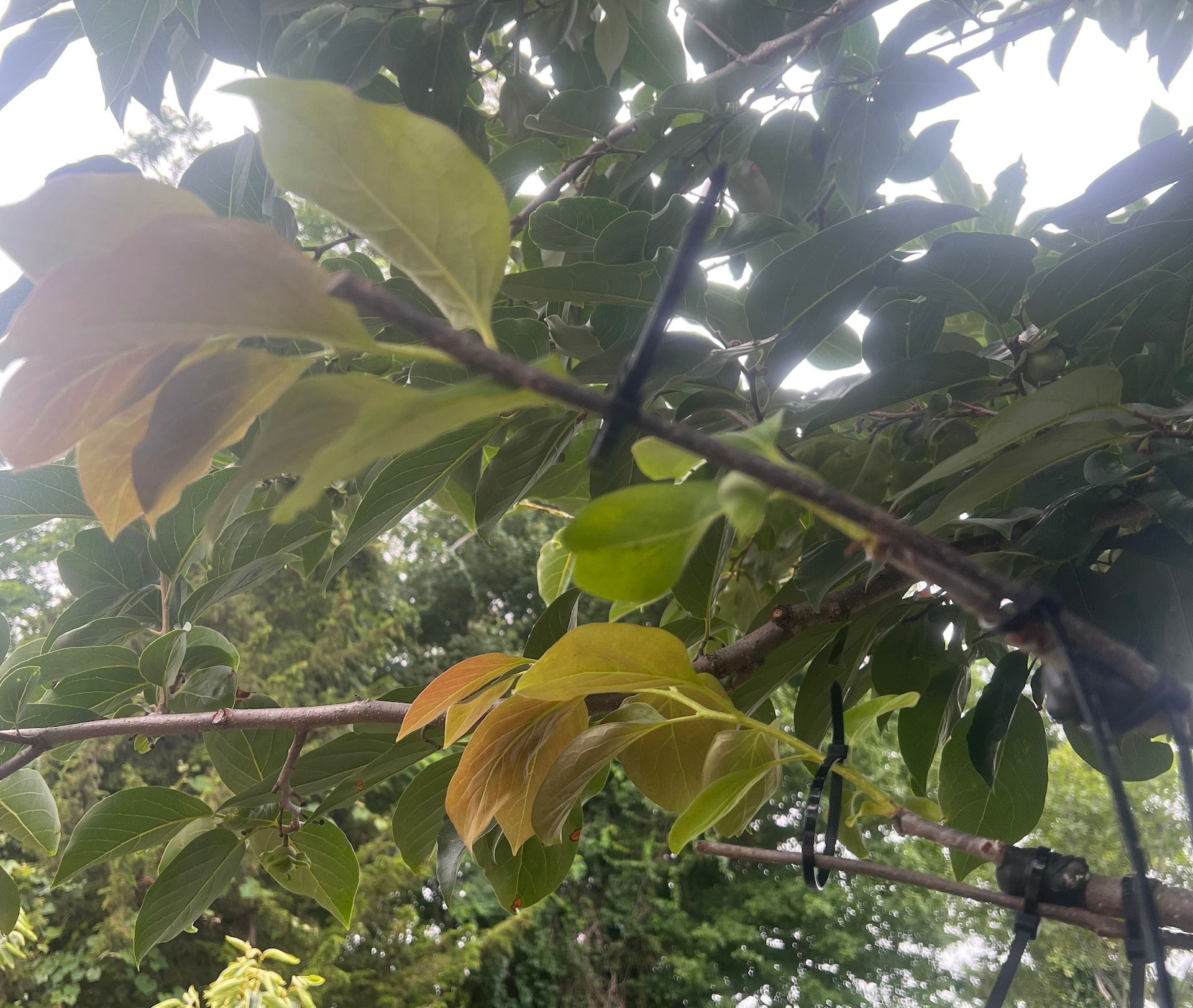
Here’s an example of poor rootstock killing a scion. All of these had a few small leaves that withered and died. I should have waited a year to graft these. Notice they all have very few roots. Some of them have been dead longer (brown all the way up to the tape) and some were just starting to show brown above the soil line.
A friend sent me scions from Kolgospnytsya. I put two pieces on a branch of an established Kasandra and one on the central leader of a potted Nikita’s Gift. I figured the Nikita’s Gift would be safe – a close relative; protected during the winter. The grafts on Kasandra are doing great; one is ~1’ long; I’ve had to stake the growth to guard against wind damage. But my Nikita’s Gift started to show signs of KSDS. The scion sprouted, began growing, and then withered.
I should have taken pictures and shared- thanks for sharing yours.
On mine, the first sign was the scion turning brown and I’d think the graft had failed. I’d give it a few days just in case. Then, I’d inspect closely and see the rootstock was brown right above the soil.
When I’d uproot them, they’d look like your pictures. The roots all dead and crispy.
This happened to me on a bunch of G.210. I agree I should have planted them out for a year before grafting.
I also wonder if it would have helped if I had left the leaves below the graft on the rootstock and let them grow. I’d like to try some experiments with that next year.
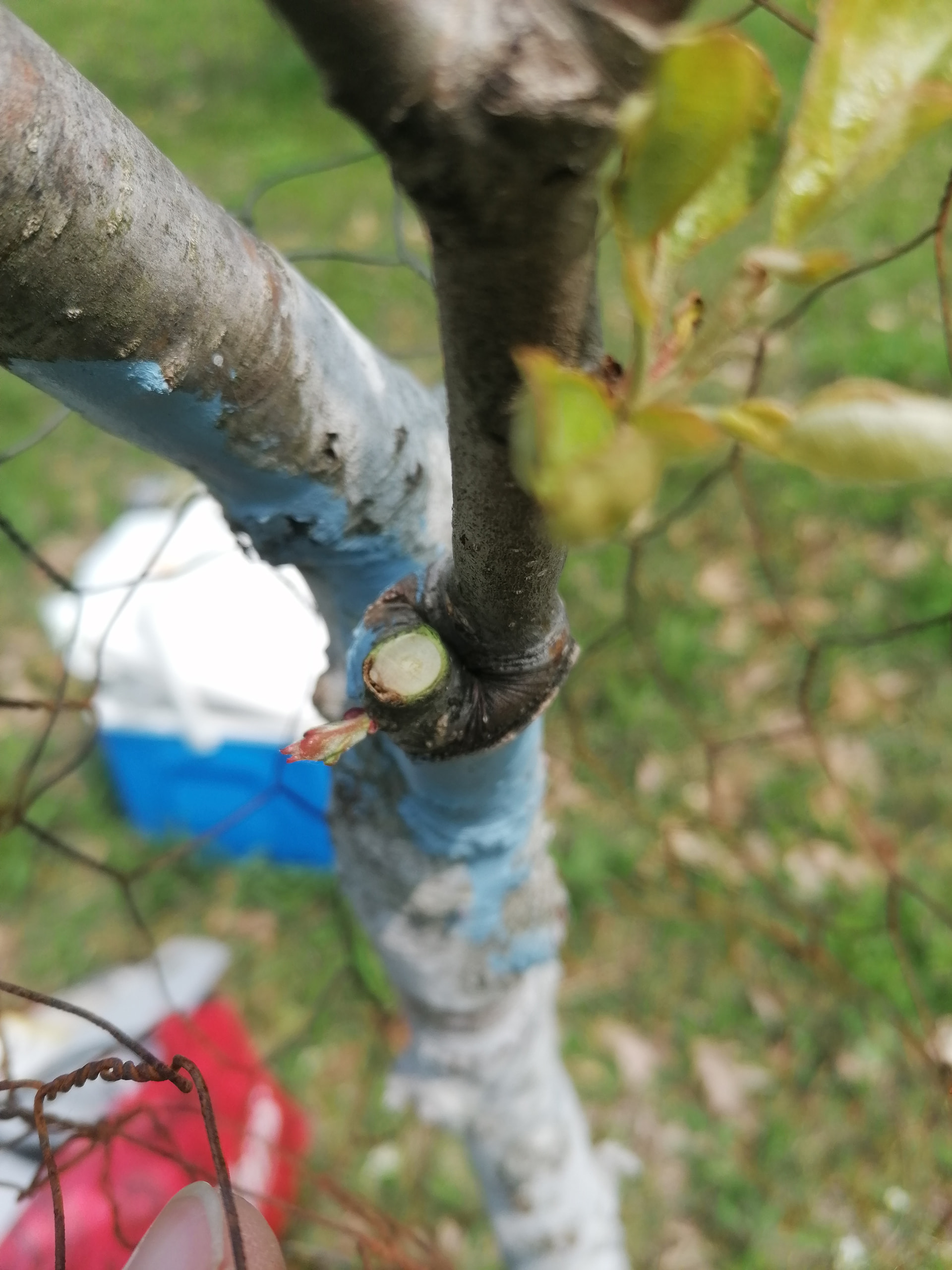
I’d be very careful, but I’d try to prune those ends back to the callus with your grafting knife I’d squeeze from the other side and trim one side slowly and try to break the last tiny bit, if you cut into the graft at all, leave it and come back to prune the other side once it’s healed.
They actually prevent totally healing and will be rotten wood in the core of trunk eventually, plus in my opinion, making fresh cuts makes callus grow faster again to cover the exposed wood faster.
It won’t close up until next year at least, but like this it literally could take 5 years or more.
This is one of my favorite examples, this took one season to close up because I left both of the cleft grafts in, then I trimmed it back to a tiny bud, so hopefully this will also close up nicely. Some cleft grafts, especially where one side died, probably won’t be healing for a few more years, and exposed wood is not great.
Like this one, I’m pretty sure this is the tree my father called a “tree with a bad graft” in his notes about the orchard, same tree actually and this is really going to be difficult for it to ever heal. I will definitely shave it back if it’s still like this and I have time, but the pruning, repairs, and cleaning the fields is probably going to take up all of my free my time for a long time.
I have two more little trees with dry-looking leaves on them. I suspect they’re going the same direction. Both are native Oregon scions that are hard to find (Apricot and Pacific Gold). I will probably order more than I intended last year from the same source, just to replace them, even though I wasn’t thrilled with the size of some of the scions, and three never showed (one was replaced by another I didn’t want. One was refunded, and the last was ignored). I got the rootstocks from Copenhagen, and about 8 of them were very small out of 50. I paid a pretty good price for them, so I am not mad about that. But the result was 8 teeny tiny scions on very few roots. The teeny tiny scions I put on better roots are doing fine.
Ram Fishman told me years ago to pick off all the leaves of the rootstock because they would kill the scion, but I’m sure he only used GOOD rootstock. I think if I had planted my less developed stock and left to grow all the leaves they want, until next spring, they would have been fine. If I get any more puny rootstock, that’s my plan next year.
I’ve been looking for any sort of research or experiments on whether leaving rootstock growth on or off would be better and I’ve found a bunch of things which I can sort of synthesize into some sense (and I will add it here later).
Most of the research is about budding and commercial apple tree production where the goal is small trees with lots of laterals starting two feet up.
Personally I like the Krymsk hybrid rootstocks best, but my apricot on myrobalan is doing about the same as my apricot on Krymsk, other than the suckers, but much better than it did for my parents’ European plums, maybe it actually is better with Apricots than it is with Euro plums.
Oh! I even have Apricot Apple! I’ve got two grafts of it on my Frankentrees, and I grafted over one or two whole trees too, and my sister should have one that I grafted and potted up for her too, maybe my mother’s friends have the other of those.
G214. Yes, Apricot is the name of the apple. It’s a hard, long - storing, semi orange apple. I’ve grafted 2 now and I guess 3’s the charm. The first one didn’t appreciate me moving it and the second one STILL has two tiny leaves on the very tip of the scion.