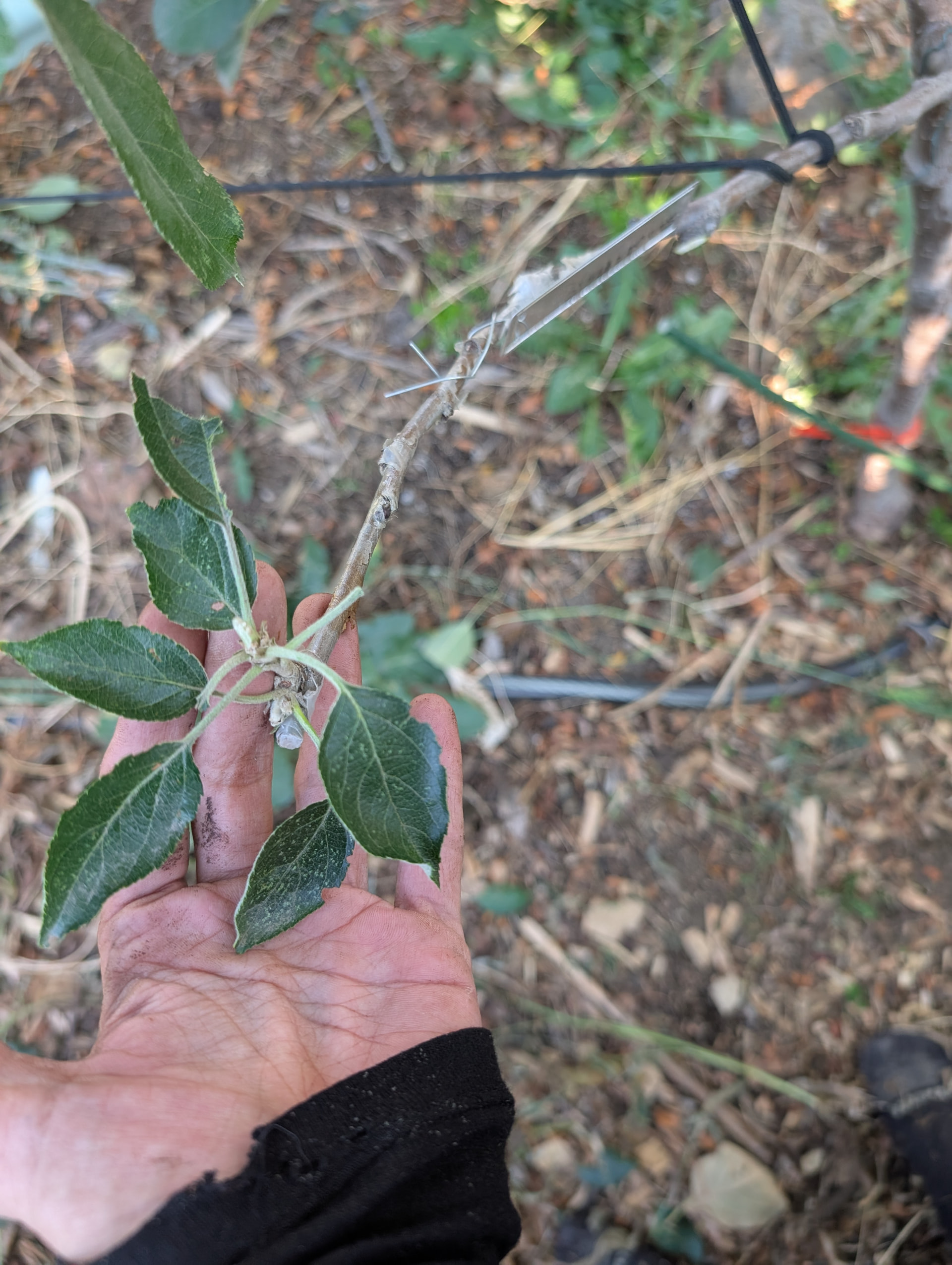
This year I’ve managed to support my new grafts ad hoc, but only after losing a few in a stiff breeze.
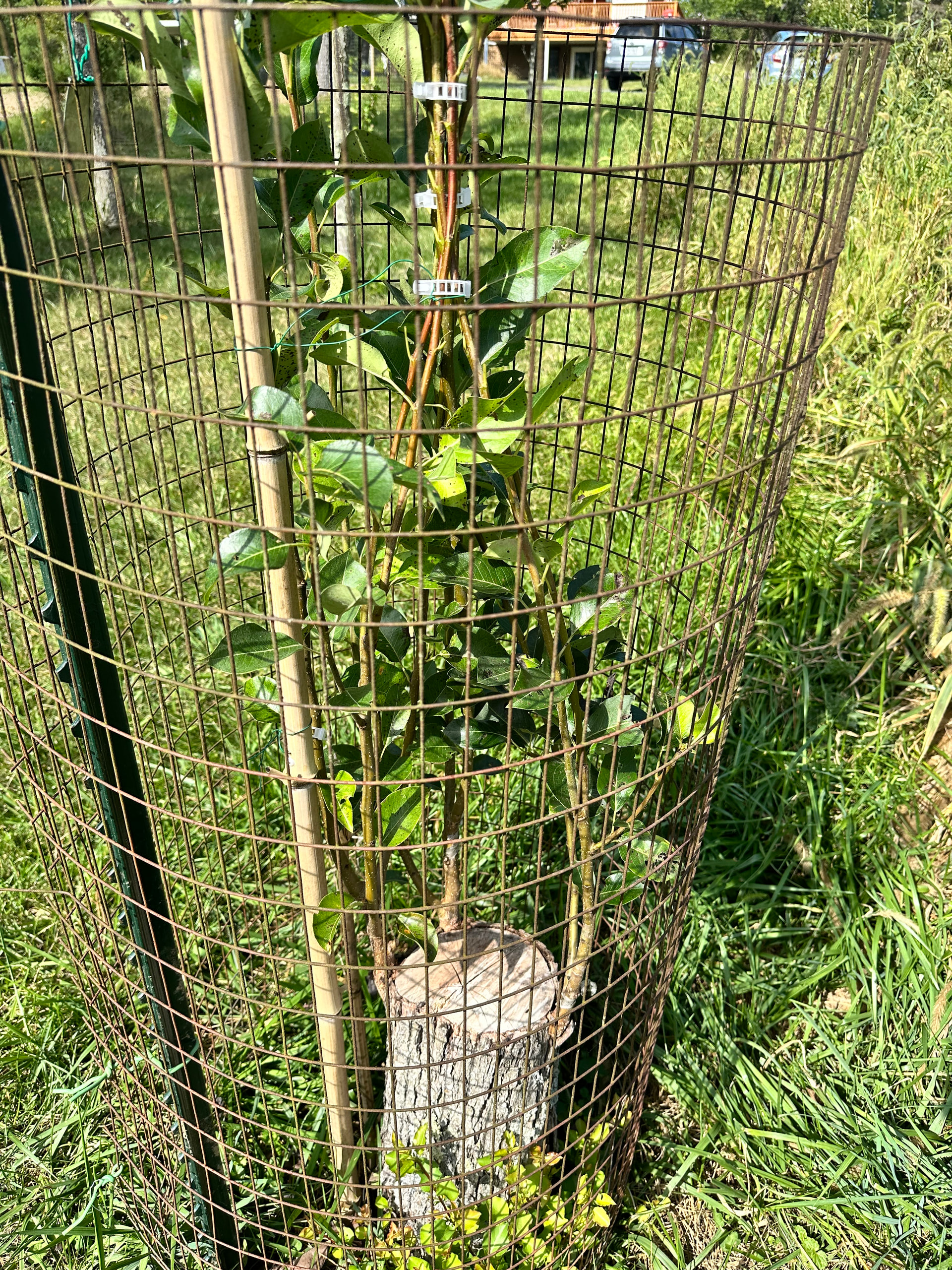
Almost all of my grafts this year were on dwarf rootstock within an orchard that has transitioned mostly to dessert varieties. [The cider apples are on semi-dwarfs elsewhere.] So the dwarf trees won’t get too big and they would have been supported anyway. I’m mostly concerned about one semi-dwarf that I top worked. Right now it has three growing grafts on a 3" trunk, each with a stake supporting / protecting it. It seems like I’ll need protection long-term.
The big pear is a concern too. Elsewhere I’ve stuck a 10’ rebar into the ground and used it for support. I may do the same for the pear.
Seedling pears here typically take longer than apples. I have a 9 year old graft of Rescue on a seedling trunk that doesn’t get full sun and still isn’t sealed over. While a graft of Kieffer also on a seedling trunk in the same location, grafted at the same time, sealed over several years ago. A Conference and Harrow Sweet on seedling trunks look like they might be sealed over after year 3. Not sure if the randomness is because of the unpredictability of seedling stocks? Apples so far typically take 4 +/- years.
Like I said earlier, no rot issues with sealant. I’ve seen snow pile up on the trunks in winter, but never any water pooling.
I would be concerned about a v shape on any heavy bearing apple. I left some apples that grew like that and ended up pruning out one side a couple years later, some due to breakage and some because I was afraid of breakage. Pears or light bearing trees may be ok.
If I were you I’d only leave one South or Southwest facing branch, and then shape the rest of the tree so that there are pretty evenly spaced branches facing all 4 or 5 directions, making a delayed open center dwarf with 4 or 5 equal leaders making your scaffold branches.
If you liked the lower branch it will be a quarter of the tree anyway and you can also graft it out, if you don’t like it you can cut the end and graft it or make it into a Frankenbranch to not lose too much of its size.
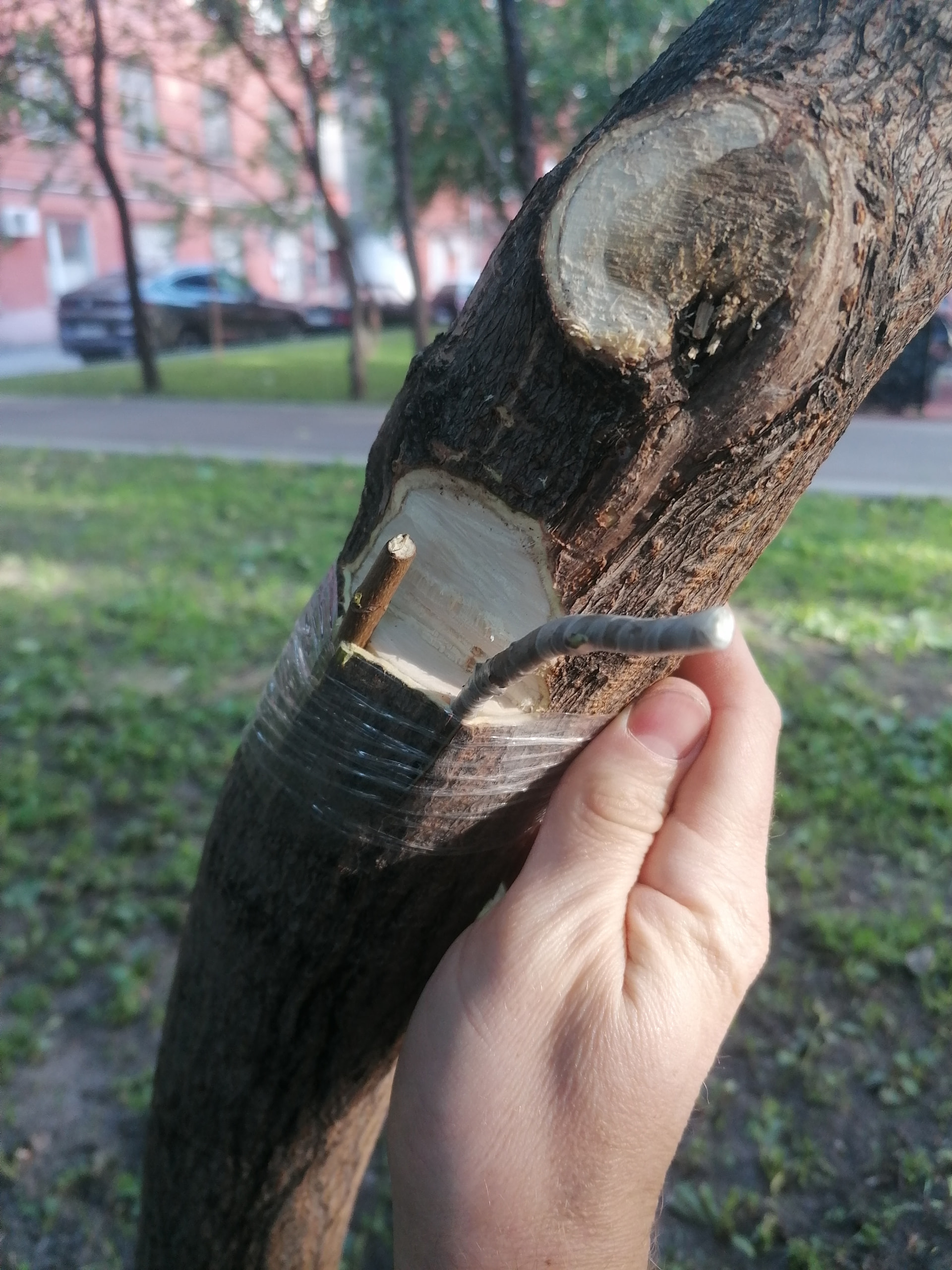
The Cornell test orchards do something called a “beaver” graft when they top work existing trees. I’m struggling to find a good article on it, but it appears that it’s common among NY commercial apple growers.
You cut out a portion of the trunk and allow the top to keep growing until the scion definitively takes, then the top is cut off.
Oh, I’ve been doing this as a summer graft….or it would be a great name for what I do: I saw a chunk out of a tree about 1/3 of the way in with a tall wedge cut out from the top down to the other cut, then I do a typical bark graft and in the fall or end of winter cut off the whole top.
I can’t find a picture now, I usually cut deeper than this, but I think this was shallow because it was already on the outside of a curve so I didn’t need the space from cutting deeper.
That Facebook page (Whitney’s Grafting) had these too and called them “Notch Grafts”.
They’re probably good when you have some of those trees that flood grafts… but I’m not sure why you’d use them on apple over just the standard bark graft.
I don’t think it matters at all whether I cover the top of my cut trunk. I’ve now seen enough grafts where the trunk wasn’t healed over that appear fine.
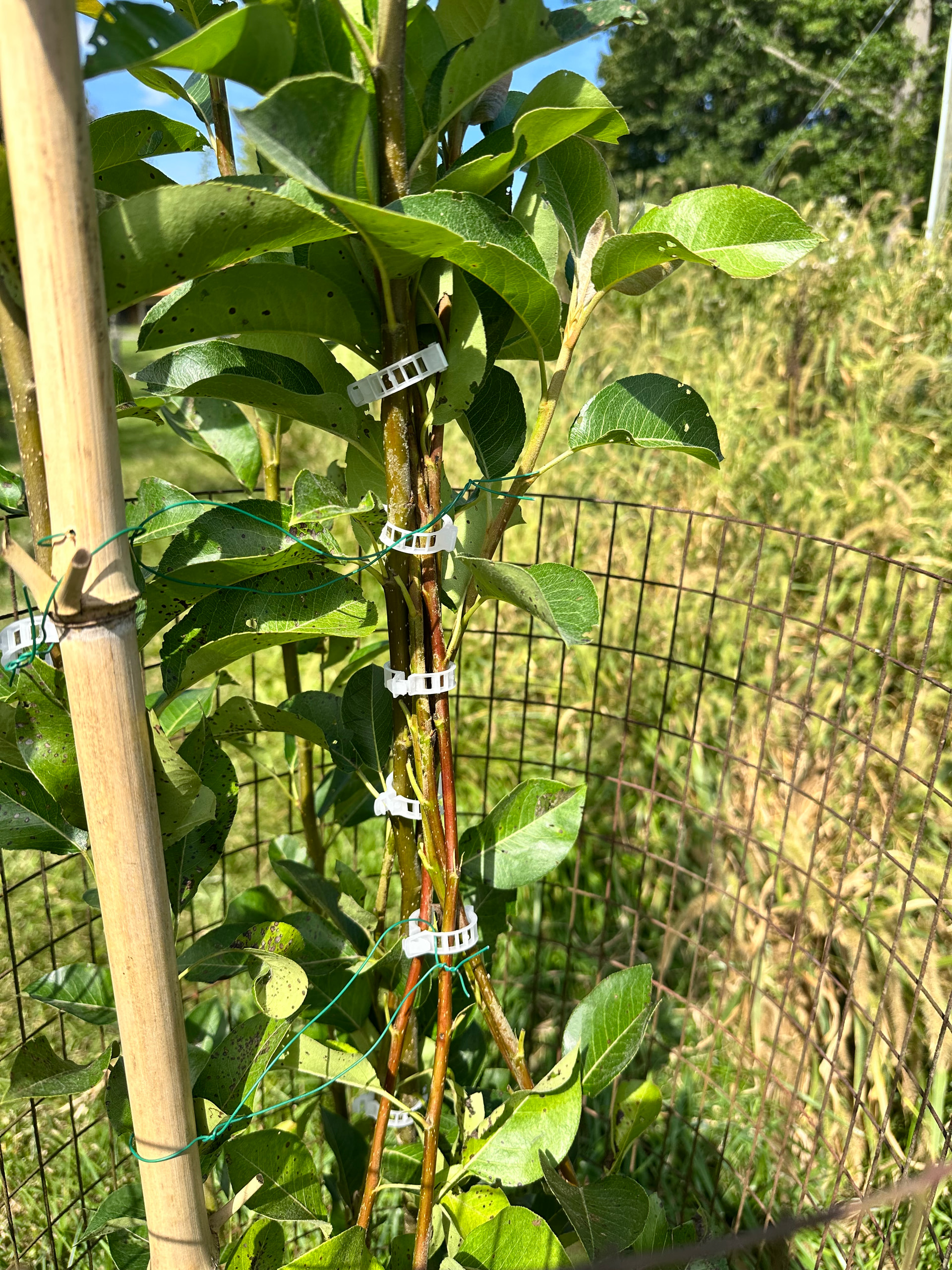
However, I did see a historical article where they braided grafts over the top of a trunk for stability. So I think I’m going to try braiding over the top on a couple trees.
Sooner than later. If cold for too long they fail to put out new roots. 8 to a 2 gallon pot. Grows 2 to 3 feet first year, “plant out" ideally in the fall or following year. I end up with 4 to 6 trees in 2 gallon pots for 5 or 10 years, fruiting the whole time.
I’ve been looking for that article. I read it a while back and have forgotten where it came from. It was definitely written before 1950.
I did find this video of these guys braiding a tree:
In the video they say they have topworked the tree and now they are braiding 2 to 3 “limbs” together to support them. They say it will make them “very sturdy”.
There’s lots places where you can see that just tying branches together they naturally graft - so I just went ahead and did that.
It’s definitely not fancy. I definitely put more than 2-3! We’ll see.
Personally I’d say you need two bark grafts for anything a one inch branch, and one more for each extra inch, so an 8” trunk should have 9 grafts, in the end, ideally that big there should probably be two trunks and the others should be just branches facing out and continuing to heal over the stump, or to braid re top together and make a much stronger single trunk, I’ll look for a link on that.
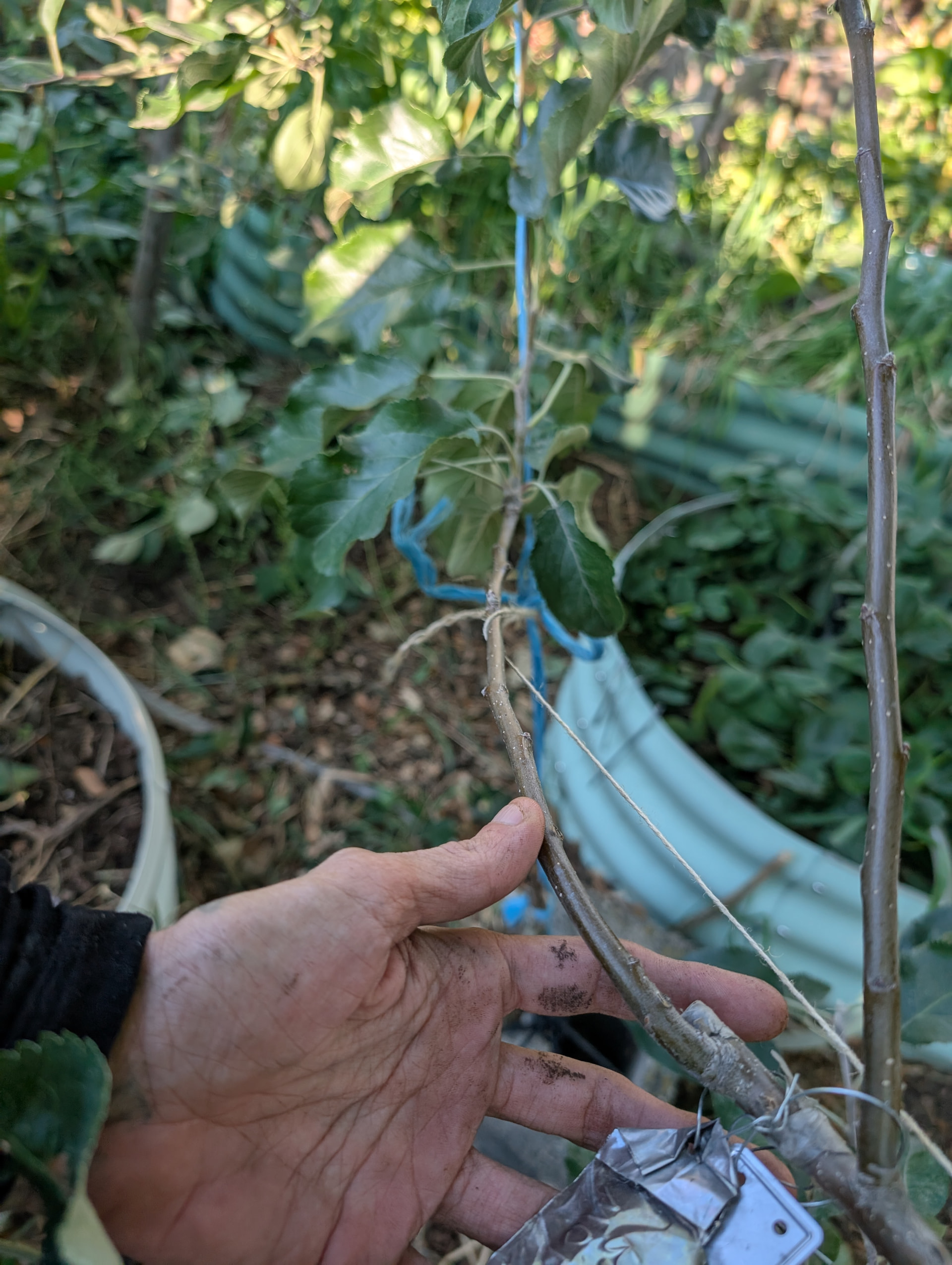
A small bark or cleft graft can be pruned to one new branch or leader and the other down to one shoot off to the side, forming a branch, I have a very successful example of a tree like this.
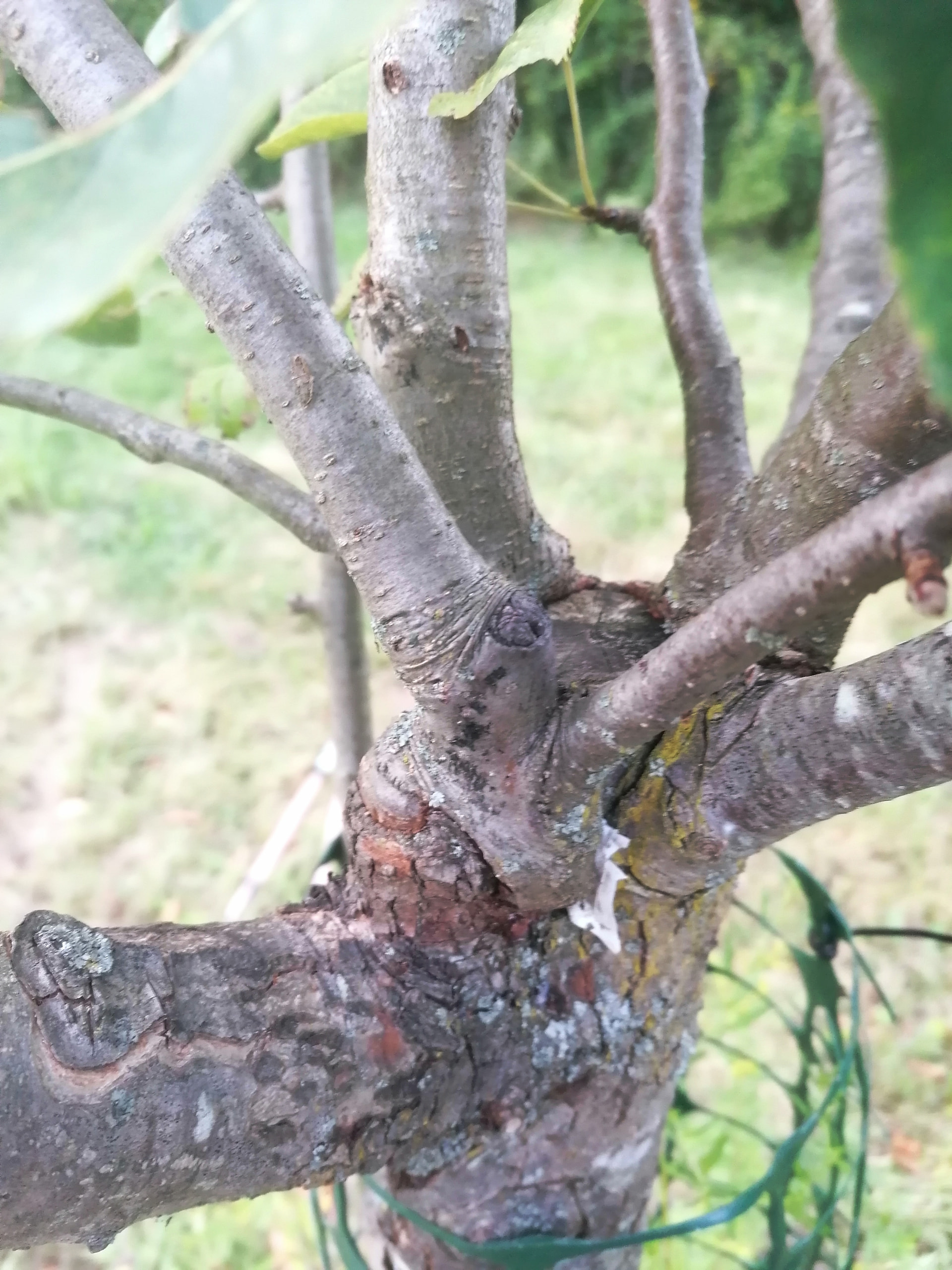
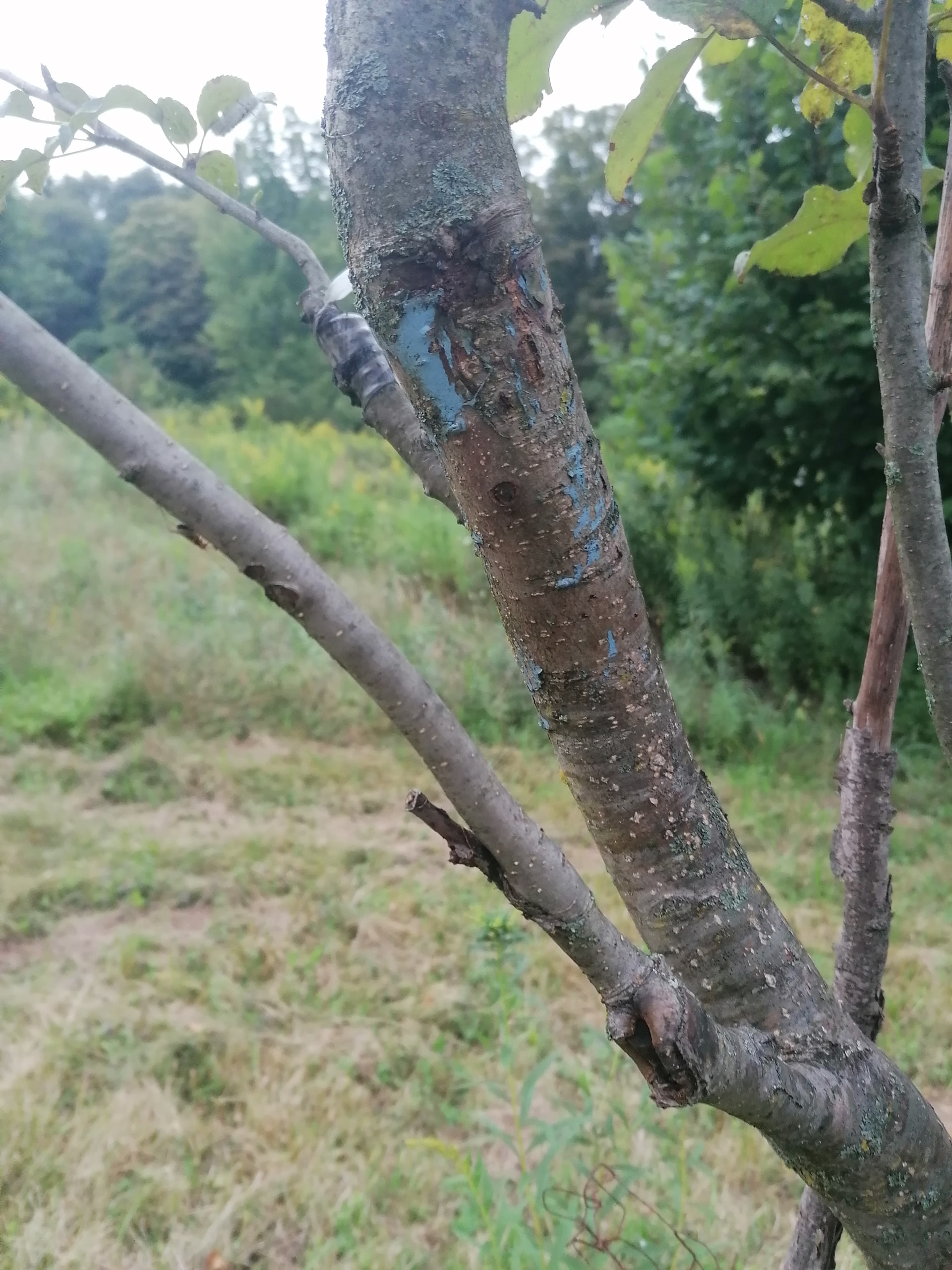
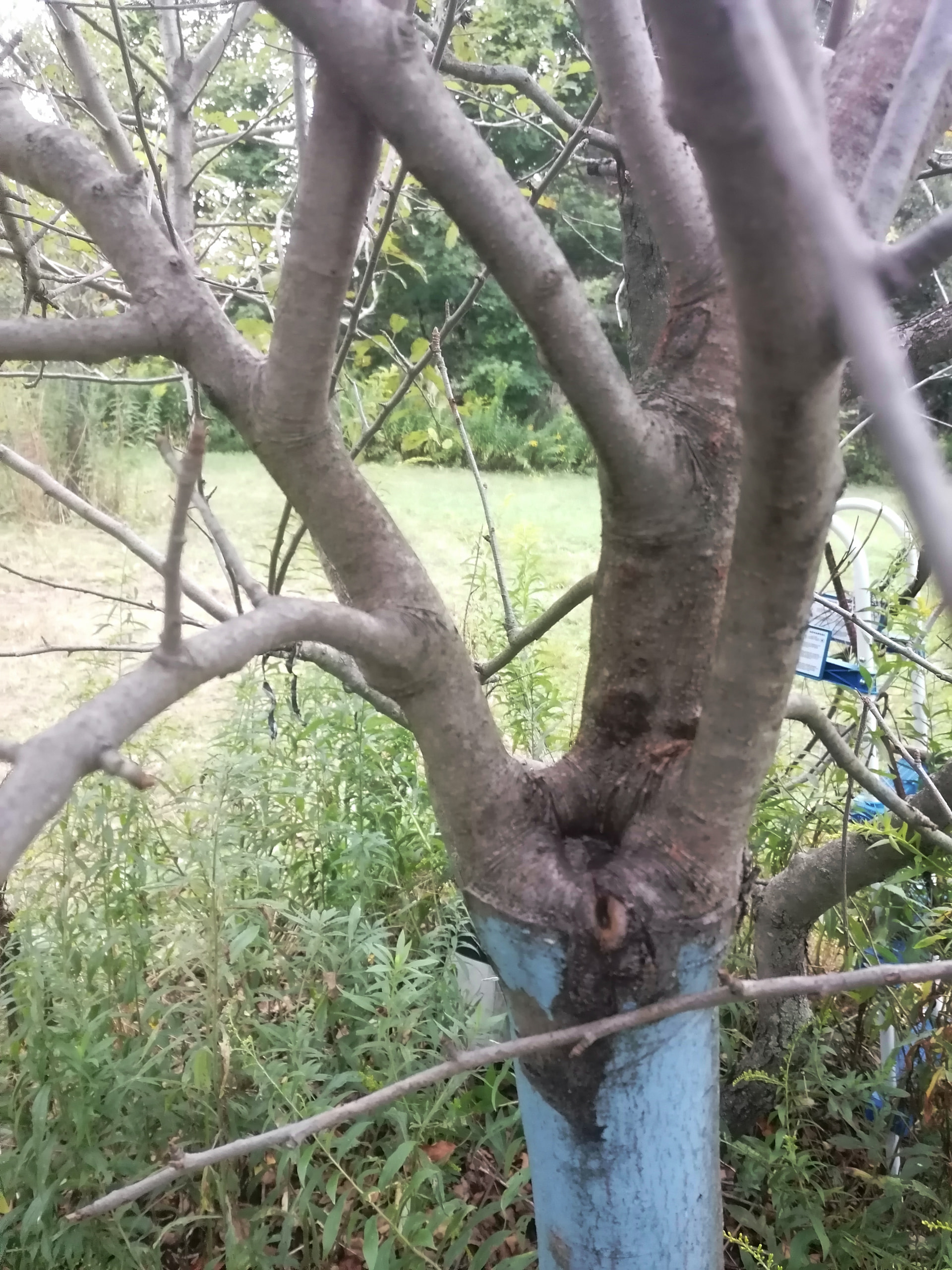
And the 3-4” apples I grafted only closed up in 4 yes where all four cleft grafts survived, where 3 survived it looks like they’ll need another 2 years, where one survived, I can’t even guess but 3-4 years is not nearly enough to heal over the open wound on 3 inch or more trunks.
But yes especially if you grafted it up a little way off the ground, training it to a goblet shape makes a lot of sense.
With bark grafts, shouldn’t the number of grafts depend on the circumference?
Circumference = Pi x Diameter. A 1" branch has roughly a 3" circumference. If that demands 2 grafts, as tiny say, then implicitly you’re recommending one graft every 1.5" of circumference. So that implies TWO additional grafts for every incremental inch of diameter. For example, a 2" branch would have roughly a 6" diameter, requiring 6 / 1.5 = 4 grafts.
The really problematic part is reaching the center, the circumference heals up pretty well even with pretty sparse grafts.
If there’s only one bark or cleft graft on a 1” branch the opposite side will die back and it will be much harder to close up, this is true for even smaller branches with cleft grafts (more damage from splitting).
The center is the hardest place to close up, not the edges.
These are closed up, or almost, and still not closed up after 4½ years.
This discussion makes me think I misunderstood what had happened with a Colorado Orange graft on Geneva30. One side of a 1 1/4 inch stock had died under a cleft graft - it was evident when I photographed the break after a storm. Perhaps I should try again onto Gen30 with a young stock. You all are good for me and this little orchard.
It might be getting a little bit late, but I’m still bud grafting various plum varieties. Our falls are usually pretty warm (but wet), so I figure the grafts still have plenty of time to heal up. We generally are frost free until mid Nov, but last year I don’t think we saw our first frost until the first week of December. I may still graft a little longer, but I normally stop bud grafting/T-budding around the second week of Sept.
I noticed a strange occurance on a plum tree I green grafted in July yesterday. I was going to cut off this green graft, as it never came to life and sprouted new growth this summer. With the green grafts I’ve done in the past, they normally come to life pretty quickly (or they didn’t take and died). I was getting ready to cut the scion wood off, when I thought I could see green under the parafilm I’d generously coated the scion with. Gently peeling back a very small piece of tape, I could see that the wood was still indeed green. Very strange, it didn’t sprout new growth, but it didn’t die either. I guess I’ll leave it until next year and see what happens with this graft in the spring.
Granted. If we intend multiple grafts on the same trunk, would it make sense to alternate bark and cleft grafts? And to use the thicker scions for the cleft grafts? The bark grafts will quickly cover the perimeter; the cleft grafts will create fingers of cover extending into the center.