When chip budding do you try to place the new bud where the rootstock bud was originally ?
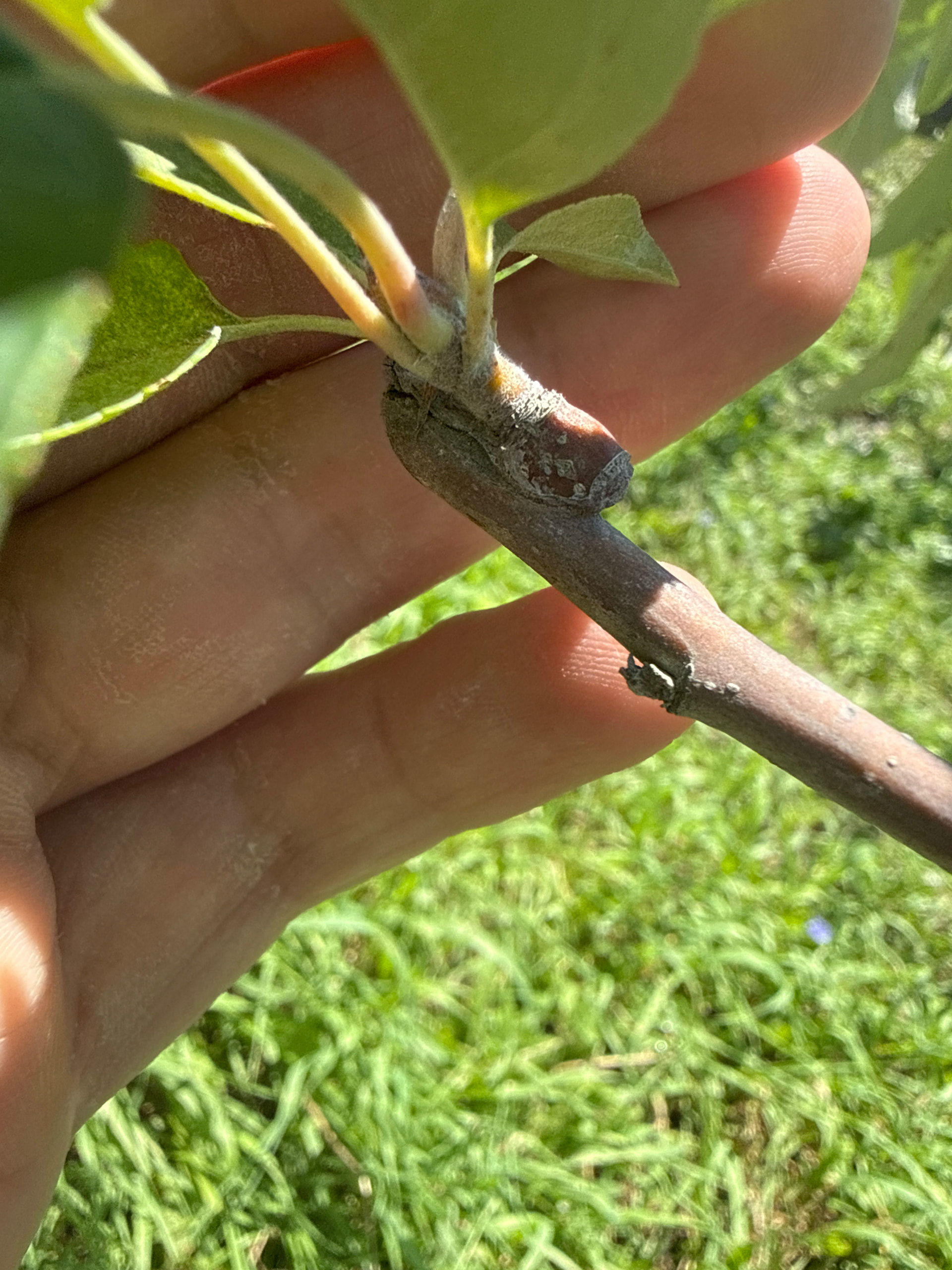
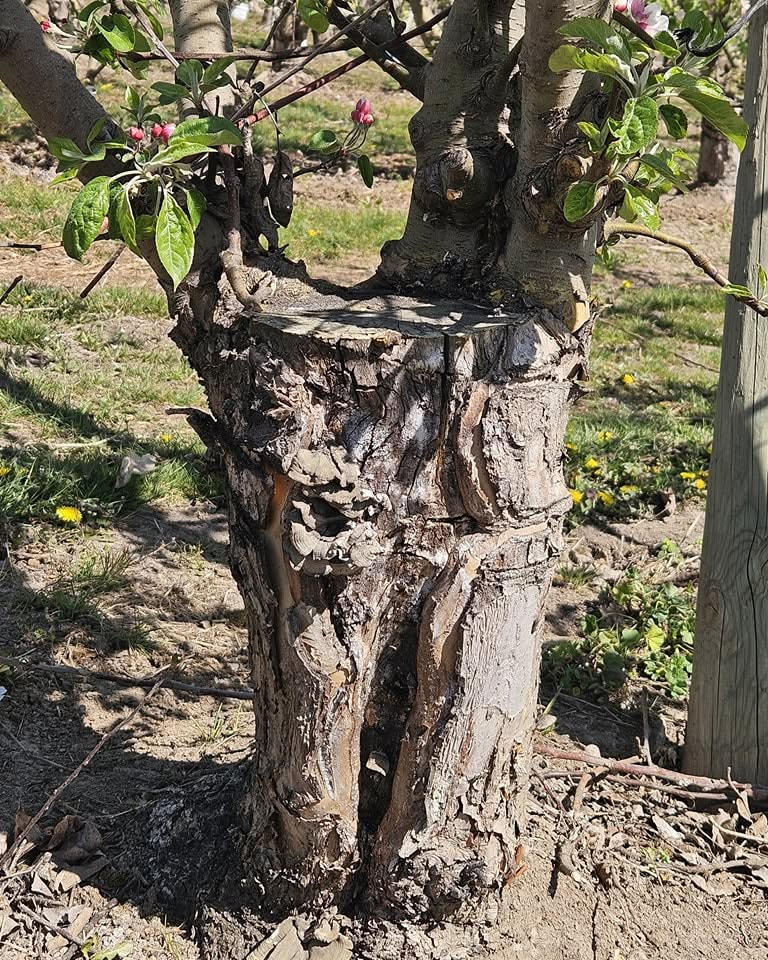
Also this bud from last year (wickson onto Williams pride) looks so funny to me
When chip budding do you try to place the new bud where the rootstock bud was originally ?
Also this bud from last year (wickson onto Williams pride) looks so funny to me
No, I haven’t taken that into account. Would the chances of success increase if I did?
Sorry that was a general question directed at the forum. I thought I saw a guide that recommended that but when I looked in other places that didn’t seem to be necessary. Wondering if anyone here feels it matters (I suspect it doesn’t)
It doesn’t matter.
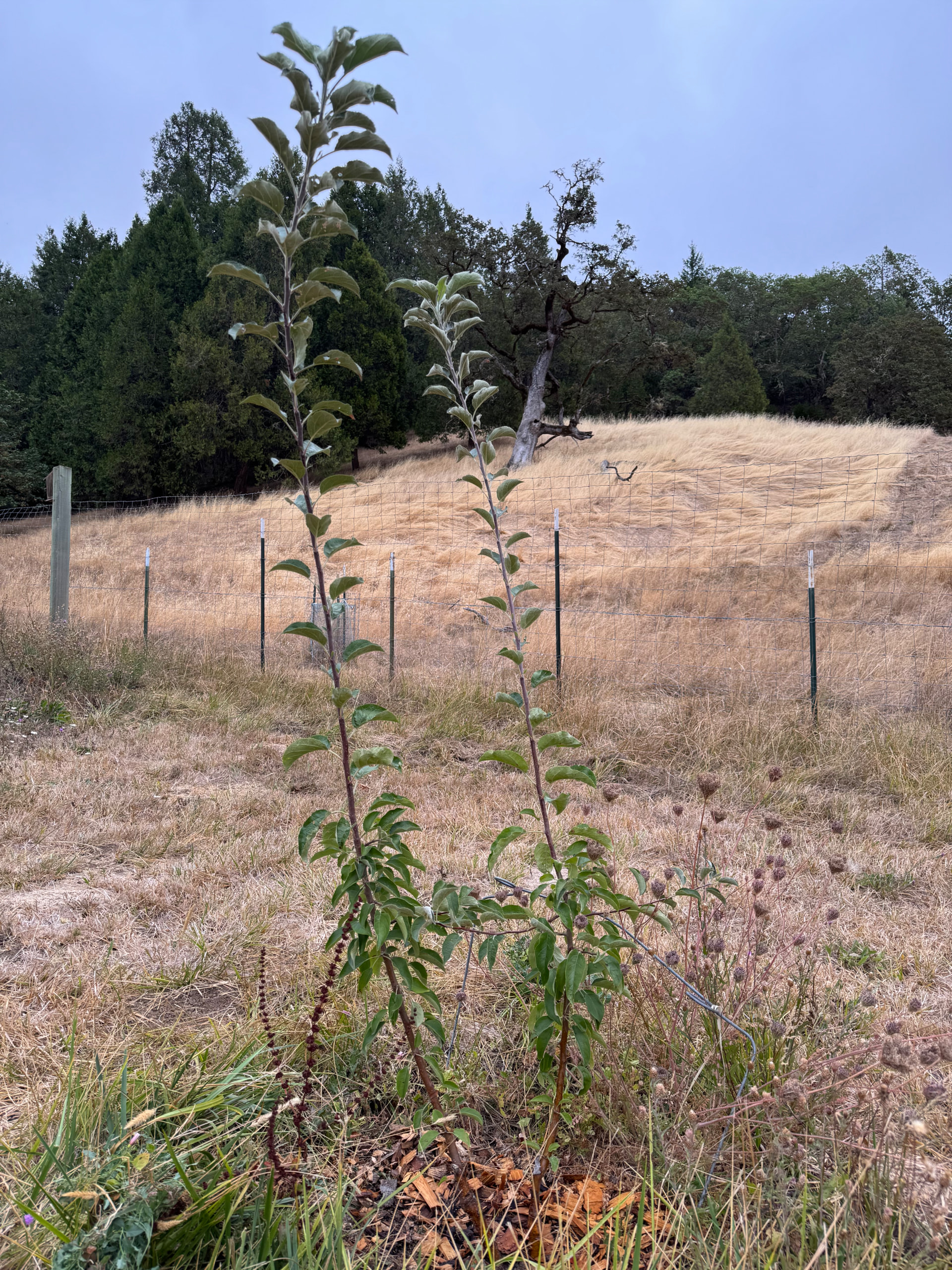
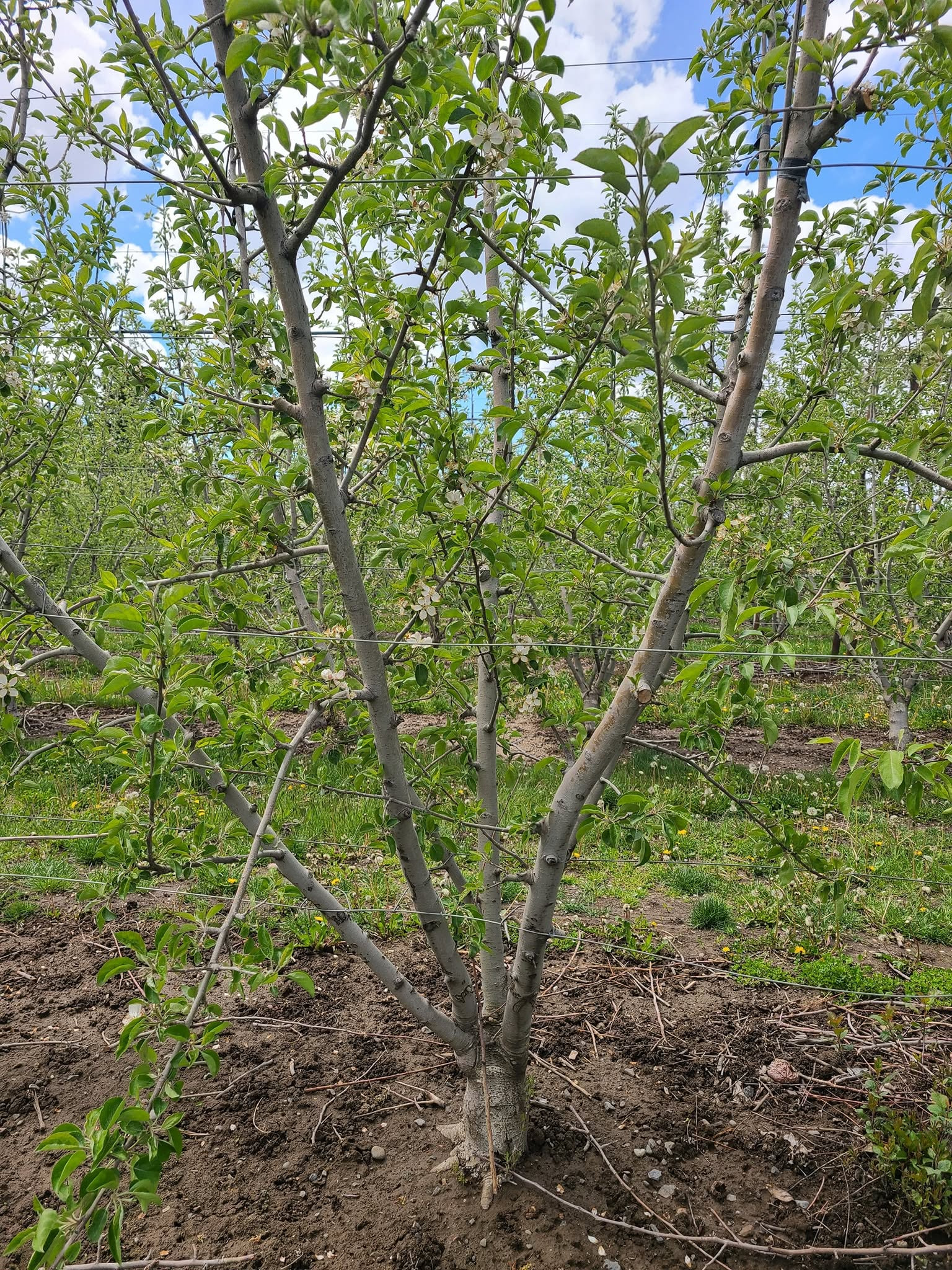
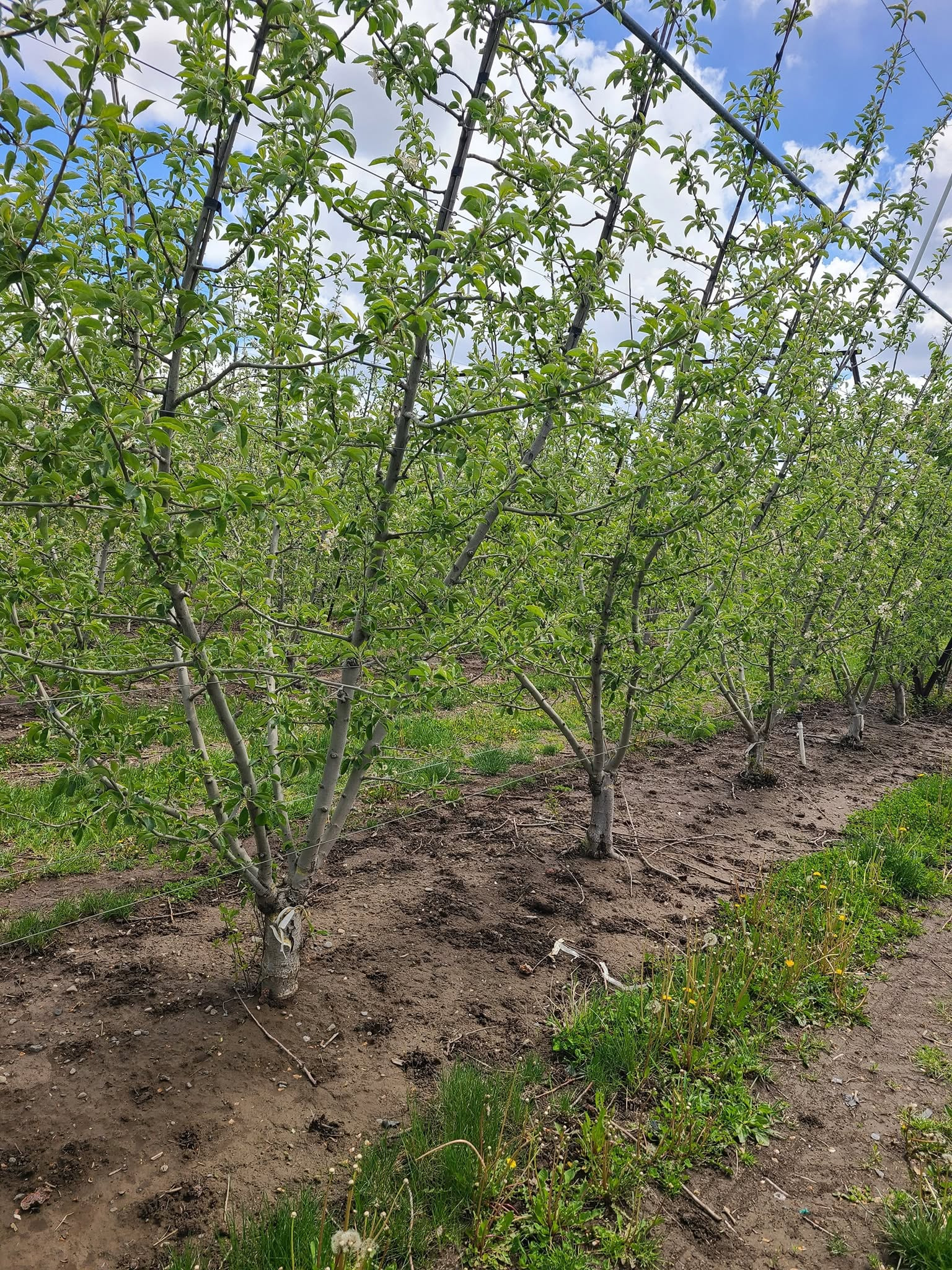
Williams Pride grafter last spring and taller than I am, but not on my typical dwarfing rootstock. This is M111 cut down to barely any stump because the original scion was diseased. I grafted on 2 suckers and moved it to the hill orchard, where despite a hot, dry southern exposure, it seems very happy.
I am considering leaving both scions since they are a foot apart, and just pruning so there’s no central branches. I might change my mind later, though. I have a dozen or so trees that I SHOULD have pruned more early on, but decided to “wait and see,” which resulted in the need to prune 1-3” diameter wood later.
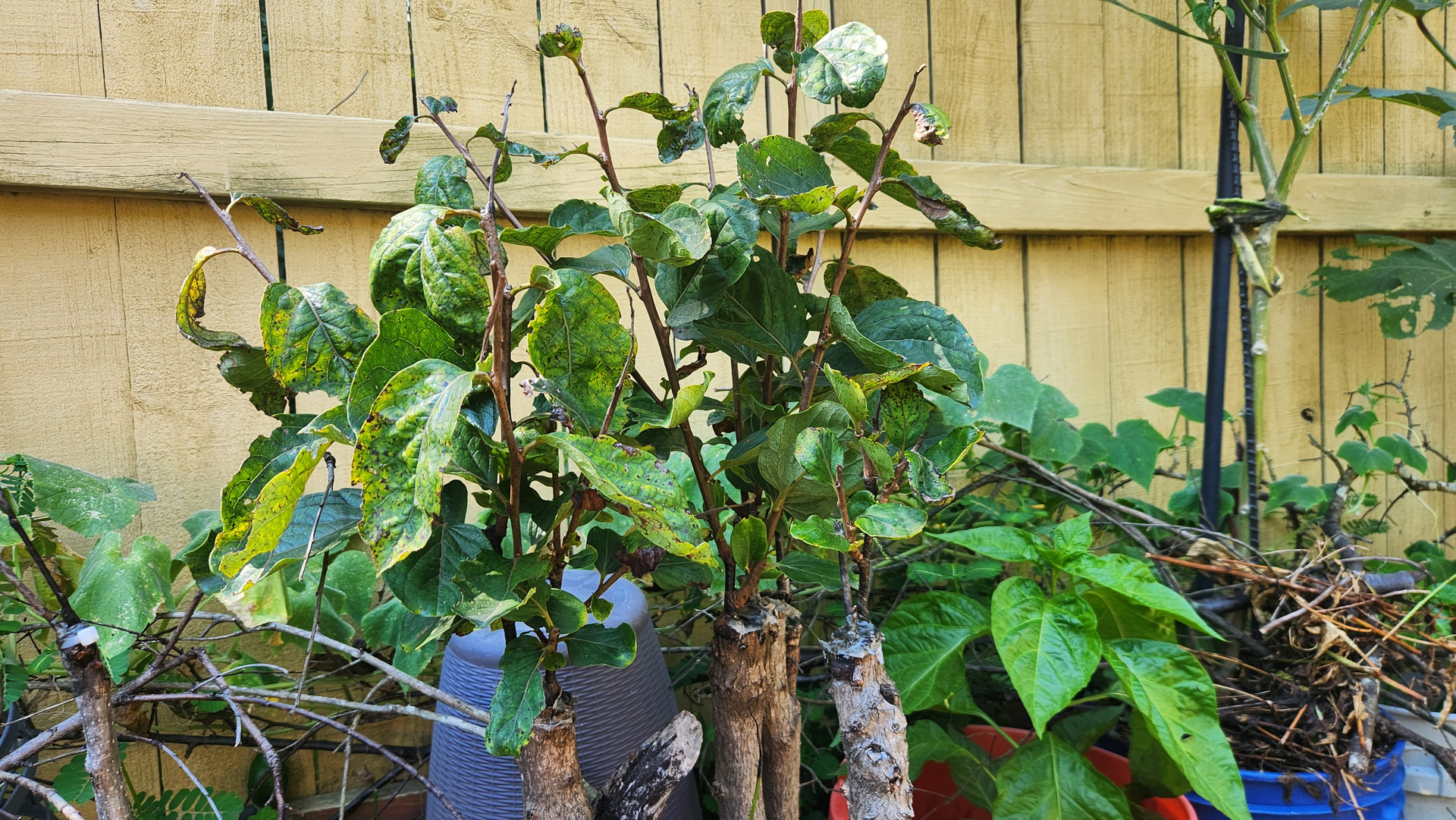
This american persimmon clump at my neighbor that I grafted makawa jiro on. The leaves look a bit chewed up. Not sure what is going on, although the grafts are growing well now.
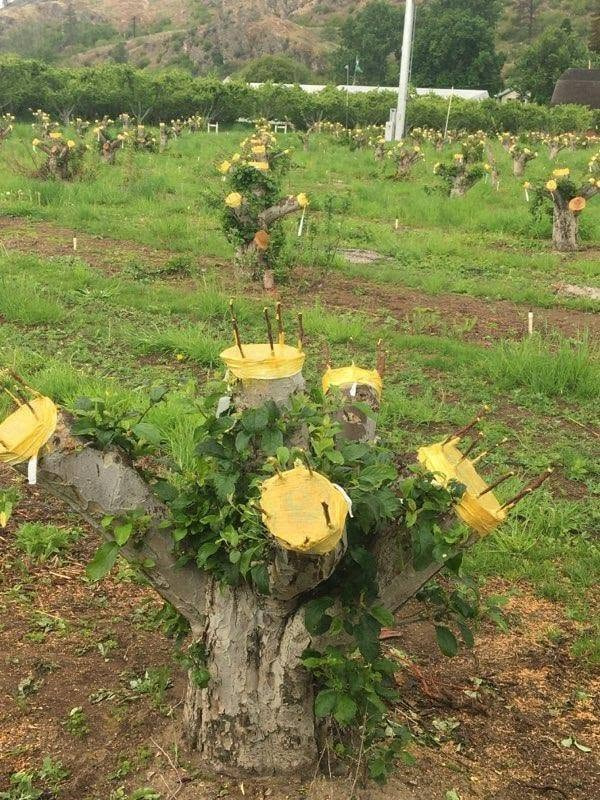
I’ve been wondering about this. I topworked some large (6”- 8”) stumps this year. I put 4 scions on them. Not sure how many to leave. Most have at least two scions growing strongly.
Me too. If anyone has a well-tested approach, please explain it.
This spring I top-worked roughly 20 apple trees due to deer / rabbit damage, stumps 2-4"; plus one huge pear, stump ~8". I was “generous” with the (bark) grafts and success was very good. So now I have apples with 2-12 scions growing on each one and a pear with 16.
I’m going to wait until leaves drop before trying much of anything. Partly that’s so I can see the patient well before the surgery. But it’s also so I can remove stakes and other supports without risk that a stiff wind will break the grafts.
Right now my tentative plan for this winter is to reduce the number of long shoots to 1-2 for the smallest stumps, 3-4 for the medium sized, 8 for the large pear. These shoots I’ll cut back by roughly 1/2 just to ensure that what remains is stiff enough to support next year’s growth. I’ll reduce the other shoots to ~2" with an outward facing bud, trying to promote continued growth of tissue covering the stump.
The key question ultimately is how many shoots should remain long-term:
Thoughts welcome.
If it’s only 3" and if the tree was not going to be trellised or staked permanently, I would only do one. Too much risk of the tree getting pulled apart if there are two “leaders” at one point on the tree and there is a lot of fruit weight.
With 2"-4" the maximum I would end up leaving is 2. Otherwise, it ends up crowded. I have a couple grafts that are only 3 years old of that size trunk and they would be crowded if I had more than 2.
With two, you can train into a V shape. Alternately you can train one as a leader and one as a “scaffold” branch (an article I read said to do so horizontally across the trunk). I did this with one that was growing very vigorously and it worked well.
I’m confused about the rot question. What part is going to rot?
Thanks for the input.
Re rot: As I’m sure you know when we cut a tree, leaving a stump, the living tissue (cambium, etc) forms a thin ring around the perimeter just inside the bark. But the whole center – the heartwood – is dead. So on my ~8" wide pear tree, maybe 7" is dead. If this expanse of dead wood is exposed for any significant length of time, it will be infected by fungi and molds. So we want the graft(s) to grow new living tissue (a) around the circumference, and then (b) across the surface.
I used a relatively large number of bark grafts because I assumed that would hasten the formation of this protective cap. I’m expecting to get growth around most or all of the circumference this year. I have no idea whether or when I’ll get sufficient growth to cover the center.
I bark grafted several seedling apple and pear trunks roughly the same diameter you mention, several years ago with just one graft, then sealed the trunk with Doc Farrell’s graft sealer. No rot problems, but pears take longer here to seal over. Not sure if rot would be an issue without sealing as I’ve never not used sealant when bark grafting.
Thanks. At the outset I covered the grafts and heartwood with pruning wax, which should do the trick this year. I’m just not sure what to do next year. I could remove all the wax, remove most of the wax but leave a thin layer, or reestablish a thick layer. Two issues: First, water sometimes puddles on the wax, which seems a bad thing. Second, wax might interfere with the growth of new tissue across the heartwood (?).
How long did it take your apples and pears to seal over?
It’s REALLY hard to find information about large trees that have been topworked by bark grafts and what happens long term.
I know @clarkinks and @scottfsmith have done some - For a large 8" tree with rind/bark grafts, do the scions grow over the top and close it completely? Do we need to worry about the heartwood of the trunk rotting?
The only pictures I was really able to find were some Clark did- but the “healed” after pictures were of smaller trees. Also https://www.facebook.com/WhitneysGrafting/. Whitney’s Grafting appears to be grafting large trees A LOT. They don’t seem worried about the top closing on the larger trunks, they do worry about having growth all the way around the edge. Apparently, You will get a dead spot otherwise.
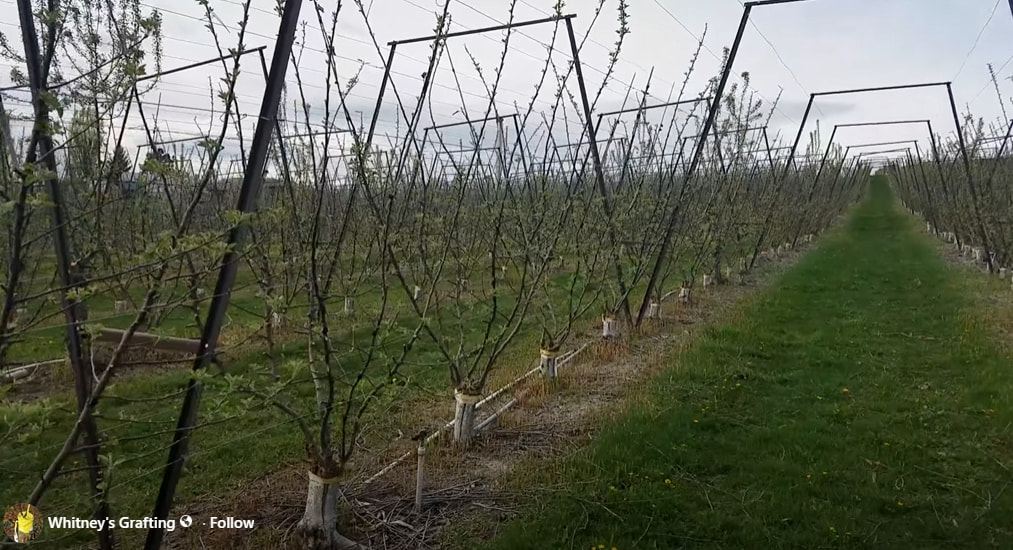
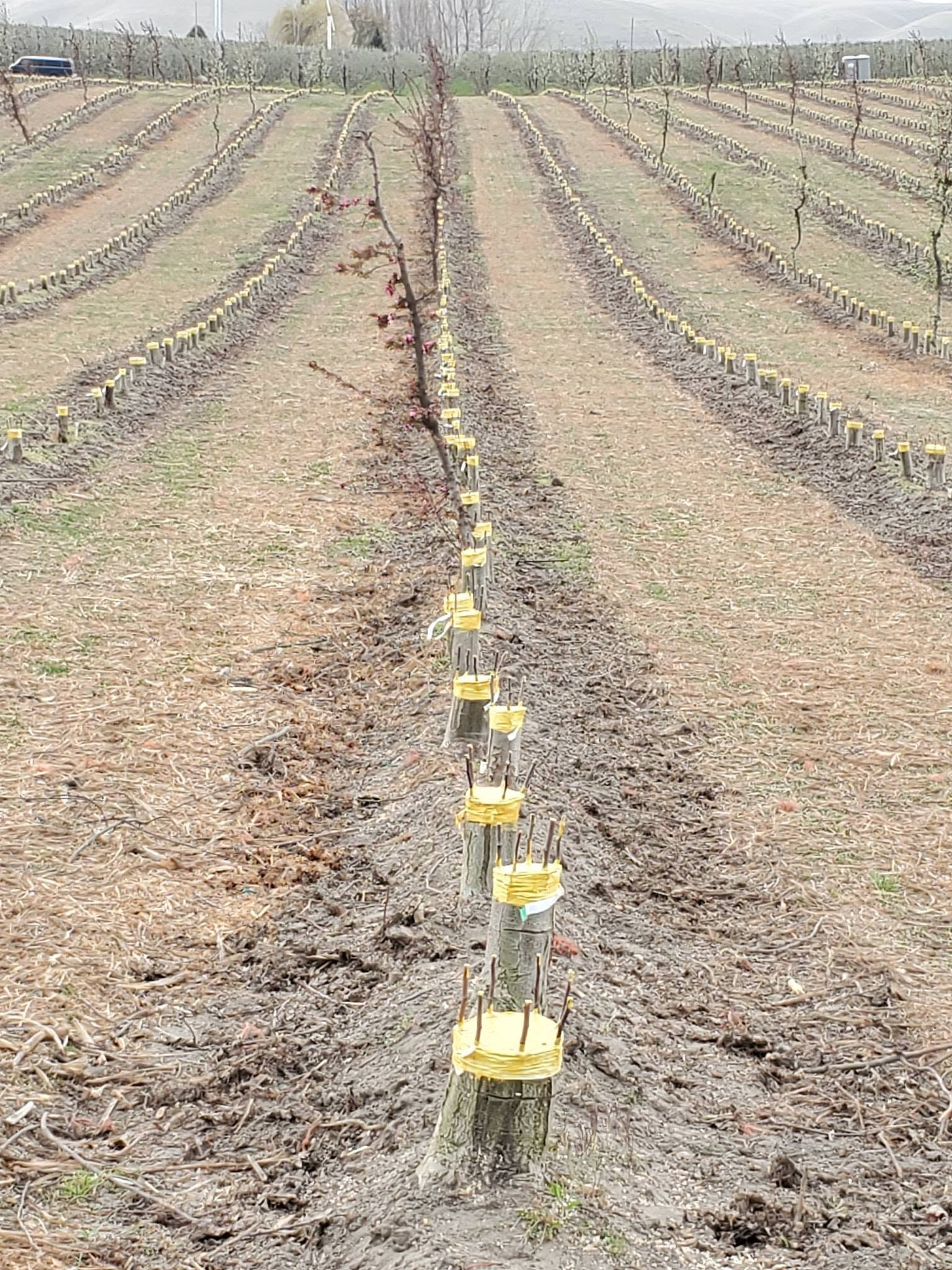
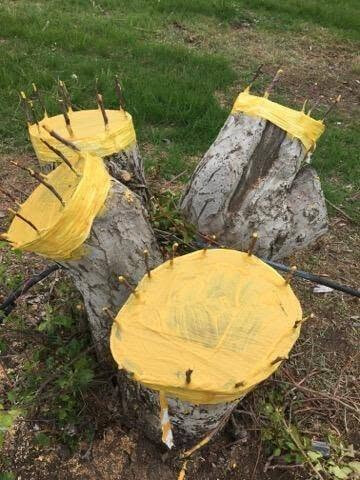
In those pictures, a 5"-8" trunk has 4-8 scions. Looks like 5 is pretty typical. The trunks/shoots are then supported by a trellis. They mention several times it will compromise the tree if you cut it down to one leader or if there is a big gap.
I also saw some historical texts describing placing one scion for each inch of diameter. Then, in August when they’re growing, they are braided over the top and will kind of fuse together.
I’m assuming that there’s some optimal distance on the perimeter. For example, a tree with an 8" diameter has a 25" circumference (pi x d). So my 16 grafts average ~1.5" apart. Assuming that spacing, a 5" diameter has a 16" circumference so 10 grafts would do it. A 3" diameter has a 9+" circumference so 6 grafts. 2" . . . 4. 1" . . . 2.
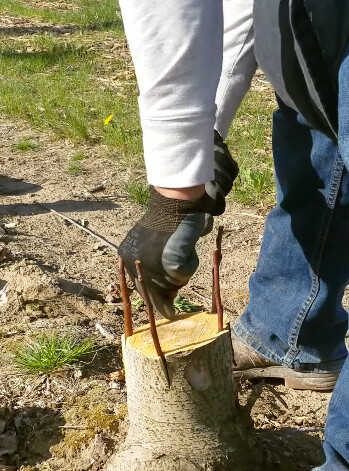
All of these pictures are from the Whitney’s Grafting Facebook Page. Hopefully they are okay with me using their pictures. They seem to be an example of good and successful grafting on these large stumps.
Three years after grafting:
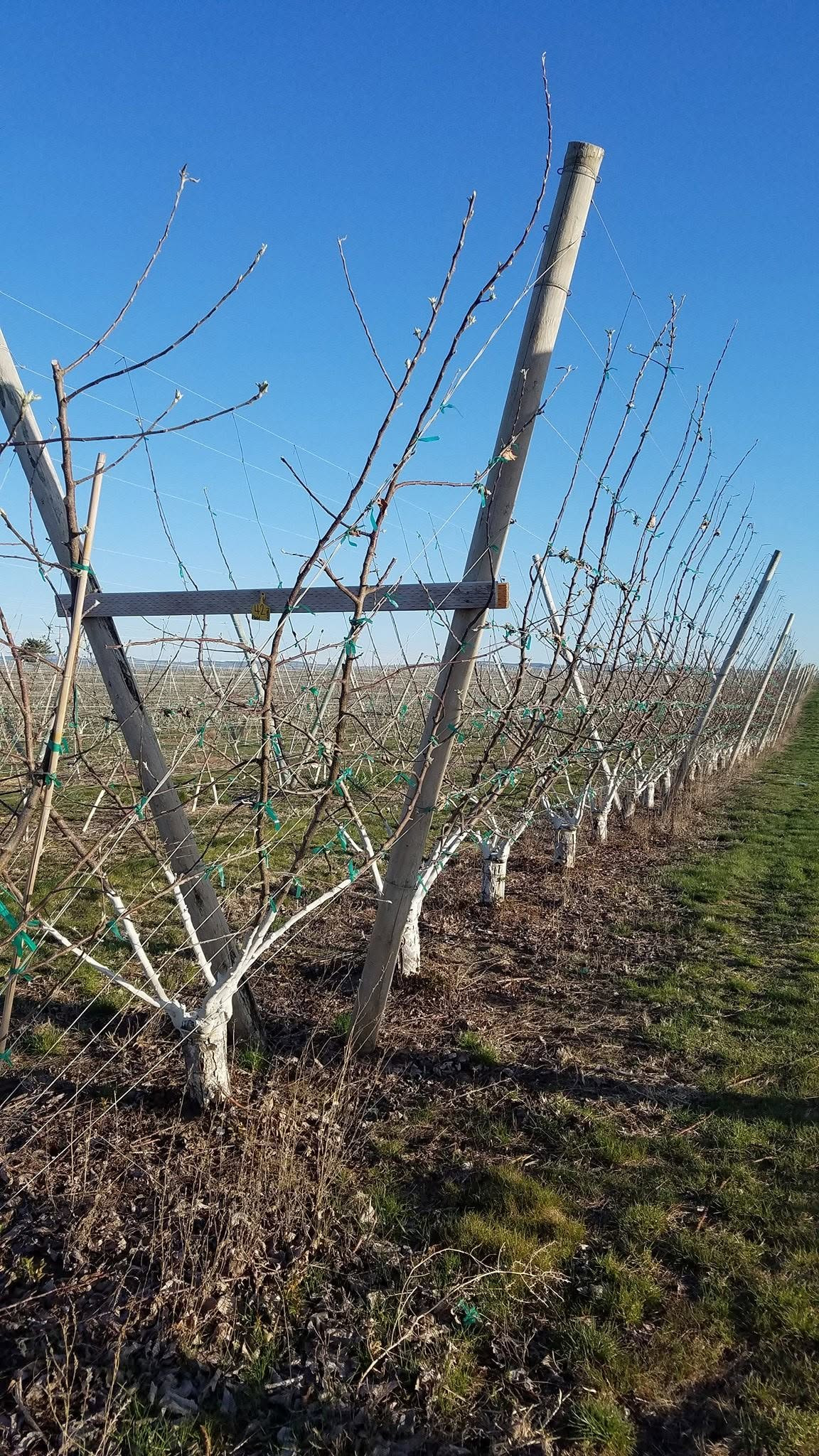
Example of how to convert to a higher density apple production using grafting:
Ramon’s work:
two years old:
This post was titled “Good Bye, Gala! Hello, Cosmic Crisp”
Wow these were big trees! apparently they were 39 years old
Here are some trees five years after grafting (you can see the heartwood in the middle still):
Example of dying back because there was no graft on that side:
I’ll try to take some pictures but my memory is that if you top work a ten or so year old tree (four inch diameter) with say three scions that it will be all healed over in five years. A scion for every inch of trunk diameter sounds like a reasonable estimate to use.
I never think about this topic because I have never needed to - everything eventually heals over even if the deer munched three of the four scions. For really big trunks it probably matters more, four inches is my usual max.
That sounds about right to me. I grafted some huge ones you cannot even see the union.
Some really good information and photos about bark grafting larger rootstocks here:
Awesome, thanks. I guess. my one remaining question is whether the trees need the support provided to prevent the grafts from breaking.
Otherwise they seem to be treating the trees like any trees with a low head.
Yes! Many of mine already needed support. They grow so so fast when they’re on huge trunks.
I think that’s why people would braid them. So they would support each other.
I had a pear on something about 4” that I didn’t support and one of the two grafts broke after 3 years just from the weight of the foliage, no pears.
This summer, I had one of two apple grafts on a 4” trunk, done this year, break off in a windstorm. I was slowly getting around to supporting them.