Looks like the Chinese scientists are ahead again! But since the plants came from China, no surprise there..
Cliff notes is what we knew, cold leading up to the event influences the genes of certain citrus to improve cold hardiness. However, they succeeded in planting that citrus gene into Tobacco and Lemon plants. So a lemon with the hardiness of Ichangensis is now constructed..
The actual journal article is here: https://academic.oup.com/hr/article/13/8/uhag131/8626127?login=false
A Blueprint for Engineering Cold Tolerance in Citrus
September 25, 2026Breeding, freeze, Research
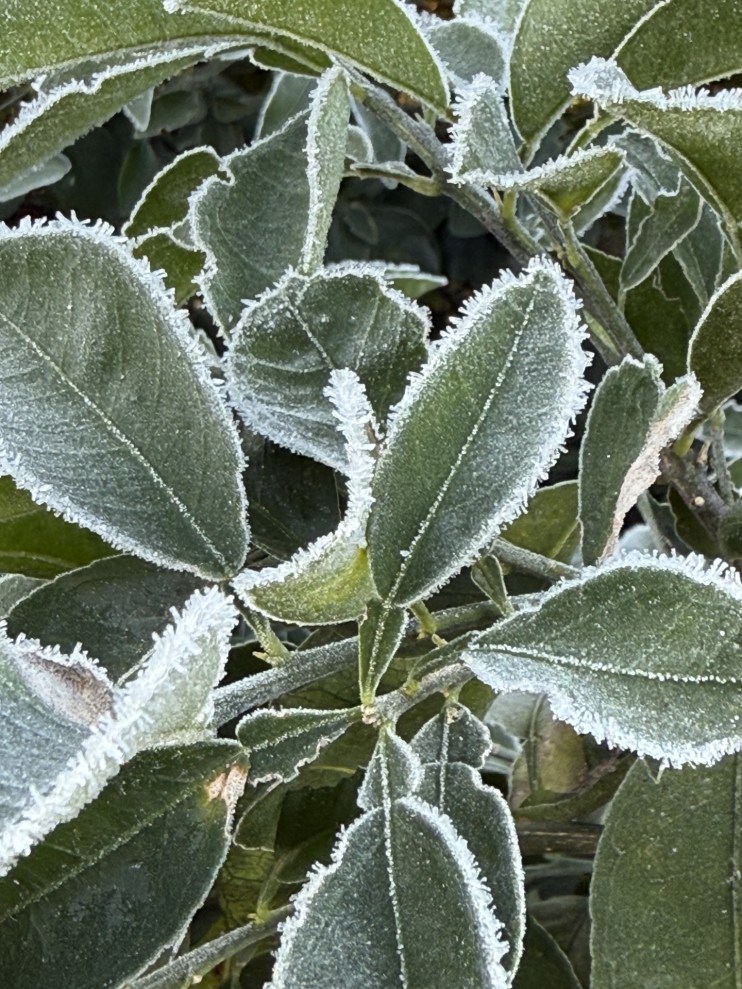
Recent Chinese research offers a fresh, strategic blueprint for engineering cold tolerance in citrus. The study reveals that in Citrus ichangensis, a frost-hardy wild citrus relative, the expression of the protective protein CiHSP26.5 is not just turned on or off. Rather, it is fine-tuned over time by two transcription factors, CiERF023 and CiERF041, which serve as its repressor and activator, respectively.
Instead of simply overexpressing a protective gene, breeders could use gene-editing techniques to fine-tune the balance between the repressor CiERF023 and the activator CiERF041. For example, selectively weakening the repressor’s binding or strengthening the activator’s activity could lower the threshold for cold defense, priming the plant for faster protection in a volatile climate.
This approach has the potential to enhance the resilience of cold-sensitive commercial citrus varieties, such as lemons and pummelos, safeguarding yields against increasingly unpredictable frost events and providing a model for other vital fruit crops.
An article about the study was published in the journal Horticulture Research. Authors are Xi Zeng, Lele Chu, Wenqiang Hu, Yilei Wang, Yike Zeng, Peng Xiao, Jing Qu, Bachar Dahro, Wei Li, Chunlong Li and Ji-Hong Liu of Huazhong Agricultural University, and Shiping Zhu of the Chinese Academy of Agricultural Sciences.
“Cold tolerance is not just about having the right protective genes, but about knowing exactly when and how much to deploy them,” the authors stated.
They added that the plant’s strategy of using a quick-responding ‘brake’ to initially stall a costly defense program, only to release it for a powerful, late-stage activation, reveals a sophisticated economic model for stress survival.
“It’s this regulatory precision — finding the perfect timing — that we believe is key for developing elite crops that can withstand cold without sacrificing growth,” the authors concluded.
Source: The Academy of Science at Nanjing Agricultural University