From my experience although I have not seen deer lately, but when I had deer entering my frontage to nibble my apple trees, I noticed they only came during twilight hours am and pm. So I mixed up a hot pepper spray with the highest capsaicin rating I could buy. I kept my sprayer loaded so I could repeat after each shower and at least every other day.
I recall I saw one more deer browse and since 6 years later no more!
May not work for you if you have no trees of deer interest on your boundary, but worth considering. A $10 memory on a deers tongue or nostril can make a lasting impression! My neighbors never had to know! P.s. if you use this method in rainy weather use a surfactant.
Dennis
Kent, Wa
2 Likes
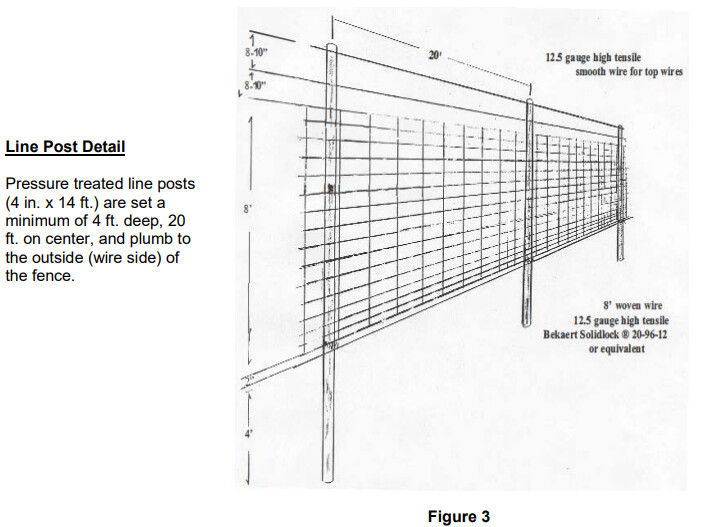
Here is the instruction book for the Minnesota Department of Natural Resources:
Posts set 4’ into the ground standing 10’ above ground. Fencing to 8’. Wire every 8" above to 10’ height. As seen on page 5
1 Like
Exoburban town setting, Minnesota…
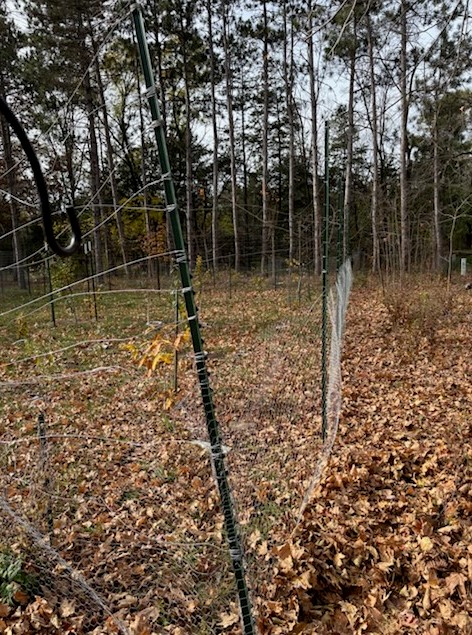
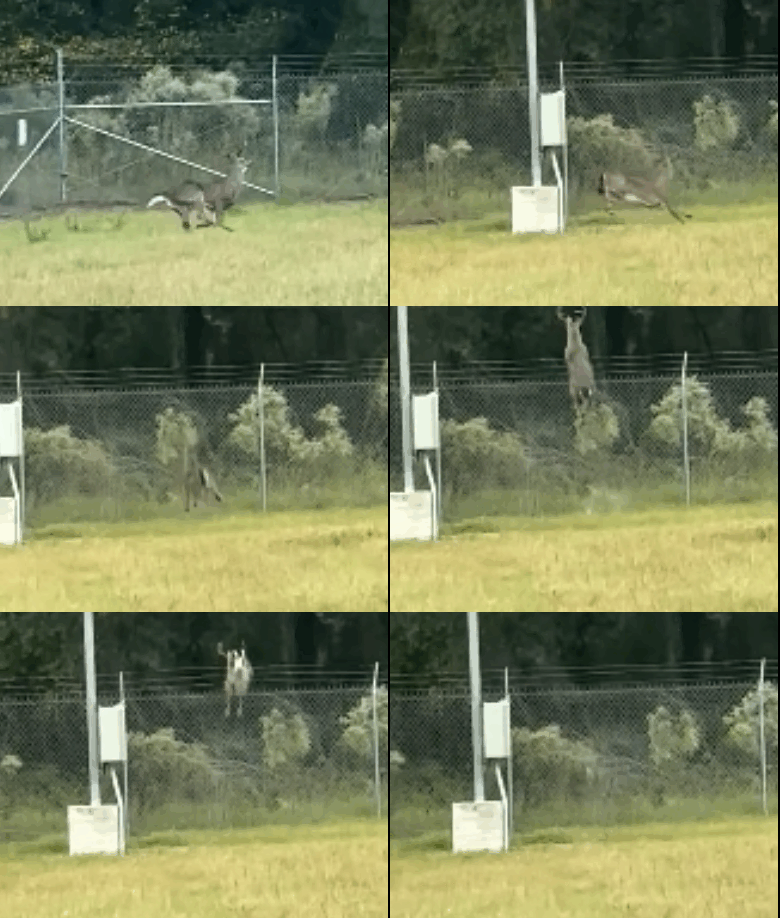
Here is a picture of where a deer ran into the fence, taken after someone tried to pull the fence back up and re-tie the wires. The 10’ T-posts were set only 2.3 feet in the sandy soil and as you can see, one is tilted. The “90 lb.” rated 17 gauge steel wires on top had snapped. The top had “368 lb.” rated wire rope held by T-post clips. The neighbor’s dog is likely to scare deer into the fence again. Hence I will set the posts more firmly in the ground and use field fencing or stronger fencing on the sides where fleeing deer might collide. Probably will cut up old light-colored shirt(s) or socks to hang fabric on the fencing to help deer see the fence.
The local conservancy only had field fence on their top 4’ with 4’ of chickenwire below. Funny, the annuals gardener growing tasty-looking corn and tomatoes said based on her garden a run of 2’ chickenwire on the bottom and then 7’ plastic deer fence would be sufficient, with just a few wires above to 10’.
UPDATE: The deer crossed through the pictured fence twice, leaving hoof marks in the chickenwire and breaking the top strand of the chickenwire on both sides of the corner post. That shows you that loose wire 6" apart does not work. Directly behind the camera, several cages on shrubs that were held by wood stakes were knocked over and crushed, so I think 1 or more deer was startled by something. That black hook in the upper left close to the camera I moved further away. The roommate hangs birdfeeders there, attracting deer.
Also for a town allegedly with no bucks, yesterday morning I had a 10 year old maple tree with its bark rubbed off completely around the tree. Neighbor said that had just happened within the prior 24 hours. Neighbor says its rutting season, so he has seen bucks in the yard, but says rutting ends soon.
It might be easier/cheaper to add a strand of electric. You can get a small solar charger. Include your ties and train them to avoid the fence with the ties by putting peanut butter on the electric fence so they get zapped by it a few times.
They can still get spooked and run into the fence but it is less likely as they will start avoiding it.
I was taught to make the fence springy so if they push against the wire it will give a tiny bit rather than snapping. I think this is what @Audi_o_phile was referring to.
With wood posts you leave the wire loose in the stapes then tension it. With clips, you don’t wrap around the poles, the wire is allowed to slide in the clip , then you tension.
To tension you really need to brace the corners or it will all kind of cave in. A second t post won’t solve that problem.
1 Like
Yes, I’m thinking that a fence which “gives” (including the T posts being pushed over in the ground when the fence is struck forcefully by a deer) will result in increased resiliency. It is akin to how tall buildings are designed to give and sway when earthquakes occur instead of being so stiff that they fail and collapse. Eventually something will spook deer again and cause another such a collision.
Those 6" interval wires which are above the chicken wire fencing could also be reduced in frequency if you wanted to have less loading. Looking at the picture above I realize that there is a lot of weight in those, and having them at least 12" apart will still be the same deterrent but would likely decrease the likelihood of another broken wire by allowing the deer to pass through when they are again in a panicked escape situation.
In all this I’m trying to take into account things that I’ve learned over the years from the use of high-tensile fence wire.
Just mentioning I updated my prior post to which I am replying. Deer passed through a fence panel on one corner and exited out the other corner panel.
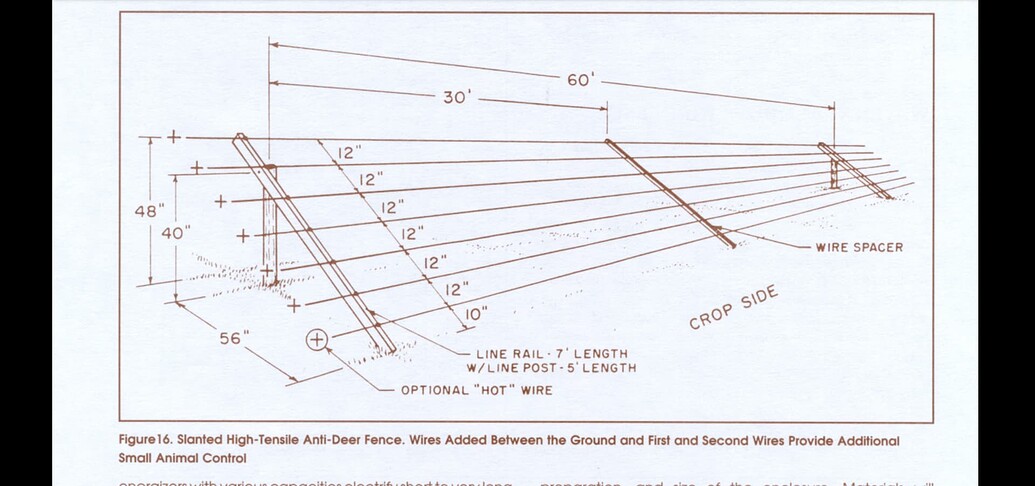
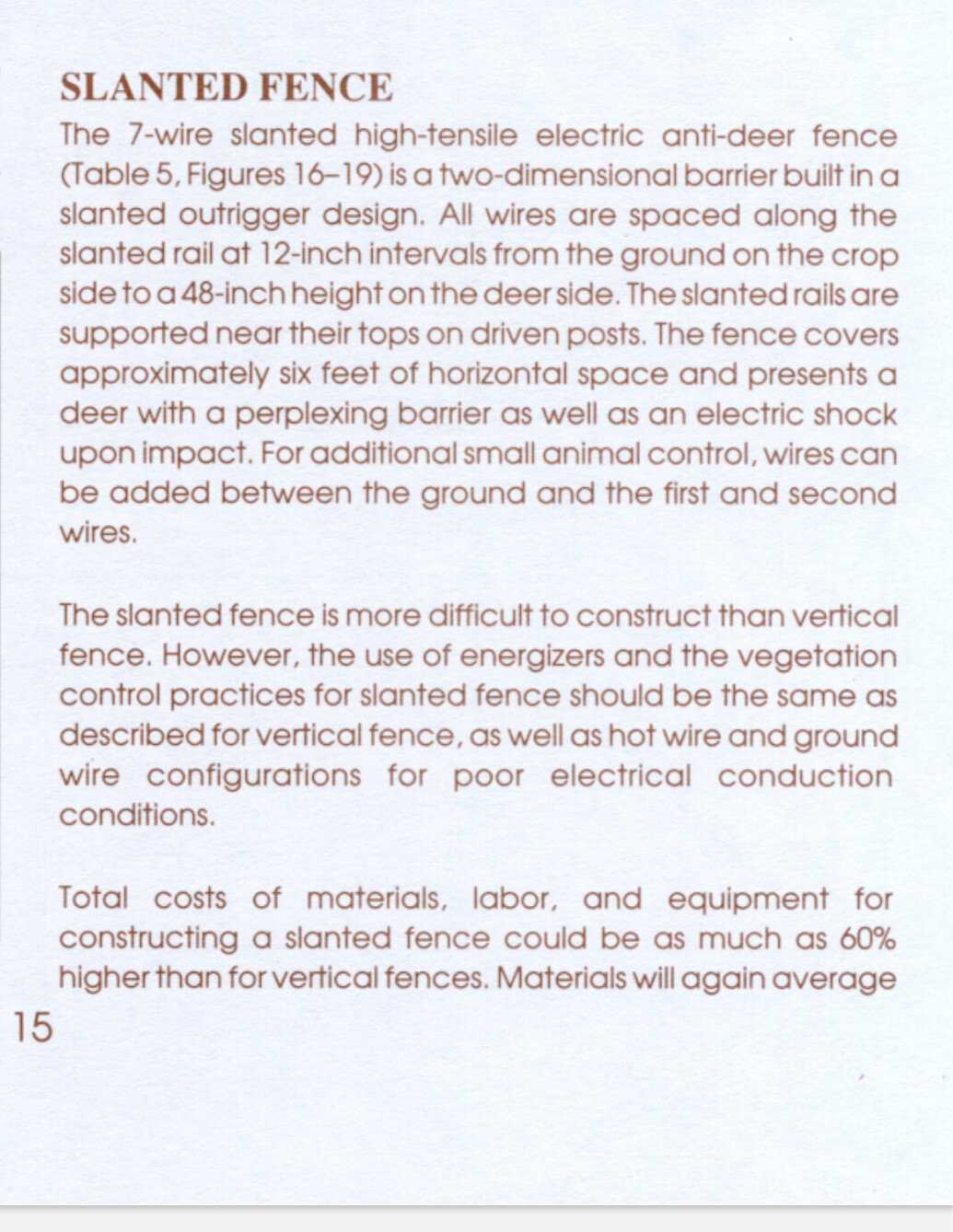
Reading the update to your earlier post I’m changing my tune. In your position I would be adding insulators to the T posts and purchasing a charger for an electric fence to use the existing stranded wire while spacing them further apart but removing the chicken wire (unless rabbits are an issue). Even better would be using one of the 3 dimensional designs for a fence which capitalize on the fact that deer don’t have good depth perception.

1 Like
Some other ideas:
- My neighbor used Maker Pipe connectors and metal conduit to create something like this:
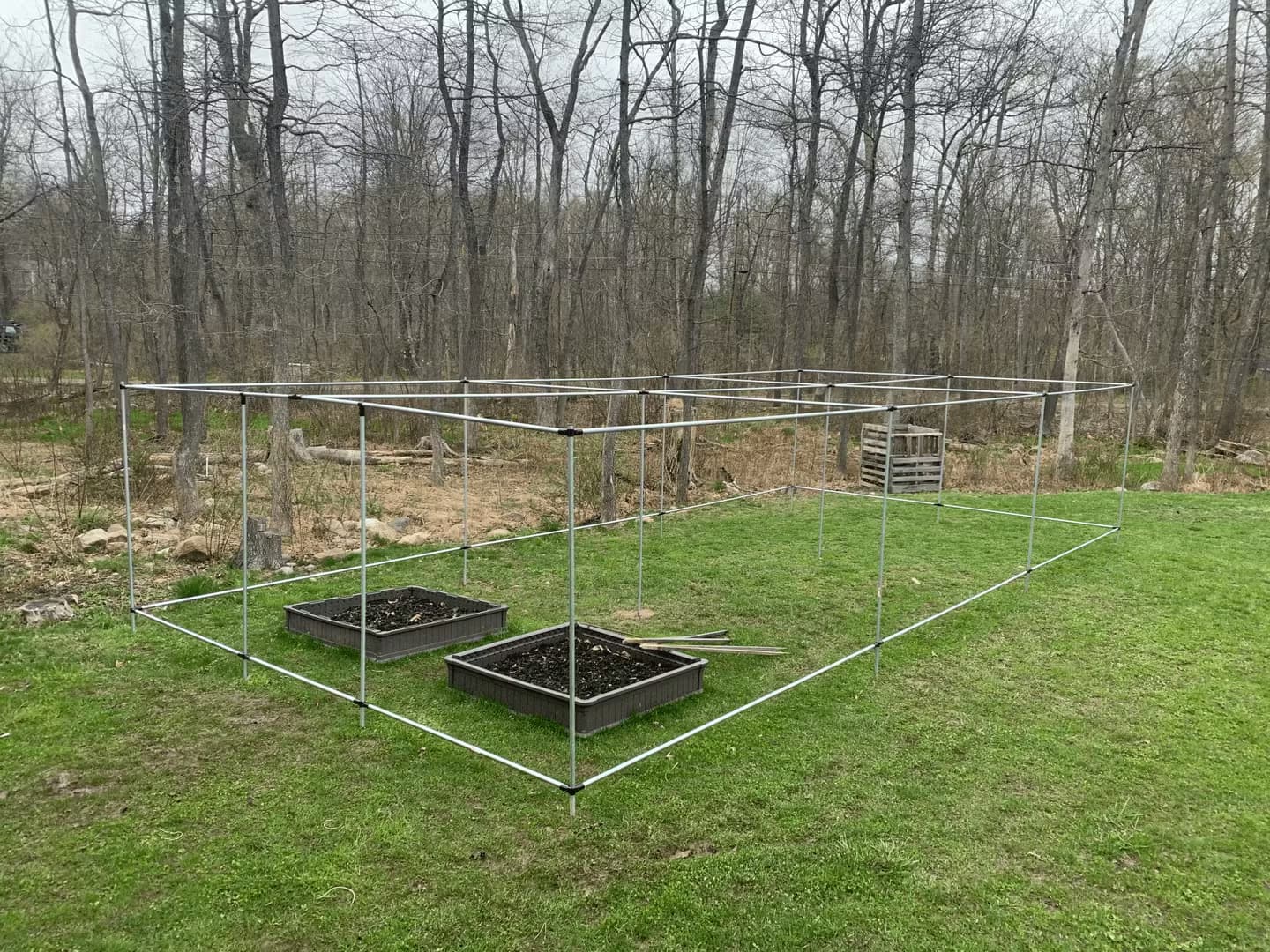
His is irregularly shaped and doesn’t have anything running down the middle. With black mesh, you can barely see it and since it’s set onto rebar in the ground, it’s easily removed or expanded. I think I’m going this direction for another section of the yard.
-
A friend uses this (mesh at the bottom):
-
I use this but it’s uglier - 6’ t-posts with conduit extenders and cow panels.
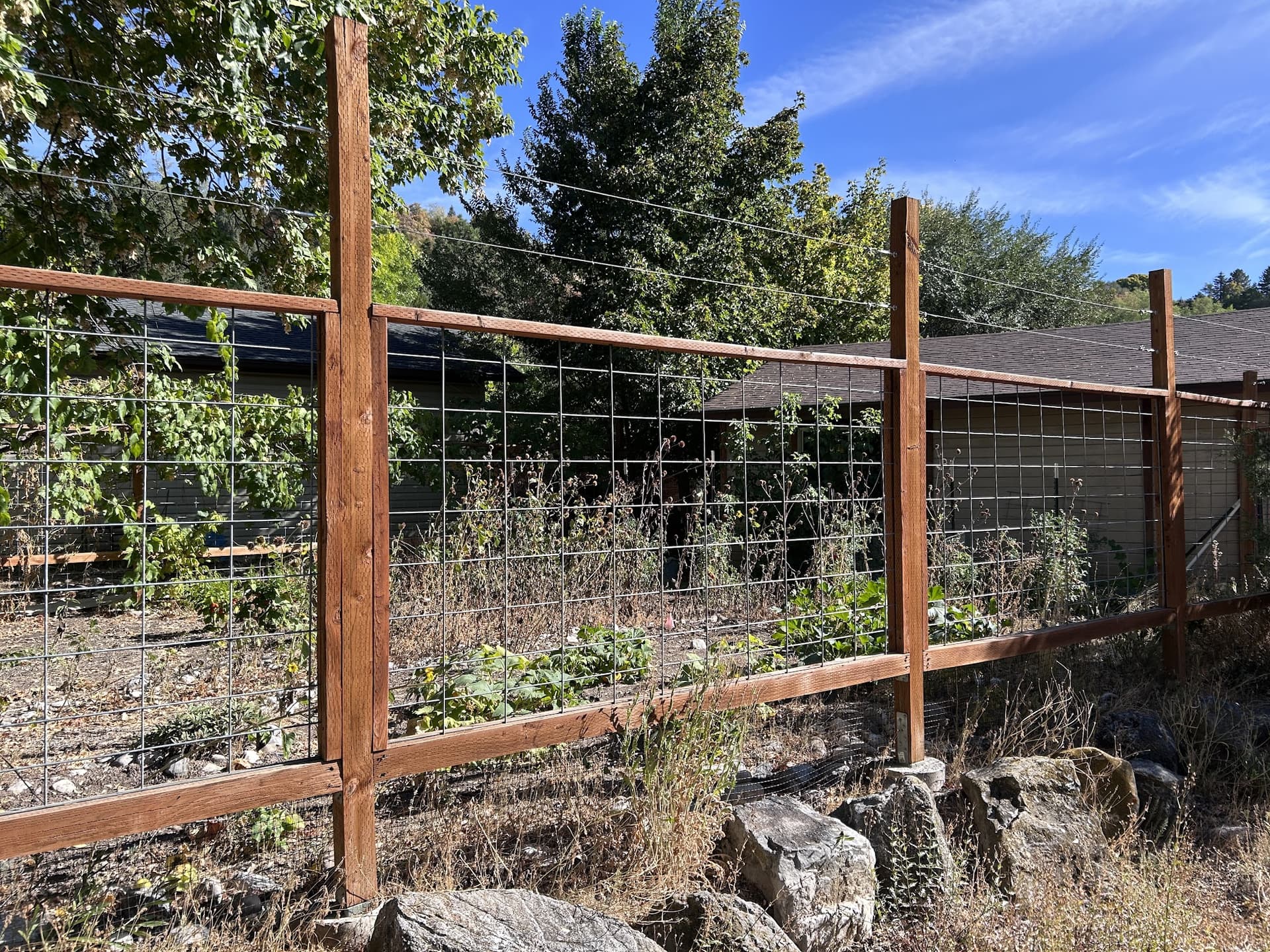
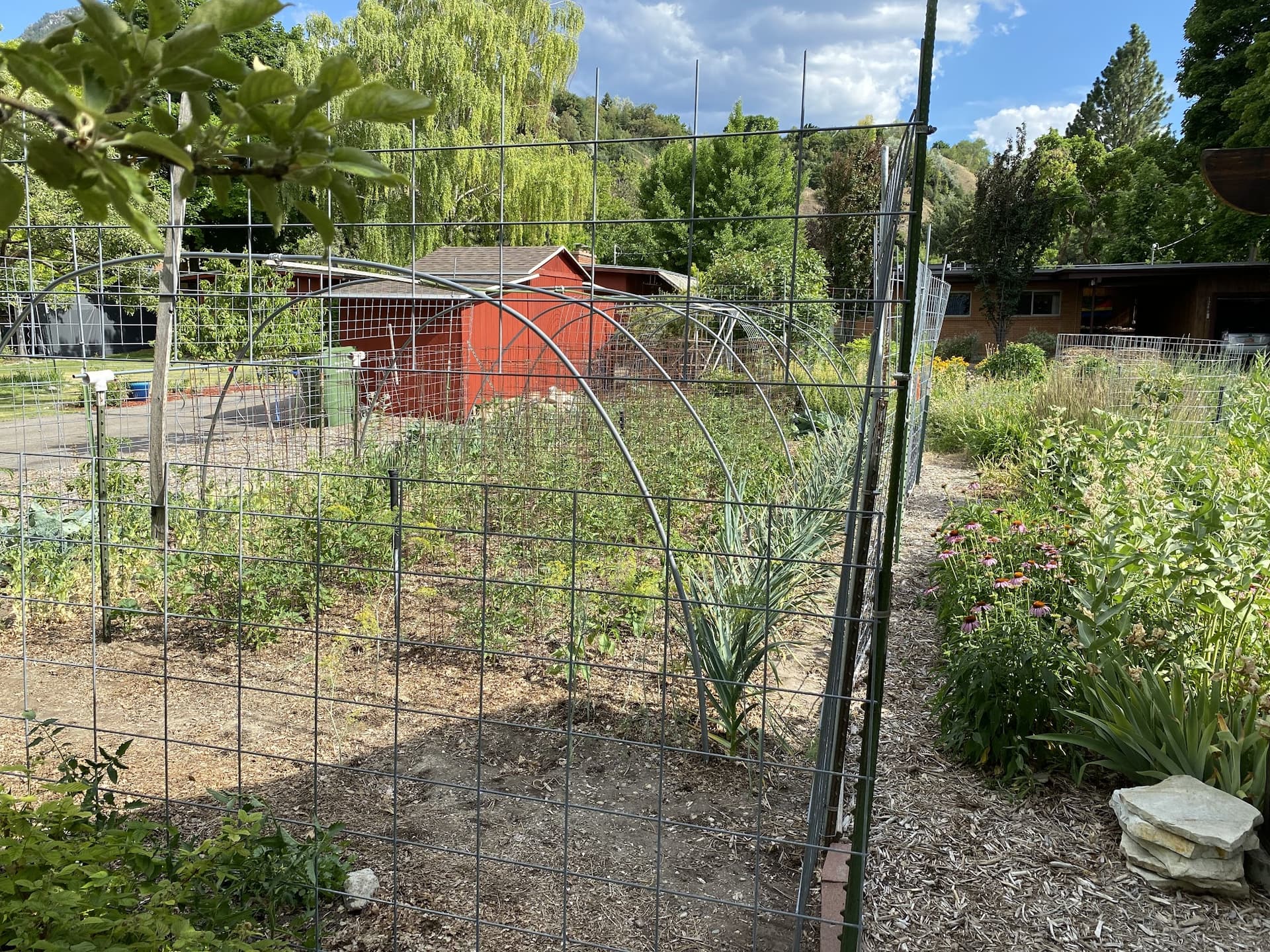
3 Likes
Yeah, you should add electric and train them to it. I’m super surprised they didn’t get tangled in the fence
1 Like
I used some leftover Maker Pipe connectors as part of a very simple support for the netting I put over my haskaps this year in order to get my record harvest 
1 Like
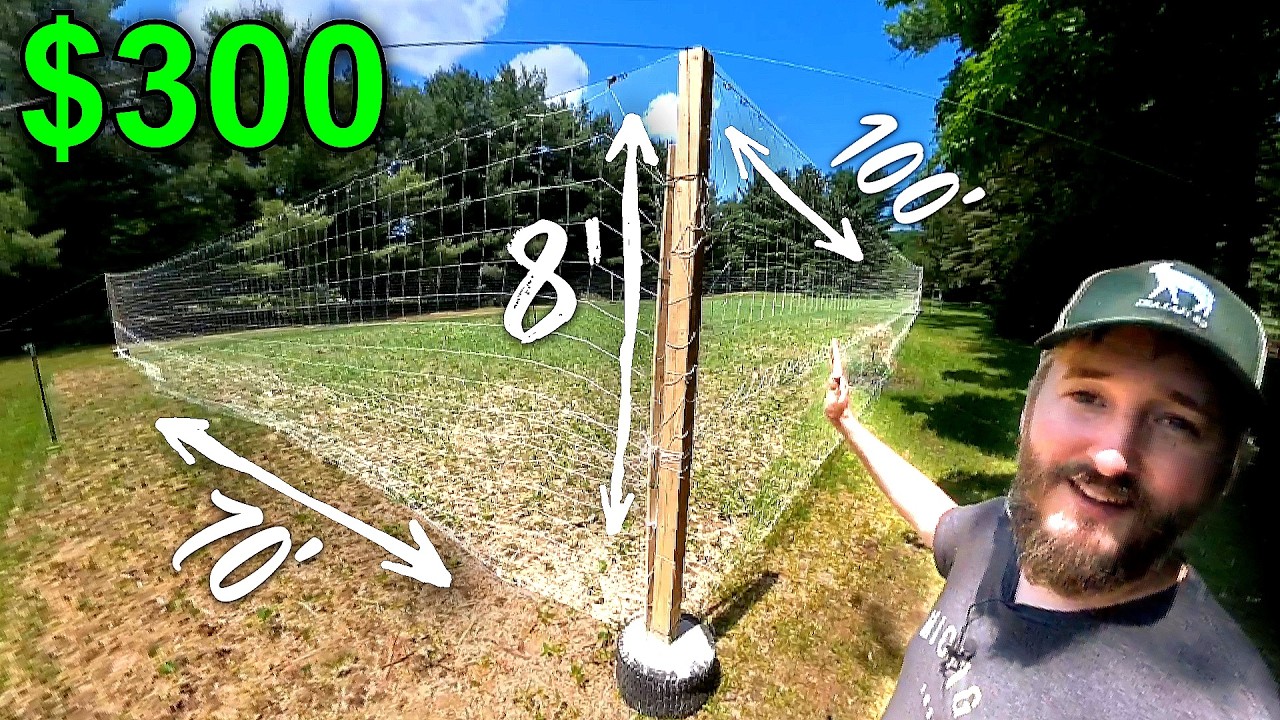
I’ve previously tried some of this “netting” and found it to be quite thin and fragile. It also tends to strangle snakes if they can come in contact with it. I need around 500’ of some better quality fencing, 7’ tall. This looks good but is fairly expensive: Critterfence 700 7.5 x 330 Reinforced Bottom
Wondering if anyone has an alternative which is just as good or better, at a lower price point?
I already have 4’ “woven wire” fencing with corner posts, t-posts between, etc.. This plastic fencing would be to go up against it and also extend above it. I’m in the country and nobody can see it so no concerns there.
I’m primarily working to exclude deer (darn destrructive hooved rats!) and potentially also make it difficult for squirrels, raccoon, etc.. Yeah I know it’s far more difficult to stop them.
Thanks.
1 Like
2 Likes
Hey what tension system are people using? By tension I mean the wire running through the top to keep the fence from sagging. I have not use any tension wire in the past but am getting annoyed at ugly sagging plastic deer fences. I think I’m going to try a 1/16" nylon coated cable and use some Gripple line tighteners I have for my trellis wire already. $25 for 500 feet of wire.
With the tenax fence I would put an electric deterrent 3’ away, at1’&4’. Woodchucks eat right through them and deer find these holes
I can’t use a perimeter fence. Trees all over the place and I’m in an urban setting. I gotta do each tree until it is deer proof / resistant. I’ve showed you before. I use 16 feet of 4 foot tall, welded wire fencing with (4) 6.5 foot tall t-posts and a mesh trunk protector. Fence is 4 x 4 foot sqaure.
2 Likes

2 Likes