It might be due to excess heat. Here, in the cool NW I picked my last ripe Akane apple on Sep 13.
1 Like
I think Akane is a great, distinctive, good tasting apple. It is crisp but not dense, which I like.
John S
PDX OR
1 Like
I think you might be right. It got hot and dry in September, and that probably delayed ripening.
Just wanted to reply to my older comment - we finally got an Akane harvest last year (2 apples on 2 yr old G11 tree) that we grew no-spray in VA and used organza bags to cover apples with. They came out clean and delicious, prob the best apple we’ve tasted yet at my young backyard orchard. Chestnut crab was a close second place to it. I’m a huge Jonathan apple fan so maybe that’s why I liked it so much, but it was crisp and has a great balanced flavor. I could eat a bushel of these!
3 Likes
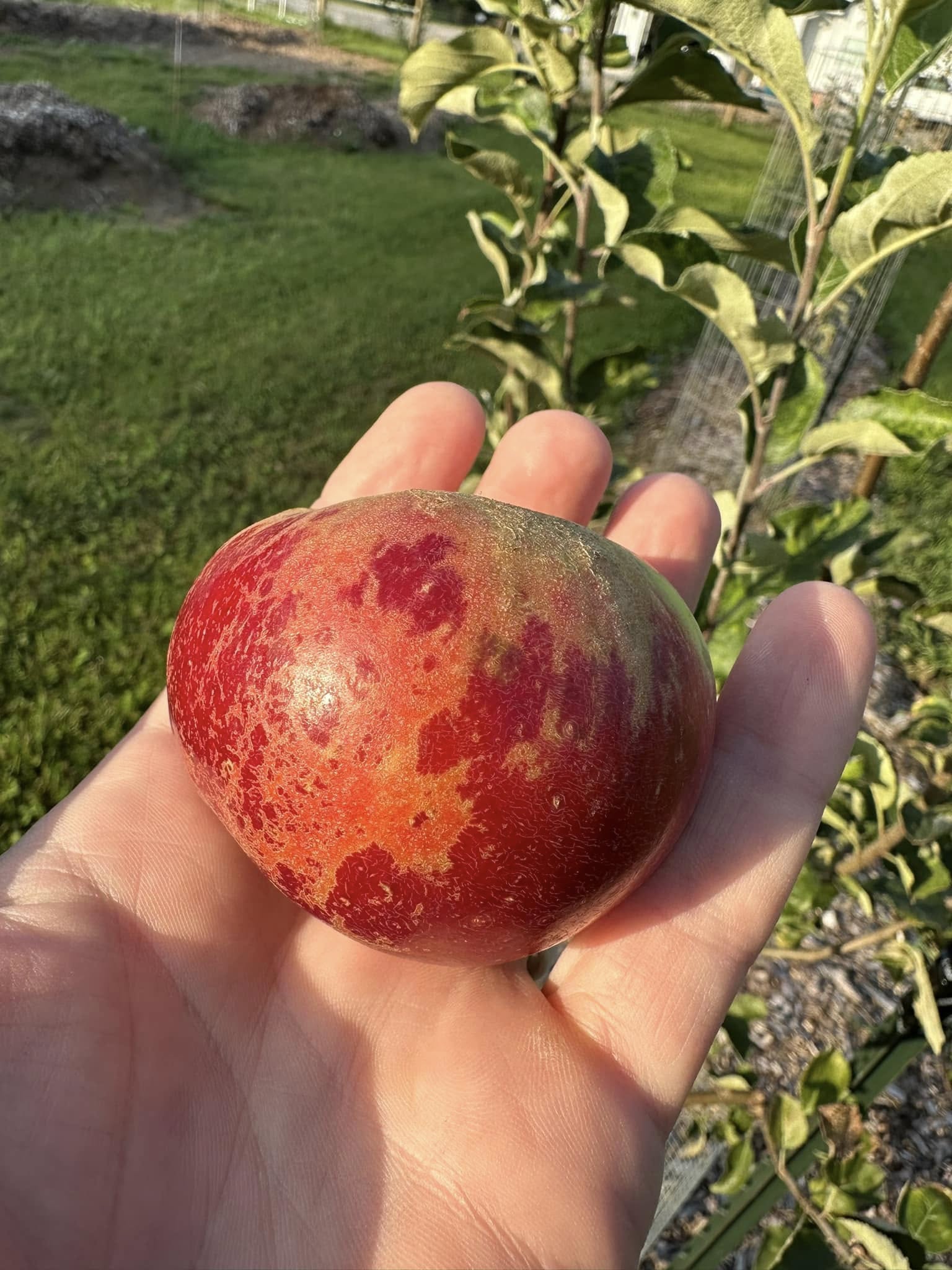
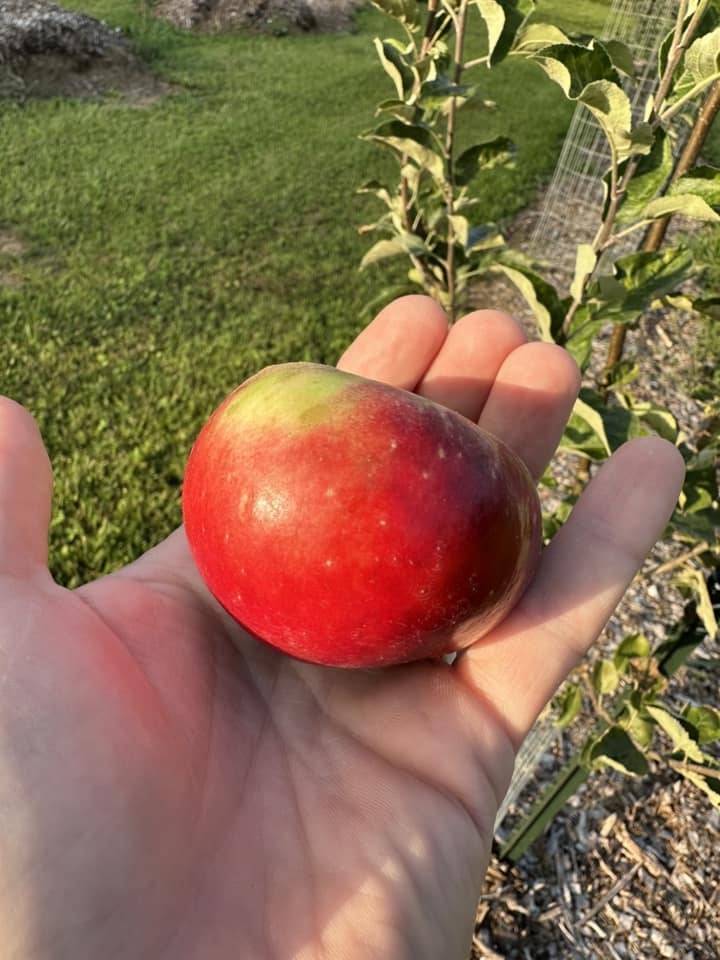
Looks like we harvested these around August 20th. Is it apple season time yet? I cant wait any longer
3 Likes
How did your Akane do this year? I’m thinking of adding it, after a few of my other trees have succumbed to fireblight in central NC
1 Like
My Akane is not bothered by disease. It can get some scab, but that is easily preventable with copper sprays. However, it is a magnet for Apple Maggot fruit flies; and I haven’t figured out how to handle them yet. It also is susceptible to Codling Moth maggots, which are treatable with Malathion. Note, though, that I’m in the Pacific Northwest, which is very different from your location.
2 Likes
@kdegs .. like many other varieties here… when it started blooming good.. we had a awefull fire blight year and it got wiped out.
The ones I can remember. Red delicious.. Fuji, Hudson Golden Gem, Gold Rush… Akane. Several pears too.
Novamac and Early Mcintosh are my survivors.
TNHunter
2 Likes
That’s interesting. I’ve noticed that most fruit that we think is tasty, is also tasty to pests 
Our climates are very different though. I’m curious how it would fare in our super hot humid summers in central NC.
That’s good to know. I think all apples are kind of a moving target with fireblight in our climate. Thanks for weighing in.
1 Like
If you are worried about it it is recommended that you cut off all the blossoms when the trees are blooming the first couple times.
The blossoms are the most important entryway for the bacteria and if the tree isn’t vigorous enough to fight it off, or has older wood to die back to it will be more likely to die.
Likewise don’t give them nitrogen fertilizer when young as the vigorous new growth is very susceptible.
Also planting on a slope will give the best chance for SE US apples as having that airflow is very important.
If you follow these steps with resistant varieties and cut back blight to an “ugly stub” (Google ugly stub pruning for FB) whenever you see blight you’ll do pretty well I think
1 Like
@kdegs.. one thing I have noticed over the years is that earlier blooming trees can beat FB by blooming and setting fruit early.
My Early Mc is in Flowering group 2 and it blooms Early March. By the time it gets warm enough for FB here (late March, early April) it has fished blooming and normally has set fruit.
What few blossoms it still has on it are on new growth on limb tips. The main bloom has finished already.
When a tree does get FB on the tip of a log branch it is pretty easy to prune that out.
My flowering group 3 trees… FB normally hits them in the last half of their bloom.
My flowering group 4 trees it will hit them soon after they start blooming.
On FG 3 and 4 trees they often get FB in blossoms (fruit spur) that is not far from the tree trunk. The FB can travel just a short distance and make it to the trunk. Game over when that happens on multiple scaffold branches.
My Early Mc beats FB with its early bloom.
My Novamac is a FG4 tree and starts blooming around first of April. It is known to be very resistent to FB and so far here it has proven to be resistent. In the year that Akane died Novamac lost 2 scaffold branches.. but it did not die and every year since it seems to get less and less FB.
I can usually stop it now by simply pruning off a few fruit spurs that have blight.
And.. yes .. I stopped giving my apple and pear trees fertilizer. They do get wood chips grass and leaves and some chop and drop from comfrey and walking onions.. but no fertilizer.
TNHunter
1 Like
Appreciate these suggestions. Thanks!
I grafted two mm111 rootstocks to Akane spring of 25, this spring one of them got hit by fire blight, no blooms. I cut it back and it has re-grown well. The affected one was planted in my garden where the soil is more fertile (years of compost/mulch/organic fertilizer) but it really hadn’t grown any better than the unaffected one.