All about Satsuma oranges

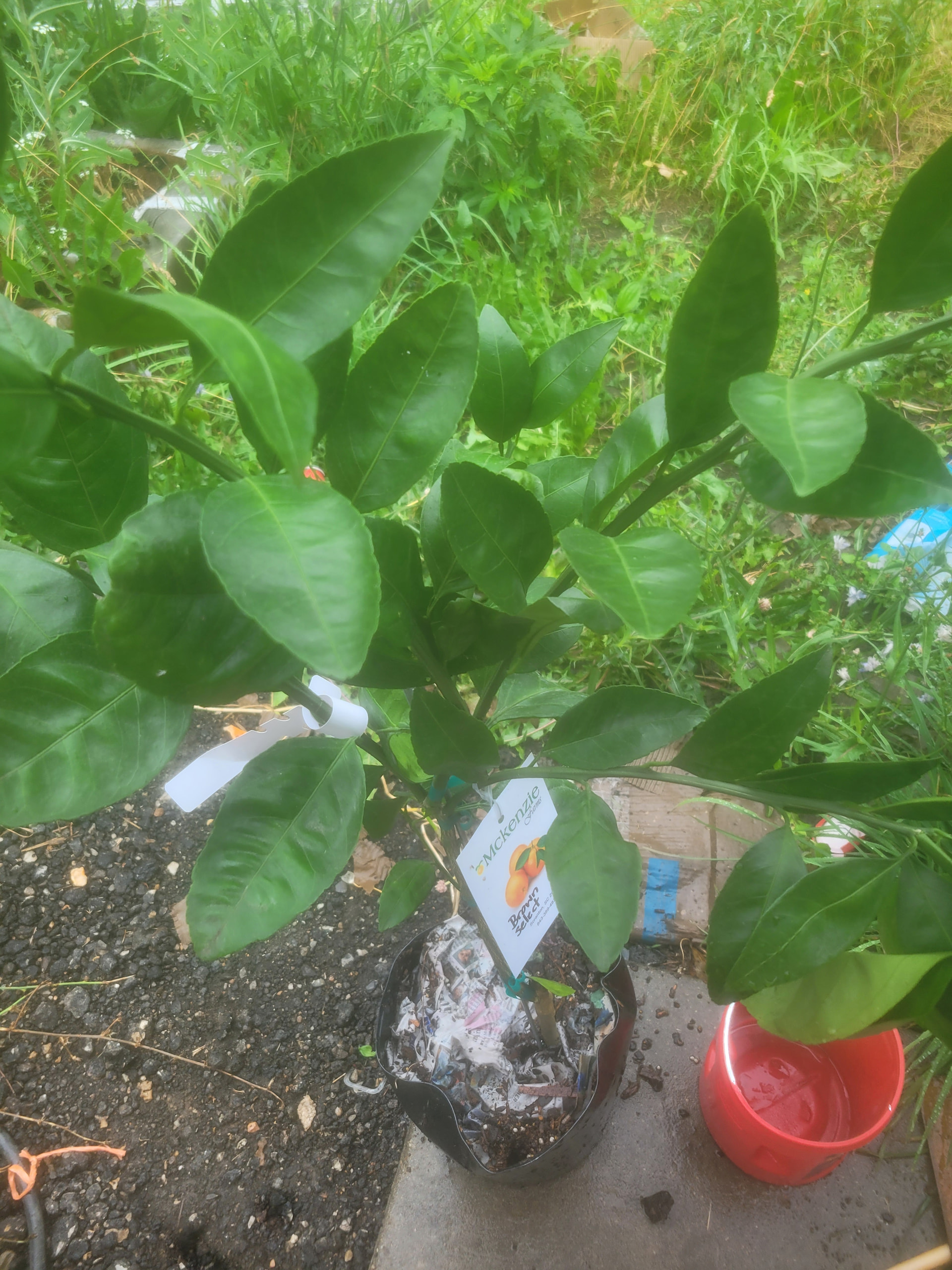
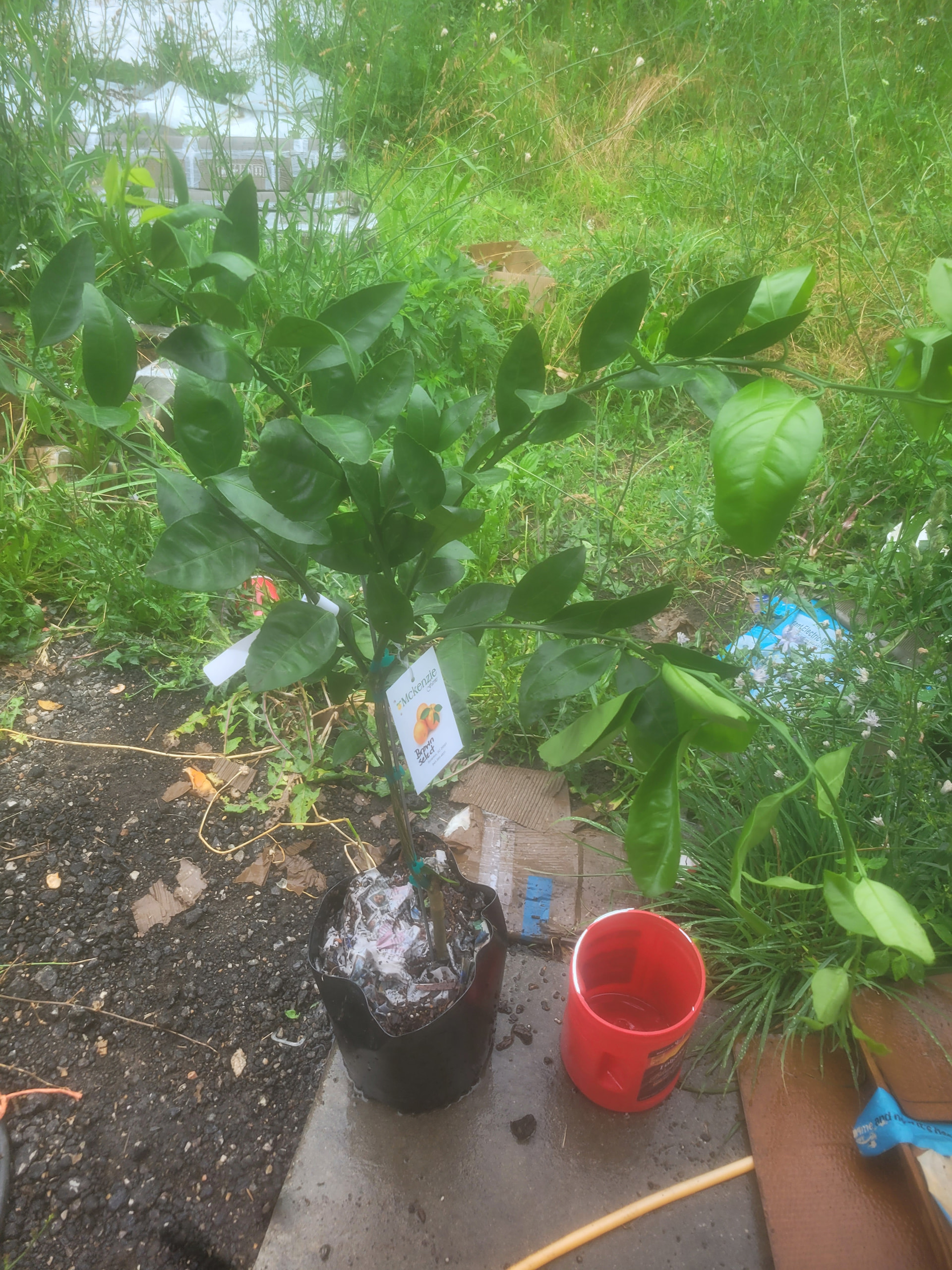
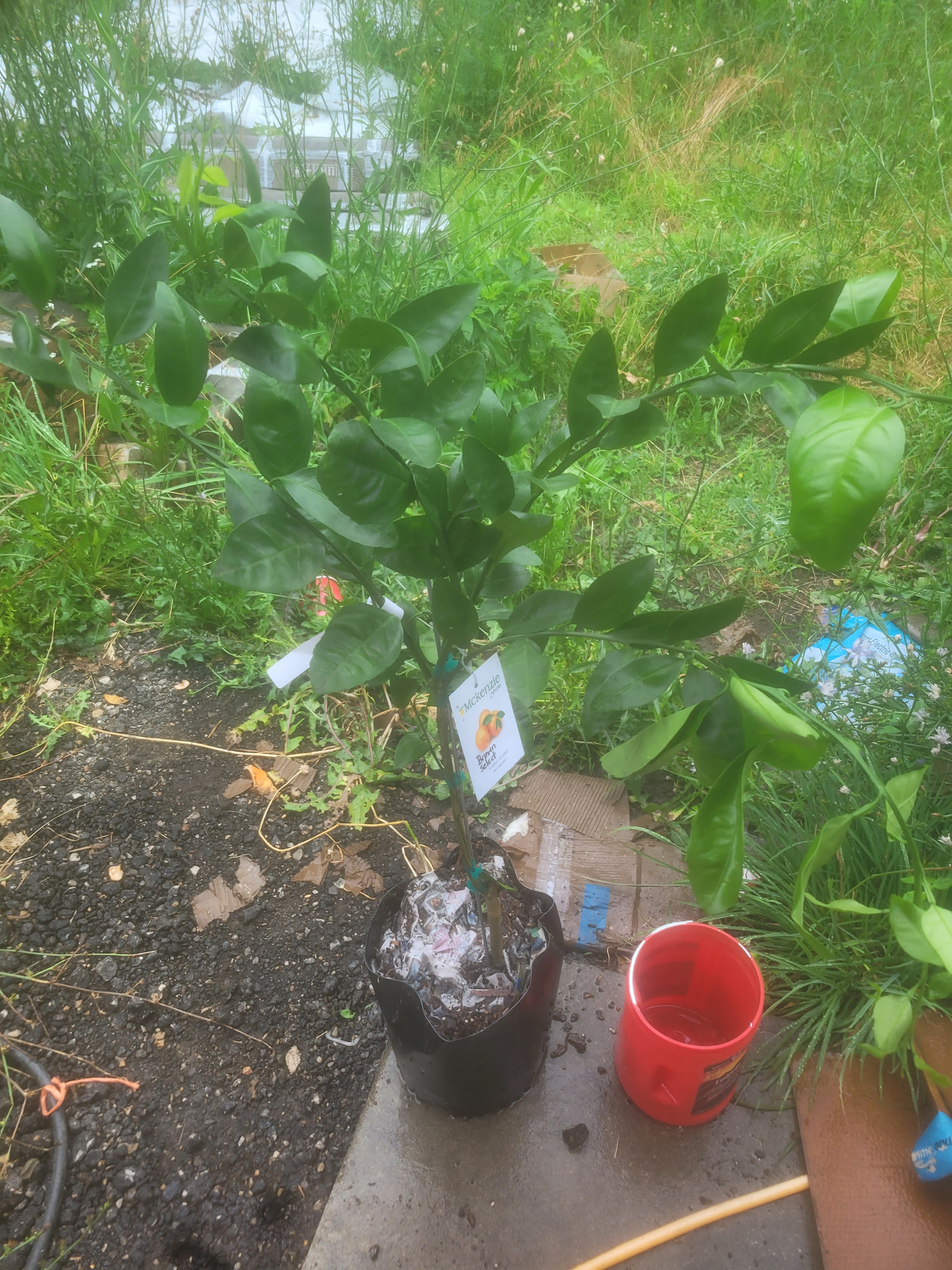
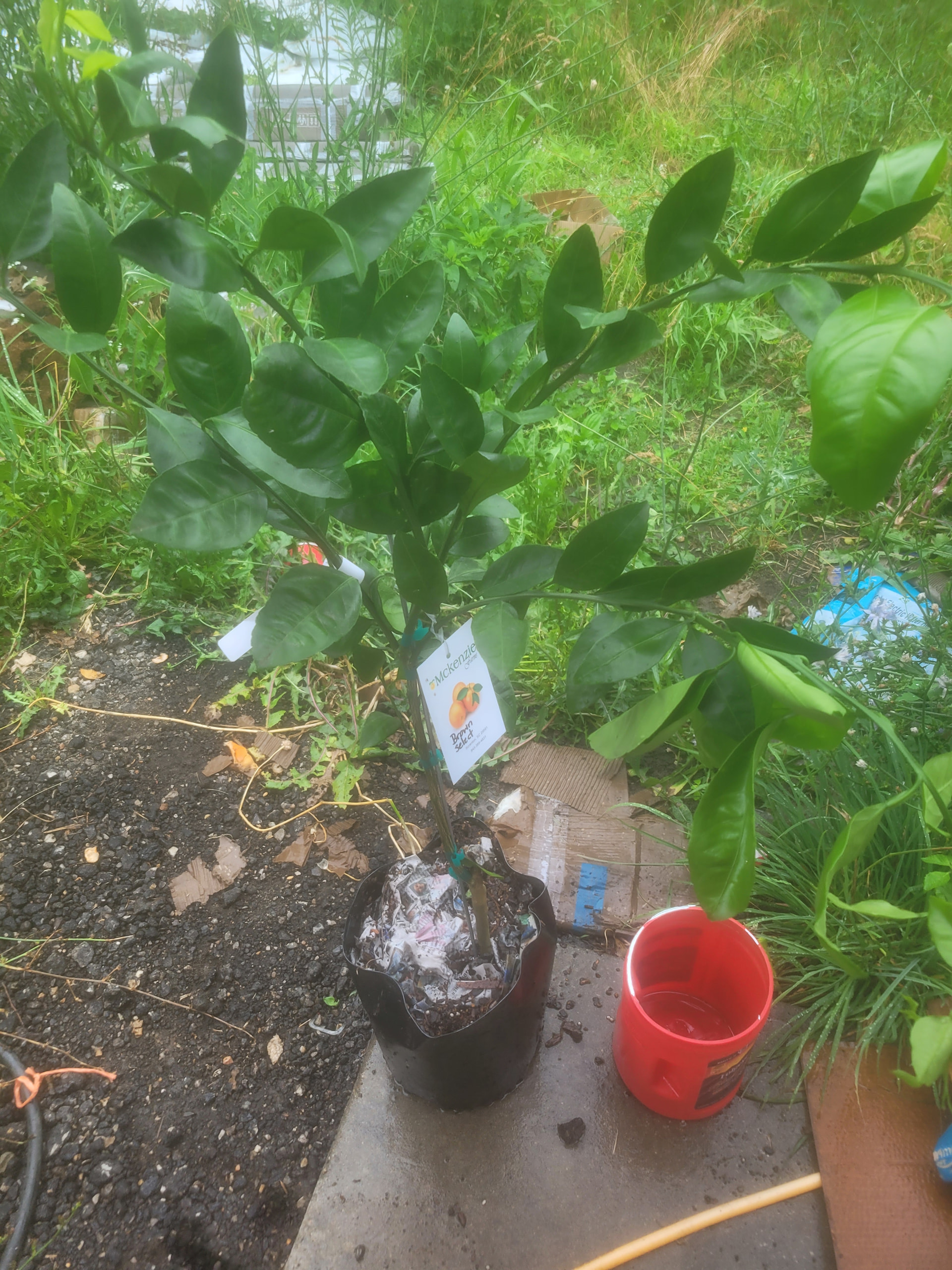
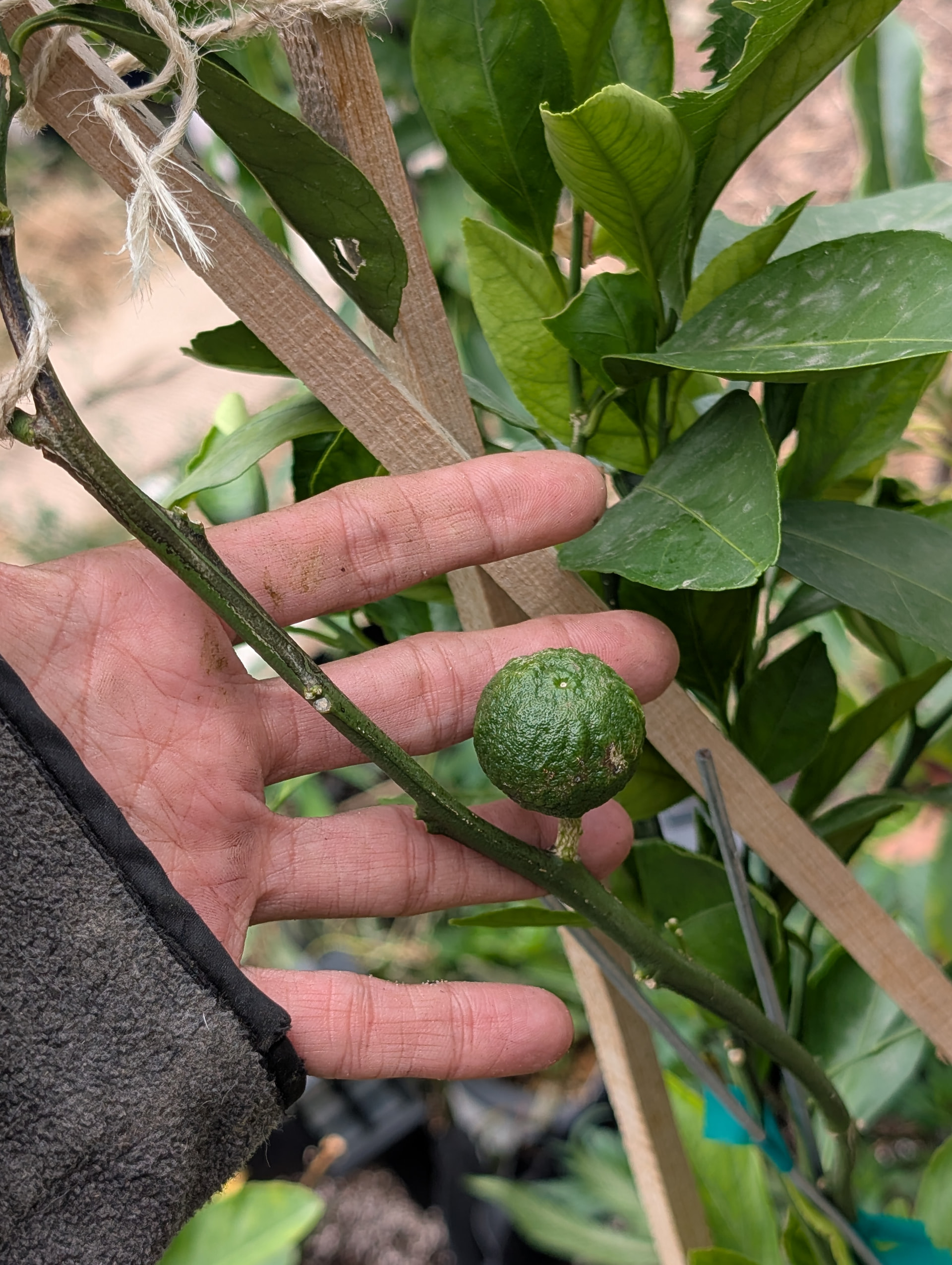
My most recent purchase was 4 trifoliata oranges for rootstocks and a Satsuma mandarin known as “brown select” and another known as “Owari” to extend my season. Seto and Miho are on my list to find next. These will be grown in a small inground greenhouse. What 4 Satsuma am I after ? Owari, Brown Select, Seto, Miho to start with!

“Satsuma

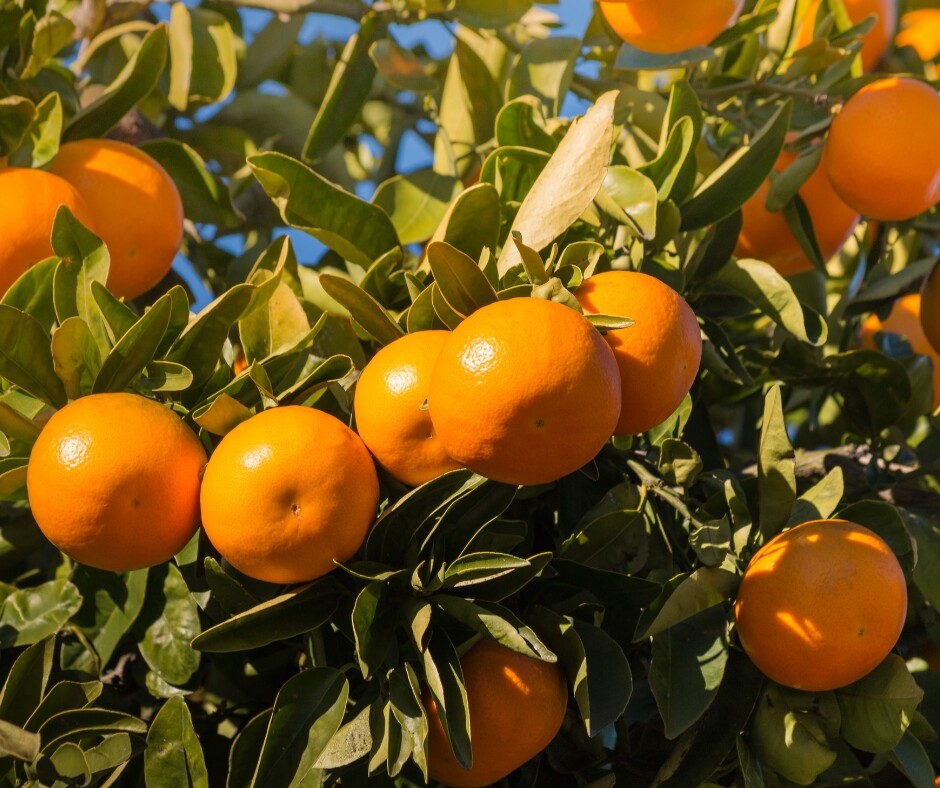
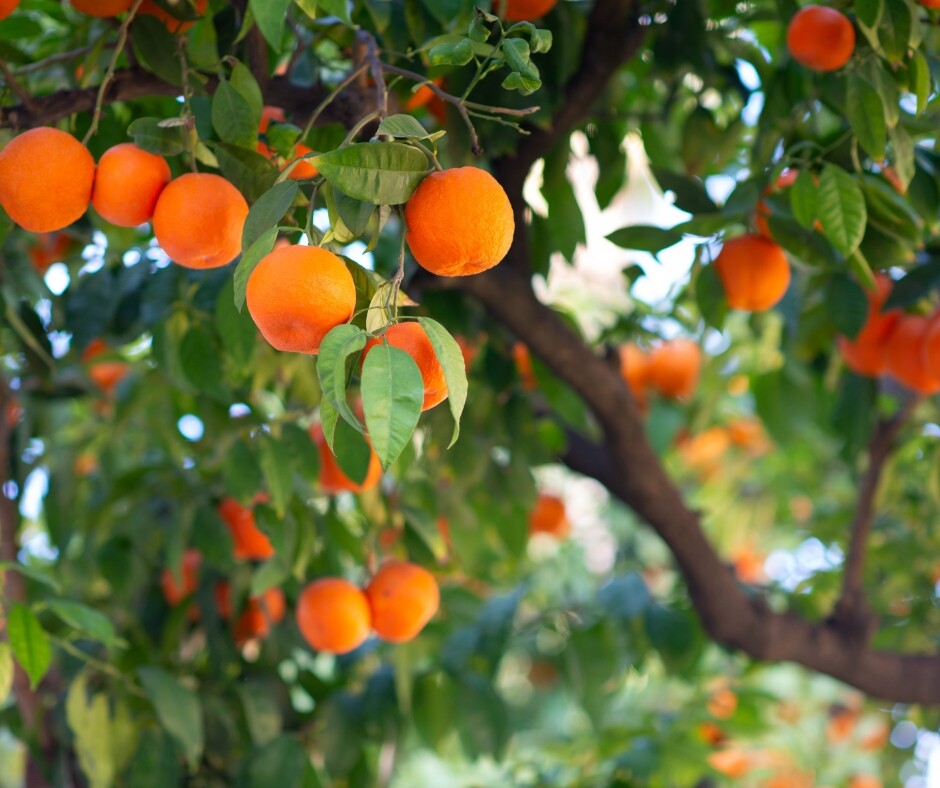
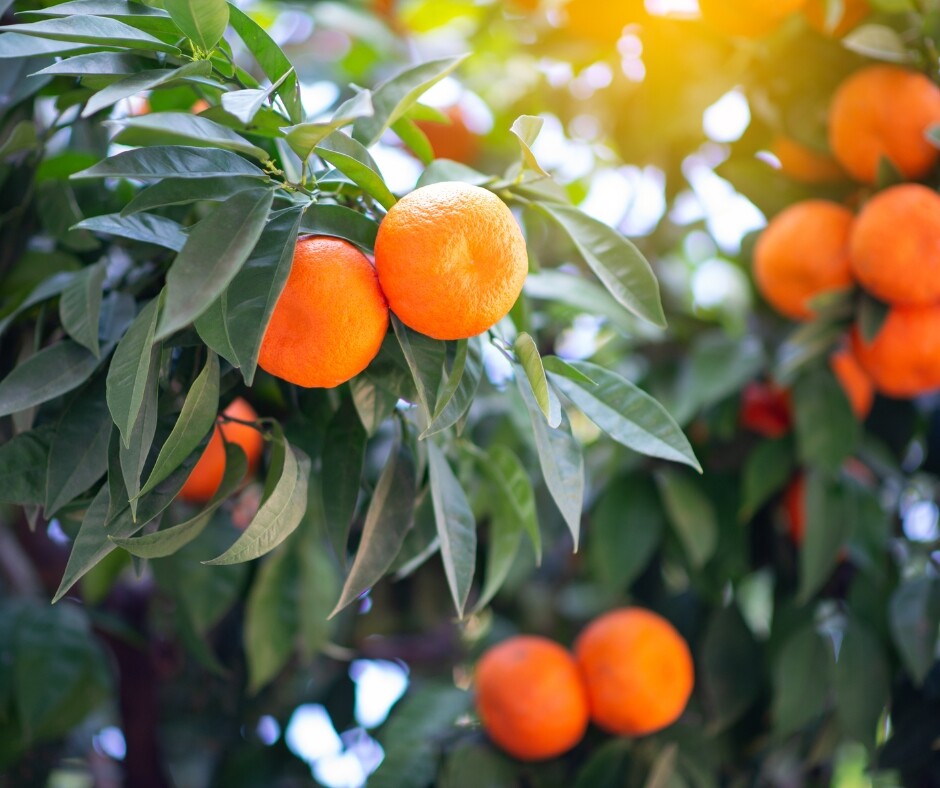
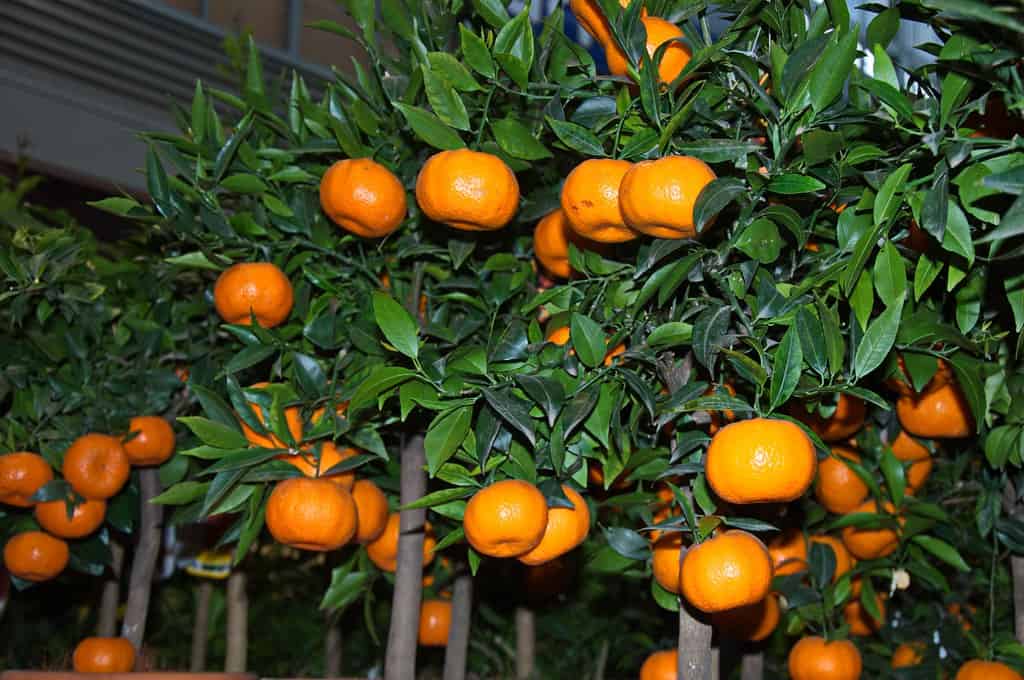
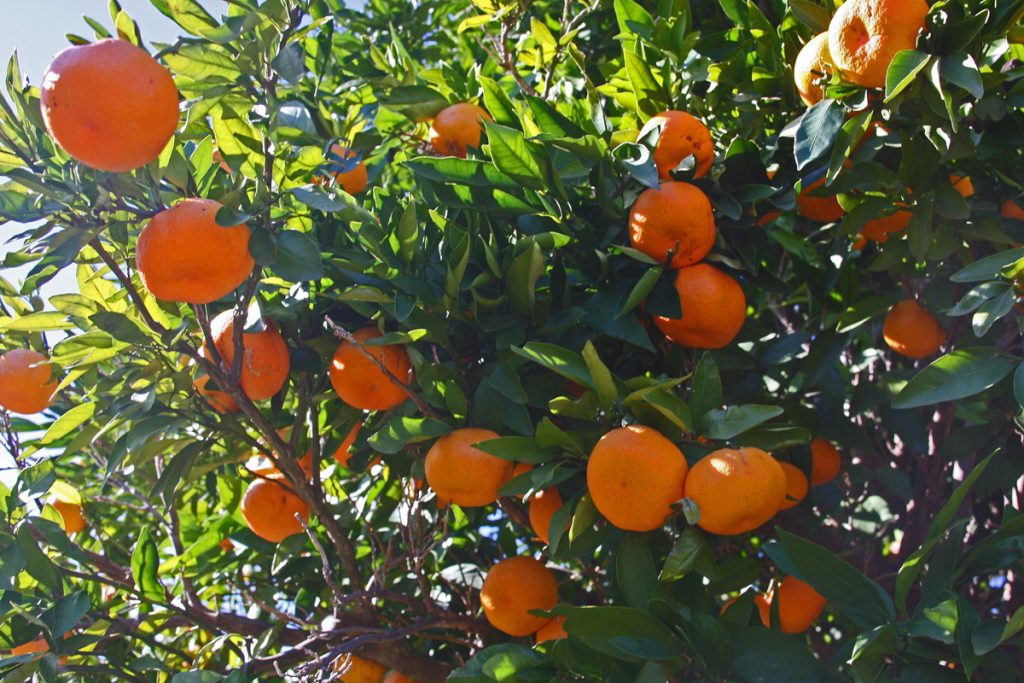
Satsumas are a type of mandarin orange and the classic selection for cold-hardy citrus. Trees are relatively small and low growing, and produce small, tangy fruits. This variety can withstand temperatures as low as 14°F, although the fruiting season is typically over by winter. ‘Owari’ is the most popular cultivar, and it consistently produces small- to medium-sized fruits. ‘Brown Select’ is another readily available cultivar that matures a couple weeks earlier than ‘Owari’, and also outcompetes it in terms of fruit and tree size.

1 Like

Satsuma Trees: Louisiana’s Favorite Citrus Variety and How to Grow Them

Satsumas are a real icon of Louisiana gardeners! They’re hardy enough to survive our mild freezes without issue. They produce white fragrant flowers, and glossy evergreen leaves. Over time, growers have honed their grafting and breeding practices to get better tasting fruits, more plentiful harvests, stronger growth, better disease & pest resistance, and more. For grafting specifically, the rootstocks help these trees thrive in our soil and climate. Most satsumas today have few to no seeds and are near-thornless, making any variety from our stores a great pick for your home-grown garden.

That being said, everyone has their favorites! In this article, we’ll cover the differences both big and small between all satsuma varieties we carry (Owari, Brown Select, Seto, Miho). That includes the size & taste of their fruit, their growth habits, and their blooming & ripening periods. We’ll also suggest products like fertilizers to increase production and tell you how to spray for bugs & disease while keeping your fruits safe to eat! For the following comparison section, we’ve broken our four varieties into two categories: The first two are ‘Sweet’, and the last two are ‘Tangy’.

Table of Contents

Owari & Brown Select: Sweet Treats!

Citrus reticulata ‘Owari’

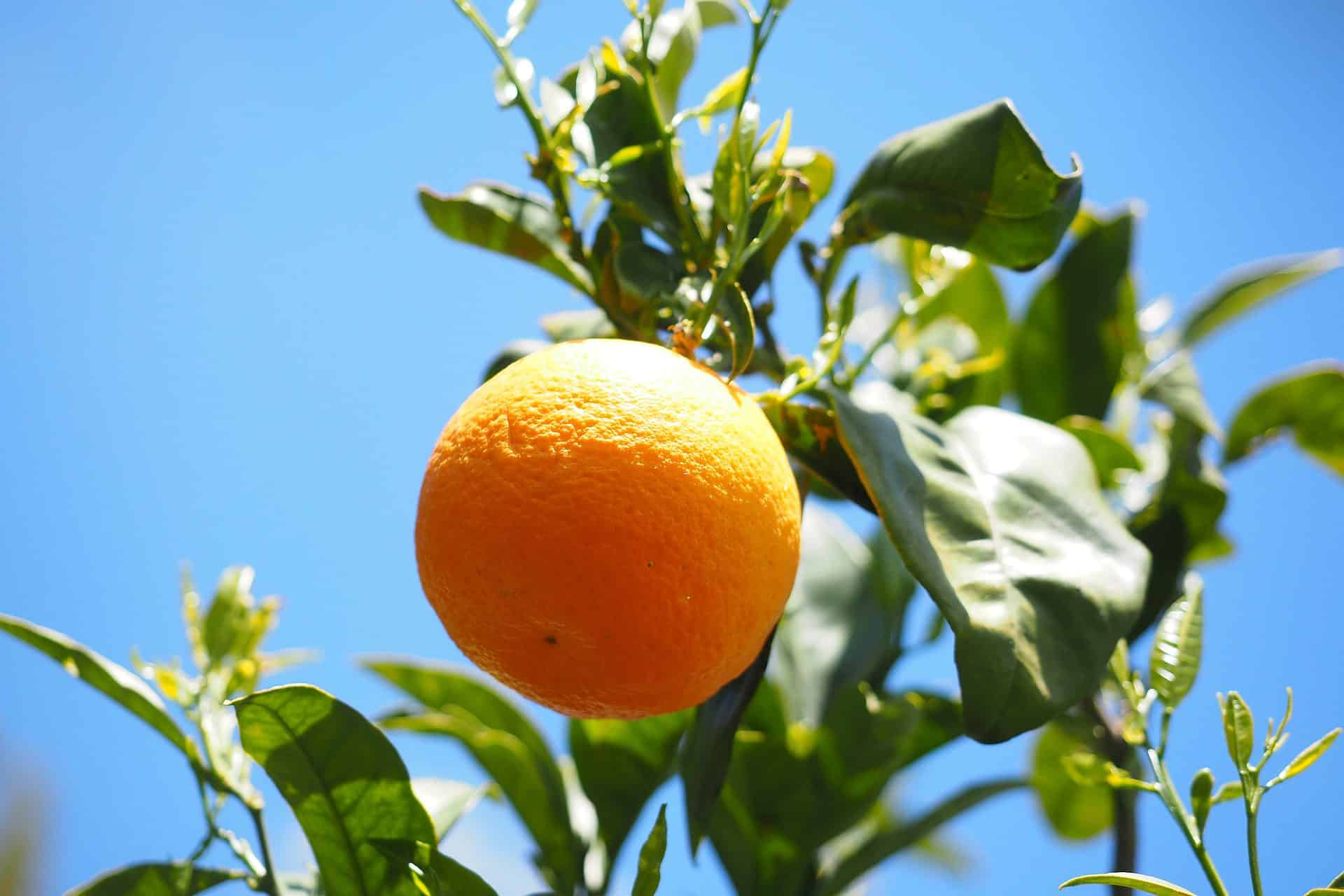
Owari is the country’s most popular satsuma tree! They grow quickly and mature at 10-15 ft tall, with a canopy spread of 8-10ft around. All satsumas should be pruned so branches stay at least 2ft off the ground. I wouldn’t cut it less than 10ft tall, and 6ft canopy spread. Fragrant white flowers will appear in April, a great combo with the dark green foliage. The small to medium-sized fruits will finally start to ripen by November, but LSU Agricultural Center notes that they can be harvested until early December! There doesn’t seem to be any benefit to ripening off the tree, so I’d wait until you’re happy with the look of the fruit before picking and eating. Although taste is subjective, it’s hard to argue with the fact that Owari is a particularly sweet, spritely fruit. Between small size, abundant yield, and great flavor, it’s no wonder why these sell so fast from our nurseries!

Citrus reticulata ‘Brown Select’

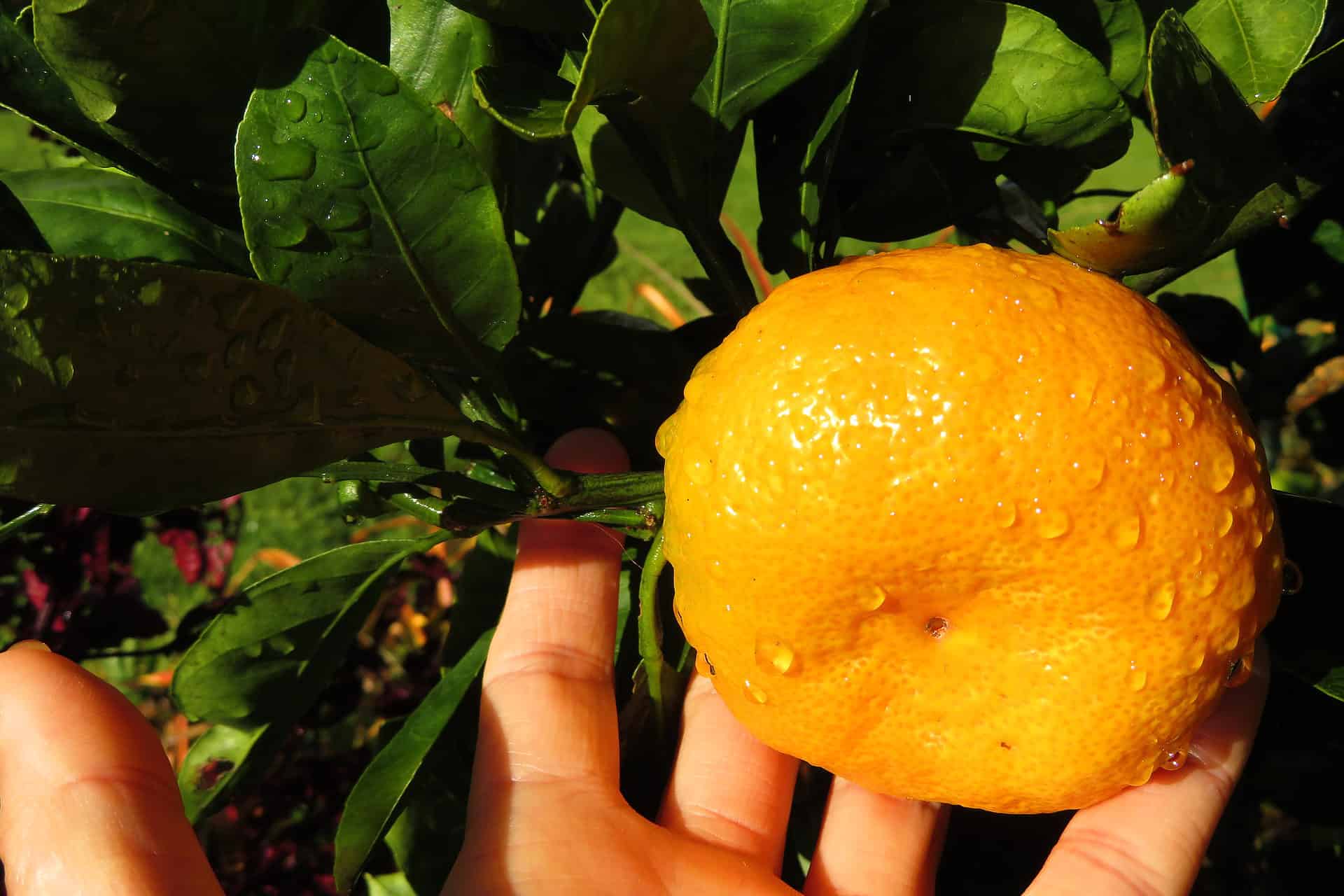
Brown Select is another Louisiana favorite. Not only do you get amazing fruit, but you also get a beautiful-looking tree with dark, glossy green leaves and fragrant white flowers. The flowers appear from March – April and will bear ripe fruit a bit earlier than Owari, usually in October. The tree is on the larger side, so this might work better for gardeners with a bit more space. You can expect a height of 12-15ft tall, and a canopy spread of 8-10ft around. I suggest only pruning if branches droop below 2ft from the ground, or as needed. The fruits are a bright orange color and are relatively large. The skin has a slightly bumpy texture but is still easy to peel by hand. From personal experience, I find the Brown Select fruit has the sweetest of all the satsumas on this list. If that’s your thing, this is the perfect tree for you!

Seto & Miho: Tangy Delights!

Citrus reticulata ‘Seto’

One of the smallest growing satsumas, the Seto is gaining traction with edible gardeners who are strapped for space (12ft tall & 6-8 ft around). Their branches tend to have a drooping or downward facing look. Seto fruits are ready to eat between Thanksgiving and Christmas, so a bit later than the other varieties we’ve listed. The fruit, just like the tree, is on the small side. This makes their individual segments great for bite-sized snacks, packed with the iconic sweet and tangy flavor we love from satsumas. Without having a side-by-side comparison, I’d argue they are similar to Owari in taste, but the tanginess is more pronounced. If you have had success growing Owari & Brown Select, why not give Seto a try!

Citrus reticulata ‘Miho’

Miho are often compared to Seto. Their height and spread are nearly identical, but their branches are opposites with the Miho tending to have a perky or upward facing look. So, another great tree for small spaces. Miho also has a tangy taste to their fruit like the Seto, but are a bit larger and would be considered the sweeter of the two varieties by most gardeners. Louisiana Nursery has rarely stocked either of the two last varieties, but we’ve been making a push in recent years for the “tangy” crowd of gardeners. Let us know if that’s you and pick one of these less-common varieties up today!

Some Satsuma Products & Care-Tips

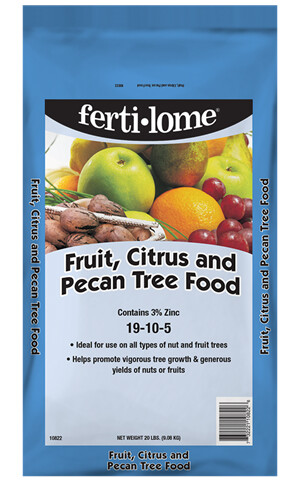
As for care, most everything you do for one of these trees can be applicable for all of them; Heavier watering in the summer months, proper mulching, pruning at an angle in the early spring after last-frost, etc. You should wait to fertilize your fruit trees for at least the first year of growing, but after that be sure to use the right fertilizer! We’re huge fans of the Fertilome ‘Fruit, Citrus and Pecan Tree Food’ granular fertilizer, and the Happy Frog ‘Citrus & Avocado’ fertilizer. You’ll want to spread the granules around the mulched mound of the tree, and water thoroughly after application. Avoid getting any on the trunk or center of the mound to prevent burning. Both companies suggest multiple applications per year, and provide further instructional materials on the bags!

Safe, Organic-friendly Pest & Disease Control

Now, for the scary part: How does one deal with an insect infestation or fungal disease on an edible / fruiting tree? For starters, you’ll want to stick with non-systemic products. Non-systemic means the chemicals, sprays, or powders do not become absorbed into the body of the tree or fruit. This way, you can spot treat issues like bugs or mold and still feel confident about eating the fruit during harvest season. Even if you apply a treatment close to harvest or mid-production, non-system sprays can be washed as they are totally surface level chemicals. Louisiana Nursery has tons of products for these issues, but a few good places to start are Fertilome’s ‘Fruit Tree Spray’ and Captain Jacks ‘Fruit Tree Spray’ from Bonide. Both of these products can be applied until the day of harvest, are organic friendly, and work on pests & diseases. If you’re looking for specific bugs and diseases that affect your satsuma tree, we loved this article from The Spruce linked ‘here’.

We’ve gone over some amazing varieties today, along with how to prune, how which fertilizer to apply, which products work best for pest and disease control, and then some! If you found any of this information helpful, why not subscribe to our newsletter? We only send one email per week, and it’s filled with to-do lists, staff-written blogs, curated content, our weekly sales sheet, and more!

Want to see all our fruit & citrus tree varieties? Check out our dedicated tree page for further information, and scroll the the very last section!

Thanks for reading!

Written by Beau Mutrie”

1 Like

The Plant Marketplace

Plant Care

Satsuma Tree Varieties

January 18, 2023 / by Nathalie Benipayo

Satsuma (Citrus unshiu) is among the variety of mandarin oranges that have originated from Japan. Having several cultivars under it, the unshio is a sub-tropical species that belongs to the citrus family Rutaceae.

There are over 100 varieties of C. unshiu reported, but there are only a few that are widely available in the United States.

Yet aside from their pleasant-looking features and fruits, satsuma varieties are valued for their cold tolerance, thin, and easy-to-peel skin with the perks of a few seeds.

Growing them would not only give you a lovely addition to your garden but as well as a provision of sweet oranges when in season!

[Upload failed]

More About Citrus Unshiu Trees

Satsuma fruits were reportedly introduced to North America originating from China and cultivated in Japan in the 18th century, and since then has been recognized for their medium-sized trees with low-growing and spreading characteristics.

Further, the drooping small tree is highlighted with adorable blooms that easily attract pollinators during springtime to early summer.

The cold-tolerant citrus fruit is distinguished for its leathery but rather easy-to-peel rind. If grown from seeds, the tree can take up to 8 years to grow and eventually bear fruits. However, the rise of grafted planting materials can hasten this process. Through this, you may witness your satsuma growing[Upload failed]in no time.

To get to know some of the ideally grown types of satsuma, read on further for the curated selection of satsuma cultivars for your next indoor/outdoor project!

9 Types of Satsuma Trees

Owari satsuma

Owari Citrus reticulata ‘Owari’ is one of the most commonly grown and cultivated varieties of satsuma oranges. It has a medium-sized fruit that ripens late in the season. The color is reddish-orange a[Upload failed]d has little to no seeds.

The concept is that they add vibrance to your garden even when off-season. And when there is a need for harvesting, the tree offers you a mouthwatering fruit that you can enjoy throughout fall or early winter!

Okitsu Satsuma

Okitsu satsuma is relatively closer to Owari in terms of growth and other morphological features such as fruit size, harvest time, and even seed count. However, some reports indicate that Okitsu may be sweeter in flavor as compared to Owari, but this may still depend on the prevailing environmental condition surrounding the tree.

Obawase or Wase Satsuma

In teams of the ripening period, the Obawase satsuma tends to ripen faster than its other counterparts such as the Owari. Hence, they may be suitable to grow in areas with a shorter growing season. Further, the fruit size of the Obawase is much superior as compared to other satsumas.

Kimbrough Satsuma

Of all satsuma varieties, the Kimbrough is said to yield much higher. During the harvest season, the tree would produce medium, late-ripening fruit having red to orange coloration. The rind is reportedly easie[Upload failed] to peel as compared to other satsumas.

[Upload failed]

Seto Satsuma

Seto satsuma is only making a name in the industry due to its flattened shape of fruits (for ease of packing), but it is also being recognized as an ideal ornamental specimen for home growers.

Tested in various demonstration areas and agricultural farm sites, Seto satsuma trees are cold hardy, and have a sweet and tangy flavor should you wish to consume them fresh.

Similar to most mandarin oranges, the Seto satsuma is a seemingly seedless fruit with an easy-to-peel skin. Further, the tree’s ability to tolerate cold temperatures enables them to thrive in the ground under USDA Zones 8 to 10.

Kara Satsuma

The Kara Satsuma is a cross between Owari tree and a tangerine. The medium-sized fruit has more seeds than other cultivars, but the skin and flesh are lighter in color. Ideally planted in rows or side beds, the Kara satsuma will grow happily with medium watering.

Also, if you wish to invest in this lovely plant indoors, you will be delighted as its flowers have a rather pleasant smell. The blooming period occurs in late Spring and early Summer.

Miho Satsuma

One of the recently rising cultivars of the satsuma orange is the Miho Wase. It may be a bit smaller as compared to other fruits of satsuma but what it lacks in size is compensated by the rich flavor, which is a combination of both tangy and sweet.

Miho is a relatively new variety that ripens early. It is characterized by thin and smooth skin. The plant may grow from 10 to 12 feet in height and may spread at about 6 ft. If to be grown along hedges or containers, the plant may be pruned to achieve the desired height and shape.

Big Early Satsuma

The Big Early Satsuma is similar to the Armstrong cultivar which tends to have larger and segmented fruits. Delving more into its fruit quality, the Big Early is seedless and has a thinner rind. The fruit matures earlier – usually from late September to mid-October.

Big Early Satsuma is grown in some parts of the Gulf Coast region. It is nearly identical to Obawase but it could still stand out on its own. Having segmented slices and sweet juicy flavor, you could never go wrong with this beaut.

Armstrong Satsuma

Armstrong is a relatively large type of satsuma. But what makes it different from other varieties is that they have a much lighter-colored rind. As most cold-tolerant citrus, Armstrong can be grown outdoors in USDA zones 9 – 11.

The tree can be grown in containers whether indoors or outdoors, as long as there is sufficient space and a source of light.

The flowers are fragrant and the fruits may be easily picked. Serving not only as an ornamental plant but also as a source of delectable fruits that may be enjoyed by any home growers!

The Best Soil for Satsuma

Satsuma mandarin oranges, in general, prefer sandy and loamy soil with a slightly acidic pH (5.8 to 6.5). Fortunately, satsumas are quite tolerant to various types of soil conditions, even clayey and rocky, however, it does not perform well under salty or alkaline soils.

If you opt to use organically rich soil, be sure that it is well-draining to avoid waterlogging.

Satsuma Lighting Needs

Similar to most fruit trees, the satsuma mandarin requires an ample amount of light. Ideally, at least 10 hours of direct sunlight, particularly during spring – when flowers tend to bloom and fruits are already taking form.

Satsuma Watering Needs

Being a cold-tolerant citrus, the satsuma trees need plenty of water to survive. You may simply need to adjust the watering level during the growing period and depending on the prevailing season. Once established, watering may be reduced once or twice a week.

Temperature & Humidity Requirements

A cold-hardy plant, satsumas can survive temperatures as low as 12 °F (-11.11 °C). Interestingly, the trees would develop a much sweeter flavor when it is exposed to colder climates.

Satsumas will thrive at USDA hardiness zones 8 through 11, but they have some level of resiliency to severe freezes and even hot weather.

Satsuma Fertilizer Needs

Young trees of satsuma mandarin orange should be well-amended with an organic source of nutrients. But once established, you may feed them with synthetic fertilizers such as ammonium sulfate: 21-0-0 (NPK).

This should be divided into three applications for each year as the tree continues to mature. It is recommended to begin fertilizing once new growth emerges on the tree.

Means of Propagation for Satsuma

Satsuma mandarin trees are best propagated through grafts, but they can also grow well from leafy cuttings. Ideally, cuttings should be taken from the tree during the growing season when the roots may easily form.

Once rooted, replant into fresh potting soil. For those living in the southern parts of Texas, where small trees are often grown in the ground, apply nitrogen fertilizer – particularly in spring.

Final Thought

Satsuma mandarin is an adorable specimen to have in your garden. Growing them would mean a supply of fresh and delectable oranges and a fine set of greeneries within reach!

To find the most suitable plant for you, check out your options here at Plantly.

Whether you want to buy, sell or simply reach out to other plant enthusiasts, Plantly is the right place to be!

Tags: trees, outdoor plant, Outdoor Plants, fruittrees

Nathalie Benipayo

I’m a graduate student taking horticulture and have taught fundamentals of crop science at a university. As an agriculturist, my field of interests is with climate smart gardening and community development. I certainly enjoy a platform where I can share my knowledge to fellow plant enthusiasts and gardeners as they embark on a journey with their green, leafy and mighty friends!”

GARDENING
Types Of Satsuma Trees
By Samantha Belyeu
Updated Sep 6, 2022

Satsuma trees are tropical to sub-tropical citrus fruits of the mandarin orange variety that originated in Japan. There are several cultivars of satsuma oranges (Citrus unshiu), all of which are valued for their cold tolerance relative to other orange varieties, as well as their thin, easily-peeled skin and few seeds. There are over 100 varieties of C. unshiu, though there are only a few that are regularly available in the United States, according to Milind S. Ladaniya, in the 2008 book “Citrus Fruit: Biology, Technology and Evaluation.”

Owari Satsuma
The most commonly used and cultivated variety of satsuma orange, Owari is a medium-sized satsuma that ripens late in the harvest season. The skin is a reddish-orange, and, like all satsumas, it has few to no seeds. Most other cultivars of satsuma on the market today are believed to have been bred from the Owari satsuma. They share some, if not all, the essential characteristics of Owari satsumas.

Obawase or Wase Satsuma
Obawase satsumas ripen earlier in the season than Owari, making them a better choice for areas that don’t have as long a growing season. Their fruit is one of the largest of the satsumas, but the skin color and seed count is similar to Owari.

Okitsu Satsuma
In size, color, harvest time and seed count, Okitsu is the same as Owari. The flavor is sometimes sweeter than Owari (depending on growing conditions).

Armstrong Satsuma
Armstrong are another large, early-maturing satsuma variety, and differ from all other satsumas in that they have a much lighter orange skin.

Big Early Satsuma
Similar to Armstrong in all but color, and nearly identical to Obawase, Big Early is grown in some parts of the Gulf Coast region.

Kimbrough Satsuma
This high-yielding variety of satsuma is in all other respects very similar to Owari. Kimbroughs produce medium, late-ripening fruit with red-orange, loose peel.

Kara Satsuma
This satsuma is actually a hybrid between Owari and a variety of tangerine. For this reason, the skin and flesh is a bit lighter, and there are more seeds to be had in the medium-sized fruit.

Miho Satsuma
Miho is a relatively new cultivar with early-ripening fruit with thin, smooth skin. The flavor is sweet, and the fruit size is large.

Seto Satsuma
The flat-ish shape of the large Seto satsuma fruit makes them of particular interest to large-scale growers, since this makes them easier and more space-efficient to pack. This variety, along with the Miho variety, has been tested at various agricultural centers in Texas and is now a recommended variety.

REFERENCES
AgriLife Extension: Home Fruit Production – Mandarins; Julian Sauls; Dec. 1998
Purdue University Cooperative Extension; Mandarin Orange; Julia Morton; 1987
University of Florida Extension; Cold-Hardy Citrus for North Florida; Julian Sauls, et al.
Aggie Horticulture; ‘Miho’ and ‘Seto’—New High Quality Satsumas For Texas; Larry Stein, et al.; 2001
“Citrus Fruit: Biology, Technology and Evaluation”; Milind S. Ladaniya; 2008

What Are The Different Varieties Of Satsumas?

Cultivars

  • ‘Owari’ Satsuma. Season of maturity: October to November.

  • ‘Silverhill’ Satsuma. Season of maturity: October to November.

  • ‘Kimbrough’ Satsuma. Season of maturity: October to November.

  • ‘Brown Select’ Satsuma. Season of maturity: October to November (two weeks ahead of ‘Owari’).

  • ‘Early St.

  • ‘Xie Shan’ Satsuma.

Table of Contents

How many types of satsuma are there?

Types of Satsumas
There are over 100 Satsuma cultivars that have resulted from years of controlled pollinations. These cultivars vary in the date of maturity, color, the shape of the fruit, and quality. However, not all of them are grown commercially.

What is the best satsuma variety?

Owari
Owari is the most widely grown satsuma and is a vigorous grower. The fruit is medium to small and seedless with excellent quality.

Are there different types of satsuma trees?

Satsuma trees produce sweet, almost seedless fruit that peels so easily it is called the “zipper fruit.” If you decide to grow a satsuma tree as a backyard citrus, you can choose among some 70 varieties.

Read more: How Long Do Satsuma Trees Live?

What’s the difference between satsuma Clementine and tangerine?

The mandarins you see in grocery stores called Cuties and Sweeties are Clementines. They are easier to peel than tangerines, but not as easy to peel as Satsumas. Satsuma Mandarins are a specific type of mandarin orange, originating in Japan more than 700 years ago. They are a lighter orange, sweet, juicy, and seedless.

Do you need 2 satsuma trees to produce fruit?

Owari Mandarin trees, also known as Satsumas, produce a bounty of juicy, easy-to-peel, seedless oranges that ripen early, through December. Because they’re self-pollinating, you only need one to gain this harvest.

Why are there no satsumas this year?

Throughout Europe and the U.S., satsuma mandarins are suffering as exporters struggle to market their fresh produce. Without channels to reach consumers, commercial activity is made more challenging amid the Covid-19 pandemic.

What is the sweetest satsuma tree?

The Seto Satsuma varieties produce one of the most delicious, sweetest and easiest to peel mandarin fruits loved by almost everyone! This tasty, seedless fruit is especially popular with children, due to the smaller sized slices that are easy to pop into their mouths.

How long does it take for a satsuma tree to bear fruit?

about eight years
Satsumas can be grown from seed. These trees will take about eight years to produce their first fruits. They can also be grafted onto other citrus rootstocks which tend to be ready in half the time.

Will satsumas ripen off the tree?

Citrus fruit do not sweeten once they are picked from the tree. While the color may change once the fruit is picked — turning more orange — the sweetness will not increase once they are picked.

Read more: Why Do Some Satsumas Have Seeds?

How do you grow sweeter satsumas?

Overall, there is little you can do to increase the sweetness of the fruit. Fertilize the tree in early February using a general-purpose fertilizer or citrus tree fertilizer following label directions, but it will likely have little effect on the sugar content of the fruit.

How long do satsuma trees live?

The average lifespan of a citrus tree is approximately 50 years. This age applies to both standard size and dwarf citrus. Trees begin producing fruits sometime during their second through fifth growing season, and continue to produce fruit throughout their lifespan.

Do you prune satsuma trees?

Because Satsuma trees have a prostrate growth habit, pruning is essential to prevent fruit on low-lying limbs from touching the ground. The best time to prune your tree is early spring after the danger of frost. Prune any branches growing below 18 inches above the ground.

Why are satsumas only available at Christmas?

The tradition of sharing these oranges during the holiday season dates back to the first Japanese immigrants who came to Canada in the late 1800s. According to BC Food History, “it was customary for Japanese immigrants to receive packages of Satsuma oranges from their families in Japan to celebrate the New Year.

Why are satsumas at Christmas?

Nicholas traveled to the house, and tossed three sacks of gold down the chimney for each of the dowries. The gold happened to land in each of the girls’ stockings which were hanging by the fire to dry. The oranges we receive today are a symbol of the gold that was left in the stockings.

Read more: Is Satsuma Japanese Or Chinese?

What is the season for satsumas?

Satsumas are in season between October and December, so you may start to see them at your local grocery store in the winter months. In the US, they’re grown in California and the Southeastern states. It’s also grown around the world in Japan, China, Spain, Korea, and more.

Why are my satsumas so big?

This is a condition called puffy fruit, and it is mostly a problem for young, vigorously growing satsuma trees. It is disappointing, as the fruit look good but are not really fit to eat. Satsuma trees are most likely to do this when they produce fruit in the first five years after planting.

Can you plant a lemon tree next to a satsuma tree?

Since citrus trees do not cross-pollinate, Satsuma (Citrus reticulata) and lemon (Citrus limon) trees can be planted near each other. In addition, Satsuma flowers produce sterile pollen and set fruit without pollination.

When should I prune my satsuma?

Prune your plant in early spring. Cut the stems back to 12 to 18 inches above the ground. During the growing season, cut back the shoots monthly, leaving 4 leaves on each shoot, until mid-September.

What has happened to satsuma?

We made the decision to close Satsuma on 31st December 2021.

How much does a satsuma cost?

At retail, satsuma prices typically range from $1.00 to $2.00 per pound for 3-lb or 5-lb bags (USDA-AMS 2017).

Tags:Satsuma

The Satsuma Mandarin1
Peter C. Andersen, James J. Ferguson,and Muhammad Adnan Shahid2

  1. This document is HS195, one of a series of the Horticultural Sciences Department, UF/IFAS Extension. Original publication date March 1996. Revised
    November 2018. Revised April 2019. Last Revised September 2023. Visit the EDIS website at https://edis.ifas.ufl.edu for the currently supported version
    of this publication.
  2. P. C. Andersen, professor; James J. Ferguson, professor emeritus; and Muhammad A. Shahid, assistant professor, Horticultural Sciences Department;
    UF/IFAS North Florida Research and Education Center, Quincy, FL 32351.
    The Institute of Food and Agricultural Sciences (IFAS) is an Equal Opportunity Institution authorized to provide research, educational information and other services
    only to individuals and institutions that function with non-discrimination with respect to race, creed, color, religion, age, disability, sex, sexual orientation, marital status,
    national origin, political opinions or affiliations. For more information on obtaining other UF/IFAS Extension publications, contact your county’s UF/IFAS Extension office.
    U.S. Department of Agriculture, UF/IFAS Extension Service, University of Florida, IFAS, Florida A & M University Cooperative Extension Program, and Boards of County
    Commissioners Cooperating. Andra Johnson, dean for UF/IFAS Extension.
    This publication covers the history of satsuma mandarins,
    and a list of their cultivars describes the various physical
    characteristics of each plant and resulting fruit. This
    publication is intended to educate students and potential
    mandarin growers, as well as inform Extension agents and
    any interested persons of the public.
    Scientific Name
    Citrus unshiu Marcovitch
    Common Name
    In most citrus producing areas, satsuma mandarin is the
    preferred name, but satsuma tangerine is also used (Figures
    1 and 2).
    Family
    Rutaceae (Also known as Rue)
    Origin
    China and Japan
    History
    Satsuma mandarin may have originated in China, but it
    was first reported in Japan more than 700 years ago, where
    it is now the major citrus species grown. They are named
    from the Satsuma Province in Japan, which is located onFigure 1. A satsuma orchard in north Florida.
    Credits: P. C. Andersen, UF/IFAS
    Figure 2. Mature satsumas ready for harvest.
    Credits: P. C. Andersen, UF/IFAS
    2The Satsuma Mandarin
    the southwestern-most tip known as present-day Kyushu.
    The first recorded introduction into the United States was
    in Florida by George R. Hall in 1876. ‘Owari’ is the primary
    satsuma cultivar commercially grown in Florida. Other
    known cultivars such as ‘Brown Select’, ‘Early St. Ann’,
    ‘Silverhill’, and ‘Kimbrough’ are available as well but not on
    the same scale as the ‘Owari’.
    Between 1908 and 1911, approximately a million ‘Owari’
    satsuma trees were imported from Japan and planted
    throughout the lower Gulf Coast states— from the northern
    Florida Gulf coast to Texas— developing an extensive
    tangerine industry. Despite severe freezes having occasion-
    ally reduced satsuma acreage in these northern areas, the
    satsuma mandarin is a major commercial citrus type grown
    in the southern parts of the states bordering the northern
    Gulf of Mexico.
    Distribution
    Satsumas are grown in cool subtropical regions of Japan,
    Spain, central China, Korea, Turkey, along the Black Sea
    in Russia, southern South Africa, South America, and on a
    small scale in central California and northern Florida. The
    world’s largest satsuma industry is in southern Japan where
    climatic conditions are favorable for the production of high
    quality, early ripening satsuma mandarins. Selection of
    slight mutations and seedlings from controlled pollinations
    over many years has resulted in a collection of over 100
    cultivars that differ in date of maturity, fruit shape, color,
    and quality.
    Importance
    While this fruit is grown primarily for fresh consumption,
    a portion of the crop is canned as fruit segments or juice in
    Japan, China, and Spain. In these countries deeply colored
    juice is blended with orange juice to improve color or sold
    as single-strength tangerine juice. Fresh fruit is also im-
    ported into Canada and non-citrus producing areas of the
    United States, where it is the earliest seasonal citrus crop to
    reach the market.
    Description
    Although authorities differ as to the number of species and
    appropriate classification and grouping, mandarins have
    been divided into four groups: 1) Satsuma group (Citrus
    unshiu), 2) the King group (C. nobilis), 3) the Mediter-
    ranean group (C. deliciosa), and 4) the common group (C.
    reticulata).
    Tree
    Budded trees are small to medium-small, low-growing,
    usually spreading and drooping, and nearly thornless. They
    also have less foliage and a more open growth habit than
    other commercial citrus cultivars. Trees have a prostrate
    growth habit, meaning they grow flat on the soil surface,
    touching the ground, but not trailing it. So, low-lying limbs
    must be pruned to prevent fruit from lying on the ground.
    Trees are very hardy to cold and resistant to unfavorable
    conditions but susceptible to Elsinoe fawcetti— a fungal
    disease that causes citrus scabbing, wart-like lesions on
    leaves, twigs, and fruit without usually affecting internal
    fruit quality.
    Leaves
    Leaves are dark green, large, lanceolate, and tapering at the
    base and apex. They are typically broader than the leaves of
    other tangerines. Both main and primary lateral veins are
    prominent above as well as below. The petiole is slender,
    very long, and narrowly winged.
    Flowers
    Petals of the flower are white, and the flowers are “perfect,”
    containing both male and female flower parts (Figure
    5). Satsuma flowers produce little viable pollen and have
    few viable ovules. However, the satsuma does not require
    pollination and is highly parthenocarpic— develops fruit
    without fertilization, resulting in seedless fruit.
    Fruit
    Botanically, the fruit of tangerines, and of all citrus species,
    is known as hesperidium, a type of modified berry. These
    fruit are medium to small, are shaped like a flattened
    sphere, and sometimes appear slightly necked. They are
    most commonly seedless (0 to 6 seeds), and when present,
    these seeds have light green cotyledons. They also have
    tough carpellary membranes and a hollow axis with
    pulp-vesicles that are short and broad. Typically, in areas
    with cool night temperatures, the flesh is a brilliant reddish-
    orange, tender and melting, with a rich and subacid flavor.
    Fruit Quality
    Satsumas are consistently high quality in regions with cool
    winters and hot summers (Figure 3). Fruit grown in humid
    subtropical areas commonly mature internally and have
    good eating quality before good peel color develops.
    3The Satsuma Mandarin
    Such internally mature but externally green fruit is
    sometimes marketed as Emerald Green satsuma tangerines
    (Figure 4).
    The rind is thin and somewhat leathery; it is moderately
    smooth with large and prominent oil glands. As for any
    fruit intended for the fresh market, to preserve high peel
    quality, clip fruit at harvest to avoid plugging or tearing,
    which may subsequently result in postharvest decay.
    As fruit matures, the rind surface becomes increasingly
    bumpy, and the rind separates from the flesh somewhat.
    Fruit like this do not tolerate careless handling, do not
    respond well to degreening, and in general, do not ship
    well.
    Cold Tolerance
    The Satsuma mandarin tree is the most cold-tolerant citrus
    of commercial importance. Mature dormant trees have
    survived minimum temperatures of 14°F–18°F in northern
    Florida, northern California, and southern Alabama
    without serious injury. Moreover, because of their low total
    heat requirement, some satsumas ripen earlier than oranges
    and most other mandarins. Consequently, the satsuma
    mandarin is ideally adapted to regions with winters too
    cold for other citrus fruits but with growing seasons warm
    enough to produce early maturity and good quality fruit.
    Its range of climatic adaption for commercial culture is,
    therefore, narrow and restricted to the higher elevations
    and colder areas of the sub-tropical zones. In the United
    States, climatic conditions suitable for satsumas occur in
    northern Florida, in a narrow strip extending along the
    Gulf of Mexico across Alabama, Mississippi, and Louisiana
    into eastern Texas and in the Sacramento-San Joaquin
    Valley basin of California. Although these areas are subject
    to severe freezes, current cold protection methods, using
    in-tree micro sprinklers, can protect trees to a height of
    approximately five feet. In addition, tree trunks can be
    mounded with soil up to a height of two feet during early
    December to protect the region above the graft union.
    Remember to remove the mound from the base of the plant
    by mid-March. Commercial trunk wraps may also provide
    some cold protection. These strategies may be the key to
    at least partial revitalization of satsuma plantings in some
    areas.
    Figure 3. Satsuma fruit harvest during late November.
    Credits: P. C. Andersen, UF/IFAS
    Figure 4. Emerald green sastumas.
    Credits: UF/IFAS
    Figure 5. Satsuma flowers.
    Credits: Peg Aloi/Getty Images
    4The Satsuma Mandarin
    Bearing Season
    Season of maturity: September to December. Fruit hold
    poorly on the tree after maturity, must be picked promptly,
    but stores well under refrigerated conditions between
    32°F–36°F.
    Cultivars
    Below is a list of the common cultivars, that are grown in
    Florida with an explanation of their characteristics.
    ‘Owari’ Satsuma. Season of maturity: October to Novem-
    ber. Seeds: 0–6, but rarely present. As the fruit matures, the
    neck, if present, increases in size, and the rind roughens
    and loosens. Fruit quality is good and, because of the firm
    consistency of the flesh and tough carpellary membranes,
    is especially suitable for canning (Figure 6). Trees are
    moderately vigorous, very productive, but slow-growing;
    they produce medium-small sized fruit on branches which
    are spreading and drooping.
    ‘Silverhill’ Satsuma. Season of maturity: October to
    November. Seeds: 0–6, but rarely present. Fruit are medium
    in size and slightly more oblate (concave on some sides) in
    shape than most other cultivar fruits with abundant juice,
    usually containing high sugars and low acid, tasting very
    sweet. The rind is relatively thin and smooth. Trees are
    very vigorous, productive, and more up-right than other
    satsuma cultivars (Figure 7).
    ‘Kimbrough’ Satsuma. Season of maturity: October to
    November. Seeds: 0–6, but rarely present. Introduced
    from Louisiana, this cultivar produces larger fruit than the
    ‘Owari’ satsuma, with rind thickness, internal color, taste,
    and fruit production comparable to ‘Owari’. Trees are large
    and productive with a spreading growth habit. They are
    thought to offer 1°F–2°F better cold tolerance than ‘Owari’.
    ‘Brown Select’ Satsuma. Season of maturity: October to
    November (two weeks ahead of ‘Owari’). Seeds: 0–6, but
    rarely present. ‘Brown Select’ is originated from the Loui-
    siana Citrus Research Center. It is as an open-pollinated
    seedling of ‘Kimbrough’. Tree size is slightly larger than
    ‘Owari’. ‘Brown Select’ has a compact or dense growth habit
    and is less weepy than some of the other satsuma cultivars.
    At harvest, the skin is leathery and easily separates from the
    flesh. Fruit color is yellow orange, the flesh is orange, and
    the fruit taste is acidic-sweet (Figure 8).
    Figure 6. Mature ‘Owari’ satsuma fruit.
    Credits: Jake Price, UGA Extension Lowndes
    Figure 7. Mature ‘Silverhill’ satsuma fruit.
    Credits: Jake Price, UGA Extension, Lowndes County
    Figure 8. Mature satsuma ‘Brown Select’ fruit.
    Credits: Kim Jones, Florida Georgia Citrus, Monticello, FL
    5The Satsuma Mandarin
    ‘Early St. Ann’ Satsuma. Season of maturity: Late
    September to October. Seeds: 0–6, but rarely present. ‘Early
    St. Ann’ is a cultivar that originated from the Louisiana
    Citrus Research Center. It is an open-pollinated seedling
    of unknown parentage. It ripens extremely early, from
    mid-September to mid-October. Growth habit is droopy,
    as is the case with most satsuma cultivars. ‘Early St. Ann’
    fruit are medium-large in size and light yellow in color. At
    harvest, the skin is leathery and easily separates from the
    flesh. Flesh color is deep orange, and the taste is juicy and
    mildly acidic.
    ‘Xie Shan’ Satsuma. Season of maturity: Late September
    through October. Seeds: 0–6, but rarely present. This
    cultivar is a relatively new introduction from China. Trees
    are slightly smaller than ‘Owari’ trees of the same age.
    Growth habit is spreading and drooping. Fruit size and
    quality have been quite variable from year to year. This
    cultivar has produced many puffy fruit, especially in years
    of a light crop. Due to a lack of consistency in fruit quality,
    this cultivar needs more testing before it can be recom-
    mended (Figure 9).
    ‘Miho’ Satsuma. Season of maturity: October to November.
    Seeds: 0–2, rarely present. This cultivar was produced by
    controlled pollination of ‘Miyagawa’ Satsuma through seed
    production. Fruit have the usual orange flesh color and a
    loose peel as well. It was imported from Japan, then evalu-
    ated and tested at the Texas A&M Research and Extension
    Center.
    ‘Obawase’ Satsuma. Season of maturity: October to
    November. Seeds: 0–6, but rarely present. This cultivar
    is closely related to the ‘Owari’. Both consist of fruit with
    similar skin color and seed count, but the fruit of ‘Obawase’
    are larger than most of the satsumas.
    ‘Okitsu’ Satsuma. Season of maturity: November to
    December. Seeds: 0–4, but rarely present. This is another
    closely related cultivar to the ‘Owari’. They only differ in
    fruit taste and maturity. ‘Okitsu’ fruit taste sweeter and
    mature earlier than the ‘Owari’ cultivar but only in specific
    growing conditions.
    ‘Armstrong’ Satsuma. Season of maturity: October to
    December. Seeds: 0–4. ‘Armstrong’ is a California variety.
    ‘Seto’ Satsuma. Season of maturity: October to November.
    Seeds: 0–2, rarely present. This cultivar was produced by
    controlled pollination of ‘Miyagawa’ Satsuma through seed
    production. Fruit have the usual flesh color of orange and
    a peel color of red-orange. It was imported from Japan,
    then evaluated and tested at the Texas A&M Research and
    Extension Center.
    ‘Kara’ Satsuma. This cultivar is a hybrid between the
    common ‘Owari’ and a variety of tangerines. Due to this
    mix, it has fruit peel and flesh lighter than the others. Also,
    it produces more seeds in its medium-sized fruit.
    Rootstocks for Satsuma Mandarin
    Rootstocks are a tree’s underground root system for obtain-
    ing the necessary soil, water, and minerals for the aboveg-
    round scion. Rootstock plays an important role for environ-
    mental stress tolerance, as well as insect-pest and disease
    resistance. Stronger and healthier root systems improve
    yield and fruit quality. Below is a list of typical rootstocks
    connected to these scions and their characteristics.
    Trifoliate orange (Poncirus trifolata (L.) Raf) is the most
    used rootstock for satsuma mandarins, especially in cool
    climates where maximum cold tolerance is needed. How-
    ever, in Florida, where the winters can be relatively short
    and interrupted by brief periods of warm temperatures,
    trifoliate orange does not provide consistent protection
    from cold south of Gainesville.
    Trifoliate orange grows well on fertile clay-to-loamy type
    soils. It does not develop a very deep or wide-ranging
    root system and is poorly adapted to saline or calcareous
    conditions, but its resistance to foot rot, a soil-borne
    disease, makes it a good choice for soils with poor drainage.
    Figure 9. Mature ‘Xie Shan’ satsuma fruit.
    Credits: Kim Jones, Florida Georgia Citrus, Monticello, FL
    6The Satsuma Mandarin
    Trifoliate orange, however, is susceptible to exocortis (virus-
    like disease), blight (unknown cause), and the burrowing
    nematode; some selections are resistant to the citrus
    nematode. Many selections of P. trifoliata are available,
    including a dwarfing rootstock named ‘Flying Dragon’.
    ‘Swingle’ citrumelo is a cross between P. trifoliata and ‘Dun-
    can’ grapefruit (Citrus paradisi Macf.). ‘Carrizo’ citrange is
    a cross between P. trifoliata and Washington Navel (Citrus
    sinensis L.). Satsumas are often propagated on ‘Carrizo’ and
    especially ‘Swingle’ rootstocks. This is because budding
    and early tree growth are better for satsumas on ‘Swingle’
    compared to P. trifoliata. The cold tolerance potential of
    satsuma on ‘Swingle’ or ‘Carrizo’ rootstocks compared to
    P. trifoliata has not been adequately compared, although
    they are believed to be less cold tolerant than when grafted
    on P. trifoliata. We have observed ‘Navel’ on ‘Carrizo’ and
    ‘Owari’ as well as ‘Brown Select’ on ‘Swingle’ to withstand
    14°F without appreciable cold injury at the North Florida
    Research and Education Center in Quincy, FL, when fully
    cold acclimated.
    Performance of Satsumas in North
    Florida
    A 0.66-acre satsuma planting was established in 2004 at the
    North Florida Research and Education Center in Quincy,
    FL, consisting of ‘Owari’ or ‘Brown Select’ scions on either
    Poncirus trifoliata ‘Flying Dragon’ or ‘Rubidoux’ rootstocks.
    Each scion or rootstock was represented 19 to 28 times in a
    randomized block design. Citrus trees were spaced 15 feet
    in a row and 20 feet between rows. Soil type was an Orange-
    burg loamy fine sand. Irrigation was provided by microjet
    emitters. Fertilizer (10N-10P-10K with micronutrients) was
    generally applied every six weeks beginning in March and
    ending in early August. Tree height and tree width (in N-S
    and E-W directions, respectively) was determined in 2010,
    2012, and 2014; canopy area was also calculated. Satsumas
    were harvested in late November through early December.
    Fruit weight, soluble solids, and pH were determined on a
    20-fruit sample from each tree. Young (after first-to-fourth
    leaf growth; 1–2 years old) trees received soil mounding up
    to a height of 1 ½ feet, and microjet freeze protection on
    young trees was deployed when temperatures dropped to
    less than 20°F. Freeze control methods were not used after
    the winter of 2008/2009.
    Satsuma trees on ‘Rubidoux’ generally reached full canopy
    size by 2010 (sixth leaf) and fully occupied the 15 x 20
    feet spacing, whereas trees on ‘Flying Dragon’ (a dwarfing
    rootstock) remained small (Table 1). ‘Brown Select’ trees
    were larger than ‘Owari’. The reduction in tree size in 2014
    compared to 2012 was due to necessary pruning as preven-
    tative measures. Some low-lying limbs threatened fruit to
    contact the ground, and for ‘Rubidoux’ only, limbs hanging
    between rows blocked easy passage of farm equipment.
    Yield per year averaged 264 lbs/tree (19.2 tons/acre) for
    ‘Brown Select’/’Rubidoux’, 218 lbs/tree (15.8 tons/acre) for
    ‘Owari’/‘Rubidoux’, 143 lbs/tree (10.4 tons/acre) for ‘Brown
    Select’/‘Flying Dragon’, and 107 lbs/tree (7.8 tons/acre) for
    ‘Owari’/‘Flying Dragon’. When calculating yield on the
    basis of tree size, yields were often similar for trees on the
    two rootstocks (‘Rubidoux’ and ‘Flying Dragon’),
    suggesting a high-density satsuma orchard on ‘Flying
    Dragon’ can produce yields per acre similar to ‘Rubidoux’
    planted for a standard tree density. Since trees on ‘Flying
    Dragon’ will seldom exceed seven feet in height, mature
    trees can easily be harvested without ladders. Average fruit
    weight ranged from 139 to 154 g, which was slightly higher
    for ‘Brown Select’ than ‘Owari’ and higher for ‘Rubidoux’
    than ‘Flying Dragon’. The soluble solids and pH of juice
    was usually about 10° Brix and 3.73, respectively. ‘Owari’
    was sweeter than ‘Brown Select’. Visible symptoms of cold
    injury did not occur in response to minimum winter
    temperatures of 14°F–15°F; however, some minor limb
    dieback occurred after a freeze (22°F) on November 19,
    2014, when trees were not cold-acclimated. All satsuma
    cultivars grow and produce very well in north Florida. In
    addition, cold weather favors the development of good
    fruit color and taste. Therefore, there is good potential for
    the expansion of a satsuma production from a niche to an
    industry in north Florida.
    7The Satsuma Mandarin
    Table 1. Average tree canopy area, yield, fruit size, fruit soluble solids, and fruit pH from 2009–2014 of ‘Brown Select’ and ‘Owari’
    satsuma budded on P. trifoliata ‘Flying Dragon’ and ‘Rubidoux’ rootstocks.
    Scion/Rootstock Tree Canopy Area(m2) Yield per Year from
    2009–2014z
    Fruit
    Weight (g)
    Fruit
    Soluble
    Solids
    (°Brix)
    Fruit pH
    2010 2012 2014 (lbs/tree) (tons/acre)
    ‘Brown Select’/
    ‘Flying Dragon’
    7.1 6.8 5.8 143 10.4 151 10.3 3.75
    ‘Brown
    Select’/’Rubidoux’
    11.3 14.0 11.1 246 19.2 154 9.6 3.73
    ‘Owari’/’Flying
    Dragon’
    4.5 4.3 3.6 107 7.8 139 10.3 3.73
    ‘Owari’/’Rubidoux’ 8.3 10.0 7.7 218 15.8 144 9.8 3.70
    z Trees were planted in 2004 at a spacing of 15 feet within a row and 20 feet between rows.

pdf.pdf (3.4 MB)

1 Like

You should look into growing Xie Shan. It’s extremely early ripening and very high quality

3 Likes

@Phlogopite

Looks interesting Satsuma, Xie Shan - Brite Leaf Citrus Nursery

Descriptions of new varieties recently distributed from the Citrus Clonal Protection ProgramToni Siebert, Robert Krueger, Tracy Kahn, John Bash and Georgios VidalakisThe Citrus Clonal Protection Program (CCPP)is operated through the Department of PlantPathology and Microbiology at University ofCalifornia (UC) Riverside and is funded in large partby The California Citrus Research Board (CRB). TheCCPP processes citrus propagative material in twophases. First, during the quarantine phase, citrus budwood of potentially important commercial varieties isintroduced from any citricultural area, germplasm orbreeding program of the world under the authority ofa permit which is issued to CCPP by the United StatesDepartment of Agriculture (USDA) Animal and PlantHealth Inspection Service in cooperation with the California Department of Food and Agriculture (CDFA).While in quarantine at the Rubidoux Facility in Riverside (approximately 2.5-3 years), newly imported varieties are tested extensively and any detected pathogens(such as viruses and bacteria that cause the tristeza,exocortis, stubborn, or Huanglongbing (HLB) diseaseof citrus) are eliminated via therapy. The second phaseincludes the production of budwood source trees whichare moved out of quarantine in Riverside and to theUC Lindcove Research and Extension Center (LREC)in Exeter, California, where the CCPP Protected Foundation (screenhouse) and Evaluation Blocks (field) arehoused. Trees established in the Evaluation Blocks areevaluated for trueness to type by scientists, growers,and nurserymen and are accessible to the public duringfield and fruit testing days (aka “walkthroughs”). Treesestablished in the Protected Foundation Blocks are offlimits to the public, they are regularly tested for a variety of pathogens and are registered with the CDFA asbudwood source trees.Over the past several years, many varieties havebeen through the rigorous “Variety Introduction-VI”disease testing and therapy program under quarantineat the CCPP. Varieties that successfully complete the VIprocess receive a unique VI identification number thatpermanently accompanies the budwood that is madeavailable to growers, nurseries, researchers, and others.Little information about many of the CCPP VI varieties is accessible to the public, or may take a great dealof effort to find. As a result, the UCR-Citrus VarietyCollection (CVC), USDA-National Clonal GermplasmRepository for Citrus and Dates (NCGRCD), and CCPPhave compiled information on the 18 most recently distributed varieties.20 CitrographMarch/April 2010Protected Foundation Block Budwood “Protected Foundation Block Budwood”is budwoodprovided from CDFA registered CCPP citrus trees from theLREC screenhouses and is available from the University ofCalifornia in accordance with the CDFA regulations for citrus registration and certification. Protected Foundation BlockBudwood is produced by trees grown in pots and in groundunder protective screen and is intended for individual nurseriesor growers to produce their own registered budwood sourcetrees or for the production of nursery increase blocks fromwhich additional budwood may be harvested in accordancewith CDFA (or other appropriate) regulations and used forthe production of certified nursery stock. A signed “Waiverand Release” form must accompany all orders for ProtectedFoundation Block Budwood. The “Waiver and Release” formis available on the CCPP website (http://www.ccpp.ucr.edu).SRA 337 or C54-4-4 Mandarin (VI 672):First distributionof buds from the CCPP: September 2009‘C54-4-4’ was selected for introduction to California in1997 by members of the California Citrus Nurserymen Society(CCNS) during a tour of the INRA-CIRAD Station de Recherches Agronomiques in San Giuliano, Corsica, associatedwith the Congress of the International Citrus Nurserymen’sSociety. C54-4-4 is actually a product of California, beinga cross of ‘Clementine’ X ‘Murcott’. The cross was actuallymade at the USDA Horticultural Research Laboratory in‘C54-4-4’ mandarin: Citrus Variety Collection, Riverside,California, 16 Feb 2010.Photo by T. SiebertOrlando, Florida, by Dr Phil Reece but the seeds were sentto Dr Joe Furr at the USDA Date and Citrus Station inIndio for testing and development. In 1963, budwood wassent from California to Texas for evaluation by Dr HeinzWutscher, USDA, Weslaco. The characteristics of ‘C54-4-4’under Texas conditions is presented in a paper in the Journalof the American Society for Horticultural Science, 103:124-127(1978). Those results indicate that ‘C54-4-4’ is a late maturingmandarin with uniform exterior color with 20 % granulation.The fruit was large with an average of 22 seeds per fruit. Brixwas intermediate in the varieties reported upon, but acid wasamong the lowest reported. Therefore, the brix/acid ratio wasthe second highest among the varieties evaluated. Yields wereintermediate. This data was based upon harvest in January orFebruary for the years 1969 – 1974. Dr Wutscher introducedthis selection into Florida when he transferred to Orlandoin 1975, and evaluated it in Florida conditions. In Florida, itproved susceptible to scab (a disease that we do not have inCalifornia). Dr Wutscher later made a scab-resistant selection of ‘C54-4-4’ that has recently been released by FloridaDivision of Plant Industry (DPI) as ‘Furr’ mandarin. Notethat this isnotthe ‘Furr’ trifoliate hybrid rootstock recentlyreleased by UC Riverside. In the 1980’s, prior to making thescab-resistant selection, Dr Wutscher sent budwood of ‘C54-4-4’ to Corsica. This is the source of the recent introductioninto California and hence doesnotrepresent the scab-resistantFlorida selection ‘Furr’.Imperial Mandarin (VI 684): First distribution of budsfrom the CCPP: January 2008‘Imperial’ is reported to have originated in Emu Plains,near Sydney, Australia, as a chance hybrid of ‘Mediterranean’or ‘Willowleaf’ and another mandarin, possibly ‘Emperor’ inapproximately 1890. ‘Imperial’ is one of Australia’s most important and long-established mandarin selections. It is widelyplanted throughout existing mandarin-growing regions, withabout 361,000 bearing and 26,000 non-bearing trees in 1999,mostly in Queensland. ‘Imperial’ is an extremely early maturing mandarin, equivalent in this regard to ‘Owari’ satsuma.Brix:acid ratio reaches 7:1 around mid-March in the earliestregions of Australia, with later regions reaching this ratio inearly June. ‘Imperial’ can be harvested up to July or Augustin Australia, depending upon the region. Fruit quality is considered good with a good balance of sugar and acid and goodinternal color. The skin is thin and soft, and although adherent,it peels easily. Juice levels are at least 35 % and fruit are firmwhen peeled. Granulation is sometimes a problem becauseof the low juice content. There are usually 4 or less seeds perfruit in both solid and mixed plantings. The fruit is mediumsized (or small in heavy crop years). The external color isyellow orange, but is more intense in regions where fall temperatures are cool. Fruit generally must be clipped from thetree rather than plucked. De-greening is necessary when fruitare harvested early and the post-harvest life is short at 2 - 4weeks. ‘Imperial’ responds poorly to heat and cold treatmentsfor pest disinfestation, which makes it unsuitable for export(from Australia). ‘Imperial’ performs adequately on a varietyof rootstocks, although incompatibilities have sometimesbeen noted on ‘Carrizo’ and ‘Troyer’. ‘Cleopatra’ produceshigh quality fruit. ‘Cleopatra’ and ‘Troyer’ are the most commonly used rootstocks in Queensland, whereas ‘Carrizo’ ismore popular in southern areas. There is a tendency towardsalternate bearing, which sometimes is managed by thinning.The tree’s habit is vigorous and upright. Cross-pollinators mayhelp with set, yield, and size. This variety is currently beingevaluated by Toni Siebert and Tracy Kahn. This informationwas summarized from The Citrus Industry, 1967, I:516; andSaunt, 2000, ‘Citrus Varieties of the World’, pp 65-66. A downloadable factsheet developed by Australian Citrus Limitedis available at http://www.australiancitrusgrowers.com.au/aspdev/resources/documents/ImperialB.pdfHickson Mandarin (VI 685):First distribution of budsfrom the CCPP: June 2008‘Hickson’ is reported to have originated near the town ofRoma, Queensland, Australia, as a sporting limb on ‘Ellendale’tangor. ‘Hickson’ is similar in many respects to its ‘Ellendale’progenitor. In Australia, it is a mid-season variety, maturingstarting in late June, about 2 weeks earlier than ‘Ellendale’.‘Hickson’ is considered to hang better than ‘Ellendale’, withthe harvest date extending through August. In August, it isusually slightly puffed but the juice content is satisfactory.Hickson mandarin: Citrus Variety Collection, Riverside,California, 16 Feb 2010.Photo by T. SiebertThe general appearance of the tree is similar to ‘Ellendale’,although there are some differences in leaf shape. The fruitis similar in appearance to ‘Ellendale’ but the rind is not assmooth and it peels more easily. The fruit averages 6 cm X 5cm, has a slight neck, and a smooth, yellowish-orange rind withsome gloss. The orange-fleshed fruit is juicy with good flavorand has 12-15 seeds. ‘Hickson’ is resistant to brown spot andwas initially considered a promising alternative to ‘Ellendale’.However, ‘Hickson’ declines when propagated on rough lemon rootstock probably due to genetic or physiological reasons.It is also susceptible to a crotch rot associated with Phomopsisand in addition does not perform well on trifoliate. For thesereasons, it is no longer as popular in Australia. This varietyis currently being evaluated by Toni Siebert and Tracy Kahn.Information summarized from: Jorgenson, 1972, QueenslandCitrus Bulletin, 1972:23-24; Cox, 1975, NSW Dept of Agriculture, Bulletin H2.2.6; Broadbent et al, Proceedings, ISC,March/April 2010 Citrograph 211978:207-208; Forsyth et al, 1985, NSW Dept of Agriculture,Agfact H2.1.4.). A factsheet developed by Australian Citrusunlimited is available at http://www.australiancitrusgrowers.com.au/aspdev/resources/documents/HicksonB.pdf.Sudachi Ichandarin (VI 693): First distribution of budsfrom the CCPP: June 2007Thought to be a hybrid of a papeda and a mandarin, ‘Sudachi’ arose as a chance seedling in the Tokushima Prefectureof Japan, on Shikoku island, where it has traditionally beengrown. When harvested young, ‘Sudachi’ is considered tohave a distinctive fragrance that is different from ‘Yuzu’. Theyoung fruits are used for cooking while still green, often beingincorporated into vinegars or flavoring many different entrees,especially fish. The flavor is now also used in soft drinks andalcoholic beverages. Fruit of ‘Sudachi’ was formally evaluatedby Ottillia Bier, Toni Siebert and Tracy Kahn in Septemberand October of years 2003 to 2007 at Riverside, California.Significantly smaller than ‘Yuzu’, the average fruit size has amean width of 3.8 cm and a height of 3.4 cm. The fruits have anoblate (spherical and flattened at both poles) shape, althoughsome fruits can be round. ‘Sudachi’ has a mean weight per fruitof 27.2 grams. Color break was reached between the first andthird week of September. The rind texture is slightly pebblywith a mean thickness of 1.9 mm. The number of seeds perfruit averages 9. The mean juice weight is 9.6 grams and theaverage juice content is 34.4%, which is fitting as ‘Sudachi’ isprimarily used for juice. The juice weight and juice contentincreased during the sampling dates. The internal flesh colorof ‘Sudachi’ in the green stage is light green to green-yellow.‘Sudachi’ is slightly more acidic than ‘Yuzu’ with an average of5% citric acid. ‘Sudachi’ trees tend to have a spreading habitof moderate vigor, but can be considered a small to mediumSudachi ichandarin: Citrus Variety Collection, Riverside,California, 15 Nov 2002.Photo by D. Karp.sized tree, as 26-years-old trees on Carrizo and C-35 citrangerootstocks are only approximately 8 feet tall, with no indications of rootstock-scion incompatibility. Thorns up to 5 mmin length are present in each leaf axil. Leaves are ellipticalin shape, with a small winged petiole. The tree canopy hasdense branching. (Kawada, K., and Kitagawa, H. “Storage ofSudachi (Citrus sudachiHort. ex Shirai) in Japan”. Pro. Int.Soc. Citriculture, 1084-1085. 1992. Kawada, K., and Kitagawa,H. “Citriculture, Marketing are Different in Japan”. FreshCitrus Fruits. Avi Publishing Company: Connecticut. 1986.)22 CitrographMarch/April 2010Australian Finger Lime (VI 697):First distribution of budsfrom the CCPP: June 2007The ‘Australian finger lime’, a citrus relative also knownasMicrocitrus australasica, is one of six different species ofcitrus considered to be native to Australia. This VI is one of 8different accessions ofMicrocitrus australasicain the CitrusVariety Collection, and was imported from Sydney, Australia,in 1965. Depending on the type of rootstock used (The CVChas used several: Schaub rough lemon, Cleopatra mandarin,Australian Finger Lime: Citrus Variety Collection, Riverside,California, 5 Dec 2008.Photo by D. Karp and T. Siebert.C-35 citrange, Carrizo citrange, Calamondin,Citrus macrophylla), the ‘Australian finger lime’ can be a very small (about5 feet on Schaub rough lemon) to large-sized tree. The leavesare tiny at approximately one-half inch long and the branchesbecome very dense and spiny with about 1 thorn set in everyleaf axil. New growth is purple in color and the one-quarterinch wide flowers are white and pink during the main floweringseason of February to April. The finger limes are about threeinches long and roughly the size of an average person’s indexfinger, but fruit from juvenile trees can be less than one inchlong. The skin of the finger lime is usually a greenish black tovery dark purple and thin, but durable. Once the fruit is cutopen the tiny round juice vesicles will slowly seep out of thefruit without squeezing, and resemble what we like to call“citrus caviar”. The round vesicles are usually a clear-green,but can be very light pink. The juice is very tart, much like aMexican lime. Although the tree produces fruit year round,the main fruiting season in California is November-Decemberwhen the fruit falls off in your hand. Australian finger lime isreported to fetch approximately 40-50 dollars per pound. Thefruits are technically edible, but this is not commonly done.Its most common use is as a garnish or flavor component inculinary creations.Persian Lime SPB-7 (VI 708):First distribution of budsfrom the CCPP: June 2007This selection of Persian-type lime is said to be free of thegenetic disorder called wood pocket, which is found in manyof the large-fruited acid limes. Wood pocket was formerly verycommon in Florida and caused extensive losses. The industryrequested help from researchers and after screening morethan 100,000 trees, 10 trees were identified that were apparently free of wood pocket, based upon their survival. Thecurrent selection (SPB-7) was entered into the program inPersian lime: Citrus Variety Collection, Riverside, California,3 Nov 2009.Photo by D. Karp and T. Siebert.1954 as Li-38-1-1-X. This selection was apparently erroneouslyidentified as being wood pocket positive and was dropped butlater reinstated and never showed wood pocket symptoms. Thecurrent selection was entered into the Florida DPI foundationprogram about 1961 and was imported into California in theyear 2000. The current screenhouse bud source descendedfrom a tree planted in the Haines City Foundation Grove.Because of this budsource, the Florida Persian lime industrybecame virtually free of wood pocket by the early 1970s. (Thisinformation redacted from an email from Mike Kesinger,06/25/2006) Trees of this selection have been planted at variousplaces in California for evaluation as to the development ofwood pocket. One of these locations is the Coachella ValleyAgricultural Research Station in Thermal, CA. Since woodpocket develops more rapidly at high temperatures, the treesin Thermal should be the most susceptible to development ofwood pocket. More information on these observations will beprovided as it becomes available.Lemonade (VI 734): First distribution of buds from theCCPP: September 2008‘Lemonade’ is reported to be a sweet lemon hybrid of unknown parentage with a very pleasant taste, and can be readilybut not easily peeled. The fruit is small-medium, and not veryseedy. The trees are semi-dwarfed (on trifoliate rootstock), butquite productive. The main crop matures in early spring in NewZealand, with much smaller summer crops also occurring. Unfortunately there is no commercial production in New Zealand,although it is a popular home garden tree. It is susceptible tocitrus scab disease; however, in a drier climate this should beless of a problem. (This information redacted from an emailfrom Andrew Harty via Peter Chaires, 12/07/2005) Althoughthe budsource trees are derived from trees at the CCPP thattested negative for all known graft-transmissible diseases,trees of ‘Lemonade’ propagated in Riverside have shown atendency to develop small brown to black lesions on the bark.The reason for these lesions is currently unknown. ‘Lemonade’trees propagated at Riverside are not particularly vigorous butthe relationships of this to the observed lesions is not known.Lemonade: Citrus Variety Collection, Riverside, 3 Nov 2009.Photo by D. Karp and T. Siebert.Early Release Budwood“Early Release Budwood” is budwood provided from selected cultivars that have been recently out of quarantine andare maintained by the CCPP at the LREC Protected Foundation Blocks for the “Early Release” program. These cultivarsare grown in pots under protective screen producing limitedamounts of budwood. Therefore, supply of Early ReleaseBudwood will be limited. A signed “Waiver and Release” formmust accompany all orders for Early Release Budwood. The“Waiver and Release” form is available on the CCPP website(http://www.ccpp.ucr.edu).Valentine Pummelo Hybrid (VI 597): First distribution ofbuds from the CCPP: September 2009‘Valentine’ is the most promising of the seedy pigmentedlow-acid pummelo hybrids selected by Drs. Soost and Cameron in 1986 from a cross of ‘Siamese Sweet’ pummelo xValentine pummelo hybrid: Citrus Variety Collectionlaboratory, Riverside, California.Photo by O. J. Bier.March/April 2010 Citrograph 23(‘Ruby’ blood orange x ‘Dancy’ mandarin). It received itsname from former Staff Research Associate for the CitrusVariety Collection Ottillia ‘Toots’ Bier, who nicknamed it‘Valentine’ not only because the fruit matures in mid-Februarynear the Valentine’s Day holiday, but also because often whenthe fruit is cut lengthwise and turned upside down, the fleshof the fruit resembles a vibrant red heart. ‘Valentine’ fruitsare round to somewhat pyriform (pear-shaped). The averagefruit size is large with a mean width of 10.8 cm (4.25 inches)and a height (including the neck) of 11.0 cm (4.33 inches).The mean weight per fruit is 531.1 grams (18.7 ounces). Rindcolor is medium to dark yellow. The rind texture is moderately smooth with a mean thickness of 8.8 mm (0.35 inches).Fruit samples from Lindcove generally have a thicker rindthan samples from Riverside. The number of seeds per fruitaverages 27.6. However, the mean number of seeds per fruitamong 36 different 10-fruit samples ranged from 2.6 seedsper fruit to 51 seeds per fruit. The mean juice weight is 201.8grams (7.1 ounces) and the average juice content is 38.6%.The red flesh color of ‘Valentine’ can be somewhat variablein its distribution and intensity inside the fruit. Color formation first appears in mid-January and becomes more intensein early to mid February when the solids to acid ratio is anaverage of 16:1. Please see “’Valentine’, A Recently ReleasedAnthocyanin-pigmented Pummelo Hybrid Developed at UCRiverside” from Topics in Subtropics, 2009, 7(3): 2-4, for amore detailed description of this variety.Xie Shan Satsuma (VI 621): First distribution of buds fromthe CCPP: June 2007‘Xie Shan’ was originally imported from the Institute ofSubtropical Crops of Zheijiang Academy in China in 1992.Dr. Fred Gmitter, University of Florida, who was responsiblefor the collection of this variety, reported Xie Shan to be“extremely early ripening in comparison to other Chinesesatsumas”. In a California trial, Dr. Thomas Chao, UC Riverside, reported that ‘Xie Shan’ developed high brix levelssomewhat earlier than other early Satsuma cultivars tested(‘Armstrong’, ‘Miyagawa’, and ‘Chinese S-9’). However, highacid levels kept the sugar/acid ratio within about the samerange as the other cultivars. ‘Xie Shan’ and ‘Miyagawa’ wereconsidered the earliest cultivars in this trial. Additionally, itwas reported that ‘Xie Shan’ was completely seedless, easypeeling, and had a unique taste and flavor. Projected harvestin the San Joaquin Valley was mid-September. (Informationfrom Topics in Subtropics, 2005, 3(2): 3-5). This variety is currently being evaluated by Toni Siebert and Tracy Kahn.China S-9 Satsuma (VI 636):First distribution of budsfrom the CCPP: June 2007‘China S-9’ was part of the first of two different sets ofseveral satsumas collected in the Hubei Province of China,by Dr. H. Huang, Auburn University, in 1995 and given to theCCPP for introduction and quarantine. Each selection in thefirst set was given the “S” signifier and a number, and wasdescribed in a letter from Bill Dozier, Auburn University, tothe late Dave Gumpf on August 28, 1995. They were selectedfrom fields in Hubei and Sichuan that had been devastatedafter a very bad freeze. Each selection was from brancheson satsuma trees that had survived the freeze, and the threeselection characteristics they looked for were cold hardiness,fruit quality and tree vigor. Huang rated the tree vigor andfruit quality of ‘China S-9’ as ‘acceptable’, and cold hardinessas ‘good’. The second set of satsumas were brought back byDozier in either 1996 or 1998 after he visited these same areasof China where the freeze occurred. Preliminary observationsby Thomas Chao at Santa Paula (see citation in previous description) suggested that ‘China S-9’ should mature early inthe San Joaquin Valley (about the same time as ‘Miyagawa’and ‘Xie Shan’). In addition, preliminary observations atLREC showed that ‘China S-9’ has a smoother peel than mostother satsumas. This variety is currently being evaluated byToni Siebert and Tracy Kahn.Pehrson #3 Valencia Orange and Pehrson #4 ValenciaOrange (VI 749 and VI 750): First distribution of buds fromthe CCPP: September 2008These VI’s are two of a group of 8 Valencia clones selected by University of California Cooperative ExtensionSpecialist Emeritus John Pehrson. These were included in aValencia Strain Trial established at LREC. In a letter sent byJohn Pehrson on April 13, 2009, to the CVC, he described theXie Shan satsuma: Citrus Variety Collection, Riverside,California, 27 Nov 2007.Photo by T. Siebert.24 CitrographMarch/April 2010China S-9 satsuma: Citrus Variety Collection, Riverside,California, 27 Nov 2007.Photo by T. Siebert.complex history of the Valencia clones. The objective was tosalvage propagative material from high production Valenciatrees of good quality fruit because urban growth was shrinkingValencia acreage in Orange County, CA. Some of the strainswere reported to be from the Smith Family Ranch and theWagner Family Ranch in Placentia, CA, and the Gilman Grove,Fullerton, CA. Seedlings were grown from collected fruits andbudded onto Troyer citrange. These were planted in cooperation with a grower in a Brea area oil lease that would not lastanother 15 years. The time frame was from the late 1950’s to themid 1960’s for collection, growing and planting. Shortly afterplanting in Brea, Pehrson was moved from Orange County toTulare County, so efforts were made to save these selections.With propagating material from the plot Pehrson had established with the grower in Brea, CA, Ed Nauer cleaned up 8 ofthe clones in Riverside, CA, and moved them into a Valenciastrain trial at LREC in 1986 where they were compared withCampbell, Cutter, Frost, Olinda, and Chapman Valencias. The8 Valencia clones were put through the VI index as VI’s 747 to754 with budwood taken directly from the nucellar block inNovember 2006. ‘Pehrson Valencia #3’ and ‘Pehrson Valencia#4’ were selected as being the most promising out of the 8clones. ‘Pehrson Valencia #3’ was selected for having good peelcolor, minimal regreening, having a good yield, and is latermaturing. ‘Pehrson Valencia #4’ was selected as having thehighest cumulative yield and weight, and a good distributionof fruit size (information from M.L. Arpaia).FairchildLS Mandarin (VI 762):First distribution of budsfrom the CCPP: January 2010‘FairchildLS’ is an irradiated selection of ‘Fairchild’mandarin developed at UC Riverside. The distinctive traitof ‘FairchildLS’ is that it is considered to be low seeded (2.4seeds per fruit) despite any cross-pollination. ‘FairchildLS’fruit are deeply oblate in shape with no neck. The fruit ismedium sized for a mandarin (classed as Large by State ofCalifornia standards) averaging 64 mm (2.5 in.) in diameterand 56 mm (2.2 in.) in height with a very smooth, deep orangerind color. The rind is relatively thin and at maturity is considered moderately easy to peel. The fruit interior has fine fleshtexture with 10-11 segments. The fruit are juicy averaging 47%juice with an average weight of 110g. ‘FairchildLS’ matures inwinter (late January) and holds its fruit quality characteristics through late March. Fruit from trees on Carrizo citrangerootstocks average 12.1-13.0% soluble solids and 0.85-1.17%acid in January increasing to 13.2-14.5% soluble solids withdecreasing acid of 0.76-0.93% by mid-March at four triallocations. Fruit from trees on C-35 citrange rootstocks average 11.2-12.8% soluble solids and 0.94-1.23% acid in Januaryincreasing to 13.1-14.0% soluble solids with decreasing acidof 0.78-1.01% by mid-March. ‘FairchildLS’ averages 2.4 + 0.6seeds per fruit in the presence of cross-pollination at all triallocations throughout California compared to 15-25 seeds perfruit for regular ‘Fairchild’. Pollen of ‘FairchildLS’ has verylow viability, therefore it has a very low likelihood of causingseeds in other citrus, particularly mandarins, when plantednearby. Fruit production for ‘FairchildLS’ begins in the thirdyear after planting. Four-year-old trees averaged 62-88 lb,and five year old trees averaged 92-108 lbs. Alternate bearingcan be a problem by years seven and eight (information fromM.L Roose and T.E. Williams). Patent and/or propagationFairchildLS mandarin:Photo by M. Roose.rights for Fairchild LS Mandarin are held by the Regents ofthe University of California. Budwood is available only tonurserymen who have a License Agreement for these cultivars.Tango Mandarin (VI 765):First distribution of buds fromthe CCPP: June 2007Tango is a patented (Plant Patent #17863) irradiated selection of W. Murcott mandarin developed at UC Riverside. Fruitof ‘Tango’ are similar to W. Murcott in all appearance, qualityand production characteristics with the exception of seednumbers. ‘Tango’ fruit are deeply oblate in shape with no neck.The fruit is medium sized for a mandarin (classed as Large byState of California standards and size 28 by industry packingstandards) averaging 59 mm (2.32 in.) in diameter and 48 mm(1.89 in.) in height with a very smooth, deep orange rind color.The rind is relatively thin and at maturity is easy to peel. Thefruit interior has fine flesh texture with 9-10 segments and asemi-hollow axis of medium size at maturity. The fruit are juicyaveraging slightly over 50% juice with an average weight of90.6 g (3.2 oz.). ‘Tango’ matures in winter (late January) andholds its fruit quality characteristics through April into May.Production is excellent averaging 800-900 cartons/acre whenplanted at densities of 250-300 trees/acre. Fruit from treeson Carrizo and C-35 citrange rootstocks average 11.1-13.1%soluble solids and 0.97-1.19% acid in January increasing to13.5-15.4% soluble solids with decreasing acid of 0.54-0.82%Tango mandarin: Citrus Variety Collection, Riverside,California, 21 Feb 2007.Photo by D. Karp.March/April 2010 Citrograph 25in April. ‘Tango’ averages 0.04 + 0.2 seeds per fruit in the presence of cross-pollination at seven trial locations throughoutCalifornia compared to 11.6-22.6 seeds per fruit for W. Murcott.Pollen of ‘Tango’ has very low viability consequently it has avery low likelihood of causing seeds in other citrus, particularlymandarins, when planted nearby. Like ‘W. Murcott’, trees of‘Tango’ have a tendency to overbear and therefore need to beregularly pruned to maintain good, but not excessive production and to maintain fruit size and prevent alternate bearing.Crop yields should be limited to about 150-170 lbs/tree (6-7mandarin boxes) through a combination of pruning and, ifneeded, fruit thinning and should be harvested on time, not lefton the trees as this can lead to alternate bearing (informationfrom M.L Roose and T.E. Williams). Patent and/or propagation rights for Tango Mandarin are held by the Regents ofthe University of California. Budwood is available only tonurserymen who have a License Agreement for these cultivars.Primosole Mandarin (VI 777):First distribution of budsfrom the CCPP: September 2009‘Primosole’ mandarin is a hybrid of ‘Carvalhais’ mandarinand ‘Miho wase’ Satsuma produced at the University of Catania, Sicily, in 1980. It is described as being seedless in isolationand matures very early (at the beginning of October in southern Italy or early April in Australia). Coastal FruitgrowersNewsletter (Australia, August 2005) reported, upon release of‘Primosole’ from quarantine, that it reached maturity about10 days before Okitsu satsuma. Fruits are oblate in shapeand average 150 grams in weight in southern Italy. The treesare said to be vigorous and productive with an open growthhabit. They do not exhibit alternate bearing tendencies. Thebranches do not have spines, and the lanceolate (long, widerin the middle or lance-shaped) leaves tend to fold as if underwater stress. According to an article published in Plant Disease,December 2001, pg. 1291, called “Extreme Susceptibility of Primosole Mandarin to Alternaria Fruit Rot in Italy”, ‘Primosole’is extremely susceptible to Alternaria fruit rot due to growthcracks at the stylar end (blossom end of fruit) and sensitivityto sunburn. Citrogold reports that this variety has orange rindcolor, a good to large fruit size, and a good to very good cropload. The peel separates easily. The flavor is said to be betweensatsuma and mandarin. The variety handles degreening well,stores well, handles cold sterilization well, and has a firm rindin comparison to satsumas. It tends to have a ricyness in thecore of the fruit that lessens with tree age and characteristicleaf wilting. ‘Primosole’ is a self-incompatible variety, but willpollinize compatible varieties such as clementines. Cross pollination is managed by a buffer of 10 rows. It does not requirea plant growth regulator to increase fruit set or size. It is verysensitive to strong winds and can defoliate under windy conditions. Swingle is reported to not be suitable as a rootstockfor ‘Primosole’ mandarin, but it does well on C-35, Carrizo,and Troyer citranges. (Aznar and Fayos, Citricos. Variedades ytecnicas de cultivo. Mundi-Prensa Libros. 2006. pg 128)Bitters C-22 Citrange (VI 792), Carpenter C-54 Citrange(VI 793), and Furr C-57 Citrange (VI 794): First distributionof buds from the CCPP: September 2009According to the report provided by Claire Federici,Ricarda Kupper, and Mikeal Roose, “‘Bitters’,‘Carpenter’and ‘Furr’ trifoliate hybrids: Three New Citrus Rootstocks”26 CitrographMarch/April 2010(information can be found at BPSC Faculty | Department of Botany & Plant Sciences), all threeare hybrids ofCitrus sunkiand Swingle trifoliate orange.John Carpenter and Joe Furr made all three hybrids as partof the USDA breeding program at Indio, CA. Professor W.P.Bitters tested the hybrids for Citrus Tristeza Virus tolerancein a trial established at the South Coast Research and Extension Center in Irvine, CA, in 1966 and 1968. All three hybridsshowed good tolerance to the virus. Details about subsequentfield trials, soils, management, and results compared to othervarieties can be found at http://plantbiology.ucr.edu/faculty/Summary-of-Active-Rootstock-Trials-5-09v5.pdf• ‘Bitters’ produces a small tree, with high yield per canopyvolume. Young trees on this rootstock showed good toleranceto freezing. Fruit quality of late navels was good and granulation was no worse than fruit on ‘Carrizo’ or ‘C-35’. It is tolerant to CTV, moderately tolerant ofPhytophthora parasitica,not very tolerant of citrus nematode, and very tolerant ofcalcareous soil. It was reported that this rootstock is the bestcandidate in Texas to replace sour orange due to its toleranceof calcareous soil conditions.Bitters C-22, Carpenter C-54, and Furr C-57 citrangerootstocks:Photo by M. Roose.• ‘Carpenter’ produces medium to large trees, with goodyield. Young trees on this rootstock showed moderate tolerance to freezing. Fruit quality of late navels was good andgranulation was no worse than fruit on ‘Carrizo’ but wasslightly worse than on ‘C-35’. It is tolerant to CTV, moderatelytolerant toP. parasitica, very tolerant of citrus nematode, andmoderately tolerant of calcereous soil.• ‘Furr’ produces medium to large trees, with good yield.Young trees on this rootstock showed good tolerance to freezing. Fruit quality of late navels was good and granulation wasno worse than fruit on ‘Carrizo’ or ‘C-35’. It is tolerant to CTV,very tolerant toP. parasitica, very tolerant of citrus nematode,and moderately tolerant of calcareous soil.Please visit the Citrus Clonal Protection Program websiteat http://www.ccpp.ucr.edu for more information about howto obtain budwood of these varieties. Registered users of theonline budwood ordering system may visit CCPP - Budwood. If you are not a registered useryou can e-mail ccpp@ucr.edu with your name, address, e-mail,and phone number or call (951) 684 8580 and the CCPP willgenerate a username and password for you. After becoming aregistered user of the budwood ordering system you will alsoreceive announcements about fut
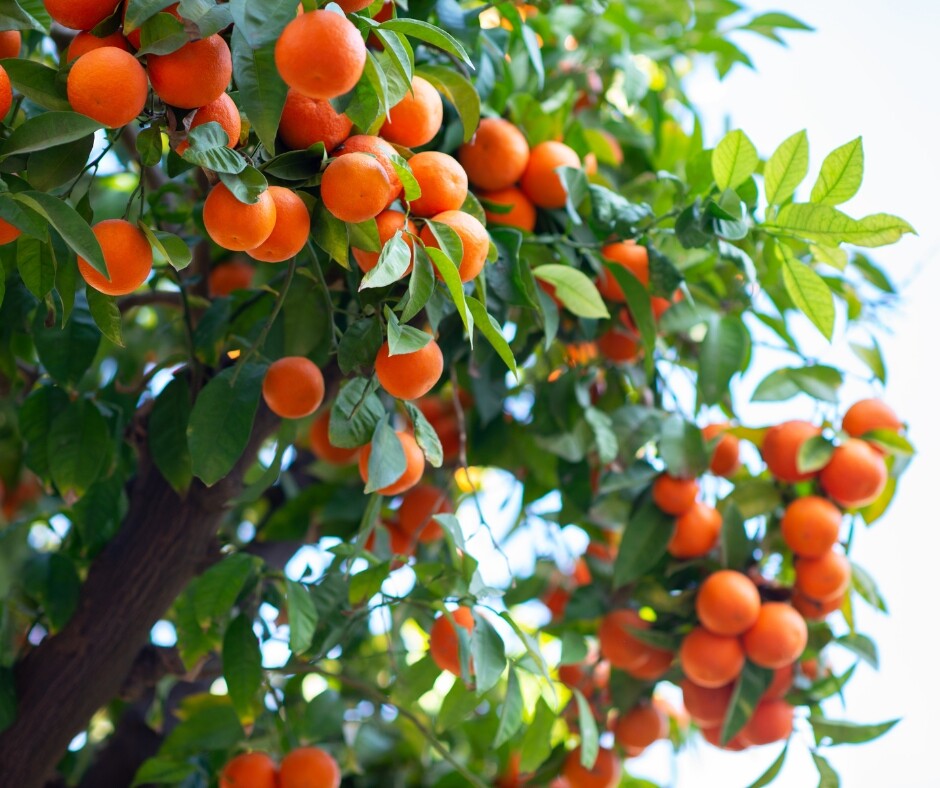
ARTIC FROST’ SATSUMA

Citrus reticulata** ‘Arctic Frost’**

| | |
|----|----|

‘Arctic Frost’ is another Mandarin hybrid resulting from a cross between the seedy, but cold hardy Changsha tangerine and a very high quality Satsuma. The hybrids are the work of Dr. Ying Doon Moy, long time plant breeder at the San Antonio Botanic Garden before his death in November, 2012. The fruit is sweet and tart, easy to peel and only has one or two seeds per fruit. ‘Arctic Frost’ is the most cold hardy of the Moy hybrids tested to date.

Exposure: Full sun; minimum of 8 to 10 hours of sun per day

Size: Eight to twelve feet high and wide in the ground; four to six feet in containers

Plant type: Evergreen citrus tree

Planting time: Early spring after the danger of frost has passed

Suggested uses: Accent plant for backyard and potential patio containers

Special notes: This Texas Superstar® should expand the planting zone for citrus in the ground moving as far north as zone 8; some cold protection will be required in the establishment phase of a year or two, and a site protected from the north wind is desired; the tree will also work well in containers; adequate fertility and a well–drained potting soil are a must in containers; amend the mix with slow release fertilizer and water once a month with a water soluble fertilizer

Additional information: Arctic Frost Satsuma Mandarin Hybrid Named New Texas Superstar®

i have a potted owari. i like the fruit but its not as good as my mineola.

2 Likes

@steveb4

I better try that one