That’s cool to know! Thank you!
i keep it down wind so i rarely smell it and so far the neighbors havent said anything. been doing itlike that for 6 yrs. now. sometimes i add weeds and comfrey which also works but increases the stink factor.
1 Like
I read this post as I was also reading the book ”Teaming with Microbes” by Jeff Lowenfells and Wayne Lewis.(2010) The book is basically a description of all the types of organisms, small to large, that make up the life in soil and what they do. It then goes through a twenty step recommendation of how too recognize parts of the soil biome that are missing and practices to rebuild them. Along the way it describes the ways different types of plants (grass up to trees) are most compatible with particular types of soil life. A big part of the ‘cure’ for unbalanced soil conditions is feeding microbes, quite the way the Korean system does.
5 Likes
“The local woods” are the very place that devastating pests like plum curculio and brown rot originate from. I don’t see how building up the soil around your tree will stop a weevil like plum curculio from flying in, piercing the skin of a fruitlet and laying larvae inside. In that case, I assume the only way the fruitlet would be able to kill the larvae would be to have an elevated level of natural neurotoxins like paw paws have, but this induces negative effects on the people eating the fruit later.
2 Likes
No, and i say that with all due respect. Ill just take a suspension and/or warning. Im about to go protest my states capital steps with a sign that reads “hang all pedos” among a few others.
Sorry, im on an anti authoritarian kick and have been since i was 11 going to protests. Its in my nature to push back. So im sorry but I stand by what i say and will face the consequences no problem.
Thanks. Love you all,
-David Alex Bogovich II
When people start with all due respect, they usually follow by disrespectful statements. It’s like I say David, No offense, we are serving the community. Civility applies. I will delete that post.
I like people who are honest to themselves. As you may know, people also need to know how to read the room.
9 Likes
Im a barber, reading the room is my specialty… however i fight fire with even bigger fire lol.
Thanks so much and have a great day 
I am a huge fan of knf practices. I have modified some stuff. Like once labs permeate a bucket I dump it into my composter. Let the compost rest a few days, and then the labs will permeate thru the whole tumbler. I am surprised how effective labs are at killing pest. It kills all the flys and knats that start to get into the tumbler. I definitely know some cannabis growers that spray labs for fungus knats and spider mite control.
Every spring I bury rice socks along wild hiking trails to diversify my IMO. I collect fallen fruit from fruit tree owners that are not fruit eaters and make FFJ as bloom food. I lovingly stuff noxious weeds into buckets and make FPJ goo. I have not bought commercial nutrients ever since I went all in and got a third compost tumbler (my kids make a lot of food waste).
it’s a blessing for the annual beds. I have definetely used knf practices on my kind herb. I have been growing poundage since 1990 with everything from miracle grow to DWC with general hydroponics to jacks 321. The flavor and growth with KNF inputs is much better, and improved pest resistance. The only pest that loves LABS is slugs, it doesn’t phase them a bit. Tomatoes, peppers, and cannabis were made for this style of growing.
But I had to cut it out with fruit trees. It was not helpful. I have only been focused as a fruit grower for 11-12 years now. I also did not go fruit tree crazy until about 6 years ago. Now I graft and stool rootstock to sell nice trees at the PTA plant sales at my kids schools. Anyway, I found that my trees were getting stuck vegetating and not fruiting if I kept them too rich. Especially the potted trees. Now I only top dress them once or twice a year with finished material from the compost tumbler.
I also would like to point out that is not the case for seedling trees. Baby trees seem to appreciate the inputs as much as the annuals. But in my humble experience cut the knf inputs out once they start getting fruit aged. Or you are just growing biomass and not fruit. It could easily be the soil around seattle is rich enough for my trees that the extra inputs were not helping. If you lived somewhere with different soil you may find that your experience is entirely different. But I have backed off big time inputing on my fruit aged trees to more fruit as the result. Happy growing. 
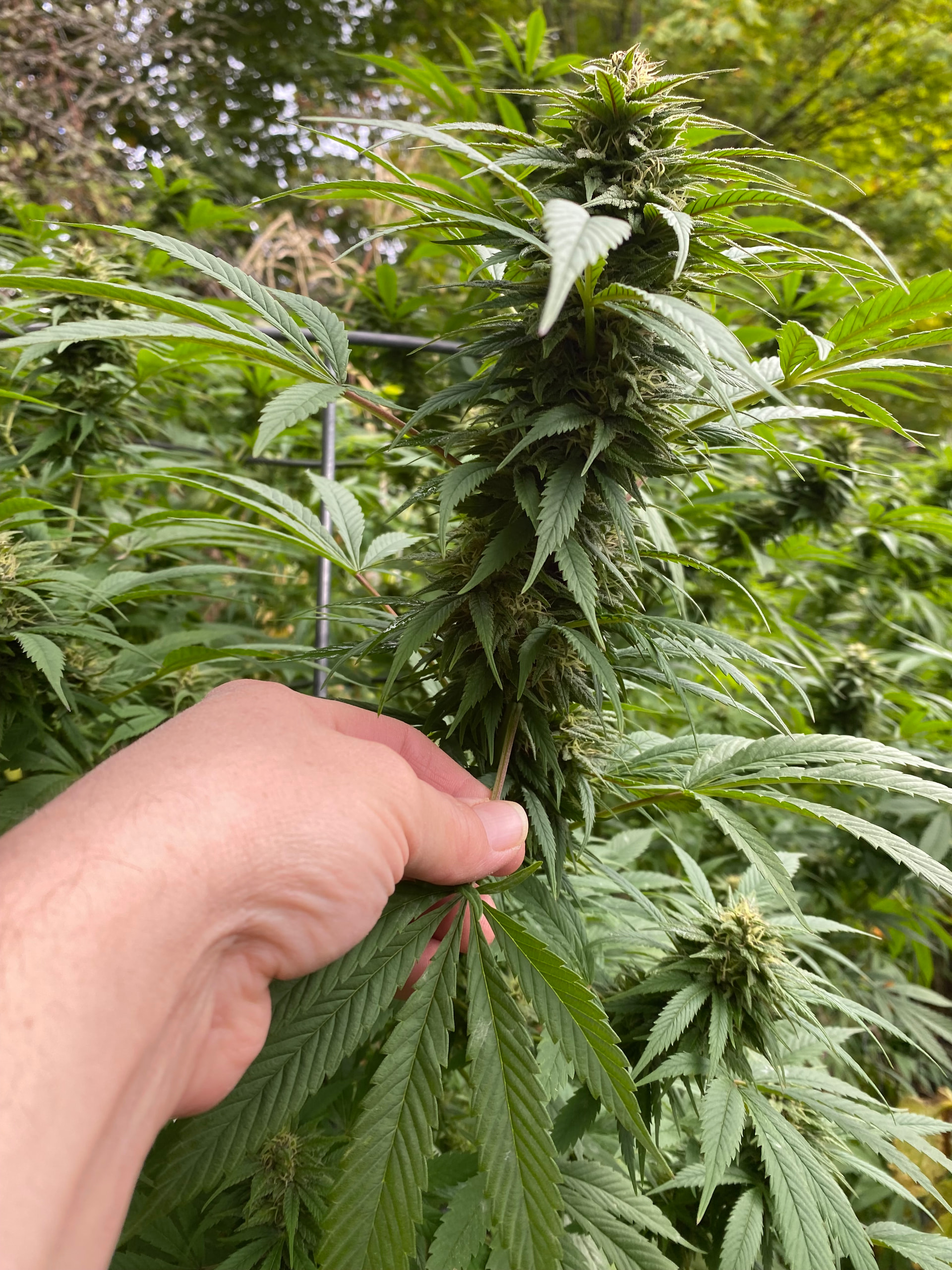
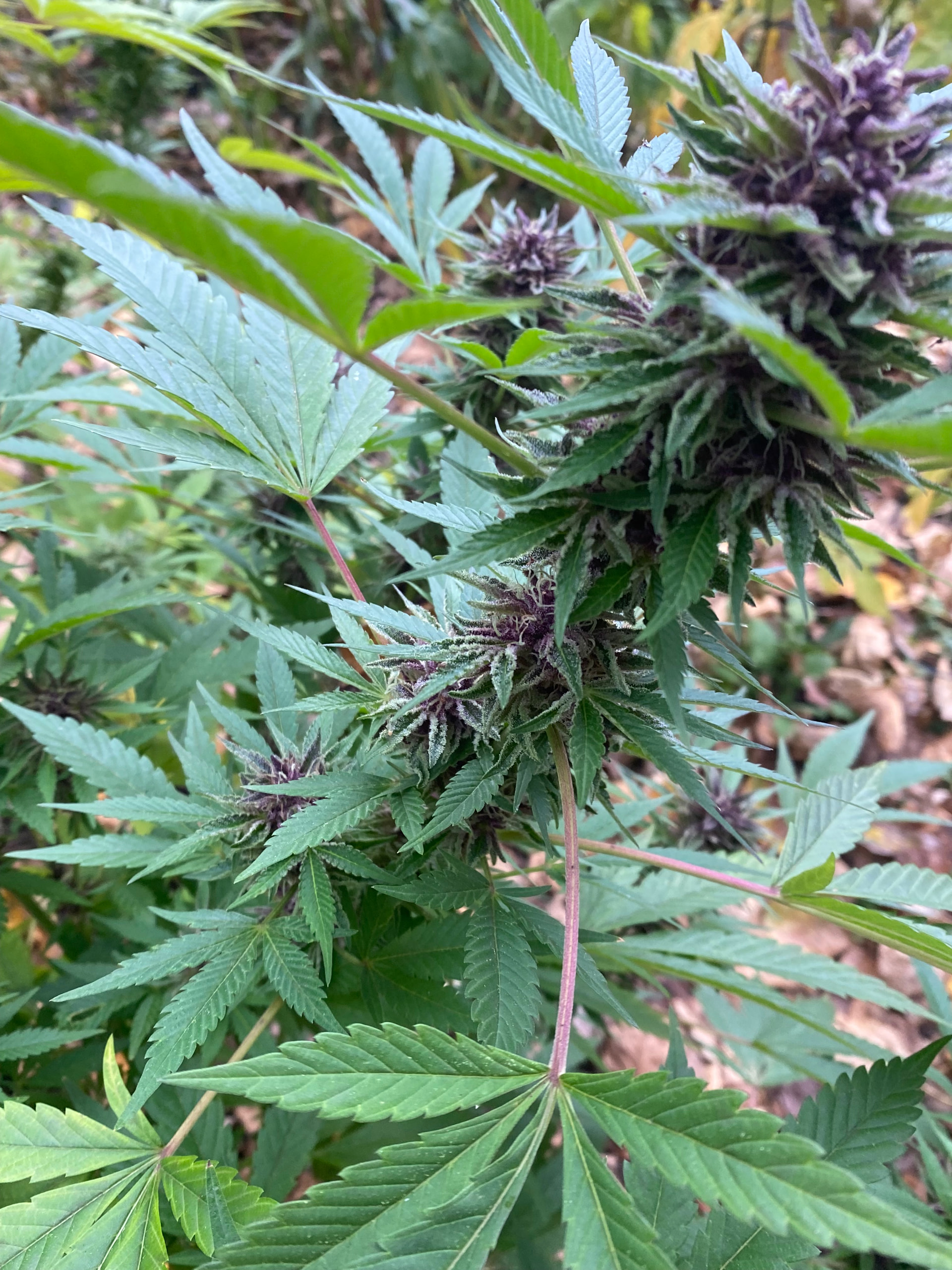
6 Likes
nice color. i dont smoke but i grow some for other folks that use medically but cant afford the medical prices. they are such cool looking plants. i also grow tobacco for the same reasons. i do puff on a pipe in the summer sitting on the deck at night.
3 Likes
I appreciate and use concepts from KNF and la nierda de vaca. 
2 Likes
Very cool i appreciate your comment.
I like adding the ammendments to young trees. In SC property they need more ammendments for longer than the ohio properties fertile soil. I really like LABS for things like adding acidity to the soil blueberries are in. I really like JADAM and i think im going to try JADAM sulfur for brown rot prevention.
Grape Pie bagseed 2019. Best bud i ever grew and smoked. It w
as a winner in every category except yield. It would have done great with SOG.

2 Likes
Beautiful color, did that one throw naners? Or are my eyes deceiving me? Did you get some s1 seeds? I can smell the grape from here.
1 Like
I’d still like to hear your answer to @ztom s question. I’ll add my own bit to it
Around here, indigenous microorganisms include:
Agroathelia rolfsii is a “good guy” microbe that thrives in warm, aerated, moist soil with a good amount of organic matter. It’s a sapotroph that consumes dead plant tissue and breaks it down. However. It’s also capable of and often does consume living plant tissue, and it’s a very serious disease of root crops, beans, and anything in the tomato family, often wiping out entire plantings. It forms special dry lumps of mycelium in the soil that can persist for ages but then very quickly infect plants once conditions are favorable, much faster than from spores. For me personally it’s a nasty threat as I really like sweet potatoes, and so does Agrothelia.
Xylella fastidiosa, a pathogen so potent it’s completely impossible to grow table grapes, growing olives is just a question of when the trees will die, and growing persimmons means replacing the trees every few years. The same native microbe also infects and can kill it weaken pretty much anything from alfalfa to peaches to citrus.
Cercosporella rubi, a fungus that can and often will destroy an entire blackberry or raspberry crop and once established pretty much never goes away. Even native blackberries can be infected.
Heyerobasidon/polyporus annosum is native to the woods where I’m from and it’s the single most destructive silviculture pathogen on earth, causing roughly a billion dollars in dead forests every year just in the US.
The list goes on. All are native to my area. I didn’t even bother mentioning some of the more well known ones like black knot.
That would depend on if you’re using a natural thickener no? And like, A) I don’t have any willow trees and B) If I had to put a number on it I personally value 20 minutes of my time somewhere around $10-$15, so it’s actually way, way better for me to just order the professional stuff, especially since I’d have to spend and extra hour or two getting ahold of some willow.
Much the same goes for fertilizers. I’m not beholden to any fertilizer company since I have chickens I could collect manure from and tons of grass clippings I could compost if needed. But the amount of time it takes to do that simply isn’t worth it to me. Instead I leave the manure in place and just move the chickens around my fruit trees and bushes and use large quantities of mulch that I get in 1 ton batches (which is as much for weed suppression as it is for fertilizing so spending time spreading it is actually worth my time), and when I feel I need more than that I toss in some bagged fertilizer that I buy in bulk on clearance. I’m a busy man, especially in my free time, if the choice is less home grown food and more work versus more home growth food and less work, you know which one I’m going to choose.
I’m sure there are a handful of real use cases for the knf stuff. Same for permaculture methods and biodynamic practices. But to me it makes more sense to just take what works and leave aside all the rest from those systems. It’s just practical and honest, it’s not like any of them could realistically claim to be the perfect system for growing food, not by a long shot.
I prefer to let the modern industrial system churn out reliable, cheap, consistent commodities. I take those and turn them into wholesome, complex, high quality foods that’d be unobtainable otherwise.
Just my thoughts. I’d appreciate an equally thought out reply if you don’t mind the effort, ideally one that doesn’t violate our community rules regarding insults haha.
7 Likes
Actually i think it may have thrown a few bananas. I cant remember though. I know the white hairs were in tightly packed clusters. Yes it was bagseed s1 i assume, could have been pollenated by a similar strain close by, but probably unlikely especially with what looks like a bananain photo. The grow room never got above 74° with lm301h diodes and buds were almost dry before i cut it due to lack of watering. 18 hours hanging in 64° then straight to mason jars. let trichomes go almost too long. The smoke was velvet smooth grape and hit hard like hashish.
The guy who taught me knf was a southern oregon grower and the only bud ive ever smoked that came close to the one i grew above was his oregon diesel. Man. That bud was terpy as hell and potent, absolute premo stuff especially with knf.
2 Likes
I think the idea is to try composting things that you normally would not bother with. To me it’s not about a philosophy, but a path of least resistance. My wife hates gardening and gets very angry anytime I spend a penny on fertilizer or plants or sprays. It always ended in a fight. So I wanted to make a lot of my own inputs to appease her, and show her I could buy no fertilizer that year. It was just a bonus that it seemed to work too. It also allowed me to reduce my household garbage can from a 120gallon bin, to a 30 gallon bin by diverting our compostable waste stream. Not bad for a family of 5.
You bring up a good point about bad indigenous microbes. But by your own illustration a lot of those microbes are practically everywhere. For another example I see botrytis every fall practically everywhere. It’s consuming the wild blackberry vines and deciduous wet leaves that don’t fall off the trees early enough.
Bad microbes are everywhere, but so are the good. When I collect local soil micro organisms, I aim for places along hiking trails that seem rich and particularly vibrant with plant life. To me I see that space as a soil in balance. Especially areas with overgrown Oso and Honey/Haskap berries and lush ferns under dougfirs and cedars. I avoid the grove of dead rotting trees from the mad max set.
The idea is to crowd the dance floor with a diverse population of microbes so no bad or good one takes over. Trichoderma is another fungus that is helpful at breaking down garden dead stuff, and can also keep on eating right thru living stuff. But only if it is on a rampage by itself. It stays in check if it’s in a diverse mix of other soil microbes. The idea behind IMO is to use local microbes so you don’t have to buy commercial inoculants. The overall goal is less upfront cost materials. Cost such as mycorrhizae in a bag at a store. We all have seen the mixed opinion about bagged dry spore microbe innocents effectiveness thread. So I won’t go over that. The IMO in KNF is an alternative to that. It’s the same idea as collecting partially composted forest litter that I have seen several trusted posting members doing as their routine.
As far as time, that is purely opinion on how you value it. Like I would pay to go to a university weekend seminar about cutting edge compost techniques and microbe studies. I find the topic very interesting and relevant to my other hobby of growing things. Even if that 20 min cost me $50 or $100 dollars in work time, its marginal value suits my interests. I would adjust my work schedule to do what I like. I would consider making and playing with my compost recreation. I don’t make my own thickener or rooting hormone from Willow because I find things tend to root just fine without it. But I do know where a willow tree is a few blocks away if I felt the need.
I did use a Willow bough (from this tree) to fix my wicker laundry basket where it unraveled 2 years ago. I am glad to report it’s still holding up well. This repair was not about my time or deferred value earned for my time spent elsewhere. It was about seeing if I could do it and the accomplishment feeling that I did repair it well. It took me around 4 hours to get a solid weave that fixed the situation and didn’t look like kindergarten art. I could have ordered a new one off Amazon and tossed the old one to fill my 30 gallon garbage can. But honestly if I had failed I would have composted that damn wicker basket and considered it time well spent. Ha.
Knf does not work for everything, but neither does a clearance bag of 10-10-10. Someone could have high PH, and they could throw fertilizer on it all day till the chickens come in to roost. They are still going to have nutrient lockout as an insoluble salt. As I pointed out, using knf techniques seemed to lessen my fruit production in favor of biomass production so I cut it out of my trees. But you will never convince me that it doesn’t work well on annuals. I have seen it with my own eyes and done 36 years of experiments on cannabis plants. Using sister clones side by side and only changing one thing at a time while maninting control plants with no changes. It works as well as the top cutting edge engineered fertilizers targeted at cannabis. I know this because I was a skeptic and I did side by side clone trials. Dismissing it as
seems a bit condescending just because you think it’s a waste of time. It really does work. I have never preached knf on this site or claimed it to be a perfect system. I only expressed my experiences with this system because this thread came up. I also never claimed it to be a better system. I only claim it to be a cheaper upfront cost system that works. But a working (and more time consuming) system it is. I am not drunk or blind and can see results and conclusions with my own eyes and data. I keep impeccable notes in my journals. I might be stoned sometimes, but that helps my back after a fractured vertebrae. I don’t want to pop pills, even back when pill popping was all the rage. That is also another story for not now.
Maybe the original poster did post about perfection, but honestly I did not read that part of his post that closely. Still doesn’t mean he was wrong about it working with its imperfections and all. In a nutshell, all knf is, is a way to think about composting things you normally would not bother, with a few basic free home techniques. It’s not revolutionary. It does not diminish your value for a bag of 10-10-10.
You ran the garden race in record time and got back to life. He smelled the roses while he walked the course contemplating life. Both exercises have value depending how you plan your day.
5 Likes
I have been pulling my living out of the soil for well over half a century of my life. I started with a faith based approach in my teens with a strong fixation on avoiding any synthetic chemicals. Interestingly, one of my most important first crops was marijuana as I was a big fan of the stuff in the 60’s-70’s- back then the seed strains available had a great deal of natural disease resistance, and I was living in CA so it was more or less about as difficult as growing radishes except for the issue of its high value to thieves and illegality.
While that was a very important crop to me I was equally committed to growing my own vegetables and religiously followed organic methods- may favorite fertilizer was loose alfalfa the Malibu Feed Bin (recently burned down) allowed me to rake up where they kept and loaded bales of it for horse loving customers.
My bible was “The Encyclopedia of Organic Gardening” from the Rodale press. They also published a magazine of the subject which I studied with fervor.
This was the age of hippies and I was sucked into the whole “back to the land” mentality of the age. By my early 20’s I was known as a very accomplished and capable gardener-orchard keeper and was still sticking to my organic methods, but I ignored many fads such as planting by phases of the moon or using herbal extracts from stinging nettles. I had observed that the main issue in growing thriving plants was adequate water and oxygen in the soil and adequate nitrogen, which I amply supplied with those alfalfa leaves. I used oak leaf mold for other nutrients.
I saw many fads come and go and by my ‘30’s I was living in NY where the challenges of growing fruit were completely different. When I got my first piece of land, which I selected on the basis of being decent for fruit and vegetable crops, the first thing I did was plant fruit trees. I managed them using the organic methods I learned from organic guidelines, often provided by the Rodale press. My vegetable garden did fine but my orchard was an abject failure. The Encyclopedia of Organic Gardening turned out to be the product of false prophets. There was no Surround at the time.to defend against insects and, to this day, organic methods tend to fall very short in combatting fungal diseases in East Coast conditions.
I have yet to meet a single organic grower with a productive fruit orchard in my region- that is, orchards of peach, apple, plum and pear trees.
I find it amusing now, when I read anecdotal claims of horticultural miracles- I suspect the topic here is among these. One thing I know is that any methods that truly work will be adopted by commercial growers. Locally grown, organic produce sells for a premium in my region, and there is a dearth of organically grown fruit that is locally produced even though it would command very high prices. Most of the organic apples produced in my state are used for cider making.
Fruit of certain species and varieties can be grown organically here, but there is a very steep price paid in terms of varieties that can be grown successfully and productivity of all the most popular species of tree fruit.
For over 30 years I’ve made my living managing a bearing age fruit tree nursery on my property and scores of orchards in my region, almost all containing mostly or only trees originally from my nursery. Many of my customers originally wanted to use organic methods for their orchard trees and some of them tried it for a time, but eventually all but one has surrendered to the reality that in the east, orchards are more fun when some synthetic intervention is used to control our many fruit pests. The one holdout using Surround to manage insect pests still needs to use a synthetic fungicide to keep stone fruit from rotting before harvest.
She is happy with her harvest, but her apples store poorly and by Dec. she relies on store bought fruit.
9 Likes
Alan, I appreciate your input. I knew you were an old hippy at heart. To me the difference is not about organic vs non organic. It is all about low cost inputs and free or cheap ways to break them down. I do admit that the connotation connected with composting knf style is organic. That old wicker basket had glue and small fine finishing nails in. Not organic, but I would have rather compost it than throw it out. I compost organic and not organic table scraps the same. Junk mail, all cardboard boxes painted or waxy, dead bird, dead rat, dead bunny, weird thing my kid made in the garage w hot glue sticks and screws and board scraps.
Specifically for pests and infections I would not be afraid to spray if I needed to. Especially if I grew back east where all the gromies on this site have pointed out is different pest pressures than out west. I use Spinosad and pyrethrums when needed, and only skip copper because I live along a salmon spawning stream. Otherwise it would be raining copper here before bud swell to fight the peach curl.
I also have a copy of this book and found it reaffirmed a lot of what I was observing in my garden. Great read.
1 Like
I also compost everything I can, cotton and wool clothing, or anything that will rot without too much contamination. I compost all my food scraps including bones and meat scraps by allowing them to sit in metal trash containers with holes drilled in the bottoms for several months. Once I dump out the partially composted and fully disgusting product it is teeming with red worms that can take low oxygen and appreciate the protection from predators. Rats only thrive if there is a continuous food source.
I don’t care that it takes another 5 months to be useable as compost after mixing it with stable waste or even leaves and/or woodchips. In the long run, there is no advantage to speedy composting. There is no advantage to big plastic tumblers, either… but that’s just me. I let nature do as much of the work as possible. No turning the compost pile either.
2 Likes
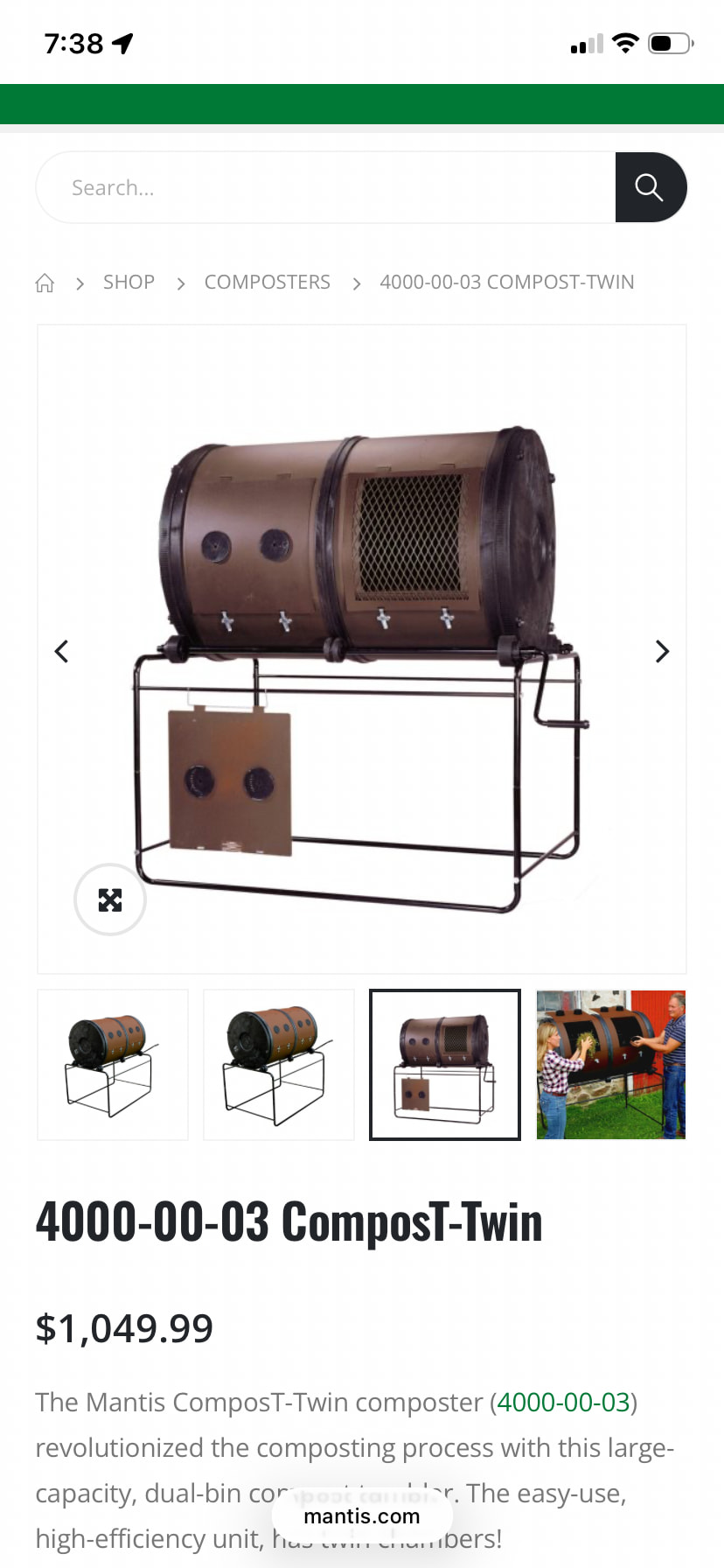
Those suck rat holes. They chew right thru them. Biggest waste of money if you deal w rats. The mantis style (seen knock offs now) are all powder coated sheet metal. They are like a thousand dollars new. If you check Craigslist and buy nothing site you can find them practically free from those gardeners that were only there for show.
I enjoy at dusk watching the rats come out of the green belt and slip off the powder coated round cylinder. Like cars on Seattle hills in the snow. Never been breached by a rat yet. I was gifted a plastic one by a neighbor and the rats chewed thru it the first night I loaded it up. I have had my first hand me down mantis for 10 years now. It looks old but has not rusted thru. The metal latches will probably fail first. Also, the geared crank handle is a nice bonus. I only amend while things are fallow in the off season so I have 3 of the 110 gallon ones to hold my compost till the things go dormant.
I catch on average 20 rats a week around here with my snap traps. I usually set a dozen traps 5-6 nights a week since they chewed thru the wire harness of our car a few years ago. That was insanely expensive to repair. The rats use the creek bed and our green belt as an highway at dusk. Peanut butter soaked gauze and the gauze gets caught in their paw or mouth.
I do like your garbage can idea and have read your routine several times Alan. If I did not use something metal I would not be able to compost table scraps without being overrun by rats.
I feel the same way. I also compost old socks and shirts and pants.
1 Like
Willow water puts out two rooting hormones instead of only 1 hormone like the store brands. That was a simply tip for people who have willows near them. I wasnt trying to debate it like we are in court.
You can continue to trust the system and companies that dont have your best interests at heart… and i wont knock you for it. Many trust the system and take comfort in it. Having an open mind, going out of your comfort zone and trying to new ideas is difficult for many people. This is why we refer to the masses as “sheeple”
I understand that this entire comment above is essentially 1 big light weight ad hominem fallacy, and I genuinely hope that my comment doesn’t violate community rules. My words arent wrong though.