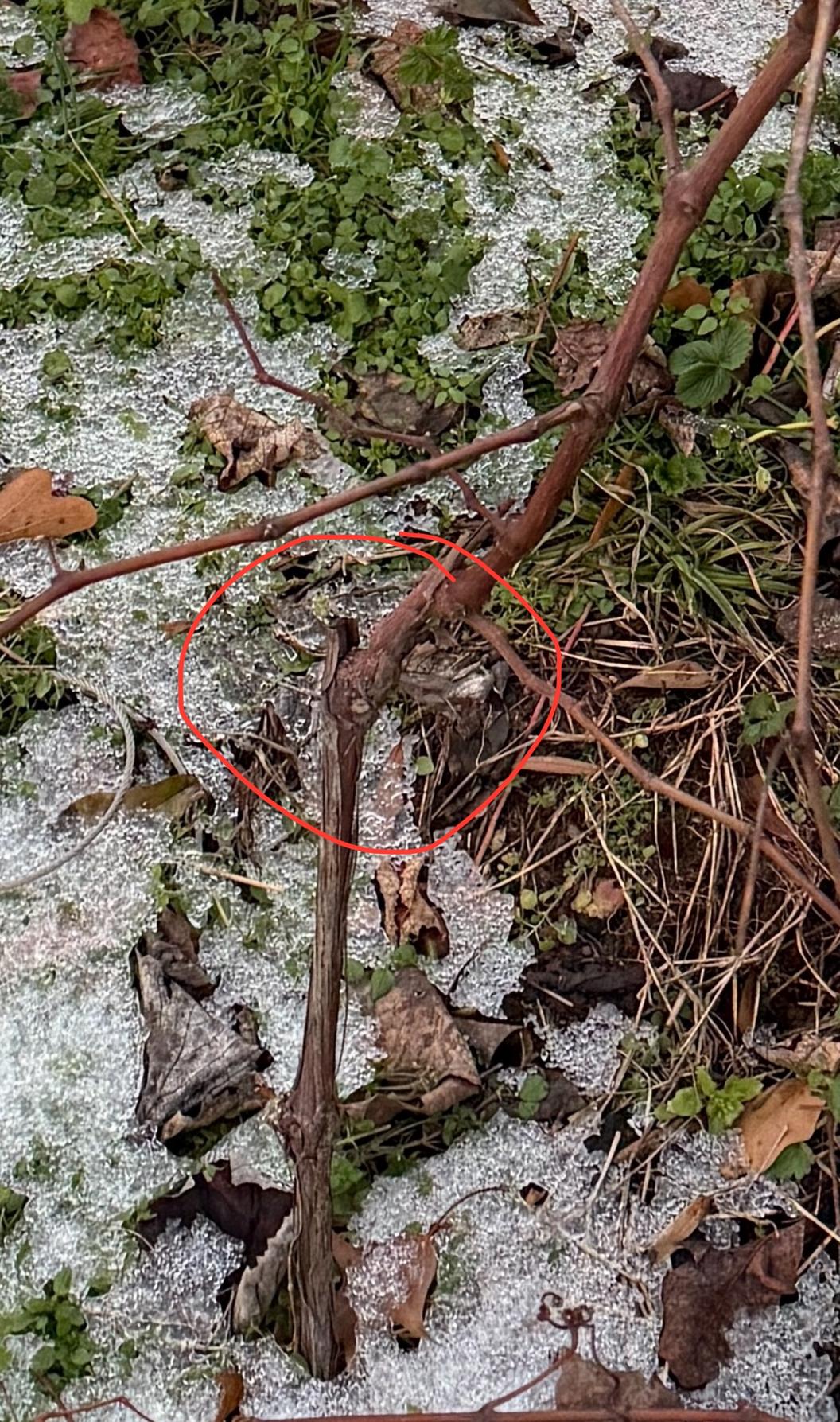
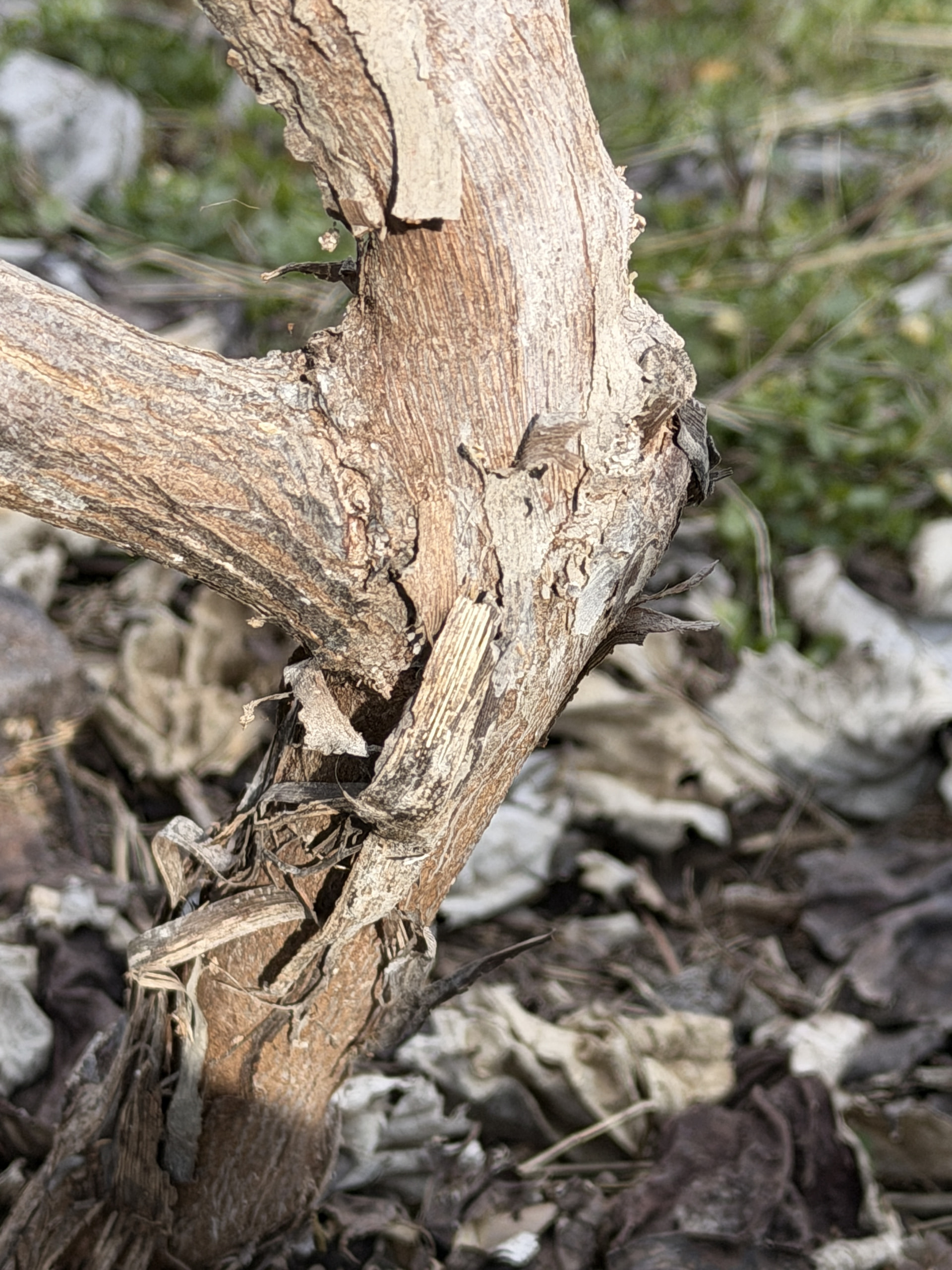
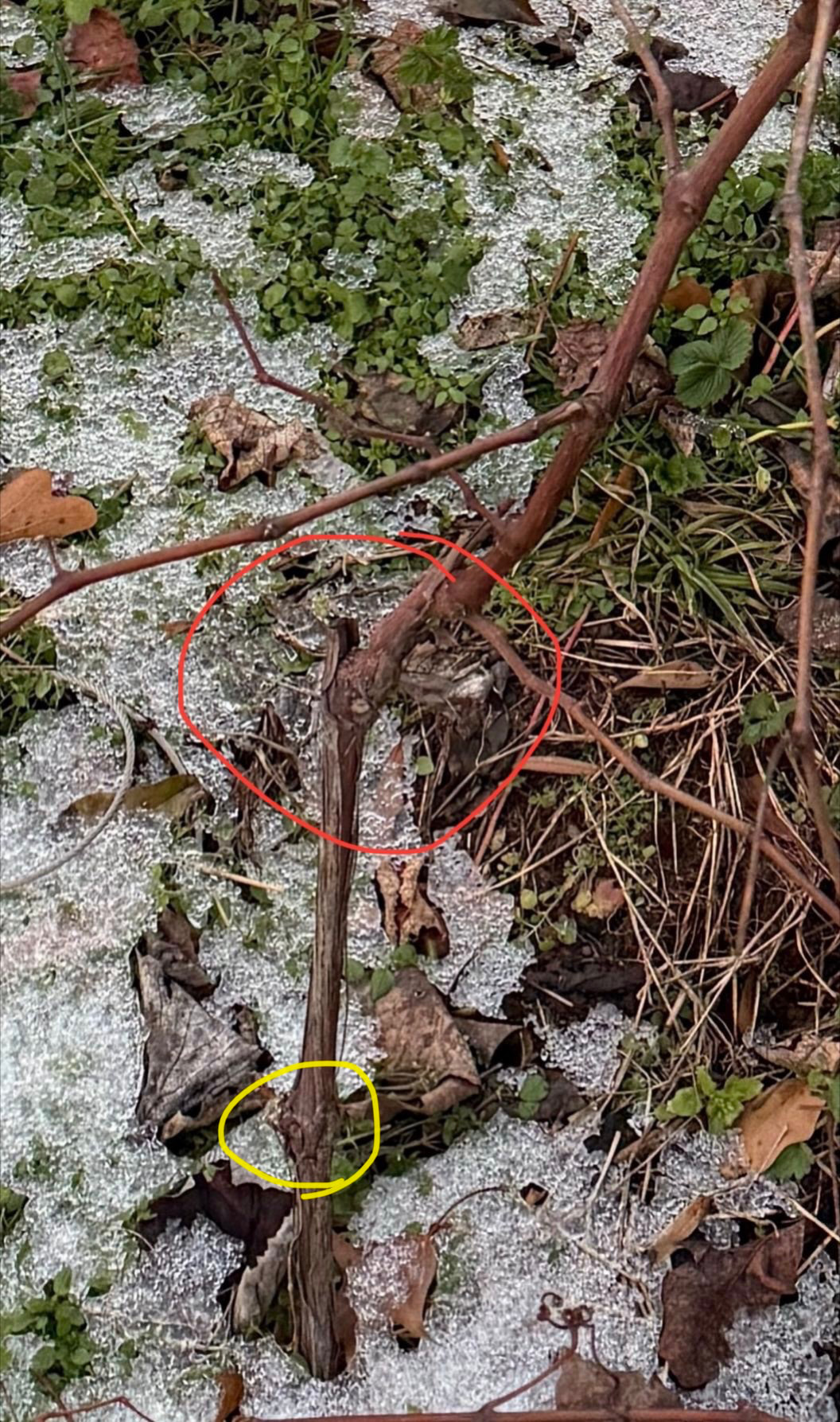
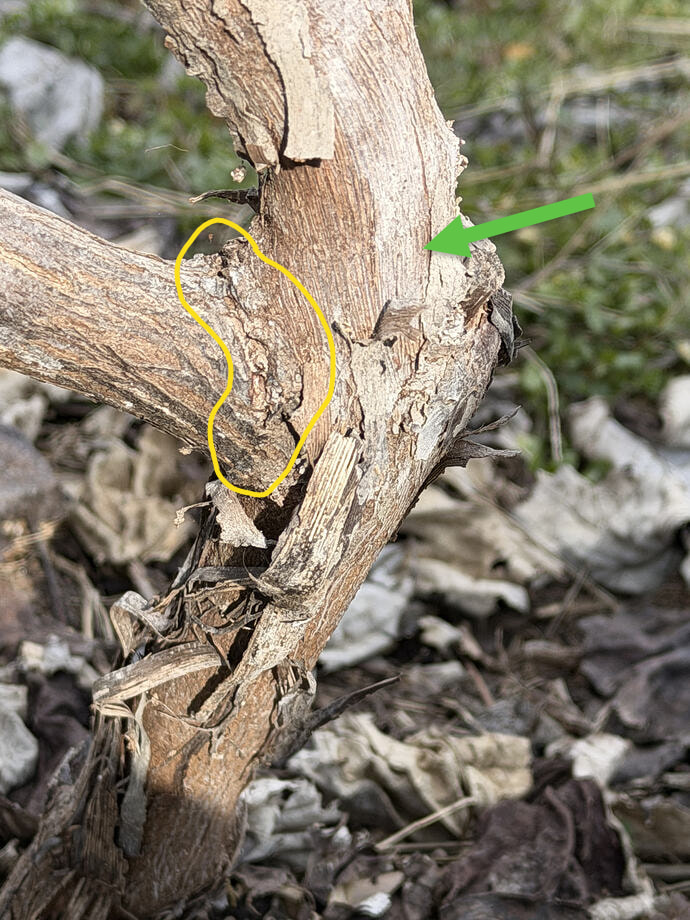
Long story short, I bought two thomcord grapes. One I think was taken over by rootstock in the chaos of summer, the other appears to still have cultivar variety on it but there is a second cane that could be rootstock or could just be a second cane off the same node. I have my own opinions but wanted to see if any others had thoughts.
Unfortunately I don’t think I do, I usually take good pics but for some reason I didn’t take any of the grapes, I think because they were dormant. The main investigation is based on them producing seeded variety vs seedless the thomcord should be. The ‘graft’ I was thinking was the lower cane that has more of a delineation on it between the main plant and itself(collar).
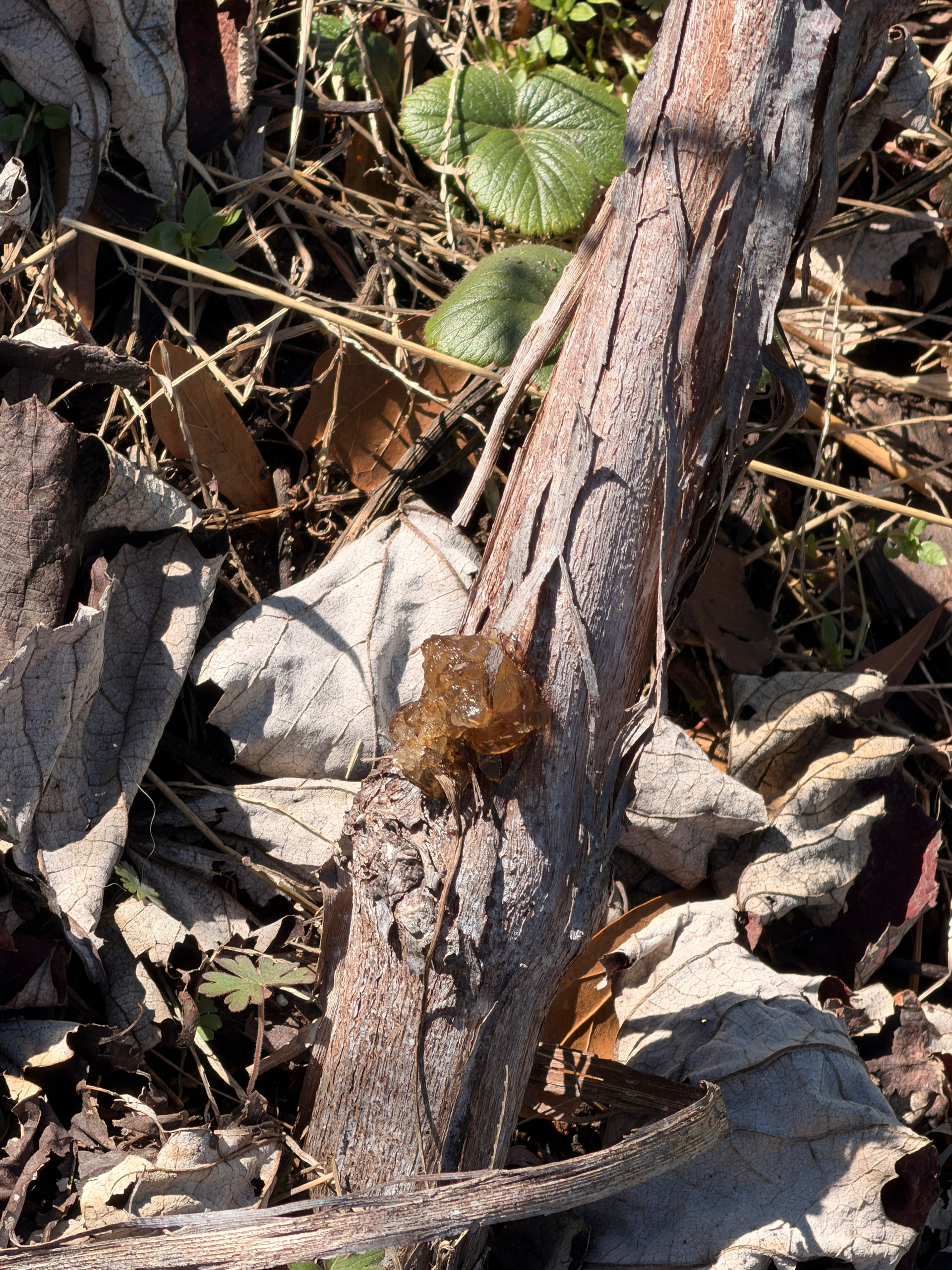
In my limited experience my grapes (wild and my concord) tend to look like that. If you zoom in on that photo below you can see lots of “knots” that look like grafts but aren’t. I think that’s just the way they heal.
None of the common rootstock varieties have fruit that is anywhere close to thomcord, and many are male and produce no fruit at all. Also, they tend to have very different leaves from thomcord, as most of the common rootstocks tend to be based on the species riparia, berlanderi and rupestris, and none of those species are in the background of thomcord, which is a labrusca x vinifera interspecific hybrid.
Lastly, the average grape sold to homeowners in big box stores are on own roots, as it is a little cheaper that way and such producers are not worried about long term issues like phylloxera.
Pollination by other sources of pollen has no impact on seed formation in cultivated grapevine due to the stenospermocarpic nature of seedlessness in nearly all forms of cultivated seedless grapevine.
Seed development and or seed trace size can vary season to season and by the weather in some varieties. Thomcord is a variety known to often produce large, hard seed traces under some growing conditions, although the seeds tend to mostly be unviable.
But also there were other aspects of them that made them taste very different from the concords etc i’ve had at store. Skin, size, and worth noting their flavor was like a SUPER concentrated grape flavor.
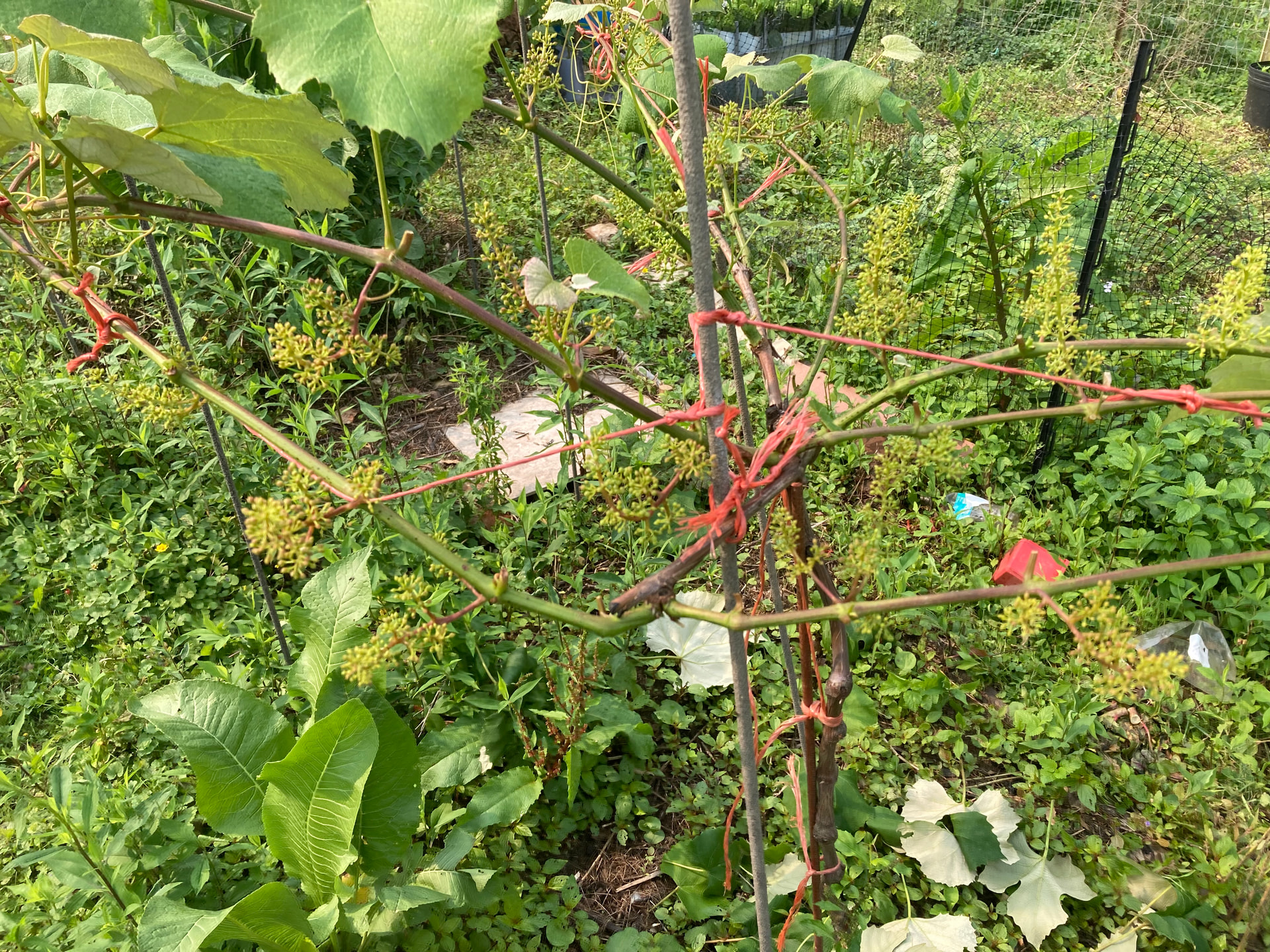
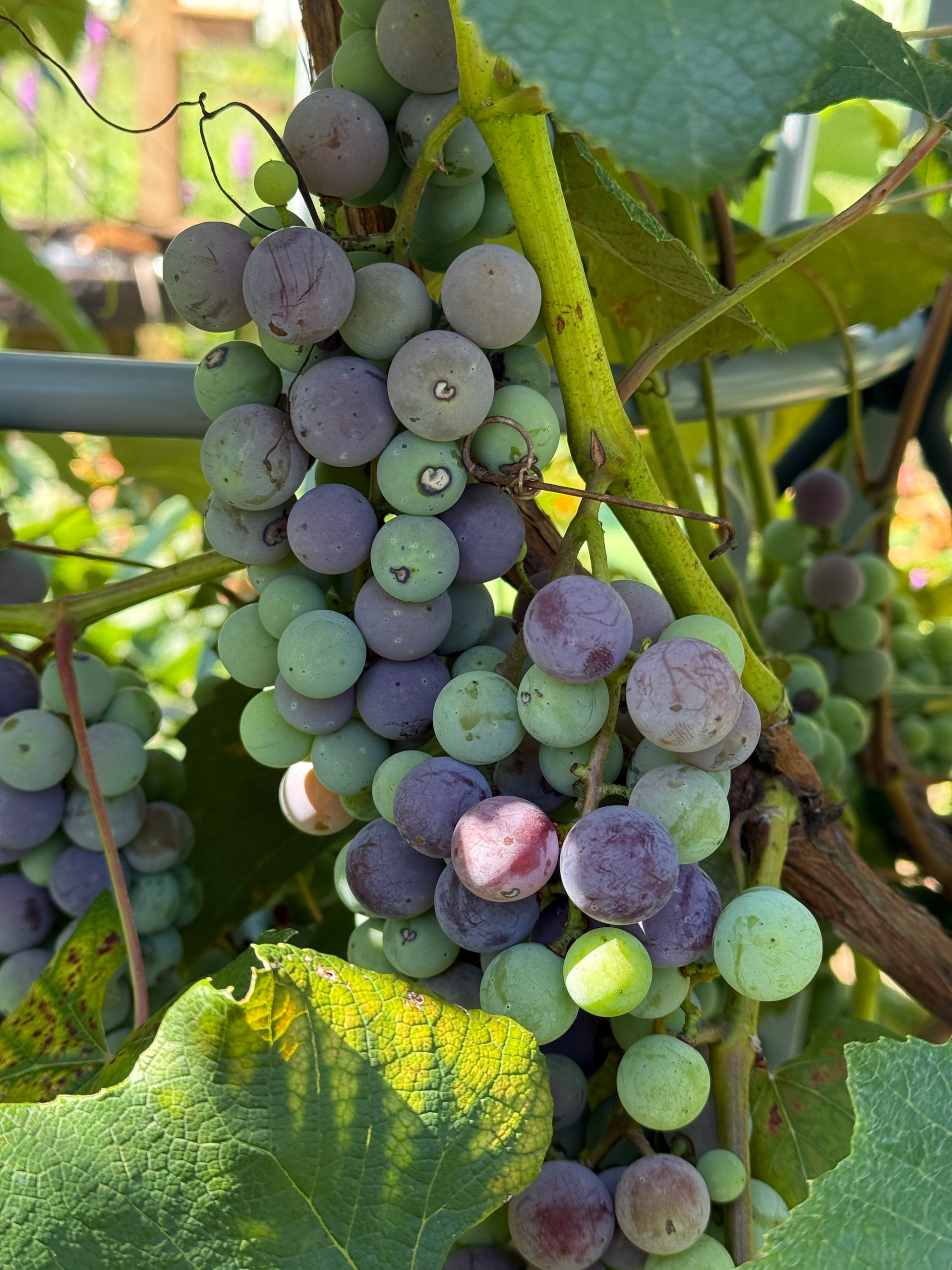
From those pictures, it mostly likely is thomcord. There aren’t all that many dark skinned labrusca class grapes with relatively large clusters of medium small berries in the retail trade.
If you want 100% confirmation, look at the seeds this year. If they are mostly deformed/hollow and unviable the variety is pretty much guaranteed to be thomcord.
Btw, looks like you have some anthracnose and fruit rots going on in those images as well. If you spray your fruit quality is likely to be significantly better.
Yeah I think I sprayed a smidge too late last year, will definitely be a bit earlier this year. Also I am likely going to take one of them out and gift to a friend and replace with a muscadine(in SC) to have both a purple grape and a gold/green muscadine. That was partially why i wanted to see if one in particular may be better to keep. The person that sold it did say it was a graft, though, was an etsy seller.
Edit: I may also have some seeds left because i haven’t cleaned up the grape clusters that are left and i can hear the seeds in them. I didn’t really eat them last year due to the seeds and the varying ripening times, by time they were all dark purple half were overripe.
The reddish ones are very likely unviable. The brown ones I can’t tell. It you crack them open with a hammer and there is white endosperm inside they likely were viable. If not, they weren’t. A slight less reliable test is putting them in water to see if they float. Most unviable grape seed will float, and most viable seed will sink. This assumes nothing is stuck to the outside of the seed that could cause it to float.
Yeah - mostly just that they are very crunchy, I know sometimes people say thomcord will have seeds but they’re mostly unnoticable but they are def noticable, like eating a small piece of wood.