I’ve read good things about Boysenberries, especially the thorny type that certain vendors claim are the original and only “true” boysenberries. Supposedly, they are the best tasting Rubus and are very productive.
However, I’ve also read that they’re more susceptible to diseases, which would be a problem for me because I would be growing them alongside blackberries and raspberries. The thorns would obviously be a disadvantage and the lower cold hardiness means they might struggle in my southeastern MA zone 6b climate. They also need more trellising because of their trailing habit.
So are they worth it? Is the flavor so good that all the extra work is justified? Or would I be better off just growing more raspberries/blackberries? For those who have grown them, have you found them to be susceptible to diseases and cold damage?
And to those who have tried both, is there a significant taste and yield difference between the thornless and thorned boysenberries, and if so, which do you prefer?
Boysen is among the more trickier caneberries to harvest at peak ripeness. The ideal harvest time only spans 2 or 3 days for each berry. You can pick them under-ripe but they will be more tart than sweet. Thornless variety tend to be wimpy in growth habit and fruit size. Also, the last half of the ripening season overlaps the start of SWD fruit flies in areas where the fly exists. The thorns are severe in length and density. I grow them because of the unique flavor profile when fully ripe.
So would you say they are worth it then? And are there any other varieties that have a similar flavor profile without the downsides?
I have some wild blackcap raspberries and they are frustrating because of the same ripening issue you described. It requires getting into the thorns every couple days to harvest the ripe ones. I’m not sure I’d be willing to do that for boysenberries unless they’re really head and shoulders above other Rubus varieties.
Do you find boysenberries to be more disease prone than other Rubus you grow?
I have thorny boysenberries they seem to produce fine despite the accumulated diseases of several decades. It’s easy enough to pick them every few days if I trellis the vines up before they leaf out. The thorns are much less of a problem than black raspberry thorns
I’m on the west coast and grow boysen. It’s my favorite cane berry of the blackberries and raspberries I grow. It hasn’t been super productive in my location, but it is very tasty.
Newberry is superior to all of the other hybrids.. but not many people grow it so with that being said a dead ripe Boysenberry in peak growing conditions is pretty good. Peak growing conditions would be Z7 or above with excellent sunlight with little to no rain during ripening. (New Zealand weather). Arkansas (lavacaberry) and Oregon/California climates as well.
Proper pruning with all of the lower laterals removed and only the laterals on the wire will give the best results.
It and the other thorny trailing varieties are a true PITA unless you have excellent gloves and stay diligent with the training to the top wire. Lots of pruning and training to have the best crops and berries.
Thornless Boysen as far as i can tell really needs Z8 or above to thrive.. they are brittle here and the berries were small. However the pics from growers in southern California seem to be favorable.
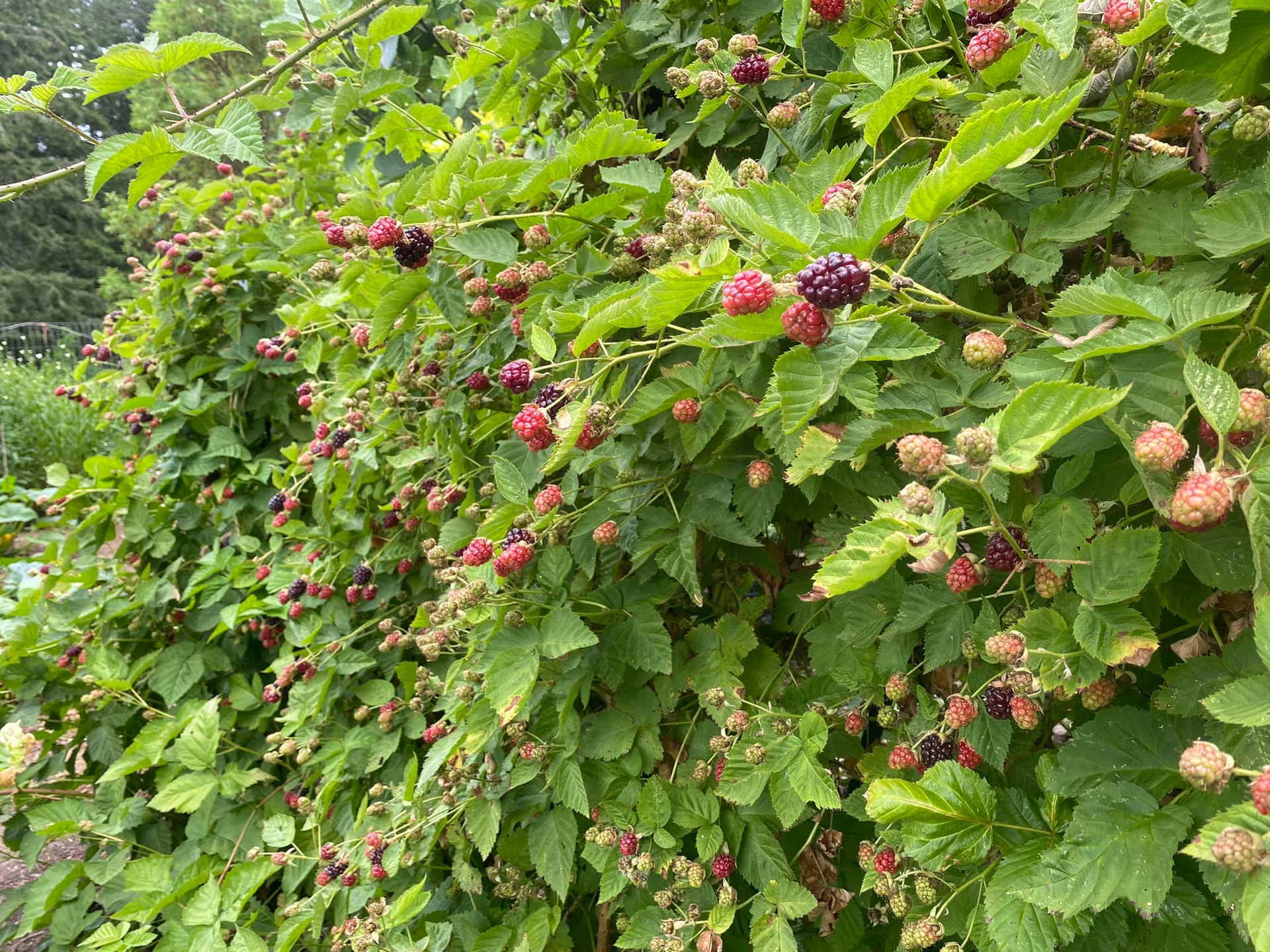
Here is a pic from a friend of mine in Oregon.. To them its the gold standard of flavor.
Mine have never had any diseases and i dont recall reading about many issues with them other than RCB.
They dont keep well.. so plan on freezing or making jams or something out of them quickly other than the ones you eat while picking.
10ft (5 feet on each side) give or take is best for each plant as they put up many canes per crown. 15 foot per plant would be ideal.
I like the lasso method best but some like to waterfall them.. which leads to many tip roots and lack of access to the lower laterals for pruning.. which in turn can lead to more tip rooting if those laterals get out of hand.
As you can see it would be hard to manage the primocanes and floricanes
They are worth it for me–but only as one of six caneberry varieties that I grow. I would not grow Boysen exclusively, too much work.
Properly trained thorny caneberries do not require “getting into the thorns” for harvest. That fun is largely had during training and pruning. I can actually work all black-cap growing and harvesting processes bare-handed, unlike Boysen that requires thick gloves-or-else-many-pains. Of course thorny variety harvest requires more focus and deliberate movements.
No Boysen disease problems here, only the flies.
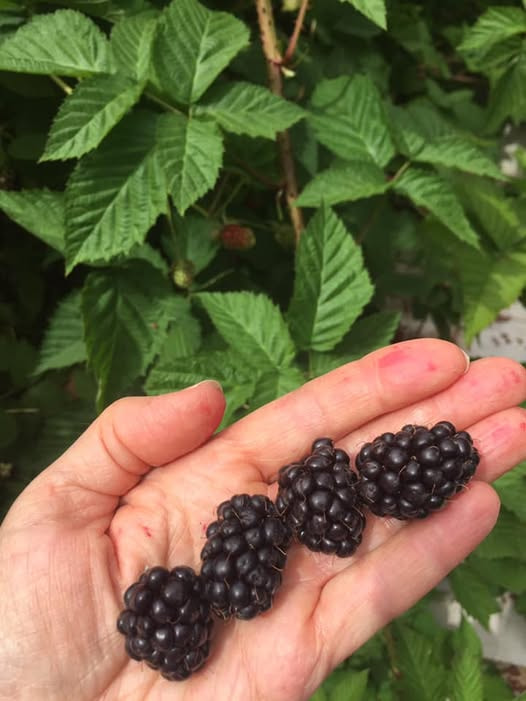
The krismoriah image above is indeed of fully ripe Boysens.
I am a big fan of them so far in Maryland. Although I have only been growing them for 2 years. I like the taste profile of them a lot, definitely less tart than my blackberries, but similar looking. They also have an interesting growth habit, as they like to put out really long canes. It has been nice to have the 4 plants that I have all fruited the year I got them.
They taste really really good. Sweet but with a bit of nice tang. I haven’t grown them, but they used to grow them a lot on the central California coast which can get very foggy during the very mild winters. They may have better disease resistance in less foggy places. I would grow them if I had more space. I’m still tempted.
My limited experience with thornless berries is enough that I will never grow them again. I tore Triple Crown blackberries out and gave them all to my neighbor. TC is supposed to be one of the better tasting thornless berries but compared to thorned it was awful.
How do boysenberries compare to marionberries in terms of flavor and productivity? I read that they are both top rated berries with similar flavor profiles.
I’m only willing to grow one thorny variety so I won’t grow both. Anyone here grown/tasted both? Which one of them would do better in my zone 6 southeast MA climate?
My new place has the thornless variety. I’d say I’ll report back this summer, but they’d been unmanaged for years and I tried to prune them all feverish with the flu and snipped the wrong place a few times, so I might be two years out
Based on years of GrowingFruit posts about the TC blackberry, it seems that it is one variety where the growing conditions greatly affect the flavor, assuming that the variety being discussed is truly Triple Crown. My TC in Oregon have a complex, rich flavor akin to a fruity dessert wine. TC is best for fresh eating if it easily comes off the plant when the berry is bent sideways while causing little movement of the plant. This is about 24-48 hours before the berry would be on the ground.
Boysen has perhaps half the productivity of Marion but individual Boysens are at least twice the weight of Marions. Both are flavorful but in a different and very subjective way.
Marion has rose-like thorns; if you do well around roses, you would do OK with Marion, rather than the cactus-like spines of Boysen. Marion is also a couple of weeks earlier, avoiding some of the SWD fly problem.
There is a fine timeline between fully ripe and over-ripe caneberries, perhaps a single day for some varieties. It can take multiple years for any one grower to fine-tune their harvest timing to flavor preferences. If they are sharing their crop with other people, that complicates things further.
It just seems that the various TC comments over the years have the greatest love-hate ratio compared to total reviews.
Caneberry harvest timing is less critical when the fruit is cooked or baked, with various sweeteners or other ingredients added.
When you say “half the productivity of Marion” do you mean in number of fruit or total harvest weight? Because if it’s total harvest weight that would be a bummer. If it has half the number of fruit and makes up for it with the fruits being twice as big then I assume total harvest weight of the two varieties is similar?