I think that’s probably the direction I’ll go. I have Euro and Asian pears I can attempt it with this year, although I don’t expect either to work. Michurin said he tried hundreds of thousands of crosses using established cultivars before realizing that extremely wide crosses only work reliably on seed-grown trees. He found he could further increase his odds by:
Using wide interspecific hybrids in their first flowering.
Crossing with more “primitive” genera and species, which were easier to hybridize than long-established cultivars. This is one of the reasons why he did many crosses with Sorbus, Crataegus, and other closely related genera.
I’m currently growing seedlings from a variety of Aronia and pear species and hybrids, including more “primitive” ones like BET and Callery hybrids. Last year I also grafted a few Aronia onto pear trees and pear onto Aronia, and I plan to do a lot more of that this year.
I might get lucky with a wide cross this year, but if it ever happens it will probably be when the seed-grown pears start flowering, which is still several years away.
I have access to some bushes of a local wild Aronia, not sure which species it is. I can send you seed in the fall if I get a chance to collect before the birds. I suspect you don’t have much germplasm from the southern end of Aronia’s native range so perhaps that seed will be useful to you.
That’d be awesome, thanks! I definitely don’t have any germplasm from that far south. I’ll happily cover whatever costs there are, and if there’s anything I might have that you’re interested in, I’d be glad to send it your way.
I think on the Pyrus side it might be worth considering working with Harrow Sweet, Douglas, and Pai Li. All three fruit fairly quickly from grafting and have some disease resistance. If you do get a hybrid, it would be great to breed quick fruiting and disease resistance into the mix. I plan to try the vegetative breeding approach as a low stakes project. I’ll be planting pear rootstock this year and will graft with Harrow Sweet, Douglas, and a few others. Then I’ll graft seedling aronia to the pear trees and run it through a few generations of aronia. I’m pretty curious what will happen and figure I’ll at least get good pears in the process.
While I know nothing about the “ploid” factor in breeding plant and thus wont be breeding aronia, I do in fact have lots of room to plant out seedlings. So if anyone has any extra seeds, you know where to send them.
Sounds like an awesome project—keep us updated with any results! This could produce some really fascinating outcomes.
Studies on mentor effects show significantly increased odds of variation through:
Minimizing the seedling’s own photosynthesis: Keeping the seed parent almost entirely dependent on its mentor seems key. It’s often recommended to remove most leaves or prune them down close to nothing, so the plant you’re mentoring relies almost completely on its mentor for energy.
Multiple grafts: Using multiple grafts, such as keeping your plant as an interstem, has been shown to increase graft-induced variation.
Multiple generations of mentor grafts: Your approach of repeating mentor grafts across generations should further increase variation. Grandchildren of repeatedly mentor-grafted plants tend to show more variation than the first generation—the more generations, the greater the effect.
I plan to try a few small experiments along these lines this year. I have seedlings from red pear varieties that I’ve stress-primed to increase anthocyanin production. My hope is that by having them live parasitically as an interstem between two types of Aronia, epigenetic switches will be triggered and the resulting pear offspring will exhibit enhanced color. Of course, while many studies show that RNA and other substances can move across graft unions, I’m not entirely convinced yet that this occurs—or occurs to any significant extent—in fruit trees.
I may have some extra Aronia seedlings or seed this year, and I’ll definitely have lots next year. I plan to share them widely with members here—including you.
I will be sure to keep you updated. I am planning to try those mentor techniques. My guess is that in the third or fourth generation there will be something interesting.
Thanks. I think these areas are really underexplored. I’ve only been experimenting with stress priming for the past two seasons, but the effects have been striking. It appears to work in a way similar to how red sports arise: environmental stress or injury can increase mutation rates in meristems, and if a mutation affects anthocyanin regulation, the resulting shoot may produce a red sport. As far as I know, almost no one is using this approach outside of annual vegetables. Someday I hope to write a more detailed post about it.
This is an entirely tangential question to the topic of fun with the Rosaceae family, but an answer would be of use to such projects.
My question is - how can someone confirm the ploidy level of an individual specimen? I mean just the base multiple of 2x, 4x, etc. ?
I have read of an older technique using emerging root tips as the sampling material, which requires an immediate immersion in solution in the field followed by more distillation work in a lab.
But that is from before the development of Flow Cytometry technology. What I have been wondering is how much do Flow Cytometry services cost?
I haven’t been able to find a commercial lab willing to work with vegetative material, or a lab that does work with plants that isn’t closed to commercial use.
I’m also very interested in finding a lab. Reliable, affordable ploidy testing could definitely save both time and money. I haven’t looked extensively but I’ve seen Flow Cytometry ploidy testing offered in several places starting around $25, but as you mentioned, many are only open for commercial use. Even those that may be available to non-commercial users likely have minimum requirements beyond what I need. I’d especially love to find a place that can test Aronia, Amelanchier, and Crataegus.
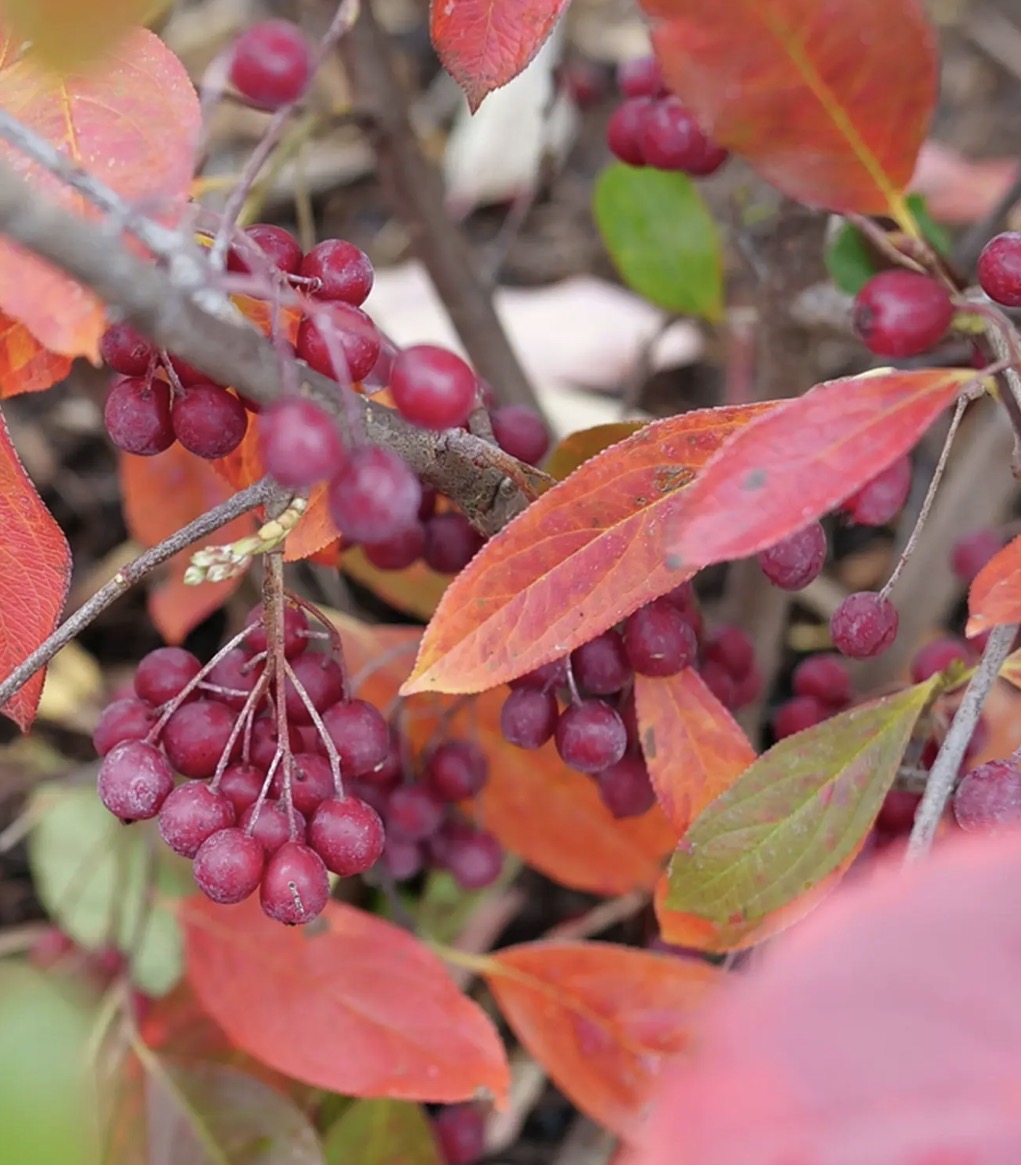
Anybody grow red aronia? I’m curious about the flesh color—mine haven’t fruited yet. They’re tetraploids, so if I use them in crosses they’ll be pollen parents. I picked up ‘Berry Scape,’ which looks interesting—at least some fruiting traits were considered in its development. Not sure flavor was one of them, though.