I feel like emasculating small flowers causes counterproductive extra stress on them. I would think diploid Aronia could be pollinated without emasculating unless they’re selections known to be capable of self pollinating.
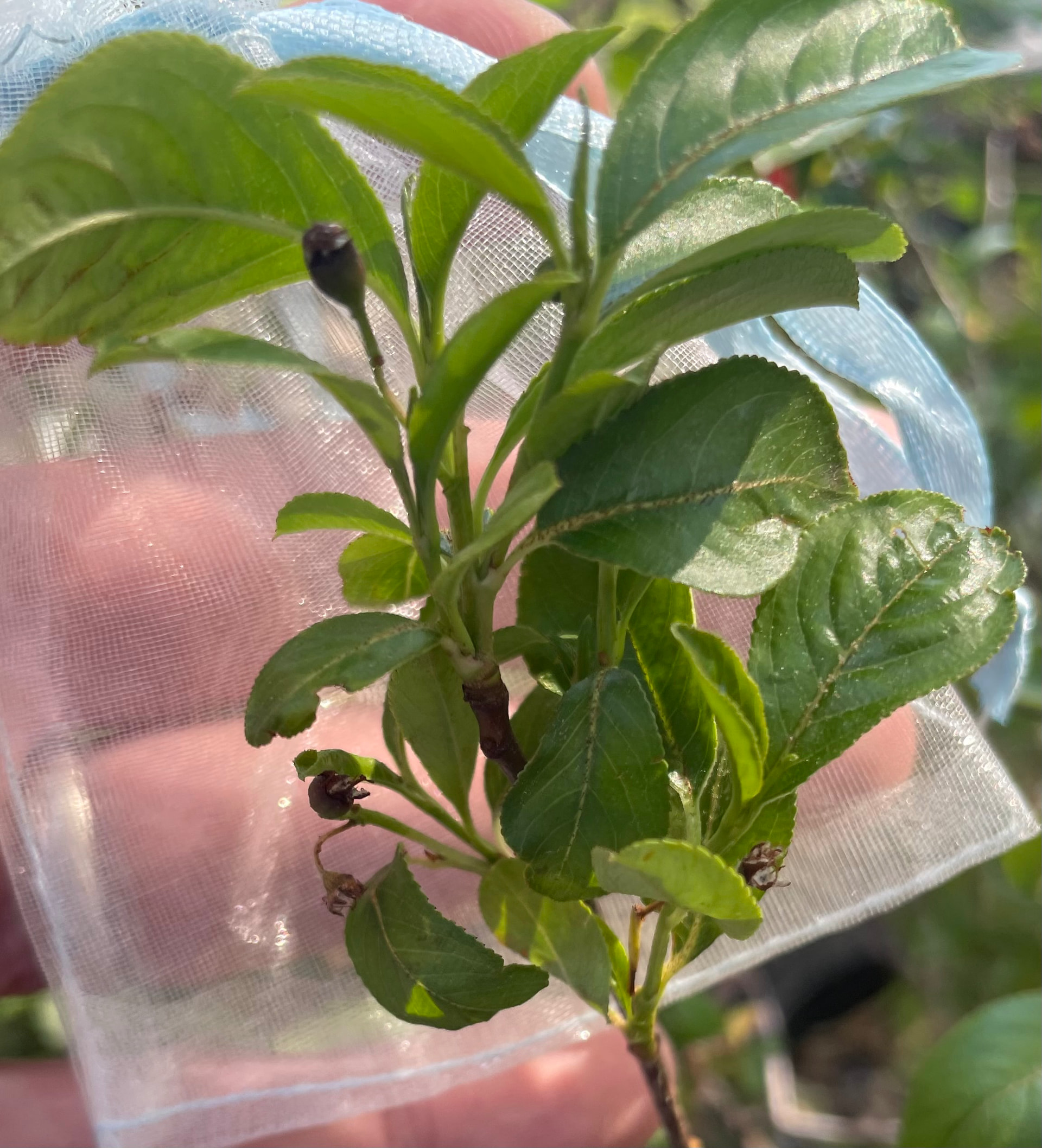
I hope you’ll get some photos of the failing fruit set for visual reference.
If whether diploid Aronia melanocarpa are self compatible isn’t already known it’s probably worthwhile bagging some flowers after hand pollinating them with pollen from the same plant and also emasculating some of the flower before bagging them to see if that hinders fruit set if they are self fertile.
Diploids being self incompatible and polyploids being self compatible is pretty common in the Maleae tribe but is hardly unheard for diploids to be self fertile too
I’m also considering trying to figure out how to do embryo rescue. Because endosperm development tends to be abnormal in many hybrids (because its proper formation and growth tends to require a proper balance of maternal and paternal genomes (typically a two to one ratio of maternal to paternal genomes at least when both parents are the same species)) which can prevent seeds from developing properly in many interploidy and interspecies hybrids
Not sure if anything can be done to prevent hybrid lethality in seedlings though. Or at least prevent it long term. Since it apparently is caused by the plant activating defense pathways when it shouldn’t be. So even if you blocked those pathways using chemicals or heat it would probably die when you stopped
Question- if any of you who understand all of this at this level have interest and time, can you put together a thread on breeding basics going over the terminology and genetically what you are doing and looking for in the parents? Or a list of resources to try to understand it all?
@AdamNY If you would like some seedlings of my local ecotype aronia here in mid Coast Maine just holler. I have dozens of seedlings I could ship bareroot in the fall.
It’s my understanding that all diploid Aronia are self-compatible, and that most — if not all — are at least somewhat self-fertile. ‘Professor Ed’ set a decent amount of fruit with no other Aronia nearby to pollinate it. I know that doesn’t guarantee self-fertility since there are other possible pollen sources, but I think it’s a strong indication that it is self-fertile.
The other cultivars are much smaller, and I emasculated and pollinated every flower on the plants, so I have no idea whether they’re self-fertile. One of the cultivars also had flowers with the stigma positioned below the anthers. Since its pollen is self-compatible, I thought it was best not to take any chances.
I imagine there are plenty of diploid Aronia that would have nonexistent or very low fruit set if there were no other Aronia or compatible pollen sources nearby. Next year I’ll probably bag some flowers, like @MaleaeLover suggested, so I can know for sure.
Most of the failing fruit has already dropped. Here’s a picture of the last of them I could find, though the photo is far from representative of what I was describing earlier. In many of the flowers that already dropped, the color was distinctly dark red/purple rather than the dark brown/black usually associated with tissue death. The developing fruit also remained firmly attached long after the color change occurred. The vast majority of the flowers that followed this pattern were on one of the high-anthocyanin plants, so maybe that had something to do with it.
@eme This is a great idea, the terminology can be confusing. When I have a little more time I’ll try to put something together in the Breeding Discussion thread.
@Everett Thanks so much for the offer! I’ll try to remember to message you in the fall. You’re in prime diploid Aronia territory, so the plants could be a great addition for breeding work. I’ll return the favor with anyway I can.
The good thing about trying Aronia x Pear crosses is we already know they will set viable seeds.
In some instances, hybrid lethality can at least partially be overcome if the parents are reciprocally grafted seedlings. Ivan Michurin called it “preliminary vegetative approximation”. This is how the first hybrid persimmon was created. I believe studies have confirmed the effectiveness of reciprocal grafting in certain species. It is also listed as an effective technique for wide-crosses in Principles of Plant Genetics and Breeding by George Acquaah that @Richard recommended to me in another thread.
its too bad i grafted over my ivans belle hybrid mtn. ash to all pear. it was a Michurin cross of euro. mtn ash and aronia. i get root suckers sometimes. i could give you guys some scion wood if it intrests you for breeding.
I appreciate the offer. I grafted ‘Ivan‘s Beauty’ and ‘Ivan’s Belle’ to a few different things this year and they appear to have taken. They’re both triploid and apparently can sometimes produce non-clonal offspring. Im curious if the fruit of ‘Ivan’s Belle’ are good for anything?
I think that’s just Sorbus doing Sorbus things. And medlar is actually closely related to hawthorns so them being able to hybridize isn’t really indicative of much
Even though that chart was published in the Journal of the Arnold Arboretum and authored by a respected professor, it’s far from complete. I believe the arrows shown are generally correct; it’s just missing a lot. I have several intergeneric grafts not listed there that have survived for multiple years—though not long enough to rule out delayed incompatibility.
Also, Sorbus has since been split up, which changes things, and other genera may have been revised as well.
I would suspect it wouldn’t be very successful since they aren’t particularly closely related within the tribe, but it probably wouldn’t hurt to try, maybe you could get plants using embryo rescue
I would say the best bet for making a loquat hybrid would be to use something like the golden azarole, it looks strikingly similar to loquat except the leaves. Just going off the appearance of fruit, seeds, and flowers the resemblance is encouraging.