As we are aware Asian persimmons at times die a sudden death when using american persimmons as rootstocks. This is rare and lotus rootstock is seldom used nowadays. The condition is briefly mentioned here
The website below mentions SDS disease and various other persimmon facts you might find useful.
"
Difficulty
persimmons require minimal effort to manage.
∙ in a moderately wet climate
Bloom
buds awaken from dormancy late enough to generally avoid frost damage in most of the US.
pH
6.0 to 7.0 is preferred but a wide range is tolerated
Yield
kaki: 2 - 3 years (clones)
virginiana: 2 - 4 years (clones)
Tolerant
virginiana is semi-tolerant of saline soil
Climate
The minimum temperature that American persimmons can generally tolerate — when referring to earlier ripening varieties from a northern strain — is not well known, but it is often said to be zone 5a. However, there are a few people who have reported no damage after experiencing those between -22F and -31F. If this is fairly consistent, the primary issue with growing persimmons in zone 4 may not necessarily be cold hardiness (at least after a few years of protection), but the length of the grow season and the amount of heat the area receives. If your area experiences a grow season around 4.5 to 5.5 months long and is capable of accumulating ~2250 Grow Degree Days (GDD) (based on the information provided at weatherspark), then there is a decent chance that part of the crop of an early ripening variety will be able to ripen on the tree before the end of the season (a GDD of at least 2500-2800 would be more ideal). An area that experiences less GDD but a longer grow season may be suitable as well, such as those seen in the Pacific Northwest. Alternatively, you should be able to harvest them when they are yellow and have them ripen on the counter. This tends to work quite well for Asian persimmons, and it seems to generally work for improved American persimmon varieties, too.
Pollination
Asian persimmons are parthenocarpic. They will produce seedless fruit without the presence of a pollinator. Some female varieties can also produce male flowers, but it’s not necessarily a yearly occurence and it might take awhile longer for them to first appear. Wild American persimmons are often self-sterile and require a male and a female tree for fruit production (dioecious), but with the exception of a few older varieties, only parthenocarpic selections have been named.
Pests and Diseases
There are currently no significant pests or diseases that harm American persimmons. Leaf spot is very common, and it can develop quite heavily on some varieties (or in some regions), but it generally does not concern anyone and is largely ignored.
Persimmon Sudden Death Syndrome (SDS), an affliction that causes Asian persimmon trees to die within 2 to 5 years, is the only disease of any significance that affects them in the United States. It is currently believed to be caused by Xylella fastidiosa,[1] a bacteria that is primarily known for causing Pierce’s disease in grapes. Xylella fastidiosa is often spread by large leafhopppers called sharpshooters, but the primary vector, the glassy-winged sharpshooter (Homalodisca vitripennis), can only survive in regions with mild winters. Based on their distribution map, their northern limit should be around hardiness zone 8a. Sharpshooters were not mentioned for spreading fastidiosa directly to Asian persimmons, but it did imply that the primary source of infection came from grafting Asian persimmon scionwood onto infected, but asymptomatic, American persimmon rootstock. Furthermore, there may be another pathogen in some American rootstock that can induce decline (rather than sudden death) in Asian persimmons,[2] but I have only seen mention of this in one country outside of the United States.
Canker is either uncommon or non-existent on American and Asian persimmons in the United States, but it has been reported in other countries of various climates, such as Japan, Brazil, Spain, New Zealand, and South Africa.[3][4] The significance of the pathogens that have been isolated from the canker is hard to determine due to the small number of studies on the issue, but the lack of concern over the past few decades implies it is generally quite rare or easy to control. However, there was one thing that stuck out in a study conducted in South Africa. Lesions were generally longer on Asian persimmon trees that were grafted to American persimmon rootstock than those grafted to Asian persimmon rootstock.[4]
Persimmon anthracnose, caused by the fungi Colletotrichum horii (previously thought to be Colletotrichum gloeosporioides), can damage young twigs, leaves, and fruit.[5] It is uncommon or non-existent in the United States, as well as Europe, and the only regions where it seems to be a problem (Korea, Japan, southeastern half of China, and the San Paulo area in Brazil) tend to receive an incredible amount of rainfall at some point during the grow season. The rate of infection within these countries “might” be increasing, but for many decades, there seemed to be a lack of concern over the disease. However, poor practices, such as using slightly susceptible yet infected rootstock from wild persimmon trees, or planting near forests with high disease pressure, has devastated nurseries and orchards in the past.[5] Most Asian persimmon varieties appear to be fairly susceptible, but some show resistance, such as Nishimura-wase (Coffee Cake). Furthermore, there is at least one Chinese variety from the persimmon species Diospyros glaucifolia that is considered to be immune. Overall, not much effort has been placed into the discovery of resistance varieties.[5]
Circular leaf spot (Mycosphaerella nawae) is a fairly new and serious foliar disease that has recently been spotted in China, Korea, Japan, and Spain. Infected trees may defoliate early, which can lead to crop failure. While there are a number of foliar diseases that can affect persimmon trees, M. nawae may be the most severe.
Moisture from dew and a high relative humidity can be enough to progress maturation and encourage spore dispersal. However, dispersal is far greater when the fungus is exposed to rainfall.[6][7] In the dry climate of east-central Spain, flood irrigation is a very common practice within persimmon orchards.[7] This may be why M. nawae is capable of thriving there.
M. nawae has a long incubation period on infected leaves, so fungicides need to be used in spring, long before symptoms appear.[8] Roughly 4 months after full bloom, symptoms are still fairly mild, but defoliation can become significant 2 to 4 weeks after this point.[8] Removing infected leaf litter and using drip irrigation are practices that should reduce symptoms, but no studies on the effectiveness of this have been done.
Nutrition
Ascorbic acid (vitamin C) can vary significantly within Asian persimmons, and it depends on multiple factors, such as the variety, their environment, and the stage of which they are harvested.[9][10] In a multi-study review from 2011, the mean value of ascorbic acid in Asian persimmons was 47mg/100g FW (fresh weight).[11] This, however, included one fairly old, often cited study with many “fully mature” varieties that had rather high values in comparison to nearly all others (between 35mg/100g to 218mg/100g, with most residing in the upper half of this range).[12] In more recent studies, the ascorbic acid content resided between 9mg to 87mg/100g, most of which were between 15mg to 43mg/100g.[9][13][14][15]
There seems to be very few studies that attempt to determine the ascorbic acid content of American persimmons, and the only one I have access to happens to be the one that gave the majority of the Asian persimmons tested an unusually high amount. The one American persimmon they analyzed was determined to have a total vitamin C content of 86g/100g FW.[12]
Persimmons generally have a water content of ~80%,[16][9][15] which is lower in comparison to the average, commonly available fruit (85-90%). A higher amount of sugar and pectin partially make up the difference.[14][15] Furthermore, they have a pH value between 5 and 6,[9] which is very high in comparison to most other fruit (less than 4). This is true even while they are green, but rather than being very acidic, unripe persimmons are very astringent, regardless of which category they reside in.
Astringency
Astringency is the dry, puckering feeling in the mouth, which is generally caused by soluble tannins binding to proteins. Soluble tannins are present in large amounts in persimmons, but as the fruit ripens, they are converted into non-astringent, insoluble tannins. Some Asian persimmon varieties will lose their astringency around the time they become fully colored, although it may depend on whether they were pollinated or not and how well they were pollinated. Overall, Asian persimmons can be distributed between four different categories.
- Pollination-Constant Astringent (PCA): the typical astringent persimmon (this currently consists of all American and hybrid persimmons as well).
- Pollination-Constant Non-Astringent (PCNA): the typical non-astringent persimmon.
- Pollination-Variant Astringent (PVA): an astringent persimmon that lacks flavor if it has not been pollinated.
- Pollination-Variant Non-Astringent (PVNA): an astringent persimmon that lacks flavor if it has not been pollinated. If it has been pollinated, the flavor improves and it may ripen in a way that qualifies it as a non-astringent persimmon.
Persimmons are considered to be edible in Japan when the soluble tannin content drops below 0.1% of their fresh weight.[17] When astringent persimmons become fully colored, it often resides between 0.5 to 1%.[18] It will not drop down to an acceptable level until they start becoming very soft, almost like a water balloon. As for non-astringent persimmons (PCNA), their soluble tannin content is roughly 0.5% in the green stage, ~0.2% in the stage their color rapidly changes, and ~0.1% or lower when they are fully colored.[18]
PCNA and pollinated PVNA (non-astringent and potentially non-astringent) persimmons lose their astringency in different ways. Soluble tannins in PCNA are primarily diluted as the fruit develops. This is possible because their tannins have a smaller cell size and their production ceases at a much earlier stage than in astringent varieties. In pollinated PVNA persimmons, the soluble tannins coagulate and form insoluble tannins by reacting with acetaldehyde produced by the seeds.[19] Consequently, pollinated PVNA persimmons with a higher number of seeds will lose their astringency quicker than those with a low number.[19] A similar event happens in pollinated PVA persimmons, but to a much lesser degree, thus causing them to remain astringent for a longer period of time.
Diospyrobezoar
A diospyrobezoar is an indigestible mass in the digestive tract caused by shibuol, a soluble tannin largely present in persimmons that haven’t ripened enough to lose their astringency.[20][21] In the presence of dilute stomach acid, shibuol coagulates into a cellulose protein structure.[21] Soluble tannins in persimmons are found in higher concentrations near the skin and calyx.
Diospyrobezoars are quite rare, and roughly 80%+ of those who do get them have impaired gastric motility due to some form of surgery.[20][21] The majority of the others also had a disorder that can impair gastric motility, such as diabetes mellitus or hypothyroidism. Additionally, improper chewing may have helped lead to the formation of a diospyrobezoar in some people.[21]
In one study of 103 patients who were believed to have had a diospyrobezoar, symptoms developed 1 day to several weeks after consuming persimmons.[20] Laparoscopy is generally the most invasive procedure required for their removal, since larger incisions are rarely needed.[22] Endoscopic procedures are more common and are often done in combination with carbonated liquid or enzymes to help soften regular bezoars,[22] but it’s generally not attempted with diospyrobezoars due to their harder consistency.
Examples of the kind of persimmon consumption that have lead to the formation of a diospyrobezoar are hard to come by, and it will certainly be different for each individual. Regardless, a few examples are better than none. The following three patients had some disorder or gastric surgery that may have caused impaired gastric motility.
- a 66 year old male said he recently consumed 12 persimmons, but it did not go into further detail.[21]
- a 51 year old woman mentioned she ate 2 or 3 persimmons per week over the past 6 months.[23]
- a 70 year old Japanese man with no symptoms was discovered to have a diospyrobezoar during an annual screening. He claimed to have had 2-3 persimmons each day for 3-4 months during the previous fall and winter season.[22]
In one case involving a patient that may not have had impaired gastric motility, a 27 year old male vegan developed symptoms after switching to a more seasonal food diet for one month that consisted of over 10 persimmons per day.[24]
Overall, people who have impaired gastric motility, or some other issue that may lead to the formation of a diospyrobezoar, are better off avoiding persimmons, especially those that haven’t lost all signs of astringency.
Storage
Various Asian persimmon varieties can store for up to 5 months, but if you wish to store them long term, they should be harvested quite early. The optimal color for storage can vary between varieties (or even location and season), but it appears that once they are no longer green, they are ready for harvest. Some varieties are mature enough to ripen off the tree while they are still entirely green, but harvesting them at this stage, or fairly close to it, may prove to be unwise. Harvesting too early may cause them to become sensitive to chilling injury below the temperature of 41F/5C.[10][25] When storing persimmons, another thing to consider is that they are very sensitive to ethylene gas and are best stored without the presence of other climateric fruit. They tend to produce a much greater amount of ethylene than persimmons themselves.[26]
The relative humidity of the storage unit should be between 85-95%.[10][27] 32F/0C is generally recommended, but some varieties, such as Fuyu, may receive chilling injury at this temperature, regardless of the stage they were harvested. This is, however, not consistent. Studies from multiple regions have had success with the long term storage of Fuyu (some of which were harvested while they were orange) at the temperature of 32F/0C, while others saw failure in less than a month or two.[27] Furthermore, Asian persimmons, whether they are chill sensitive or not, may have a higher chance of being injured when the storage temperature is set closer to ~41F/~5C.[28][29][30]
Chilling injury can cause Asian persimmons to develop a brown discoloration, a metallic or chlorine-like odor, a mealy or gel-like texture, and a loss of flavor, sweetness, or juiciness.[30] It may also accelerate the loss of firmness or cause the persimmon to dramatically reduce its firmness within a few days after being removed from cold storage.[29]
Overall, there is a lot of variation in the recommended method of storing Asian persimmons based on the various studies that have been released. They can, however, be used to guide us toward the most appropriate method for the varieties we grow in our particular region.
While it may not be a practical solution for the average home-grower, commercial growers are capable of avoiding injury to chill sensitive varieties through various methods, such as the use of the ethylene action inhibitor 1-methylcyclopropene (1-MCP)[29] and adjusting the concentration of one or more elements, primarily oxygen and carbon dioxide, in a modified atmosphere polyethylene bag.[25][31][32]
- Graft-transmissible agents in oriental persimmons (Diospyros kaki L) in the southeastern USA, 2018.
- Decline of persimmon (Diospyros kaki L. ) trees on Diospyros virginiana rootstocks, 1991.
- First report of Pestalotiopsis diospyri causing canker on persimmon trees, 2011.
- Trunk Disease Fungi Associated with Diospyros kaki in South Africa, 2016.
- Anthracnose of Persimmon Caused by Collettotrichum gloeosporioides in China, 2008.
- Inoculum dynamics and disease progress of circular leaf spot of persimmon caused by Mycosphaerella nawae in inland Korea, 2018.
- Effects of temperature, water regime and irrigation system on the release of ascospores of Mycosphaerella nawae, causal agent of circular leaf spot of persimmon, 2011.
- Control and yield loss modelling of circular leaf spot of persimmon caused by Mycosphaerella nawae, 2017.
- Study of postharvest changes in the chemical composition of persimmon by HPLC, 2013.
- Effect of Various Maturity Stages at Harvest on Storability of Persimmon Fruits, 2003.
- Selected primary and secondary metabolites in fresh persimmon (Diospyros kaki Thunb.): A review of analytical methods and current knowledge of fruit composition and health benefits, 2011.
- Provitamin A (Alpha-Carotene, Beta-Carotene and Beta-Cryptoxanthin) and Ascorbic Acid Content of Japanese and American Persimmons, 1989.
- Comparative Studies of Antioxidant Activities and Nutritional Constituents of Persimmon Juice, 2012.
- Chemical composition of persimmon cultivars grown in Crimea (abstract), 2016.
- Comparison of sensory and compositions of five selected persimmon cultivars (Diospyros kaki L.) and correlations between chemical components and processing characteristics, 2015.
- Persimmon (Diospyros kaki) fruit: hidden phytochemicals and health claims, 2015.
- The Natural Removal of Astringency in Sweet Persimmon Fruit and the Distribution of Tannin Substance in Leaf and Fruit, 1986.
- Influence of persimmon astringency type on physico-chemical changes from the green stage to commercial harvest, 2016.
- Unique features of tannin cells in fruit of pollination constant non-astringent persimmons, 2003.
- Surgical Aspects of Gastrointestinal Persimmon Phytobezoar Treatment, 1986.
- Diospyrobezoar as a Cause of Small Bowel Obstruction, 2012.
- The Combination Therapy of Dissolution Using Carbonated Liquid and Endoscopic Procedure for Bezoars: Pragmatical and Clinical Review, 2016.
- An unusual case of bleeding from stomach due to a giant diospyrobezoar, 2009.
- Gastric Diospyrobezoar Dissolution with Ingestion of Diet Soda and Cellulase Enzyme Supplement, 2017.
- Post-Harvest and Processing of Persimmon Fruit, 2002.
- Commodity Resource Fact Sheet.
- Storage life of non-astringent persimmons grown in the eastern Mediterranean, 2010.
- The influence of storage time and temperature on chilling injury in Fuyu and Suruga persimmon (Diospyros kaki L.) grown in subtropical Australia, 1995.
- Temperature and Ultra Low Oxygen Effects and Involvement of Ethylene in Chilling Injury of ‘Rojo Brillante’ Persimmon Fruit, 2010.
- Development of chilling injury in New Zealand grown ‘Fuyu’ persimmon during storage, 1987.
- Quality of ‘Fuyu’ Persimmon during modified atmosphere storage, 2009.
- Extending the Storage Life of `Fuyu’ Persimmon by Modified-atmosphere Packaging, 1992.
Collapse
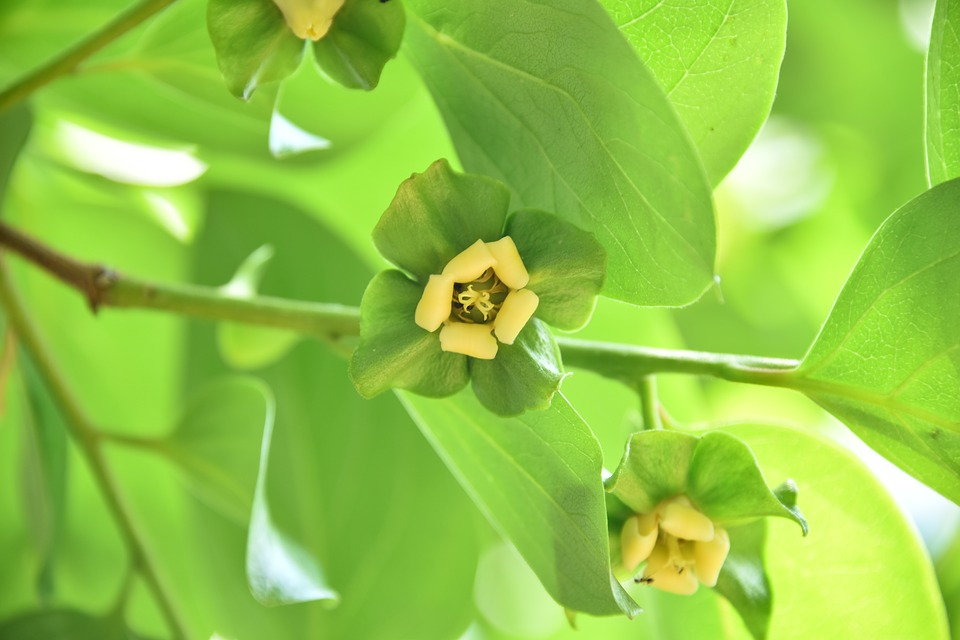
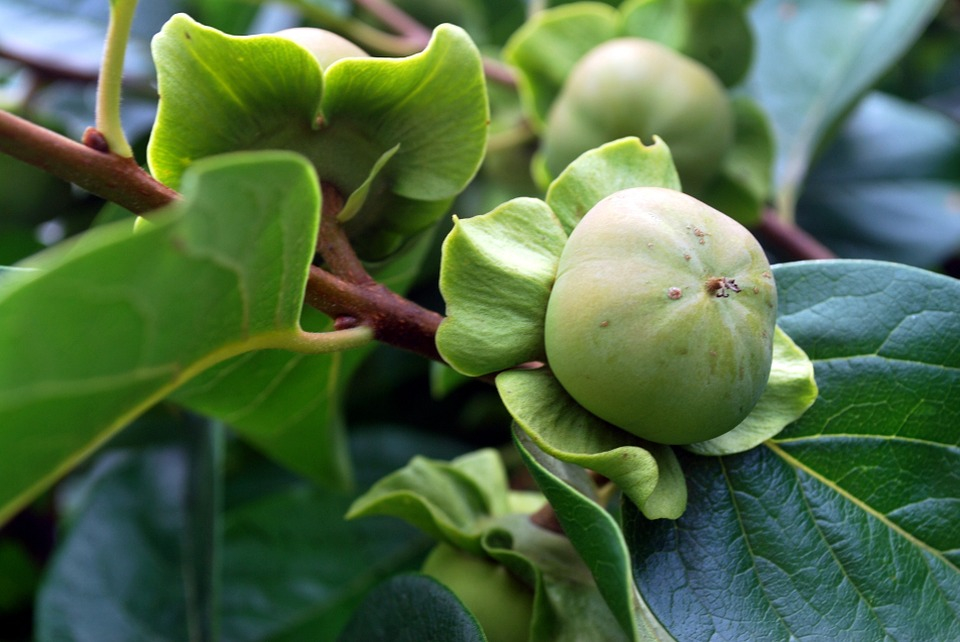

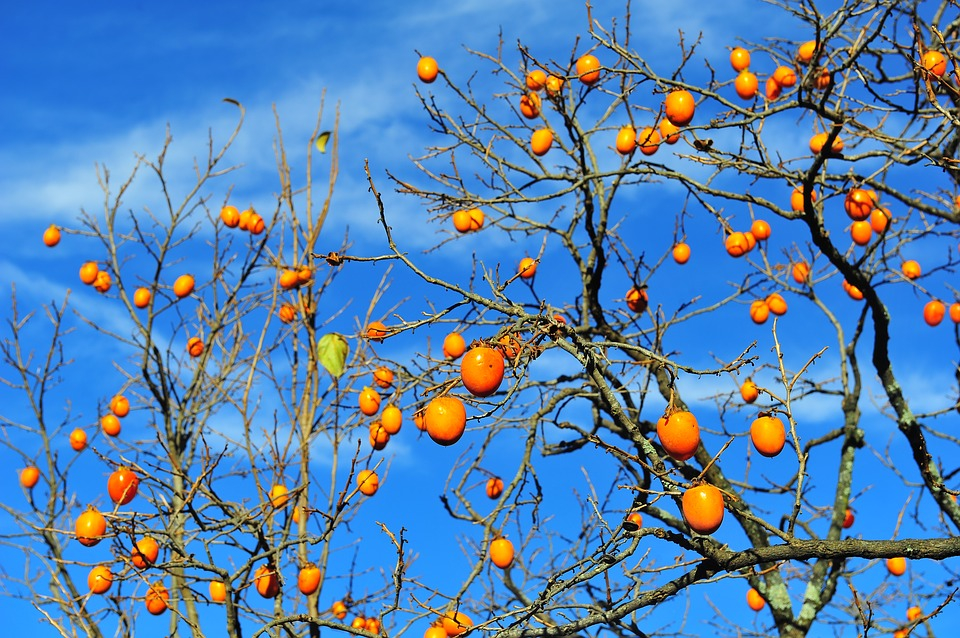
Asian Persimmon: Diospyros kaki
Asian persimmons are self-fertile and produce seedless fruit in the absence of a pollination partner (parthenocarpy). They also tend to be low in vigor, but only those that have directly been mentioned for having this trait are labeled as such.
Non-astringent Asian persimmons develop less flavor than the Astringent-type and are generally said to taste identical to one another, so they should primarily be chosen for their hardiness and ripening date. Some people, however, do not mind this shortcoming, because they much prefer their firm texture. Astringent persimmons do not become edible until they are nearly as soft as a water balloon.
Persimmon Sudden Death Syndrome is the only significant problem that faces Asian persimmons in the United States, but it is believed to only affect Asian persimmons that are grafted to “some” American persimmon rootstock. More details can be found in the “Read More” section.
Chinebuli

Zone
• 6b? ◦ possibly 6a
Ripens

• mid?
Fruit
• non-astringent
There is some controversy involving the cold hardiness of Chinebuli, or more specifically, if it is just a mislabel of another more common variety, but there are practically no reports concerning it. Experimentation is still required.

Chocolate
Zone
• 7a
Ripens
• mid-late?
Fruit
• PVNA
Chocolate is a pollination-variant non-astringent cultivar (PVNA) that produces a good amount of male and female flowers (monoecious).
Coffee Cake
Alias
• Nishimura Wase
Zone
• 7a
Ripens
• early-mid
Fruit
• PVNA
Coffee Cake is a pollination-variant non-astringent cultivar (PVNA), so its flavor greatly benefits from pollination and, if received, it can lose its astringency in a firmer state. In fact, there is clearly a preference for pollinated PVNA persimmons when compared to other Asian varieties, at least when it comes to people who do not mind the seeds. Some of the better American persimmons are often implied to be a notch above anything that is Asian though, but their flavor can be overwhelming to some.
Early Fuyu
bud mutation of Fuyu
Alias
• Matsumoto Wase Fuyu
Zone
• 7a ◦ possibly 6b
Ripens
• mid?
Fruit
• non-astringent
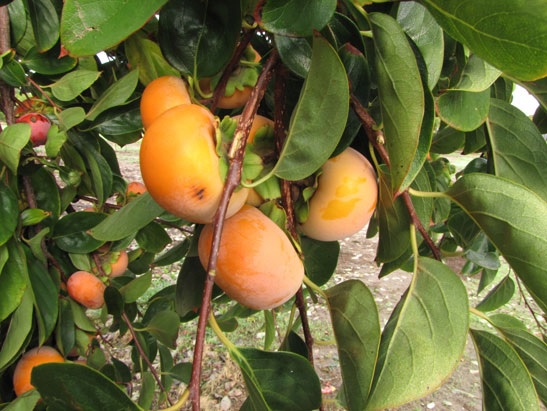
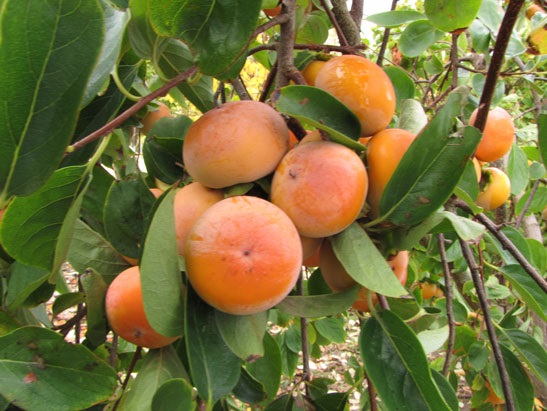
Fire Crystal
Originated in Central China near the city of Xian.
Alias
• Lintong Huo Jing
Zone
• 6b ◦ possibly 6a
Growth
• low vigor
Fruit
• astringent
Early reports on the quality of Fire Crystal are not promising.
Fuyu
Zone
• 7
Ripens
• late
Fruit
• non-astringent
Fuyu and Jiro are supposed to be different varieties, but Jiro, along with many other varieties, were originally marketed as Fuyu.
The chill sensitivity of Fuyu persimmons may vary by region or year (storage details can be found in the “Read More” section).
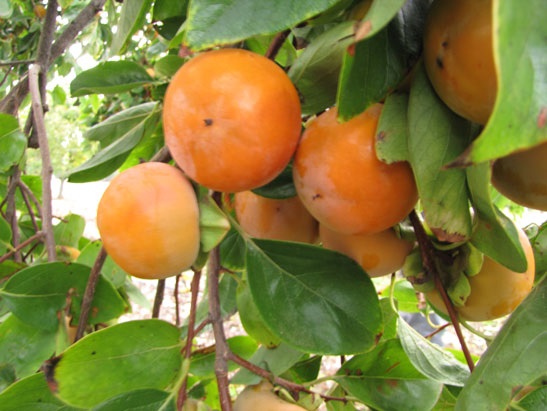
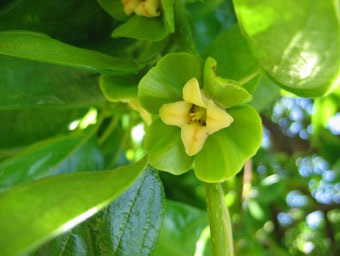
Giboshi
Selected in Virginia.
Alias
• Smith’s Best
Zone
• 6b
Ripens
• mid
Growth
• low vigor
Fruit
• PVNA
Giboshi is a pollination-variant non-astringent cultivar (PVNA), so its flavor benefits from pollination, but it apparently produces good quality fruit without pollination as well.
Giombo
Zone
• 7a?
Ripens
• mid
Fruit
• 4 to 5", astringent
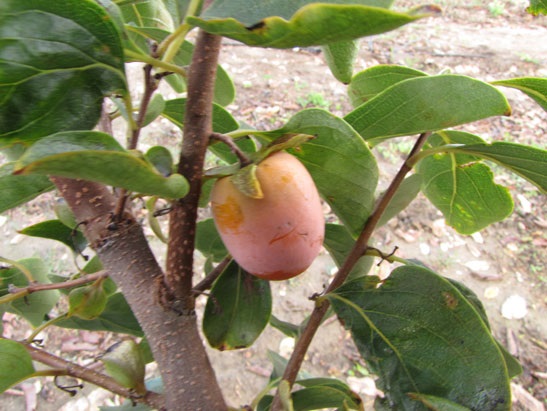
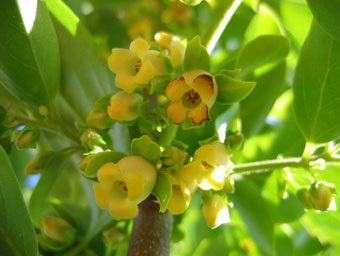
Gwang Yang
Originated in Gwangyang, South Korea.
Zone
• 7a (6b)
Ripens
• mid?
Growth
• low vigor
Fruit
• non-astringent
Hachiya
Zone
• 7a ◦ possibly 6b
Ripens
• late
Fruit
• 4", astringent
Hachiya is a common commercial variety, and it is said to be chill tolerant (storage details can be found in the “Read More” section).
Honan Red
Zone
• 7a?
Ripens
• mid?
Fruit
• astringent
Ichikikei Jiro
bud mutation of Jiro
Zone
• 7a
Ripens
• mid ◦ possibly earlier than Saijo by at least a few days
Growth
• low vigor
Fruit
• non-astringent
Ichi-ki-kei Jiro may receive severe dieback, if it doesn’t die completely, after experiencing zone 6b temperatures, especially when it is still quite young, but as the tree ages, it may become quite tolerant of these temperatures. Regardless, there are better selections for such a climate.
Izu
Zone
• 6b? ◦ may receive some dieback in zone 6b
Ripens
• early-mid
Growth
• low vigor
Fruit
• non-astringent
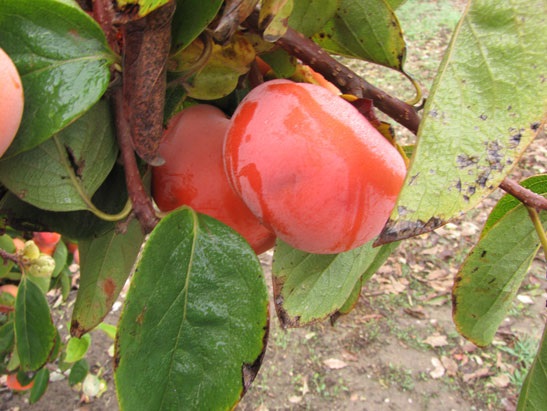
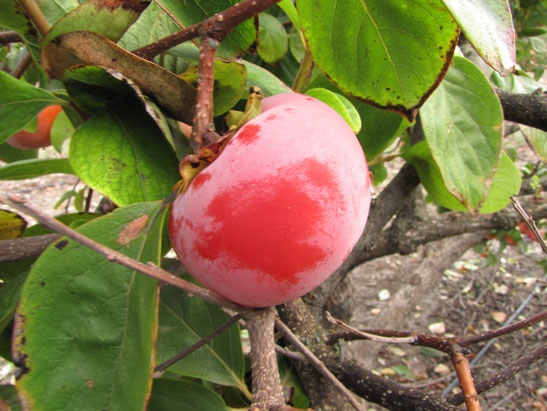
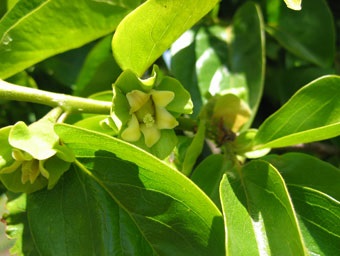
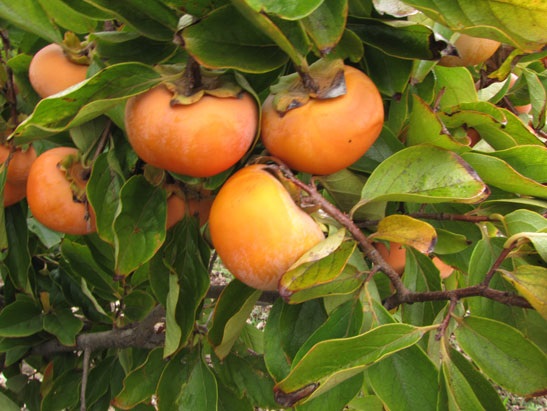
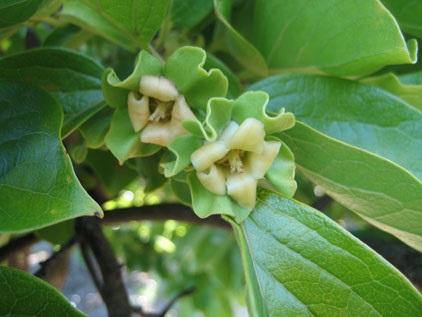
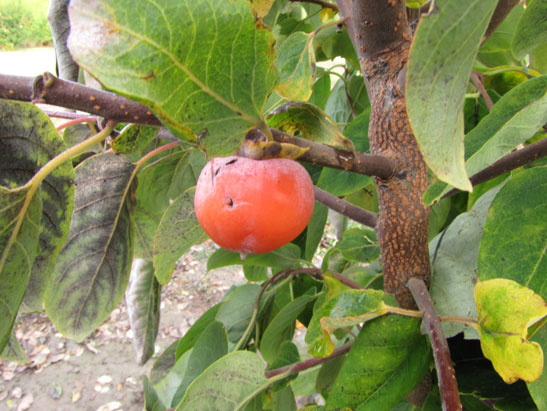
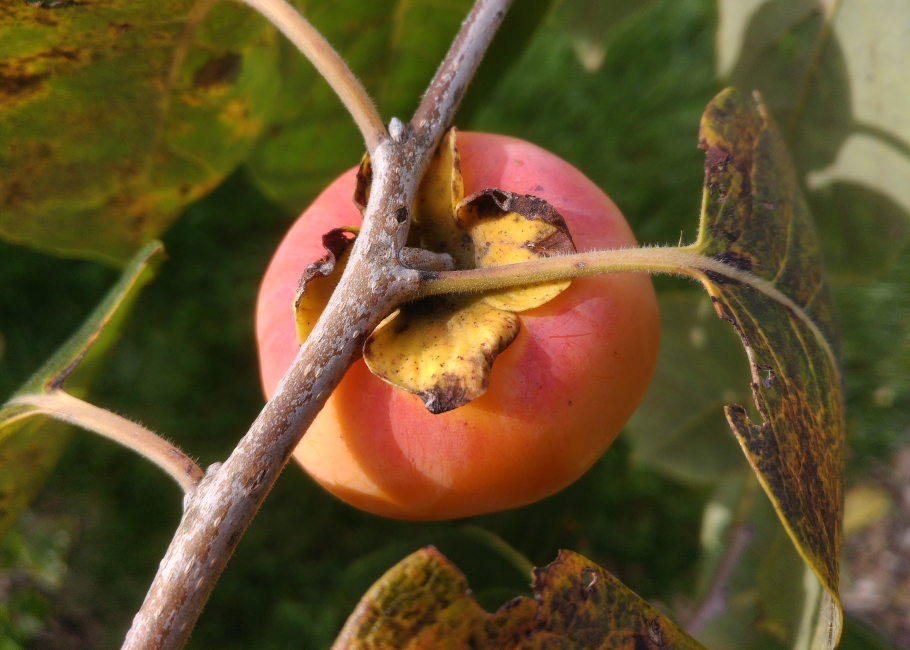
The red color of the second image, and even the first, is likely not typical. The expected color should probably be orange around the time it first ripens. Izu is an earlier ripening variety, and the photo was supposedly taken quite late in the season.

Maekawa Jiro
bud mutation of Jiro
Zone
• 7a ◦ possibly 6b
Ripens
• mid ◦ ~1 week before Ichikikei Jiro
Fruit
• non-astringent

Miss Kim
Originated in Korea.
Zone
• 6b? ◦ possibly 6a
Ripens
• mid ◦ possibly earlier than Saijo by at least a few days
Growth
• low vigor
Fruit
• astringent
Saijo
Zone
• 6b
Ripens
• mid
Fruit
• astringent
Saijo is mentioned by quite a few nurseries for being hardy down to -10F (zone 6a), but due to the reports I have seen, this is something you should not take seriously. It is best grown in zone 6b or higher.
Saijo is well-liked by many, but it frequently loses out when compared to other astringent persimmons that are still uncommon but starting to rise in popularity.
Sheng
Zone
• 6b? ◦ possibly 6a
Ripens
• early-mid? ◦ possibly mid
Growth
• low vigor
Fruit
• 3 to 4", astringent
Suruga
Hanagosho x Okugosho
Zone
• 7
Ripens
• late
Fruit
• non-astringent
Suruga may be a notch above the other non-astringent Asian varieties in quality, all of which (or at least the more common ones) are frequently mentioned for being very similar to one another.
Suruga is chill tolerant to temperatures around 32F/0C but sensitive to temperatures closer to 41F/5C.
Tam Kam
Originated in Korea
Zone
• 6b ◦ possibly 6a
Ripens
• mid?
Fruit
• non-astringent
Tamopan
Zone
• 7
Ripens
• late
Growth
• above average vigor
Fruit
• 3 to 5", astringent
Tamopan is a large, uniquely shaped persimmon that looks like a capped acorn, and it is produced on a tree that has been found to grow as high as 30ft, which is fairly tall for an Asian persimmon available in the US. It is, however, generally not recommended due to frequently lacking sweetness and flavor when compared to the alternatives.
Persimmon: hybrid
Asian x American hybrid persimmons are self-fertile and produce seedless fruit in the absence of a pollination partner. While some of them are quite hardy, the grow season will likely be too short to ripen them in all but the hottest areas in zone 5.
The hybrids are often preferred over the pure Asian varieties, since their American parentage gives a number of them a more complex flavor.
Kassandra
Great Wall x Rosseyanka F2 male (Rosseyanka (D. Kaki x D. Virginiana) x D. virginiana)
Zone
• 5b
Ripens
• mid
Fruit
• 2.5 to 2.75", astringent
Kassandra’s ability to tolerate the cold may greatly increase as it ages, possibly allowing it to survive zone 5a temperatures with some (but not complete) dieback.
Mikkusu
Josephine (D. Virginiana) x Taishu (D. Kaki). Developed in Japan.
Alias
• JT-02
Zone
• 5a (4b)
Ripens
• mid
• precocious
Growth
• low vigor
Fruit
• 2.5 to 3", astringent
Mikkusu (JT-02) is at least as hardy as Rosseyanka but it ripens earlier and likely has a better flavor. It may struggle to develop fall colors around zone 6 and lower, though.
Nikita’s Gift
Rosseyanka (D. Kaki x D. Virginiana) x D. Kaki? Developed in Yalta, Ukraine.
Zone
• 6b (6a)
Ripens
• mid ◦ possibly earlier than Saijo by at least a few days
Growth
• low vigor
Fruit
• 2.5", astringent
Nikita’s Gift may lose its astringency easier than many other PCA type persimmons, and it sounds like it ripens earlier than Saijo as well. Both of these qualities, in addition to likely tasting better, makes it a better choice in areas with a long grow season that lacks heat, such as the Willamette Valley, where some of the other “mid” season varieties struggle to ripen. However, fruit drop is commonly experienced during the first few years it attempts to produce.
Nikita’s Gift often experiences some (but not complete) dieback during lower zone 6a temperatures.
Rosseyanka
D. Kaki x D. Virginiana. Developed in Yalta, Ukraine.
Zone
• 5a
Ripens
• mid-late?
Fruit
• astringent
American Persimmon: Diospyros virginiana
American persimmons are usually self-sterile in the wild, but named selections are practically always self-fertile either through parthenocarpy, the production of male flowers, or a combination of both. It is uncommon for a persimmon to experience a disease of any significance in the United States. Leaf and fruit spot are the only ones you will likely experience, and they are cosmetic. Insect damage is generally irrelevant as well. While many of them appear to be hardier than what they are typically said to be, only the earliest ripening varieties should be grown near their northern limit.
American persimmon trees are generally more vigorous than Asian persimmons (as well as their hybrids), and their fruit exclusively belongs to the astringent category. They also have the most complex flavor, but it can be overwhelming for some.
Early Golden
Discovered in Alton, Illinois (1880).
Zone
• 4
Blooms

• ◦ self-fertile (parthenocarpy and occasionally male flowers)
Ripens
• early ◦ 1st week of October in Ontario
• precocious
Fruit
• 1.5" to 2"
Early Golden, and many of its female seedlings, produce male flowers, but it may take a few extra years for them to show up and they tend to appear on weak branches. Persimmons pollinated by these male flowers tend to form only a few seeds rather than all eight.
Early Jewel
Developed in Illinois
Alias
• H-118, Prairie Star
Zone
• 5a (4)
Blooms
• ◦ self-fertile
Ripens
• early
• precocious
Fruit
• 2"+, possibly up to 3"
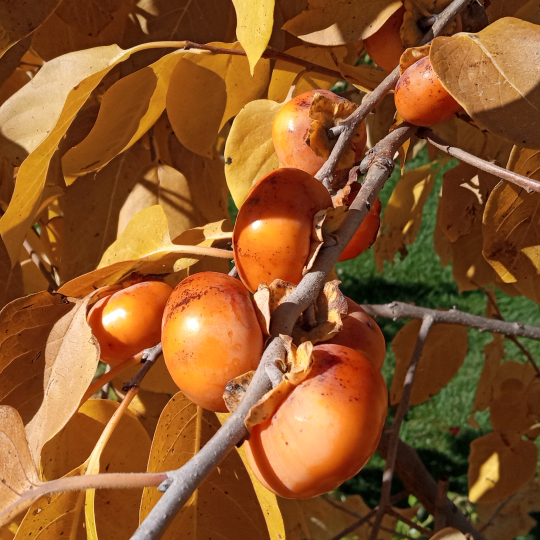
Fall colors from Early Jewel, and probably most American persimmon varieties, may not be typical when they are grown close to their northern limit. Those on H63A were similar but slightly weaker the year this photo was taken, and the colors on Garretson were only half as strong, thus displaying more of an incomplete yellow-lime (photos for those two are not displayed).

Elmo
Alias
• A-118
Zone
• 5a
Blooms
• ◦ likely self-fertile but I could not confirm
Ripens
• mid
Fruit
• 1.5"+
Garretson
Seedling of Early Golden. Introduced in Pennsylvania (1920).
Zone
• 4
Blooms
• ◦ self-fertile (parthenocarpic and male flowers at an unmentioned frequency)
Ripens
• early ◦ 1st week of October in Geneva, NY — slightly before Early Golden
• precocious
Fruit
• 1.37" to 1.5"
Garretson is supposedly more productive than Early Golden.
H63A
Zone
• 5a (4)
Blooms
• ◦ self-fertile
Ripens
• early
Growth
• medium vigor
Fruit
• likely over 2"
H63A seems to have the edge over most other American persimmon varieties at this time. There are a few others that occasionally receive high praise though, but they aren’t as popular yet. In my opinion, H63A was more appealing than Early Jewel due to the caramel-like flavor it is often said to have, but Early Jewel (and possibly many others) starts to develop this flavor too as the fruit slowly dries.
Lehman’s Delight
Developed in Terra Haute, Indiana.
Alias
• 100-46
Zone
• 5a
Blooms
• ◦ self-fertile
Ripens
• mid?
• precocious
Growth
• medium vigor
Fruit
• over 2"
Yield
• extremely productive
There is some contradicting information about the time frame of which Lehman’s Delight ripens, but I doubt it is one of the earlier ones.
Meader
Developed in Rochester, New Hampshire.
Zone
• 4a (3b)
Blooms
• ◦ self-fertile (parthenocarpy and occasionally male flowers)
Ripens
• early
Fruit
• 1.5" to 2"
• flavor is on the stronger side
Reports about the quality of the Meader persimmon are quite variable, but it is an older variety with small fruit, which is partially responsible for it falling out of favor.
Morris Burton
Originated in Mitchell, Indiana (1957).
Zone
• 5a (4)
Blooms
• ◦ self-fertile
Ripens
• early? (early-mid)
Fruit
• 1.5" to 2"
Prok
Selected in Amherst, New York.
Zone
• 4a (3b)
Blooms
• ◦ self-fertile
Ripens
• early ◦ drops when ripe
Growth
• faster than most American persimmon varieties
Fruit
• 2.5" to 3"
Prok is sometimes reported to have flavor (and texture) reminiscent of an Asian Persimmon due to its more mild nature, and while it was often praised at one time, it is starting to fall out of favor. This is particularly true for those who have a grow season long enough to ripen hybrid persimmons, but for those who do not, Prok might still be preferred by those who do not care for the relatively strong flavor of the average American persimmon.
Ruby
Zone
• 5a
Blooms
• ◦ self-fertile
Ripens
• mid?
• precocious?
Fruit
• 1.5" to 2.5"?
Afflictions
• Resistant to leaf spot.
Szukis
seedling of Early Golden
Zone
• 5a (4)
Blooms
• ◦ self-fertile (parthenocarpy and male flowers)
Ripens
• early
A large percentage of the Szukis persimmon tree may, or perhaps likely, end up being male, and some of these “male” flowers supposedly produce fruit that are much smaller than those from its female flowers.
Weber
Originated in Alabama
Zone
• 5a (4)
Blooms
• ◦ likely self-fertile but I could not confirm
Ripens
• early
Yates
Discovered in southern Indiana (1983)?
Alias
• Juhl
Zone
• 4a
Blooms
• ◦ self-fertile
Ripens
• early ◦ shortly before Garretson
• precocious
Fruit
• 1.37" to 2.5"
The flavor and aroma of Yates is stronger than some of the other American persimmons, and it can be a bit overwhelming for some"