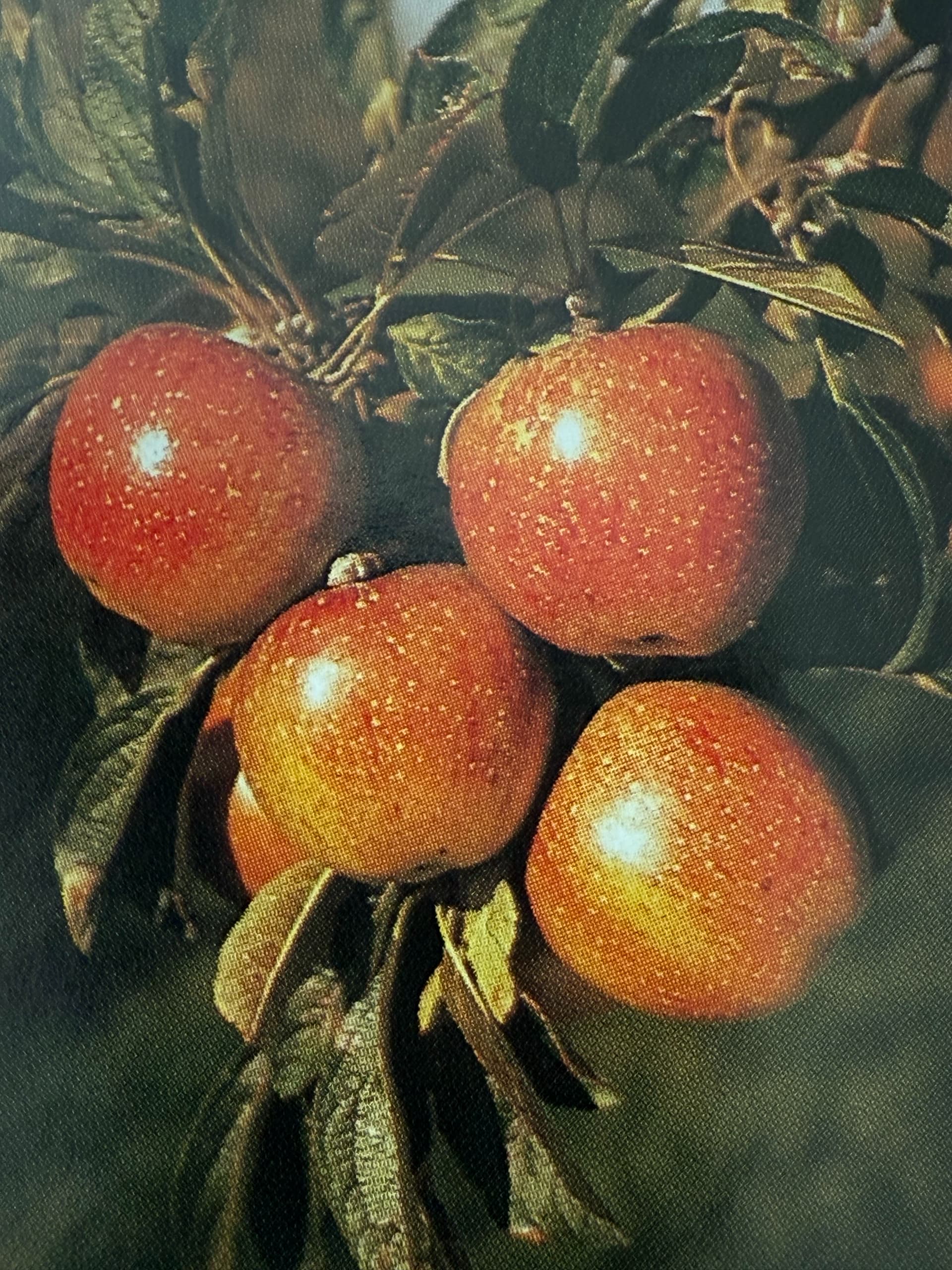
I’ve been growing unusual apple and other fruit cultivars since 1992 and during this time I have found that mis-identifications are everywhere. I guess that’s part of the “fun” of fruit collecting. Recently I’ve been focused on my “Margil” apple which I obtained in the mid-1990s. I always assumed it was authentic Margil but I now strongly doubt it. Looking through the literature and internet, I’ve found that there seem to be two different “Margil” apples in distribution in the USA. The authentic Margil is described as a smaller version of a Ribston Pippin. Bultitude has a nice image of authentic Margil in his book:
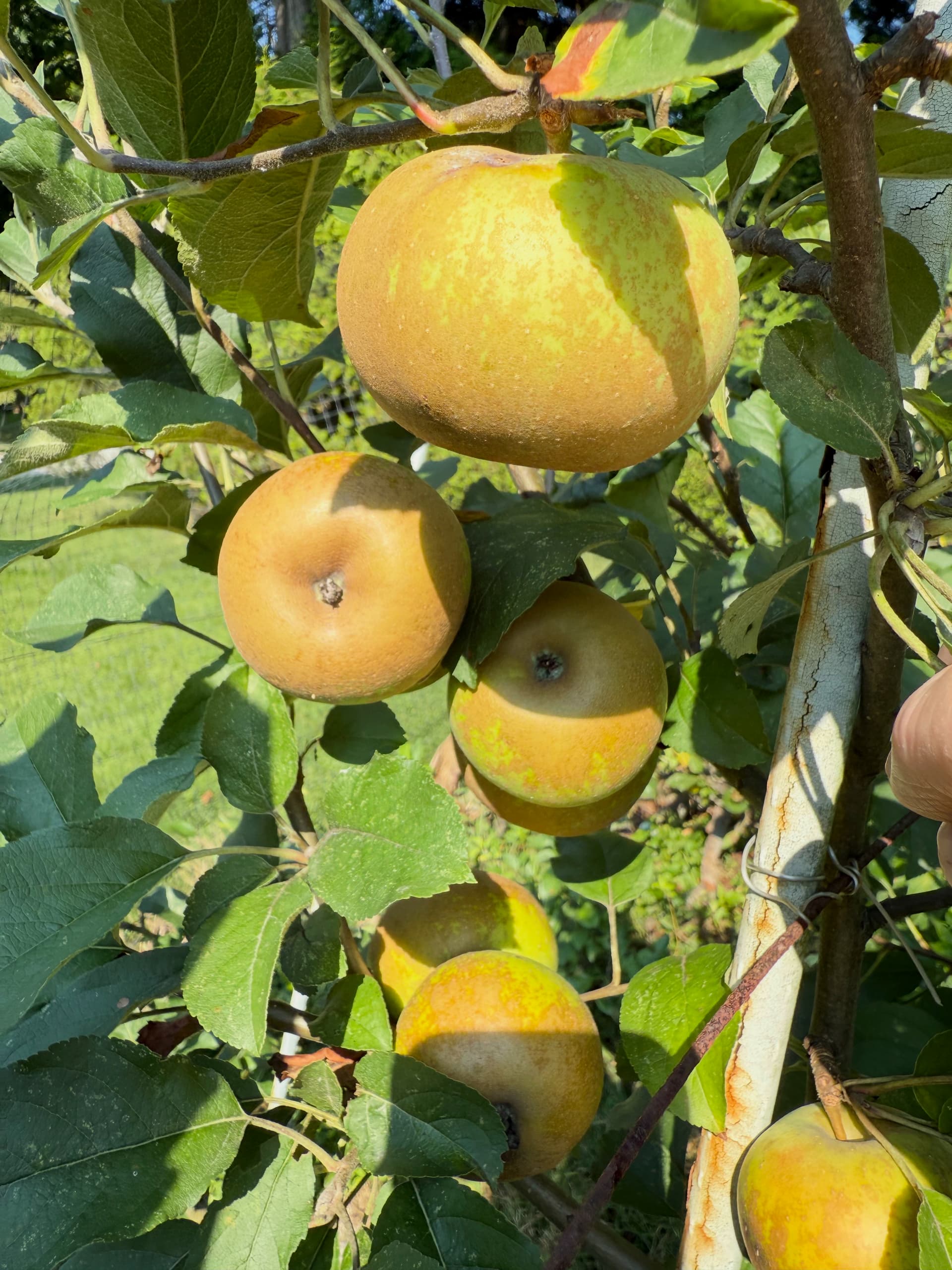
My “Margil” is a much flatter and more russeted apple. It is very similar (identical?) to the “Margil” offered by a couple online orchards:
My “Margil” is an outstanding eating apple, but I don’t think it’s the authentic Margil. Does anyone have any ideas what cultivar my faux Margil might be? I would also be interested in trading scions with anyone who grows authentic Margil this coming Spring.
MARGIL Also called Reinette Musquée, Small Ribston, Never Fail. A very old dessert apple, possibly first introduced from France by George London, who had worked in the gardens at Versailles. He was a partner in the Brompton Park Nursery, Surrey, where this apple was extensively cultivated as early as 1750. Small golden fruit with broad red stripes and russet patches, and with a quite exceptional concentration of flavour, sweet and aromatic, especially after a warm summer. One of Bunyard’s top ten apples for the epicure. Small trees, which are very hardy and produce good crops. Pollination Group 3
I was able to contact Ian Merwin, Emeritus Professor of Cornell who wrote the article I posted above with the image of my faux Margil. He now believes that his (and my) faux Margil is actually Pomme Grise. It is an excellent apple. Just not Margil!
This could be like how CNC screwed up Albert Etter apples. By interplanting the true identities on other apples in the same rows. You could order an Etter’s Gold and end up with a Skinner’s seedling. Because they top worked a Skinners or other varieties and mixed up cuttings.