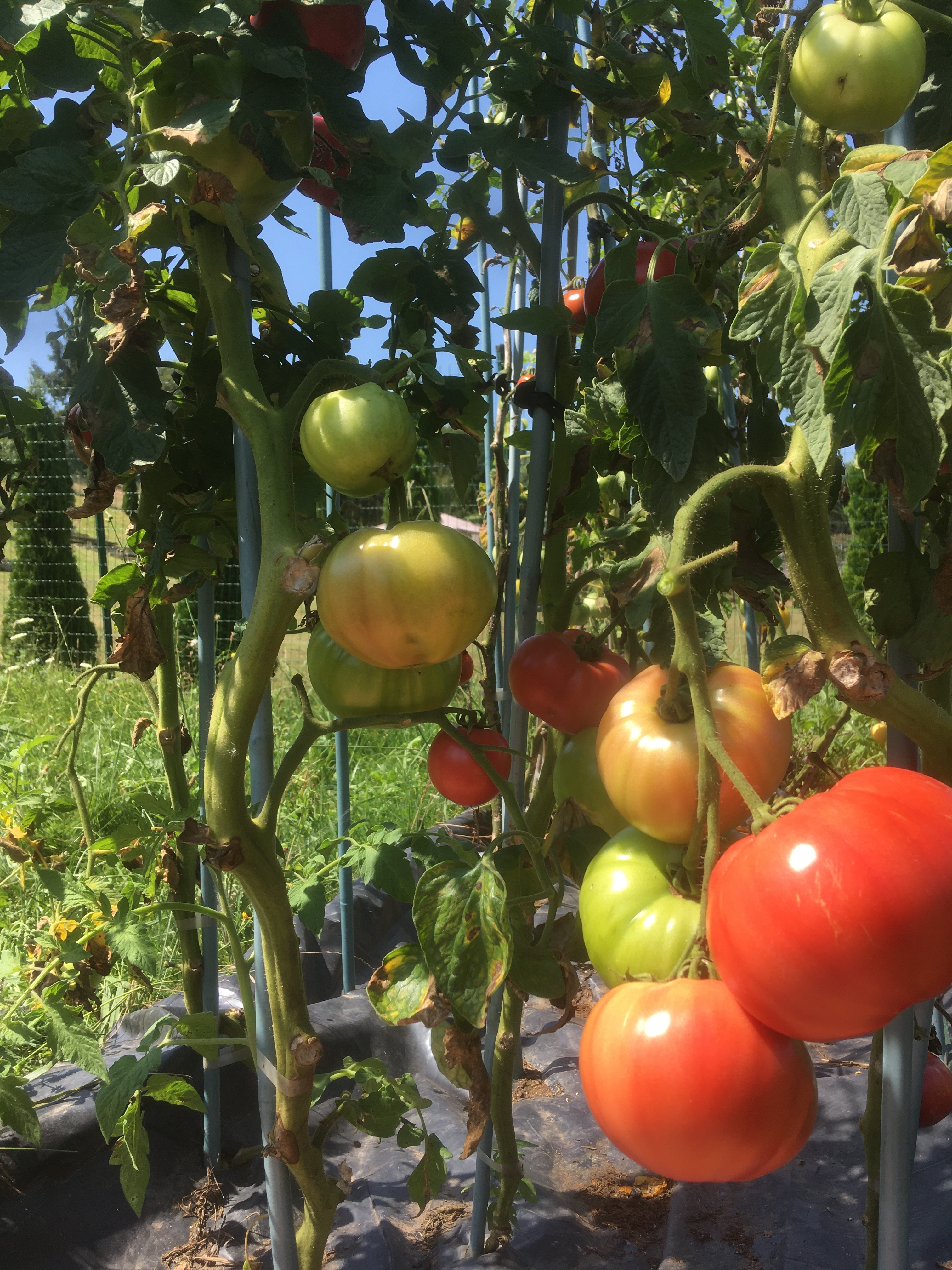
Hi Hugh,
I think you are mixing concepts, that the mutation was not 100 years later or I don’t care if it’s 300 or 3 years, it has nothing to do with whether a hybrid or non-hybrid variety has or doesn’t have resistance in its genes,
It is one thing that the genetics of the fungus has mutated and the mutation is more aggressive,
And another thing is that the genetics of tomatoes are resistant to that mutation,
What I don’t think has happened is that both the fungus and the tomato have mutated at the same time 
In fact, the resistance of hybrids is obtained from a non-hybrid variety, as far as I know, being hybrid does not mean that the genes have been manipulated in the laboratory, they always talk about crosses between two varieties through sexual reproduction,
Or that we have accessed alien technology (exaggerating a little) from a certain year after the fungus will mutate, nor are transgenic techniques used to put our feet back on the ground, they are only crosses by sexual reproduction, then those resistance genes are there from who knows when, to say something they may have been there all their lives or since 1500 BC for example.
Another thing is that in ancient varieties there is no laboratory analysis, so we cannot categorize them even Fol: 1,2,3
In rainy areas, the split or at least micro split is something you have to count on,
To minimize the split, planting in high beds and drip irrigation help a lot to minimize it, the issue is that it has a constant humidity as much as possible.
On my list to plant next year, you may find it interesting:
Best Regards