whats the name of late rust that isnt late yellow rust, I can only find Pucciniastrum americanum. Regardless this lists the same cultivars as resistant, nova, boyne, himbo top
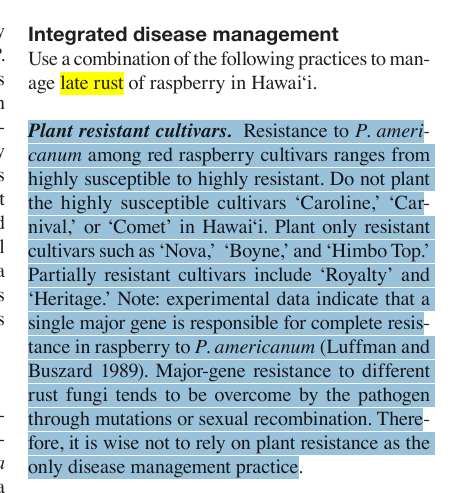
Yes Pucciniastrum americanum is late rust!
Phragmidium rubi-idaei is yellow leaf rust.
But I can’t find what you found in the pdfs… I had just found the exact opposite in the New England guide, “Also, in New England, some floricane fruiting cultivars contract late leaf rust as early as the green fruit stage, resulting in nearly 100% loss of marketable fruit. Festival, Nova, and Heritage cultivars appear to be extremely susceptible to late leaf rust.”
So maybe I’ll just give up and go with @a_Vivaldi 's “guess it needs more airflow” plan!
1 Like
that was from a different one from uhawaii, this was to show the name
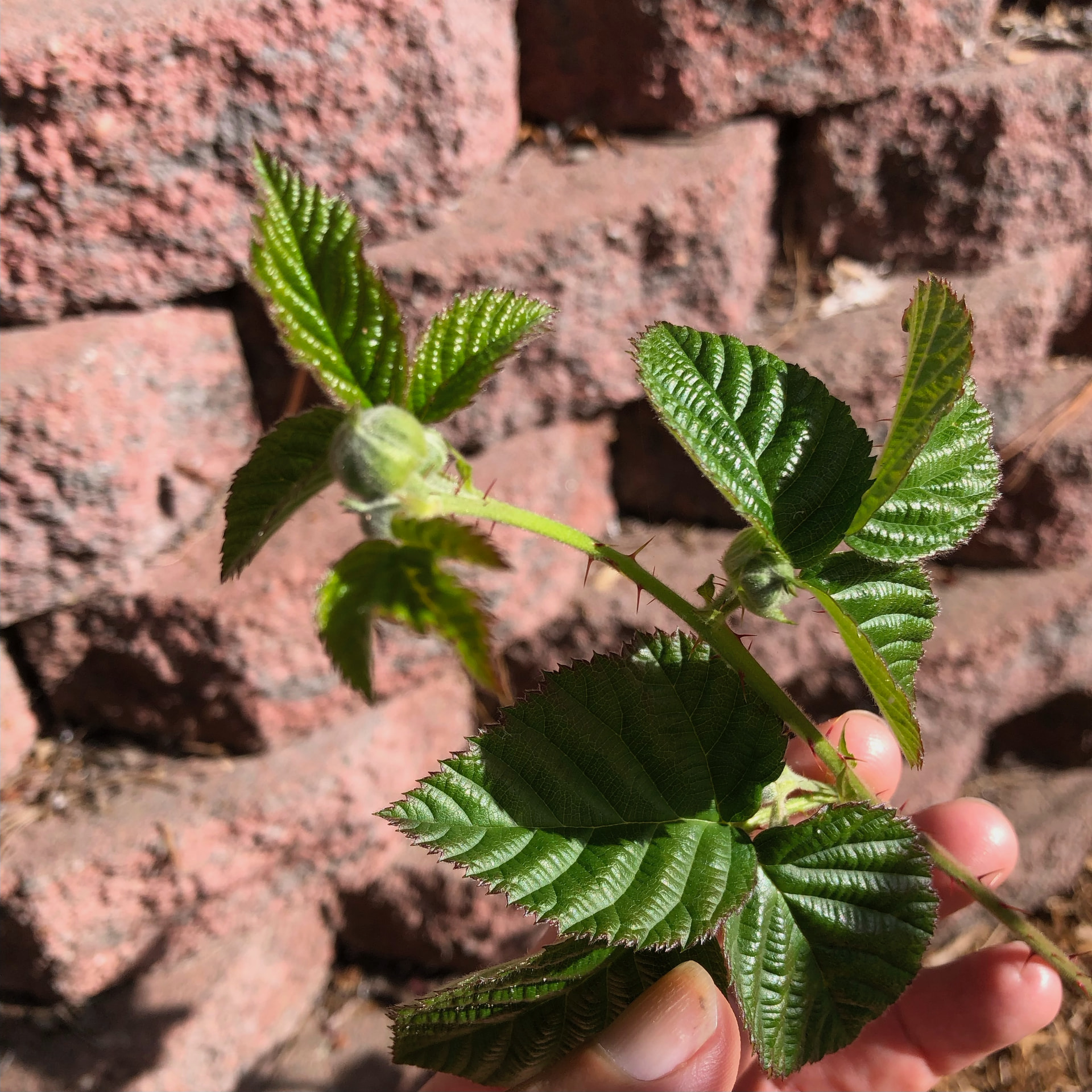
I don’t think it’s yellow rust. I’m pretty sure what took out my plants was late rust.
Well, I was hoping there’d be some resistant cultivars so I could have one plant with no fungal issues… I guess my pawpaw don’t have fungal issues (though now that I’ve mentioned it, they’ll probably get one).
I went outside an hour ago and flipped over all the raspberry leaves and found a couple with some orange stuff underneath - but I’m lucky in that it wasn’t very widespread or on too many plants.
1 Like
Not sure where you read that info.. but Nova is the opposite.. being highly resistant as noted above and various other sources in the northeast.
Early fruiting may have something to do with some of these ailments.. Fruiting and providing primocanes at the same time is very taxing on plants especially with too many canes/crown allowed to fruit while also allowing too many primocanes.
It is not always the cultivars fault for not being able to defend itself..sometimes its management coupled with environment.
The harsher the environment.. i think warrants better management…
YMMV
3 Likes
Absolutely. I was overcrowded, despite heavy winter pruning and pruning of primocanes. I will be much more aggressive next year.
1 Like
I recently bought Nova so I’ll be able to give it a trial by fire.
Despite being extremely cold hardy due to having Boyne as a parent, Nova should be one of the more heat tolerant commonly available varieties because its other parent is Southland which was bred in NC and has R. parvifolius as a great grandparent, with the selection for that line having been made with heat and humidity tolerance and variable winter weather as part of the selection criteria. It’s noted as being fairly tolerant, though still not suited for the deep South.
One of the grandparents of Southland was Mandarin, an old F1 parvifolius hybrid from like the 60s. NCSU restarted their breeding program in the 90s using Mandarin and some then newly released PNW varieties, but to my knowledge nothing was ever released from that program.
I’ve been on the hunt for Mandarin and Southland, but so far no luck. Mandarin in particular would be awesome to get ahold of since it’s more heat tolerant than Southland and supposedly had better tasting berries. Southland had better sized berries, Mandarin had smoll but good berries. I would love to give that I’ve a try, especially since small berry size is something I can tolerate if it makes up for it in other ways.
I doubt I’ll ever get ahold of them though. If they even still exist.
Anyway, for me, Dormanred, which is majority parvifolius, has held up better against foliar diseases than most anything else other than UofArk blackberries and R. niveus (And niveus itself sadly isn’t bulletproof; while basically disease free, does get spider mites in dry weather which I don’t see and of my Rubus have issues with). It still gets stuff, but the leaves hold up way better than any raspberry I’ve seen so far.
Most of the hybrids struggle too to keep healthy leaves, though Newberry has impressed me by having pretty clean leaves.
4 Likes
Cascade pushing out some monster canes as we start to head into the wet season:
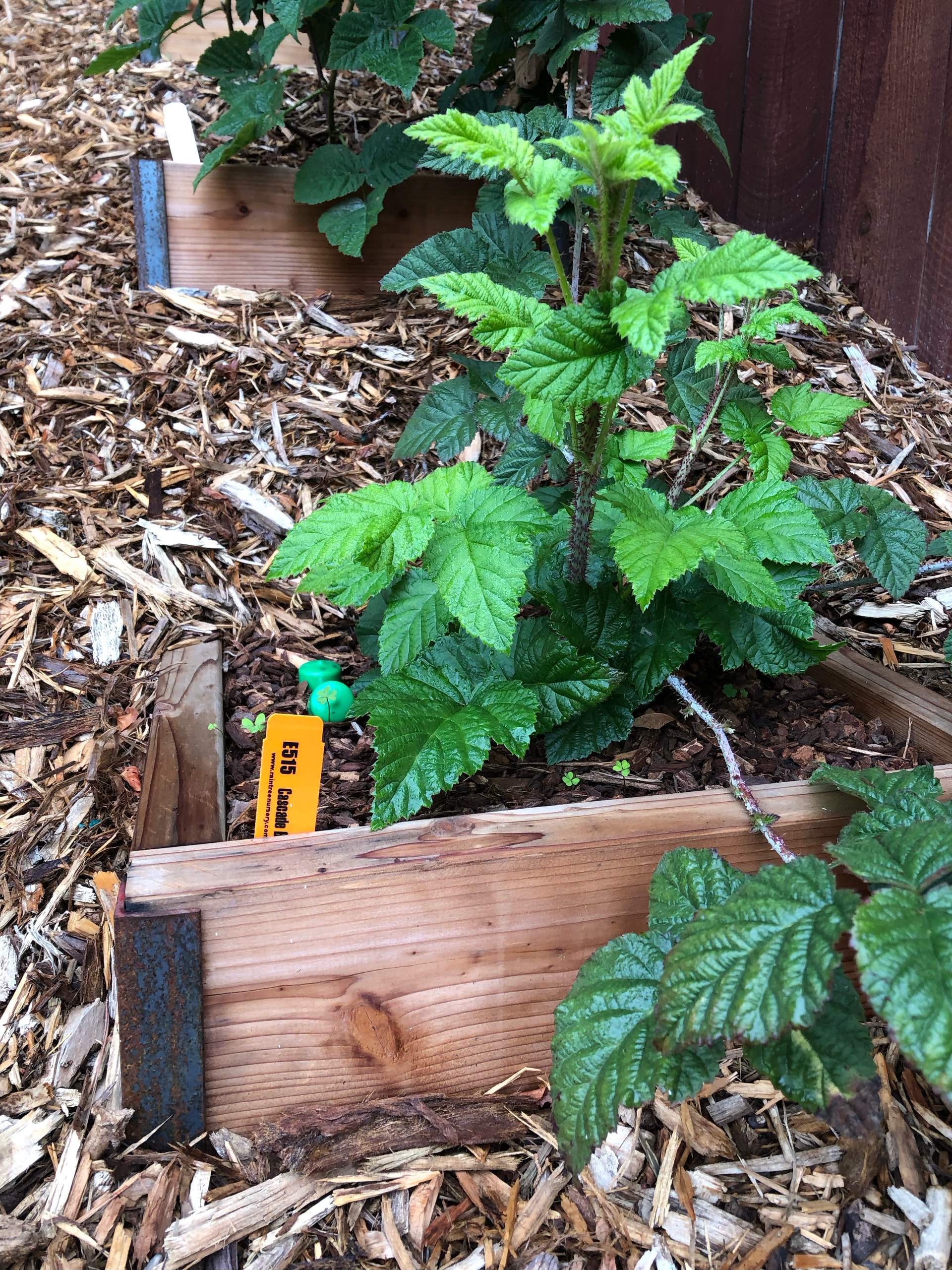
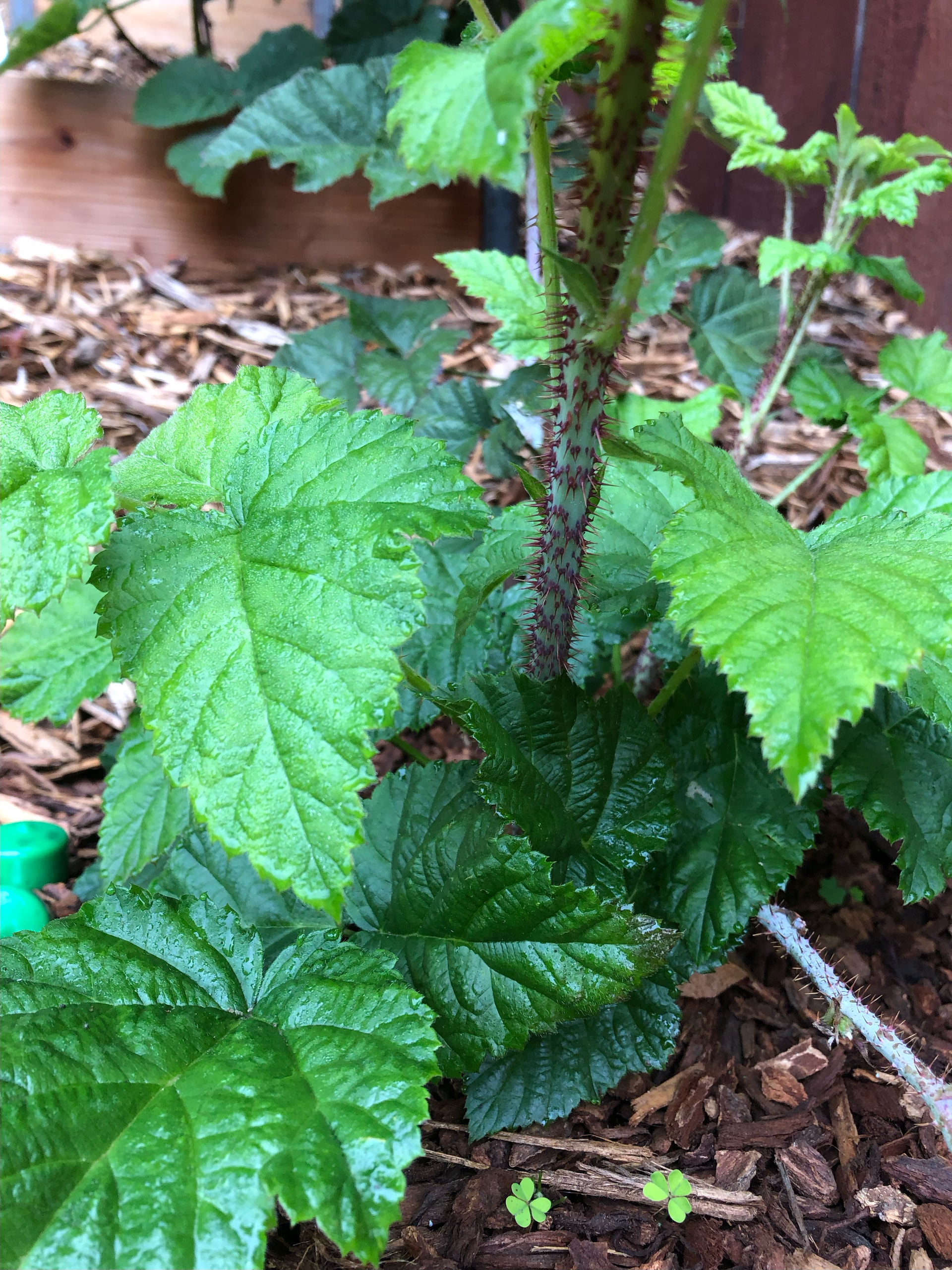
These are easily twice the diameter of the oldest canes on the plant which are already close to 15’ long. It’s a fairly vigorous variety as I planted it in the ground at the beginning of August and the canes were only around a few feet then. No risk of freeze here so I’ll just let them do their thing.
3 Likes
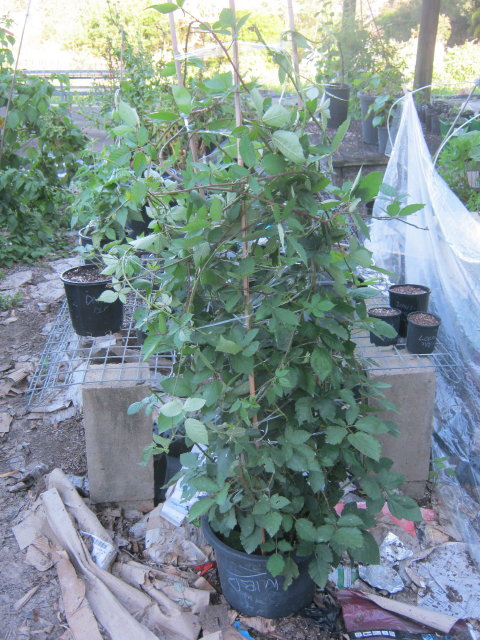
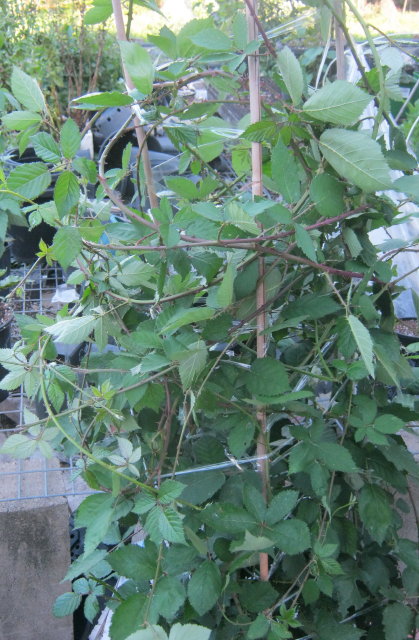
I have 3 wild blackberries trained around 3 bamboo stakes as described on this list by another poster. It is working very well.
4 Likes
Nice. If they’re R. ursinus just make sure they’re not males or else you’re not going to get any fruit. Only way to tell is to wait until they flower.
Ok, Thanks. I am not sure what species they are but I have 3, so if they are R.ursinus, I have a good chance of getting a female.
1 Like