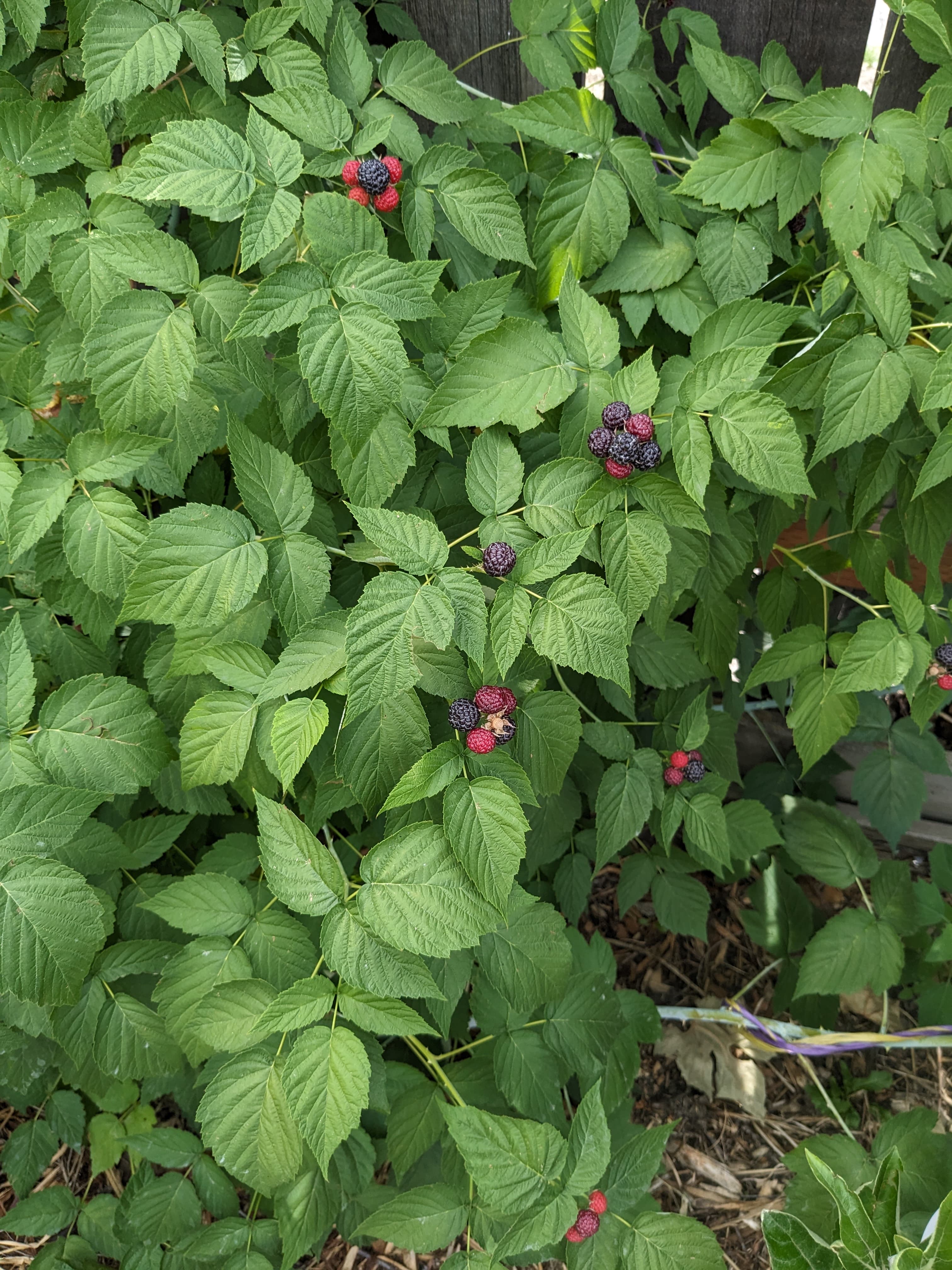
They taste the same by any name, but–
There you go, developed in the Silvan District in Australia. Neither spelling seems to be of any person’s name, so either is fine.
They taste the same by any name, but–
There you go, developed in the Silvan District in Australia. Neither spelling seems to be of any person’s name, so either is fine.
@krismoriah what black raspberry varieties would you recommend for zone 6b?
Im looking for something tasty and really productive
Ok here goes along with some history and nerdy facts… for the public record.
Im gonna say Allen, MacBlack and Munger. (you can end there if u dont want to read my editorial).
Most of the black rasps are wild finds during the early 1900s when people were finding things all over the US and naming them and trying to make a buck. There are several that have been bred though.
Allen - developed by the Geneva Station in the early 1960s - large berries and one of the cold hardiest of the cultivars able to grow in Z4. Its very productive… has excellent disease resistance and very productive…often fruiting longer than than other cultivars.
Mac Black- developed in Canada (some will say Michigan) and not much is known about it except that it produces very tasty berries with some say a hint of purple as it has a bit of red rasp in its lineage. This produces a bit later than the others which extends the season… also offers great cold hardiness.
Munger/Bristol- thought to be a wild find in the 1890s but chosen as a main cultivar for commercial production and still is today in the PNW. Some folks will say that Bristol is the same and some will say that they slightly differ in ripening times. Munger is generally sold in the PNW and Bristol is sold on the East Coast… likely for profit reasons. If you have ever had black raspberry jelly or ice cream or any thing black raspberry flavored from the store or restaurant… most likely it was from Munger that was grown in the PNW and processed to be sold worldwide.
My grasp on the story of Munger vs Bristol is that in the early 1900s there was alot of name changing and things going on for profit…such as the Lavaca Berry vs Boysenberry… I think that Munger and Bristol are the same… Munger was being planted heavily in the PNW and an academic from NY claimed it as a new cultivar for the East Coast in the 1930s and released it from the Geneva Station in NY. Likely Munger was stolen from someone else as well.
OSU did a little study on Bristol, Mac Black and Jewel… you asked for ‘really productive’… Bristol had over 1000 blossoms per plant…
If anyone really wants to nerd out… here is an article from 1899 from the Ohio Agricultural Experiment Station where they got an early look at Munger and said that it seemed very like Gregg Black Rasp… which probably leads further down a rabbit hole that Munger was likely stolen from Gregg…and then later claimed as another name. This was very common during those days however.
Kind of amazing how many names and varieties there were 125 years ago… when we were pioneering cultivars.
Here is a look at all kinds of black rasps, blackberries and other fruits that were being talked about in 1899
I just came in from eating several mouthfuls of wild black raspberries off the canes and now reading this. 
Thank you i really appreciate it. I enjoy reading the history of each variety i find it very interesting how varieties are found
How we’ll do you like Jewel? Is it productive?
Anyone had either bababerry or Mysore raspberry? I’ve got some plants in ground but won’t have any fruit till next year I expect.
Im pulling mine down to 2 plants… i have 4 right now.
Its productive, its a vigorous plant… and the berries are big… i personally think that they are fairly boring for fresh eating and dont have the flavor that the others i listed do. (likely why its not used in commerical production). Its good for pictures and the wow factor though. I recently posted a pic myself. If you were to make a good jelly or jam from them i think you would need to add some sugar and some black raspberry flavoring to make a good product… However if u have never tasted any other berries it would likely be good.
Here is the history if anyone in the future wants to know- it was planted from seed in 1954 and selected in 1957 in Geneva NY and released to the public for home use in the 1970s.
https://ecommons.cornell.edu/bitstream/handle/1813/4819/FLS-035.pdf?sequence=1&isAllowed=y
I put Baba in this year also… I have a mysore on the porch… probably a total waste of money for me… its not doing well. I also have a few growing from seed as its one that grows true to seed and in some places its invasive… i think in Hawaii its an issue.
If your Mysore grows for you…you may as well grow some Himalayan Yellow Raspberry.
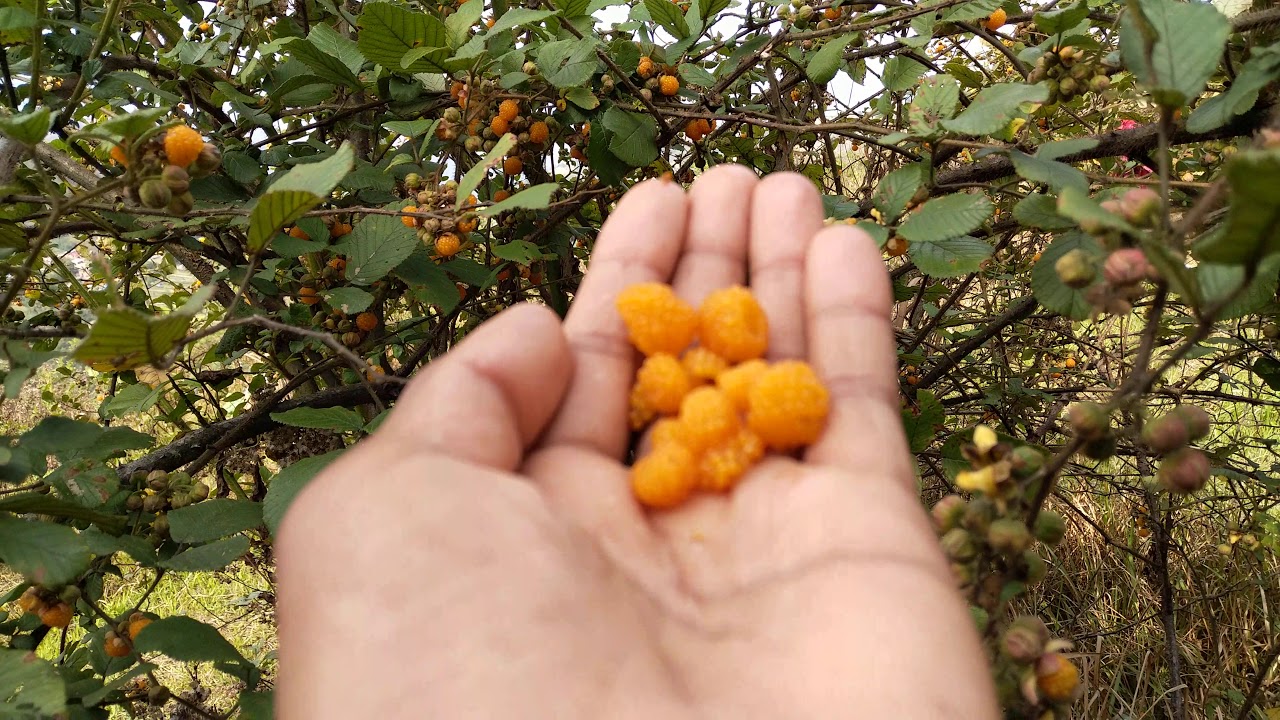
Well, I don’t know yet if mysore will survive my winter, I’ve seen conflicting accounts of hardiness. They grew really well initially, but I was late getting them planted out and they floundered for a month or so. Now that is it really hot though, they look to be doing better and putting on some growth.
The bababerries are going absolutely nuts, I need to get them trellised up pronto before they sprawl too far. So far they have shown no issues, I was worried about our humidity here but it does not seem to phase them and I’ve not seen any fungal issues, which is really good.
Hmm, Himalayan Yellow is one I had written down as worth looking into. I assume it’s a good one? Any idea what the hardiness is on it?
My take is that Mysore isnt worth growing unless you live in Florida/Southern California/ Southern TX/AZ etc where it has become popular due to its ability to grow there. It is (invasive) so due to recent popularity i think it will be talked more about in years to come.
Himalayan yellow is even worse… so lets keep that on the list of invasives also. Its been awhile since i saw the photo but i remember seeing one with Luther Burbank and the bush was like 20 feet tall and probably double that size wide.
By your saying the word ‘winter’ likely puts you in a category of folks that shouldnt grow these tropical berries with high hopes… you may get lucky some years and other years it will die to the ground.
There are much better black rasps, yellow rasps and blackberries for folks that dont live in tropical climates… and very few that are available for folks that are.
If you live in the extreme warmer climates of the US there are lots of berries that you can grow… or if you are breeder and want to make your own crosses you can grow them and go from there. This guy sells all of those Rubus and other seeds… i have bought from them and they are legit.
Out here in eastern NC, it’s kinda the worst of both worlds. Summers are really hot, really humid, and the pest pressure can get absolutely insane, especially after milder winters, with lows that are sometimes just zone 9, but it is also totally possible for us to get smacked with a 5 F winter, or frosts after a week of 80 F weather in the spring or fall.
Most traditional fruits and berries are a losing proposition here, especially the standard varieties. Blackberries are usually are pretty solid, but I’ve never seen a raspberry live more than a few years, hence my interest in these more tropical ones.
Cascade Delight, Gold and Harvest are Z6-9 and for folks in warmer climates… whereas there are plenty of rasps for folks in colder climates.
Those are not popular on the East Coast… but should be for folks in southern climates.
As noted in this study…Cascade Delight is not cold hardy…it is however heat tolerant…and one of the most disease resistant varieties.
i think it was jung or park seed i got my cascade gold. its been hardy here since 20’ and survived above snow to -40. i had to move it this year because root rot was starting to kill it. now its on a hill so hopefully will bounce back. the fruit are even better than fall gold and its floorcane fruiting so ill get a whole crop instead of half from fall gold. berries are good sized as well.
Good intel… thats what im saying is that some of these fruits get a bad rap due to lack of intel on growing zones. I have my cascade series in a mound about 1 foot tall… pretty easy to do.
PNW guide says that Cascade Gold is not cold hardy…i think you and Drew have proved that wrong.
who ever i bought it from said it was z4 hardy otherwise i wouldn’t have invested in it.
I have not tried a variety of black raspberries, but have grown Jewel here for 25 years and it has always been as boldly flavorful as the black-caps I ate as a kid. For those who do not like a seedy berry they are best made into juice and then used for flavoring or thickening to a sauce for toppings.
Months after planting Jewel along with the Lowes or Home Depot matched purple raspberry it was paired with (though actually 75’ away and tucked in closer to the house as it turns out, and the other red raspberries planted near it didn’t make it) I read that black raspberries shouldn’t be planted near other types and can spread virus to them more easily. Anyone here ‘breaking’ this rule? Believe it? Should I tear out my Jewel? Doing pretty well along with 1 other- Royalty- and with two others- Caroline and another Royalty- struggling along near the thriving Royalty. (My clay yard is giving them too wet feet I think.) Thanks for advice!
royalty doesnt like my clay either. plant it in a mound of well draining potting soil then mulch to hold soil in place. i have black rasps. near my reds for years with no issues but im in alot colder area than you.
is there a good native blackberry with bigger fruit? I’m inland, west of the Rockies and it’s dry heat all summer. my black raspberries do really well here despite the extremes (winter can be very cold) but all I see for sale are the Himalayan, which can get pretty aggressive here and I don’t want to be fussing with them and cutting them back that much
I don’t know what kind mine are- they were a gift of two crowns with no label.