My attempt to grow them is still iffeeeee. My small plants are still green.
An explosion of new growth this spring will be most welcome.
1 Like
Do you propagate your own Rabbit eye plants?, or do you buy the plants than graft them?
1 Like
Grafting sounds interesting.
However, when all else fails to crop, I get some blueberries every year, even though I mostly neglect them except for supplemental watering in drought.
Wet feet are the killer of most blueberries. And there are a few cultivars that seem ok with that even. Drought stunts them and extended drought can kill them.
Organic matter and low pH are desirable.
But, I am able to grow blueberries in 6 to 6.5 pH. Highbush.
And I’m beginning to get a collection of Rabbiteye bushes too…and plan to see if they won’t
do ok at 6.5 pH. (If not, I’ll add sulphur…and something like Hollytone).
1 Like
I generally have all the volunteer rabbiteye runners I (and some neighbors and friends) want, so I generally just exploit volunteers rather than propagating them, but I have also layered rabbiteyes, and that seems to be pretty reliable, and doesn’t require any of the special set-up or attention that rooting cuttings requires, so if I wanted to propagate a slightly larger number of plants, that’s probably what I’d do.
As far as rootstock for grafting, the main reason I’m interested in grafting is just to have some blueberries for my own family to eat fresh before the first rabbiteyes come in. If I combine that with some interest in experimenting with highbush varieties that other people have especially praised, I still probably don’t need even a dozen plants, because I’m very happy with rabbiteyes once they start ripening and for freezing and for selling to my farmers market customers. Grafting might also make sense for market production, but I don’t think I’m personally interested in extending the chore of picking market quantities of blueberries over any longer season than I already have, so I haven’t had much reason to consider how to propagate larger numbers of rootstocks. For my purposes, what seems best for rootstock is some kind of wild vaccinium – I have no idea what species it is – that grows in my woods, mostly in pretty heavy shade, and tends to produce wiry, more or less single stemmed plants that will typically have 4-5’ of stem before the first branching. I have other types of wild blueberries, too, but the type that seems to grow more like a very small tree seems best for grafting. It seems similar to farkleberry (aka sparkleberry) except that I think I might be outside of the native range of farkleberry, and I’m inclined to think that the species I’m using for rootstock doesn’t have the size potential that farkleberry apparently does (up to 20+’ tall and over 12" in diameter) – I’ve certainly never seen any wild blueberries anywhere close to that size. So I’m guessing what I’ve used for rootstock is some other species. The northwestern 2/3 of Arkansas seems to be in the native range for sparkleberry. I don’t know what part of Arkansas you live in, but maybe it grows native in your woods?
1 Like
Many thanks, helps to go with your advise if mine fails to grow. I live in the north/ west part of the state, 7a.
Hartmann’s Plant Company and Finch Blueberry Nursery both carry Blue Gold, and
in fact have the largest selections nationally for retail customers, and probably at any level.
Right plant for the right spot. I never intended to say Blue Gold or Sunshine Blue are the best blueberry plants. But, they, along with Patriot, many of the rabbiteyes and several of the southern highbush (crossed to rabbiteyes), tolerate slightly acidic soils better than many other highbush typically raised in Michigan or the Northeast.
I think there’s enough variations in blueberries that ‘one size fits all’ advice sometimes
can be discouraging or unhelpful, seeing there is such a diverse number of offerings, and some are not as picky as others about growing conditions.
But, I don’t have a full knowlege of the subject, for sure. Just more than a beginner.
3 Likes
Have to agree. All of the standard varieties have went down in flames for me, but the hybrids have done pretty well. Your right if you look there is one for everybody.
2 Likes
After several years, I am dialing back on growing blueberries. It is supposed to be prime blueberry country here but I am tiring of the chore of maintaining them through our dry summer. atleast half will get ripped out and replaced by more robust fruiting bushes.
1 Like
Blueberries grow well for me here in TN zone 7a
my soil is decent for 3-4 inches then heavy sticky rocky red clay… ph normally 5.5 range.
I break up about a 8 ft wide strip… 3-4 inches deep and then rake it up into a borderless raised bed.
I add to that bales of peat… till it in… ending up with about a 50/50 mix of my native (good soil layer and peat moss) it has worked well for me.
I have Rabbit eye varieties planted… Climax, Tifblue, Powderblue, Brightwell… and plan to add Yadkin at some point.
Definitely worth growing IMO - will need some bird protection… especially if you only have a few bushes… I have bagged, and used the streaming bird flash tape… and have done some netting too.
Once your bushes get larger and start producing LOTS of berries… birds seem to be less of a problem. Especially if you have several 10-20 bushes producing berries. I think there is a point where the birds and you get all you want. That may never happen if you only have 2 or 3 bushes.
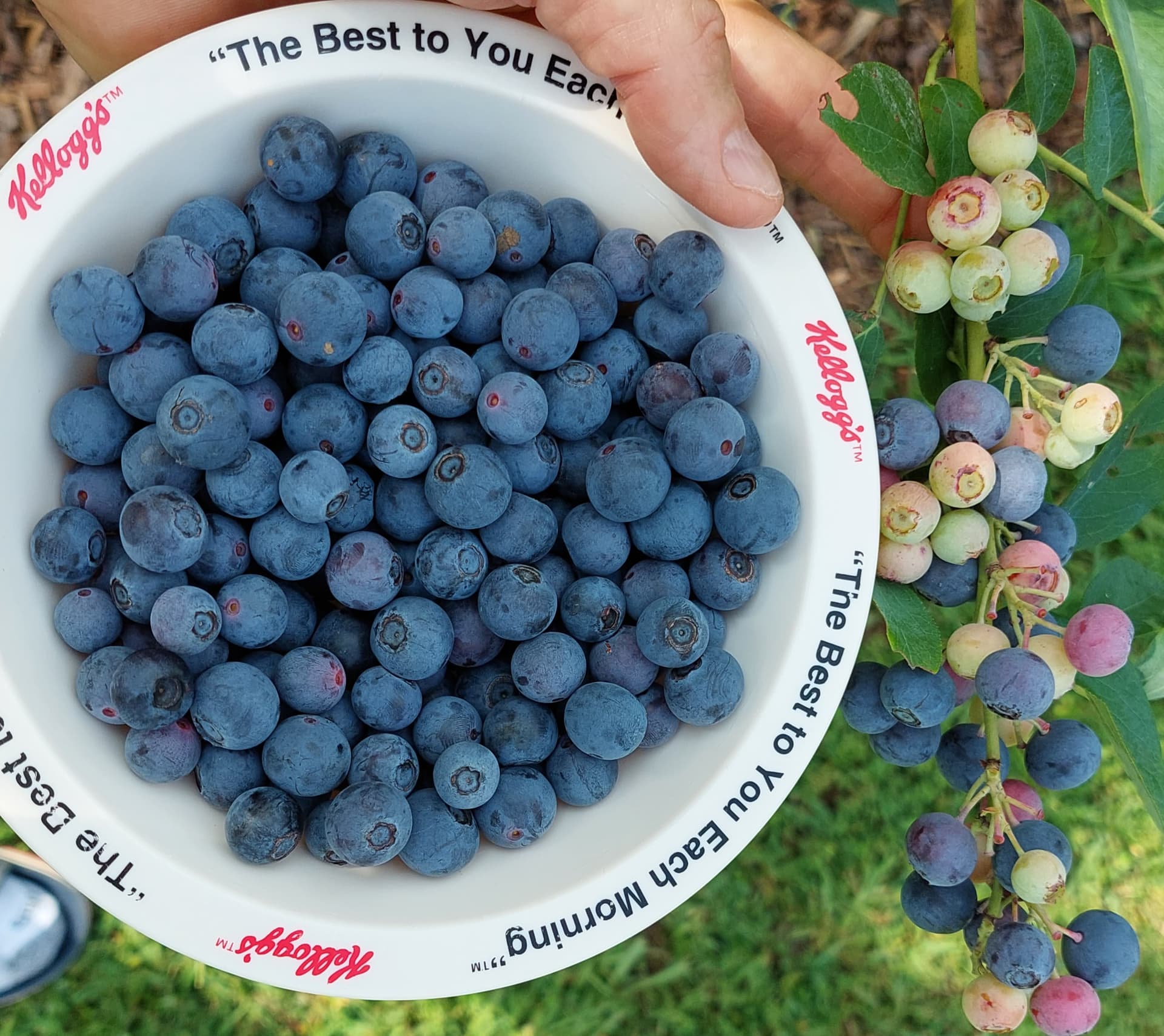
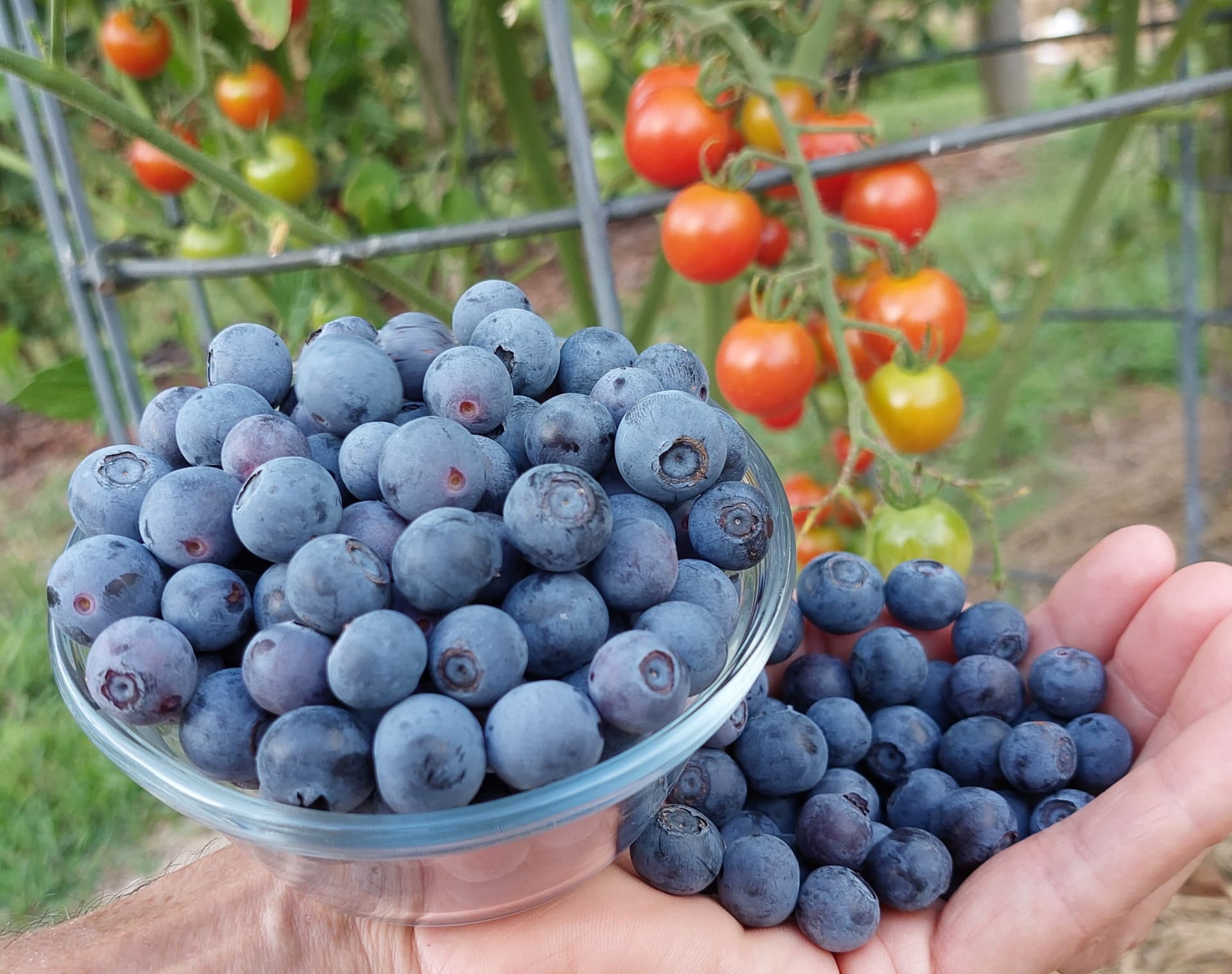
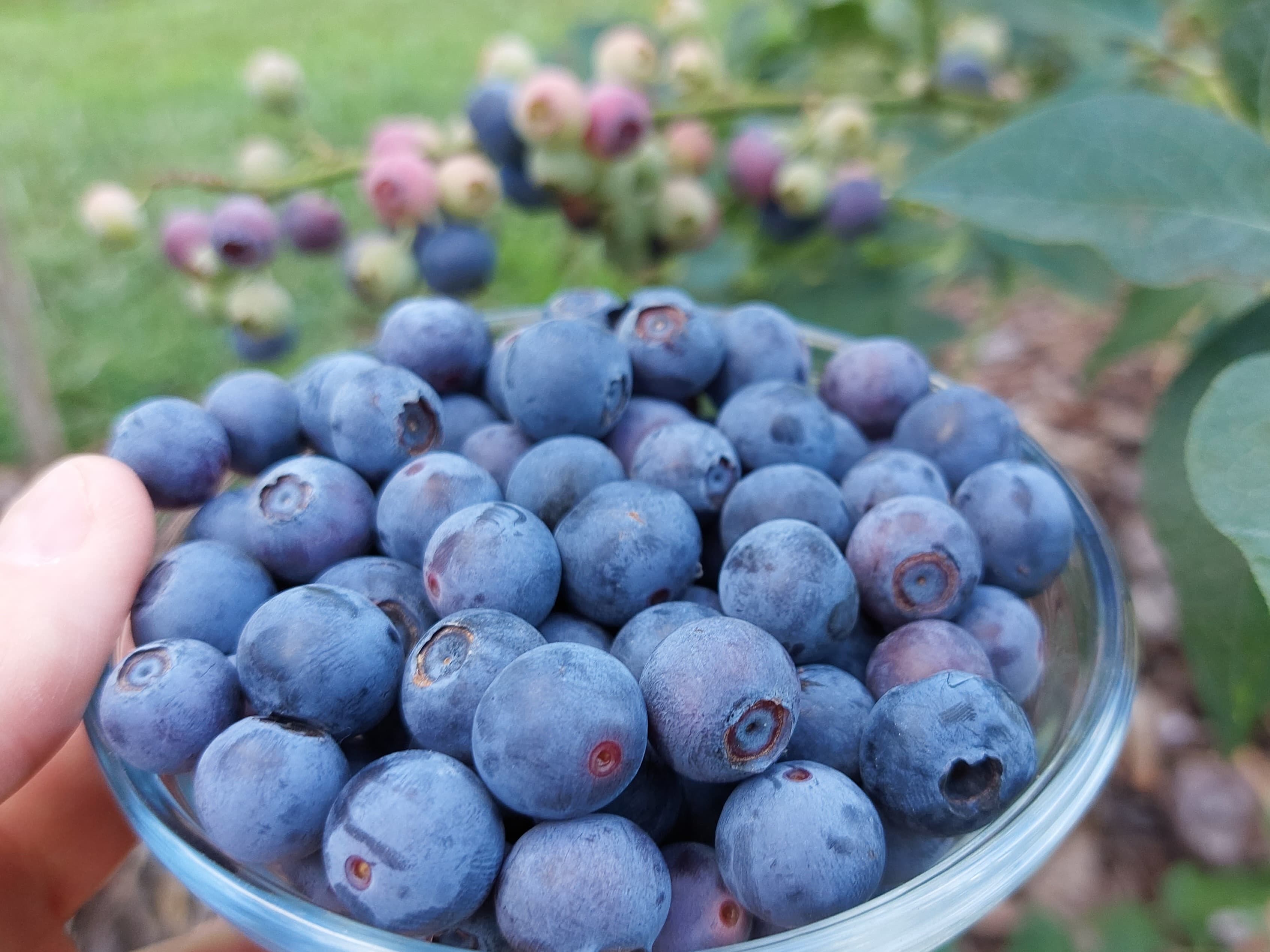
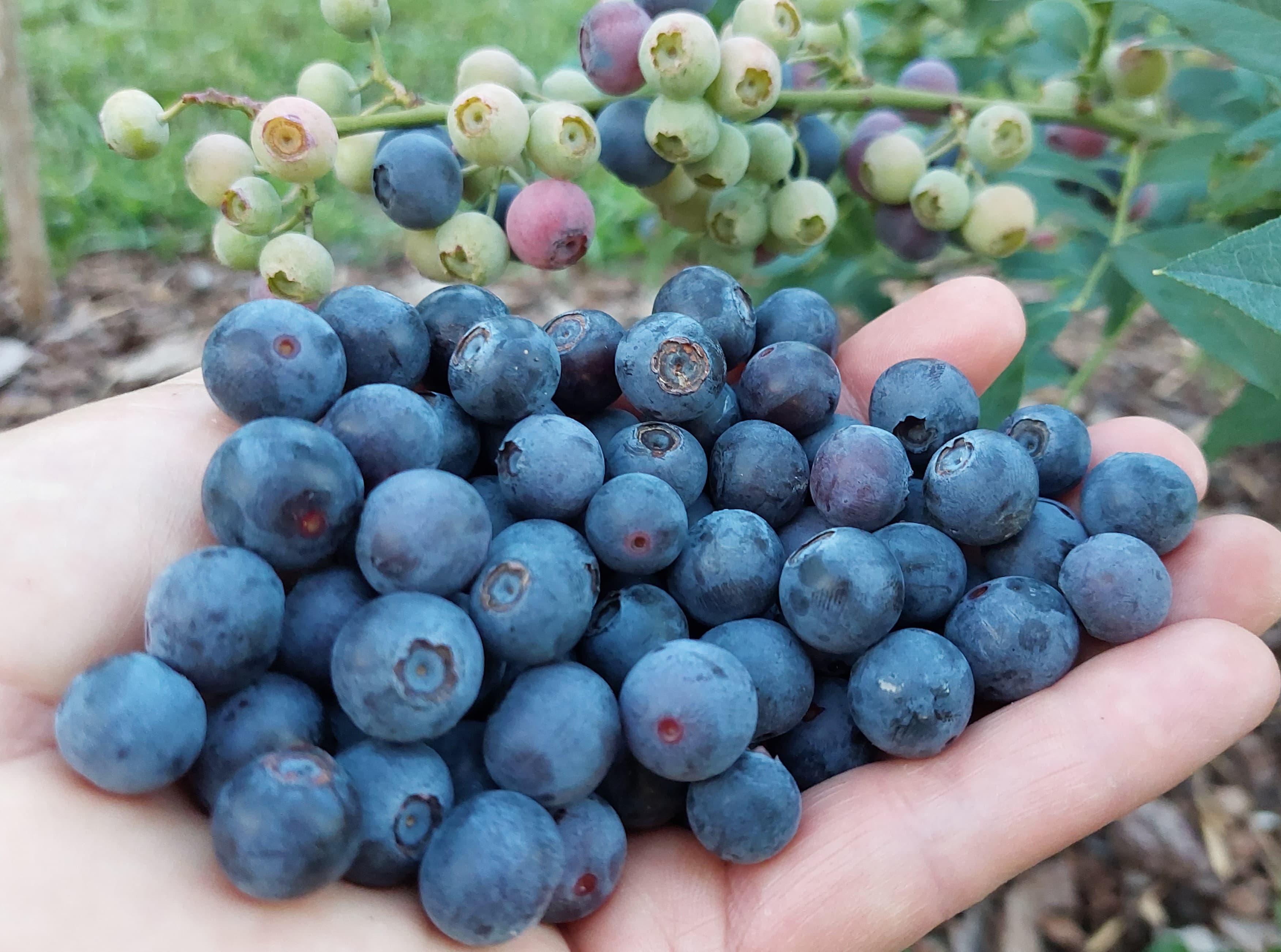
6 Likes
My 2 cents: You can grow blueberries and they are “worth it.” But there is work involved if you want the plants to succeed and if you want to eat what they produce.
Here’s my story – I decided last year to plant a bed this (past) spring. I ordered the plants last winter.
My soil is somewhat acidic but not ideal and my location is generally damp but seasonally dry. I decided to help on both fronts by mixing peat moss into the soil. So, I dug out the topsoil then replaced it while adding the peat moss. I’d throw in a layer of soil then throw in a layer of peat. Every so often, I’d mix it with a pitchfork. As I recall, I also added leaf compost – the more organic matter the better. it’s important to mix the peat well because otherwise it can repell water. I didn’t pre-wet the peat moss but that is advised.
Also I added a sulfur-based fertilizer that tends to lower pH. The same kind of stuff you’d use on rhododendrons and azaleas.
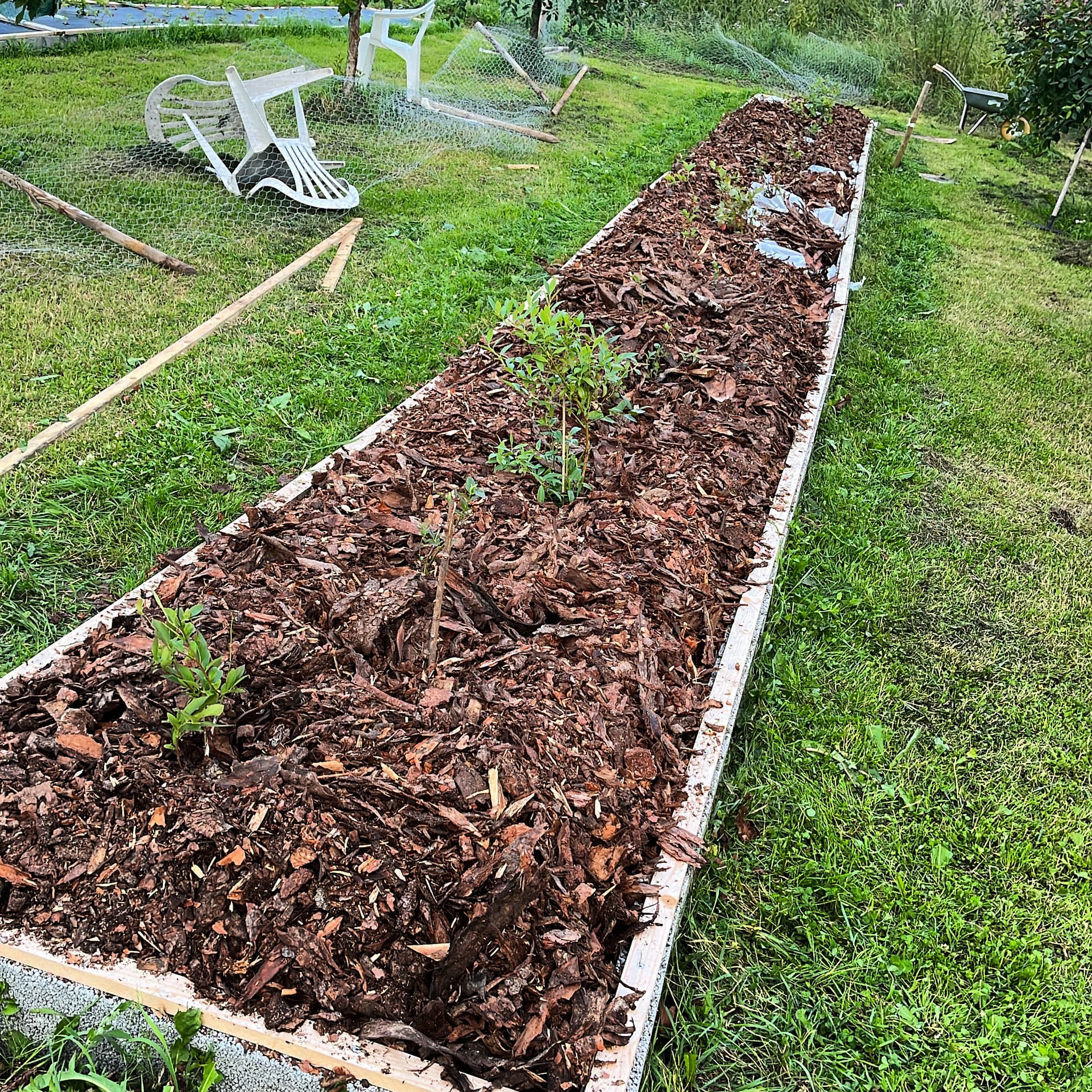
Then I planted the tiny bushes. Then I covered the ground with a layer off wood chips to retain moisture. Coincidentally, we had a severe drought from mid June to late August, so I watered the plants roughly every week.
The bushes have been kicking ass. Plants that were 6-8" in April are 2’ x 2’ now. Going forward, I think I’ll only have to (1) add occasional fertilizer, (2) periodically refresh the chips as mulch, and (3) water only during dry spells.
Re pests:
-
Birds are a problem that must be faced. I intend to build a frame and cover the bushes with a net that can be easily raised / lowered. The net must extend to the ground. I know from experience at another location that otherwise birds will get the whole harvest. Catbirds are the worst.
-
Mammals are a threat too, mainly deer and rabbits. Thankfully, I already have a surrounding 7.5’ deer fence with a tighter-mesh chicken wire around the base for rabbits, etc. Without these fences, deer and rabbits would eat the foliage. Before I added the chicken wire, I was losing all the lower shoots to rabbits.
I suppose that good nets would keep out both birds and mammals. So maybe the fences would be redundant if I already had the nets. The main advantage of the fences is that I will need the nets only during the harvest.
Obviously this was/is all a lot of work. But I figured that the soil prep was a one-time effort. Now the bushes will be well situated for 20 years or more. In this location, the deer fence is also required. I had erected it last year to protect apple trees. You might get away without the lower rabbit fence but it really is nice to walk into the garden and NOT see damage.
2 Likes
The right type of Blueberries grow almost like weeds with very little attention in some areas but may also grow well with a lot of attention in many other areas.
In my area they require much less attention than Apples or Peaches and slightly less than Blackberries. We let an acre of mature rabbiteye blueberries sit for about 10 years with no water, no fertilizer and no pruning. Only lost several plants out of 700 during the entire time.
Interesting that large growers are producing amazing Blueberry yields (over 25K pounds per acre) in portions of Washington state where you would not expect Blueberries to thrive.
Native “Blueberry Soil” like that found in the Pine Barrens area of NJ or southeast NC provide the perfect soil for growing Blueberries but the growers there can not produce anywhere close to 25K pound/acre.
One of the biggest difficulties with growing Blueberries is starting with plants that are well suited to your area. Most nurseries do not have a clue and are happy to sell you what they have in stock. I recently saw two large local nurseries promoting and selling NHB for my area. Really dumb since NC State has produced research showing that NHB are not well suited to this area for over 40 years!
6 Likes
I suspect that advice applies to most of NC. But, Franklin, Canton, Mars Hill, Boone?
Probably NHB can do fine. Though I have not tried.
Excellent commentary. As usual. Thanks.
I’ve planted about 25 bushes this summer, haven’t tried them before. Dug out the top soil, old newspapers and cardboard in the bottom, then a layer of old/rotten wood, branches from raspberries and a little this and that. Topped it all with rhododendron soil, planted the blueberries and then a layer of newspapers and mulch on top of them. Newspapers and mulch to keep weed and grass away but also for lowering ph. Interesting to see how many will live this spring, -25 Celsius is common here.
chandler
Pink champagne
(2-3 of each)
North blue
Duke
northsky
patriot
sunshine blue
spartan
bonifacy
bonus
Dixie
Darrow
Bluejay
Herbert
3 Likes
The research splits the state of NC into 3 portions, Costal, Piedmont and Mountains and shows the proper type for each. In the Piedmont portion where I live Rabbiteye is suggeted with SHB listed as “maybe” and NHB listed a no.
I believe they suggest NHB for the mountain areas above 2000 feet.
2 Likes
Question for blueberry growers…
Is spring or fall planting best? Or does it matter?
This Jersey in my special mix wants to go. My other ones are growing hard and fast in pots… wondering if i should let the roots grow in pots instead?

I do not exactly have decades of experience and am the owner of a mere 7 bushes. I have done both spring and fall planting and can’t say that I have seen a big difference. My biggest issue is that sinceI am lazy / impatient and do not acidify my soil with sulfur a year ahead of time all of my bushes have shown significant chlorosis the first year. (I treat this with chelated iron sprays.) Even the spring-planted bush for which I prepped the soil in fall exhibited this behavior. I presume it was because the bacteria which convert the elemental sulfur to acid are not so active over the winter and one requires an actual summer of warm soil temperatures to do this.
1 Like
I didn’t read the whole thread, so FWIW . . . .
High bush blueberries grow wild around here – it’s New England, after all – so I figured blueberries would do OK if I gave them half a chance. IMO, that meant decent sun and damp soil with a low pH. So I figured I’d invest a lot of work at the start, then just let 'em rip.
I picked a spot in full sun at the base of a hill, where it is naturally damp. I dug out a long trench, setting aside the topsoil. Then I threw peat moss in the trench. Then soil. Then peat. And so on . . . Then I made a half-assed attempt to further mix it up with a spade. I also added handsful of an acid-promoting (sulphur containing) fertilizer. Finally I planted 2 plants each of 9 varieties selected for excellent dessert quality and a range of ripening.
That was two years ago. Over the last two summers, the berry plants have grown like crazy. All I did was water from time to time. This year I hope to build a cover with netting to keep out birds. The location is already fenced to keep out deer and rabbits.
I totally believe that blueberries are worth it. This year’s harvest may begin to show it.
2 Likes
A local U-Pick farm is selling some ‘Collins’ blueberry plants along with others.
I did a search on here and on the net an not much if any info on them…zero on FB.
Cant buy it online as far as i can tell… the sites that had it say out of stock.
Worth getting for the rarity? or is it rare because its likely not good?
extension.psu.edu/blueberry-variety-selection-in-the-home-fruit-planting
Collins
Bush is vigorous and upright but susceptible to winter injury. Fruit is large, firm, light blue, and has very good flavor. Plants do not adapt well to “non-blueberry soils", and tends not to send up new canes. An older variety that had been widely-planted but now is difficult to source
- Ripens early- to mid-season
- Plants are vigorous, semi-upright
- Productive
- Fruit are large, light blue
- Good flavor
- Good picking scar
It looks like a perfectly good blueberry variety
1 Like