My husband had gout pretty bad, i force him to eat a small handful of dried montmorency cherries or a half cup of juice daily. Miracle. He went from barely hobbling to walking with an almost imperceptable tick tock and no pain or swelling. Might look into it for arthritis.
5 Likes
my wife has connective tissue disorder and my sour cherry juice works wonders for her pain where meds rarely help. she doesn’t care for cherries so it’s a fight to get her to drink enough. its helped with my gout as well.
5 Likes
Phoenicia might be resistant to the fungus? I.e. just gets a smattering of black spots under the same disease pressure instead of rotting the whole way through. Was the fungus anthracnose or black heart something (I forget the name) or something else?
Is it the only very tart variety you grow?
2 Likes
Will answer you tomorrow . . . tonight, I’m On A Mission ! Till then . . .
1 Like
I think that you must be right -
“Phoenicia might be resistant to the fungus”.
This is probably T.M.I. - but here goes.
My Phoenicia tree is surrounded by many other varieties that lose almost all their fruit to what appears to be:
Bacterial Blight
Symptoms on fruits start with water-soaked lesions on the fruit surface that later turn to dark brown spots. Cracks form on necrotic fruit spots and fruit splits. Fruit infection is restricted to the rind and the internal part, according to most literature. And in mine - the rind that is directly over the rotted interior parts - are leathery, and hard and dry. Very difficult to cut through.
I tried to find photos, online, of the interior rot that ruins most of my fruit.
It doesn’t look like heart rot, which is described as " Pomegranate fruit rot disease, known as “heart rot” or “black heart,” is a major pomegranate disease that impacts production worldwide . Heart rot is characterized by black rot of the fruit core that spreads from the calyx area, whereas the outer peel and the hard rind retain their healthy appearance.
My fruit always has damage on the exterior - and some of the interior is soft, brown, mush. The entire interior is not always infected by the disease - or perhaps the culprit has not had sufficient time to spread to all the arils.
And - the diseased areas seem to develop from the outside - IN. The mushy parts are always next to the rind. This does not appear to be heart or black rot.
I do think that this is one of ‘my’ problems. -
A fungal issue called Cercospora fruit spot, which will not only cause black rotted spots on the outside of fruit but also compressed black areas on twigs and defoliation.
I don’t have much defoliation? But do have shriveled dark twigs.
And, some of my fruit looks like this one - but most like my first description.
And in answer to your “is Phoenicia the only very tart variety” in my orchard?"
The answer to that question is hard to pin down. Many of the ones I grow have a combo taste. So far, none are simply SWEET. And none are completely TART.
I can tell you that Wonderful is more tart than Granada - and ripens a little later. Nikitski Ranni is absolutely beautiful - bright red - until the disease appears. Very few of those (if any) make it to fully ripe. But the few I have gotten to try, taste fairly sweet - in comparison to Wonderful. Still a good mix of tart and sweet. Hotuni Zigar and Kai Acid Anor have both produced a few nice pomegranates . . . but most get diseased and drop. The few of those that I’ve tasted - are very nice. Also a combination of sweet and sour.
I was hopeful about Salavatski and Afghanski - both cold hardy. But - they rot very easily!
And, of course, when any of the varieties’ fruits are picked earlier or later than they were the year before . . . that will affect how tart ‘we’ think they really are. One year I had quite a few nice Granadas that I ‘stored’ on the tree until December. As I picked them - the taste was noticeably sweeter! Unfortunately, with most of the varieties, if I left the fruit on the trees . . . they would continue to rot.
The descriptions of Phoenicia vary. It becomes quite baffling! And these ‘official’ photos show a very different looking fruit than those on my Phoenicia. !!!
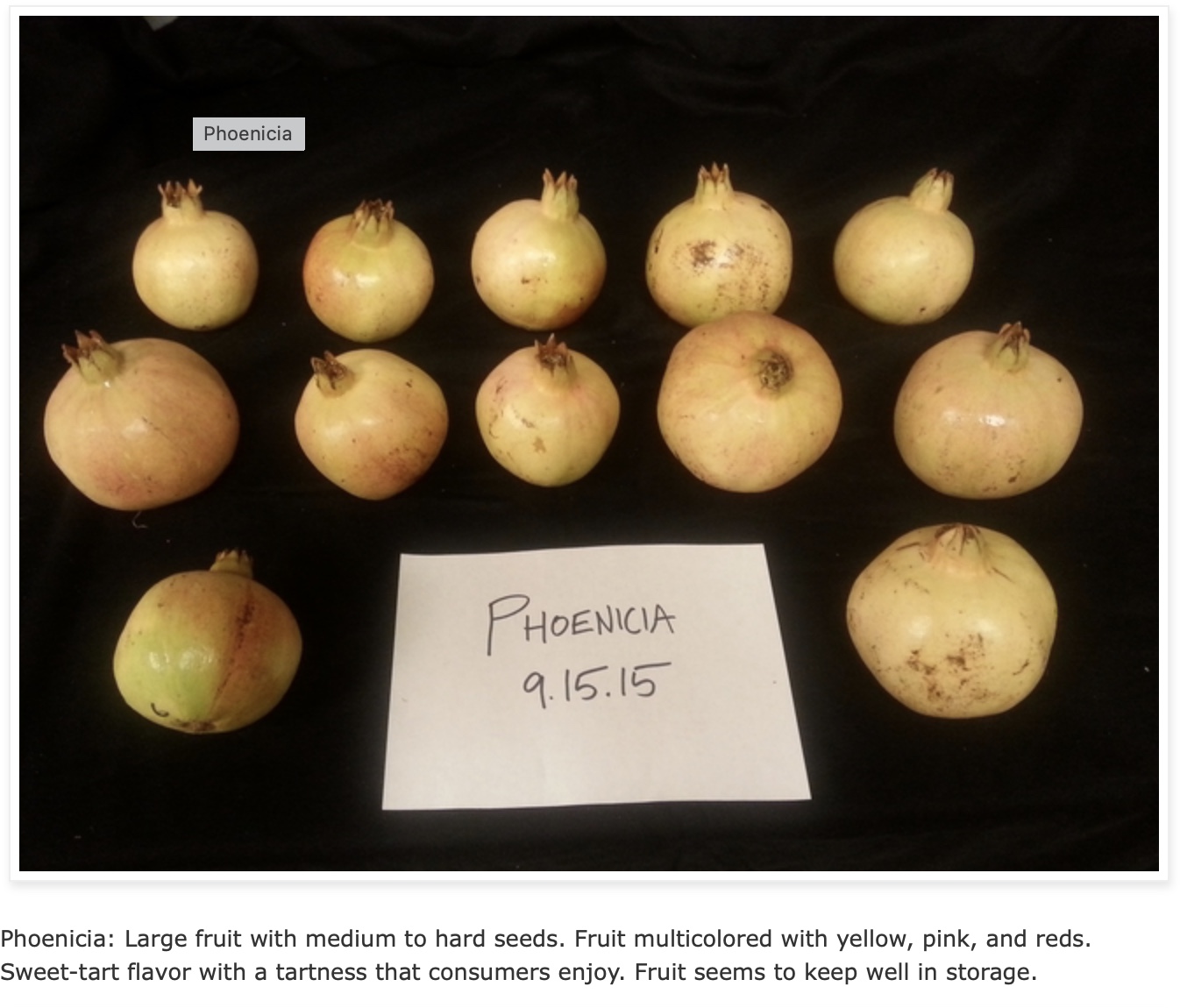
My Phoenicias are not light-colored like the ones in the photo. They have a rather green/brown under-color. Thick rind. The taste is sweet-tart but heavy on the ‘tart’. And many other descriptions describe the arils as being multi-colored, and quite sweet . . . while mine are all red and ‘no way’ are they quite sweet!
P.S. - If the tree I ordered and received was labeled incorrectly, it won’t be the first time that this has happened to me. Some of my pears do not seem to resemble others’ descriptions. After awhile - I just try to enjoy whatever varieties appear on my trees - and let go of trying to figure out ‘who has the real Phoenicia pom - or Moonglow pear’.
2 Likes
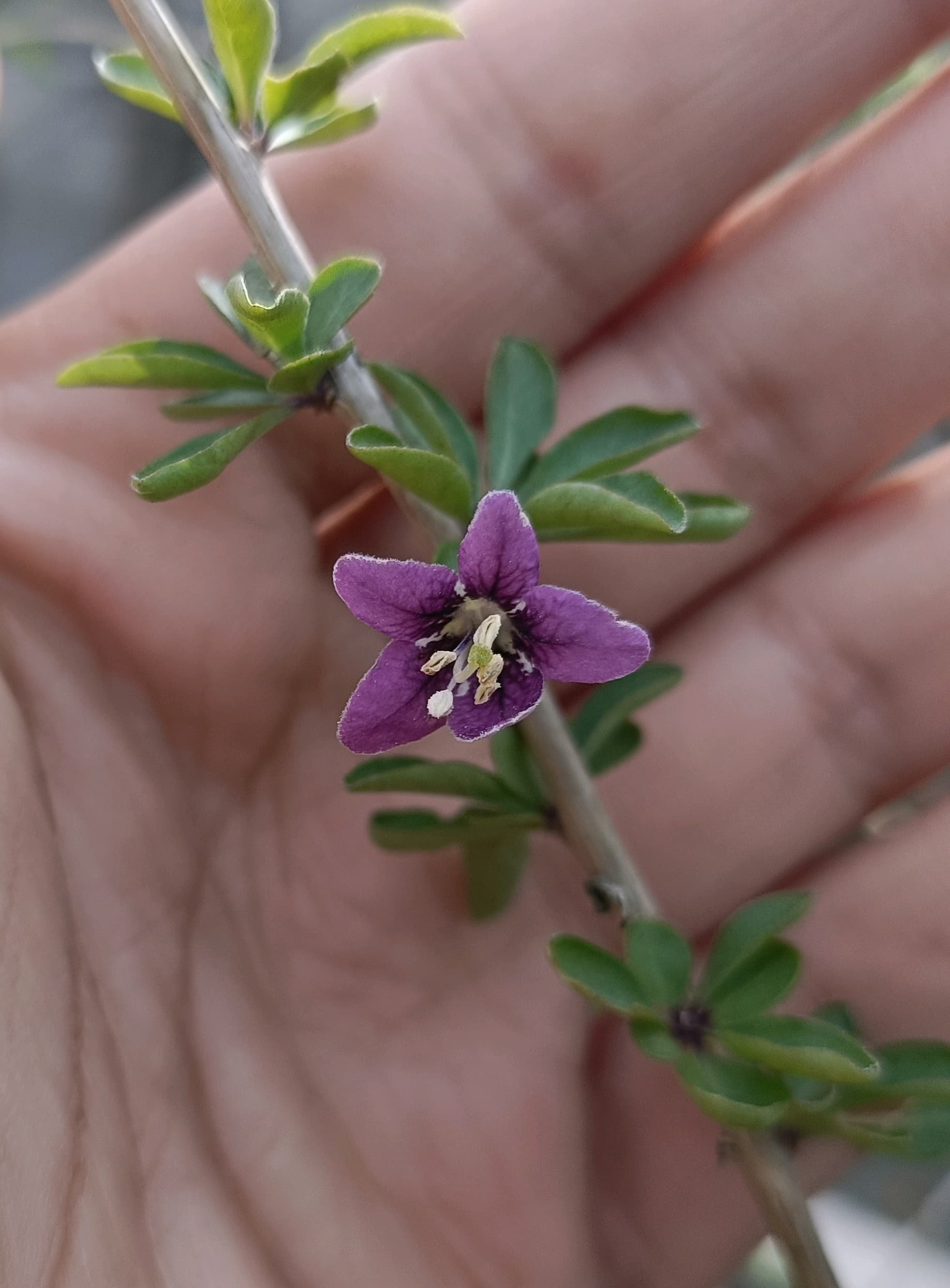
Goji berry (L. barbarum) flower. This plant is an unnamed variety which I bought perhaps 5 or 6 years ago that makes nasty fruit - well, not nasty really, just bland… I’m cutting it down because I’ve just bought a new variety which is bred to have higher sugar levels and is better for fresh eating; its called ‘synthia’ if anyone’s interested. I am skeptical but willing to take the risk. It’ll take a couple years nonetheless…
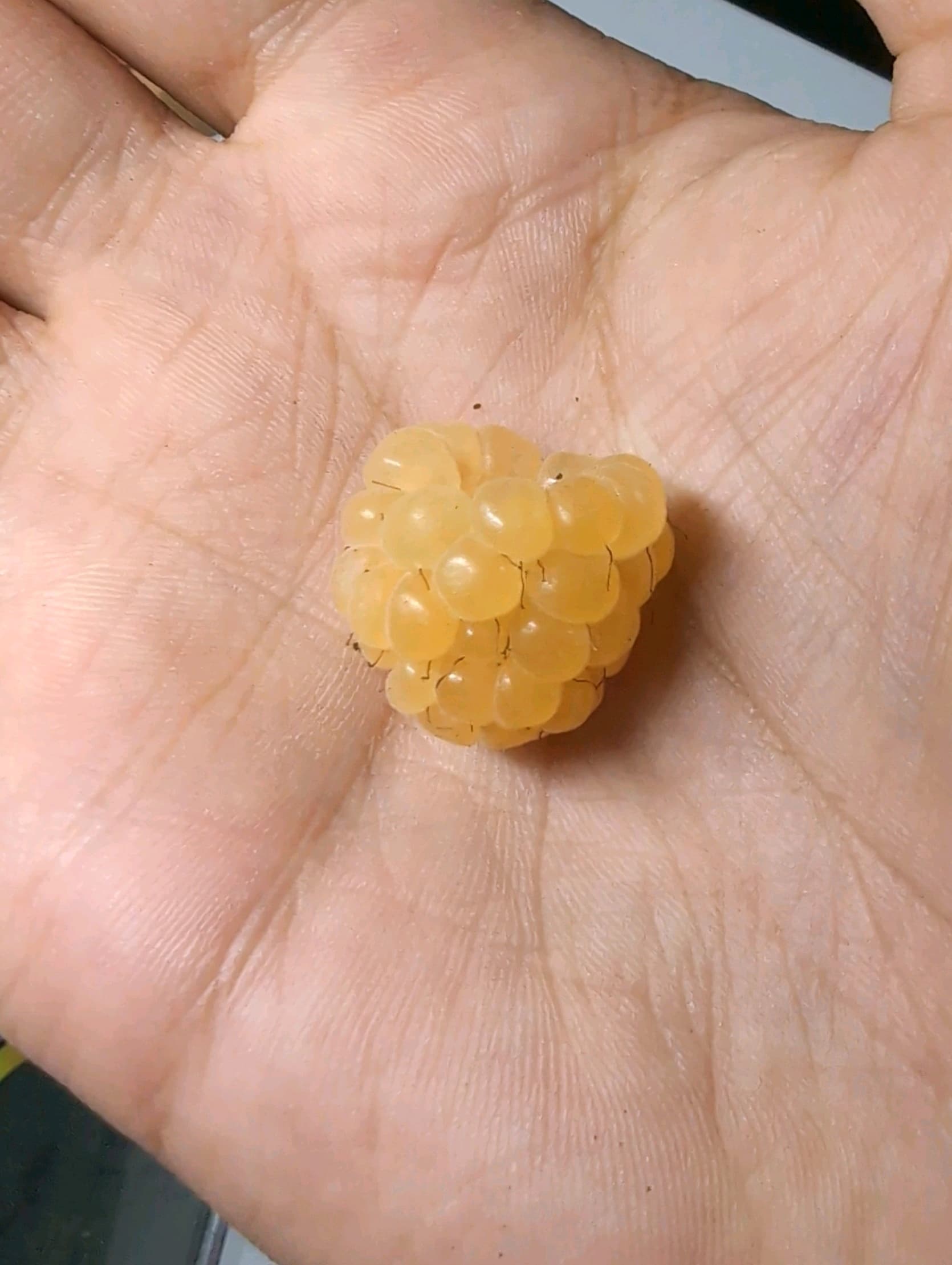
My first yellow raspberry. Cultivar is ‘All Gold’. Yeah, not sure if ‘All Gold’ is the same as ‘Fall gold’ that you seem to get often in the States or what, but this is the cultivar most commonly available around my area of the UK.
8 Likes
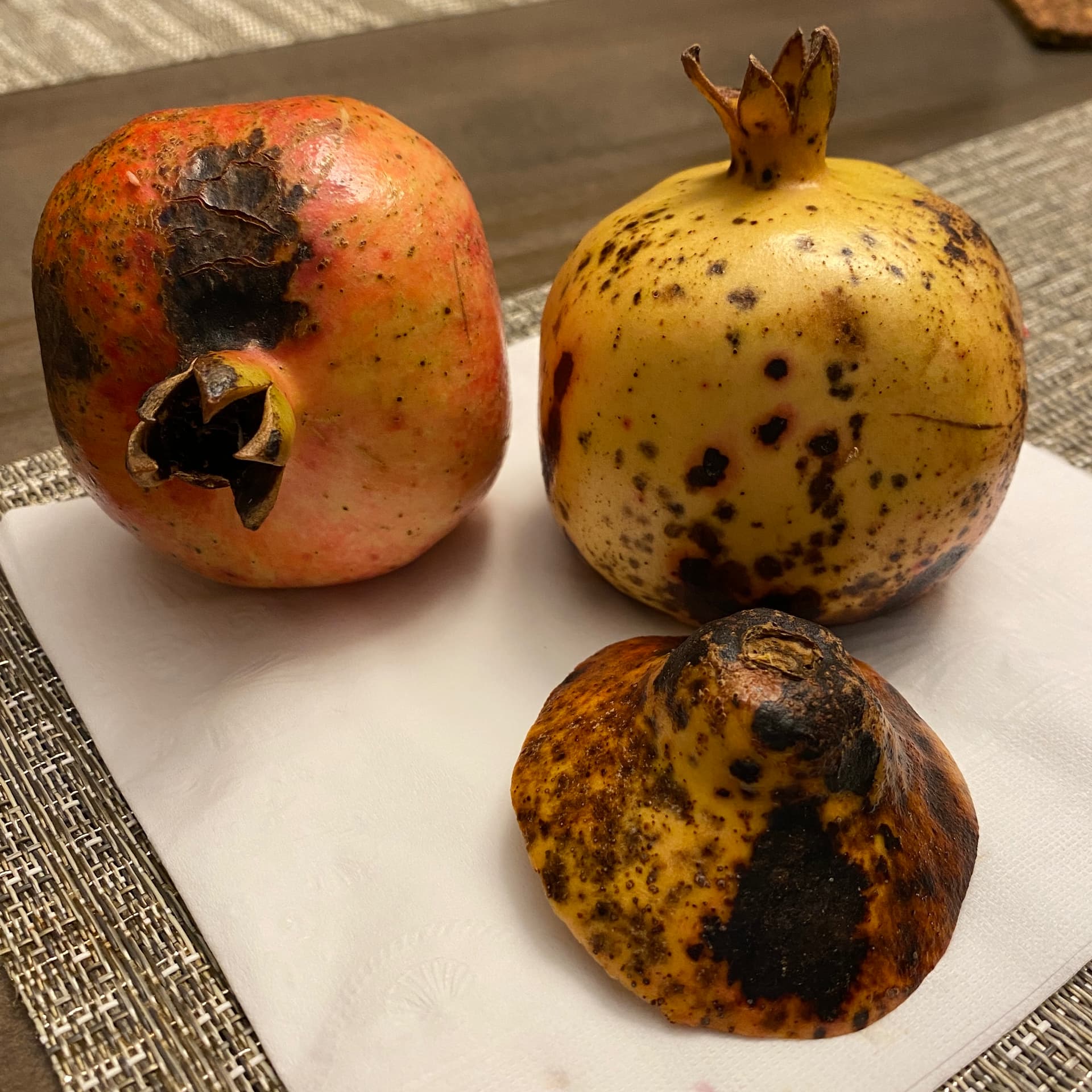
I took a few remaining pomegranates off of my Wonderful, yesterday. One had not colored up, to red, yet. One had . . . but had leathery areas on the skin and I thought for sure that I’d find some rot. I think that the rot can retard growth and development of the fruit. Both of these are about the same size. Both Wonderful. Same tree. One is yellow and spotty. One turning red.
To my surprise - the red one was very nice inside. And, well you can see what the yellow one looks like. YUCK.
And there were at least 100, if not more - just like this one (or worse).

5 Likes
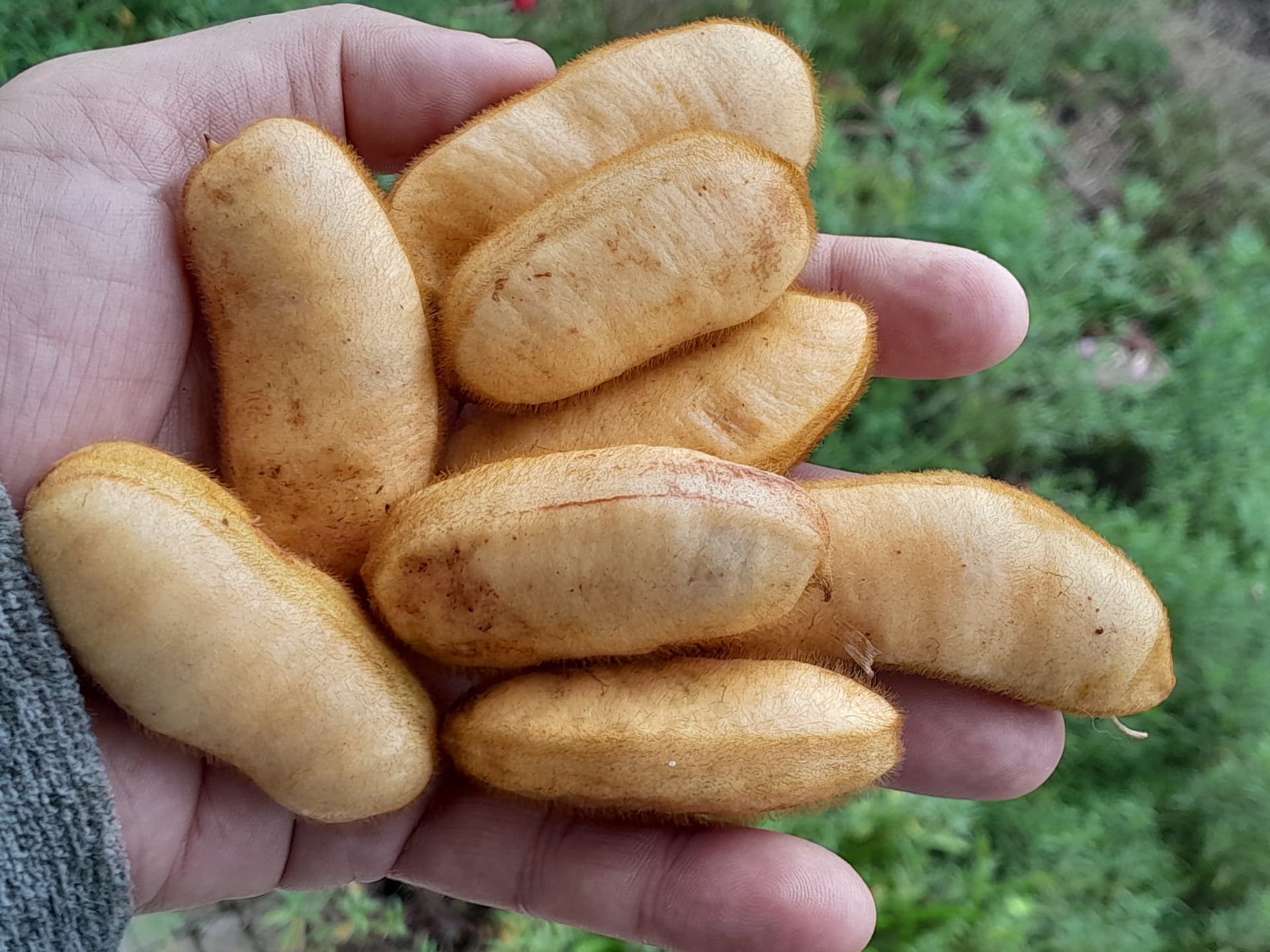
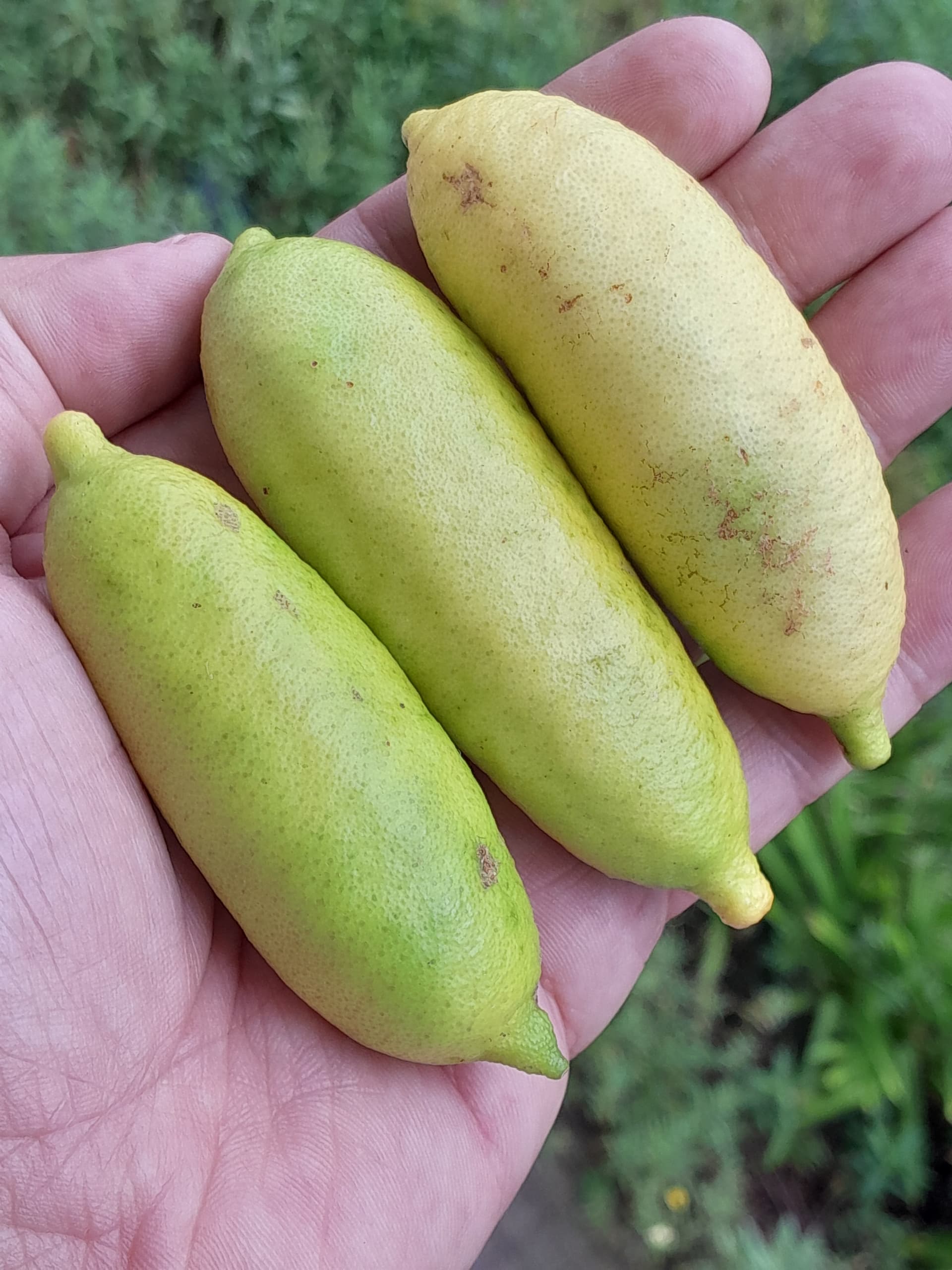
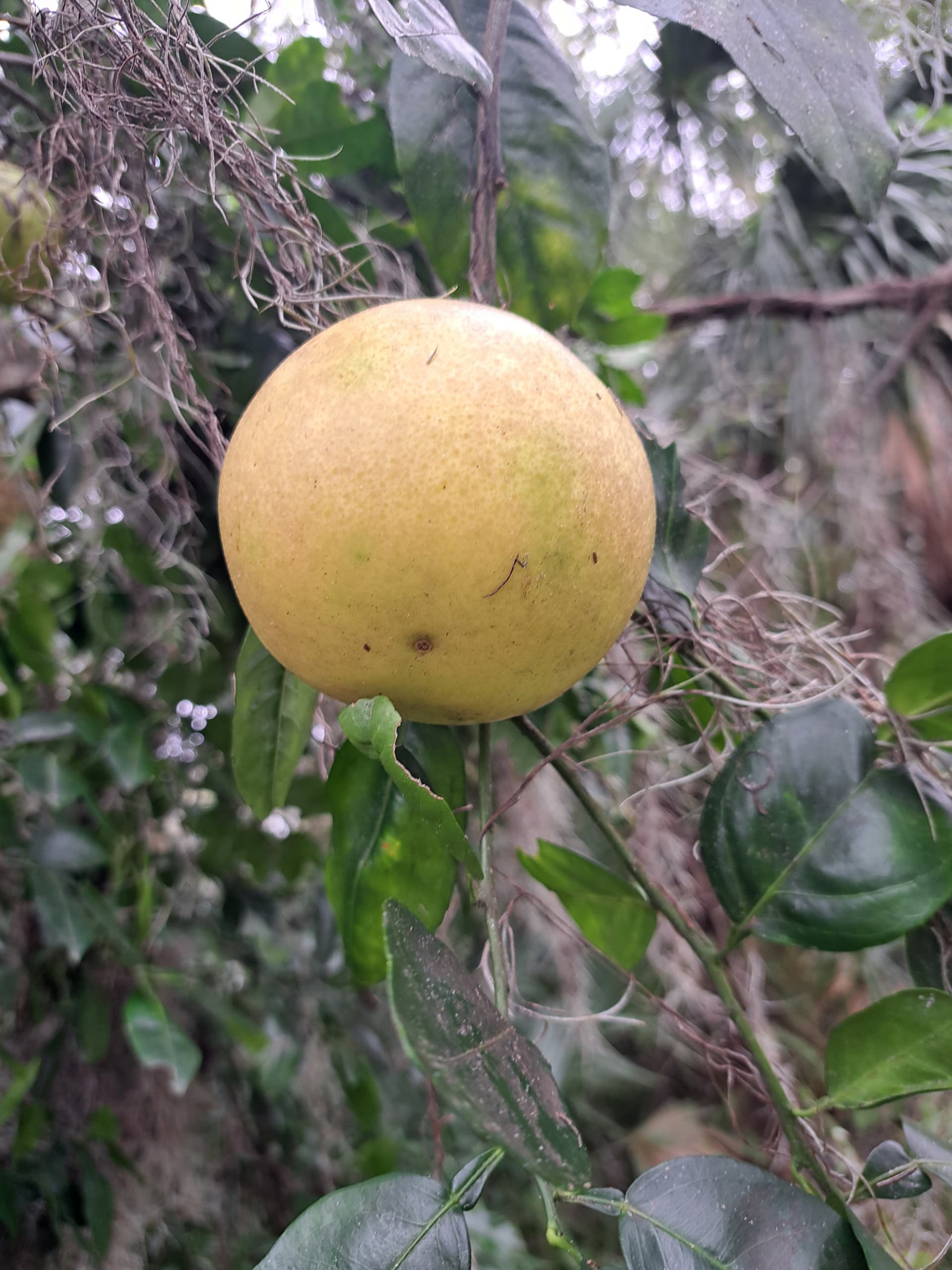
Giant wild oranges or possibly grapefruits ripening up. Not sure if I’ve seen fruits on this tree before, but they’ve never been this big. I imagine its just a big sour orange since pretty much all the wild oranges are all old rootstock plants spreading in neglect.
7 Likes
Don’t grapefruits usually have huge leaves?
Not sure, google pictures don’t really show any grapefruit leaves that are larger than orange leaves though. This is a “wild” tree, so its more than likely just another sour orange, the fruit on it are just twice the size of the rest.
1 Like
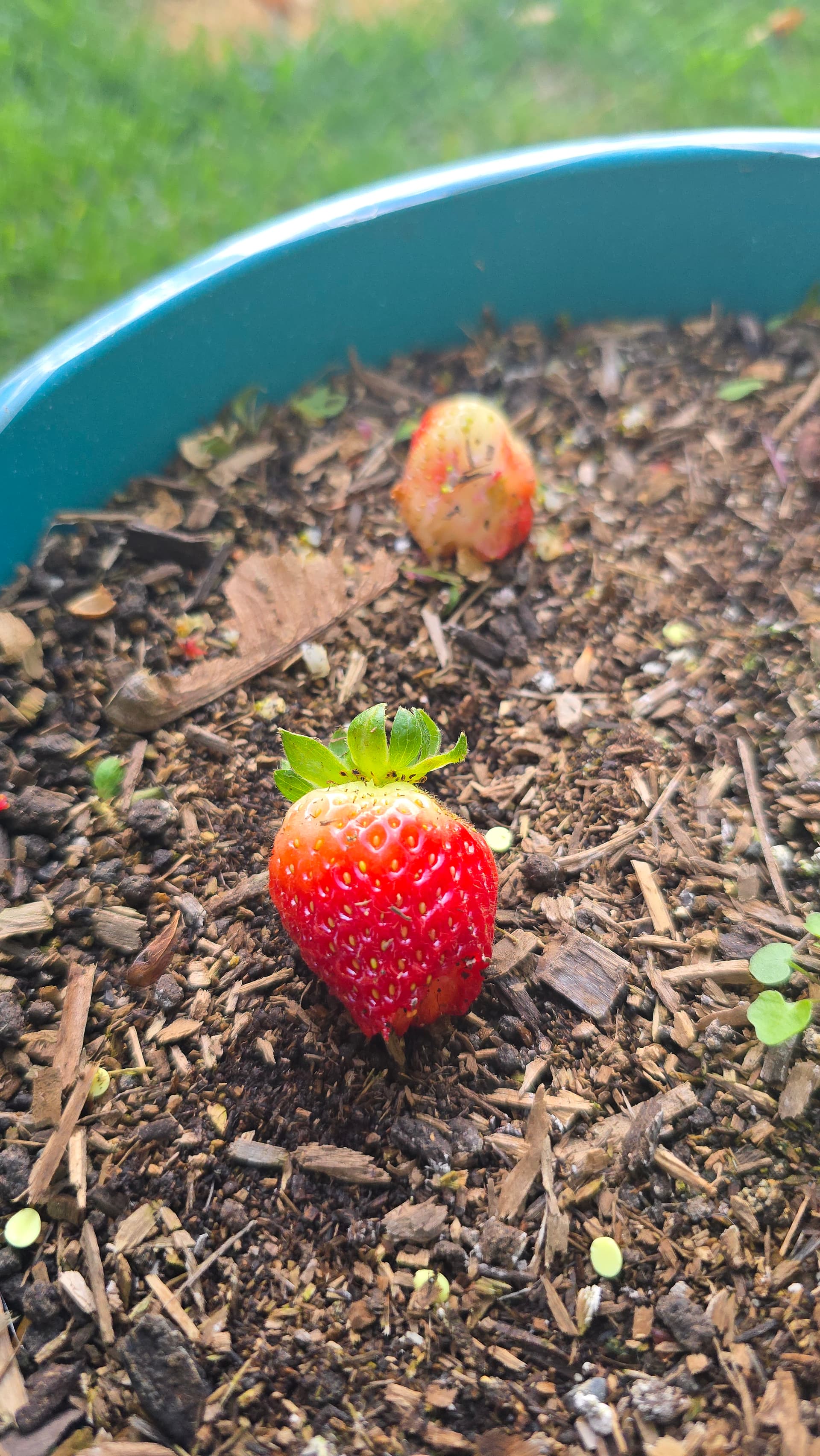
The chipmunks have found me. I thought they were rats at first but i saw a very fluffy brown tail after this was thrown at me the other day. Its okay though, i have more than enough to share these days.
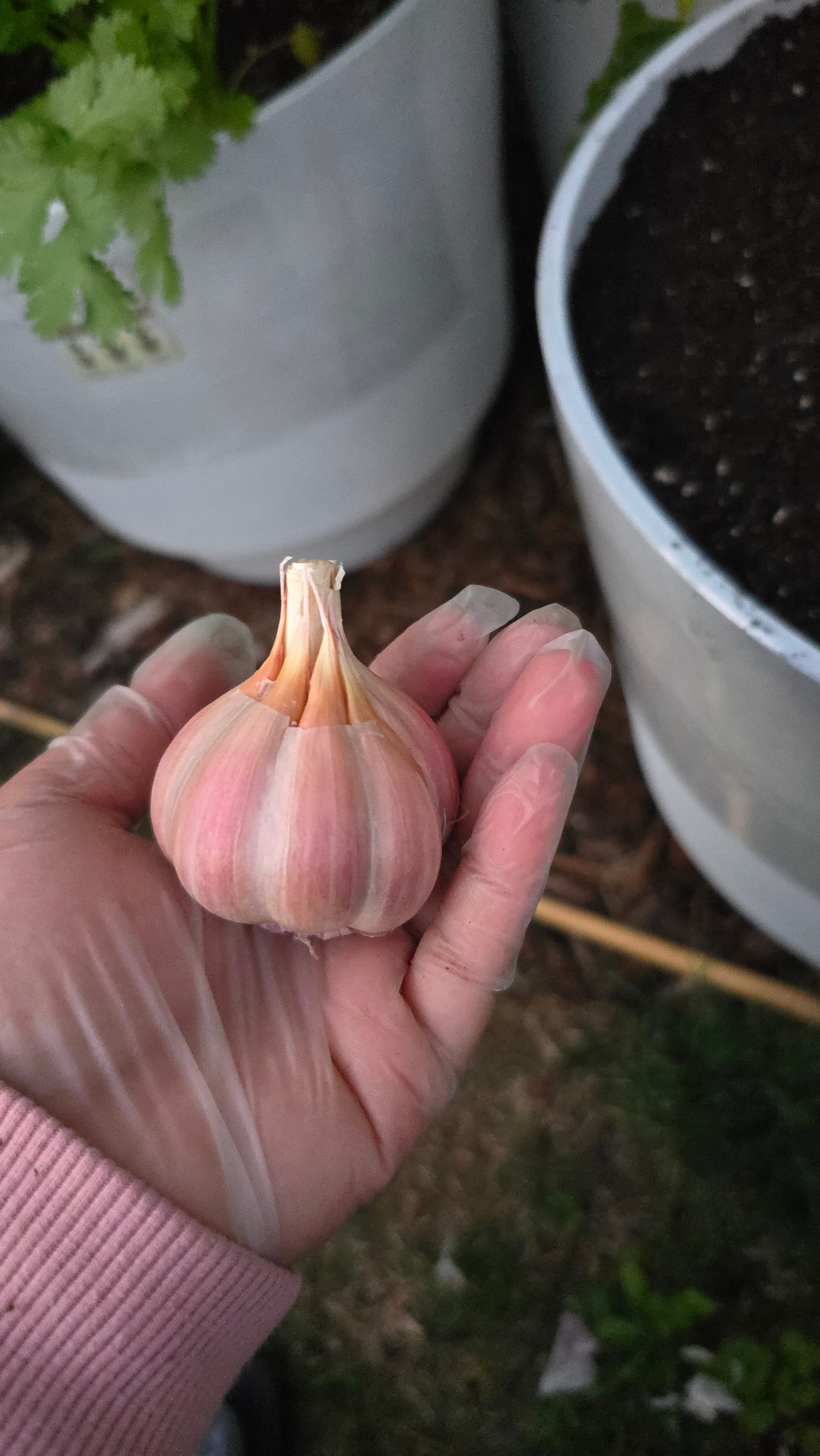
The prettiest garlic
 I’ve ever seen: Korean Red from MIgardener
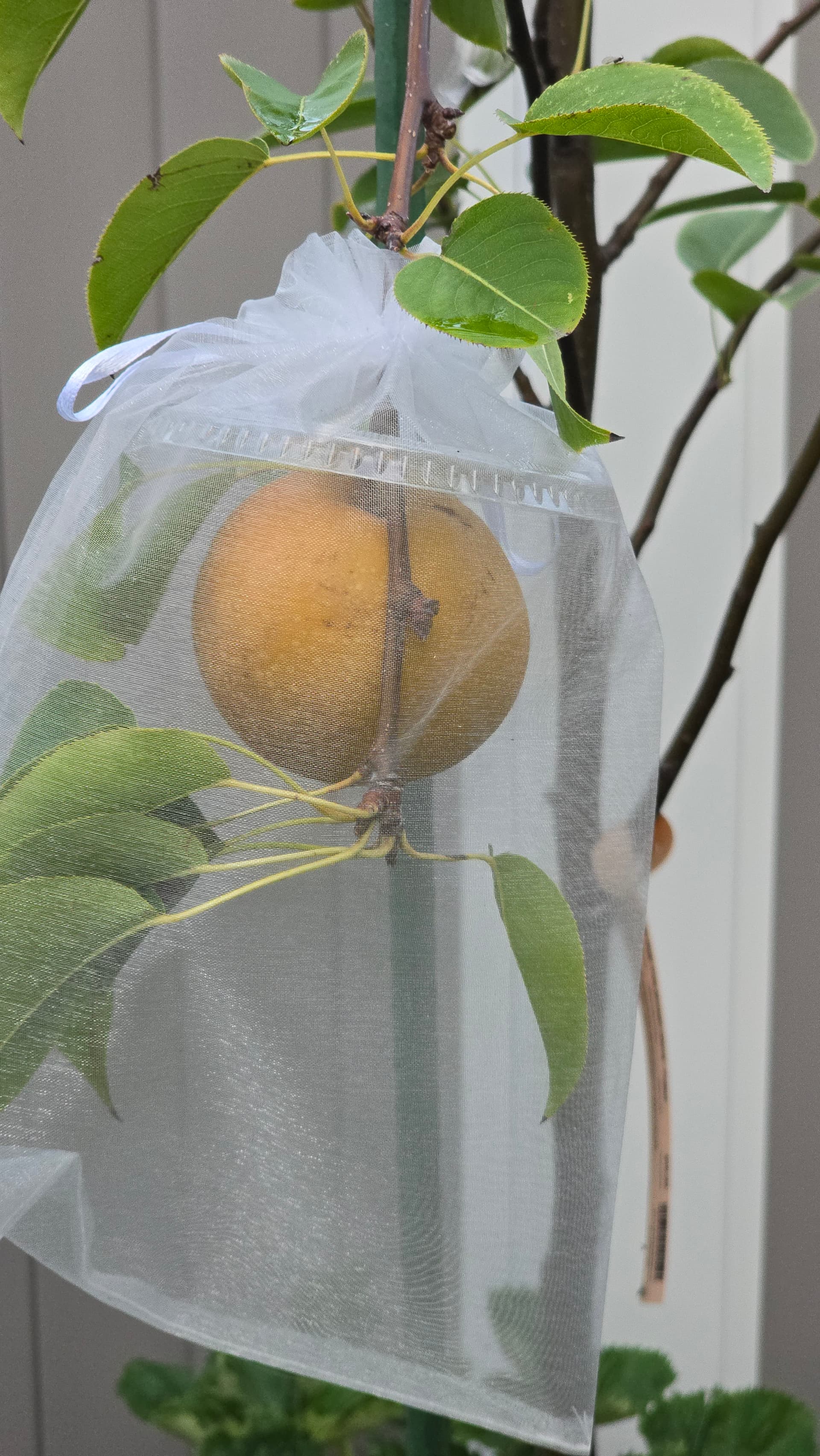
Korean Giant pear
 this keeps it from splitting. Trialed this this year and it worked. It’s my only one that hasn’t split after heavy rain in the past.
8 Likes
Thanks for the post. I use those bags on a lot of my fruit to stop insects and critters or at least to slow them down. It’s good to know it may have another benefit because it does require a lot of work when you have a lot of fruit.
1 Like
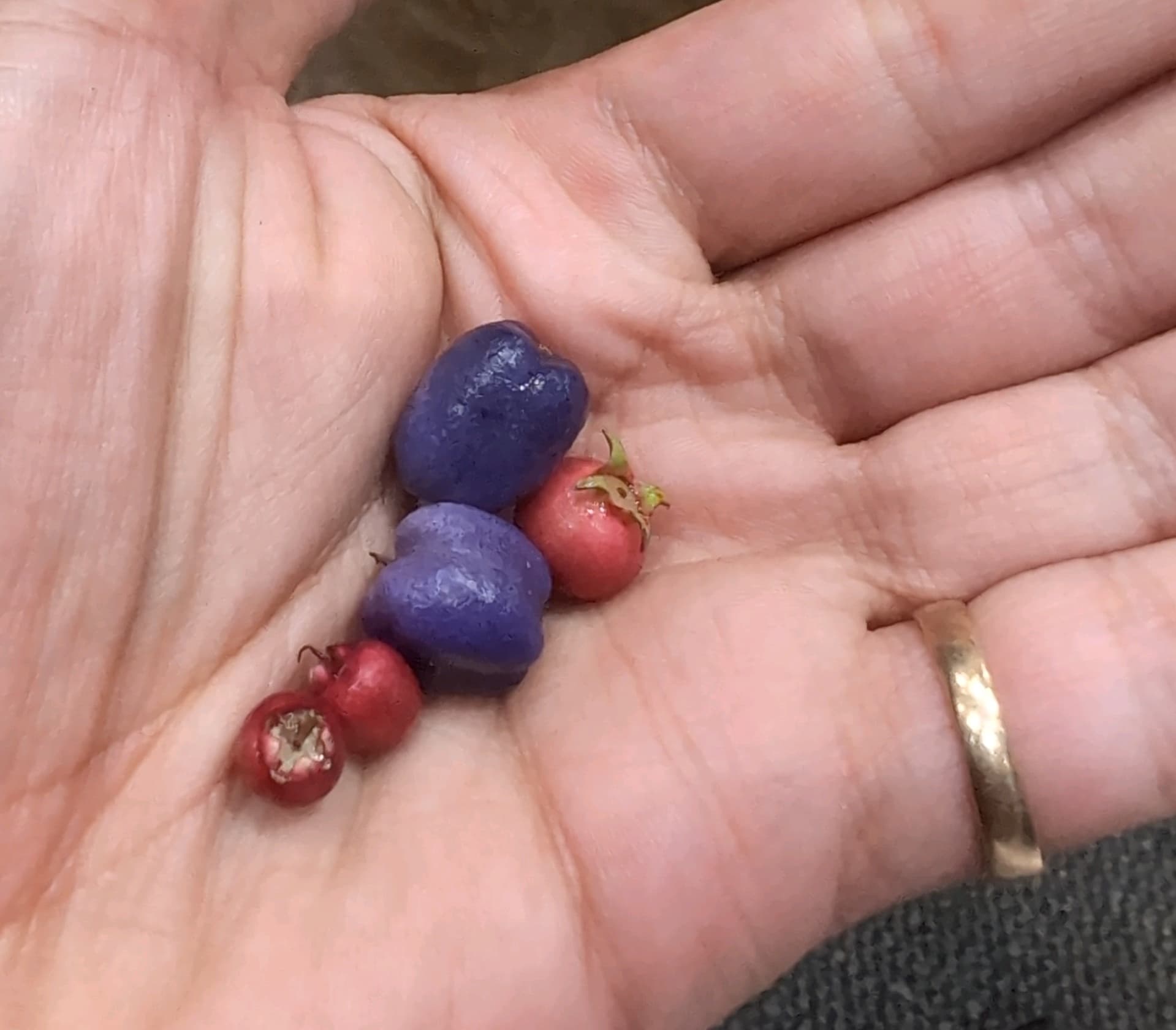
Meyer lemons getting ready to bloom

These didn’t do so well last winter, so I have a new setup this year. Fingers crossed.
3 Likes
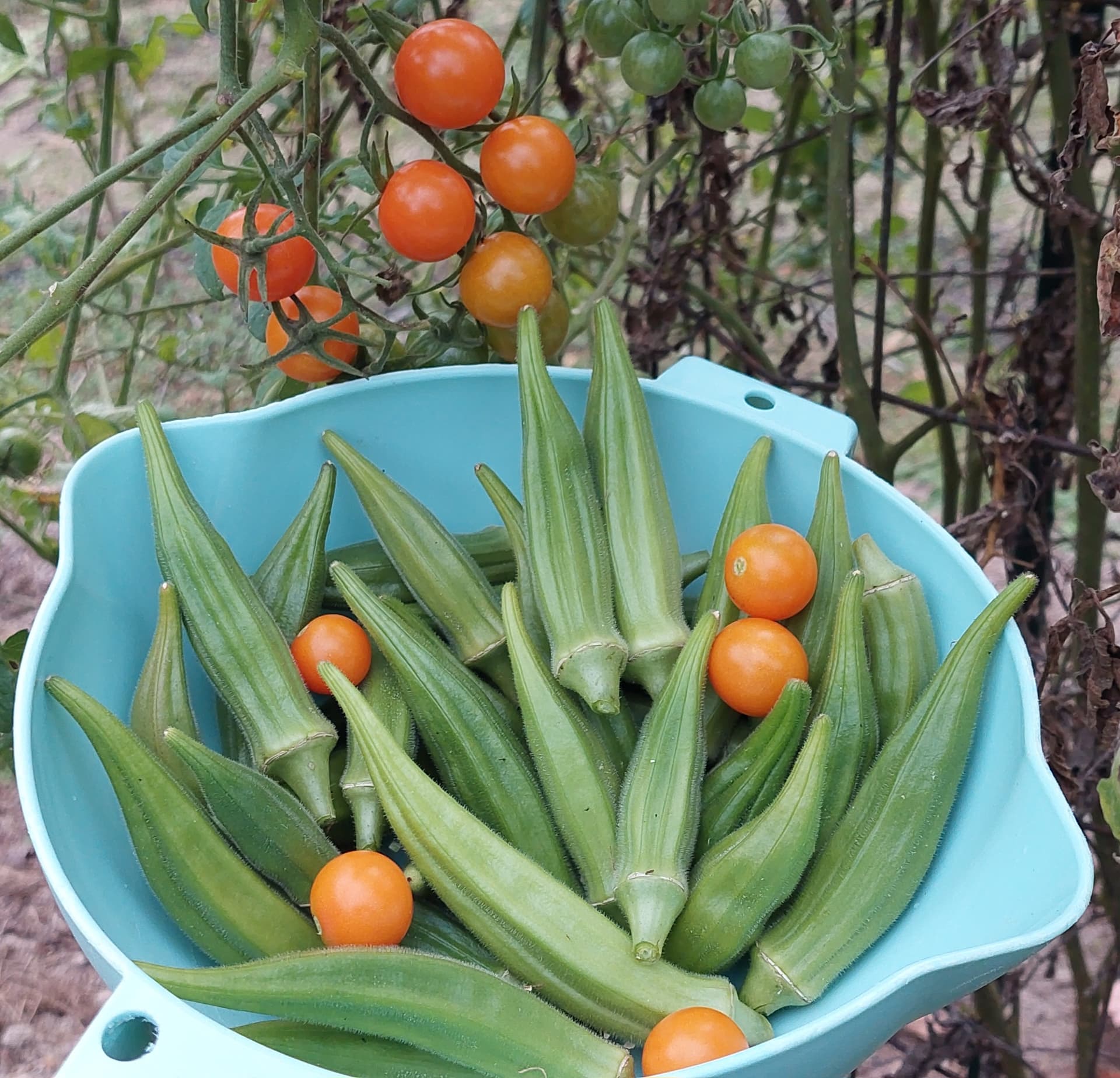
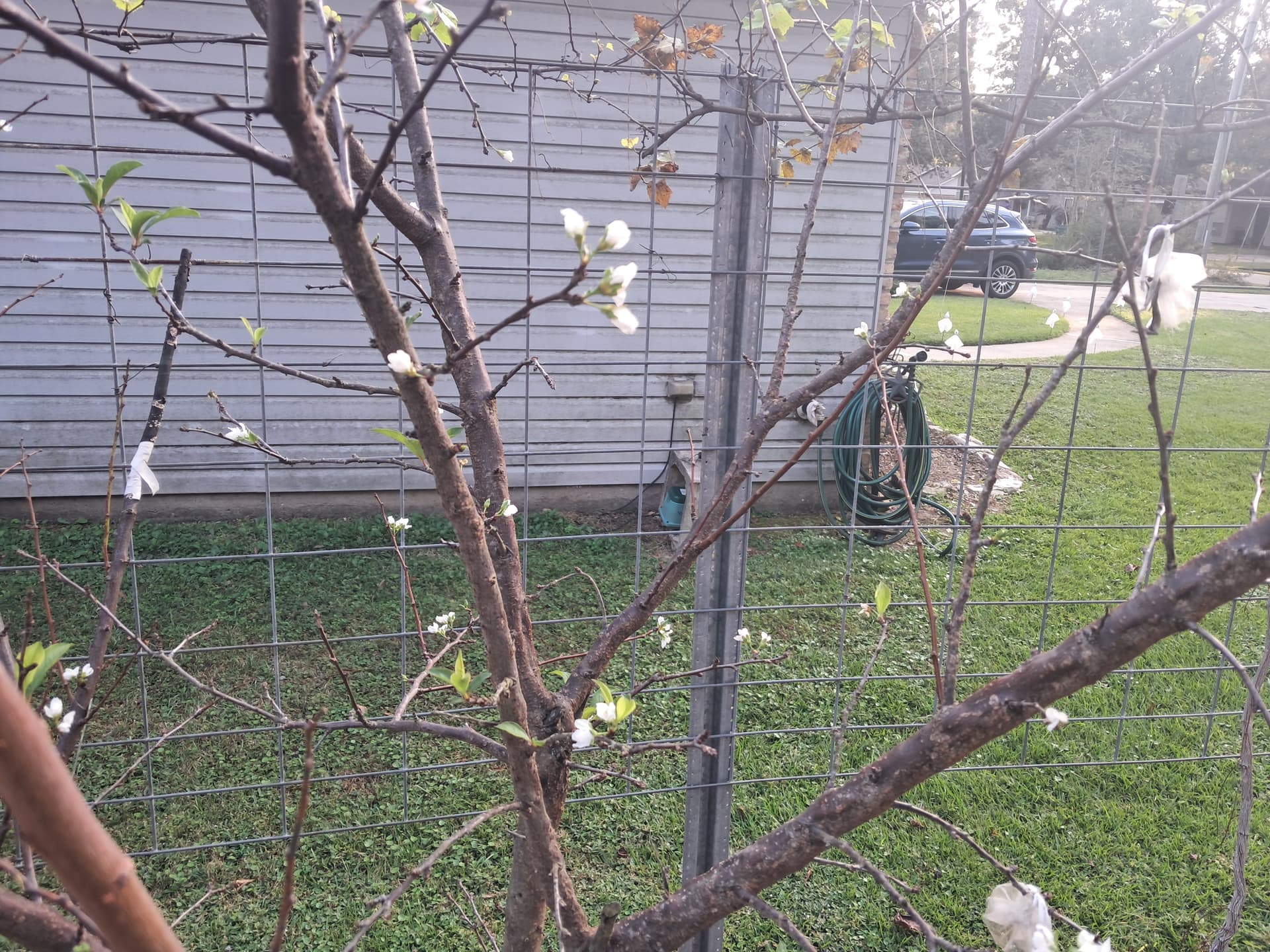
After a few weeks of blooms after blooms, I’m beginning to think my Flavor Grenade will not bloom next spring. There may not be any flower buds left.
I’m used to seeing a few late season blooms on fruit trees, especially after a dry spell followed by rain, but this is different.
None of my other fruit trees have popped a single bloom.
2 Likes
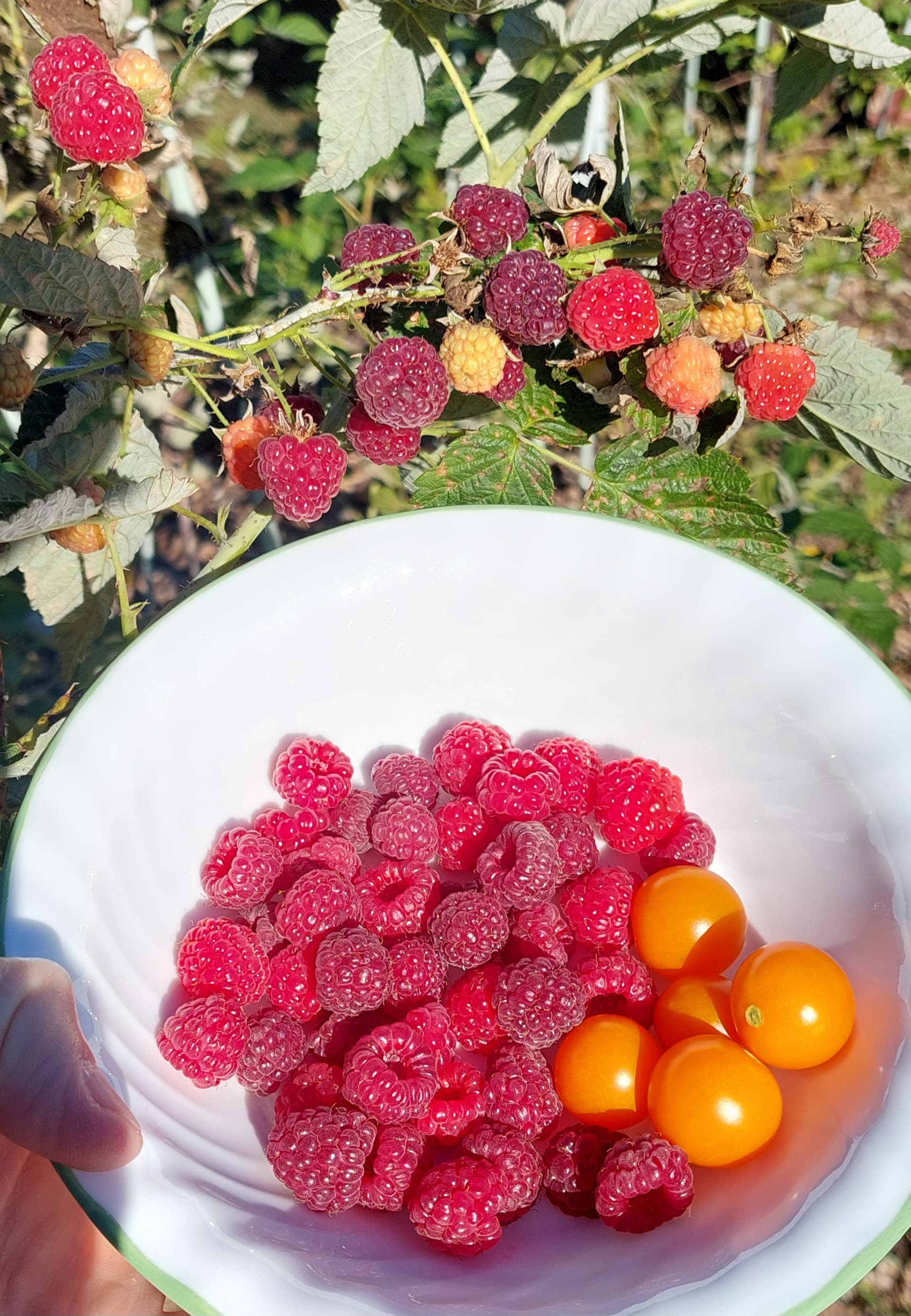
2 light frosts and mine are still ripening berries. supposed to hit upper 20’s tonight and tom. night then into the upper 60’s through the weekend into next week. if they survive the frosts they may continue to produce. last year they ripened berries into the beg. of Nov. which is unheard of here.
4 Likes