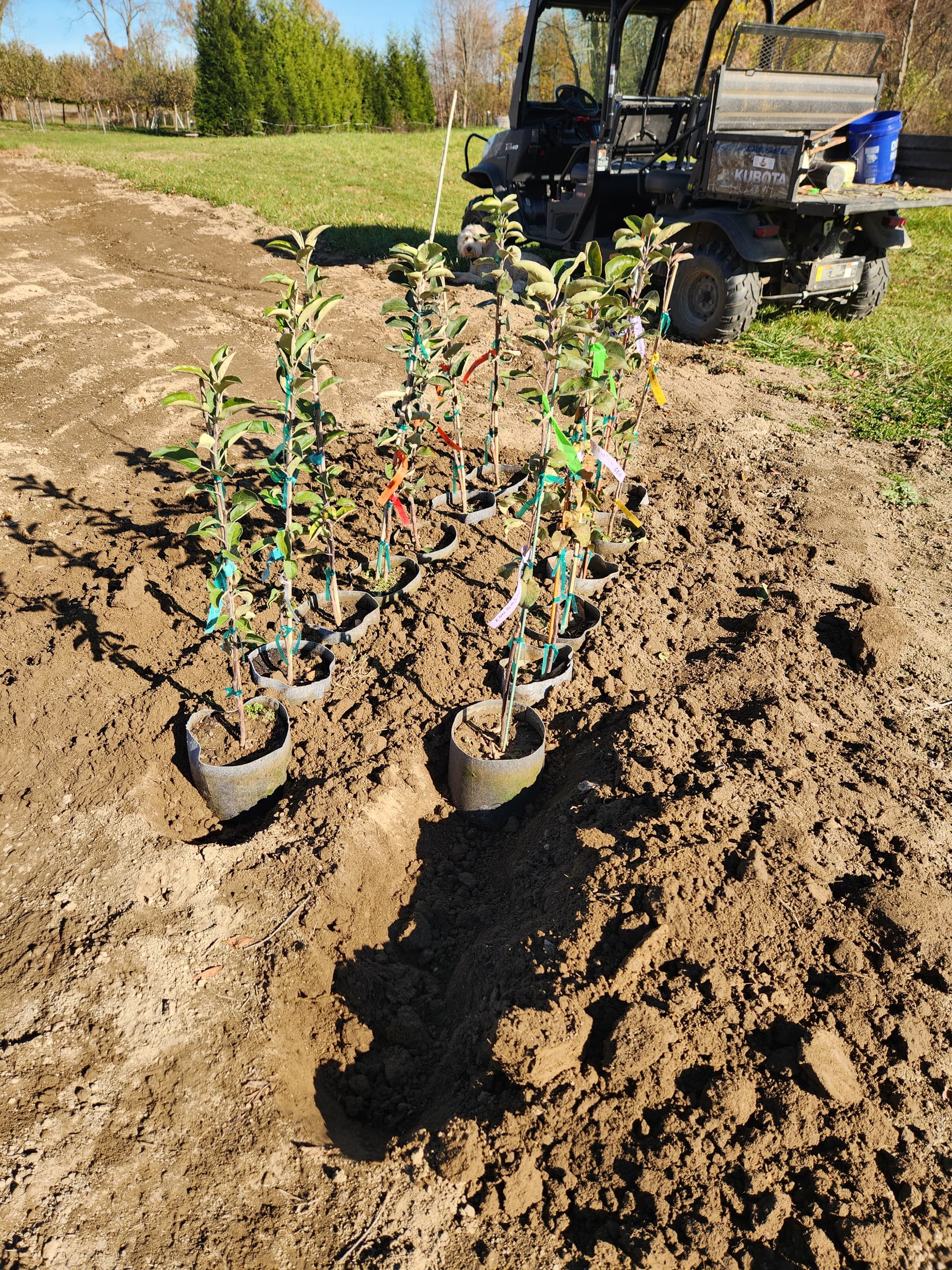
Burying fabric pots in the ground as method to control size?

I have 3 fruit trees (pear, gage and apple) that are all on semi dwarfing rootstock. I planted them in the ground earlier this year, but for a multitude of reasons I need to find some easy methods to control their size other than pruning. This winter I’m thinking about putting them in fabric pots and burying them in ground since they’re permeable to water, nutrients while still providing a barrier for the roots.

I want to know if anyone else has tried this and if it’s a good idea. I’d obviously try and get a sturdier pot so ideally thick fabric and non-woven (thinking of AC Infinity brand).

1 Like

I used a lot of fabric pots (10-15g root pouches) sitting on the ground this year- they are not a barrier for the roots. Canes, strawberries, and some vegetable garden plants rooted right through them. My trees didn’t, but they were on a deck and the bags dried out faster.

4 Likes

I had all of my new to me fruit trees in panda bags since Spring… alot of them pushed roots through the holes then also thru a tarp under neath of the pot that had no holes.

I have about 25 trees that i have no idea why i bought them in the first place… that i am seriously thinking about just leaving in the bags and letting them take root somewhere to see what happens.

I will never find it again but someone on FB posted some pictures of some trees that they dug up that were still in the pots… i think they were 3 gallon plastic pots that were just buried as is… the issue i believe was that the trees remained unusually small and the new home owner dug them up to investigate… so i think that is an option?

2 Likes

There was a nursery that sold all his apple trees in fabric wrapped roots. And explicitly stated to plant them in the fabric. I never researched it though.

1 Like

Back in '08, I tried 2 layers of weed blocker on top, around the tree and it did nothing for size control from what I can tell. Never tried the cloth bag. I plan to try the 2 trees in 1 hole method in '26 for size control.

If the tree root bag is cloth, it will rot away unless it is composed of a plastic weave. I pulled up some of the weed blocker and it was still good after 17 years.

3 Likes

Appreciate all the responses everybody. It seems the general consensus is that the tree WILL push roots out of the bag which is unfortunate however there is differing quality between fabric root bags so I’m not 100% calling off the idea.

I grow a lot of trees in my nursery in 25 gallon pots that I started in 18" Whitcomb rootmaker bags (I believe he is the original inventor of in-ground bags). The pots are set half way into the ground and roots are allowed to grow in the soil outside the pots. These trees were moved as soil based balls into containers a bit wider than the balls. Drainage is fine because I surround the soil completely with light potting soil. Being more than half soil allows a bigger tree in a smaller pot and allows less frequent watering. The potting soil makes them lighter than pure soil rootballs.

To avoid having them get too big I use a heavy spade to lift up the pots while using a cultivating spade to lift escape roots and push them close to the pots- I don’t start of planning to do this, I try to sell these trees after their first season in pots. They are bearing fruit by then, being precocious as a result of the root pruning that occurs when you transplant from the ground to the pots.

Sometimes a container tree remains in my nursery much longer than I want. I can hold them back by lifting them up every other year and either pruning the roots or pressing them close to the pots.

The method could be used to keep trees dwarf for the long term. The best thing is that in my humid region nursery, the trees don’t require nearly as much watering as fully potted plants.

It is the airflow on the outside of fabric pots that provides most of their selling points. Burying them eliminates those purposes and effectively just provides a more expensive burlap-style wrapping. It won’t slow them down much. It will offer a bit of extra stabilty for rodents and other critters attracted to root zones.

1 Like

My experience in the last 30 years growing thousands of trees in fabric bags completely contradicts this. You cannot use burlap to create a root ball that can be lifted, that requires the addition of a wire basket and neither stops complete root escape. The Whitcomb bags usually girdle the roots when they penetrate it, supposedly increasing carbohydrate storage on the part of the root inside the bag, primarily directly into the knot formed on the inside of the interface.

What the bag allows you to do Is quickly lift the ball out of the soil with a heavy spade and requires much less soil than a conventional wire basked-burlap contained one. It means I have to carry less than half the weight to move an equal sized tree.

Your conjecture on rodents seems purely a reach without substance based on my experience in my vole populated nursery. Landscape fabric does seem to work that way.

Whitcomb created two types of bags but the first one wast while he was a professor at the University of Oklahoma. The University owned the patent but he started a business of manufacturing them without their permission and was sued. He then left the heavy black felt model, that allows far less root development outside the bag and designed one that is a knitted very strong fabric built like a screen where small roots easily form outside the bag.

The felt model has been largely copied and I ordered some heavy Chinese ones for a very reasonable price that I plan to experiment with as a replacement for plastic pots- no they do not allow anywhere near the level of root escape as burlap. I’m essentially a dry tree farmer but a part of my nursery includes potted trees.

Black felt in-ground bags can be placed in the soil without too much root escape, but that means you really need drip irrigation even in the humid region to get trees to grow to size quickly.

1 Like

Just as a possible technicality work around. We used to buy draw string burlap threaded bags to capture lint in our industrial lint collecting machinery.

The bag makers will gladly produce bags to your material and thickness level required and name it for what ever use name you want to name it. They also have tons of already existing bags that could work. They make a ton of fruit use packaging as well.

1 Like

Its pretty much as Alan said. I was introduced to root control bags by Whitcombs studies.

We would buy species of ceratin varieties that didn’t transplant well bare root. Nyssa, white oak, etc. From a vendor in Oregon. The trees were vigorous and healthy, and nothing about them suggested it was inferior to bare root. You simply got all the roots except a few escaped fine roots without the circling roots of a container.

We would plant them in the field and into containers usally 20 gallon plus.

Burlap will rot in the ground in less than 6 months. We used treated burlap and as heavy as we could buy. Anything contacting the soil would rot within 3-6 months to the point it had no structural use and we would have to re-burlap.

I supposed if you left them in the bags long enough it would control the vigor just like a container. Not sure I want size control due to stress.

They are the felt bags not woven.

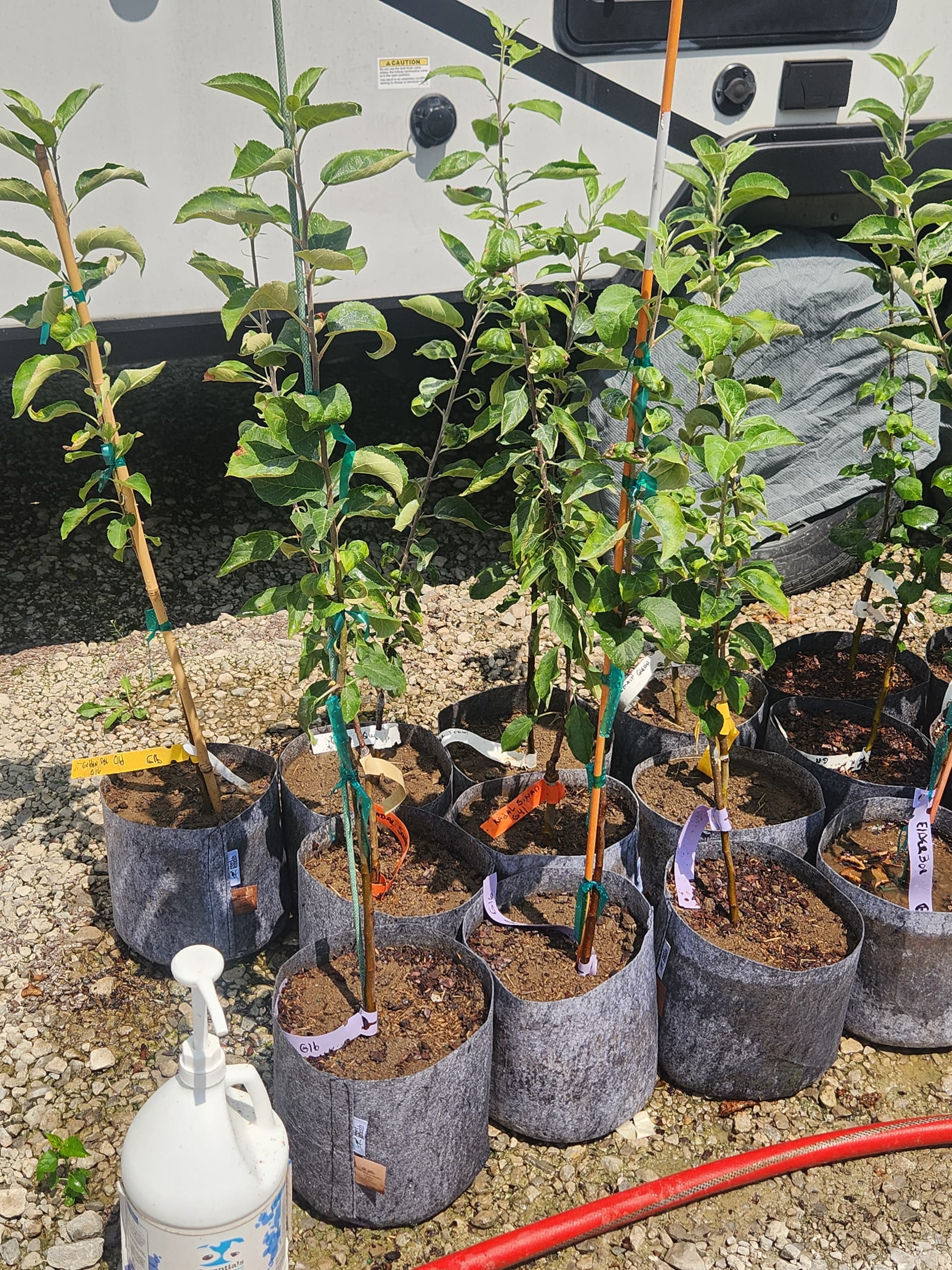
I used them this year for my grafts. I started the grafts in one gallon containers and moved them to the root bags in late July. I should have moved them into the ground as that helps control the moisture from wicking away moisture. I just heeled them in for the winter. There they will sit until next summer/fall and I will plant them out to their final spot.

I don’t like planting small trees and prefer 2yr olds. So I will also bag up some of next years 1yr trees and carry them through the summer that way.

Watering containers this summer was a daily or bi daily chore. The bags with mineral soil need watering much less frequently due to the lack of the sun shining on the bags and the mineral soil. It’s like growing them in the ground, but you have much less transplant shock due to getting all the roots. At harvest I will just spade around them and pop them up, remove the bags and plant. I can plant them whenever I want. No waiting until they are dormant to bare root them.

My grafts, the best ones grew to 42" and I expect they will be 6’ with branches by late summer.

Apple grafts from spring potted up in bags in August. They grew an additional 4"

These were heeled in last week before our cold snap. Well watered and later surrounded with chicken wire to keep the rabbits out. Trico pro deer repellent was sprayed on them liberally.

A good soaking should get them through a week next summer, but I will set up drip on them.

Its a good system, especially for liners.
4 Likes

I have looked for these but have not been able to find them. Do you think If I sewed a bag using window screen mesh (like the kind made of fiberglass) it would be similar?

You could call the company and beg them to send you some bags, they are warm, rural people and might respond. RootMakers

Otherwise you are on your own with your experiment unless you can find the fabric that Whitcomb uses. They might tell you that if they won’t sell you a few bags. Their official policy is to only take orders of a hundred or more. Whitcomb is a very generous soul so you might try to reach out to him if the distributers are not helpful to you.

1 Like

I am not a commercial setup. If I use fabric bags, they get neglected just as much as plastic pots. I cannot speak to different types of fabric. It is very wet here and even the “rubber” tree rings end of rotting and with assorted things happily growing through them. Anything that encourages a level of runoff is a favorite place for rodents to live under in my yard. I suspect my number one subject is deer mice. Fabric pots have not proven an exception here. They do not seem to make a home inside any of the pots I’ve used, but they make a home underneath anything.
The large holes in plastic pots seem to leave a lot of room for larger roots. I can see how fabric ones might girdle roots, but I have found “fabric pots” generalized to have more roots grow through them over time where they are in contact with dirt. I have not distinguished variety of fabris of plant contained, but I mostly play with trees and shrubs that will provide me some form of food.
annuals that I have put in fabric dry out too quickly for me, despite all the rain, to have successfully grown anything long term- this has likely been mostly tomatoes and peppers of assorted types. If I had a green house or drip lines, or all the other “fancy” stuff, I’d likely see different results, but I essentially use a shovel and a hose when time allows and take advantage of shade, mulch and windbreaks as needed.
So, I may not meet the norm of how others are using them, but I stand by my previously identified experience with them. I might be disappointed should I do it, but I currently would not hesitate to plant something in a fabric pot with the expectation that it would decompose within a year or two. If I want a turn-and-burn type scenario, I bury one plastic pot, and then drop the plant into it after it is planted in a matching pot. I offset the rim holes and block one of the center holes to minimize how many of the roots escaping the pots end up in the ground before I relocate the plant.