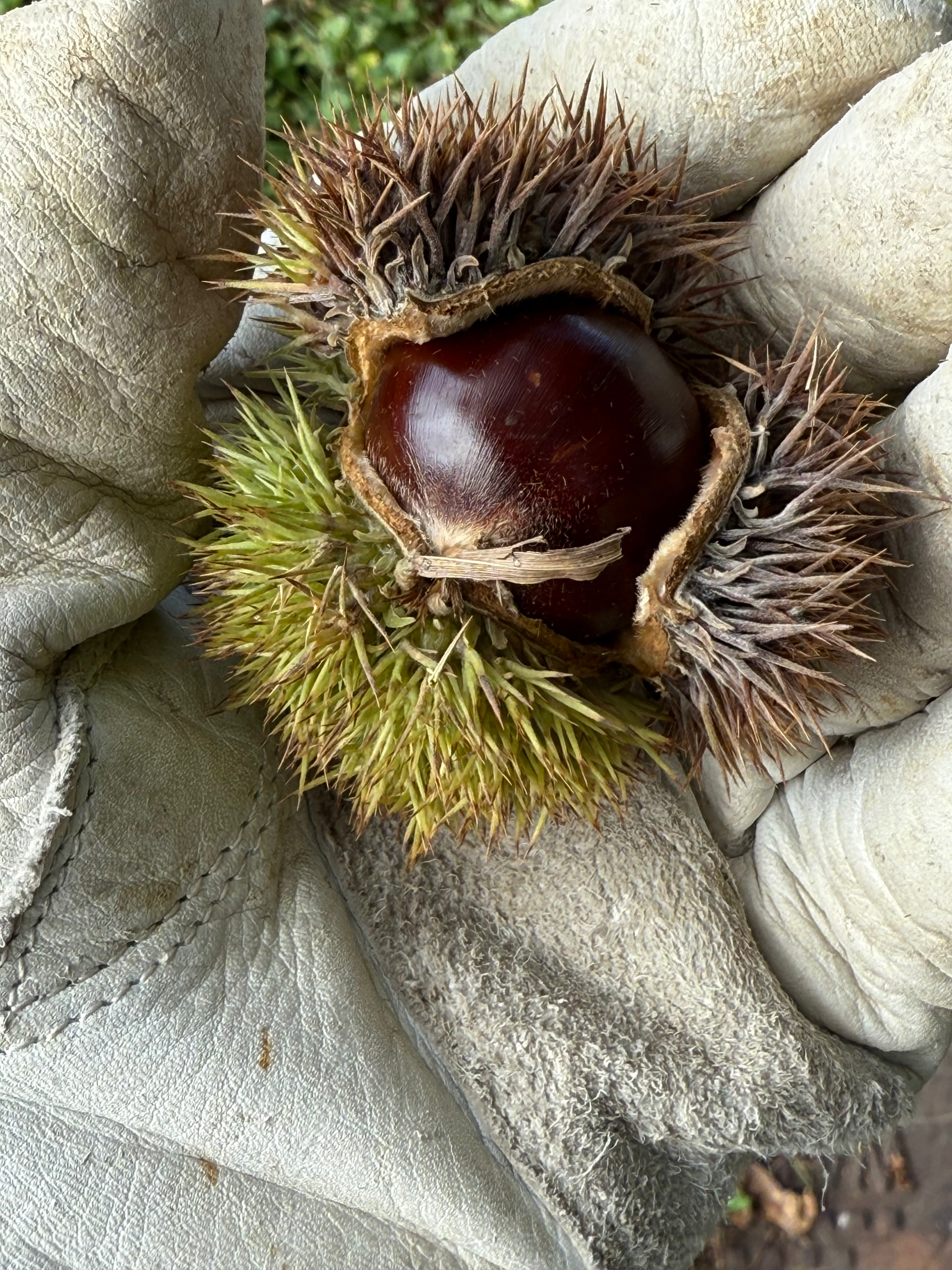
Well the genetics of introgression aren’t necessarily that simple, but with yeah eventually you should get something similar enough to american chestnuts
3 Likes
@MaleaeLover They already have it, the question is if it will be true enough to seed, certainly the parent tree can be grafted and planted out, but they’re already on the last step, maybe they’re done with the 7/8ths American Chestnut and ready to sell to the public. Check out their video.
2 Likes
They’ve had 15/16 for awhile and I think even those are being bred back for more genetic diversity now.
There’s some still pushing for the Chinese hybrid route, but many from TACF jumped ship to SUNY ESF’s work a decade ago because the 15/16 trees still had way too many Chinese genetics in appearance and growth form and they still struggled with the blight. But there’s a bunch of different groups taking different paths to produce a dentata-like tree. The TACF site is pretty good and seems to cover all of the current work being done. They’re getting deep into RGS now.
We’ll probably see the D54 trees get approved and the hybrid seeds/seedlings released in the coming years…all while many others keep striving for a resistant 100% american tree the hard way.
3 Likes
I’m hoping for a full GMO ban like Italy and Russia soon. We’ve got an epidemic of cancer and mental/behavioral diseases and the GMO’s are not playing a small part.
Also the current style GMO’s cannot ever produce a stable lineage, so a GMO wild tree is just criminal pollution of natural.
1 Like
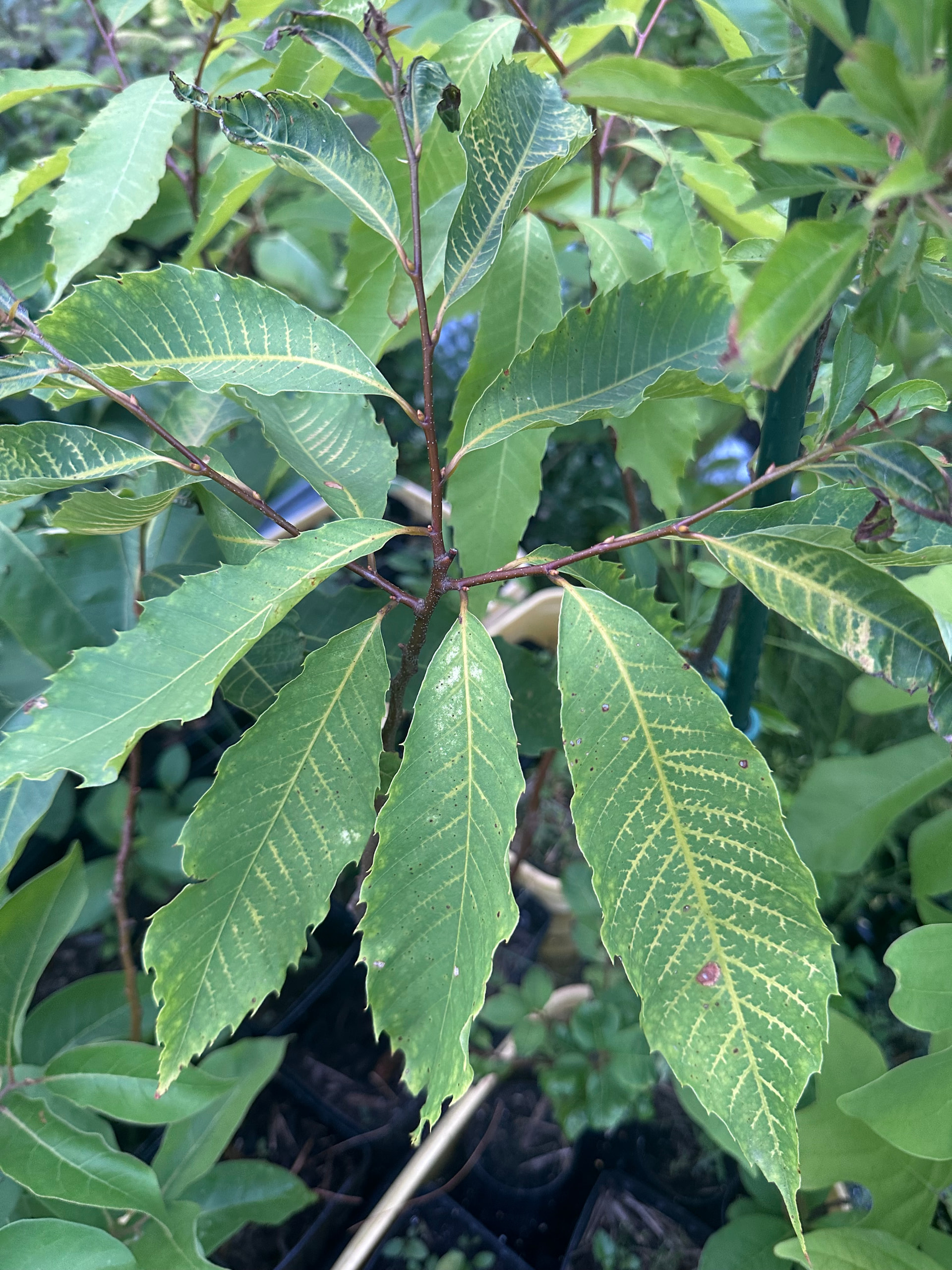
Anyone have an idea what this deficiency could be in this potted dentata?
I can’t recall seeing yellow veins with green margins before…usually it’s opposite (Fe or Mg issue).
1 Like
Probably nickel. Trees often show patterns like this when they have been fertilized with too much nitrogen and not enough potassium. I would get a good micronutrient fertilizer and apply judiciously.
2 Likes
Interesting. Hadn’t given them fert yet this year until I noticed the leaves…so I gave them some very diluted liquid fish/seaweed a couple days ago.
I have a little bit of Jack’s 20-6-22 with micros left…maybe I’ll try a small amount of that. I really don’t want to go too crazy since I’ll be planting them in the field in September anyway.
3 Likes
Blight does spread thought the soil, so what do you mean by this?
Think about it, why do infected trees continue to resprout from the roots? If it was effective at killing trees below the soil level we would not see this.
It is why sometimes folks will pack mud around blight infections to help slow it down.
Btw blight spreads via spores, and can be hosted on oaks as well as chestnuts.
2 Likes
Chestnut blight does not live below ground. P. cinnamomi infects and kills chestnuts below ground. Most people who grow chestnuts have no idea how bad P. cinnamomi is for American chestnut.
2 Likes
I know that it feeds off of oak and beech roots below the soil, the beech trees seem to be affected by Chinese chestnut blight too, but generally not dying from it for some reason, the cankers on the bark look exactly the same, but white-cream not redish.
So is it the sexual reproductive body of the Chinese Chestnut blight fungus that kills the trees? Or does it spread from root to root and once it grows up to the trunk it starts killing it?
1 Like
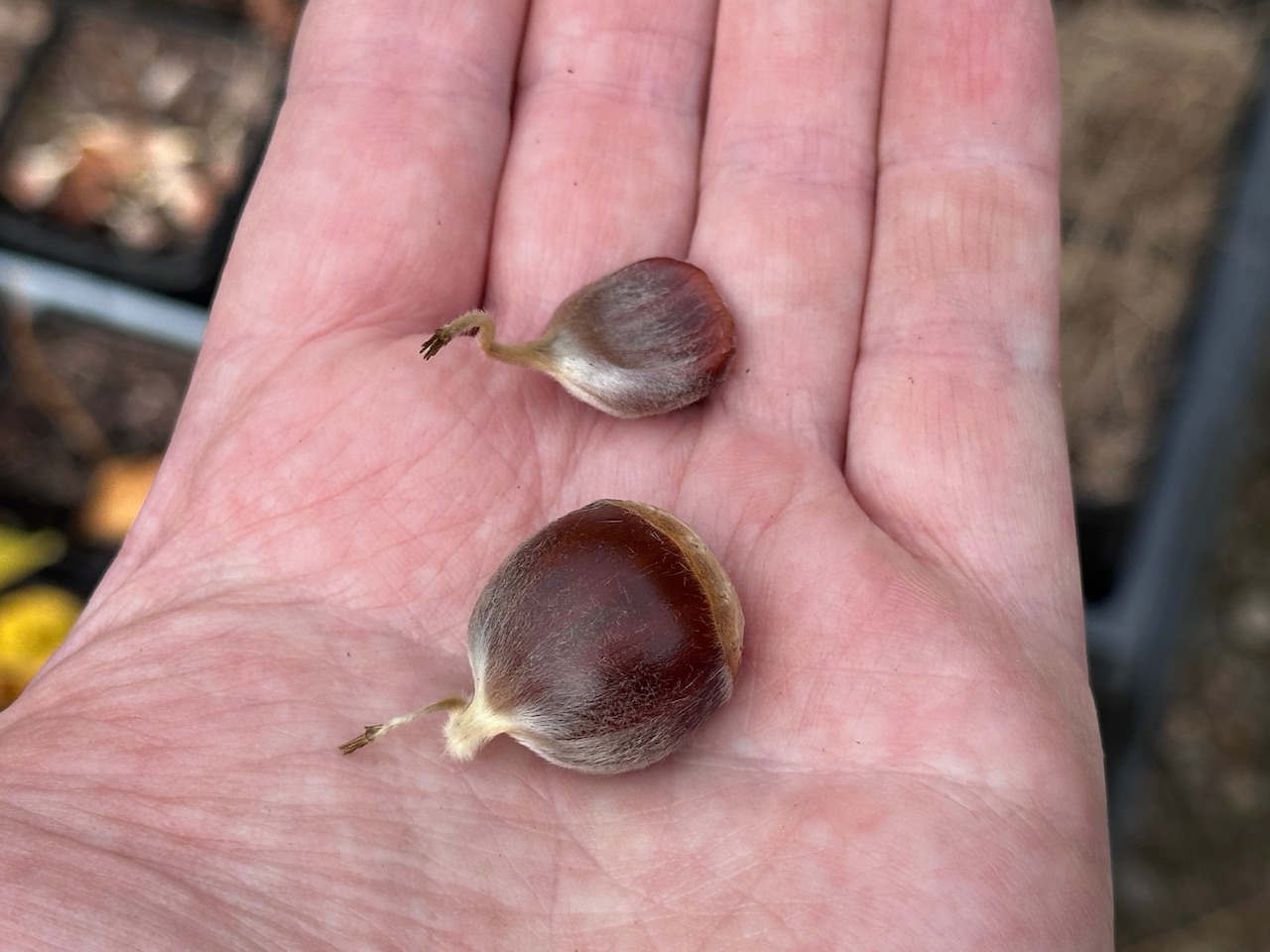
Most burrs were duds, but I finally got my first fertilized pure C. dentata out of one of them. Not surprisingly it was the burr closest to my other tree that put out small catkins for the first time.
5 Likes
Are these from a particularly blight resistant American chestnut? Or it’s it just of off young trees in area that might not even have Chinese chestnut blight yet?
So I have seed from a few different sources from people who grew pure C. dentata with no other genetics known in the area. This source was out of central PA. He obtained seeds from trees that were hand pollinated decades ago from old, surviving trees. He grew them out and had a few trees that grew large and resisted the blight. That generation is what this tree is from. I think he’s onto another generation now.
I have 2 large trees from him now, but unfortunately this one has cankering near the base. I’ll probably cut it down before spring because it attracted ambrosia beetles.
One of my other sources was out of upstate NY. He was a supplier to Sheffields for awhile. He ended up moving and had to leave his orchard behind. I have 5 trees growing from him.
My 3rd source is from one of Bill Deeter’s restoration orchards in IN. I have 4 or 5 from him that need to be planted.
There’s also a 35ft tree I have in my back woods that must be a sucker from a long gone tree. There’s a lot of chestnut basal sucker growth here along the roadsides.
3 Likes
I got a few dozen chestnuts this year from trees I planted as seeds in 2019. I collected the seeds from an unattended tree growing at an old farmstead, looked chinese. Nice size and excellent tasting! After a late frost caused 99% fruit failure,’it was nice to get something !
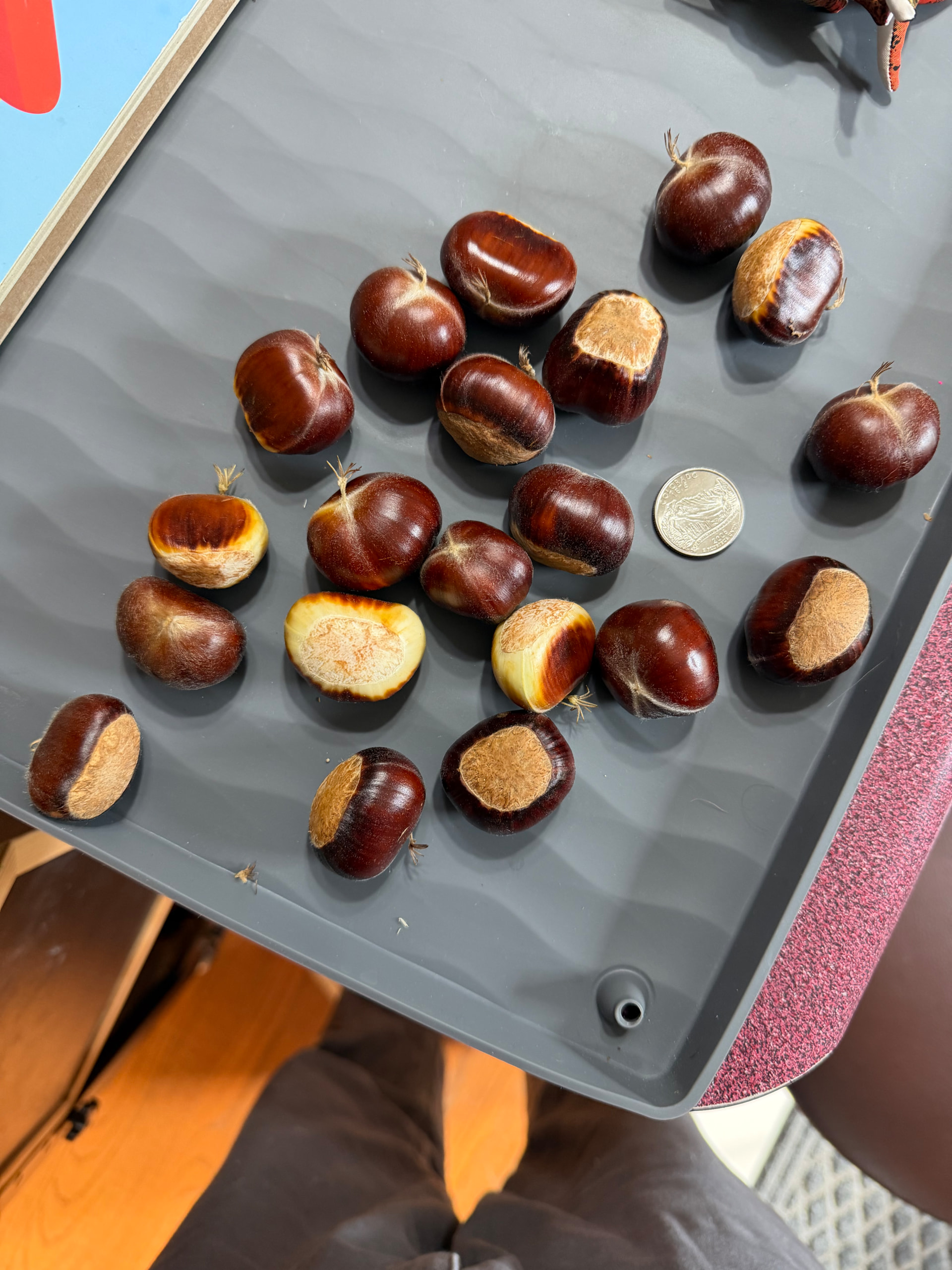
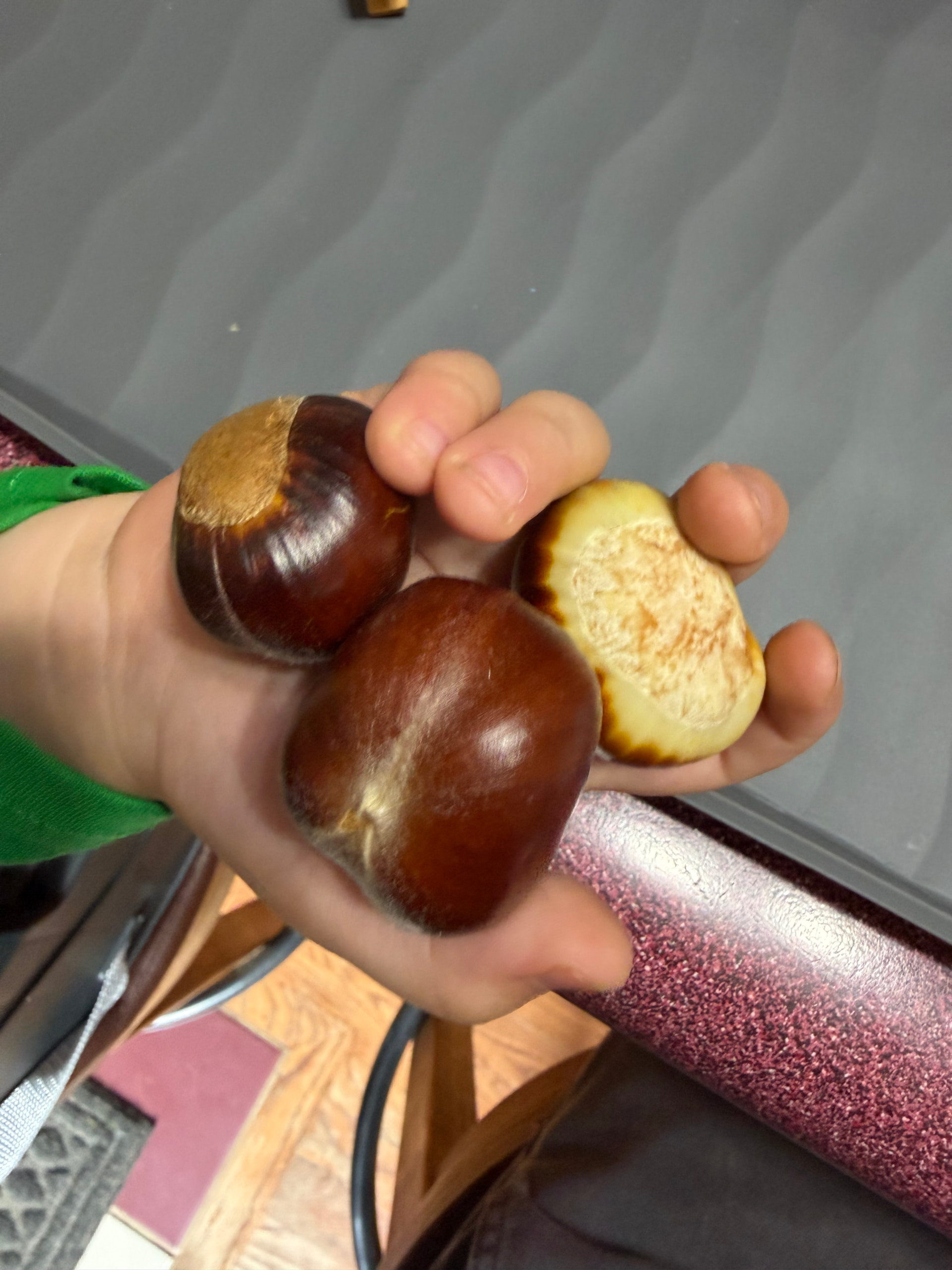
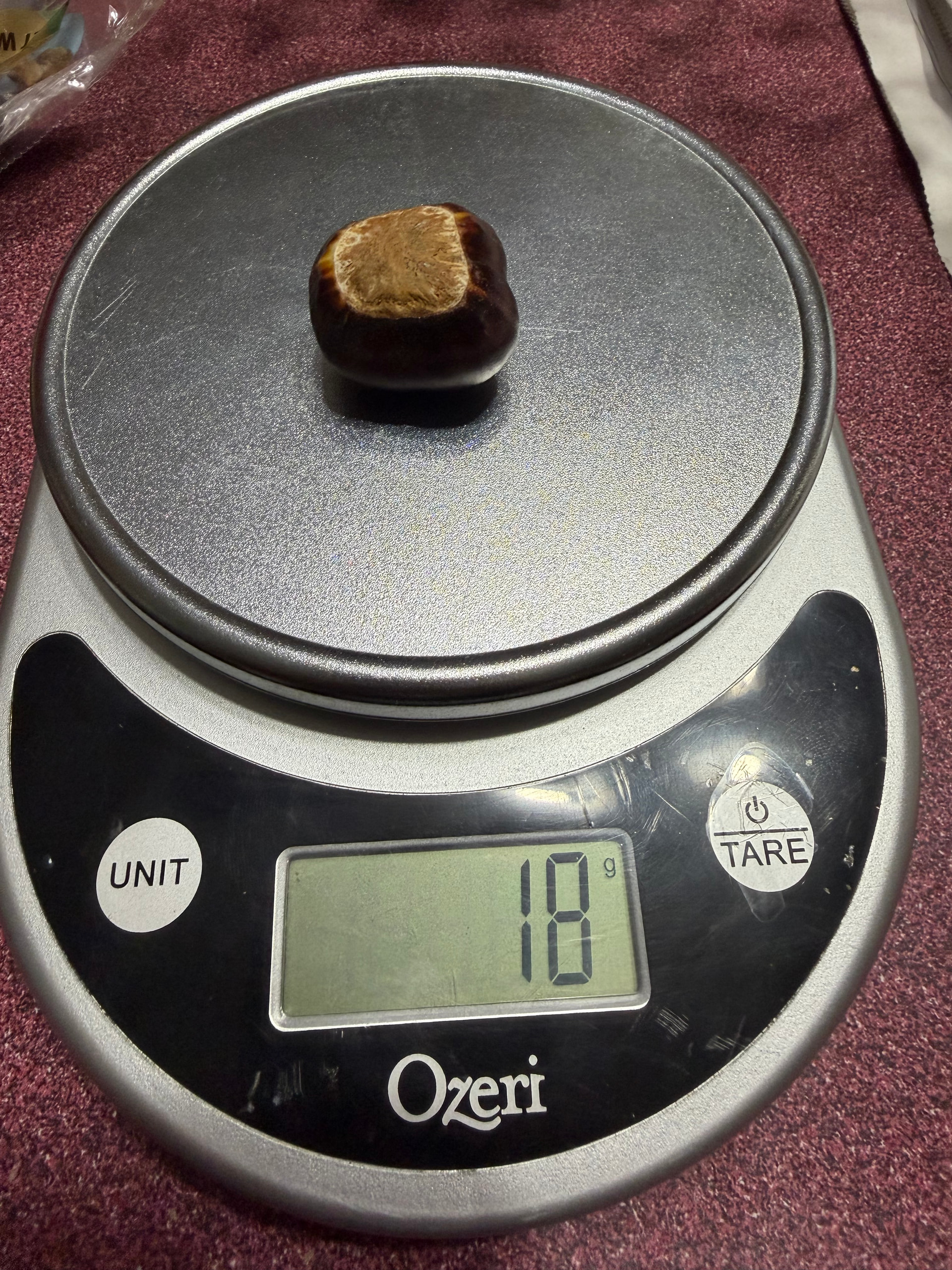
*Disclaimer- that’s my toddlers hand in the pic holding them
10 Likes
Nice work!
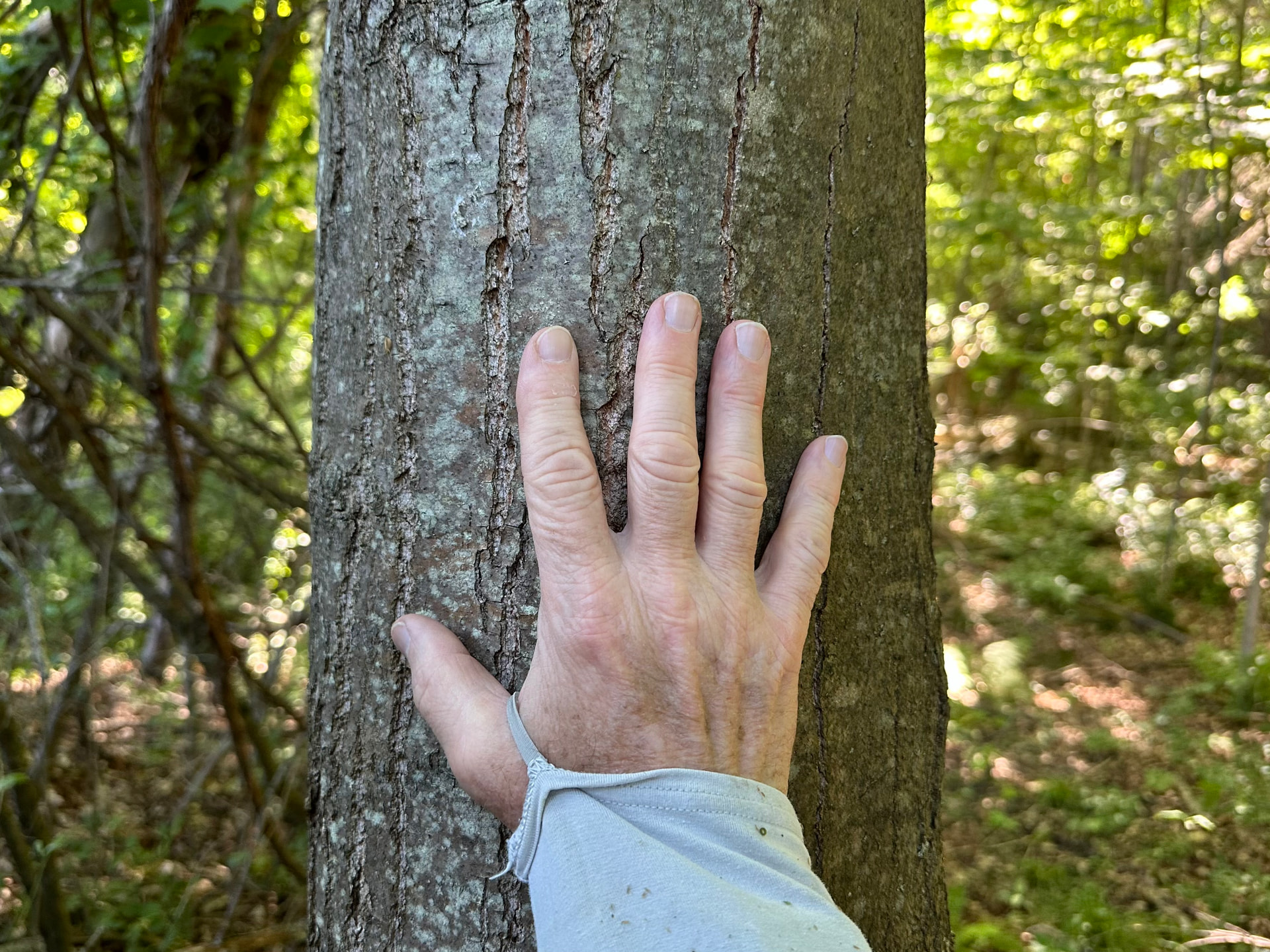
In 1998 I planted 25 pure American Chestnut seedlings that I got from the American Chestnut Cooperators. I planted the majority of these seedlings in the forest which had been opened up by a terrible ice storm that we had the previous winter. All the forest planted trees didn’t make it due to competition from other trees but two on the forest edge survived. One got blight over 10 years ago but the other is growing strong, producing nuts and shows no sign of disease. I have used this tree as a pollen parent in a cross that I made with Bouche de Betizac (Japanese x European).
17 Likes
I’ve got a good crop of chestnuts coming off of the lone chestnut that my parents planted almost years ago, I’m not sure the variety but it had a Japanese x European label still.
It had a few early drops and there are a lot more nuts coming.
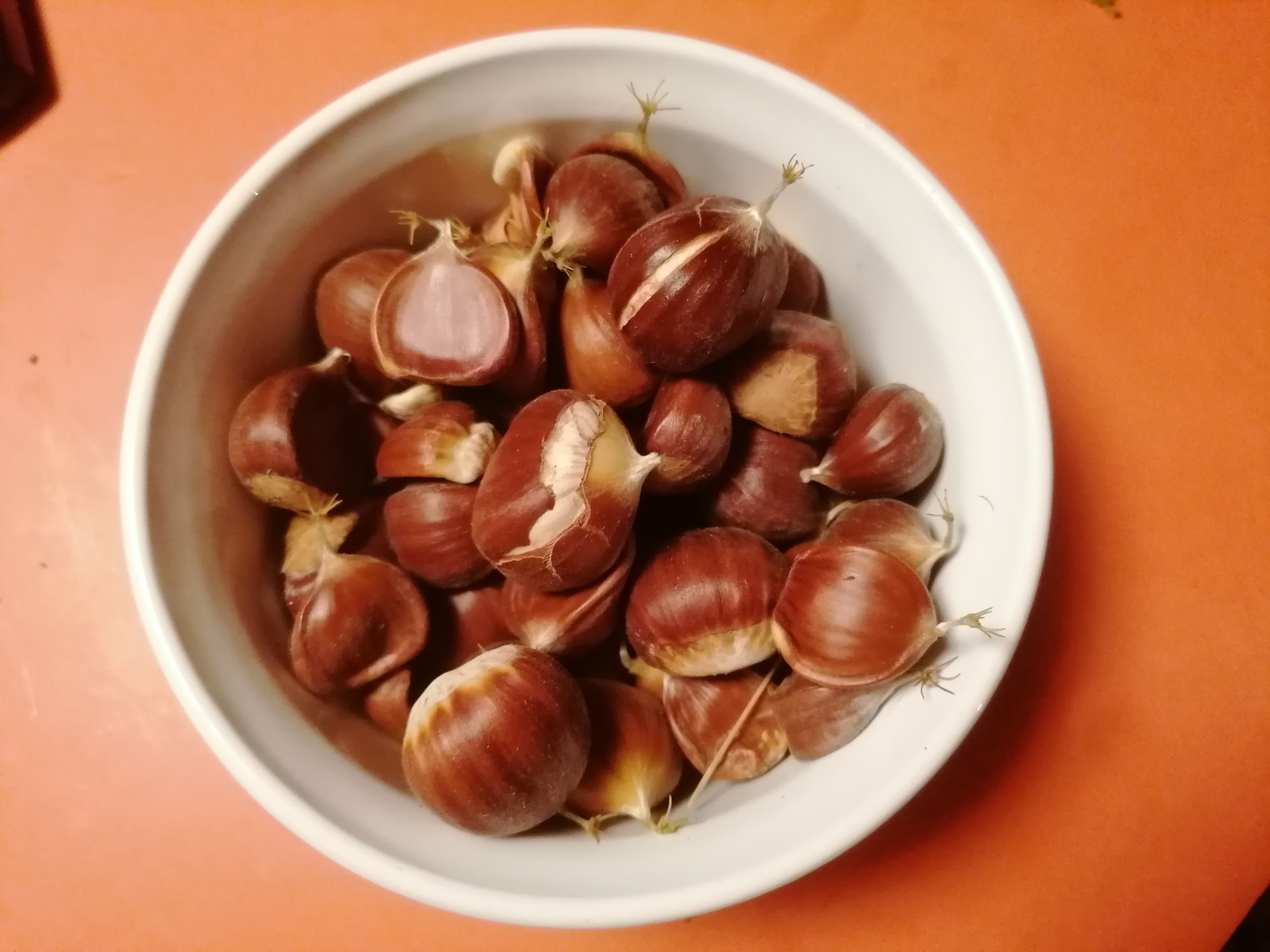

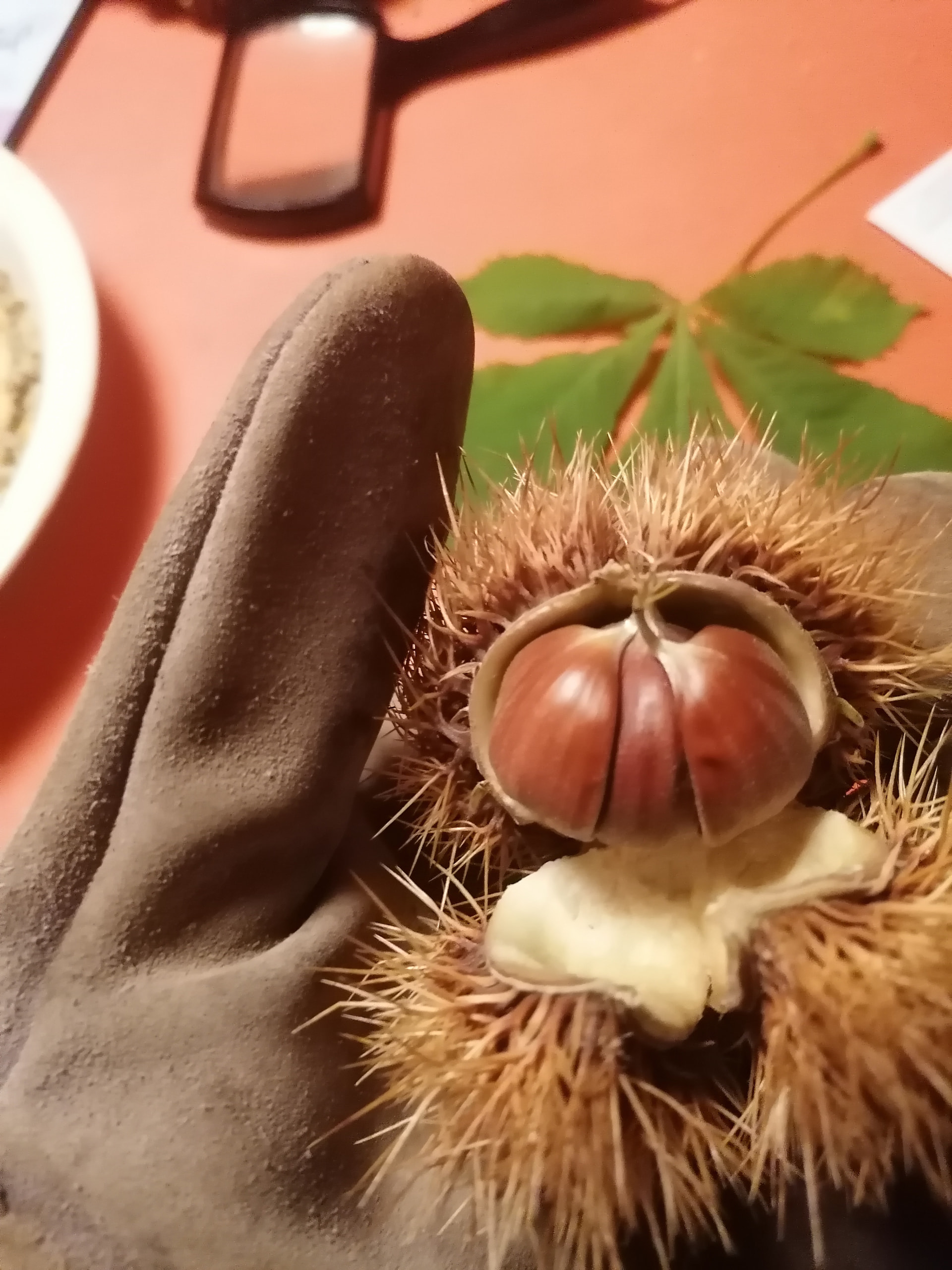
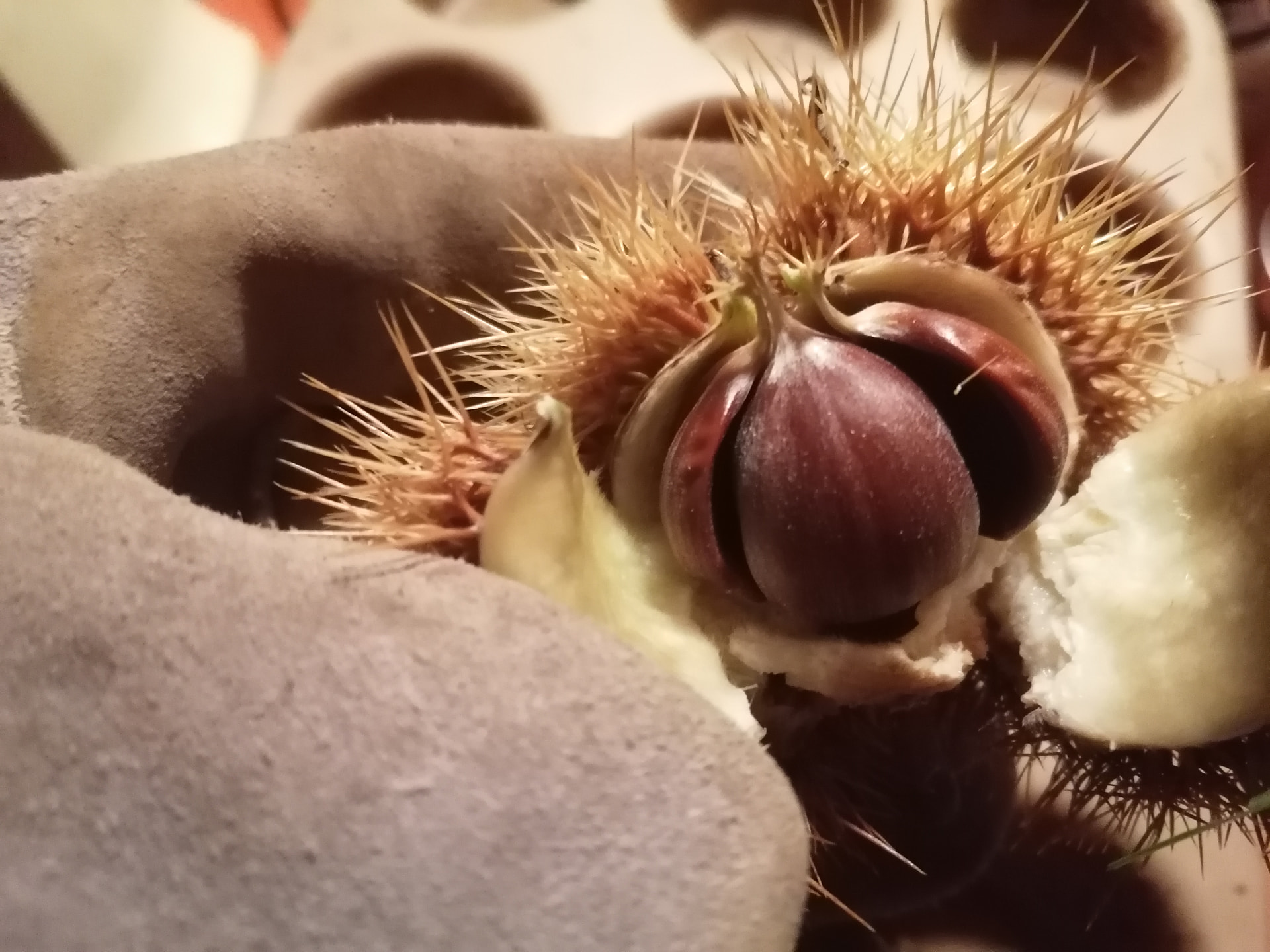
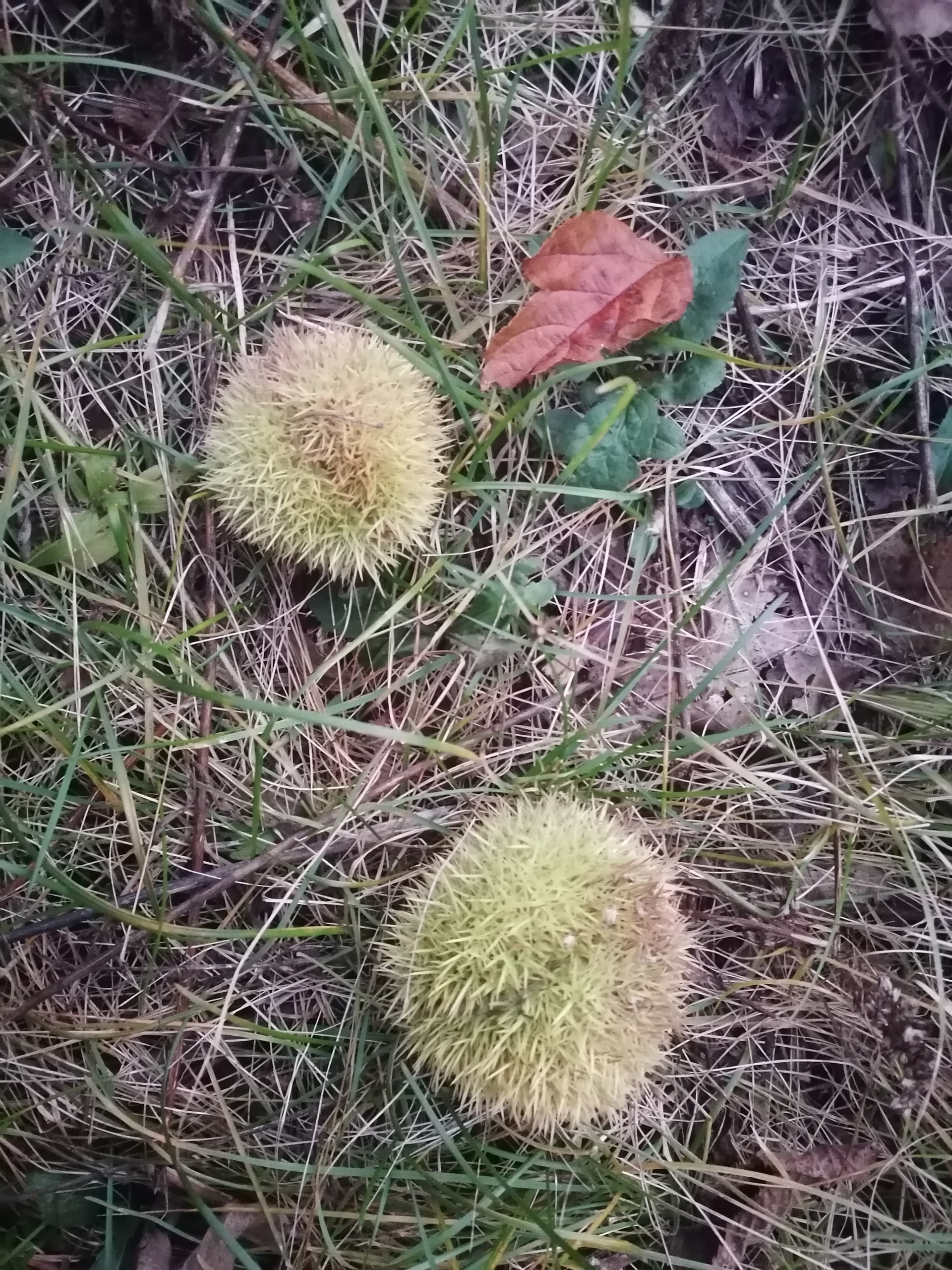
Unfortunately our Dunstan’s burs are full of nothing but empty shells, is this common? I have lots of young trees of various genetic mixes coming so maybe the Dunstan will improve with a different pollinator?
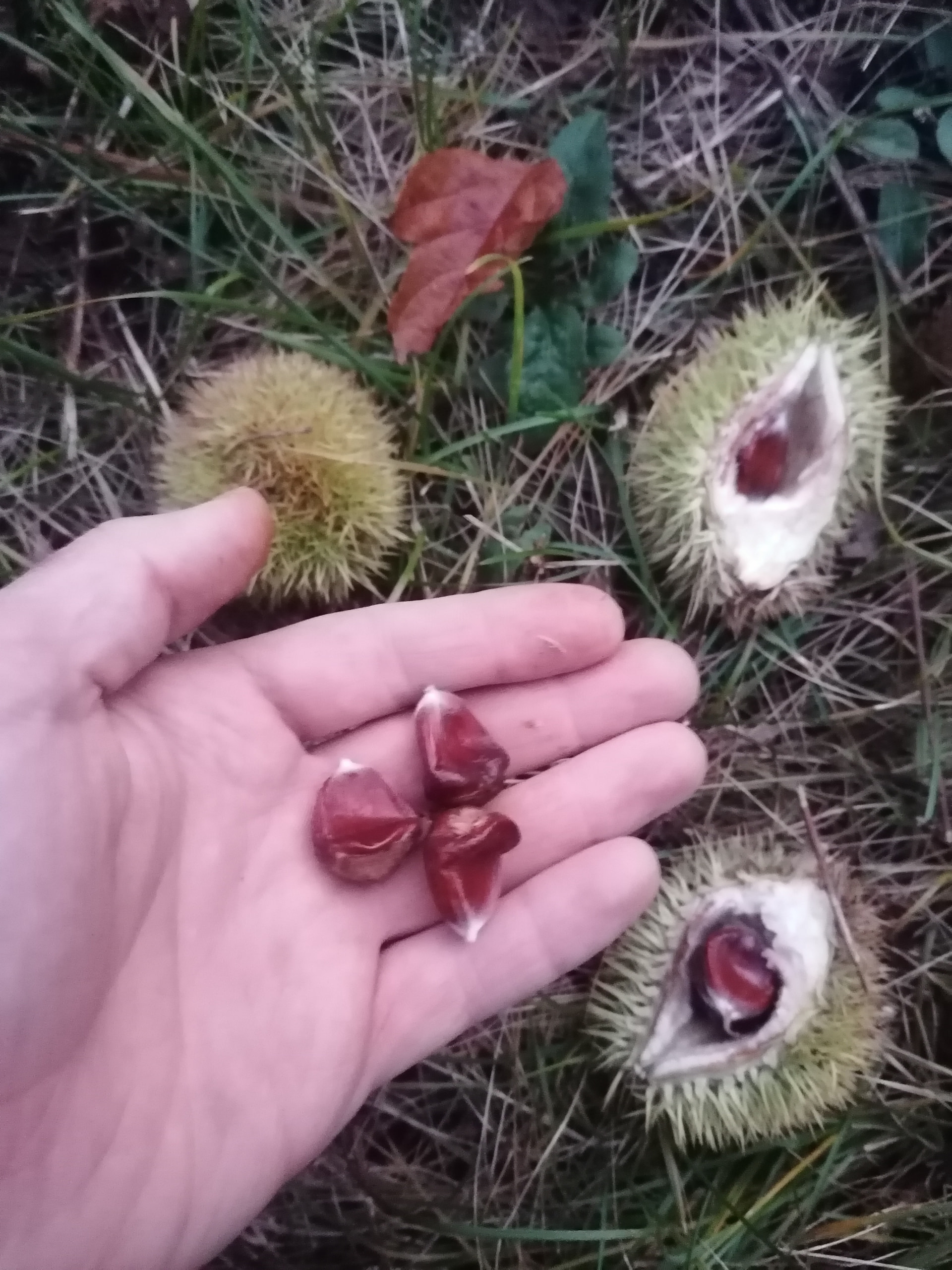
2 Likes
I would really like to have a chinkachestnut meaning a single nut per burr with the size nut typical of a chestnut.
I went to the chestnut planting near Muscle Shoals Alabama and collected a few nuts from specific trees. One is a hybrid American X Chinese that mostly favors Chinese chestnut. It is known and proven to be resistant to both chestnut blight and ink disease (phytothora).
I also collected 7 nuts from a young tree that shows almost entirely American traits but no sign of disease issues.
There was some work done in the planting by ACF personnel to make crosses with the disease resistant tree. I waited until they had collected the crossed nuts before going to see what was left.
My plan is to grow seedlings and carry them back to plant on the open areas. There is room to put in a few thousand more trees with no issues.
5 Likes