According to this article, marigolds are insect repellant.
You’re getting a lot eggs! Do do you sell or give them away, other than what you keep? I like eggs, but don’t know if I can eat them every day. My wife less so. What I see happening is we end up giving most away to relatives.
No I wouldn’t want to just throw their feed in their flooring. I have some ideas on how to do that. Probably use a PVC pipe gravity feed system with holes in it for that.
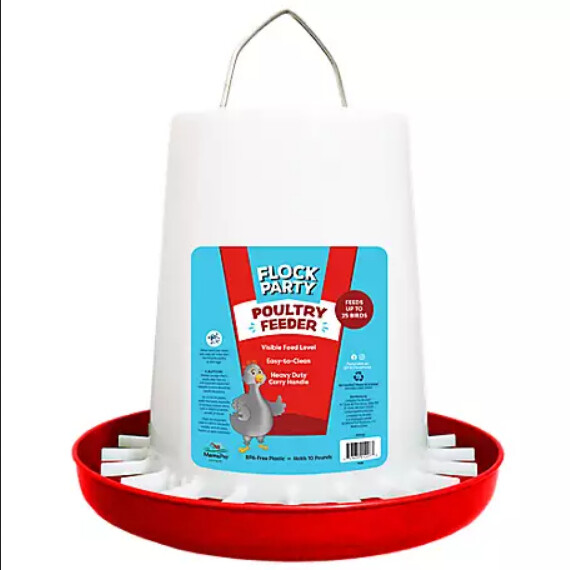
This is what i use to feed… 2 of them for 40 birds. Takes 2 days to wipe them both clean… I store them in totes when i put them up for the night.
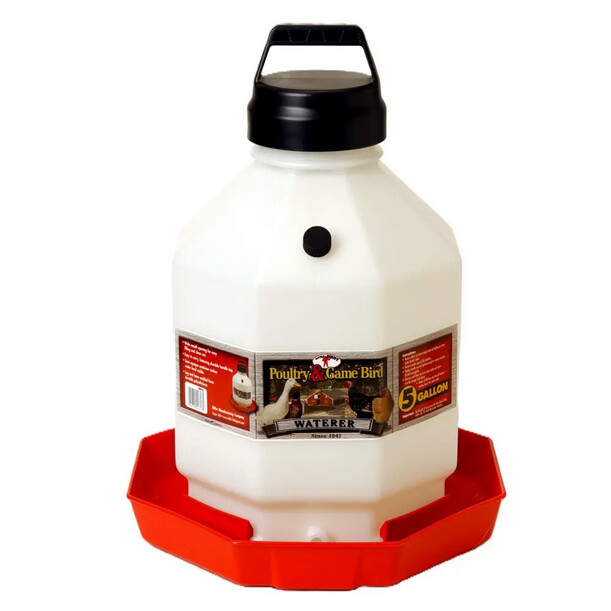
2 of these to water- (the octagon ones are better imho)
I have 5 farm dogs… so they will be getting them in their feed going forward…
I have sales at about 8 doz per week right now… but the cartons are the tipping point of that business. I am trying to get that figured out with donations as they are sold… and getting more folk involved into giving me cartons.
My sale price is $4/doz with nobody balking at that price.
It doesnt cover cost at all… but it helps.
In a nutshell… this is kind of where i want to be (on a much smaller scale)… im not there yet.
dont worry about cold. as long as the wind doesnt blow on them and its dry in there, theyre good. i have open eaves in my 10’ x 10’ coop. no insulation or heat and my birds came through -40 with no damage. only thing i do different in winter is add cracked corn to their diet . thats all they need to keep them warm.
The sweeter heaters I picked up can be hung overhead above roosts or otherwise mounted and use very little wattage, like 100 watts for a big 11x30 panel…I just don’t want to take any chances with frostbite or to be honest, the chickens having any sort of suffering, so I bought an extreme temp extension cord and will just run it. They can go in the coop during the day if it’s too cold and warm up, as well.
I do have an acquaintance who does deep litter and says the composting keeps it warm enough in winter. We’ve been doing deep litter…I should stick a temp probe in the coop and see where it’s at overnight now that the cold weather is here.
probably got too moist in there. i even keep my water in the run to ensure the humidity stays low. if you keep it dry and draft free, they can survive crazy temps.
the worse thing you can do is heat them. if the heater dies or the power goes out they WILL freeze. what happens is like plants hardening off. if they dont have a chance to adapt to the cold temps, when you lose the heat they will die. i live in one of the coldest areas in the lower 48. no one heats their coops here. they have learned the hard way. supplement with cracked corn and they will do fine.
A very interesting rabbit hole will form when trying to learn about this.
It is a Myth, Old Wives Tale and a Fact… of course when the information is via open discussions.
Some folk even feed their chickens suet cakes… and various other things.
I think from reading between the lines that giving them plenty of scratch grains which i think all include corn… is a good maybe better option than just corn.
And that this old remedy of feeding corn was probably started way before modern feeds… My modern feed has corn, soybeans, canola, wheat and vegetable oils… all will at some point or another can be turned into fuel that can be ignited…so obviously has the potential of a high energy source of food…
Also that information possibly dates back to when chickens were smaller.
So not trying to disprove anything at all… as it obviously works for some if not many folk… but im also not sure that just cracked corn is key.
Cracked Corn is however cheaper… and for those folk that only free range or only feed the cheapest feed sparingly… would be a better option than not.
I do remember as a young boy visiting various farms and seeing their chickens in poor situations as well as health… even eating each other. As those farmers only fed their chickens a few handfuls of cracked corn here and there. But times were hard then and im sure that they thought that they were doing the right thing.
It’s a radiant panel and is incredibly safe. It’s not like a heat lamp. It warms the animal standing under it. I definitely live in a colder environment, and chickens will get frostbite here. Not all breeds are super cold hardy. Regardless, they’re just plain cold, or they’re uncomfortable. Surviving isn’t thriving or even contentment.
I realize this is a controversial topic, but I’m firmly in the supplemental heat camp. The cost to run is minimal and the risk is negligible so it isn’t a big deal to me.
they get about 2c of cracked corn in late afternoon for 30 birds from dec to mar… its not alot. just to help fire up their inner furnaces to keep them warm though the night. its standard practice here in the north… i also supplement with soldier fly larvae when laying and molting for the extra calcium and protein. i do give scratch occasionally for variety. they also love meat scraps from the butcher shop i work at. my birds have maintained a steady proper weight this way despite brutally cold winters. their primary food is 18% protein layer pellets that makes up 90% of their diet… in summer i feed lots of fresh grown kale and weeds ive pulled. they really love the dandelions. i have a kiddie pool on a pallet in their run for water. sometimes i trap minnows from the pond across the street and put some in there to watch them fish them out. keeps them occupied for days.
You’ve seen pics of my coop. It uses old rough hewn wood for the walls with narrow gaps in between the boards. What do you recommend for filling in the gaps in the would to prevent drafts? Would just putting up OSB on the inside be okay?
You said there should be a gap in the top part of the coop to allow it to ventilate out moisture for the winter?
I’ve heard some folks use linoleum or smooth plastic flooring for the coop floor to make it easier to scoop out. What do you think?
I put tar paper in my new shed/barn… as i had a few rolls left over from a roofing job on my house.
House wrap is easy to work with and cheaper… I just built a puppy pen out of pallets and lined the walls and the floor with it… until they get older… makes cleanup much easier…
This is what i used…but there are many other options as well.
For the floor long term maybe something like TYPAR if its in the budget…
Or there is always gravel fabric which you could use on the walls and floor… i know that it stands up to heavy foot traffic on some local nurseries as thats what they use in their open areas…
mines board and batten. i just screw a heavy tarp covering the north and west side of the coop, also covering the open eaves on those sides as well, from nov.- apr. that takes care of any cold breezes that could hit them. my floor is advantec and i use sand about 3in thick. every few days i scoop out their droppings with a cheap hay rake. retains less moisture than using woodchip bedding and alot less work to maintain. i make a pile near the coop that i pick up with the tractor every few weeks and dump in the compost pile. i only add sand about every 3months or so. i imagine linoleum would work good for a cheap durable floor cover.
Thanks for the tips y’all. I’ve been battling a post hole I’ve been trying to dig. It’s important because it’s going to be where I hang my gate. The problem is that it’s about 4ft from a 30ft sycamore tree, so you can imagine what the issue is, big roots…
I’m using a cordless sawzall, and it’s struggled to cut thru 2-3" diameter roots. My blades probably aren’t the best of shape, even tho they’re 6 tpi blades that should cut wood easier. I’ve ended up using my double serrated pruning hand saw to cut the roots, it makes easier work.
I expected roots but not this many, all the other holes were pretty much root free, but it’s about done.
I decided to use 1/2" wire mesh for my run, I can get a 3ft by 50ft roll for about $65 off Amazon, so I’ll need a couple rolls of that.
Your choice… but you can drive a stick of rebar in then drill a hole in your post (caulk it with liquid nails) and set the post on the rebar if needed.
This is the wire I used for my 100X80 orchard/chicken haven… as well as the fenced in run…
You will however need 7ft T-posts… but i think 6 foot wire is minimum for where i live… YMMV though.
Good stout wire thats pretty easy to work with.
(If you see dented rolls or look for them at various TSC you can get them for up to half off if the manager works with you)… I bought 1 roll and got the rest half off… the manager was glad to be rid of them…
My advice is from trial and error and farm life… not trying to steer you one way or another just sharing what has worked for me.
The only other advice i can give is to frame out your run with 2X4s for long term satisfaction. Things will try to dig their way in…and the chickens will try to make their way out otherwise… YMMV on that too but i learned that the hard way also.
I’m looking more for something like this especially around the lower part of the fencing closest to the ground. Don’t want anything to be able to reach into or slither in.
I actually have several segments of 3ft and 4ft welded wire fencing leftovers from when I put them around my fruit trees to keep deer off them. So I plan on using that too.
I’ll get the roots out of that hole, it’ll just take a little work. I got it dug down to about 17", just need a few more inches to go.
I’ve had rat snakes in my shed, it was after some chicks in a nest in the soffiting. That was quite a surprise to see. I walked in and saw it laying on a cross beam in the rafters, have no idea how it got inside the shed.
Well I guess I’ll need the hardware cloth all the way up the sides, no big deal. We have seen several king snakes and black racers on the farm. I had to kill a rattler about 20ft from my shed a few years ago.
The other probable predators would be coons, weasels, possums and coyotes, but I doubt they’d get too close to our yard with our dog in it. I’ve been hearing them howling lately at night.