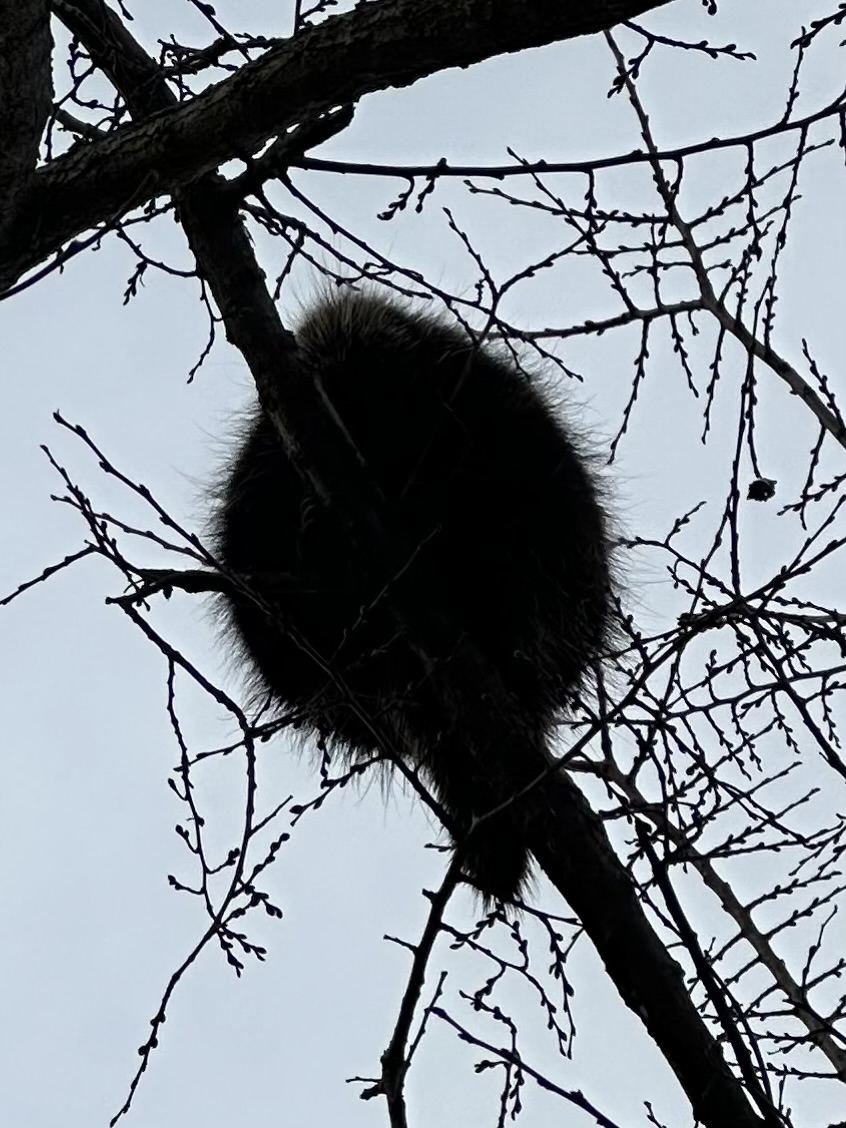
I have always planted fruit and nut producers but in 2007 I decided that anything that I planted going forward had to be food producing. Since then I have created a very diverse collection of tree crops focusing on the less common. Our home is surrounded by forest and over time I have had an increasing problem with deer, bear and porcupine. At the same time I have gained a lot of knowledge about what can be grown in our area successfully. I wish to take this knowledge and create a community orchard, a commons, with the goal of introducing to people the diversity of what can be grown. My hope is that I can used town own land in the village where there isn’t the herbivory pressure that I experience at home. I have given one talk about my goal and it was well received. I’m wondering if anybody on this forum has taken on such a project.
Good luck. Tried that here and community gardens and municipalities often shy away from trees for a number of issues. Though some Churches with food programs have been an exception.
A guy and his wife that go to the same church as me run a community garden. They own a small cafe in Norwood Ohio called:
For The Life of The World Cafe.
You can contact them about any questions on the subject.
Thank you Danny. I have good support from the community not sure about our Selectboard.
Thank you Ethancactus. I will reach out to them. I have private landowners that are interested in me doing plantings on their properties which I do but I want to establish something where the town takes ownership and support. A big part of what I want to achieve is building community.
The most successful community orchard in Cincinnati Ohio is said to be at the corner of Roll and Ralston ave. 45223. That group didn’t shy away from fruit trees.
Great to hear. But many community gardens only allow annuals. And others restrict any spraying period.
All Cincinnati orchards are required to be organic to be part of the Civic garden center program. While the CVG discourages fruit trees they are more supportive of berries and bushes. They really like annuals. There are other groups that work more on individual help with city support.
Vermont is a good state to do this in. Community oriented. We have some here in the PNW. I volunteer at a city park that allows people to harvest the fruit. There are others here in Portland as well. The largest I know of is the Seattle Beacon food forest. I would talk to someone in the parks department. A guy let me plant some fruit because he is a forward thinking guy in a different park. Connect with the right person. I second the idea of churches. I know a guy who is planting food forests in churches. A good attraction for the church too. You will probably get some rejections, but keep going. Also most schools now allow some gardening. I planted an orchard at a school I volunteer at.
JohN S
PDX OR
Thank you for seconding working with a church since our small village does have a Congregational Church with a good amount of area to do plantings. I will reach out to them.
I forgot to add that also have an orchard. Im not sure if they are an official community orchard/garden
Are you in Southern Vermont, or Central. I used to live in Vermont, and I have never heard of there being porcupines there.
Southern Champlain Valley of Vermont. Plenty of porcupines here.
Hi David (and everyone!), fellow Vermonter here (Middlebury area). I wrote a few grants and received the full amount on each. My idea was to build a food forest at our local middle school, building in a curriculum around nutrition, plant science, economics etc. which could happen during TA or study halls. Unfortunately, the principal was a control freak and a terrible communicator. I’d email questions, and then never hear back. After three or four attempts/months of radio silence, I gave up, mainly because the window to order plants and planting was never going to be met and I had started writing him in November. (I used to sub there, so I knew all of the people.) I tried again at another school, and that principal’s concern was that someone else would be stuck taking care of it, and therefore was very leary and really wasn’t interested. Fair point.
Maybe though, if you contacted a high school that already has a technical center that also has some sort of plant department, they may be more willing and have a better idea of what is involved. I can look back and see if I can find the grants if you would like to use them for some of the cost. I had also approached the food pantry while dropping off gallons of blueberries. The fella there was very interested in the idea of permaculture, but the pantry was on rented land and so that was a non-starter.
I didn’t want to add more work to anyone’s plate, so I thought that a school would be great. TA’s or Teacher Advisories would have been a good time to fit it in, because teachers have smaller numbers then–10-15 kids, and it’s usually about 25 minutes long. That many kids could get a lot of work done, and it would be at least one less prep for the teacher who is expected to have daily activities to help bond a small group of students. In the winter, as you know, there are still activities that need to be done–kids could learn how to prune, start seeds, etc. Maybe there is a small private school who is freer to include such a thing into their curriculum. There are so many tie ins. Cooking, for example could even be used to gain funds to keep it self-sustaining. Just selling plain fruit, could add a substantial amount to the bottom line. Kids could do presentations or work out a buddy system with younger kids…so many possibilities. I’m now 65 and just didn’t have the fight in me to push it through, but I think that there needs to be someone who will be accountable on the grounds rather than just public land, because it won’t always be you. Also, there should be a water source nearby, especially when things are just starting out. Other equipment handy? One grant dealt with that as part of the budget, where carts, saws, shovels, etc. could be ordered. I hope this helps.
my plant bff michelle teaches 4th and 5th grade in the los angeles area and has created a lovely garden at her school with a few fruit trees. i’ve donated plenty of plants to her school garden over the years. her students really enjoy working in the garden and seeing all the associated critters. naturally there’s been a few bureaucratic challenges, such as aloe arborescens having to be removed because of its “spines”. and there’s always a concern about the school district sending out a memo about how fruit trees are no longer allowed at schools because one kid had an allergic reaction to a strawberry guava. for the most part her principle has been supportive. naturally principles change over time. so do teachers. michelle isn’t too far from retirement age. when she retires, what happens to the garden? the other teachers enjoy it, but they don’t want to do the work of taking care of it. same with the school gardener.
really the issue is about how an organization’s priorities are determined. in my own hoa community there’s a small park. i noticed that two jacaranda trees in the park had died from being too wet. so i talked to the gardeners and we secretly replaced the two dead trees with a couple of fruit trees… a grafted black sapote and a seedling nance (byrsonima crassifolia), both had been in 5 gallon pots. the two trees established over the summer and the nance flowered, but it didn’t survive the severe winter winds. the next spring i replaced it with an ice cream bean tree (inga sp), which established nicely. but that year the black sapote was stolen. a few months later the hoa board removed the inga, because they didn’t want fruit trees in public spaces. at least they gave it back to me rather than throwing it away.
i wasn’t deterred. my fig collecting friend in the area had given me a bunch of 5 gallon and 15 gallon figs that he had culled. its not because they were bad, its simply because they weren’t the best of the best. so far i’ve planted nearly a dozen 15 gallon fig trees in front yards in the community. the figs and my labor were freely donated, but with the agreement that anyone walking by was welcome to pick some of the figs. so we basically have a community fig orchard, but its not centralized, its decentralized. its a distributed orchard. i also freely planted other fruit trees in front yards such as loquats, pomelos and lemons.
outside the community is an overgrown drainage ditch where i’ve planted quite a few figs and other fruit trees. the results have been mixed, most of the losses have resulted from very hungry packrats and rabbits. i’d never seen all the bark completely stripped from a 15’ foot fig tree. it was planted by the birds, and its coming back from basal offshoots. i love nature but wish there was someway to help the critters understand that its everyone’s interest if they’d just let the fruit trees mature and fruit.
my friend don hodel has been planting rare figs in public parks near him with the city’s permission. the figs he plants though are tropical figs, not the common fig. i’m not sure if the city would have given him permission to plant the common fig. in the past couple years i’ve made 7 crosses between the common fig and tropical figs, and so far i’ve given my first couple hybrids to don for him to eventually plant in his parks. i’ll share seedlings of the rest of my hybrids with him when they are larger. hopefully some of my fig hybrids will turn out to be “edimental” (edible + ornamental).
a year ago i bought a 10 acre orange grove and nearby home in central florida (sebring). i’ll probably move there at some point, but in the meantime i plan to visit a couple times a year. in the public fb group for the garden club of sebring, i recently shared my solution to the problem of organizational priorities.
Hi Barb, I’m near Middlebury and have done a fair bit of fruit growing. I’m older than you and I’m not eager to grapple with bureaucracy, but the idea of a shared educational food space is compelling.
Hello Barb, Thank you for all that you have shared with me of your experiences trying to establish a planting at your school. Starting in the 80s I volunteered with both my town’s grade school and local high school. I did nature walks with both but also did tree plantings within town some on the school grounds with students help. My goal is to find a community, I hope my own, that will allow the establishment of a community orchard on town owned land drawing together volunteers that will do the plantings and care for the fruit and nut trees. I love to propagate trees and for many years have given away trees that I have propagated and fruit trees that I have grafted. In 2024 I gave away 300 trees, wildflowers and perennials. Luckily I not in a rush so I will be happy with a slow acceptance of my hopes of doing a planting. I gave a presentation in town last May that was well attended. I’m close to you, we are in Orwell, so we are practically neighbors.
David, T\that’s amazing that you are so close. I’m getting myself psyched up to start pruning, and even have ordered a mini chainsaw, which will make the task so much easier! I went into the Aubuchon store, and the fella I talked to raved about his. I have 40 well established blueberry bushes alone, and those are probably what I will start with using my electric pruners. I have a wide variety of things growing here, so if there is anything that you’d like, let me know and you can come get some; chances are, I probably have it!
Hi David:
I live near Houston, TX, and have been a (rabid) fruit and vegetable gardener for decades (I grow hundreds of fruit trees in our 1 acre orchard and manage very large vegetable beds, donating most of the produce from both). I have designed and help plant several community garden orchards in this area over the past 20 years (through United Way, at churches, YMCAs, in city-owned parks, etc.). Some have succeeded well, others probably languished. We have a local non-profit (Urban Harvest) that promotes sustainable urban gardening initiatives in the city (they have over 160 affiliated gardens, most are focused on food production, especially in so-called “food deserts” and under-served communities). Be sure you look at their educational materials and videos about starting a community garden here: https://www.urbanharvest.org/gardens/. I am good friends with one of the original co-founders of Urban Harvest (Dr. Robert Randall). Be sure to also check out his community garden suggestions on his website: https://yearroundgardening.me/