Tomatine is too large and polar to be volatile. The main compounds responsible for tomato leaf aroma are 6-carbon aldehydes and a mix of mono- and sesquiterpenes.
Corn can apparently release ammonia from its leaves, but I don’t know if it releases enough to be perceptible by human noses.
The primary factor determining ear number per stalk for modern corn varieties is plant density. At high densities, 30+K plants per acre it’s mostly one ear per plant. At lower densities it can be 1-2 ears per plant. Highest yields of field corn are at high densities in narrow row spacing. A good density for sweetcorn is about 24,000 plants per acre. A bit less than 2 sqft per plant.
Plants in outside rows will usually have more and bigger ears because those plants receive more light. A lower density provides more light per plant thus more and bigger ears per plant.
In the 1950s when I grew up on a dairy farm our planter had a trip wire anchored at one end of the field that caused it to drop 4-5 kernels every 40 inches. This resulted in hills of corn spaced 40x40 inches. Thus you could cultivate for weed control in two directions, Now modern field corn is planted in 18-30 inch rows with plants spaced roughly 6-12 inches apart in the row.
I planted and sold my first crop of sweetcorn in 1962. And I used clear plastic on the soil suface to warm the soil for earliest harvest. I beat everyone to harvest.
Yeah, i’m probably in the same boat. My wife likes to run those scented melted wax thingies. But I can’t stand them, I call them “stinkpots” because they elicit some kind of repulsion to me. Well repulsion may be too strong a word, but I just don’t like them. Sometimes when she’s not looking I’ll switch them off. And eventually she’ll ask if I turned them off. I can also smell when it’s about to rain without knowing it’s in the area, probably the ozone or something.
Regarding tomatoes, she loves the smell of the plants but to me they smell like dirty wet socks. Plus after working in a tomato mega-greenhouse for a year, I have less tolerance for the plants. I’d often come home with my shirt caked in the pollen and rosin. Somehow we ended up with about 40 plants this year. A lot of them were volunteer plants that just sprung up on their own.
Our corn is about 3-4ft tall now, I suppose now would be a good time to hit them with a sidedress of some N?
We used to plant different corn with a 4 row cyclo air planter towed by my farmall m , and they space 36” which as @fruitnut said was the way it was done. We planted sweet corn, field corn all with the same planter. Everyone here has made great points. It is all about nutrients, water, genetics, climate including sunshine for photosynthesis. I realize as I read this what everyone is saying is accurate. We have to see these slant on each method.
”GMO corn varieties can increase crop yields by 5.6 to 24.5 percent compared to non-GMO equivalents. This translates to significant bushels per acre, contributing to overall higher production levels.”
Is higher production your goal? It is not my goal I prefer better quality. If your living depends on higher yields open pollinated will yield less and make you less profit. Hybrid corn can’t uptake 7 nutrients with cobalt being the most important but open pollinated corn can. I love hybrid corns like peaches and cream. I’m pointing out that gmo corn hybrids are really not great for us. Before someone misunderstands im not saying all hybrids are gmo but I am saying gmo are hybrid. Peaches and cream is not gmo. I am saying starlink corn yields were very high and very bad for anyone involved StarLink corn recall - Wikipedia
I think many of you will find this Nutrition Matters article both informative and fascinating. I also suspect many of you will be scratching your head in recognition that you have never, ever considered the use of this mineral as part of a genuinely holistic nutrition program; I think you will soon agree that it’s time that this neglect was addressed.
We are going to be looking at cobalt in terms of its role in the soil, in soil life and within the plant.
We find that almost 50% of the soils that we test lack sufficient cobalt, so it is a really common deficiency. “What does this mean?” I’m sure you are wondering. Well, let’s begin by considering the roles of cobalt.
The roles of Cobalt
Cobalt plays a crucial role in crop health and productivity, impacting soil life and legume root performance.
Perhaps the most important role of cobalt relates to its essential role in the formation of Vitamin B12. Some of you may recognise the importance of this particular nutrient in human health, where exhaustion and anaemia are just two of the deficiency symptoms. Let’s look at why it is so important in plants and microbes.
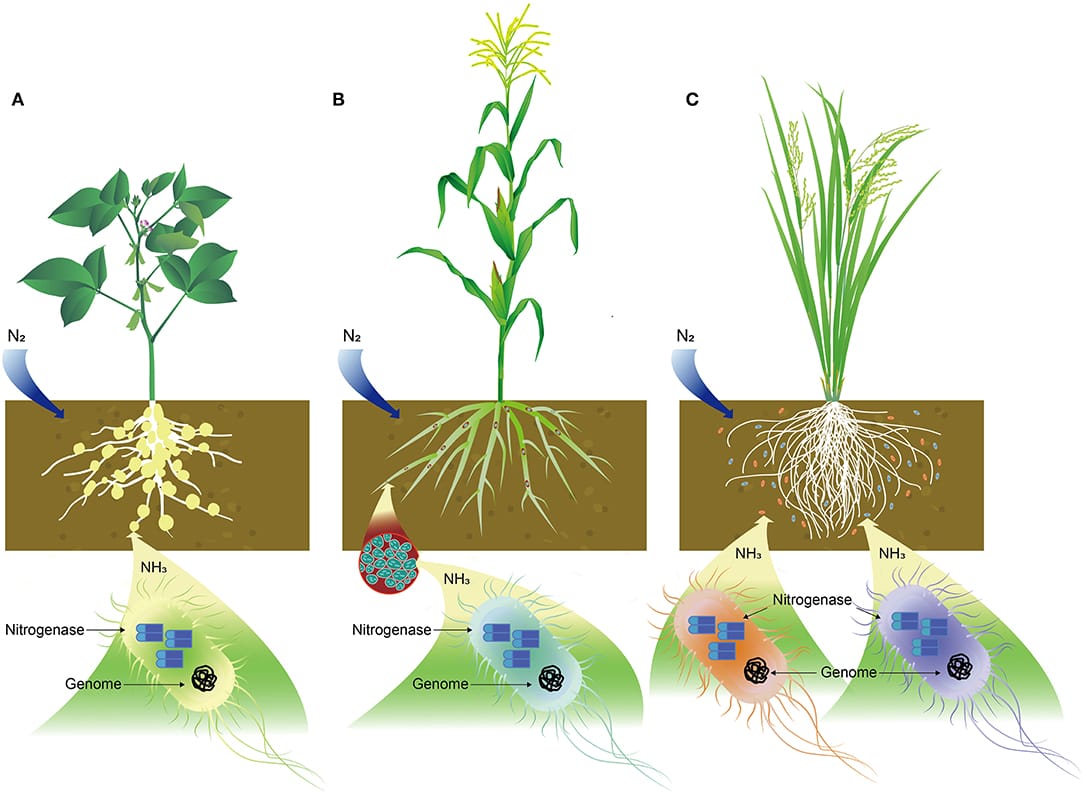
B12 is a critical cofactor in the creation of nitrogenase. This enzyme is used by nitrogen-fixing organisms, like rhizobium, and specialist actinomycetes, called Frankia, to pull nitrogen gas from the atmosphere and convert it to ammonium nitrogen in the soil.
However, it’s not just these organisms thefree gift”, the 74,000 tonnes of nitrogen gas hovering above every hectare. Azotobacter It’s obviously a good thing if you can successfully harness this process to reduce your reliance upon increasingly expensive nitrogen fertilisers. Cobalt and B12 are major players in this process.
Schematic illustration of nitrogen (N) fixation in bacteria. (A) Symbiotic relationship of Rhizobium with soybean in N fixation, (B) endophytic bacteria, like Azospirillum lipoferum in corn plant root for N fixation, and (C) N-fixing bacteria, such as Azotobacter and Azospirillum associated with rice plant roots where cobalt or cobalamin plays important role in N fixation. (Source: https://www.frontiersin.org/journals/plant-science/articles/10.3389/fpls.2021.768523/full)
In fact, the B12 link to nitrogen doesn’t stop there. B12 is also a cofactor for the enzyme urease. Most of you probably understand that urea is converted to plant-available ammonium nitrogen by this enzyme, but often it is not understood that urease is equally important in grazing situations for converting animal urine into useable nitrogen for the crop and the soil microbes. Please understand the importance of this understanding. If you are lacking cobalt and associated B12, you will not be seeing the full, soil-building benefit of intensive grazing.
Plants do not produce B12, it is created, using cobalt, by soil bacteria and archaea. In this context, cobalt becomes an important player in microbe health. Bacteria produce B12, in part to supply themselves with supplemental nitrogen through nitrogen fixation. That N source is pretty important when 17% of your body is made from nitrogen. Of course, the plants amidst the microbial workforce also benefit from this ongoing N supply when nitrogen is their most abundant mineral component.
The all-important formation of humus is also linked to cobalt and the associated flow of nitrogen into the soil. Here we are talking about the carbon-to-nitrogen ratio linked to the breakdown of organic matter. Nitrogen is required to create humus, and the better your access to the free gift, the better your humus formation.
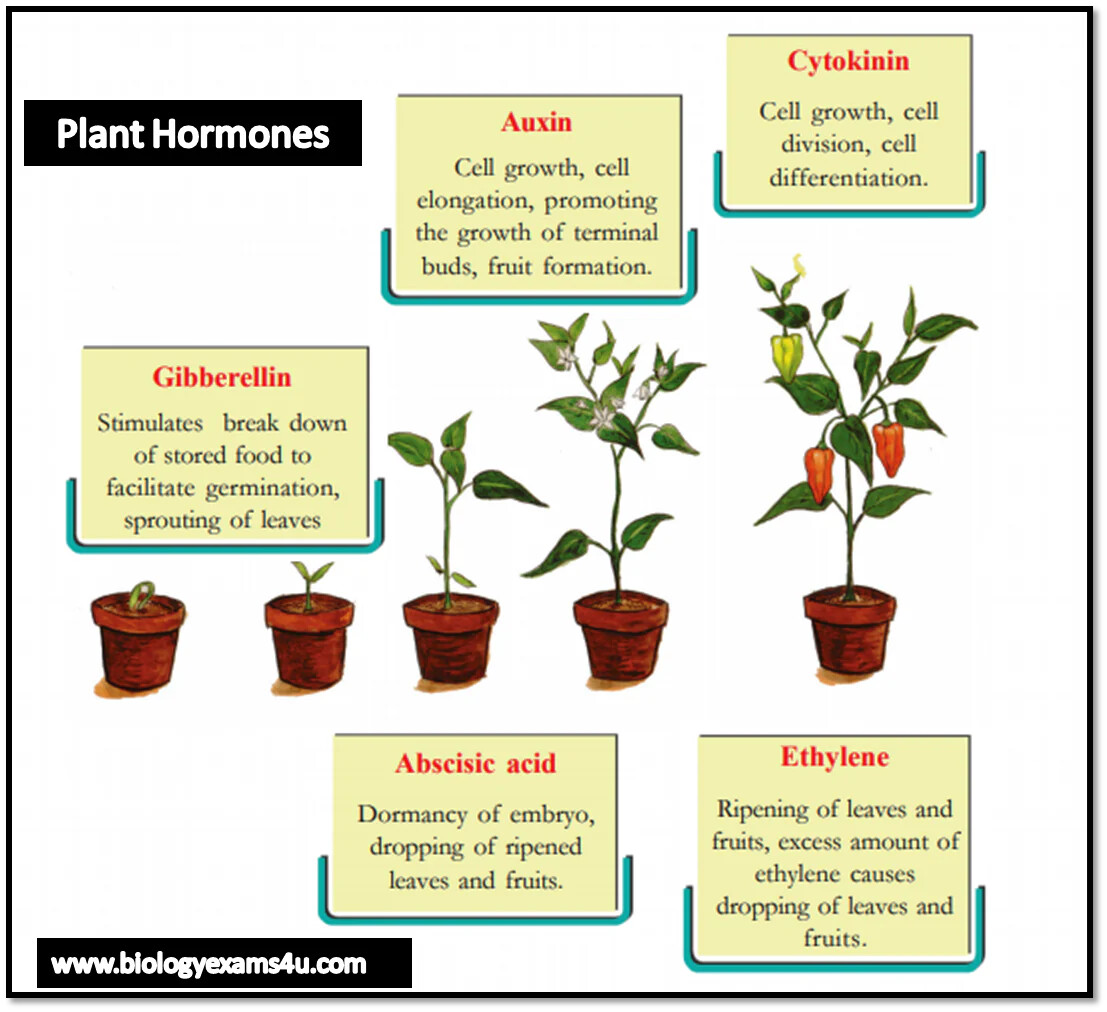
So, what does Cobalt do beyond this critically important role of nitrogen delivery? Well, it is a cofactor, along with zinc, in the formation of auxins, the hormones that regulate root and shoot growth. If auxin production is compromised, then you have a smaller solar panel and less production. I hope you are getting the picture here, if your supply of the most abundant mineral, nitrogen is limited, and your auxin production is substandard, then cobaltdeficiency can lead to stunted growth, reduced crop yields, and impaired plant health. Let’s look more closely at some symptoms of a cobalt shortage in your crop.
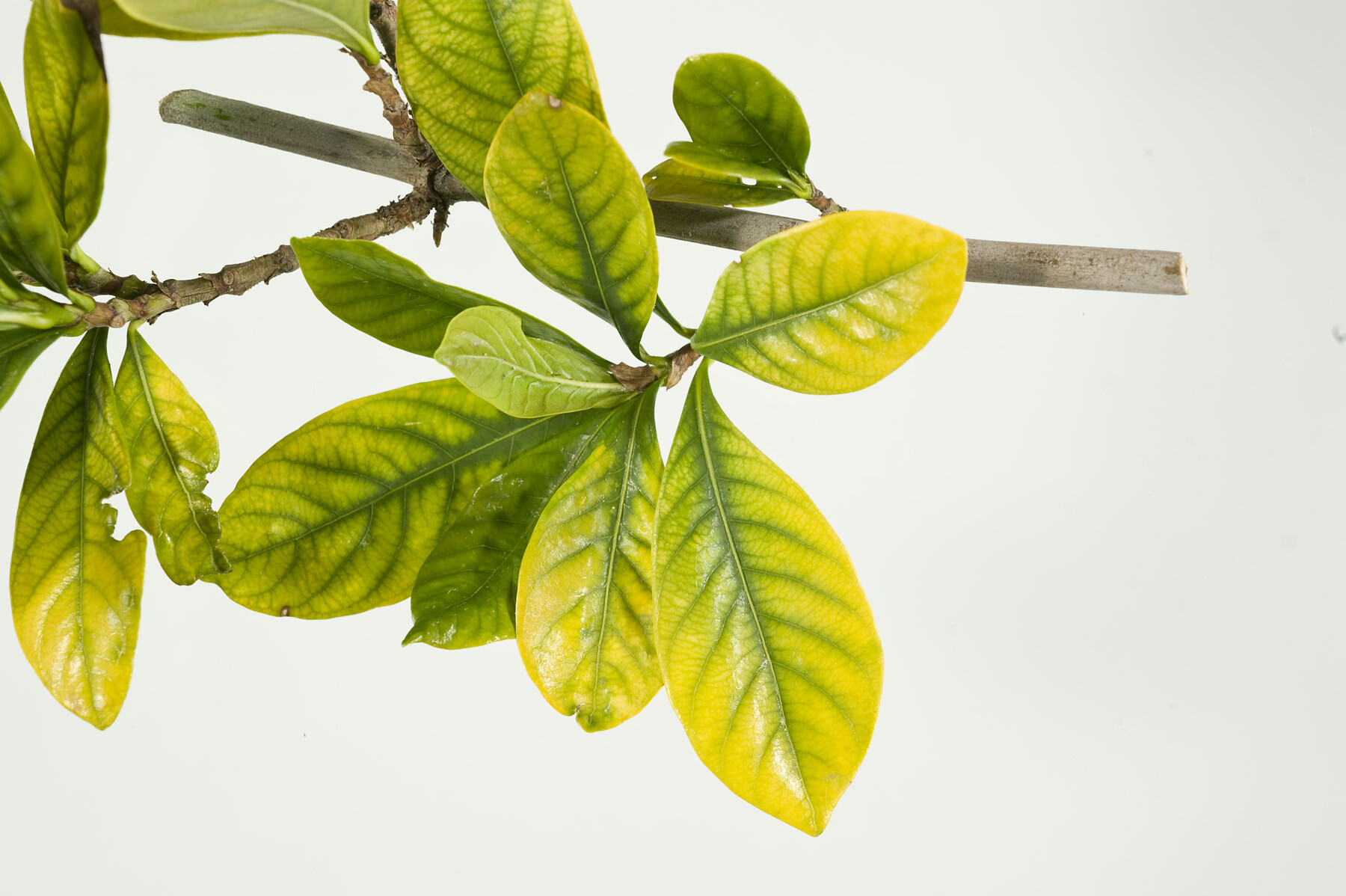
Chlorosis, or a lack of sugar factories, can be a symptom of cobalt shortage. You will see yellowing of young leaves and a general yellowing of the plant, especially in the tips and margins of leaves.
Misshapen or malformed leaves – A shortage can lead to curling and cupping and a reduction in leaf size.
Stunted growth – This is typically linked to a nitrogen shortage and hormonal disruption and will always lead to yield loss.
Reduced seed production – Cobalt is involved in the development of reproductive tissues, and a shortage can lead to reduced seed production and smaller seed size.
Poor root nodulation – A lack of nodules on legumes is a classic sign of cobalt deficiency, as the legumes use cobalt in the process of building nodules.
Let’s focus on seed production and seed size for a moment. Obviously, from a timing perspective, it is apparent that getting a title cobalt on the seed or in-furrow will help ensure good nodulation and nitrogen fixation in general. However, there is also some research suggesting benefits in both legumes and cereal crops with the use of cobalt sulphate as a foliar at the business end of the season, during seed formation, to boost the number and size of seeds.
There are some exciting studies on Fava beans, for example. One Egyptian study, “Effect of Cobalt Fertilizer on Growth, Yield and Nutrient Status of Faba Bean Plants,” found simply amazing findings.
In that study, by Hala and Kandil, from the National Research Centre, various rates were applied at various times. Here it was demonstrated that the most productive rate was the highest rate, involving 20 ppm of cobalt. At that rate, there was a whopping 217.74% increase over the control, and protein levels increased by 47.82%. There was also an increase in nutrient density associated with cobalt treatment, where most minerals increased,n but iron levels decreased. 20 ppm rate in this study was in irrigation water and this is not applicable to most dryland producers, so let’s look at productive foliar or seed treatment rates.
Raj (1987) studied the effect of cobalt nitrate on pigeon pea and peanut seeds. Cobalt nitrate, at the rate of 500 mg per kg of seed, which equates to half a kg of cobalt nitrate per tonne of seed, significantly increased plant height, number of branches and leaves, total dry matter, and yield.
Peanut seed treatment with cobalt nitrate at the same rate, followed by 2 foliar sprays before and after flowering at the rate of 500 mg per litre, increased the plant height, the leaf number and the total dry matter. Pod yield, shelling percentage, test weight and harvest index increased significantly. That equates to 50 grams of cobalt nitrate in 100 litres of water.
Sometimes, it is easier to access cobalt sulphate, so how do the application rates of these two forms compare? Well, there is a slight difference in the cobalt component in the two forms but similar rates can apply. In several studies, cobalt sulphate has proven to be the most productive of the cobalt forms.
How and why is it working
It’s important to understand the key plant process that cobalt positively impacts to generate increases in pod numbers, cereal yield and grain size. Here we are looking at the link between cobalt and cytokinin production. Cobalt stimulates plant production of this natural hormone that regulates the growth and development of the plant. Cytokinins can promote cell division, hence the increase in seed numbers and seed size, but this hormone can also delay senescence. This can delay the aging of the crop, which can often result in greater yield outcomes. One of the major benefits of kelp relates to the high cytokinins found in this input**.**
I’m guessing that at this point, the fruit and vegetable growers are starting to sing, “What about me?” Well, it turns out the cobalt foliars can be wonderfully productive in most crops. Let’s look at some studies. Singh and Agrez This application rate equates to one gram per five lites, 100 grams per 500 litres and 250 grams in the 1250 litres that is typically used on Mangoes”.
Several Indian orchard studies have reported increased fruit retention, fruit quality and yield following cobalt foliar.
At this point, I’d also like to share an interesting study published in the Journal of Plant Production titled “The Effect of Cobalt and some Vitamins as Foliar Application Treatments on Productivity and Quality of Williams Banana Cultivar.”
Here, a combination of cobalt sulphate, vitamin B12 and vitamin C produced banana bunch weight increases of over 60%. It’s of interest to me because our largest-selling liquid fertiliser, Triple Ten, contains this combination of cobalt, vitamin B12 and Vitamin C, along with over 50 other ingredients. It took me two years to formulate this product, and if you have not yet tried it, give it a trial, and I suggest you will be very pleased with the outcome. It’s available across North America via our Canadian distributors, Agriculture Solutions, in the UK via our partners, New Generation Agriculture and in Europe via our Dutch Distributors.
Now, let’s look at a couple of cobalt considerations.
Cobalt considerations
1) Iron displacement - It’s interesting to note that nutrient density in the seed increased across the board in multiple studies, but, in many instances, iron levels dropped. This relates to the fact that that there can be competition between iron and cobalt for uptake and utilization by the plant. Cobalt and iron are similar in their chemical properties and can occupy the same sites in plant metabolic pathways, leading to this competition.
Applied Cobalt can displace iron from these metabolic pathways and decrease the overall iron content of the plant. This effect can be more pronounced in certain crops, such as wheat and legumes, that have a higher demand for iron and are more sensitive to changes in iron nutrition. If you have marginal iron and intend to experiment with cobalt fertilization, it may be worth foliar spraying a little iron or applying humic acid to increase iron availability.
2) Cobalt accumulation and soil reserves - legumes are noted cobalt accumulators, so it is possible to foliar spray cobalt on legumes, and when the crop residues are returned to the soil, it can serve to gradually build soil reserves of cobalt
3) Soil pH, organic matter content, and soil type can affect the availability of cobalt. High pH can reduce cobalt availability, while organic matter can increase it. Clay soils tend to have higher cobalt levels compared to sandier soils.
In response to multiple requests from growers struggling to source cobalt sulphate powder at their local rural store. NTS has now added Cobalt Shuttle to our product range, so it is available via the website, direct sales or other distributors.
In summary
A brief review might prove helpful here.
I first noted that almost 50% of the soils we test are deficient in cobalt and I then described the potential outcome of that shortage. Cobalt plays a crucial role in the health and productivity of crops, impacting soil life and root performance of legumes, and is a critical cofactor in the formation of Vitamin B12. I explained that B12 is a cofactor for nitrogenase, the enzyme that nitrogen-fixing organisms like rhizobium, actinomycetes, and free-living nitrogen fixers use to convert nitrogen gas from the atmosphere into ammonium nitrogen in the soil. This process is important for reducing reliance on nitrogen fertilizers and helps to build soil carbon.
Additionally, cobalt is a cofactor in the formation of auxins - hormones that regulate root and shoot growth. A cobalt shortage can lead to stunted growth, reduced crop yields, and impaired plant health. Symptoms of a cobalt shortage include chlorosis, misshapen leaves, stunted growth, reduced seed production, and poor nodulation on legumes. I also highlighted the importance of cobalt in seed production and seed size, and I provided some guidelines for productive application rates.
If you need any further guidance on this or any other agronomic issue, please feel free to take advantage of the free telephone advice offered by the NTS agronomy team. Just call 07 5472 9900.”
I’ve discussed the relationship of corn and nutrition as it relates to animals and people. Open pollinated corn that is non gmo is the way to go for nutrition. For taste se types are really tasty as @Fusion_power discussed in more details with regard to hybrid crosses
“ I was reading a book called Eco-Farm by the late Charles Walters of Acres magazine and I read something about corn hybrids and I wondered if it would pertain to Cannabis or other vegetable hybrids.
In discussing Open Pollinated corn versus hybrid corn, two samples were taken by a farmer from his field and showed the OP corn contained 19% more crude protein, 35% more digestible protein, 60% more copper, 27% more iron and 25% more manganese than the hybrid sample.
When his OP corn was compared to 4000 samples of hybrid corn from 10 midwest states in a single year, his OP corn contained 75% more crude protein, 875% more copper, 345% more iron, and 205% more manganese. The same trend has also been seen in the content of calcium, sodium, magnesium, and zinc. It could be said that the OP corn contained an average of 400% more of these nutrients.
Further testing confirmed the failure of hybrid corn to uptake certain mineral nutrients. Spectrographic testing at the laboratory of Armour’s Institute of Research in Chicago revealed the hybrid short of nine minerals. The hybrid failed to pick up cobalt and any other trace minerals. The core of vitamin B-12 is Cobalt and a lack of Cobalt is implicated as a cause of undulant fever and brucellosis and Cobalt is the cure.
In the opinion of this writer, hybrid corn merely masks poor farming by producing bins and bushels without the nutrient goodies that are really corn’s reason for being. In other words, quality versus quantity.”
The impression I got of corn is that it is always a good time to hit them with some N. I’ve fertilized once with a balanced and twice with high N. Each time before a rain storm to help water it in.
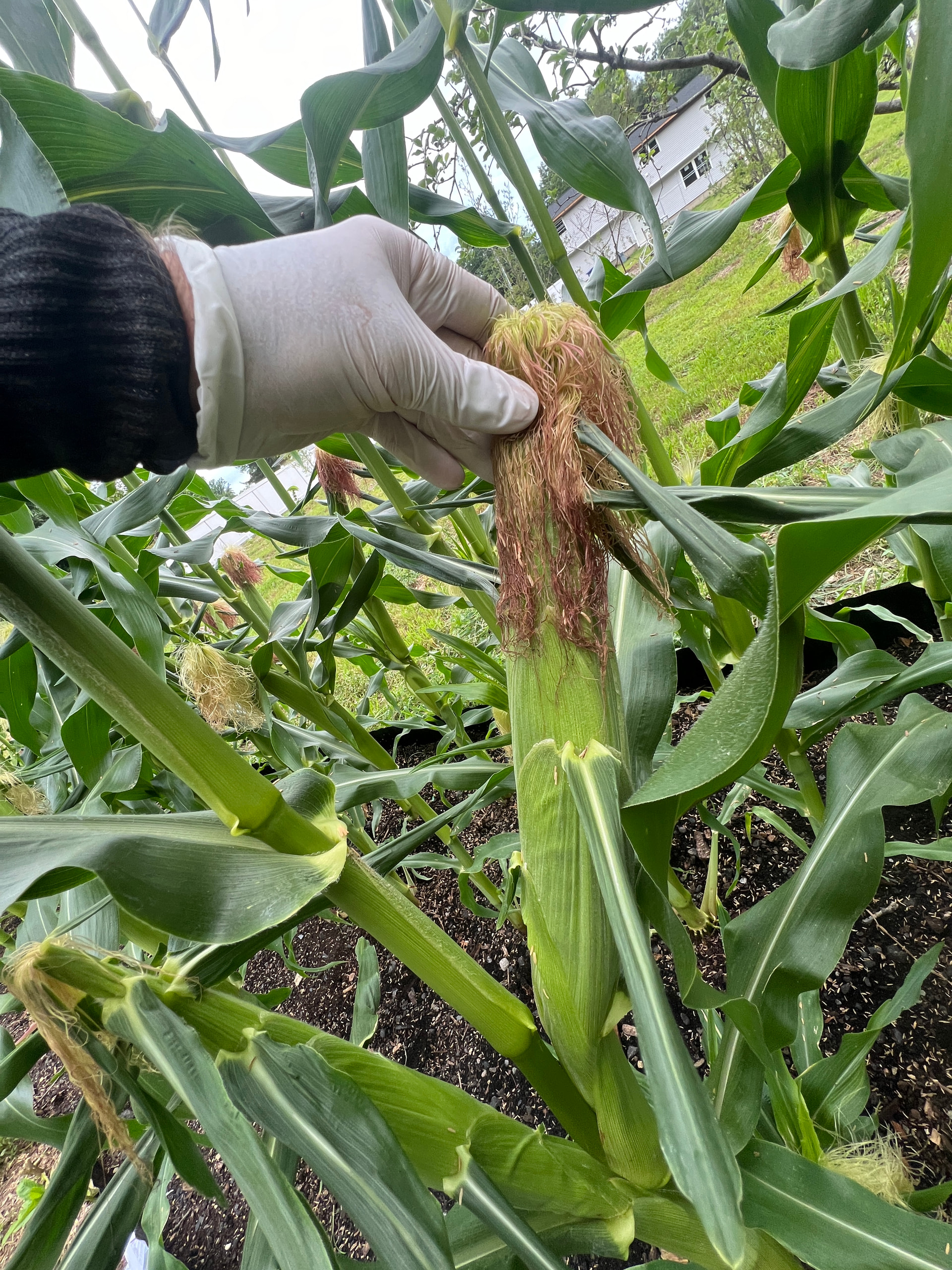
Two weeks out and some of the ears are getting pretty big, while other ears are still forming. I’m thinking that I may be picking corn for a while from these plants. Hopefully the recently planted climbing peas and beans don’t cause an issue for them.
I’ve marked out a 10x25’ area of lawn to remove sod and mix in some composted leaves. On first glance, I’m thinking that I should make 8 rows, each 10’ long and spaced about 3 feet.
I asked Google’s AI and it said that I should add 12 days to late season corn. So, if I plant on Aug 1st, the date becomes (73-75 (from Xtra Tender 3473) + 12) = 10/25 - 10/27. Our first frosts generally fall between 10/27 and 11/3, so a 10/27 ETA cuts things pretty close. But, that is assuming that I add 12 days to the expected maturity and I like to experiment a bit. So, I’m thinking about doing a 2nd planting of the same kind (so no pollination issues) a week later.
Given the 10x25’ area, does about 3 feet between rows and 1’ in-row spacing seem about right? I can then do two plantings of 4 rows each. I think that is giving about 3 sq ft instead of 2 for each plant. But, for a late season backyard situation that seem prudent.
Yeah those are close. I pick them when the silks are mostly black, that seems to be the best time. Some sweet corn varieties have a small window to pick before they quickly turn starchy, like a few days at the most. But HS is a bit more forgiving in that regard. Nothing better than harvesting a few rows, and sitting down and shucking them, one of life’s little pleasures.
The best way to tell if sweet corn is mature is to squeeze the ear near the tip. You can feel the rounded mature ears vs those that are immature and skinny. Also, harvest window can be extended by picking a good variety. Standard su corn has the shortest harvest window at 1.5 days. An se variety has a 7 day harvest window though it is best if kept to the optimum 3 days. Most sh2 varieties have up to 10 days for harvest.
I think you are too late to plant more sweetcorn. You should have done that several weeks ago. I used to do as many as 7 plantings in Alpine TX with warmer falls than where you are, and if I remember correctly this is too late to plant. But give it a try and see what happens.
Three sqft per plant is a little thin but it’s okay. You could go 3ft x 8 inches. I will say that your plantings pictured above esp the second one are severely lacking in plants and leaves. In corn country a field like that would get plowed under before the neighbors had a chance to see it. The cure is more plants, more nitrogen, and maybe more water. But for home use a planting doesn’t need to maximize production. For Green Giant or anyone growing sweetcorn commercially, they won’t even pull the harvester into the field.
I did plant some a few weeks ago as well. But, I’m hoping to extend the season. I’m not sure exactly when is too late (given the potential elongation of the day requirement due to less sun and lower temps in the fall), hence wanting to experiment a bit
Is the worry pollination? Every time I go by, I do a bit of hand pollinating. Definitely not how it is handled in commercial settings.
I think part of the issue is that the seed is a couple years old, so I didn’t get perfect germination. But that is a good point, maybe I’ll do 8”, and figure that 1/3 of it won’t come up anyway.
This made me smile. I’ve been sporadically growing tiny patches of corn for a while now and this is the best I’ve gotten it so far.
You could grow a variety with shorter maturity. I grew the Buhl corn for Glenn in 10 weeks. Look for a shorter maturing variety. There are many in the 65 to 70 day range.
From what I’ve seen at the Farmer’s market, most of the early season varieties aren’t very good. At least when compared to the main season. Maybe that has something to do with how they are grown, but I had always assumed it was the variety. I used to ask the guy which varieties he had and when he moved from Temptation to varieties like Primus and Vision is when it got good. In recent years, he’s stopped growing the early stuff entirely. Now he just re-sells another farms early season corn and his own comes in early August (and keeps going through the first 1-2 weeks of October). So, I’ll probably compare my early crops with his. But the latest planting will likely (hopefully) be ready after the FM is out.
So, I’m trying to grow varieties I think/hope will be good. If it turns out I miscalculated, then hopefully I take good enough notes to fix things next year and properly thread the needle
80% of corn taste/flavor is genetic, the rest is how it is grown. If you can find Breeders Choice corn, get some seed. It is 74 days maturity, is an se variety, and has excellent flavor. It was developed by Mesa Maize about 40 years ago and was sold by Burpee. I don’t know if anyone still produces it. Mesa Maize was sold about 20 years ago and most of their varieties have since disappeared. SPRING TREAT
I think a big component of it for me is the texture rather than the flavor. Thinking about it, most of the FM varieties I liked a lot were SH2. When I read about SH2, it is supposed to be the crispest:
Xtra Tender and Eden. Because they are pure sh₂ supersweets, their kernels have slightly thicker, tighter skin walls holding back massive amounts of watery, sugary fluid. When you bite down, the kernel walls resist pressure for a microsecond before bursting cleanly—giving you that loud, satisfying “snap”. Because they lack standard starchy components, they feel incredibly crisp and juicy, not tough.
But, from what I’ve read, it doesn’t do well when the soil is under 60F.
I was probably over-generalizing when saying early season aren’t good. But, when I go to the FM in early July, I try buying a few ears from each and don’t usually find anything that impresses me. Maybe there are some varieties out there that would be good, but have other drawbacks that keep them from being FM mainstays (like productivity). I looked around for Spring Treat, and while a lot of people talk about it, it doesn’t seem to be sold much anymore. A couple places suggested Expreso as a substitute.
Ok I am weird when it comes to corn. Everyone wants ears of nice tender kernals. Not me. I pick out the cobs with larger kernals. I like it on the tougher and over mature side.
Too many of these modern sweet corn varieties taste like candy to me. All sugar and no corn flavor.
For me I like ‘Golden Jubilee’ and regular ‘Butter N Sugar’. I can pass on the super sweet stuff that all seem to rave about. But like I mentioned I prefer tougher and starchier tasting corn.
My grandpa always said that when it comes to corn, first put the kettle on to boil. Then go to the garden and pick the corn. In his day no supersweets, extra sweet ect. Just regular sweet corn.
Lucky for us all we now have much to choose from when growing corn. A flavor available to please everyone.
I never did grow any heirloom white corn. Nor shoe peg corn either. Not dead yet so I still have time to scratch them off my bucket list of things to try.
The Oneida indians in my state have a heirloom white corn they use for hominy. Never ate hominy either so another item on my bucket list to try. I always thought hominy was a southern regional thing. I guess not. Did not realize the native tribes made hominy too. Fun watching them dump in the wood ashes as they cooked their white corn. Our local PBS station had a show about it a few years ago.
I’m partial to some of the old varieties of corn. Pencil Cob is one that is worth trying.
Re hominy, B vitamins in corn are bound and unavailable. Cooking it into hominy releases the vitamins. Native Americans HAD to make hominy in order to avoid vitamin B deficiency. I’ve got some good hominy corn in the freezer that needs to be brought out and planted.
my sweet corn tasseled well then the earwigs and grasshoppers ate all the silk. so I’ll have a few gap tooth heads this year again. i can grow popcorn here very well but would much prefer to grow sweet, it’s best fresh and popcorn and dent corn are very inexpensive to buy in.
edit to add it’s the same every year that i attempt sweet corn. no amount of sluggo plus stops them. i should have a few ears by now, i start early.
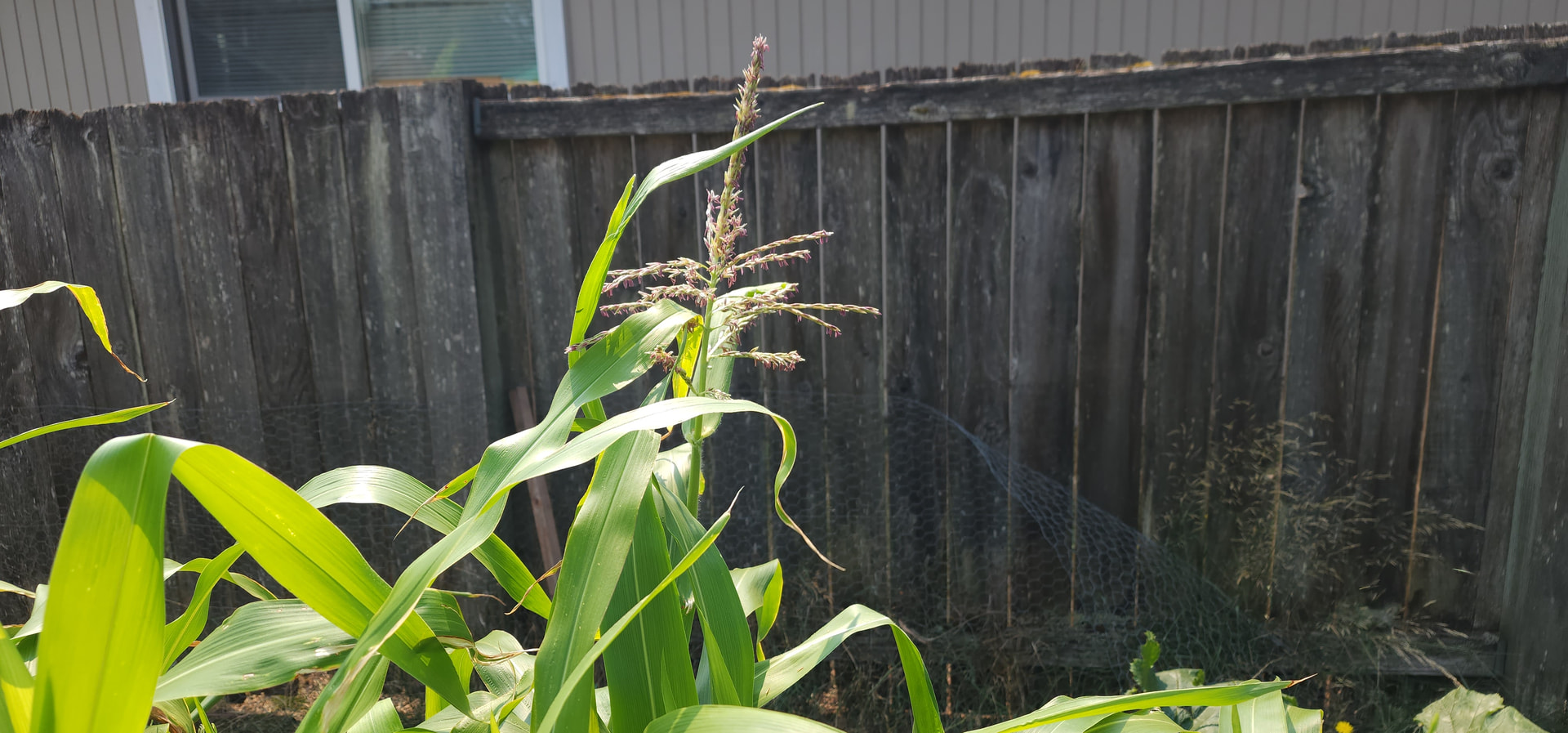
Here is a tip you may be able to use. Dust some pollen from the tassels into a large bowl, then drop a pinch on each ear where the tassels emerge from the shucks. Pollen will attach and grow a pollen tube from just about anywhere on the silk including down inside the shucks. Be careful if opening the shucks, this can give entry to bugs and diseases. Close the shucks with a piece of string or rubber band if they have been opened.
these bugs eat the silk the moment it’s visible. it’s bad
they leave popcorn and field corn alone. for some reason they only go after the sweet corn. it’s maddening. I’ve tried pollination this way and tying the shuck closed, then i end up opening corn husks FULL of earwigs
You might try covering each ear with a paper bag and use a rubber band to secure it around the ear. After 2 or 3 days, remove the bag and apply pollen then cover it again. It is a lot of work, but can be done.