I knew I wouldn’t tend to my big garden this year because I had too much on my agenda. I decided to cover crop it and found Buckwheat at our local Agway. It filled in nicely and is now in bloom. Is this when I mow it down? I can either mow it down or just till it right in. I hope to plant a second round that will likely be left for the frost.
2 Likes
Either…letting it go to seed can get seedlings coming up at various times.
Haven’t had a big garden in years, but I used to plant crimson clover in early fall.
1 Like
I’d heard of buckwheat, but never seen it growing… bought seed of red and pink-flowered Soba & Takane buckwheat this spring… photos of those fields in bloom looked very nice.
I found it to be quite disappointing, in the flower department, and totally unsuitable as an interplant in my wife’s flower beds. lol.
Saw a discussion in one of the hunting/wildlife habitat forums recently where someone plowed a field and got a great stand of buckwheat… but upon discussion with his brothers, it had been 40 years or more since buckwheat had been planted in that field. I’m not surprised as pigweed or Johnsongrass, or other weed seed lying dormant that long, but didn’t expect buckwheat to…
I have grown a lot of buckwheat cover crops over the years.
It’s biggest attributes are…its rapid growth ,on good soil it will out grow most weeds. Also it’s blooms are very attractive to beneficial insects .
The amount of biomass is a illusion. It’s mostly water / plant juice ,dry weight is low.
Have had best results Rototilling~3 inches deep when the first few seed clusters have ripe seed.
This is a boom to soil life , and those seed will jump back out of the ground.providing more weed suppression.and a second green manure crop.
On the other hand , if you don’t want it to grow back , incorporate before seeds set , such as for a fall crop of greens, etc .
Buckwheat seeds have been hard to find locally here lately.
1 Like
I just planted a few vegetable beds in buckwheat, hoping to let it grow, fall over, die, and interplant in spring with vegetable starts. Not sure if this method will work! I don’t want it sprouting back to life in the spring…it does die with below freezing temps right? 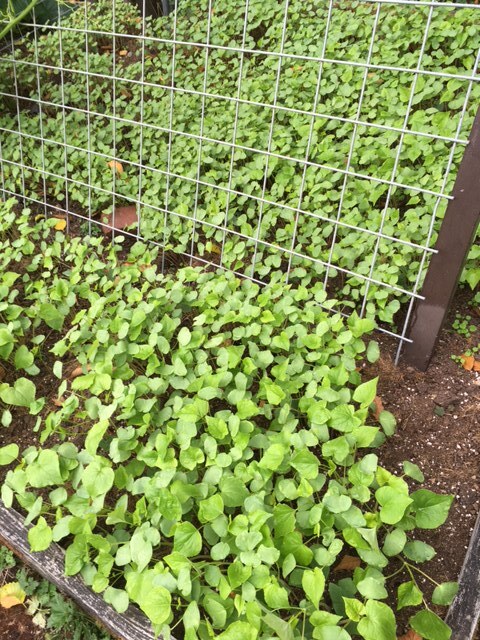
1 Like
Buckwheat will die after going to seed or freezing temps.
The seed may resprout in the spring.
Some years few if any sprout the following year.
Some times many.
Birds and rodents will eat the seed , fall - winter .
I don’t consider these volunteer plants a problem.
They are easily controlled, hand weeding ,/ cultivating, etc
1 Like
3 years ago i also grew a small patch of red buckwheat amongst my flowers . i let them go to seed and they come back every year since. they look nice with the other flowers. a few farmers grow buckwheat for flour. its used as a primary ingredient in our French Acadian buckwheat pancake mix called ployes that everyone eats as a side here. wheat has a hard time in our soils but buckwheat grows well. the farmers rotate it with potatoes and oats. some always comes back the next season growing among what evers been planted then. beautiful when it ripens into a field of red.
Thanks!
In our area I usually incorporate buckwheat with other legumes as I till and sow the garden with a green manure cover for winter, I suspect if you let it go to seed and merely cover it with a layer of wheat straw horses manure or other suitable organic material it would grow as your new cover crop this winter
You confirm what I was thinking, that the biomass isn’t going to be much. I looked at the plants and my thought was if I mow that down before tilling there’s not really going to be much left once the water is gone from the plant. I have a good amount left in the 50 lb seed bag I bought, so I’d prefer to control seeding by getting at it before it sets seed. I think I’ll till it in and go ahead and reseed.
Yes, I knew I would want to drop it before it set seed. I’d rather choose to seed it than have it reseed itself.
I have cover cropped (late summer) with buckwheat in the past and had great results.
Once fully flowered I mowed and then tilled mine in… then a couple weeks later tilled again and planted a fall crop of greens, turnip, collards, beet, etc…
Found these details online…
…
Buckwheat is the speedy short-season cover crop. It establishes, blooms, and is ready for incorporation in 35 to 40 days and its residue breaks down quickly. As a grain, it reaches maturity in just 70 to 90 days. Buckwheat suppresses weeds and attracts beneficial insects and pollinators with its abundant blossoms. It is easy to kill, and reportedly extracts soil phosphorus from soil better than most grain cover crops. Buckwheat thrives in cool, moist conditions but it is not frost tolerant. In the Great Lakes region it is best sown in June and July for cover crop use. Even in the South, it is not grown as a winter annual. Buckwheat is not particularly drought tolerant, and readily wilts under hot, dry conditions.
…
So if it blooms and is ready for incorporation in 35-40 days… and the seed is not mature until 70-90 days… sounds like you have some time to let it fully bloom… benefit your pollinators… and not worry about viable seeds on out to 50-60 days.
I normally just cover crop in things I eat now… late fall, turnip greens, beet greens, spinach, collards.
The deer do come in and mow them down as winter gets here… starting with spinach first… and collards last.
TNHunter
2 Likes
That’s helpful, I just want to be sure to get to it before any seed becomes viable.
1 Like
I must have pondering buckwheat back in April when things were still cool and moist around here!. This year’s dry weather (not so ‘maritime’ northwest) has been quite unusual. No rain here for a record 47 consecutive days.
Good advice about mowing (and tilling) once fully flowered but not seeded. I’m hoping to mow and leave on bed …to be parted in spring with transplants. Sounds a bit too easy but will see.
1 Like