Many times in my life people have told me what I can’t do , or shouldn’t do. I bring this up because every time i plant from seeds to accomplish new varities the people come out of the wood work to tell me I should not. That does not deter the dedicated mind from our cause. The most intelligent people sometimes are very negative. They at times accomplish nothing in their life for society because of their cautios, poisonous perspective, and ability to outsmart any good idea anyone ever came up with. They might accomplish some success doing things to outsmart others my morals don’t allow me to do. In general a negative person will appear smart on paper. They quote every study that says you cant or shouldn’t do anything in life the entire time they talk down to you. I avoid those types once they expose themselves. It was put best in this famous quote “Stay away from negative people. They have a problem for every solution.” - Albert Einstein . You would not think i would need to open a seed planting task to Develop new varities of fruit by describing all of these things others say and do while we develop varities. @themulberries is making good break throughs in citrus. @KYnuttrees @tonyOmahaz5 have made huge break throughs on many different plants. I developed the clarks crabapple and a host of lesser known varities. My point is new varities are being developed. Anyone a follower of @SkillCult he does constant non stop work on developing new apples. Van mons was a pear developer who’s work has never been matched. Dr. Swingle developed many varities of citrus. I encourage anyone wanting to try to do it. There are many great things that come out of Russia and the ukraine when they are not at war. Look at the wonderful persimmons and pears from there. As i embark on making my next hardy crosses of citrus from seed I wanted to encourage you to do the same. It is easier for me when varities like the Clarks crabapple have already become enormously popular. It is not that easy doing anything the first time and many will tell you like they tell us why we can’t. God had a different plan for the clarks crabapple he helped me to make something he wanted society to have for free. Maybe he will also want society to have better citrus in colder climates long term. I cannot say what tomorrow will bring.
In my experience Mother Nature has done better at crosses than I have. I’m letting Mother Nature decide these days. I look for volunteers. Or as you mention grow out seed. I’m eating purple and black raspberries for breakfast I picked yesterday. Nice to have blacks and purples this time of year thanks to breeders and Mother Nature. Primocane fruiting brambles rock! Primocane harvest just began and will go through till October. Includes unnamed purples, and Lynn’s black and Sterling black from my breeding program. I developed two blacks three purples and a pink called Irene. All primocane fruiting.

Wow those are really late types! That is a huge accomplishment!
I managed to aquire some of your favorites for crosses. Full disclosure on what I’m doing is back crossing these with prague , Carolina lime and others long term. Lets touch base soon and see where we are.
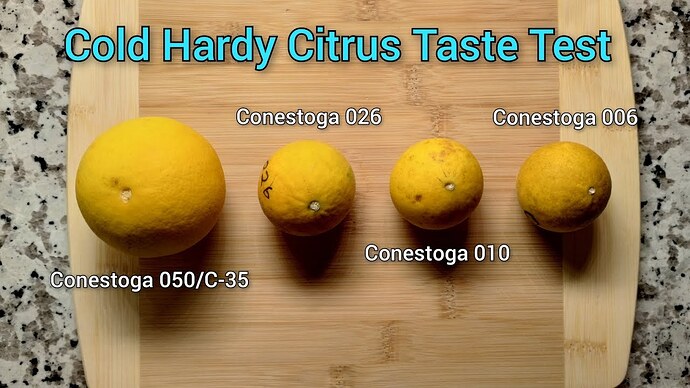
“ Conestoga 010 Citrange F2
The Conestoga series are the most cold-hardy hybrid citrus. Developed by Kumin from the Tropical Fruit Forum. More details can be found in his post ‘F2 citrange winter hardiness trial’
This is a seedling of Conestoga 026, not a grafted plant. Most Conestoga 026 seeds are nucellar, which means they produce a genetic clone of the mother plant. I believe seedlings will help push the cold hardiness of citrus, because if an unusually cold winter causes die back, they can resprout from the roots.”
“HARDINESS: -11°F and reliably hardy to zone 6b, and can be grown into zone 6a
PARENTAGE: Citrus sinensis ‘Ruby’ × Poncirus trifoliata F2
ZYGOTIC SEEDLINGS: low
OTHER NOTES: brix 11, low bitter flavor”
“Conestoga 026 Citrange F2 - Most Cold Hardy Citrus - seedling
The Conestoga series are the most cold-hardy hybrid citrus. Developed by Kumin from the Tropical Fruit Forum. More details can be found in his post ‘F2 citrange winter hardiness trial’
This is a seedling of Conestoga 026, not a grafted plant. Most Conestoga 026 seeds are nucellar, which means they produce a genetic clone of the mother plant. I believe seedlings will help push the cold hardiness of citrus, because if an unusually cold winter causes die back, they can resprout from the roots.”
“HARDINESS: -11°F and reliably hardy to zone 6b, and can be grown into zone 6a
PARENTAGE: Citrus sinensis ‘Ruby’ × Poncirus trifoliata F2
ZYGOTIC SEEDLINGS: low
OTHER NOTES: Hardiest drinkable hybrid. Earliest maturing of the Conestoga series, first flowering in its second summer. Brix 12, low bitterness, acidic, 2mm rind”
Quotes from Michael at Interwoven Farm
“Among the best-balanced selections combining strong cold tolerance with improved flavor. Deciduous, small-leaved, and highly productive, with fruit described as having discernible citrus character and reduced bitterness relative to Poncirus. Suitable for beverage applications (“ades”) and one of the more promising breeding parents in the Conestoga group. Cold hardiness consistently ranks near the top tier just behind pure Poncirus types.
The Conestoga selections are a group of F2 citrange hybrids derived from open-pollinated seed of C-35 citrange. The project was initiated in 2018 in southeastern Pennsylvania (USA) by forum member “kumin” on Tropical Fruit Forum, with the explicit goal of identifying individuals approaching the winter hardiness of Poncirus trifoliata while retaining improved fruit quality relative to typical citranges.
The selections were named “Conestoga” after the nearby Conestoga River.
An initial planting of approximately 20,000+ seedlings was established. Based on citrange reproductive biology, an estimated ~15% were zygotic and ~85% nucellar, yielding an effective recombined population of roughly 3,000 individuals. Seedlings were germinated in April 2018 and planted outdoors in June 2018 with no winter protection during their first winter.
The first major selection event occurred during the winter of 2018–2019, when temperatures fell to approximately −11.8°F (−24°C). These temperatures are within the normal survival range of Poncirus but represent a severe test for citrange-derived hybrids. Following that winter, only a small fraction survived. Approximately 12 normal-sized above-snow stem-hardy individuals remained, along with a group of dwarfed or snow-protected survivors. Roughly 69 selections were retained for continued evaluation.
Hardiness rankings were reported to be highly consistent year-to-year. Individuals that barely survived mild winters were consistently the first to fail during severe cold events, reinforcing the stability of genetic differences in cold tolerance.
Across the surviving population, strong poncirus-like morphology generally correlated with superior cold resistance, while more citrus-like foliage (evergreen habit, unifoliate expression) tended to show reduced winter survival.
Conestoga selections typically break bud 10–14 days later than Poncirus, suggesting retained dormancy control. However, late-season growth flushes have shown greater vulnerability to dieback below approximately −10°F compared to pure Poncirus.
Most Conestoga selections are not refined enough for fresh consumption. However, several lines—particularly Conestoga 010 and 026—have produced fruit suitable for dilution and sweetened beverage applications (“ades”), with reduced bitterness relative to Poncirus.
The Conestoga selections represent one of the largest documented outdoor F2 citrange cold trials in North America.
Winter 2018–2019: The defining selection winter. Temperatures fell to approximately −11.8°F (−24°C), with additional lows of +3°F, +2°F, and +10°F during sustained cold conditions. These temperatures are fully tolerated by Poncirus but were devastating to most F2 citranges. The vast majority of the 20,000 seedlings perished. Survivors formed the foundation of the Conestoga selections. This winter acted as the primary natural hardiness filter.
Winter 2019–2020: A relatively mild winter with a lowest temperature near +10°F (−12°C). However, a significant late spring cold event followed an early warm period, causing freeze injury to actively growing tissue. Damage to Conestoga 011 paralleled that of Poncirus but was not more severe. This season highlighted dormancy stability and vulnerability to late freeze events.
Winter 2020–2021: Another mild winter with lows near 10°F (−12°C). No major extreme events occurred. Limited differentiation among selections was observed.
Winter 2021–2022: No extreme cold events were specifically recorded. Continued moderate winter exposure allowed selections to mature and transition toward fruiting age without catastrophic losses.
Winter 2022–2023: A stronger cold event brought temperatures down to approximately 2°F (−16°C) during high winds. Hardiness rankings were reinforced, with Poncirus and Poncirus+ ranking highest, followed closely by Conestoga 011, 010, 006, and 026. More citrus-like selections ranked lower in tolerance.
Winter 2023–2024: The lowest recorded temperature was approximately 6°F (−14°C). Moderate stress occurred, but the established hierarchy among selections remained stable.
Winter 2024–2025: Temperatures reached approximately −8°F (−22°C), described as an excellent year for distinguishing hardy from exceptionally hardy individuals. Conestoga 006, 010, 026, and 128 approached Poncirus in cold resistance. Conestoga 011 survived but sustained notable damage. Selections such as 058 and 067 failed to persist outdoors under repeated exposure, and Conestoga 121 was killed back to ground level. This winter further confirmed multi-year consistency in cold tolerance performance.
Origin
Pennsylvania, USA
2018·kumin
Submitted by
Brady Mitchell •@cascadiaadmin”
@themulberries has a great list of cold hardy citrus.
He discussed conestoga here
Kumin’s work can be viewed here
Gloria Moore demonstrated that the “cold-hardiness genes” in deciduous trifoliata are not significantly activated unless cold acclimation occurs during germination of its seeds. Consequently, cold acclimation during germination must be practiced from the bottom up in the progressive breeding of flavorful cold-hardy hybrids from trifoliata.
https://growingfruit.org/uploads/short-url/taOycSc096RrawSxb6eeucZk1Kz.pdf
The nice thing is Kumin left us his experiement and results. This is what he said and the responses from the first page. I’m not going into the entire post but it was not a small planting it was 20,000 seedlings to come up with Costenoga.
“I’m trialing a population of F2 Citrange seedlings this winter in zone 6b in SE PA. There is considerable variability in the resistance to low temperatures, with some dying in November and others still viable at this point. The population is a mixture of nucellar F1 and zygotic F2 seedlings. The F1 are freezing out at present, but a number of the F2 are surpassing the F1 in hardiness and a few appear to be surviving the winter. My hope is that several will approach the hardiness of P. trifoliata.
Any survivors would then be evaluated for palatability. My focus is centered on hardiness, with palatability being secondary.
I’ve grown poncirus since 1980 and lost everything above the snowdrifts in Jan of 1994. This was after 2 consecutive nights at -24 F. The trees resprouted below the snow height and haven’t been injured since.
kumin
#2
hardyvermont, I have Poncirus plantings at three locations on the same property. All are in clay soil, one location is well drained , the remaining two are poorly drained. The trees growing in full sun have the the most vigor. Last winter I removed a M. Grandiflora tree that was shading the largest Poncirus tree and upon release the Poncirus tree responded positively. Most of my trees are fairly close to buildings which could block or concentrate the wind. I haven’t recently germinated Poncirus seedlings on large scale. When I did in the past, I saw the occasional seedling I suspected of being tetraploid. Due to generally having rather high % of nucellar (clonal copies) seedlings, one usually sees a lot of uniformity.
The citranges by contrast have no wind protection other than the density at which they’re planted. They are planted at about 20 seedlings per sq. ft.
kumin
#3
hardyvermont, I lost a planting of first year Poncirus a few decades ago by planting them into loosely cultivated soil and not allowing the soil to solidify during the growing season. During the winter 500-600 succumbed to late winter frost heave. In early April I could very easily pull the dead trees out by hand. They were approximately a foot tall at that time. There were no survivors. Mulching the soil might have saved them all.
Walt
#4
What is your source of citrange seeds?
I’m glad to know someone else in the USA is growing F2 citrus x trifoliate hybrids. But mine are still at the tiny seedling stage, certainly not ready to face zone 6 winter. In fact, I assume I’ll need at least one backcross to trifoliate, maybe two. I would love it if you proved me wrong.
Keep us up to date on your results
kumin
#5
 January 25, 2019, 07:53:36 PMLast Edit: March 12, 2019, 07:39:14 PM by kumin
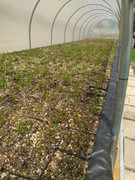
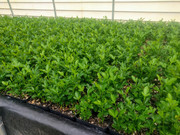
Walt, being of similar age as you, I am using brute force (large populations) in an attempt to increase the odds of obtaining very hardy F2 segentranges in a short time span. After planting a number of putative " cold hardy " cultivars that failed, I am seeking plants with nearly the full hardiness of Poncirus. I began with an initial population of 20,000+ seedlings. The seedlings are 85% nucellar and 15% zygotic, so the effective population under trial is 3,000 plants.
The seeds were germinated in April of 2018 and planted outdoors in June, 2018. These plants are not protected against the cold in any way. Survivors, if any, will be protected going forward, knowing they have the necessary genetics. At this point the population will be very small and easier to protect.
Googling “citrus tree seed California” will give you 2 hits that sell seed by liter or quart. If you need details on how to germinate large quantities of Citrus seed I can’t make a recommendation, but I can tell you how I did mine.
Florian
#6
Check out the Hamlin x FD: http://tropicalfruitforum.com/index.php?topic=28270.msg321750#msg321750.
It appears to be rather coldhardy.
Walt
#7
Kumin
3,000 is a number I can respect. I stated in long term cold hardy thread why I think F2 citranges will be less cold hardy than than F1. But 3,000 trys? If I’m wrong about even one of them, you win. This is a real effort.
I think your chances would be better with older trees. But you are doing a big job, so do it your way and I hope you succeed.
Thanks for the information about seed source.
Ilya11
#8
January 26, 2019, 02:48:24 PMLast Edit: January 26, 2019, 02:50:20 PM by Ilya11
HamlinxFD is certainly not hardy in zone 6.
I wonder if citrandarins like US852 are better choice for such large scale testings. I guess 5-10 mother plants will give sufficient quantities of starting seeds.
For the germination, from my experience, the best method is perlite/buggy approach used for palm seeds.
Seeds are germinated in zip locked plastic bag in moist, but not wet perlite at 25C. After germination seedlings can be transplanted in common pots to grow under artificial light and transplanted in spring in the open ground.
I am germinating each season around thousand of seeds by this method (my record is 3000), selection to discard nucellar seedlings and plants with poncirus aftertaste in leaves can be done very early, before open ground planting.
Best regards,
Ilya
SoCal2warm
#9
Quote from: Ilya11 on January 26, 2019, 02:48:24 PMI wonder if citrandarins like US852 are better choice for such large scale testings. I guess 5-10 mother plants will give sufficient quantities of starting seeds.
I just looked at my germinating US852 seeds. Four of them had begun sprouting, and of those 2 of them were polyembryonic and 2 only had single sprouts.
kumin
#10
January 26, 2019, 02:59:03 PMLast Edit: March 12, 2019, 06:06:38 AM by kumin
3,000 is a little less impressive than it sounds, approximately half are genetically dwarf which is not unusual for F2 zygotic citranges. Many of them are too lacking in vigor to hold much promise. Long story short- I did a status survey today and believe 100 to 150 plants are relatively unscathed, but February can be brutal to plants. Some winter cold damage is accumulative, as any individual cold event can be. The best looking plants phenotypically favor Poncirus rather strongly. However, they are not identical to one another in appearance. Hopefully they will carry some Citrus genes.
kumin
#11
January 26, 2019, 04:32:51 PMLast Edit: November 23, 2019, 05:05:21 PM by kumin
The germination technique I used, was placing the seeds in mesh bags, then using a repurposed dishwasher with thermostatic control of water temperature, aerated/soaked them for 24 hours at 86 degrees F. I then removed them and scarified the seed coat for 30 minutes, followed by neutralizing the solution and rinsing them thoroughly. They were then returned to another 24 hrs of soaking, followed by planting immediately into a germination bed, again at 86 degrees F. They were planted 1 centimeter deep. Areas cooler than 86 degrees had a bit of seed decay. Seeds planted too shallow lifted out of the soil. Seeds planted too deep had delayed emergence. Emergence began at 7 days and continued a little over a week.
The seed soaking procedure was used, as the seed was stored, dry seed. This would be unnecessary with fresh seed. Soaking the seed helps to synchronize the germination and subsequent emergence of seedlings.
The water used in the soak was slightly chlorinated to prevent decay. The water was drained and replaced every 6 hours. As the seedlings grew larger and May weather became warmer the bed temperature was dropped to 75 deg. F. The seedlings were field planted on June 12, 2018. By end of September the tallest seedlings were 48" tall. The average was closer to 30" - 36 " tall.
kumin
#12
Ilya 11 Thanks for your suggestion of a leaf taste test. During field planting I noticed some plants were pleasantly sweetly aromatic, but I didn’t trust that there was a definitive correlation between plant sap taste and fruit taste. Relying on such a test could dramatically reduce the time, labor, space, etc. required to plant seedlings.
SoCal2warm
#13
Quote from: Ilya11 on January 26, 2019, 02:48:24 PMI wonder if citrandarins like US852 are better choice for such large scale testings. I guess 5-10 mother plants will give sufficient quantities of starting seeds.
Yes, US 852 is a hybrid between Changsha mandarin (already pretty hardy) and trifoliate, and can survive well into zone 7.
Apparently their flavor isn’t too terrible. There’s a video where one guy is managing to enjoy eating them.
Walt
#14
I’ve been away from my computer a few hours, but this hasn’t been out of my mind. Kumin. your results so far alreadyshow that I was wrong that all the F2 would be less hardy than the F1. You said ALL your F1s are dead, but some of your F2s live. I really didn’t expect that.
You made my day.
kumin
#15
January 27, 2019, 03:26:06 AMLast Edit: January 27, 2019, 03:48:07 AM by kumin
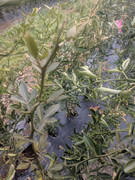
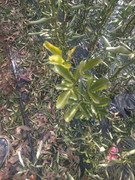
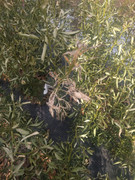
Photos taken yesterday of one plant lacking hardiness and one showing little damage.
Ilya11
#16
Quote from: kumin on January 26, 2019, 04:32:51 PM
I then removed them and stratified the seed coat for 30 minutes, followed by neutralizing the solution and rinsing them thoroughly.
Kumin,
I do not understand what do you mean by stratification? Certainly not cold treatment, may be washing soda incubation?
Your brute force approach is very impressive, hopefully it will produce some hybrids as resistant as poncirus. Still, most of the freeze damage occurs in spring when small stem cracks begin to be infected.
Best regards,
Ilya
kumin
#17
January 27, 2019, 04:56:13 AMLast Edit: January 27, 2019, 05:02:35 AM by kumin
Ilya11, Yes, it was a strictly controlled alkali treatment followed by water flushing, again followed by weak acid rinse. then flushed repeatedly. At this point the final 24 hour soak was begun. I’ve just noticed I referred to the process as “stratification” my intent was to say “scarification”.
mikkel
#18
January 27, 2019, 05:19:14 AMLast Edit: January 27, 2019, 05:20:45 AM by mikkel
kumin, you are doing impressive work!
Just a notification there is a Citrandarin F2 (but it could be F3 too) in Germany fully hardy and very similiar to Poncirus but not zone 6 more like zone 7.
It is a HRS 899 (or offspring of it) but unknown which one. There are (or were) HRS 899 a to k . All HRS 899 are offspring of US852 or another hybrid with Changsha x Poncirus parentage.
[
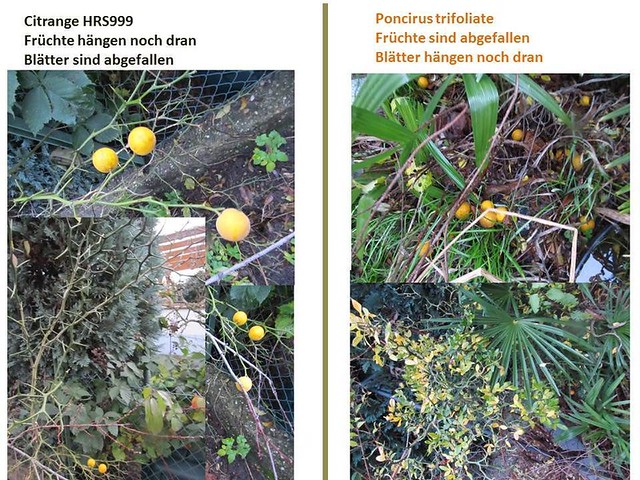
on the left HRS 899 to the right Poncirus
](https://flic.kr/p/23Qc5mt)
kumin
#19
Thanks, Mikkel the reversal of the hybrid retaining the fruit while dropping the leaves is interesting. One aspect of Poncirus fruit is the rapid dropping of the fruit followed by short storage life. I have no experience with the variability of Poncirus hybrids fruit storage life.
usirius
#20
January 27, 2019, 02:42:50 PMLast Edit: January 28, 2019, 03:15:09 AM by usirius
@Mikkel I can confirm your observation. Fruits of HRS89 (Poncirus x Changsa F2) stay much longer on the tree than the fruits of Poncirus trifoliata. See also my other post with photo here: http://tropicalfruitforum.com/index.php?topic=30863.0
Jesus: “I am the way and the truth and the life.” (John 14:6)
mikkel
#21
@usiriususiriusJanuary 27, 2019, 06:02:12 PM
@usirius
I have the feeling this picture might be yours? Is it?
usirius
#22
Yes mikkel, the picture above including the text has been done by myself some years ago 
Jesus: “I am the way and the truth and the life.” (John 14:6)
mikkel
#23
I knew it  We had some contact then.
Shall I put your name under the picture?
Is this 899 above the same as the pear shaped one you posted in the other thread?
usirius
#24
Concerning the picture all is okay! On the first view I think it is the same HRA 899 selection. If helpful can check this in my garden to a later time. - But which selection is it? The foliage is mostly trifoliate. Thank you also for the hint to find the description of Bernhard Voss- I catched the direct link to this descritption: https://web.archive.org/web/20130106094639fw_/http://www.agrumi-voss.de/hrs.htm → This description is very old and it is related to the habitus of relatively young plants. It is possible that shape and size of foliage varies during aging. So a more actual description including fruits would be very interesting. Do you know if Bernhard Voss has done any newer documentation of the HRS899 selections - may be he published a book about those or has written something about them in an article in a garden journal?”
It’s nuts that people think that only universities or big nursery can make new varieties. Every seed is a new variety.
Not when it is a nucellar seedling. 
The guy in Pennsylvania did the only effective thing that can be done to produce cold hardy citrus. He made a cross, carried it to the F2, planted thousands of seedlings, then let nature do the dirty work.
That is correct if it’s apples or citrus the mass plantings are part of the process. We have a huge advantage some work was already done. More work will be done very soon. Literally I could plant 5 acres of seeds with my cyclo soybean or corn planter. I could then cherry pick the winners that are alive the next year and in one year develop more cold hardy citrus than has been done in decades. Plow the field under and replant. At the moment I’m gathering materials. If that was done for 10 years you would make heads spin with your varities. I’m talking plant cold hardy mandarin, yuzu, Carolina lime, 10 degree tangerine, costenoga , poncirus plus etc. . By pure volume you could launch the citrus industry for the world’s children and grand children that come after us. If i dont do it someone else will give it time. My reputation speaks for itself on what I have done already in my lifetime. Not many can say that they have done much for anyone besides themselves. The jealous will try to tear down as much of our accomplishments as they can. There are people in this world that don’t want cold hardy citrus, as then citrus is in everyone’s reach. The bottom line is you can do whatever you want to do in life if you dedicate enough of your resources to doing it. Finding the seeds is a real challenge.
Yes they have been indoctrinated into the system, believing not everyone can breed fruit. I cannot imagine what that is like to believe a lie that not everyone is able to plant seeds. Thankfully we just keep planting and more do it all the time.
Kumin’s work with mass selecting hardy citrus seedlings in PA has been incredibly important and also great inspiration to replicate it with many other citrus varieties! His Conestoga 058 selection is incredibly citrus-like in appearance, but did not prove consistently hardy for him there. Here in zone 8a however, it seems hardy enough, and I believe it may produce good fruits.
I spoke with a friend recently about doing a mass trial with Yuzu in zone 7a, where Yuzu often dies back during single digit Winters but resprouts from its roots. There is a very good chance we could find one that can survive 0-5°F whole taking less or no damage.
It’s really amazing how many good varieties come from pure chance and nature doing what it does best. I have to make a separate post about it, but all of our most promising hardy citrus seedling varieties were the result of careful selection, not intentional hybridization. They were either open-pollinated hybrids or zygotic seedlings of known varieties that appeared more citrus-like, and have since proven surprisingly hardy.
This is the first I’ve heard of this one, do you have it, or have a source for it? A quick search yielded nothing, would like to hear more about it, seems to be hardy to around 10
The genetics involved suggest that the more cold hardy plants will be high percentage poncirus. The path to a good flavored cold hardy citrus would be to find a lot of cold hardy crosses and intercross them with further selection for desirable traits while retaining cold hardiness. I like the idea of planting 20 seedlings per square foot and then let nature whittle several thousand seedlings down to a dozen survivors. Fortunately, that will only have to be done a few times to get enough citrus traits into a poncirus background.
It won’t work the way you think it will. The result will be a group of high percentage poncirus hybrids that express relatively few desirable citrus traits. Combining traits will take years to grow out a bunch of cold hardy lines to produce another round of zygotic seedlings. In other words, it will take a good bit more than 10 years. Fortunately, you can leverage work that has already been done by planting some of the cold hardy varieties that have already been selected. Grow them out to produce seed and steady improvement can be made.
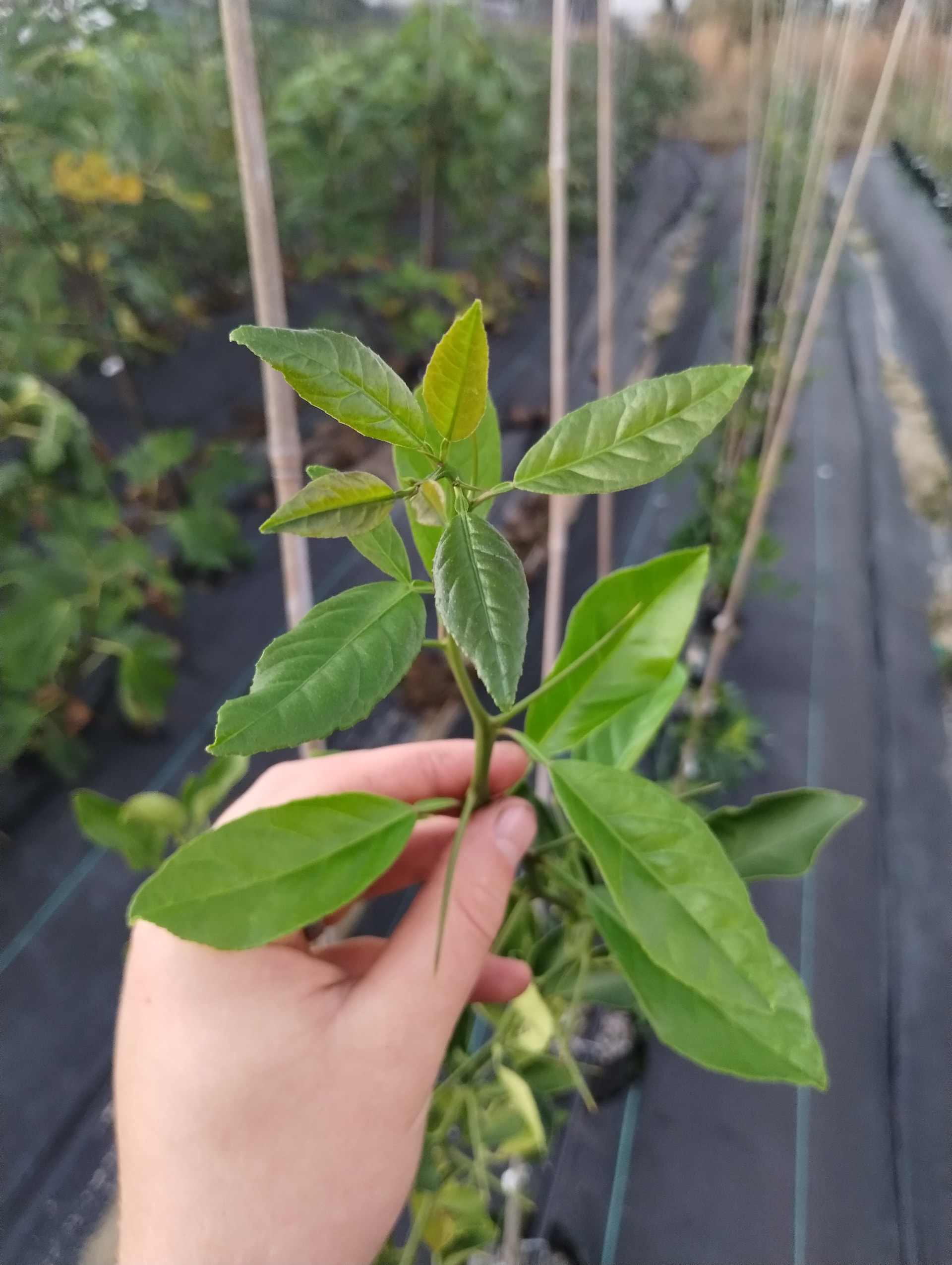
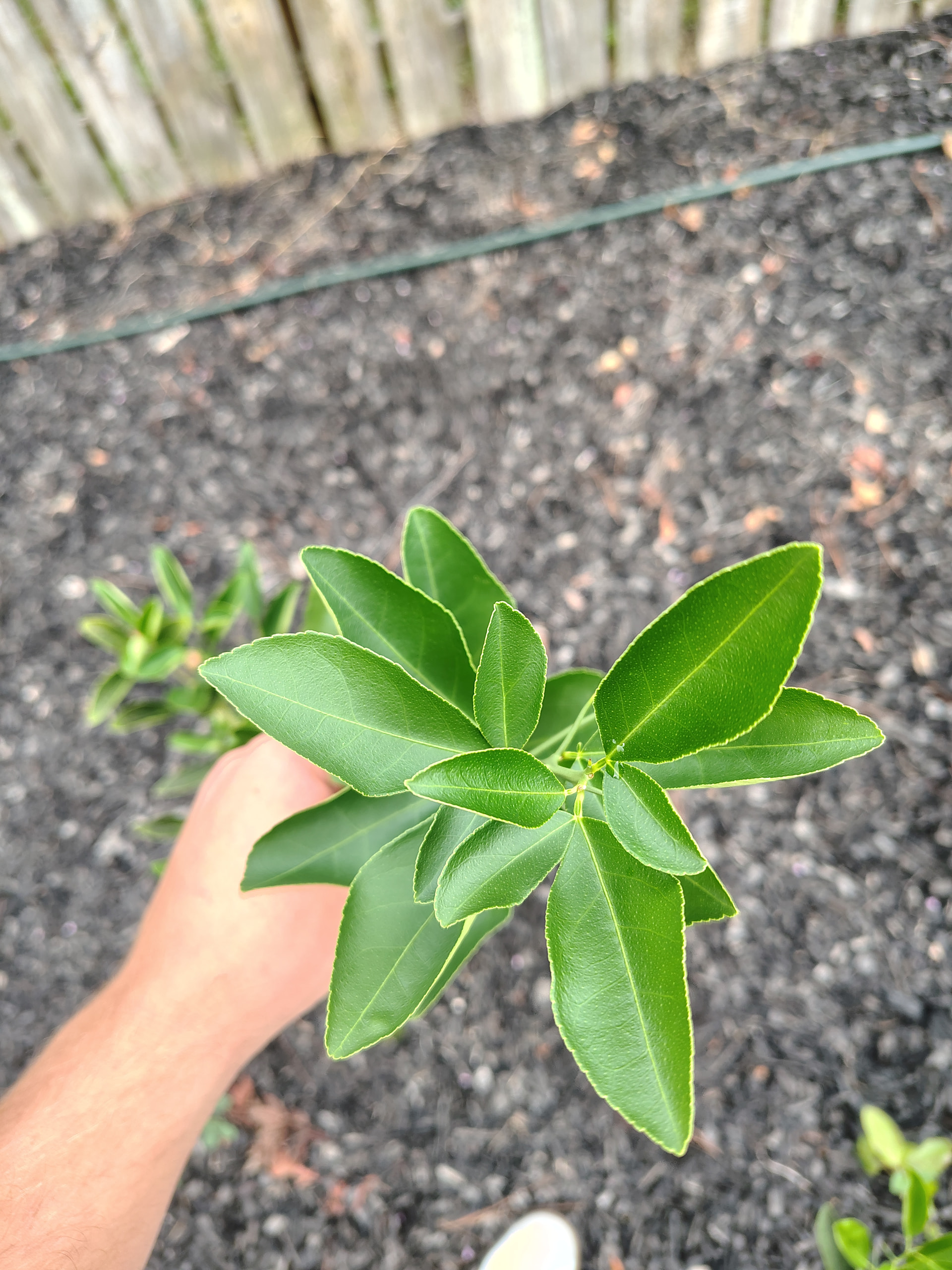
It is my favorite selection since I think it has the most promise for edibility. It’s hardy to at least 10°F, maybe slightly lower under ideal conditions, and that is based on our assessment of 1-2 year old grafts. Tender growth was surprisingly hardy and handled 20s with no damage. It is likely this selection survived the -11.8°F Winter under snow or it died back and resprouted.
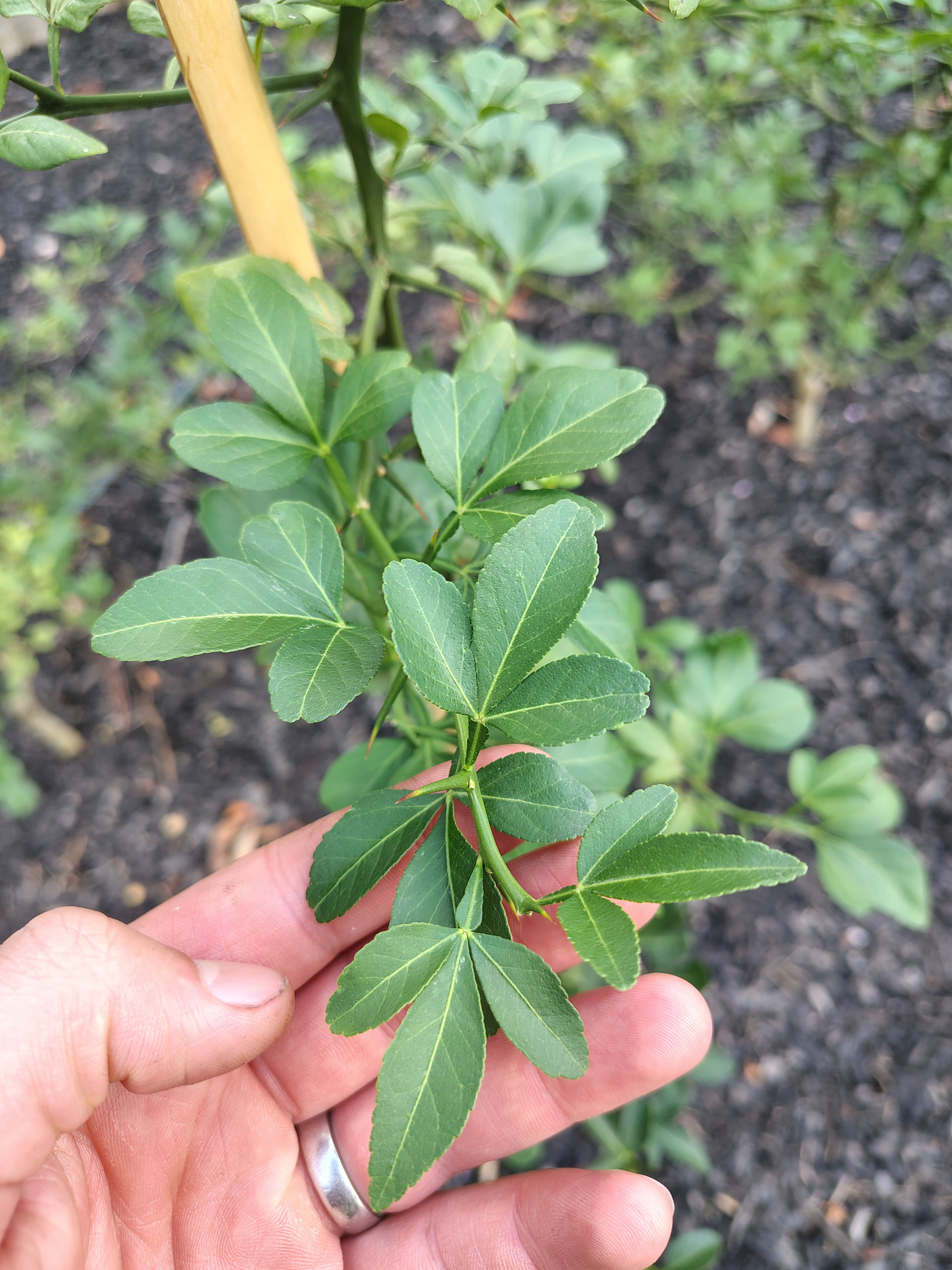
Here’s some photos of the leaves:
Here is a photo of the blooms he shared with me, they are very unlike Poncirus:
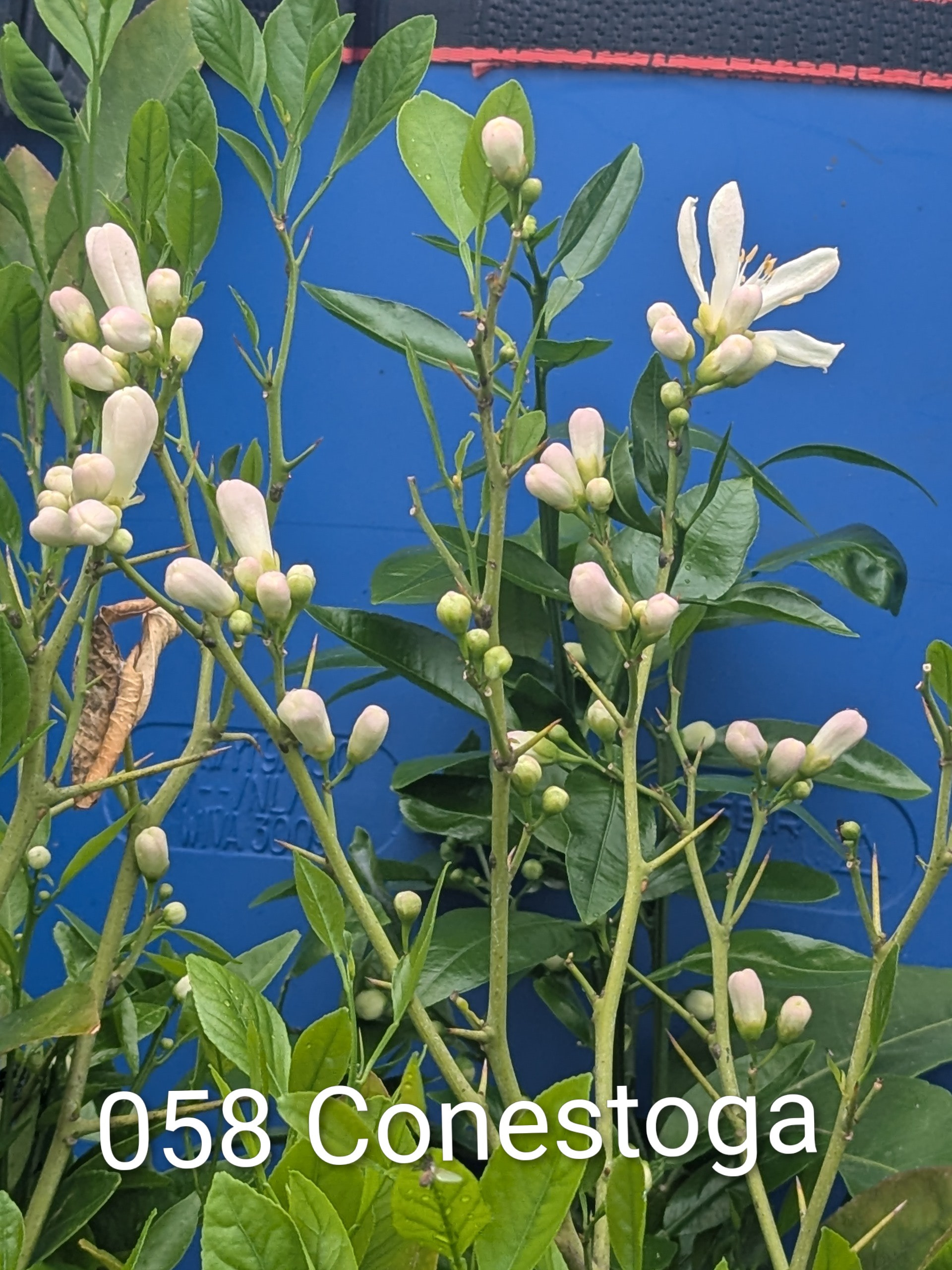
I should specify, neither of our specimens have fruited yet, just blooms. Fingers crossed, we could find out as soon as next year!
Incredible. Add me to the waiting list 
That is exactly how I said it would work. That is what i am doing now. 10 years is how long it always takes to make good varities. Thankfully with that much work done as you said it should take less time. Maybe we can corroborate on this project.
I did an interesting leaf taste comparison just now, between the only 4 trees in our collection with a strong Poncirus resemblance: Poncirus+, Conestoga 010, Conestoga 026 and Kinga1.
On the outside, they all look extremely similar, even less distinguishable than true citrus, but the taste tells a different story. The only variety with a stronger resinous taste in its leaves was Conestoga 026. Poncirus+, Conestoga 010 and Kinga1 all had more of a leafy, vegetal taste.
Not exactly yummy but not as extremely unpleasant as Poncirus leaves typically are. What’s funny is when I did our taste tests on the first 3, only Conestoga 026 had a stronger resinous flavor present. Conestoga 010 was reduced, not quite as low as Poncirus+, but the fruit tasted better.
I’ve hesitated to tell people Poncirus+ has better tasting leaves because I haven’t been fully sure, but in comparing these all, there may actually be a difference in the plant as well as the fruit. This can be useful for early testing, and how I found a single hybrid in our thousands of Flying Dragon seedlings.
For those who don’t know, Kinga1 resembles a trifoliate orange, but the fruit have a sweeter taste which is unusual. It is now thought to be a hybrid since it is not as hardy as one would expect, struggling with temperatures below 0°F.
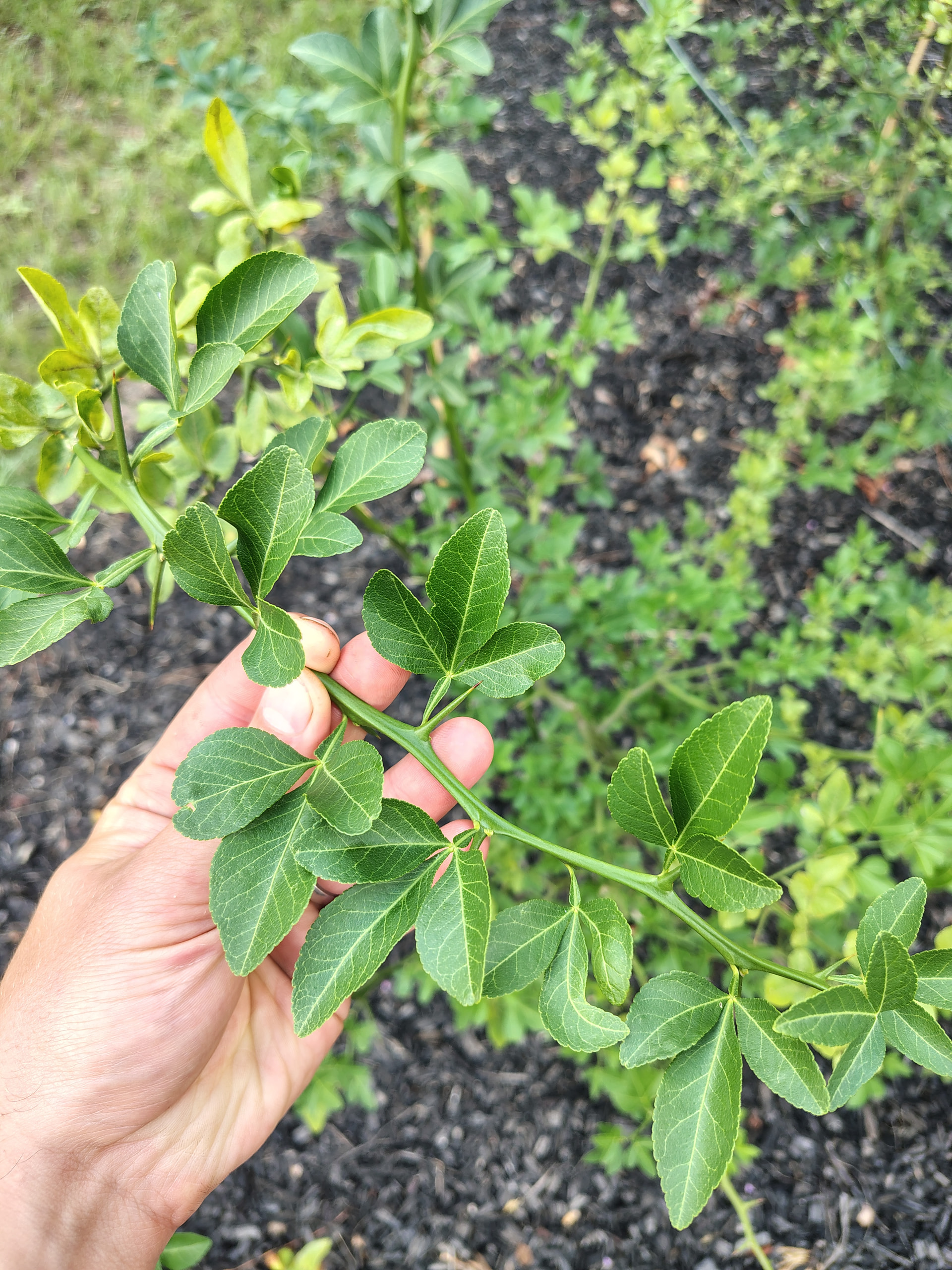
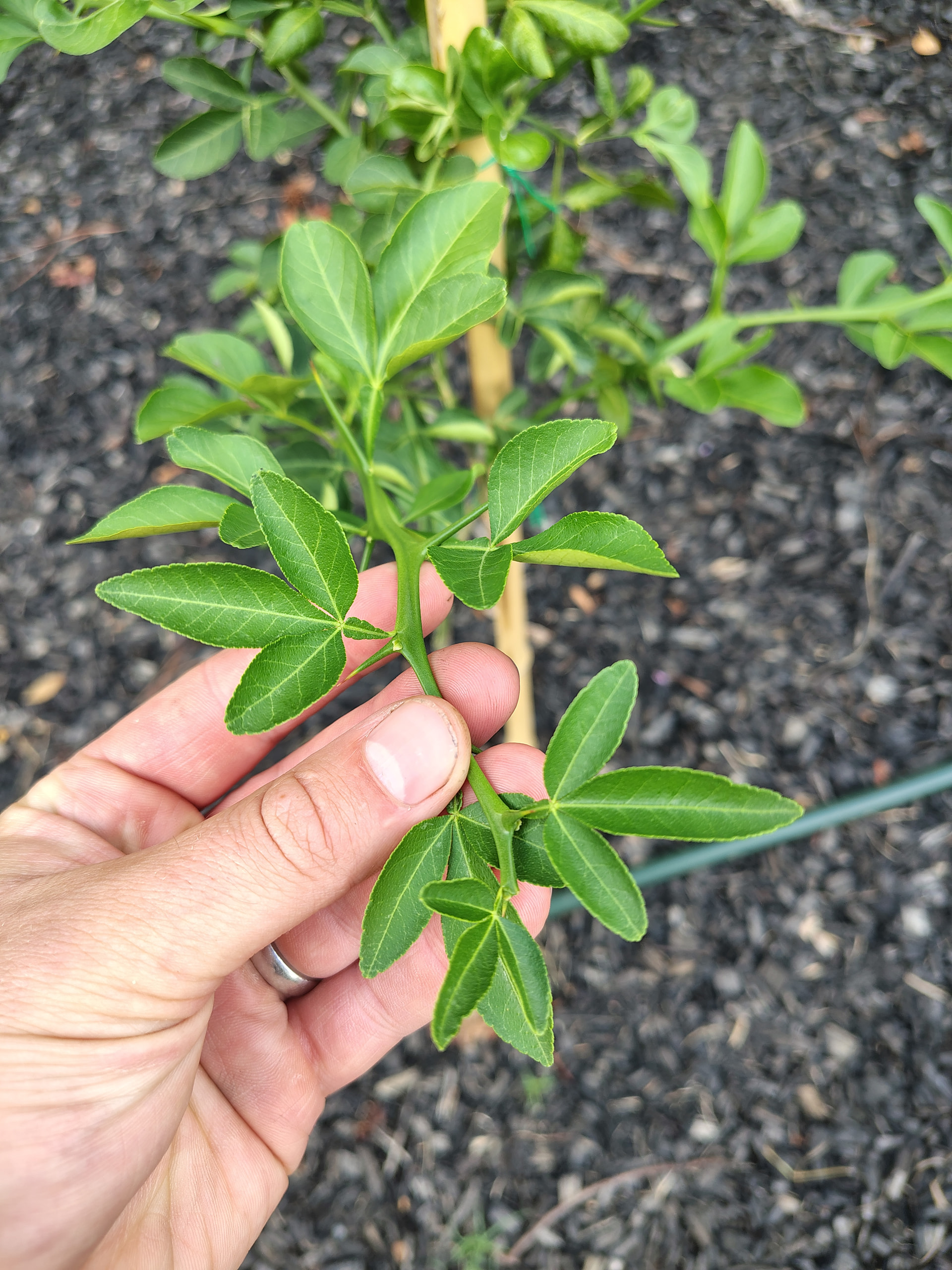

I’m patiently watching your website for the ones I dont have yet. I’m excited about poncirus+ for sure.
Thanks for you support!
I integrated our product inventory spreadsheet into our home page to make it easier for people to gauge what’s available and in what form, since we are not equipped to have grafted trees of every variety at all times.
Our projects and nursery are still young, so variety and availability will improve drastically over time.