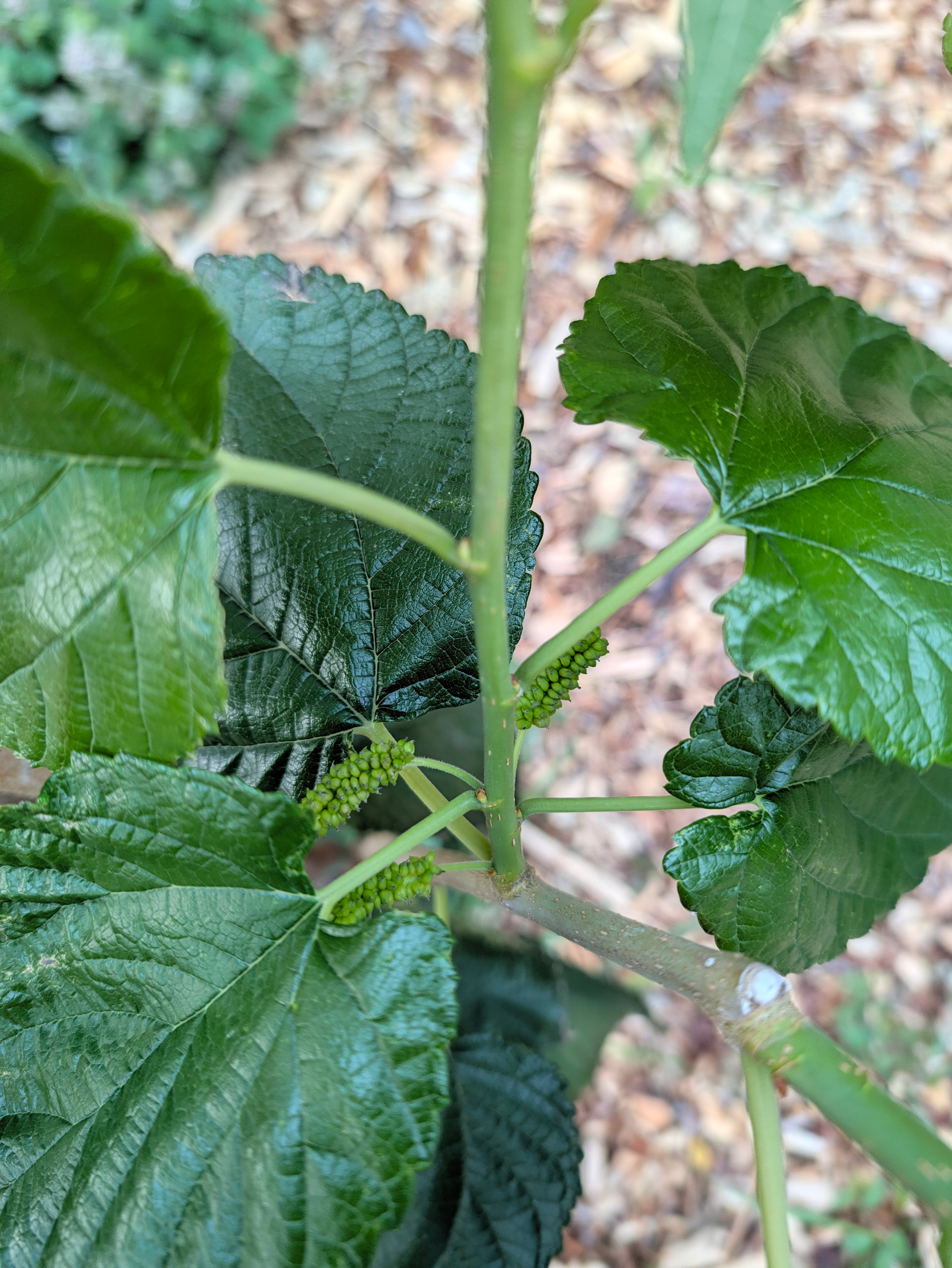
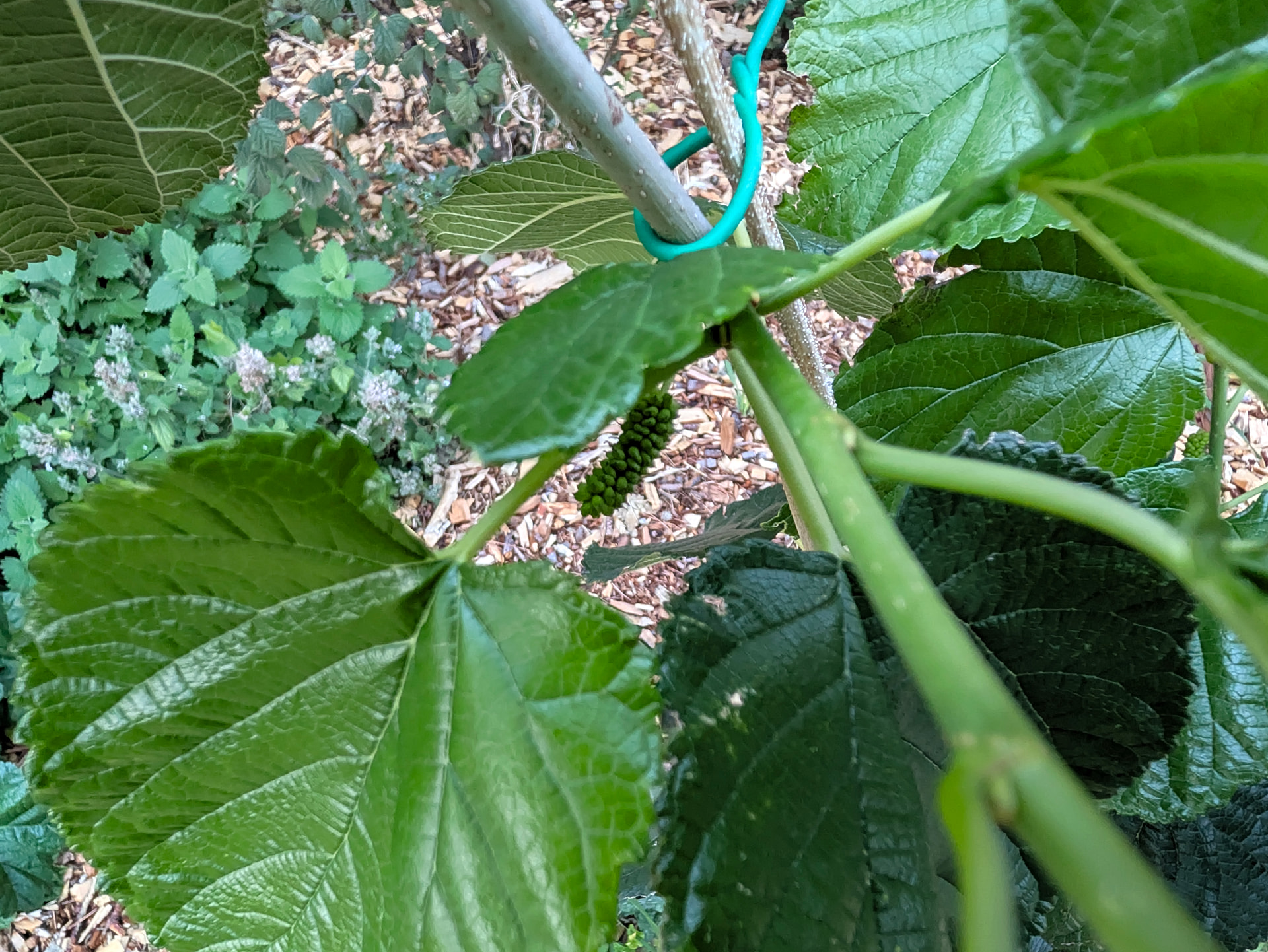
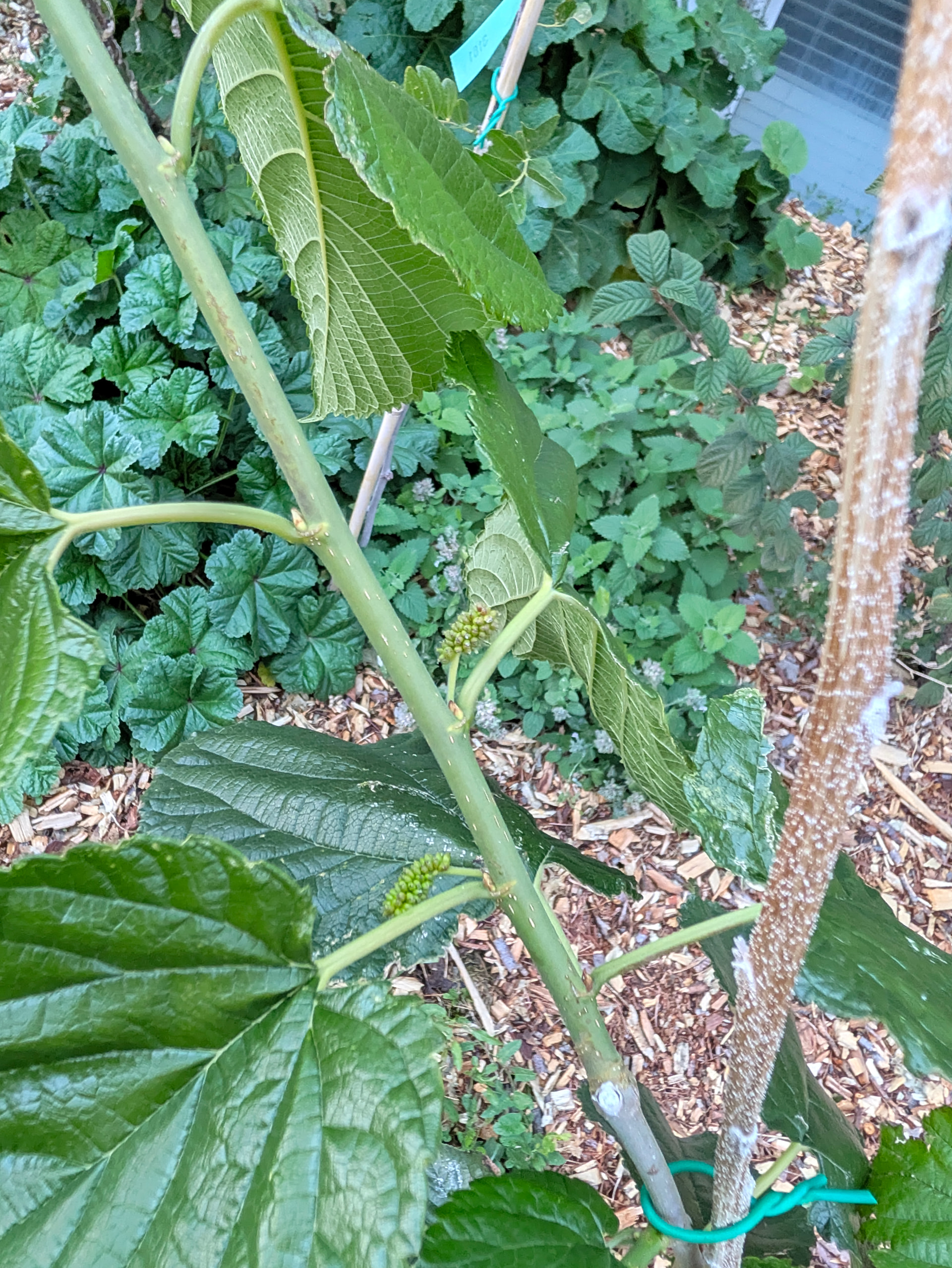
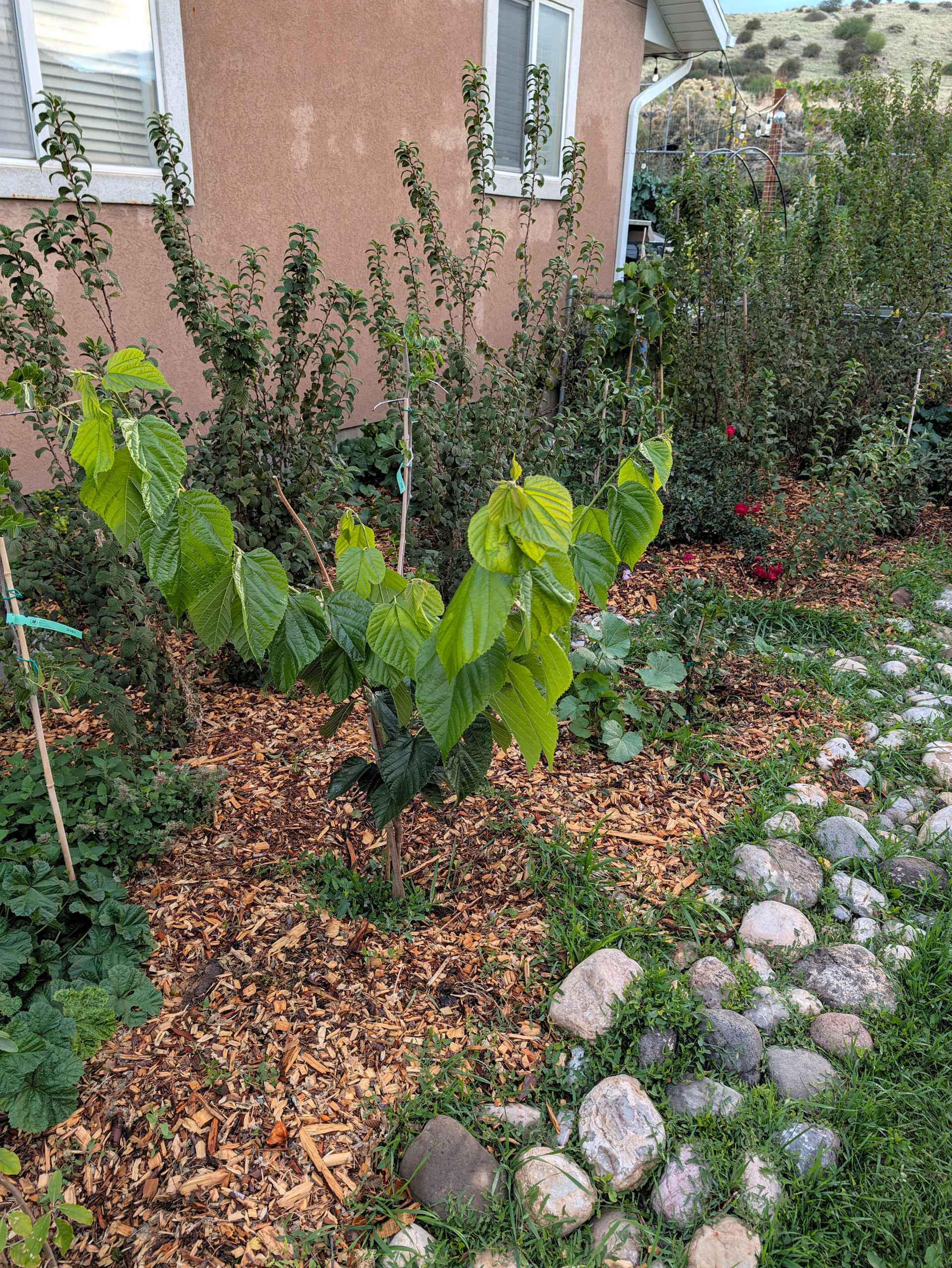
I planted a Kokuso this year. I saw a video claiming that mulberries fruit after pruning. I pruned it. It fruited. Cool, good to know.
It’s grown 2.5 feet from the cuts.
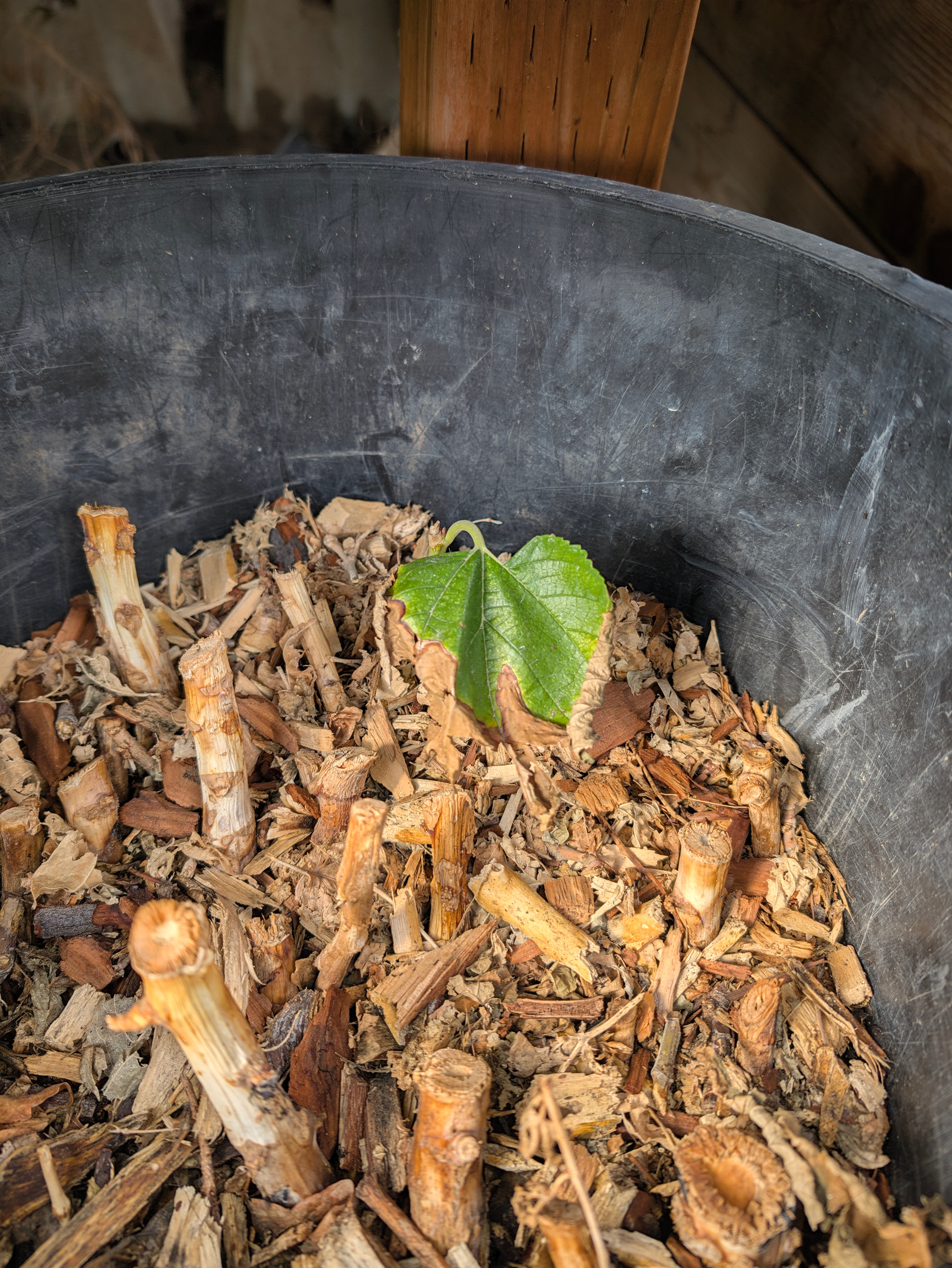
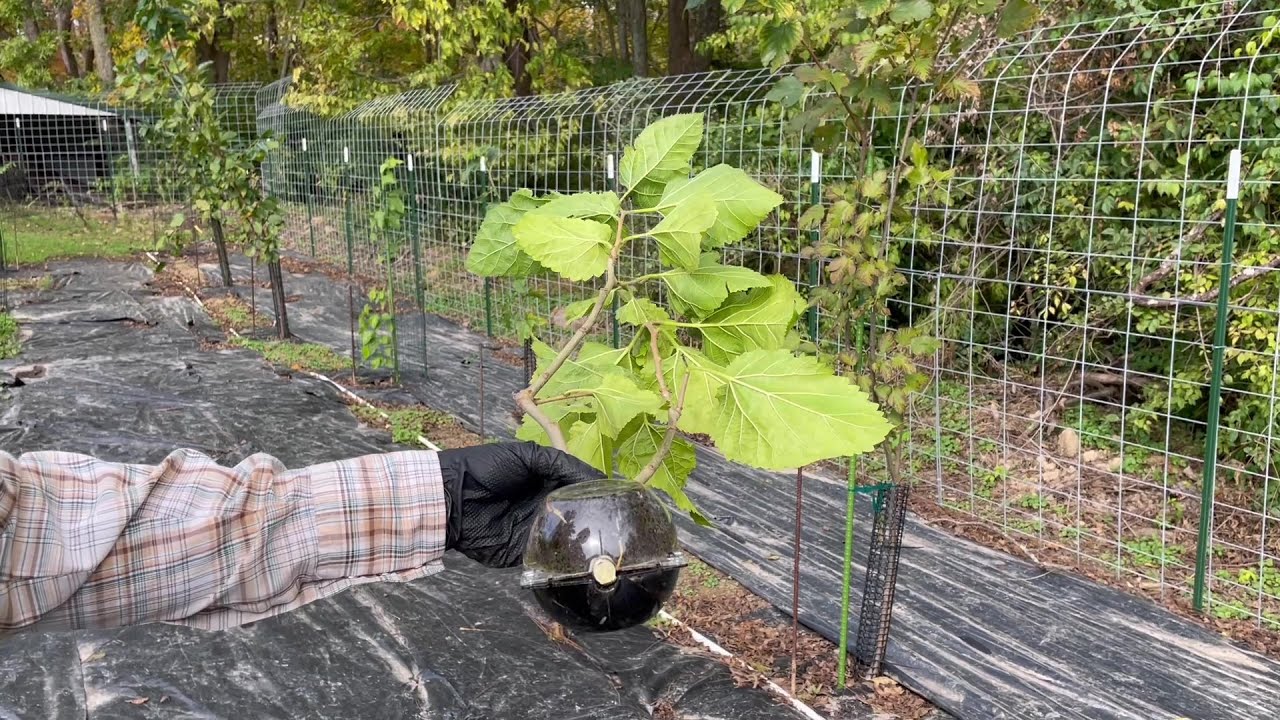
But, as I almost always do, I thought, why not stick some cuttings in some soil and see what happens. The soil was a simple blend of garden and potting soil I had laying around from the locally owned hardware store.
That was a couple-few months ago.
100% success rate, so far. Winter’s coming. We’ll see what happens, but if I were to bring them indoors they’d carry on for sure. They are plugging right along.
I may bring one or two inside and leave the rest outside. Prolly will now that I think about it.
I am now certain we’d be pals in real life. The use of the word "Aye” is what has engendered my certainty.
Of interest, the only other successes (so far) this year, as regards plopping cuttings in some soil and seeing what happens, are brambles; another mulberry (a volunteer that arrived this year); and a couple of grapes.
Unsurprisingly, pear, quince, perennial kale, apple, haskap and peach are all 0% (except one pear cutting that is holding on for dear life and is gonna definitely die at hard frost).
I don’t often have great success with this method, it’s just interesting to see what happens, because sometimes things surprise me.
I agree with not pulling the cuttings out just to look at their roots (if any), but would also not be claiming their success based on the looks of them. In my experience, mulberry cuttings that produce roots also produce new top growth. A cutting which has not yet died does not always translate to a rooted cutting.
Years ago i watched different techniques of rooting grape cuttings.. Europe etc seems to like the horizontal laying of the cuttings..whereas Americans seem to always like the vertical sticking.
In the elderberry group a guy did a bunch of elderberry cuttings and laid them horizontal and covered them. looked highly successful to me.
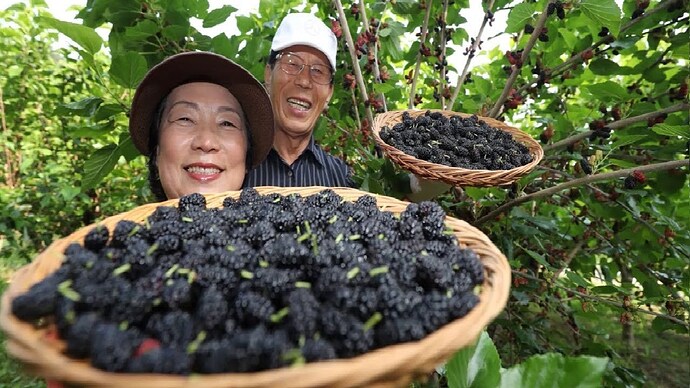
Note in the Korean video they say ‘mature stem’. So im assuming that those cuttings were taken in early spring with the most stored energy before bud break.. and in the darkness of being covered up (we have discussed rooting in darkness).. that the most potential for ‘roots’ would happen and then top growth would happen after rooting.
Its simple and much wiser than the American way i think.
I think elderberry will root no matter how it is laid, but I can confirm horizontal and covered works as I accidentally grew a ton like that this spring by leaving trimmings on the ground when I mulched. I thought all my plants were suckering like crazy and then realized it was all “cuttings” under the mulch. Was a pain.
I’ve read about using horizontal elderberry trimming bundles laid on contour on a slope, combined with support stakes to keep them from rolling downhill, as an example of the “live staking” practice which helps to control erosion.
Those roots look solid. Kokuso has a reputation for being difficult from cuttings so that’s a good result, especially if you didn’t do anything special with the soil mix.
I had a yuzu cutting in the soil for over a year that stayed green. I was certain it had rooted until I went to transplant and it had absolutely nothing.
I was expecting a picture of roots, or inches of growth, especially since there were several cuttings and sounds like no special plans for them. And if they root 100%, no big loss for one.
I’ve had cuttings (not mulberry in this case) stay alive for two years before growing roots. As long as the cuttings don’t die, I don’t give up on them, but I never consider them a success until they start growing well both above and below ground.
I’ve had minor success (maybe 10%) getting some M.rubraXalba hybrids to root from mid season semi-hardwood cuttings, but find that of those that actually develop roots do so very weakly, and if I try to move them from a communal pot to individual pots at the end of that growing season, they DIE. So…I leave them alone in their communal pot, sunk in the ground or in the wood chip pile, and any still alive come spring then get gently up-potted, IF they actually have any roots.