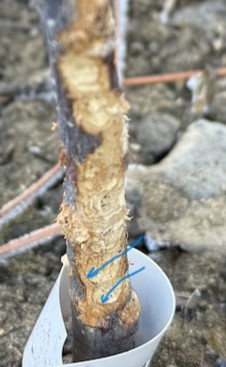
Feeling heartbroken and dumb (young apples, mostly girdled)

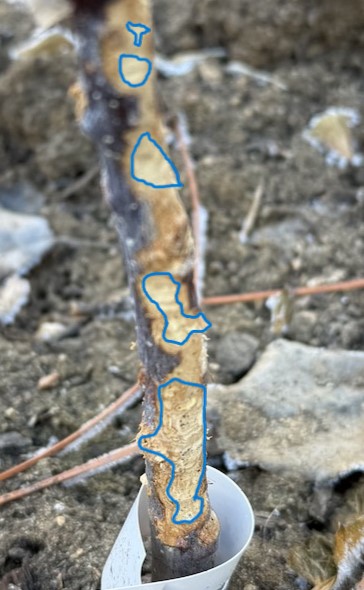
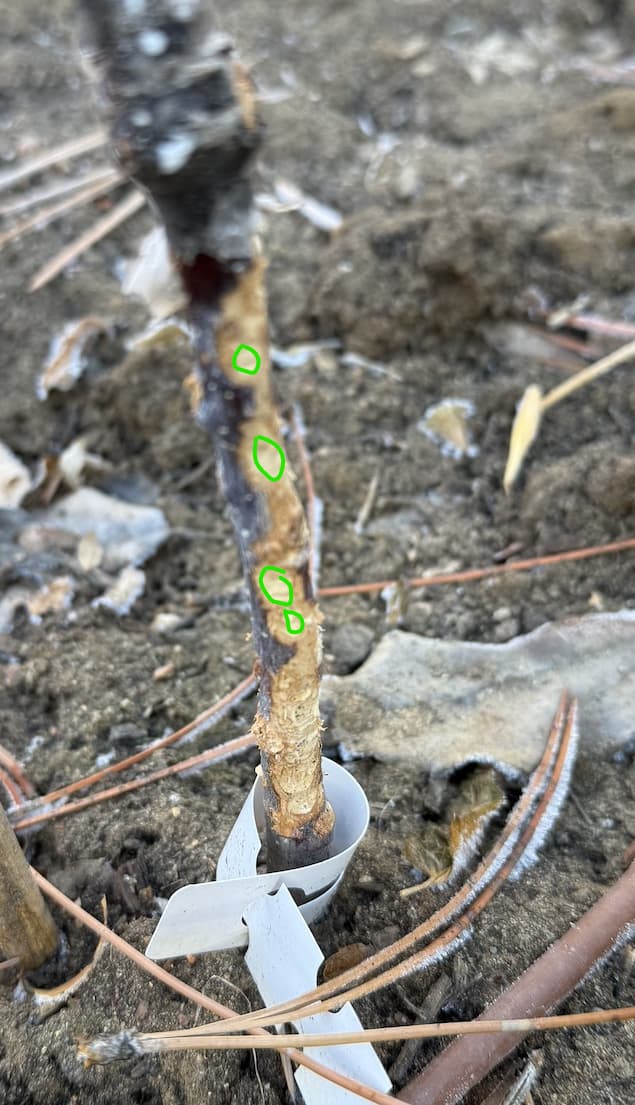
From one picture, I’ve circled the areas that I think probably bit deeper than the cambium. I’ve had several young trees with similar damage. Some I tried to inarch graft new roots. My grafts sucked, but whether they took or not didn’t affect tree recovery in any obvious way.

As they recover it will be obvious where the cambium was gone because you’ll see the bulge surrounding them until it covers over.

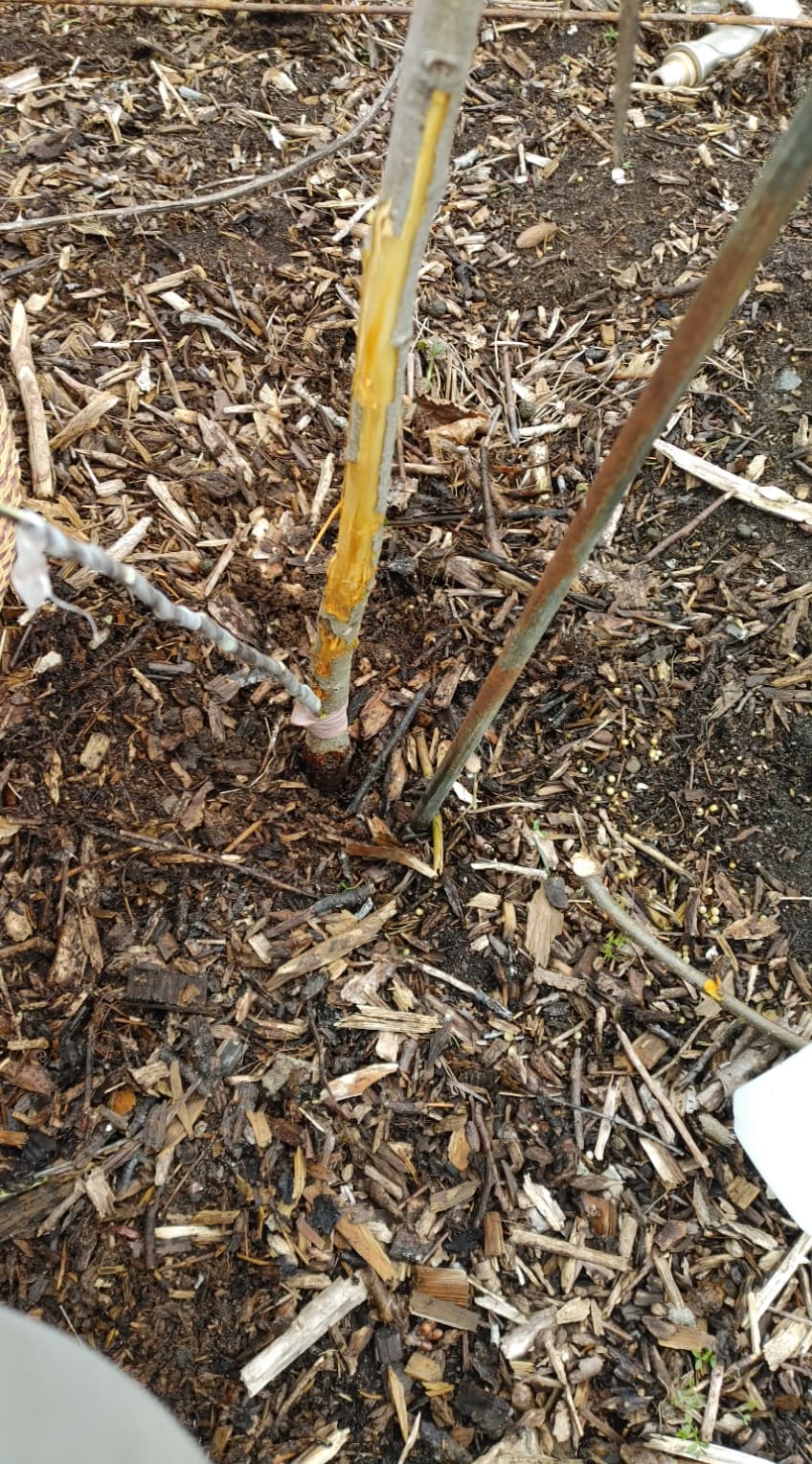
The tree in this post looked like that one a few years before this picture. I think there is at least one extra rootstock growing next to it that I tried to use but I think that one didn’t take:

And on this one, the bark was slipping when it was damaged, so it is peeled back to the cambium. I did a successful bridge graft, but it too seems like it may have been unnecessary:

2 Likes

Protected from further damage, I think most would make it, but I’m kind of with Zombie… I’d be inclined to cut a scion from whatever top growth you got last year, then, when the time is right, lie on my belly and cut off the rootstock immediately below the lowest chewed spot and re-graft the most questionable ones. That will, however, put your graft union very close to ground level, which could be an issue if you’re counting on a dwarfing rootstock to control vigor/size, as it might eventually get buried and result in scion-rooting.

2 Likes

I know this is an enormous amount of work, but the reward will be harvesting fruit.

I have this saying that people not facing the work you need to do are under the mistaken impression that fruit just grows on trees!

Actually, fruit just does just grow on trees, and that is the wonder of it all, but there is a lot of heartbreak along with hard work along the way.

3 Likes

i think you missed a few spots.

d4922c98a2c7fbf0ad23dc67308fc9951495999d cambium arrow

the blue arrow points to where i think the cambium is. Everything past that is secondary xylem (woody) and thus has no cambium left.

When the bark is “slipping” and you peel it of the “wood” there is the cambium. Between the bark and wood.

d4922c98a2c7fbf0ad23dc67308fc9951495999d within blue no cambium left
If encircled the area’s where i think the animal chewed past the cambium.

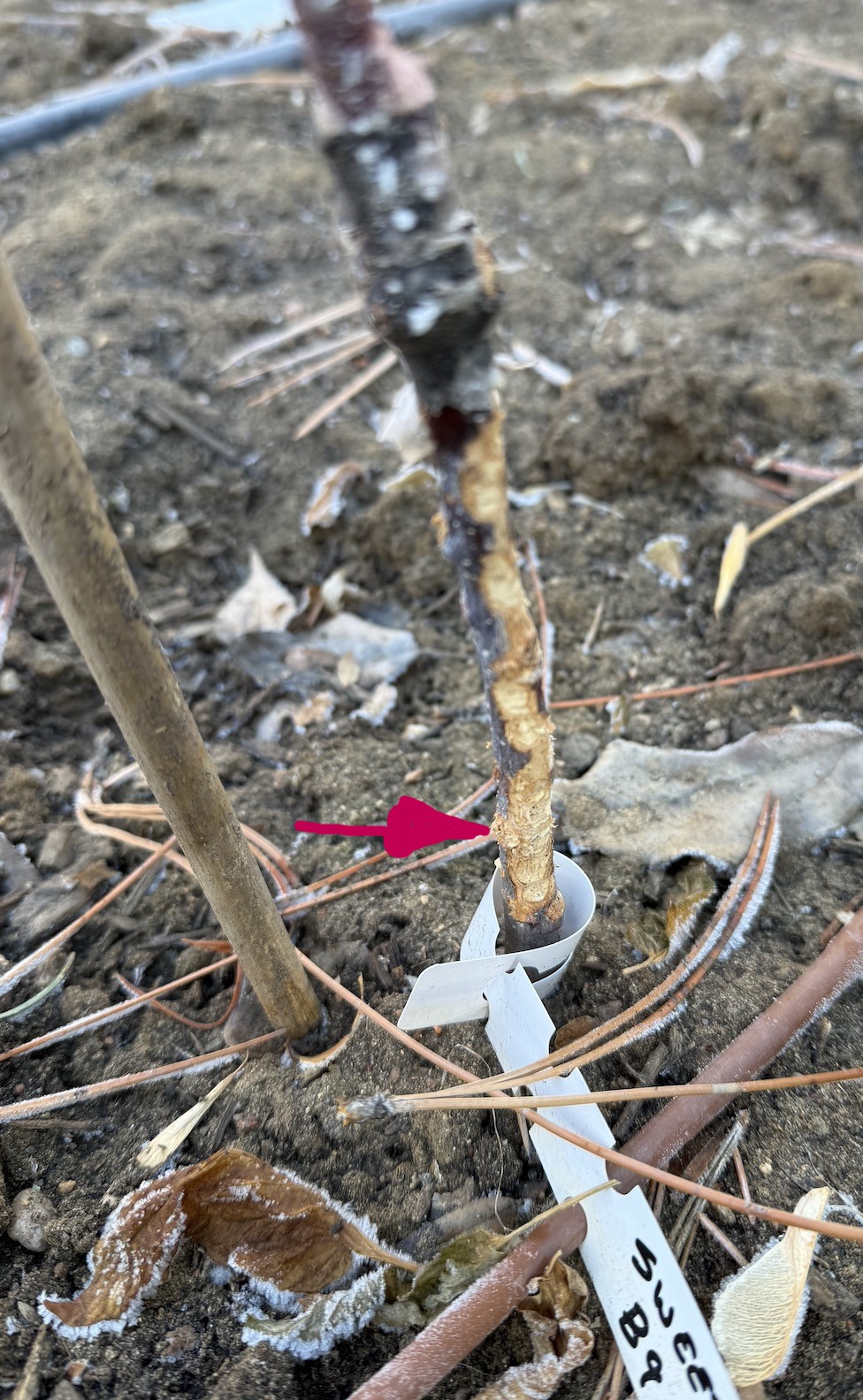
Where the red arrow is. If the damage continues on the back side. the tree is girdled. If there is a strip of non damaged (or slightly damaged) bark there. It will probably recover. Either way. If you have the option. It is a good idea the snip of a bit of the top, scion to either save or graft. Unless you have the cultivar on another tree or can easily get some new graft wood if you loose it.

1 Like

I would have agreed with you 6 years ago. But, after watching what recovered on mine, I think its only the smooth shiny areas that are the lightest color.

I paint all my tree trunks for this reason, even the little ones.
Sorry about what I imagine felt like a crushing blow when you saw them.

1 Like

If I listed all the ways I’ve killed apple trees it would be a long list.

4 Likes

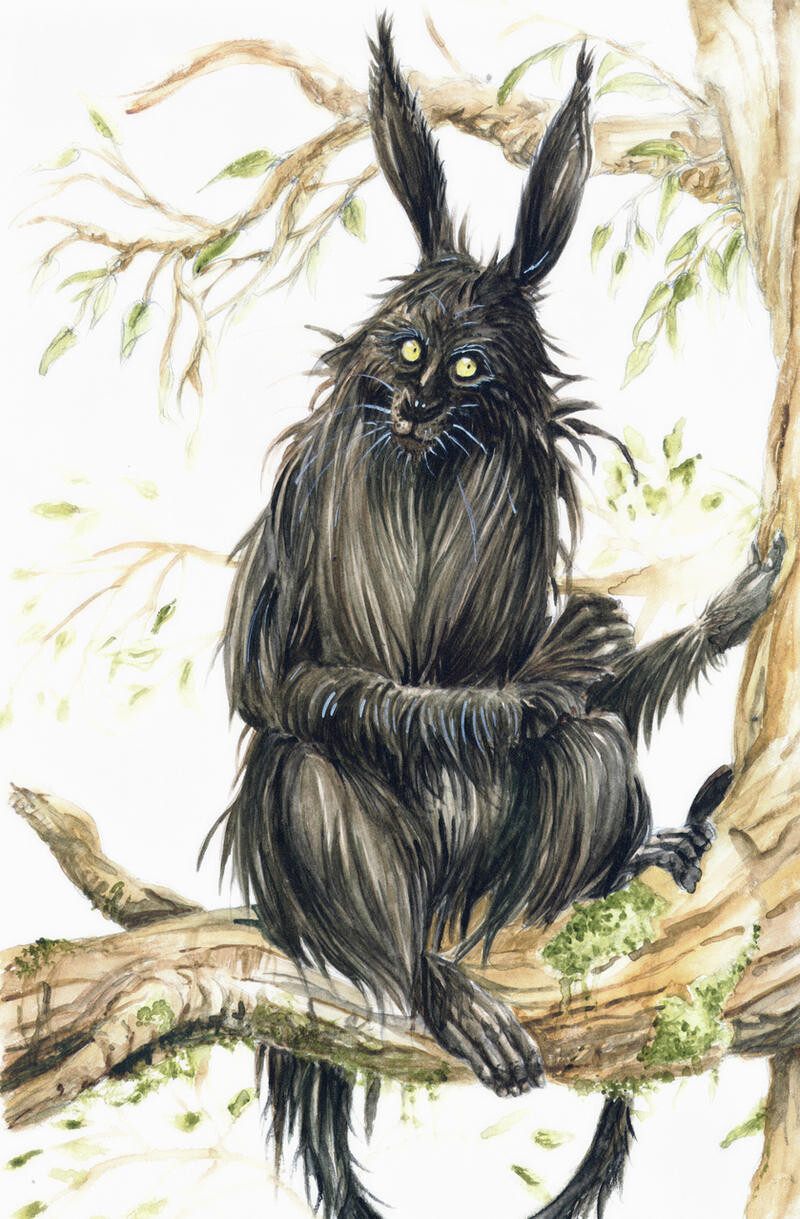
… and púcas. Don’t forget púcas. They can range up to 6 ft 3+1⁄2 in.

1 Like

@northwoodswis4 - Yes, a very good point. I’ve lived in the upper midwest for some period of my life, and can completely relate - especially to the ‘permasnow’ that continually builds. While it can be an issue for a single storm, as well, luckily, I’m slightly better off here in CO, as snow doesn’t hang out on the ground here very long, so the build up thing doesn’t happen. However a single storm can still lead to some more height exposure, and that’s worth considering.

@murky & @oscar - I think it points out that my pictures aren’t the best with some wonky lighting, and who knows… if you had the specimen in hand, you all might actually see it the same way. However, your point is well made, and enlightening. Thanks.

@Lucky_P - that’s encouraging, for sure, and given that seems to be the theme here, I’m mostly inclined to just roll with it (protect them and let nature take its path). After the discussion and reviewing each one closely, I feel like most might have a fighting chance. I think the stake might have been the saving grace for most of these. In some cases it allowed a thin strip to remain, in others, the rabbit couldn’t get as deep. Fully agreed on the challenges of re-grafting at almost ground level - at least for this relatively inexperienced grafter. They are Bud.9

@PaulInMaplewood - Yes, have been looking forward to the harvests for quite some time, and those I’ve had have been rewarding. I’ve got maybe 10 trees that will be in 4th leaf this year, and hoping ‘this is the year’ for several of them. Weather depending, of course (a crapshoot here). Yeah, it’s funny how most think ‘how simple’ it is to plant a fruit tree that will produce well. Continually amazed at trees and plants that produce edibles out of soil and sunlight.

@LarisaLee - Yeah, disappointment for sure - both in the damage and me not protecting them. Actually, the whole area had a rabbit fence around them in the summer, but it got left open during the winter. I’ve painted trunks, but mainly to reduce sunscald on some heavily prune trees. Paint prevents vole and rabbit damage?

@hambone - yeah, very funny. well, kind of. I’m sure I have many more ways to discover!

@CRhode - learning something new every day… though at 6+', I think the trees might need a prison built around them.
3 Likes

Yes, púca damage can be discerned inexplicably high off the ground. It may sometimes be ascribed to rabbits’ clambering over snowdrifts or even the hilarious notion that they, too, in extreme cases climb into trees.

Yes, in my experience. It’s not yummy looking or smelling with latex on it. We don’t get deep, long lasting snow here, so there’s always something better to eat. I don’t know if it’s infallible in colder areas.

1 Like

I planted spearmint at the base of my apple and pear trees, but that may be wishful thinking on my part. I can’t help but wonder if adding cuyenne pepper to latex primer might do the trick. I switched to using suet with hot pepper and the squirrels have completely ignored it.

I had mixed a ton of cayenne pepper with my wax for grafting to stop mice last year, and it almost seemed like they liked it better.

2 Likes

I was wondering if it was like it is for people? My wife can’t take even a little hot pepper and it doesn’t bother me at all. I was going to mix cayenne in latex paint and paint my whips even though I have them in tree tubes. My property is infested with voles and field mice. I was told that drywall compound mixed in latex paint works very well too. I think I will make a concoction and try it on a few trees this winter and just use the tree tubes on some others and see if the paint helps more than the tree tubes. The bigger tree I will just use hardware cloth.

1 Like

How are they now?

1 Like

I had rabbits stripping the bark with white paint on it. Unless you have more than a few dozen trees, I would put a ring of hardware cloth around the trees. Tree guards can cause problems in the summer, like borers hiding under there or fungi.

4 Likes

Sadly, they all went back to rootstock. Not a single one in the garden bed made it; just the ones in containers are fine. Speaking of which, with winter thinking about setting in late, it’s time to protect those… I’ll probably try again this winter, just shy on time.

1 Like