Fig Talk

@Ethancactus
You will then need Caprifigs with varying characteristics, because traits do not solely come from females.

Among those available in the USA:

The ‘Black Capri’ that originated with Bass is unique among those in circulation.

‘Croisic’ is a French fig brought to California in perhaps the 1880s. It has a pollen-laden Spring crop but a ‘Dottato’-like main crop with stamens sticking out the eye. It is the source of “edible Caprifig” stories in the USA. G. Eisen wrote about it on multiple occasions and coined the term ‘Croisic-type’. Fifty years ago, a California collector of figs mislabeled a derivative of ‘Croisic’ as ‘Croisic’. It was widely distributed among collectors and for a short while from USDA Davis. Thus, any fig labeled ‘Croisic’ that cannot be traced to France is best labeled ‘Croisic-type’.

Note that worldwide, a majority of persistent F.c. carica Caprifigs do not have “edible” main crops.

‘Enderud’ is perhaps the pinnacle of the UC breeding program (see Frost 2023 Fig. 3 and Suppl. Fig. 2 for breeding maps). Its immediate female offspring tend to split.

‘Saleeb’ is a back-crossing of ‘Enderud’ with ‘Beall’. The latter is an excellent female fig of unknown origin.

‘UCR 347-1’ is a back-crossing of ‘Enderud’ with ‘Calimyrna’. It has significant differences with ‘Saleeb’.

‘Capri Q’ is one of the feral Caprifigs discovered by Todd Kennedy. It is a Croisic-type.

‘Al Assad’ (aka UCD Caprifig) is from a feral plant alongside Putah Creek near UC Davis. It is a Croisic-type.

‘Wild #1’ is thought to be a Croisic-type, but I haven’t examined the fruit.

There are also a few persistent hybrid (labeled carica x palmata) Caprifigs available, possibly sourced from Algeria. Don’t shy away from these – F.c. carica are a hybrid landrace.

4 Likes

I know very little about fig breeding. But I Mainly want to breed figs that are “cold hardy”, fast growing, very productive, and that taste good.

@Richard I appreciate the suggestions and info on these caprifigs. I will definitely look into them and consider them for my (soon to be) breeding project.

@GoodFriendMike
Cold hardy and persistent is a challenge. Let me explain.

What agriculturists label as Ficus carica is actually Ficus carica subsp. carica (F.c. carica for short). It is a domesticated blend of four species. The ancient Romans were largely responsible for this but prior to that, separate portions began in (a) northeast Africa and (b) regions south and southeast of the Black Sea.

Persistence is thought to have arisen with Ficus palmata subsp. palmata (F.p. palmata) in NE Africa – not to be confused with Punjab fig (F.p. virgata) of India. Note that the native F.p. palmata are evergreen in their endemic environment, producing green-skinned light-fleshed figs continuously year-round instead of seasonal crops.

Cold hardiness is not necessarily associated with species native to mountainous regions. For example, the highlands associated with native Punjab species are at latitudes less than 30°N and thus temperate in comparison to portions of the USA mid-south. Further, the Punjab figs originating in south central Asia are largely non-persistent.

Ficus carica subsp. rupestris (F.c. rupestris) is a shrub-like plant producing dark-skinned red-fleshed figs that arose in semi-arid regions bordering the eastern Mediterranean. A portion of the academic literature refers to it as wild fig – although agriculturists often confuse it with feral F.c. carica. K. Browicz cites findings of native F.c. rupestris in eastern Anatolia, although these might have been brought there during the Iron Age. Regardless, the Romans (documented by Plinias) brought them to central Italy for their cold hardiness. These were bred with existing F.c. carica in Abruzzo, leading to the modern day cultivar ‘Abruzzi’ (aka Hardy Chicago).

Ficus johannis subsp. johannis (F.j. johannis) is cold-hardy species, native to regions south of the Caucases, overlapping the eastern portion of Anatolia. It produces roughly 1/2" dark-skinned red-fleshed figs on a long stem. Ficus afghanistanica subsp. johannis (F.j. afghanistanica) is a hybrid of F.c. rupestris and F.j. johannis. This might have occurred naturally. Regardless, it was propagated in ancient Armenia, now existing as a landrace with many local cultivars plus feral individuals in Iran and Afghanistan.

If I were to embark on breeding cold-hardy berry-tasting figs, I would begin with female F.j. afghanistanica x persistent F.c. rupestris-F.p. palmata hybrid. Both of these are available in the USA, though I would prefer afghanistanica grown from seed of Iranian dried figs.

From the above, you can see that breeding a truly cold-hardy Dottato-like fig is problematic. I believe we’ll have to wait multiple decades for a genetically-modified Dottato.

4 Likes

I may not be a true part of this forum. But trust me. I keep an eye everywhere I can. From what you just posted. I need to get my Iran seedling’s growing. On a side note the Capri Q X FPTC seedling’s are growing well. I will keep checking in. :slight_smile:

5 Likes

If your main interest is breeding. You need to breed for females and Capri that fit your goals. Both male and female pass on certain traits.

@Ethancactus
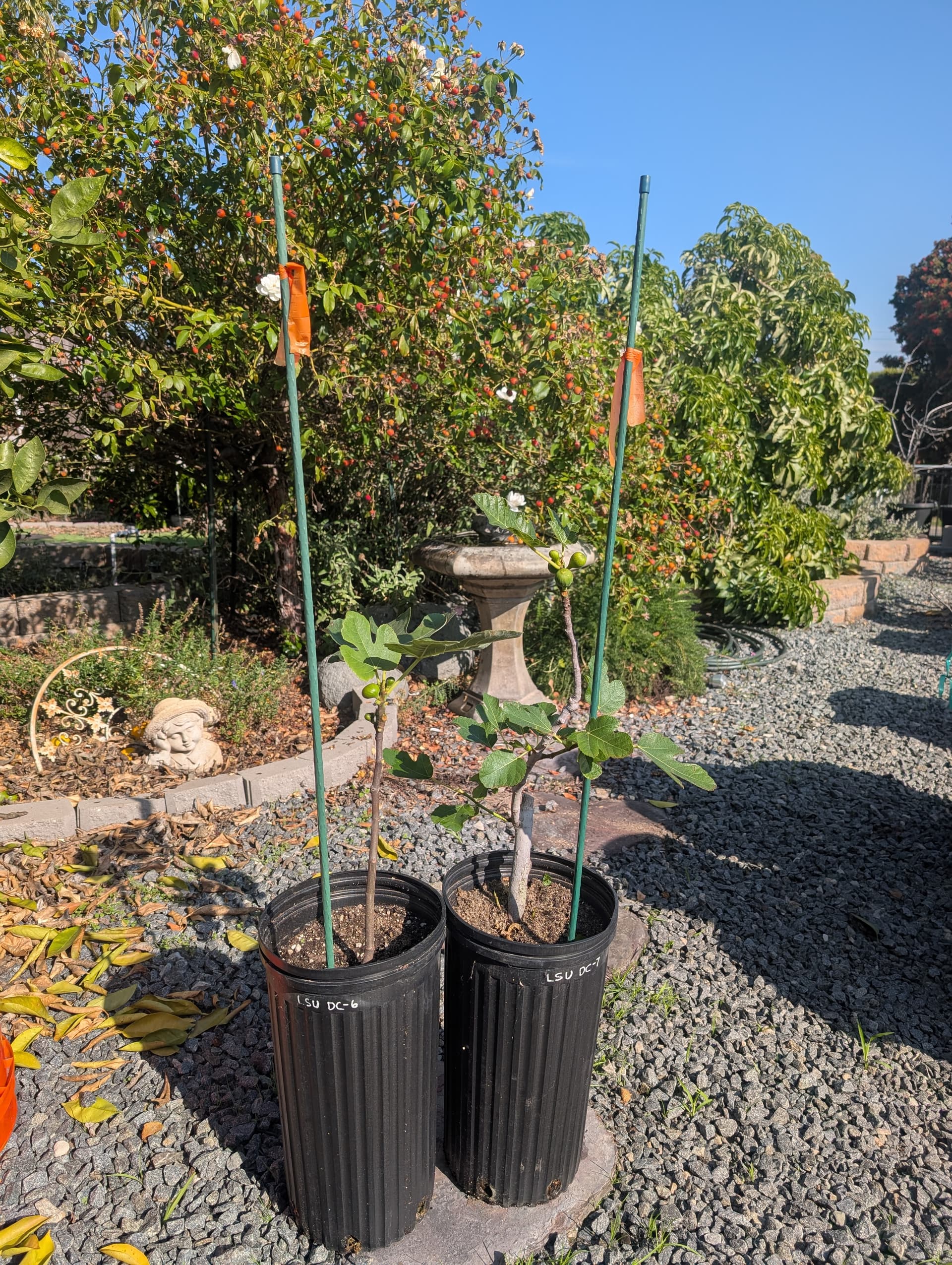
Here are clones of LSU DC 6 & 7, both sporting a winter crop. The pots are 15" tall.

2 Likes

That cool! Have you been able to try them in past years and if so what do they taste like?

@Ethancactus
I hadn’t noticed a winter crop in past years. I’m curious if they can provide concubine for B. psenes.

2 Likes

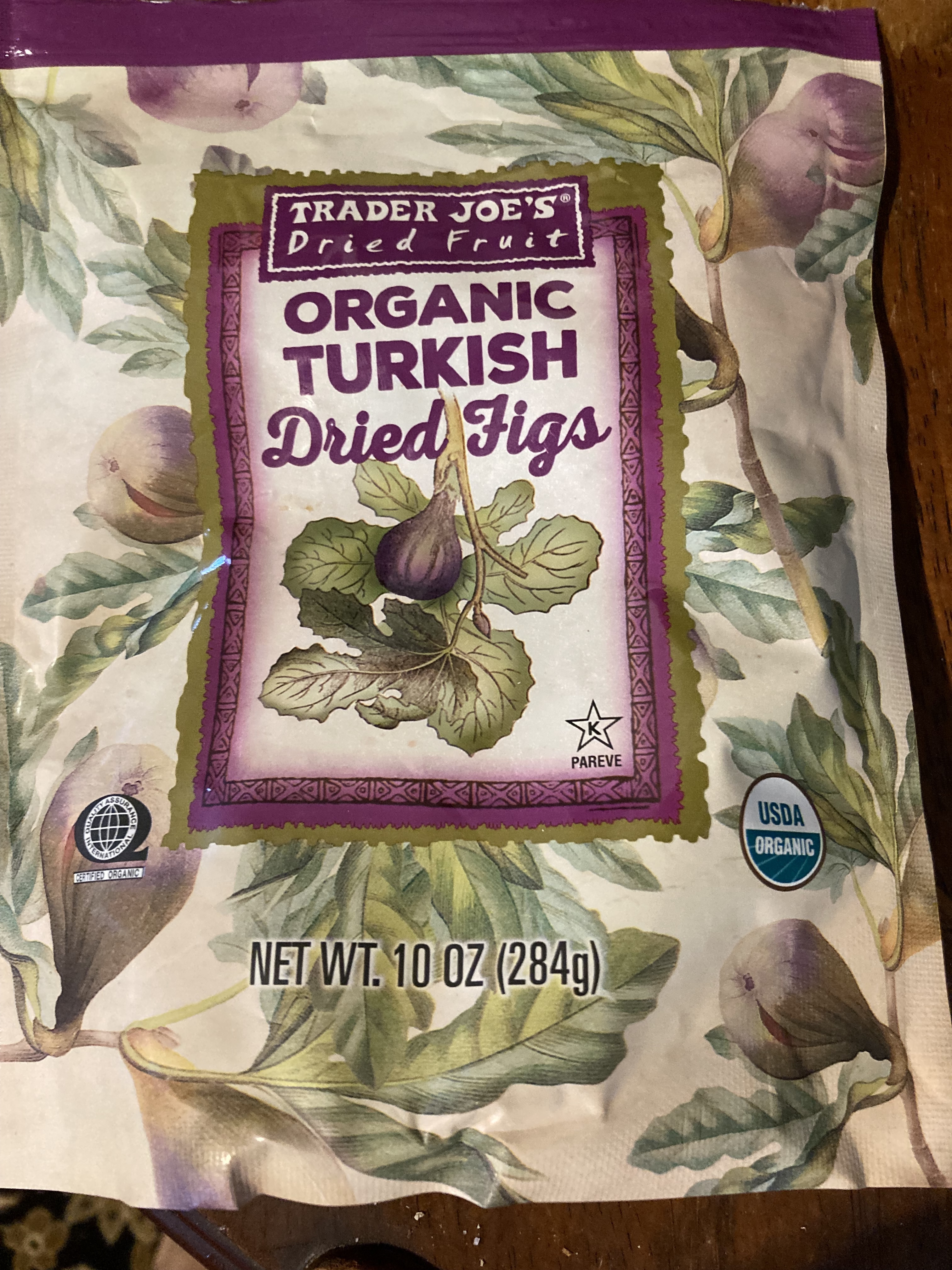
My mom gave these to me yesterday.


It seems that they mixed multiple types and put them in the same bag. The flavor was very good but definitely preferred the ones that tasted like honey. I also plan to grow the seeds out in the hopes of getting some that are persistent, “cold hardy” and tasty. Even though I am breeding for “cold hardiness” I am still planning to grow some in pots.

1 Like

Be aware that not all figs from Turkey are cold-hardy.

1 Like

If you like growing seeds from dried figs. Try these. Amazon.com: Ziba Foods Sun-Dried Figs | Non-GMO, Vegan, Whole 30 Friendly & Paleo | Superfood Naturally High In Calcium Iron And Fiber No Added Sugar : Grocery & Gourmet Food You will get some trees with very interesting leaves. :slight_smile:

4 Likes

Thank you for bringing these to my attention. :grin:

2 Likes

Cut them in half and soak in water over night. Next day you can separate the seeds from the fig bits. If you like the leaves of the Ice crystal fig. These are what you should grow.

3 Likes

@GoodFriendMike Could you tell me more about how they grew like vigor, preciousness, hardiness, and if they were persistent or not? Thanks in advance.

@Richard are you planning to have a fig cutting sale again this year? If so I assume it’s going to be in march?

1 Like

No. I might sell some extra saplings later on in the year.

1 Like

Figaholics.com looks like they might be having a sale again.

2 Likes

yes, most sales have ended but the california growers usually sell in february and january since their dormancy is so late. so thats where id look. theres fb pages with fig sales that I frequent (too much, someone stop me)

1 Like