Ficus sect. Ficus are not epiphytes. They are not considered “rooted” until actively producing roots and leaves in growing media for a sustained period of time.
3 Likes
The optimal temperature range for propagating roots from cuttings is 70° to 75°F. Thermostats for heat mats are inexpensive and widely available. They usually have a 3°F setback, so setting the thermostat to 74°F will cause the temperature to fluctuate between 71° and 74°F.
4 Likes
Is there a “Fig breeding for Dummies” article somewhere? I would like to try to understand the subject better.
@Josh6b
No. In part, this is due to individuals and organizations protecting their commercial and/or bragging rights. This behavior is not unique to figs.
If you are willing to spend some money, this book will provide you with some tidbits. It is not a definitive guide to breeding:
https://www.cabidigitallibrary.org/doi/book/10.1079/9781789242492.0000
1 Like
8/30 of my fig pops put together on in mid december have roots so far.
In order of rooting:
Cavaliere- slighlty ahead of the others, has had roots for a bit
Cherry Cordial - both rooted out right after cavaliere and have leafed out already
Cherry pie- also rooted right after cherry cordial
Now today, we got 4 new guys with roots peakin out (been checking every day so they just poked out today)Party popper 
Capri-Q
Emalyn’s Purple
San Biagio
Angelito
How long after putting them in soil do you usually see rooting? I do fig pops or in a tree pot with a bag over them, but it seems like mine works a lot slower than most. Or maybe people just only show their fast ones
1 Like
I ate these today, and one of them had a strong banana flavor. The back implies that they are unintentional crosses of “wild” and “domestic” fig varieties. Hopefully they have at least a little F.j. johannis blood in em.

2 Likes
No, it doesn’t. Also consider that F. carica has been cultivated in portions of Afghanistan for 3,500 years.
I assume that you grew out seeds from these figs. Do you happen to have photos of the seedling’s leaves?
- Don’t poison yourself.
- The 2nd article references the 1st.
tetraploidy induction in fig.pdf (814.4 KB)
2 Likes
The article on Tetraploid Figs was interesting but they did not mention what the fruit was like. Sometimes tetraploid fruit is bigger than the diploid fruit, sometimes it is smaller. Has there been an article that describes tetraploid fig fruit size ?
At the time of their report, the plants were likely not mature enough to produce fruit. Hence, an article on that topic might be forthcoming. In the meantime you can search for articles on scholar.google.com. As you mention, autotetraploids often have distorted sizes. The sizes can vary among seedlings of the same parents. Like any breeding program (e.g. blackberries), multiple generations are often necessary to produce an offspring that meet multiple criteria.
1 Like
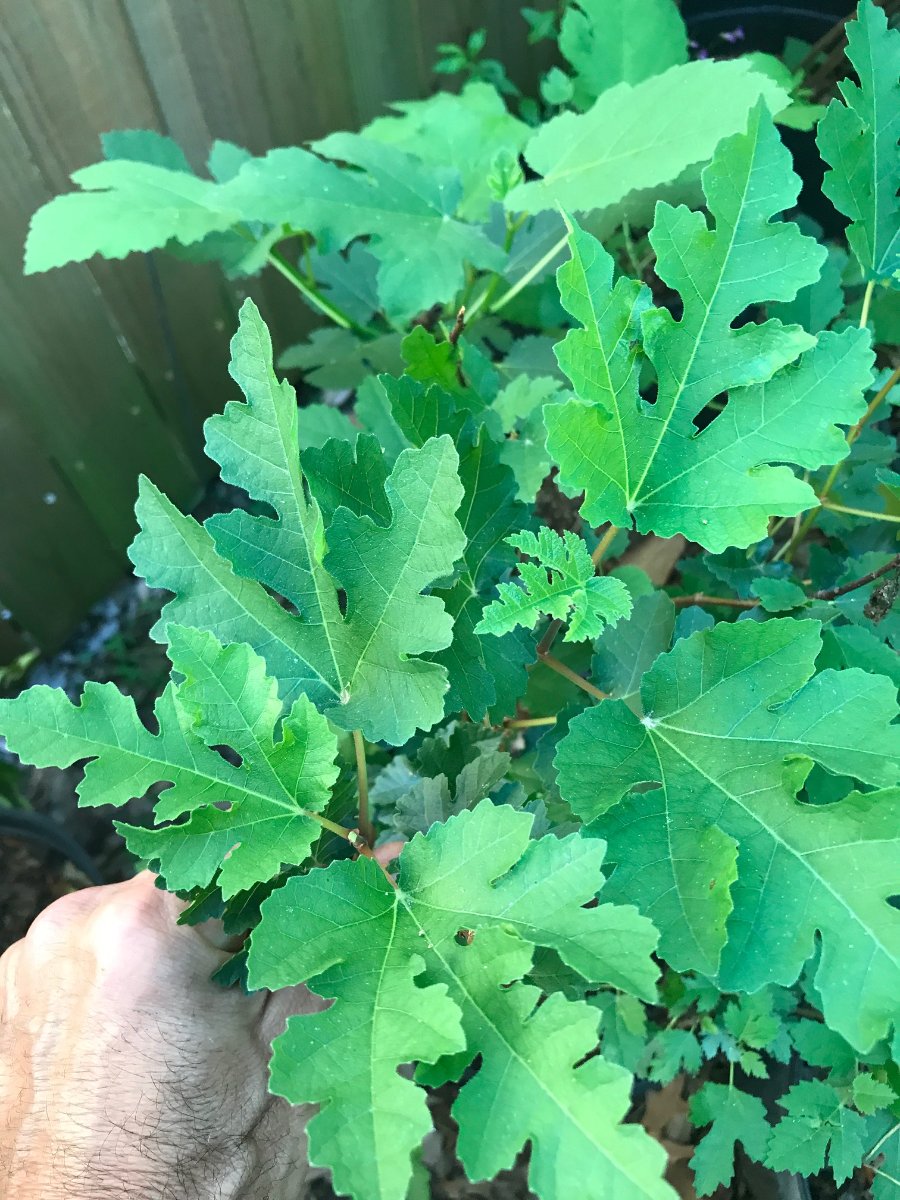
Time for roots to appear can vary by cutting, and is dependent on temperature, but on average most of mine show roots in 4-6 weeks. It can be longer and it can be shorter, but most are around 1 month. As long as they are still viable and have not rotted or gotten mushy there is no reason to give up on any. I have had some odd ones take 7+ months to root
3 Likes
I could not find anything on tetraploid fig fruit size, only Kiwifruit 4x which are bigger than 2x. Anyway, I might try for a 4x fig in the near future.
@Favman
Just as a heads up, their are already non-tetraploid cultivars in circulation that have 4x size fruit. They perform best in semi-arid environments.
2 Likes
Hi, I am in subtropical Australia, so I am limited in what cultivars I can get and grow here without bad splitting. I have bought as many split resistant cultivars as I can get here. I may have a caprifig, and I love to breed, so I may still have a go at a tetraploid Fig. It is one of the few species I have not managed to chromosome double.
1 Like
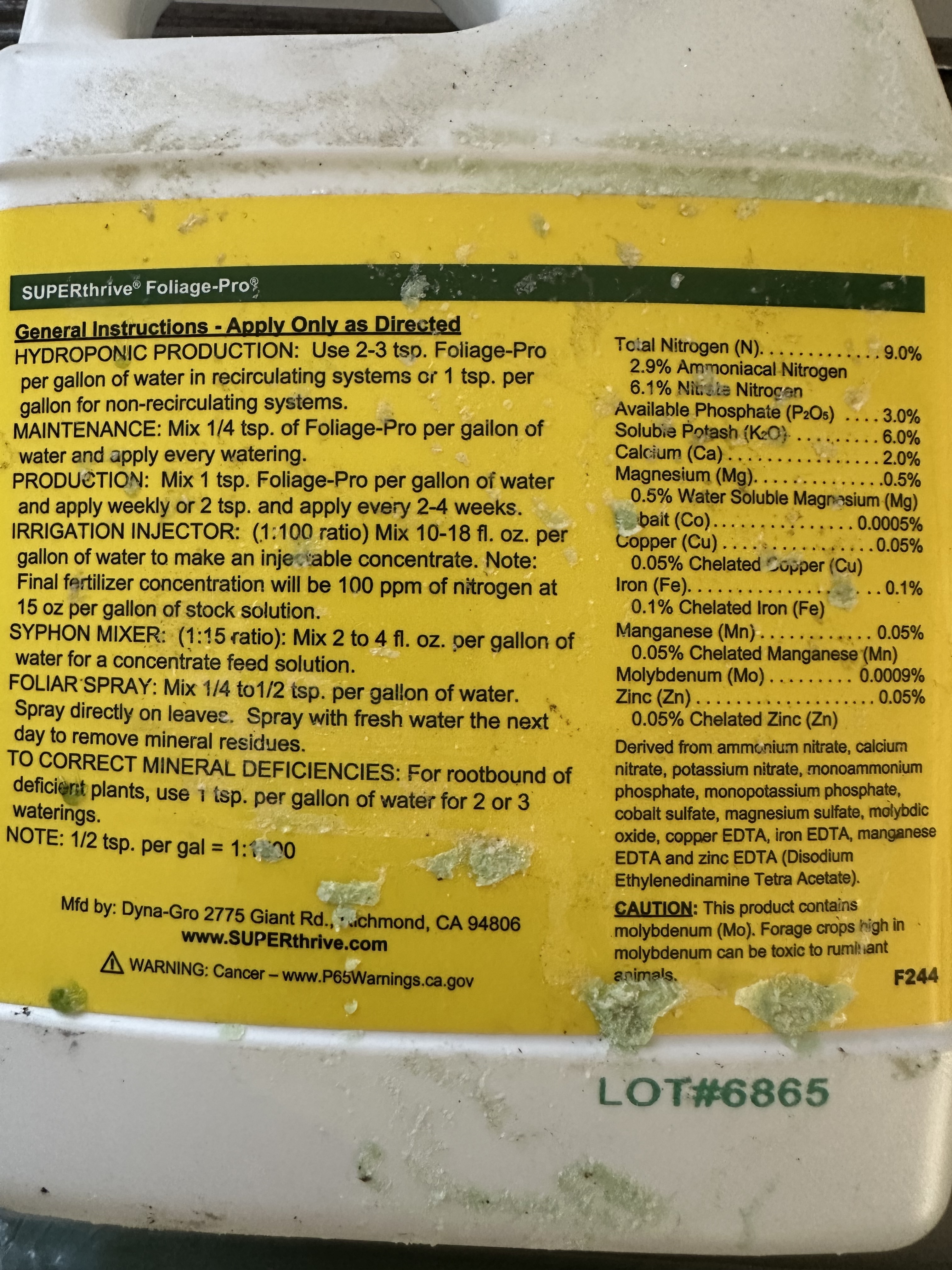
Using this product and the Dial-N-Spray, I water each 15 gallon pot for 20 seconds every other week and the rest of the time they get regular drip water set on timer with the other trees. The Dial-N-Spray apparently dispenses 2 gallons/ minute. I would appreciate your guidance on dilution factor of product to put in the Dial-N-spray and the recommended setting. Thanks in advance!
@Mcjuj
Set your Dial-N-Spray to 1 fl.oz. per gallon (see photo).
Add a suitable amount of water to the Dial-N-Spray canister. Try 16 1 fl.oz. (marked 16 OZ on the side) for your initial use.
For each fl.oz. of water in the canister, add 1 teaspoon of Foliage Pro.
Now you are ready to feed your plants.
After each day of use, rinse out the canister and fill it about 1/4 with clean water. Then spray again (not on plants) to clean the unit. Afterwards, dump it out again and let it dry, perhaps on a garage shelf.

2 Likes
Thanks, @Richard. Seems simple enough. Will give it a try. Very different to what ChatGPT was suggesting 
1 Like
So far I have 7 different caprifigs. I believe all are persistent.
UCD caprifig
UCR 228-20 caprifig
Capri Q
LSU DC-7
LSU DC-2
Saleeb capri
Capri S
And yes, my wallet is once again emptied.
1 Like