Agreed. Queen of Malinalco is in a weird place where it’s too sweet and fruity for normal use as a vegetable, but to vegetal to be a fruit.
Roasting it helps tame and develop the flavor, and for any kind of salsa, it really needs to be combined with green tomatillos. It’s there to flavor the salsa, not make the salsa. I’ve been planting normal tomatillos as well for that exact purpose, though I think in the future I’ll just buy them from the grocery store and only grow the yellow ones (my green tomatillos aren’t any better than what the Mexican grocery store has, so why bother? Same with jalapenos and serranos–they taste the same, but the Mexican grocery store has them all year and they’re cheeeeap. I’ve rarer things to spend my time growing.).
But yeah, if you do combine QoM with green ones, it’s pretty incredible. At least in my opinion.
To your point about mixing: I usually only use one, maybe two yellows per batch of salsa. QoM is like biquinho pepper–the flavor is way more potent than you’d expect, and a little goes a long way.
I agree with QoM being in a weird not quite fruit or veg place. With all the people I see raving about it though, I really thought I was missing something.
Have also thought the same about giving up growing tomatillos, jalapenos, and serranos. I live in a place with a large Mexican community so these are super cheap and easy to come by. It’s more satisfying to pick them from the garden though, especially because they’re so productive and you get so much in return for very little effort.
I think for me it’s about the opportunity cost as much as anything else. I could grow some jalapeno plants, or I could finally try out aji melocotan or rocotillo or some weird baccatum variety.
I think of a pretty common sentiment among American gardeners is, given ample space, time, and money, they’d be happy growing everything they eat, or nearly so. That’s certainly the outlook on life I was raised with. But, and this is totally a tangent, I… don’t value that anymore. I… have come to like industrial agriculture. Not for its methods, generally, but for the plentitude it creates, and the life of cultured leisure that plentitude affords me. Growing my own jalapenos is satisfying, but I think I’d prefer to take the time and effort I’d have spent growing them and, idk, learn how to make aged aji amarillo and garlic salami, or play a Chopin piece. Let the industrial machine handle what it handles best–commodities, the things that are better consistent than unique, I’ll handle the cool, interesting stuff. I sometimes wonder where the “self-sufficient” strain of American culture came from. As best I can tell, it’s mostly an English-speaking world phenomenon, though it has crept into other cultures. I’d assumed it was a hippie thing, but as I’ve read more, I’m thinking it’s actually much older, going back to the American nationalist propaganda/literature of the early 20th century that celebrated the westward migration and the American pioneers, and also tracing its roots to New England low church Protestantism, with both the weird revivalist cults on the late 19th century and the early Puritan sects being particularly strong examples of this kind of proto-hippie “back to basics” and “self-reliant” asceticism. It’s… interesting. And something my wife, who is from Eastern Europe where people actually do grow much of their own food, but out of necessity more than luxury, has absolutely no sympathy for. Anyway, tangent over.
Not trying to assume, but I gather from this and from your name that you have an affinity for classical music? Yes, it’s not related to salsa, but I did create the thread, and I am a classical fan. Just curious.
I think folks are headed in that direction more than in the past, just out of wanting to be less reliant on the “system”. That’s a reason why we moved here to this farm. But that’s another tangent…
Very much so, especially Baroque music, and most anything especially idiosyncratic. Yourself?
Fair enough. I think my point, to the extent that there was a point, was that, while not uniquely American, that way of framing things is almost uniquely American, and mostly seems to exist in other countries largely only to the extent that they have been Americanized (the UK being an exception here, shared cultural history and all).
Wait a minute, I would try to avoid generalization too much, maybe you don’t know the Americans that I know, and same with the British people. None of them is very much into gardenning period. When they came out to my house they were always surprised.
I grow jalapeño peppers because when I need just one, I can just go pick one outside from my garden. I don’t want fancy anything, last time I made quesadillas, my husband and daughter turned them down because the store bought jalapeño was not providing enough of a kick.
Oh yes, love me some Bach. His works seem so mathematical, but still beautiful. I am in the technology field, so his music appeals to my nerd side. Love his choral works, and especially the sonatas, particularly the violin and cello suites. TBH, I haven’t listened to a whole lot of Baroque, compared to Classical.
Beethoven may be my favorite of all of them, though. His piano sonatas, esp the middle and late ones, are hard to beat. I try to play piano, but looking through some of his works seem unattainable to a shlub like me. It’s one thing to be able to play his and other masters’ works, but to create them is even more mind blowing. His string quartets are another favorite.
Mozart’s music seems delicate and not very deep emotionally, but listening to his Requiem or something like his 40th and 25th symphonies, 20th and 24th piano concerto’s, or Don Giovanni belie that assumption.
I like others, like Tchaikovsky, Mendelssohn, Chopin, Handel, and Schubert, Tallis, etc, but those three are my favorites.
Bach is superlative. Most classical musicians I’ve heard discuss the topic, will have this or that composer as their favorite, but when pressed, will invariably say that, insofar as there is a best, Bach was the best. I tend to agree.
If you like Bach’s choral works and Mozart’s Requiem, but maybe wish they were a littler weirder, I gotta plug my hipster fav baroque composer: Jan Dismas Zelenka. He’s like Bach, if Bach was a Catholic bohemian instead of Lutheren German. Really complex counterpoint, but he takes more risks and is a little bit unhinged, unlike Bach.
Beethoven is fun. My personal feelings toward Beethoven have changed a lot. When younger, I liked the big, loud, passionate stuff he wrote (still do), but then I drifted away for later, more sophisticated romantic works. But, being a bit more musically mature, I can often go back to Beethoven and be like, “ohhh, shoot, Beethoven did it first. No wonder he was seen as so revolutionary.”
I find the classical period boring, but I also do not have much ear for the sonata form, or most forms in general, so that is probably a big part of why. Still really like late romantics and the nationalist guys, people like Franck, Dvorak, and the Russians, Tchaikovsky, Borodin, R-K. Had a fun moment the other day listening to the radio when they played some Ravel after playing some Borodin, and it became really apparent just how much Ravel was inspired by the Russians, especially in his orchestration.
Tallis. Now that’s a name I haven’t heard in a long time. The polyphonic sacred music tradition is just mind-blowing. Tallis, Palestrina, Allegri, to say nothing of their Mediaeval predecessors (some of my favorite music!).
We agree in part, but I’d like to offer some pushback as well.
It’s true the average American isn’t interested in gardening, nor the average Brit, or really most any person. We agree. And you identified some reasons for growing jalapenos yourself, and I’d agree those are rational conclusions given your priors (long way of saying, yes, I agree that, if the store bought jalapenos don’t provide what you actually want, it makes little sense to buy them). This does start to get into an interesting tension that sometimes comes up when gardeners discuss motivation: the tug of wanting to grow new or rare things that you don’t get to have often, if ever, versus the pull of wanting to grow the things that you can get at any store, because those are the things you actually use in daily life. But that’s getting a bit off-topic, so I’ll just leave it at that.
Where I’ll offer some pushback, for you to take or leave as you wish, is on my original, perhaps more philosophical, argument about “self-reliance” and American culture. There really is something pretty deeply ingrained in American values and norms that has to do with being self-sufficient or self-reliant. Sure, very few Americans have gardens, but that’s not what I was arguing. My point was more that, among the Americans who do garden, a far high percentage of them due it because they value having grown the thing themselves, irrespective of costs and quality. And that attitude, of wanting to be in some way self-sufficient, shows up all over the place. Self-sufficient homesteading and DIY are quintessentially American, unplugging from the grid is something that loads of Americans do but hardly anyone else does, and TV shows about wilderness survival and the like fascinate even the most suburban of Americans. Sure, you’ll find other people outside the anglosphere like that, Germans in particular seem to go in for this kind of stuff too, but if you look closely enough, you’ll see that those Germans have translations of Walt Wittman on their bookshelf, so to speak.
Sure, a lot of it just goes back to the fact that hippie culture was gigger in the US than pretty much anywhere else, and nowadays most American are either hippies or the children of hippies, but that’s just a surface-level sociological analysis. The better question would be, why did the hippie movement take off to the extent it did in the US? Why were Americans so easily persuaded of the value of being “close to nature” of seeing the artificial and mechanical as dangerous at best, of seeing society as corrupting and wanting to escape it, and so wanting to provide all of their means from their own hand? Hard as it is for Americans to imagine otherwise, but those precepts–that Nature is better than the artificial, that society corrupts the innocent, and that living an authentic life just doing stuff yourself is inherently good–are not the default beliefs of most people. And they are actually very new ideas with a specific and clear intellectual history (briefly, the goodness of Nature idea is a hallmark of American Transcendentalism, so Ralph Waldo Emmerson, Walt Wittman, etc, and derives from German Idealism, so Schiller, and ultimately to Kant, and self-reliance as a virtue is also totally an American Transcendentalist idea, though that idea seems to come more from New England low church protestant asceticism than from German philosophy. Ideas like “society, and technological civilization, destroying the natural innocence that everyone is born with” and “being authentically yourself is good” is 100% straight from Rousseau). So the ideas have a clear genesis, and certain historical events seem to have really pushed them into the mainstream. The Vietnam war is the easy example, of course. I think more revealing, though, is early modern America’s fascination with the pioneers. A lot of that has died down in recent decades, but there was a time when ‘Oklahoma!’ and Willa Cather novels were the dominant pop culture, which is really weird when you think about it. Why on earth were early 20th century Americans obsessed with what were effectively subsistence farmer and peasants? Perhaps the very American idea of seeing “leaving the crowded city, moving out into the great wild, building a home with your bare hands, and growing all of your own food” as not an act of utter desperation taken by the hopeless poor, but an act of heroism. Heck, it goes back further. Who was it that peopled the early American colonies? Outcasts and social rejects and religious fanatics who, finding their own home countries so alien and hostile, elected to cram into dangerous little wooden boats and sail away to try and scratch a living off New England rocks and Virginia swampland.
So, yeah, self-reliance or self-sufficiency are just really American values, and a lot of people from other places find those ideal super weird. The blurb I provided above is my best estimate of where those ideas come from, but that’s probably only half the story at best.
(As for generalizations, sure, but in order to think at all, you have to make generalizations. “Carcinogens cause cancer” is a generalization with a million and one exceptions, but it’s also true. You can try to think without making any generalization or leaps, but doing so is extremely hard and inefficient. Some totally non-consequential dudes did exactly that about a hundred years ago, with a book called Principa Mathematica and in that book, on page 370, they finally prove that 1 + 1 = 2. Logically, it was probably the most rigorous book written to date. It’s also totally impossible to think about anything important at that level of exactness. Generalizations, presuppositions, and leaps of faith are absolutely essential for being able to think at all. Sorry, rant over.)
I give you a like for writing such a long post. America has more land, it’s also a large country, I read people can get 30 acres easily in the middle America, if you have that much land, you try to do something with it, so that may explain the self reliance.
Where I live it’s very hard to get a large piece of land and then you have water problem.
There’s a 200 acre chunk of ground with a 3500 sq. ft. home, 5000 sq. ft. outbuilding (insulated, heated, concrete floor, electricity, running water/toilet, etc. etc.), numerous elevated deer stands (with L.P. heaters), small private lake, foodplots for deer/grouse/turkey, and numerous apple trees about 5 miles from me that just sold for…$1.2 million.
When I was in Maine I saw ad for 6 acres for a much smaller sum, I was very tempted. Just land only. I think when people add this and that, they can raise their prices.
Yeah, the geography helps, but, again, my wife is from Eastern Europe. Wanna know who had even more land and lower population density than Americans? The Russian Empire/Soviet Union/post-Soviet states. And yet, the whole self-reliance thing is probably the bit of American culture my wife thinks is the dumbest and weirdest. That, and our stupid urban planning. It’s so alien to her, and I reckon that has a lot to do with the fact that there was no Russian or Polish Thoreau, let alone hippies or 19th century Presbyterianism.
Thanks on the Zelenka recc, I’ll have to check him out.
Heh, yeah, sometimes I’ll put on the final movements of his 5th, 7th, and 9th symphonies, or the final movements of the Appassionata, or the last three piano sonatas and crank it. A full orchestra at high volumes like that can really test your speakers. But I’ll also do that with Muse, Pink Floyd, Zeppelin, etc. Maybe ole Ludwig was the rock star of his day?
I like most Classical period stuff, but really couldn’t get into Brahms, don’t know why.
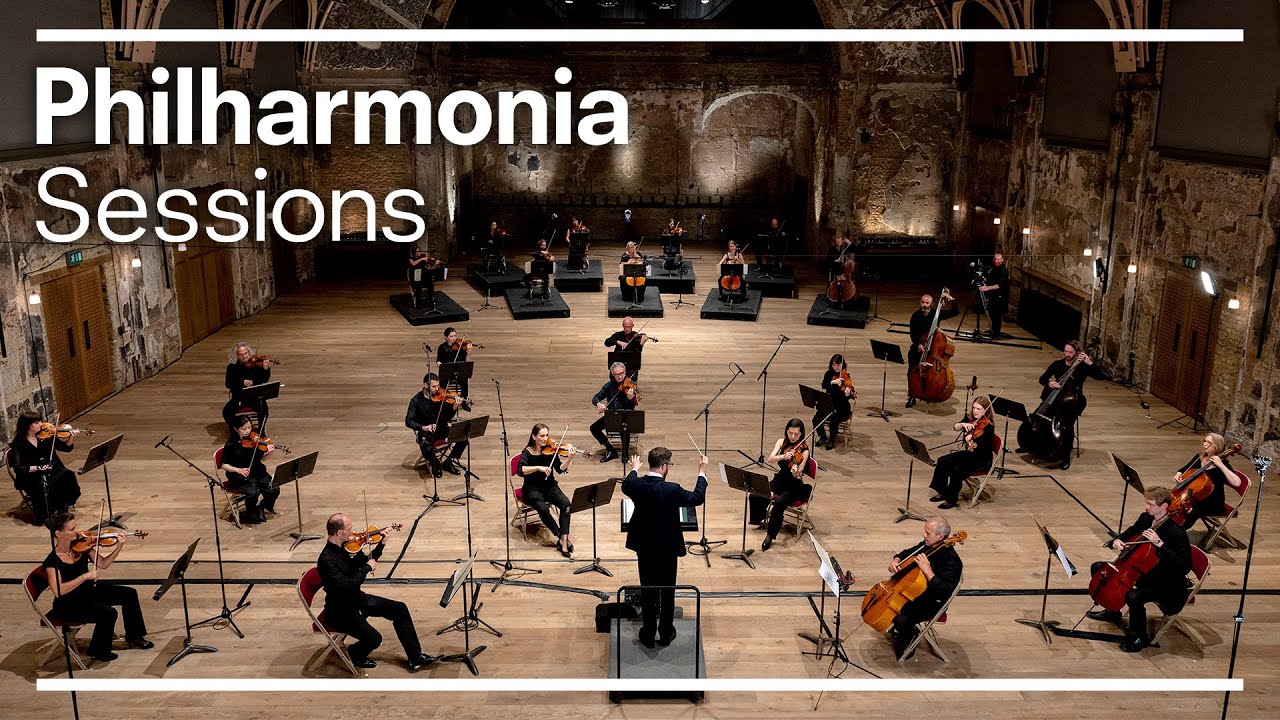
I discovered Ralph Vaughan Williams’ Fantasia on a Tallis theme a few years ago, and his use of three different string sections and its haunting, ephemeral quality makes it one of my favorite pieces of music. I found this version done by the Philharmonia a couple years ago to be particularly well balanced and recorded, and the performance is beautiful.
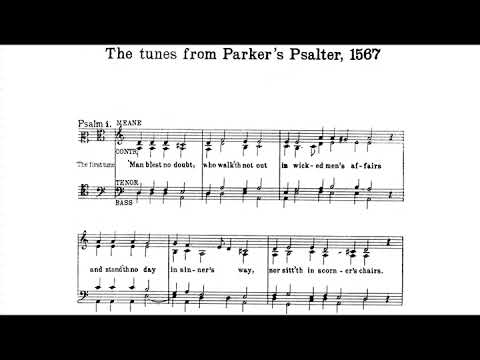
It was based on one of Tallis’ nine songs he presented to an Archbishop in 1567. Williams “borrowed” the third tune for his piece.
Oh yeah, Beethoven was totally a rock star, both musically and irl. I recall watching a video once that showed how similar, especially rhythmically, his music often is to rock music. There’s also a really funny bit in one of his piano sonatas that’s straight up ragtime. I’ll try to dig up just which one it was. But yes, much of Beethoven, and some others, is best played loud. Shoot, even some Bach is (passacaglia and fugue in C m comes to mind, gotta amp up that base ostinato).
Interesting. Brahms is probably my favorite of the German romantic composers. I might go so far as to say I like him more than Beethoven.
I’ll give the Williams a listen. I know I’ve heard at least part of that piece before, but I don’t remember anything about it.
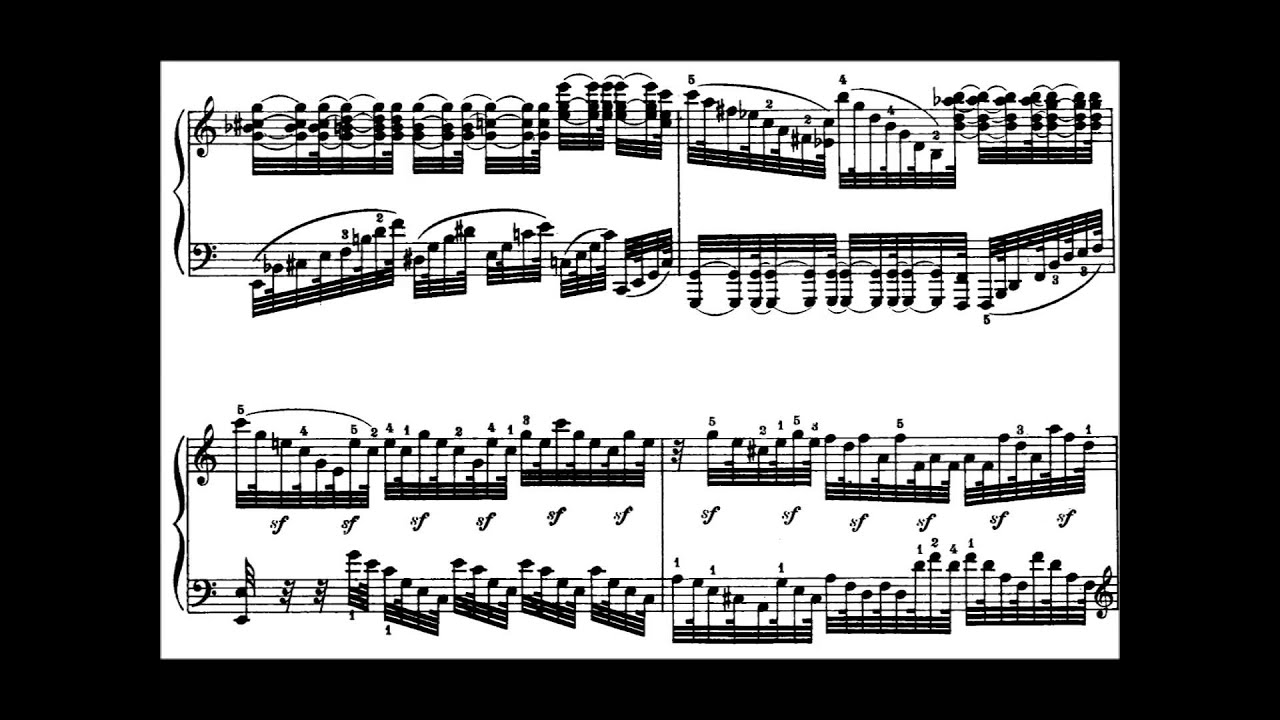
I think you could be referring to the second and last movement in his last piano sonata, Opus 111 in Cm. The movement starts in C major with a very simple melody (even I can play that part), and then, which as he tends to do, take that simple melody and twist, turn and contort it in so many variations. The part you’re probably talking about is when it progresses into 6/16 meter, then 12/32 where it gets all funky. Truly bizarre time signatures, but yeah, it has a Joplin vibe to it.
After that plays out, it simmers down into a lighter, airy variation, proceeds into a beautiful finish with a flurry of trills, with a busy bass line, and still keeping the melody going with the right hand. It’s like listening to two players at once. Here it is, the part you’re maybe talking about is around 16:48 into the piece if you don’t want to listen to the whole thing.
I like to crank up the last few minutes of his famous (or infamous?) Toccata and Fugue in Dm where those devastating chords play out at the end, would love to hear it live, I imagine that section would rattle your bones hearing it in a cathedral.
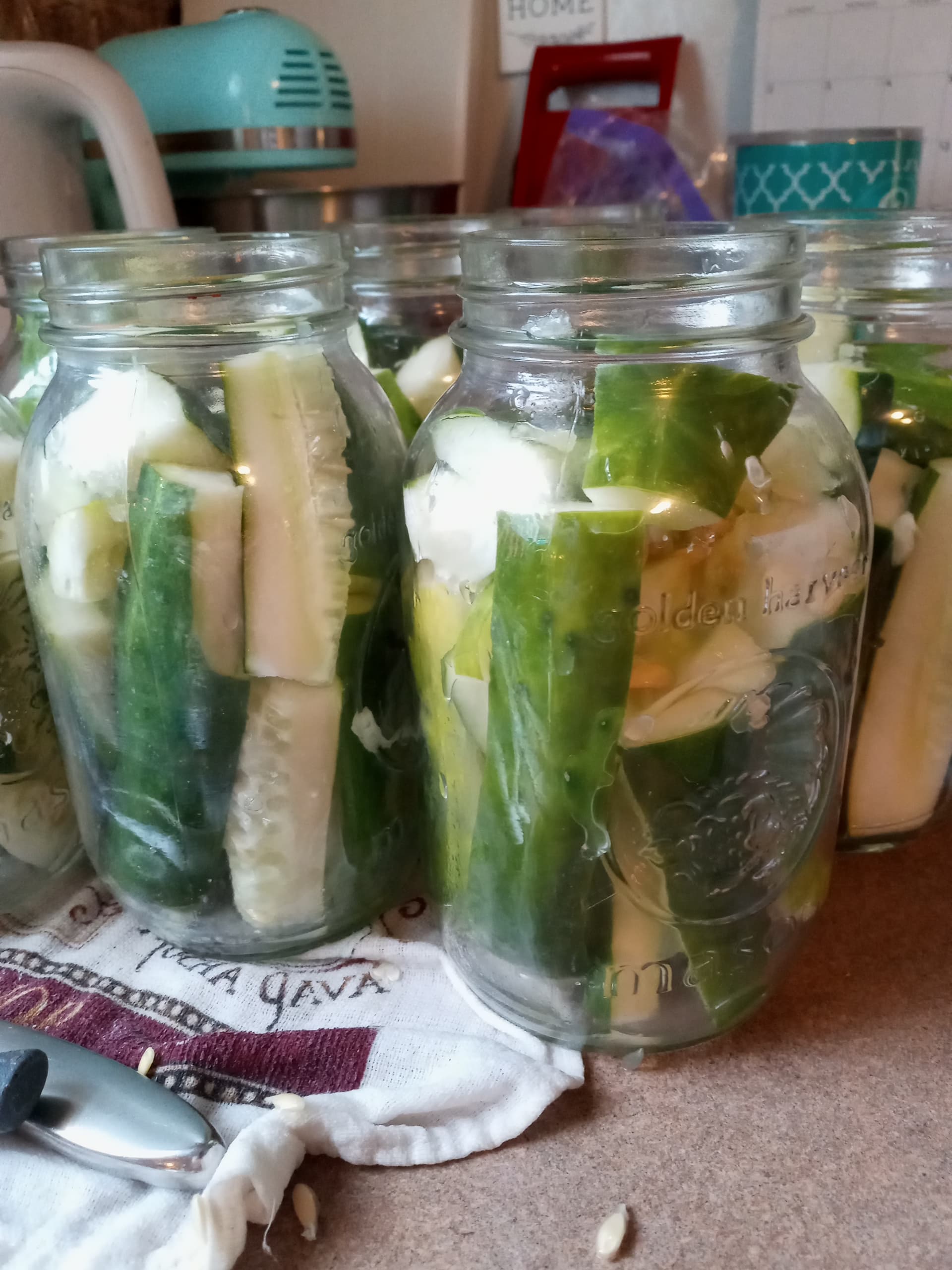
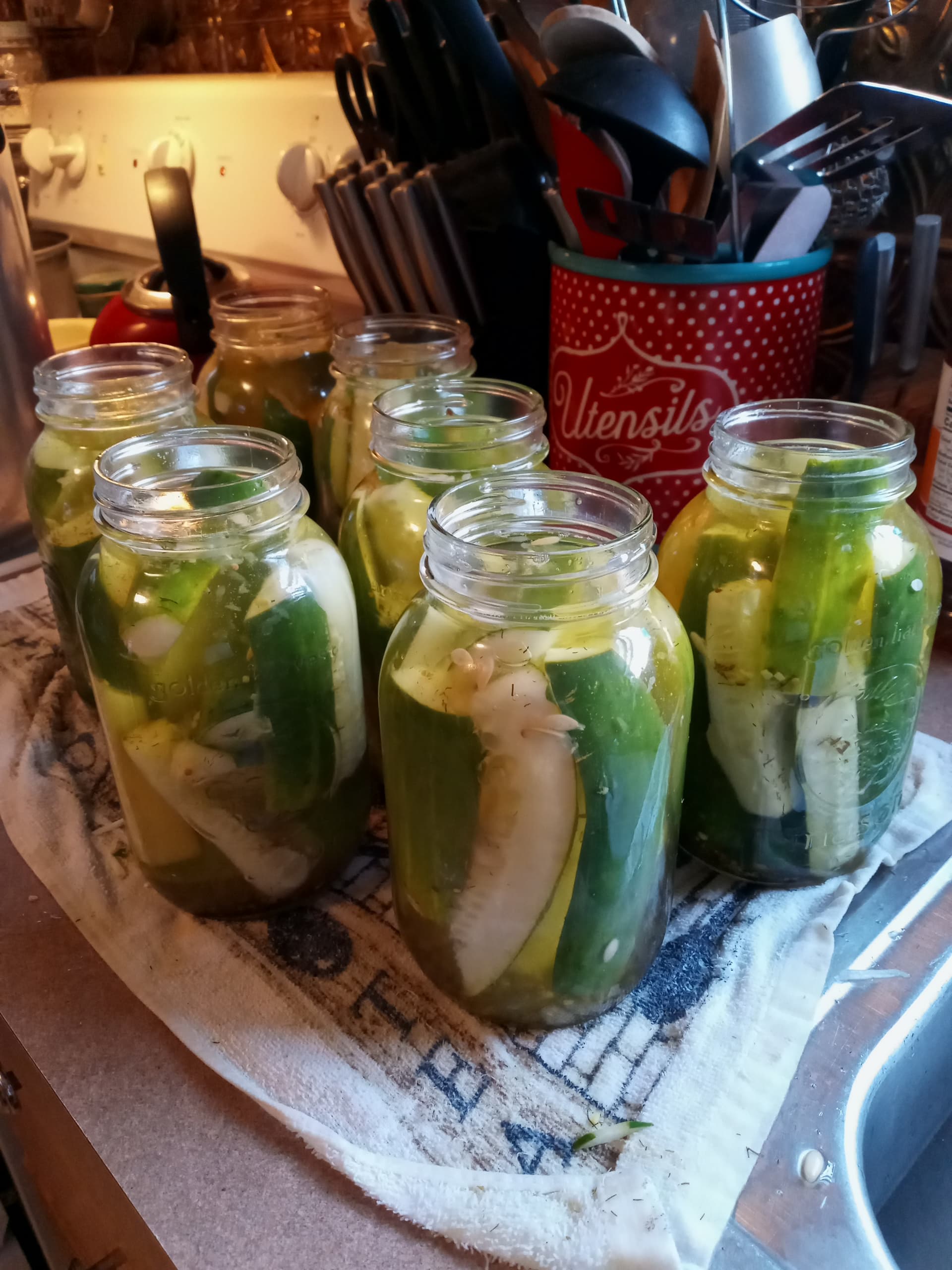
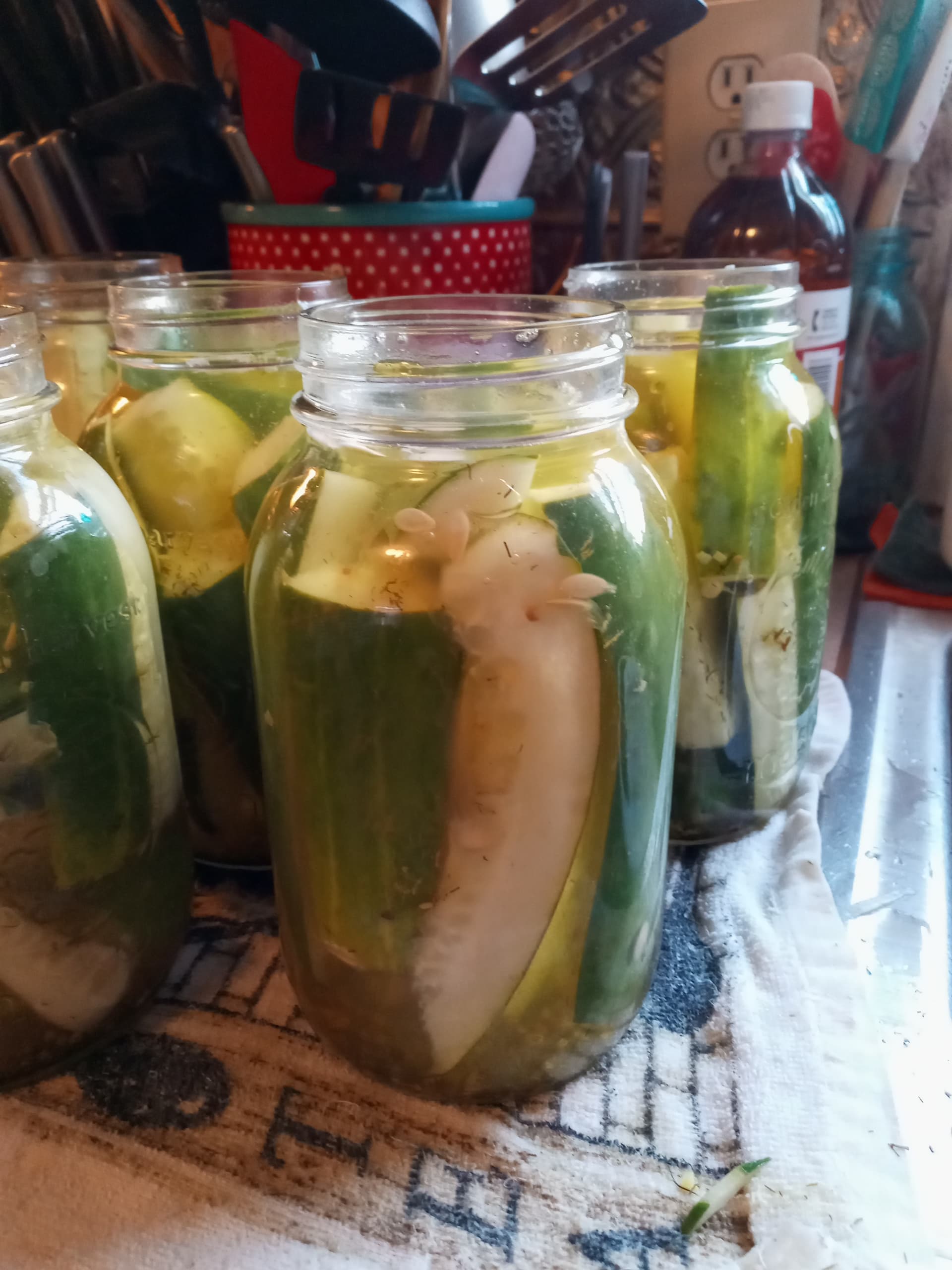
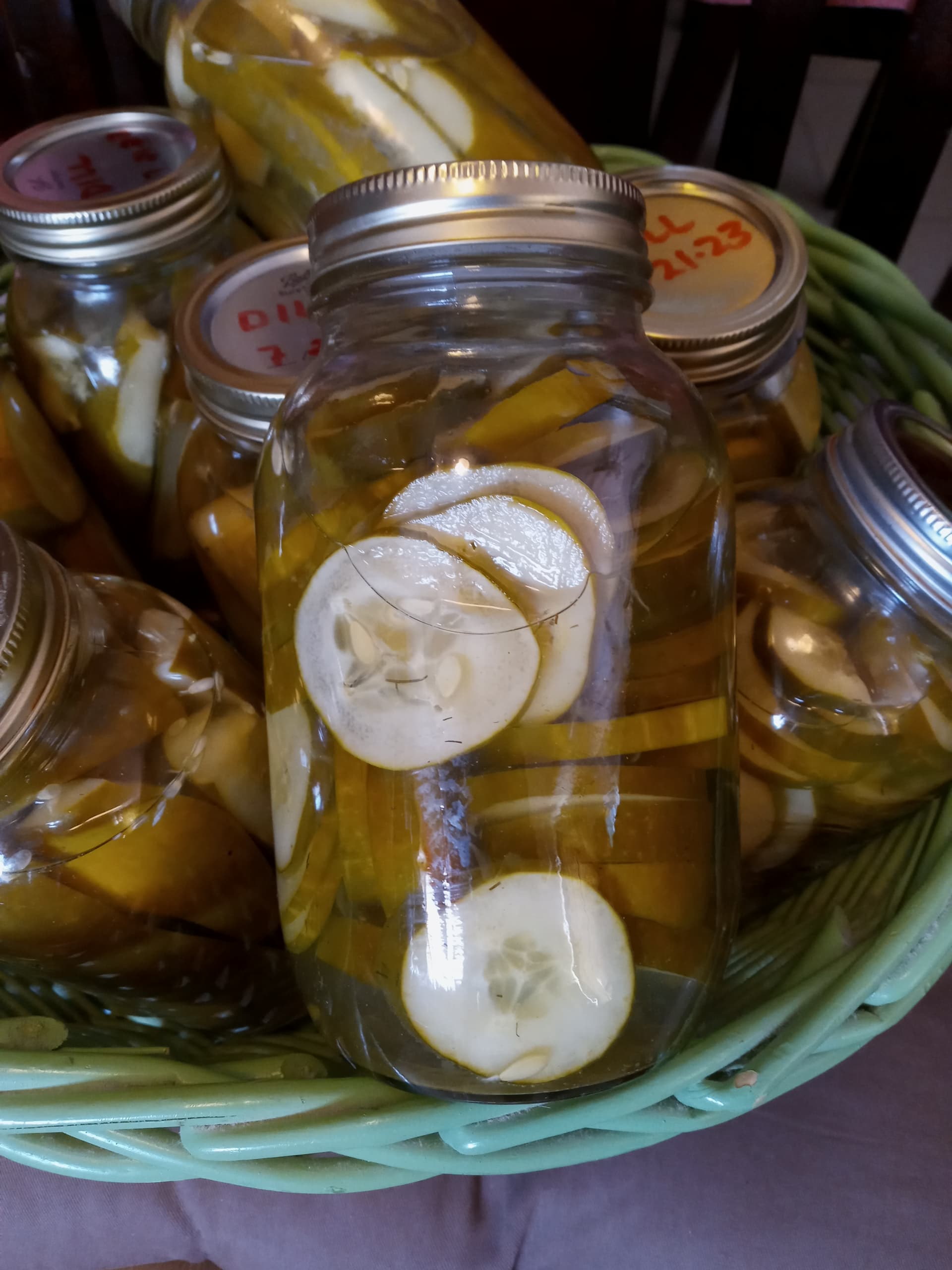
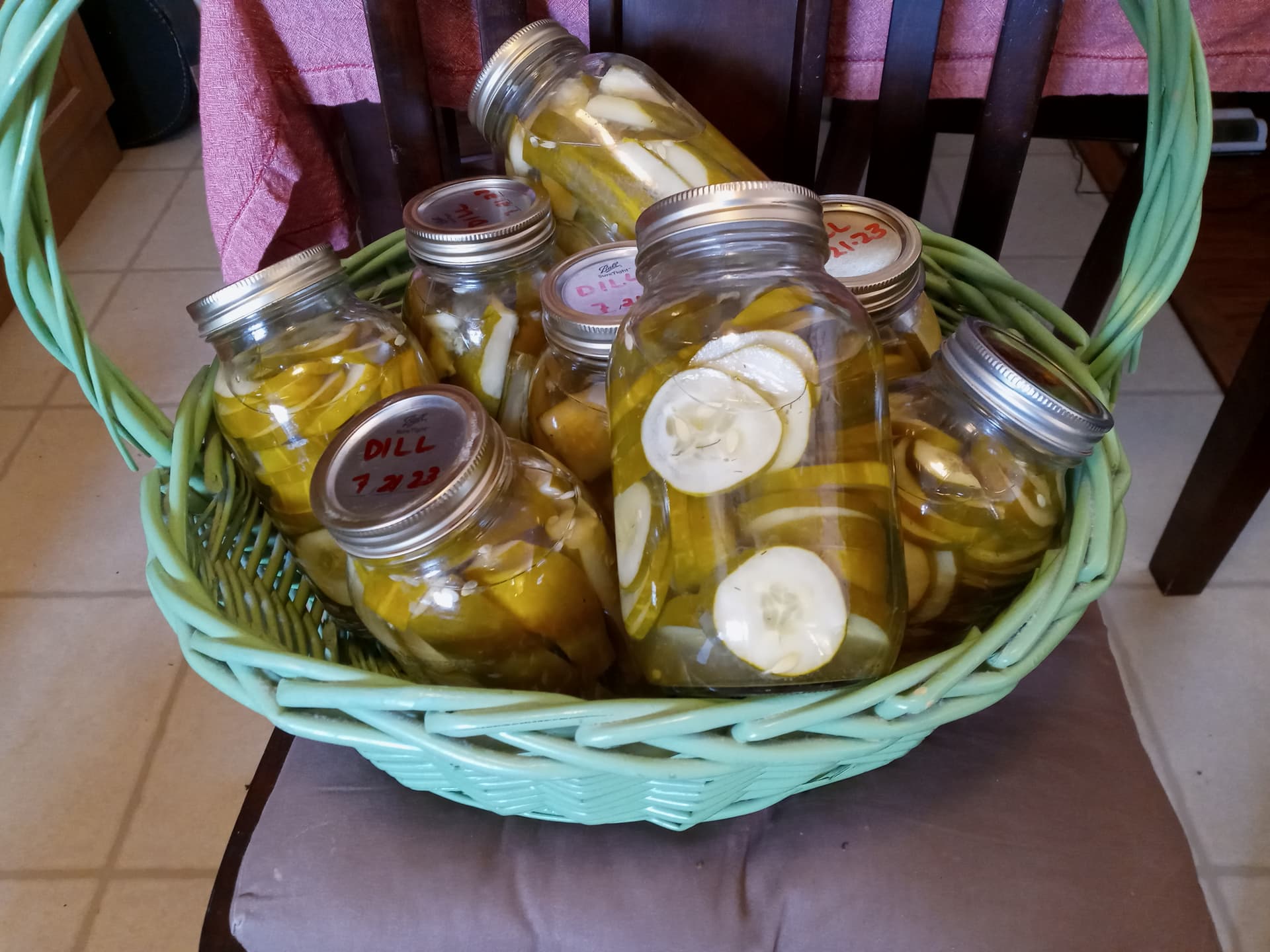
Not salsa, but we also had a bunch of cucumbers to deal with when I got them from the pantry. We ended up doing 7 quarts each of dill pickle slices and spears.
We used a standard brine, a couple qts of water and vinegar, 1.5 cups of sugar, 1 cup canning salt, heaping teaspoon of minced garlic, 2 tablespoon dried dill, dash of ground mustard and allspice, teaspoon of mustard seed and maybe a half tsp of turmeric cooked in a 5qt pot.
Brought to a boil, then simmered for 15 minutes before poured in the jars. Jars were water bathed in boiling water for 15 min, then removed after sitting 5 min.
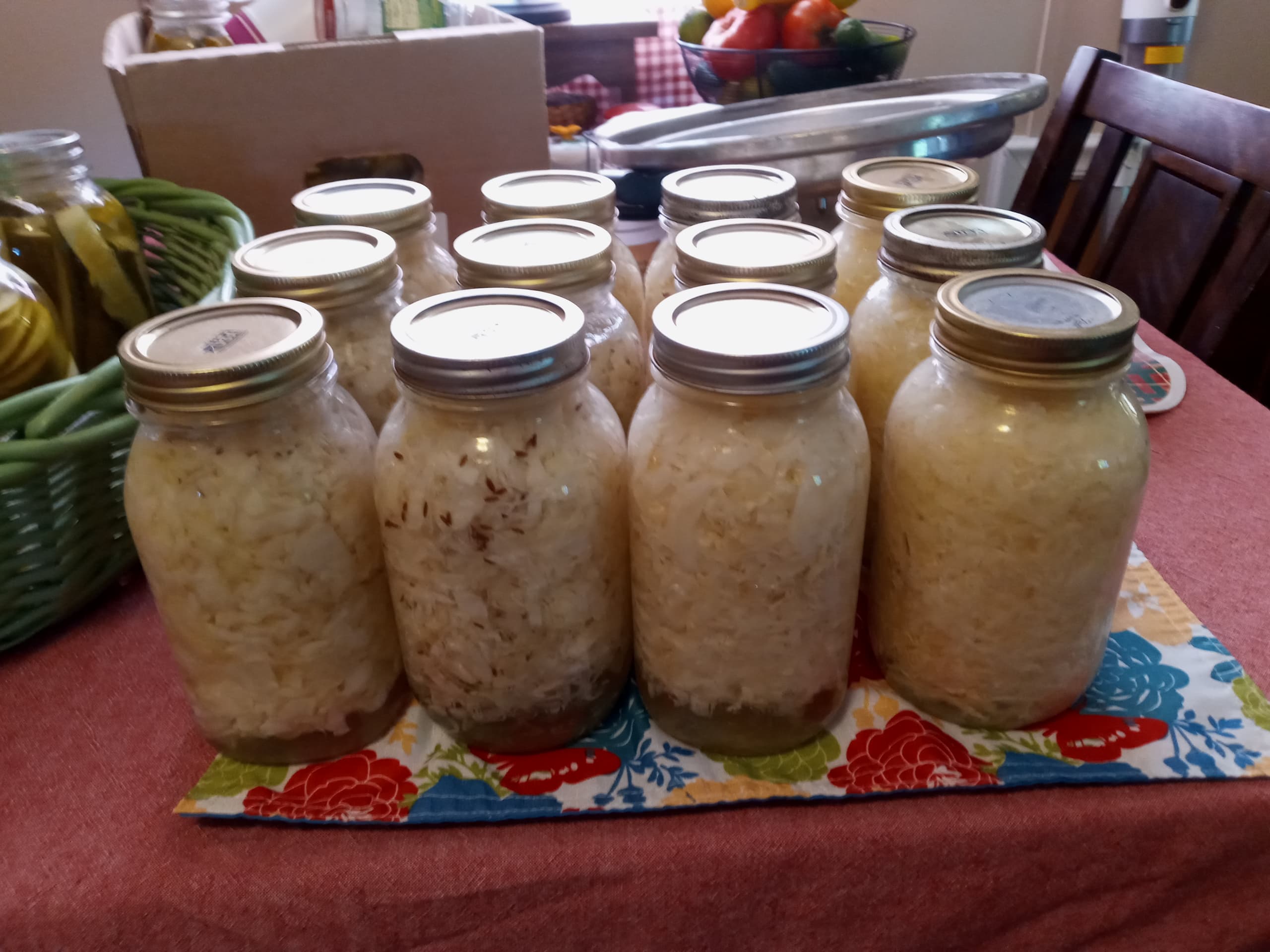
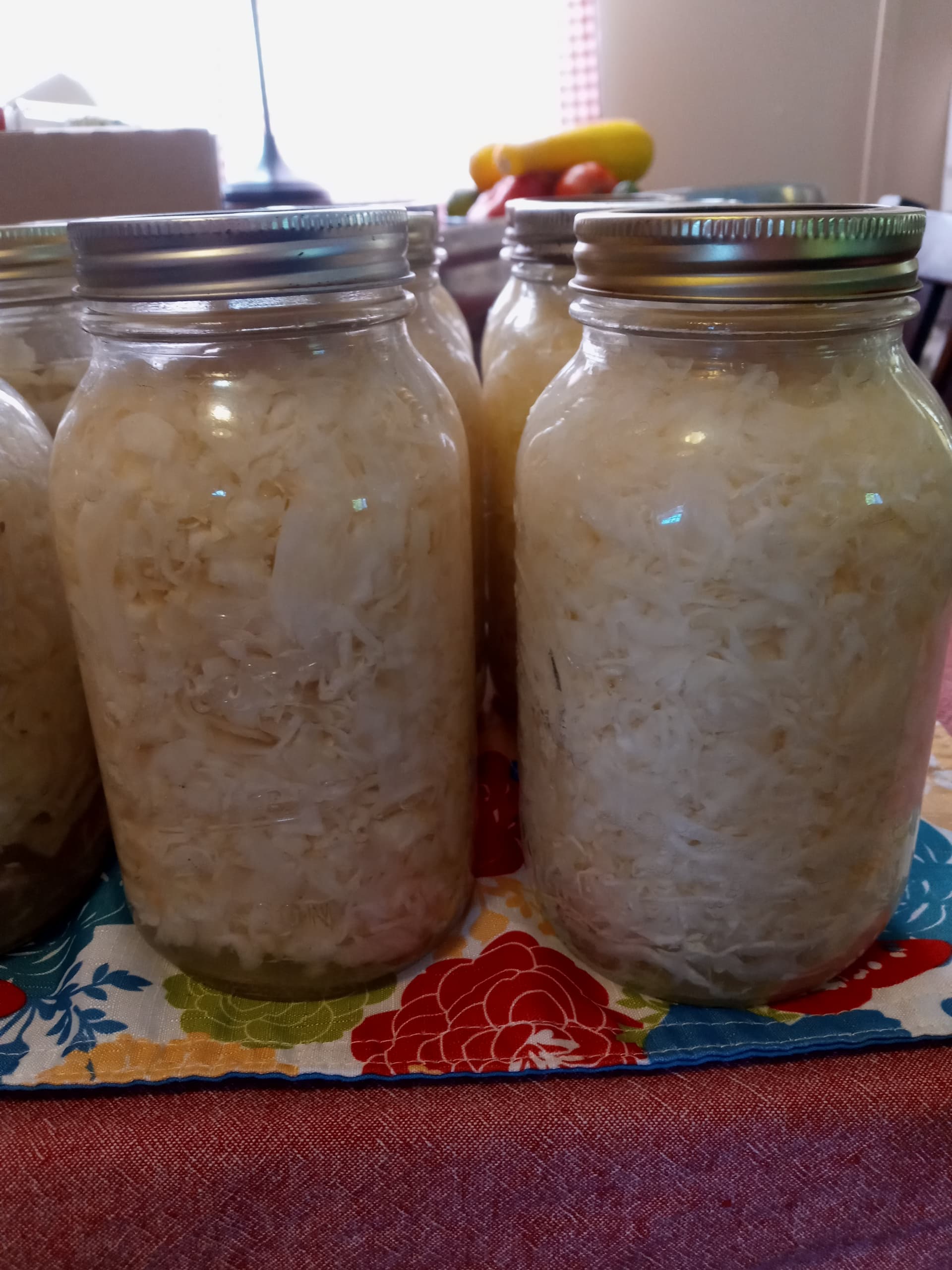
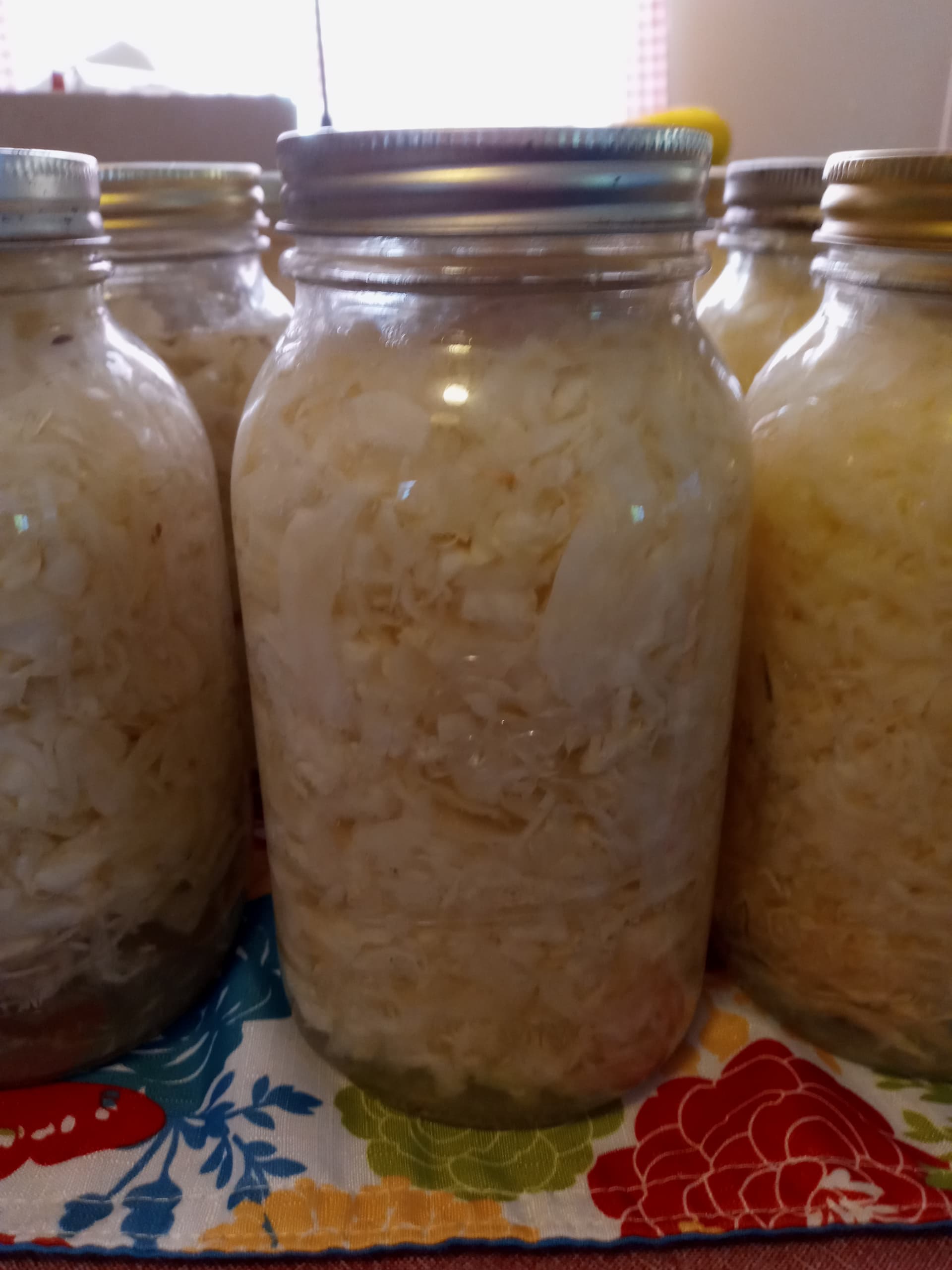
Had three large heads of cabbage so we made some canned sauerkraut today. Ended up with 14 quarts of the stuff. Think we’re done with canning. Until Monday when we’ll do a run of green beans.