Hi everyone: I want to start a new thread for the plum I found under the tentative name I’ve given it, Georgia Nectar.
Below is the original post when I asked if anyone had seen this strain before. Given responses here, on FB and my own research, I think I’ve concluded that this is something new. It’s most likely a local Chickasaw X Asian plum hybrid. The tree I found appears to be on its own root, so it’s either a seedling or a root sucker from another tree. That it’s on its own root most likely means that there’s no history of it or a parent being grafted nursery stock.
The description I gave back in the summer fits the tree, so what’s below is pretty accurate to what I found. It has sort of a honeydew melon sort of flavor. That’s the flavor that an Asian variety called Golden Nectar is supposed to have. If it’s a known cultivar, Golden Nectar is the most likely candidate. It could also be a seedling or a sport of Golden Nectar. I have some good reasons to doubt that it really is Golden Nectar. The total lack of evidence of the tree ever being grafted is a huge one. The chickasaw looking leave, the tree has taken SE Georgia climatic conditions and desease pressure for so long are big more big reasons. However, it could well be a seedling of it.
From the original post:
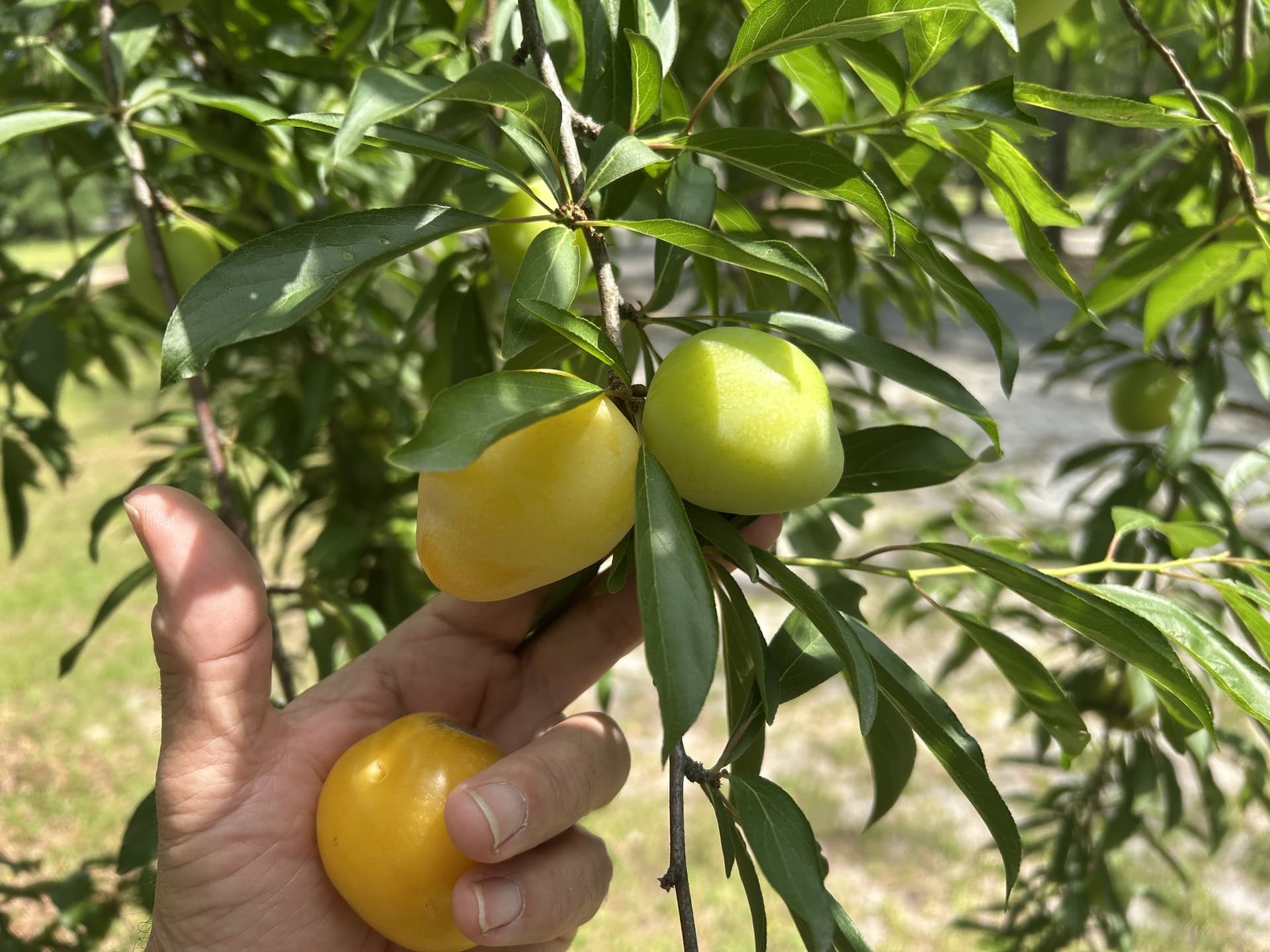
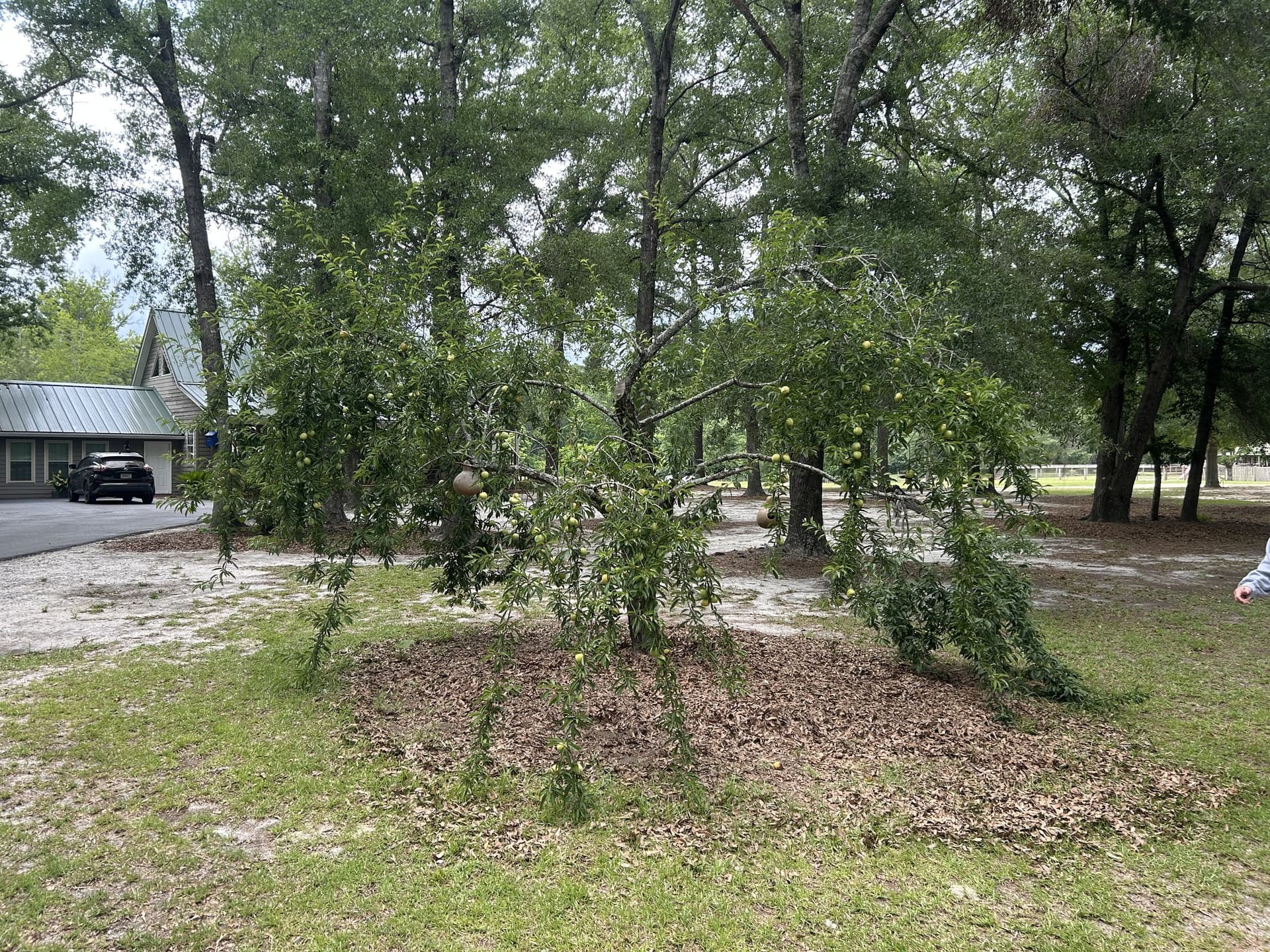
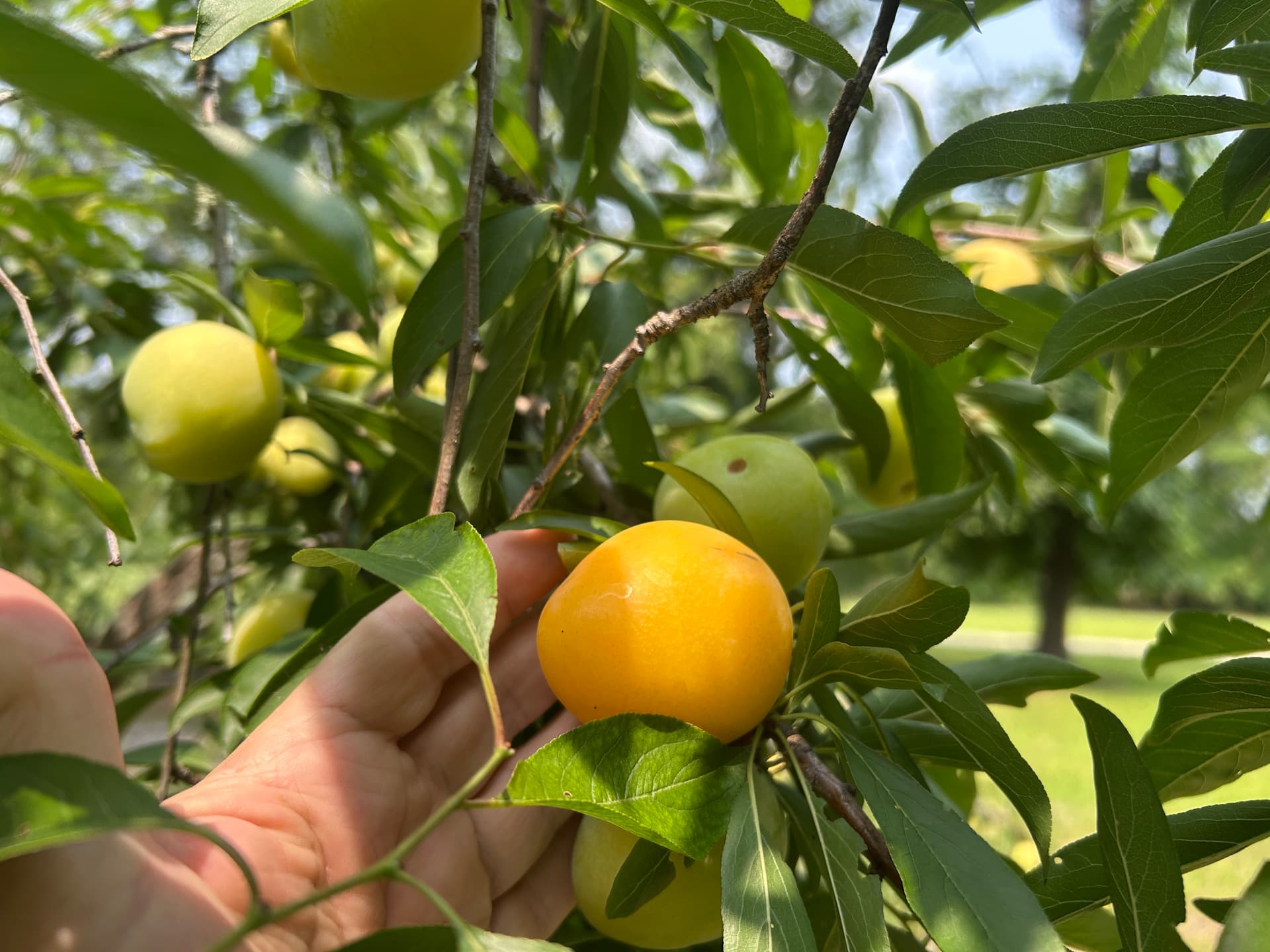
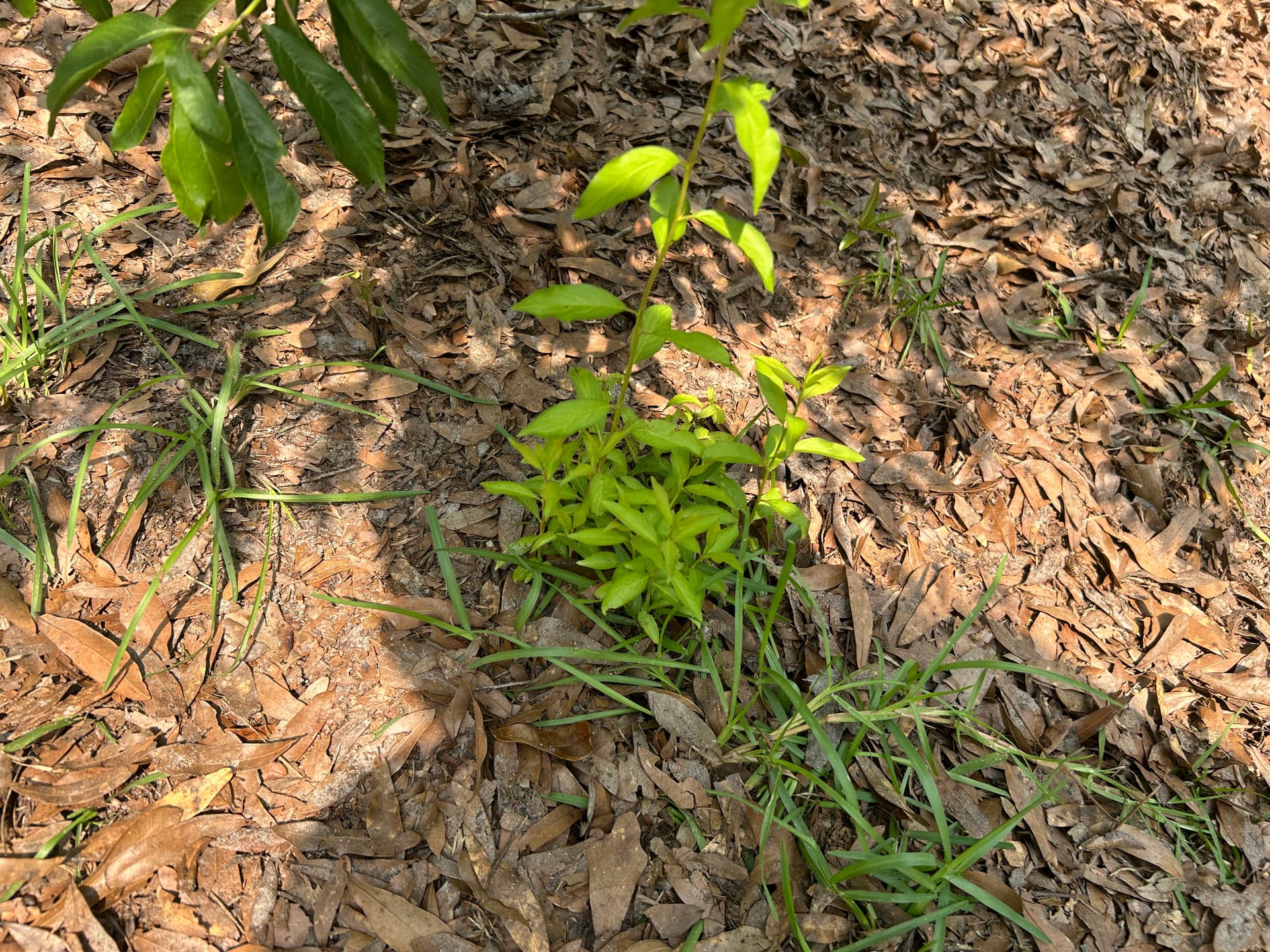
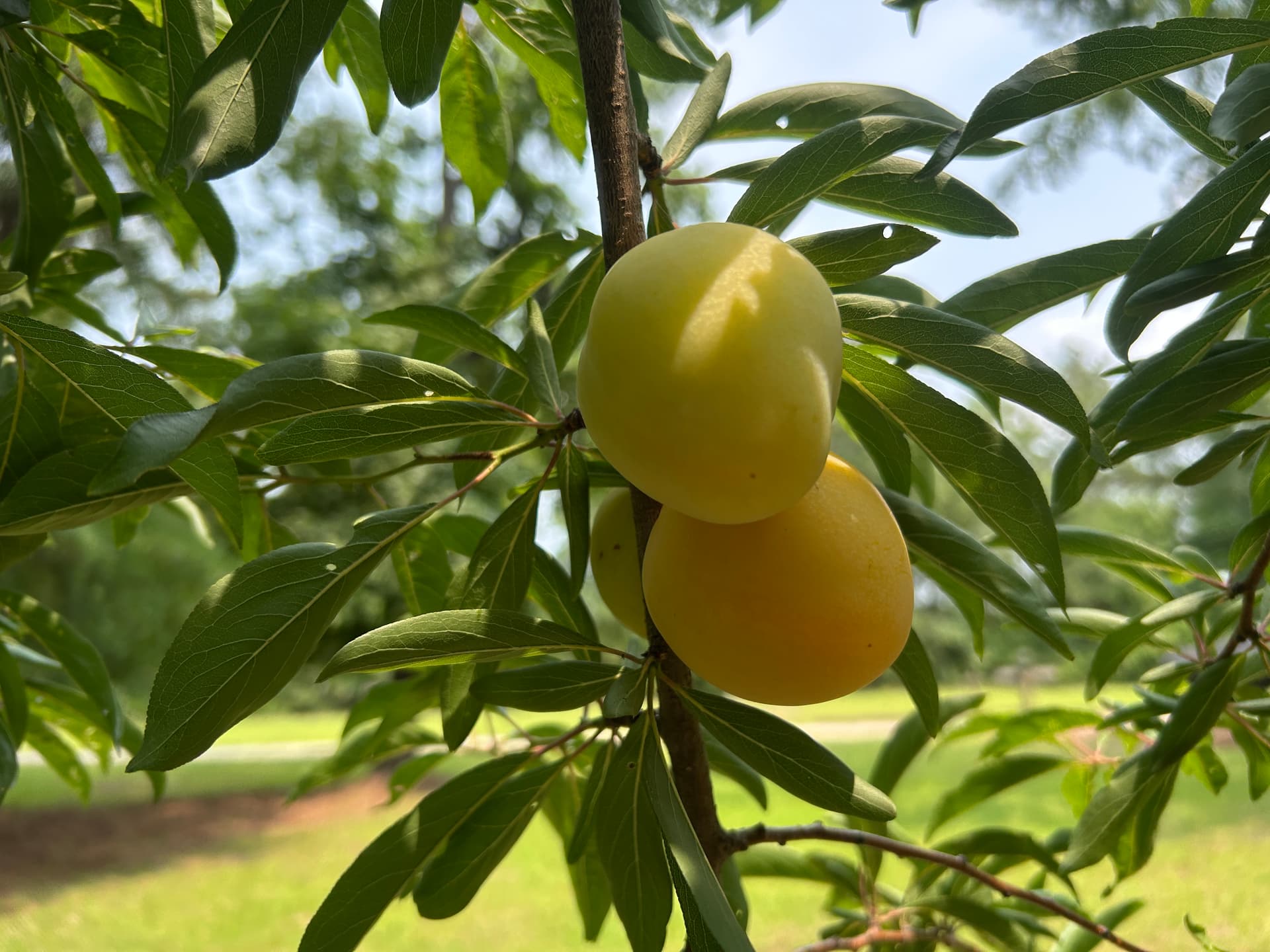
Hi. Some people from church asked me over to identify their plum tree. Plum trees don’t usually stump me anymore, but I have never seen one that looks like this before. See the photos: Vegetatively the tree looks as much like a peach tree as a plum. The leaves are super long and skinny even by chickasaw plum (Prunus angustifolia) standards. The tree looks very, very old, much older than my 15-year-old trees. The tree is so gnarled and has such rough bark that I can’t tell if its grafted or not. It has several suckers, and the suckers have leaves very similar to the adult tree, but there are enough differences that I’m not confident that it’s the same. The bark too rough and blocky to look like any plum bark I’ve seen before. It’s not huge, but it’s been cut way back recently. the trunk is about a foot in diameter at the base. Some of the main branches are about five six inches in diameter. It’s responding to the recent pruning with healthy new growth.
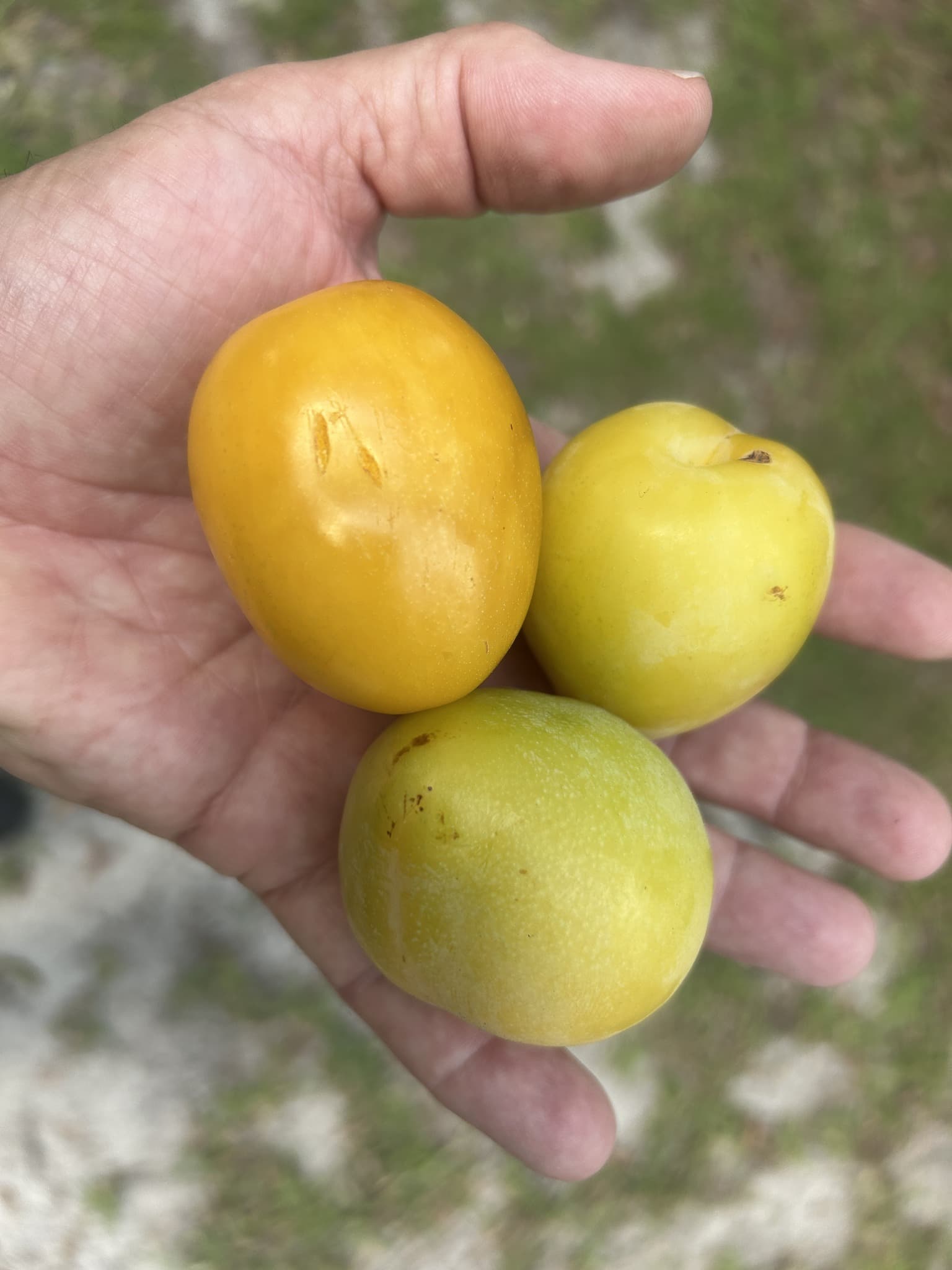
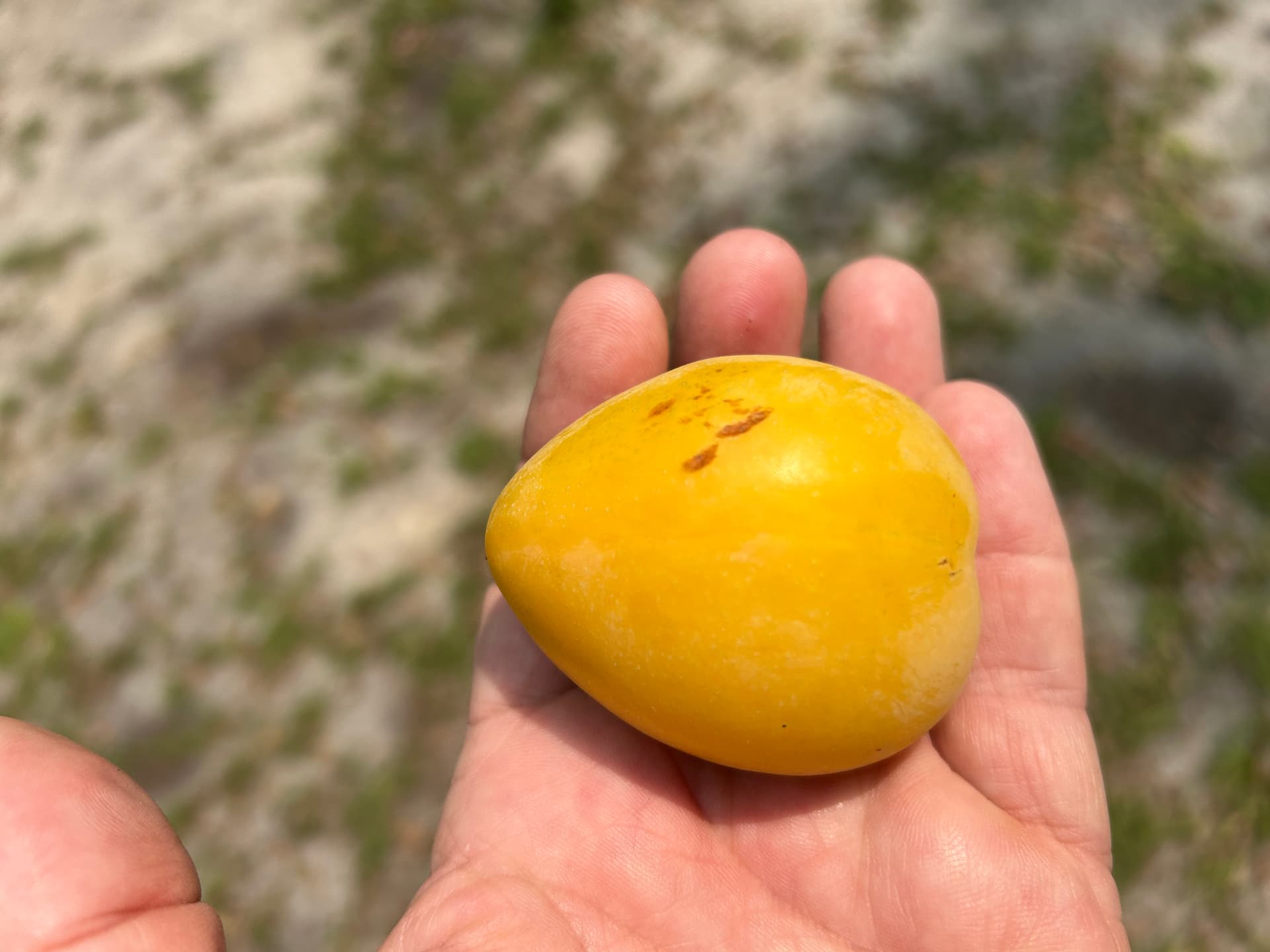
The fruit are as bright of yellow I have ever seen in a plum. Super ripe fruit have a little gold towards the bottom similar to the color of a caution sign. The plums are about 3 inches long and over and between 1 1/2 to 2 inches wide. They are peach shaped with a pointy bottom. The flesh is fleshier than any chickasaw (Prunus angustifolia) cultivar I’ve tasted. The texture of an over ripe one is like an overripe Methley. Flavor, wise the plums are very sweet with some tartness but not much. The flavor is more similar to a chickasaw plum cultivar than to an Asian plum or peach. It has that chickasaw plum aftertaste. Like a lot of chickasaw strains, the plums are kind of bland when super soft ripe. Unlike most chickasaw plums, they are astringent whin slightly green. The skin is unusual for a plum. While it becomes smooth and shinny when you rub it, it has a slight satin feel to it when you first start handling the plums. This is just especially pronounced in the green one. The seeds are really big for plum and seem slightly intermediate with peach. The feel, look and taste of the plums is way more plum like than peach like, and the tree just plain looks more like a peach tree than a plum tree. My hunch is that this is a hybrid between a chickasaw cultivar and peach with more plum in it than peach. When I first saw the tree, my thought was maybe it was a peach X plum hybrid rootstock which survived the scion.
There are lots of chickasaw strains in the Deep South being passed around by rural families from generation to generation. If this is one of them, it’s an unusually good one. It deserves a name and to be distributed among growers. But we need to rule out it already being a named cultivar. The cultivar out there that I know about which has plums that look kind of like these is the Asian plum, Inca. I’m confident that this is not an Inca on account of the long skinny leaves. If this is a named cultivar, the most likely candidate will be some sort of plum X peach rootstock.
Last bit about this plum. Not only is the fruit huge and very good by chickasaw plum standards, but the tree is very old and growing under terrible conditions. It’s in the shade. It’s growing in a very light sand and isn’t getting any irrigation in a very dry season. Every ripe and ripening plum has a curculio. Yet, the plums are still 3 inches long. With some basic care, I think this strain would make an excelent farmers market plum for the Deep South. Oh, one more thing, there is not a second known plum tree on the property. There are about a half dozen active bee hives in the same yard, there are neighbors nearby, and the surrounding habitat is suitable for flatwoods plum (Prunus umbelatta) which is a good pollinizer of Asian type plums. The tree might be self-fertile, but with all those bees a few yards away, likely means that a plum tree does not have to be terribly close by to pollinize it.