Glyphosate back in the news

I won’t link the article since the practice has been criticized here, but it’s in the New York Times today (01-02-2026) for those with access. No doubt other news outlets will carry it too. Here it is:

"In 2000, a landmark study claimed to set the record straight on glyphosate, a contentious weedkiller used on hundreds of millions of acres of farmland. The paper found that the chemical, the active ingredient in Roundup, wasn’t a human health risk despite evidence of a cancer link.

Last month, the study was retracted by the scientific journal that published it a quarter century ago, setting off a crisis of confidence in the science behind a weedkiller that has become the backbone of American food production. It is used on soybeans, corn and wheat, on specialty crops like almonds, and on cotton and in home gardens.

The Environmental Protection Agency still considers the herbicide to be safe. But the federal government faces a deadline in 2026 to re-examine glyphosate’s safety after legal action brought by environmental, food-safety and farmworker advocacy groups."
8 Likes

important to note that roundup sold in stores is not glyphosate

4 Likes

Im not sure that 17000 give or take federal employees can or do honestly Protect the Environment from their offices.

Those employees are also to regulate all of the water and sewage and waste as well as the air and land. They also regulate biosolids.

I imagine not much of the environment really gets protected in the grand scope of things.

5 Likes

The EPA considers a lot of things to be safe that are not really safe. Statements like “within acceptable safety standards” and “used as directed” really rather define the line. I don’t know many people who consistently use anything “as directed” and my personal expectation for product safety is generally stricter than what industry standard allows for.

It was clear when those reports were being published way back when that the details being discussed were cherry picked to allow for “accurate” reports that conveniently left out everything that put the truth above the desired outcome.

For this particular product, there was also a timing element that meant that under the right conditions, if you waited the right amount of time and weather cooperated, the product was sufficiently neutralised to be presumed safe. Weather does generally cooperate for long enough in a lot of places, and profitiablilty and patience are not happy bedfollows.

It is my opinion that the gluten-free industry largely exists not because of a gluten insensitivity, but because key crops for which glyphosate can improve harvestability happen to be the same ones that contain gluten. The number of people I know to react poorly to wheat products grown here in the US who did not react poorly to wheat products imported from areas that did not allow the use of glyphosate is more than sufficient for me to believe it should be avoided. I also feel that it creates an unfair situation for those that actually do have gluten issues.

Incidentally, I do not have any personal anecdotes for people “intolerant of gluten” who proved to have issue with vital wheat gluten, seitan, tvp or the like where the gluten iself has been the isolated end product. I have an untested suspicion that the issue is removed along with the chaff and other non-gluten elements of wheat and other gluten-reduced products.

So, if you use it in a fashion where the run-off or produce will even potentially affect someone else, please do “use as directed” and be up-front with your customers about the fact that it is part of your process, even when the produce is processed into something else that doesn’t require the disclosure.

3 Likes

I use glyphosate to paint stumps after clearing land but that’s about it. I use it very sparingly.

I’ve already had a lymphoma scare with my doctor that luckily a specialist cleared as not cancer.

2 Likes

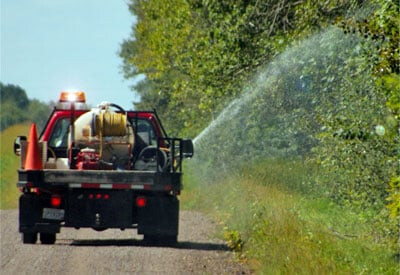
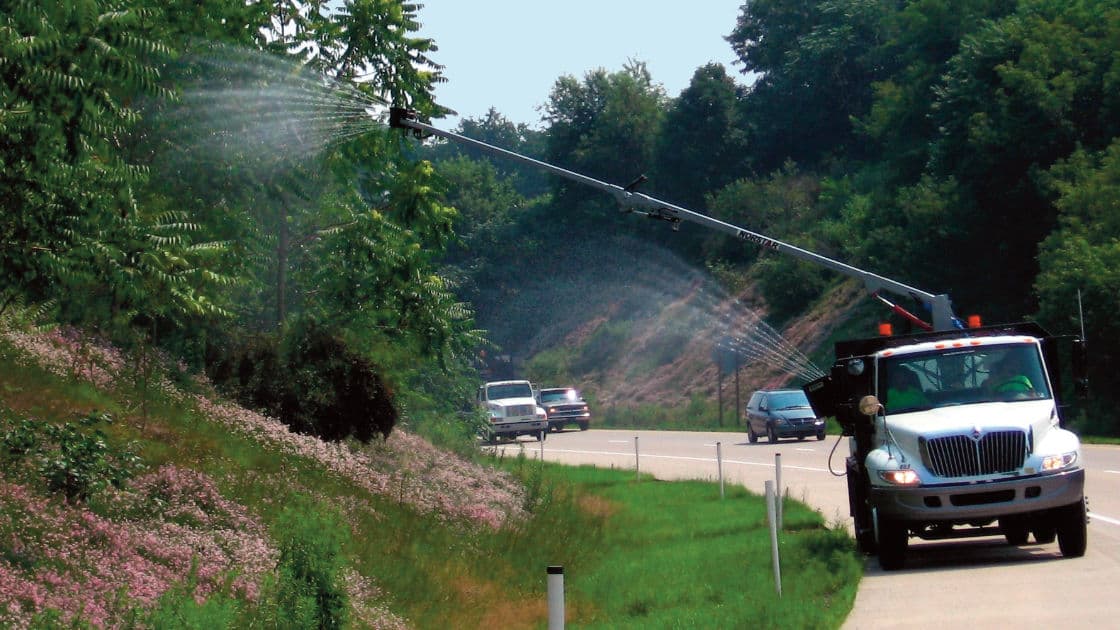
Here in my state the railroad sprays some kind of industrial brush and weed killer. The Dept of Highways sprays some kind of industrial brush and weed killer in every place that a mower wont reach… like guardrails and creekbanks etc. I drive down lots of roads with farms and ALOT of farmers spray some kind of weedkiller in all of their ditches and irrigation drains… I reckon so that they dont have to weedeat.

So basically everywhere near water that things grow the stuff gets sprayed to not interfere with production or transportation.

I suspect it has greatly harmed aquatic life… as well as the birds and creatures that ‘used to’ eat them.

I think 15 million tons give or take of Glyphosate have been applied… not sure about its variants.

I guess it gets filtered out of the drinking water somehow… not sure how or if it does to farm animals etc… but they are slaughtered fairly young so hard to know the effects.

1 Like

And that the things used in new formula roundup are more toxic than glyphosate

1 Like

In the gives-a-crap-about-diet/lifestyle med world, you will find a consensus that glyphosate has played an oversized role in the rise of many health problems. Gluten intolerance is complicated…I’m sure you are at least partially right. There’s too much there to unpack here. Suffice to say: I hate the stuff. If not cost prohibitive, I always encourage everyone to buy organic grains/anything that is sprayed with glyphosate to desiccate it, at the least. If you don’t know about this, internet search for a list of foods sprayed to desiccate and consider switching those to organic. Yes, there could still be trace glyphosate, but nothing like nonorganic.

I am growing to understand it has a role in management of invasives, but I wish it was heavily regulated and kept far, far away from our food. Now is an extremely unfortunate time for anything consumer safety to be brought up let alone this and it is highly unlikely to change. Plus, even if changes are ever made to regulations, how many decades would it take to make practical changes? How long does it take to eliminate glyphosate down to “organic” levels in soil? The seeds…EVIL Monsanto turned Bayer has built the agricultural industry around it!

2 Likes

I never used the stuff in my youth, but by my mid-20s, we were dirt farming with it. It is a highly controversial subject. Glysophate is no more or less safe than most orchard chemicals. I quit using chemicals in my orchard years ago. As far as farming goes i still use tordan , glysophate , etc. The scrub trees get into fence rows ,poison ivy among other things become a problem when farming. Multiflora rose is very problematic. Hay fields like i have or cattle operations use thousands of times less chemical than grain farming. That does not mean it’s safe , it is something necessary at the moment.

2 Likes

the ‘other ingredients’ as well.

You can read down all the rabbit holes of the effects on other bees as well like bumblebees… and i think that some scientists believe that its the reason for colony collapse… as some bees are social bees and bring the chemicals back to the hives etc.

Not to mention it also impacts nematodes, earthworms… predator insects as well as prey insects…which of course make their way up the food chain.

I guess probably a good statement is that it is not beneficial to things that are beneficial.

A good winter read is about the War on Weeds that humans have fought… from the early days of mines selling toxic waste to farmers to the invention of 2,4-D.

A lot of things have been done to remove ‘weeds’ and promote ‘grass’ as well. I think its obvious when we see the ‘Lawn Guy’ spraying yards with chemicals from a truck…

But its been happening and will continue to happen more. Just the history of what has been applied that is and can be found in our bodies now is mind boggling.

This is not meant to offend the pro spray folks who spray herbicides, pesticides and insecticides on their things that they want to eat or want us to eat… or to simply have a nice looking yard or ditchline devoid of all life… as it is part of our culture and who we are as humans at this time.

The cost of spraying in some states/counties/cities is cheaper than mowing… so it will continue at higher levels i think.

image

Its crazy the lengths that we go for the war on ‘weeds and brush’… as we dont like to see them… we like to see more barren and devoid areas.

Here locally there were crews of folks (hispanic mostly) climbing all over the hillsides spraying for future data lines. Those areas look like pure death.

1 Like

Unlikely. Most water treatment plants just sterilize (kill pathogens) water by oxidation…but not purify it of pollutants. So, our water is GIGO.

1 Like

European farms do use glyphosate, but your premise is still logical, because its use is much more restricted there and they use much less of it. Maybe the ones who suggest no allergic reactions DO eat products there from organic producers, but you can purchase organic wheat in the U.S. almost in every big grocery store these days- or bread made of it.

An aside is that traditional European bread making, particularly with sourdough breads, changes the gluten chemically, and it has been suggested that this is where the difference lies- along with the fact that U.S. growers use much different strains of wheat.

Back to the use of glyphosate in grain production in Europe- I had read that they also use the chemical albeit more restrictively, but in questioning CHAT I discovered some interesting information. For one thing, European producers get much more production per acre than the U.S. or Canada (they didn’t teach us that in school when celebrating our amber waves of Roundup coated grain).

However, growing conditions in the U.S. tend to be much more harsh… all producers seek profits in capitalistic societies, of course. The mid-western economy relies on the ability to produce grain at globally competitive prices. The liberal use of glyph0sate can be assumed to vastly reduce the cost of production, but this is something the public doesn’t tend to take into account, whether in Europe or the U.S.

The chemical manufacturers are often made the villains in these controversies, but when you speak to the farmers they often consider the politicians the villains, but the politicians are only trying to stay in office… they need corporate money AND public support.

Corporations don’t have the same clout in most Euro democracies as in the U.S., but the farmers may have more influence there. I believe the voters do as well, in the sense that the information they receive is less under corporate influence. But that is politics, and we don’t discuss that here.

What we can talk about is how much harder it is to farm in our conditions than in Europe. There are more than political reasons for a more permissive use of agricultural chemicals.

1 Like