The graft in the picture is almost 1 year old. In the future for grafts like this, I am going to try a combination of scion strap wood across the xylem, as well as preserve some bark from the Root stock and wrap it over the top as well. You can see in my picture there is a little gap that has not been filled in yet by tissue. While the graft healing isn’t perfect I think it’s far better than a regular bark graft or modified cleft graft leaving that wood open.
4 Likes
When you made the graft how did you handle the portions of xylem that weren’t covered by the strap? Did you cover with parafilm or paste, or just leave exposed? The video that @marknmt posted stops after the graft is made and I’m curios how or if it was dressed after that.
Parafilm! And watch this guy:
And if you want to do interesting grafts or grafts on big trees, watch this guy:

3 Likes
Parafilm!
Paste is a big danger as it can get under the bark and prevent healing together.
3 Likes
Just wrapped tightly with paradigm and some rubber bands. I like rubber bands to push things together and they loose their mojo from the UV and aren’t binding after a while.
2 Likes
I posted about a similar graft last year with a pear. Just stab it though the side instead of drilling. Check it out


5 Likes
Nice great job!
And Hosui is hard to graft, it’s so suceptible to fireblight, great job!
I assume you cut or stabbed through the tree or bark with your knife, right?
I’ve been doing a similar graft just with the stock cut at an angle. It’s called a Z graft, or in old books similar to a double whip, but you usually see it with same sized material and, when you use a small scion an a large stock it ends up looking like the one you did in the photo. Sort of like a modified cleft but you leave a flap to cover the top. I find it does help the cut heal over significantly faster and makes a more solid union.

here’s on where the stock/scion are similar size but it works for a larger stump. I know it looks a bit like a whip & tongue done weird, but makes more sense when there’s that size discrepancy and you might be tempted to just use a bark grafts of the modified (off to the side) cleft.

11 Likes
Yeah, this is exactly what I did, see post directly above by @DougAtOakSummit and his diagram there, to that pear tree that I posted way up above, but I put two on it. Z-Grafting. Nice, now I know the name, it’s my favorite, but I don’t usually do the P cut like in the diagram, unless it’s large or I do only one and go across the middle and then I just tuck it under the bark.
(Whoops these aren’t Z grafts, they’re bark grafts with a strap) 
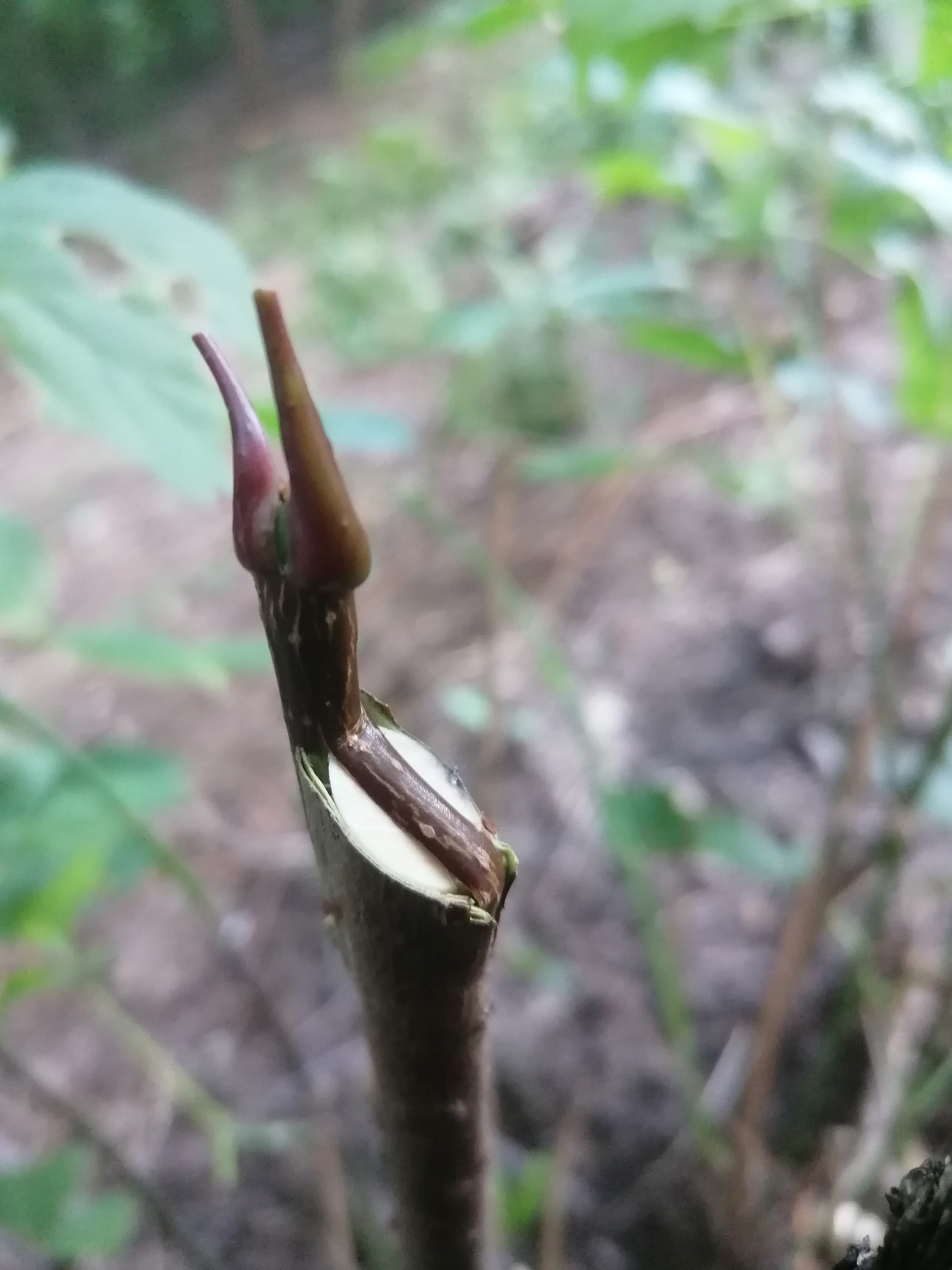
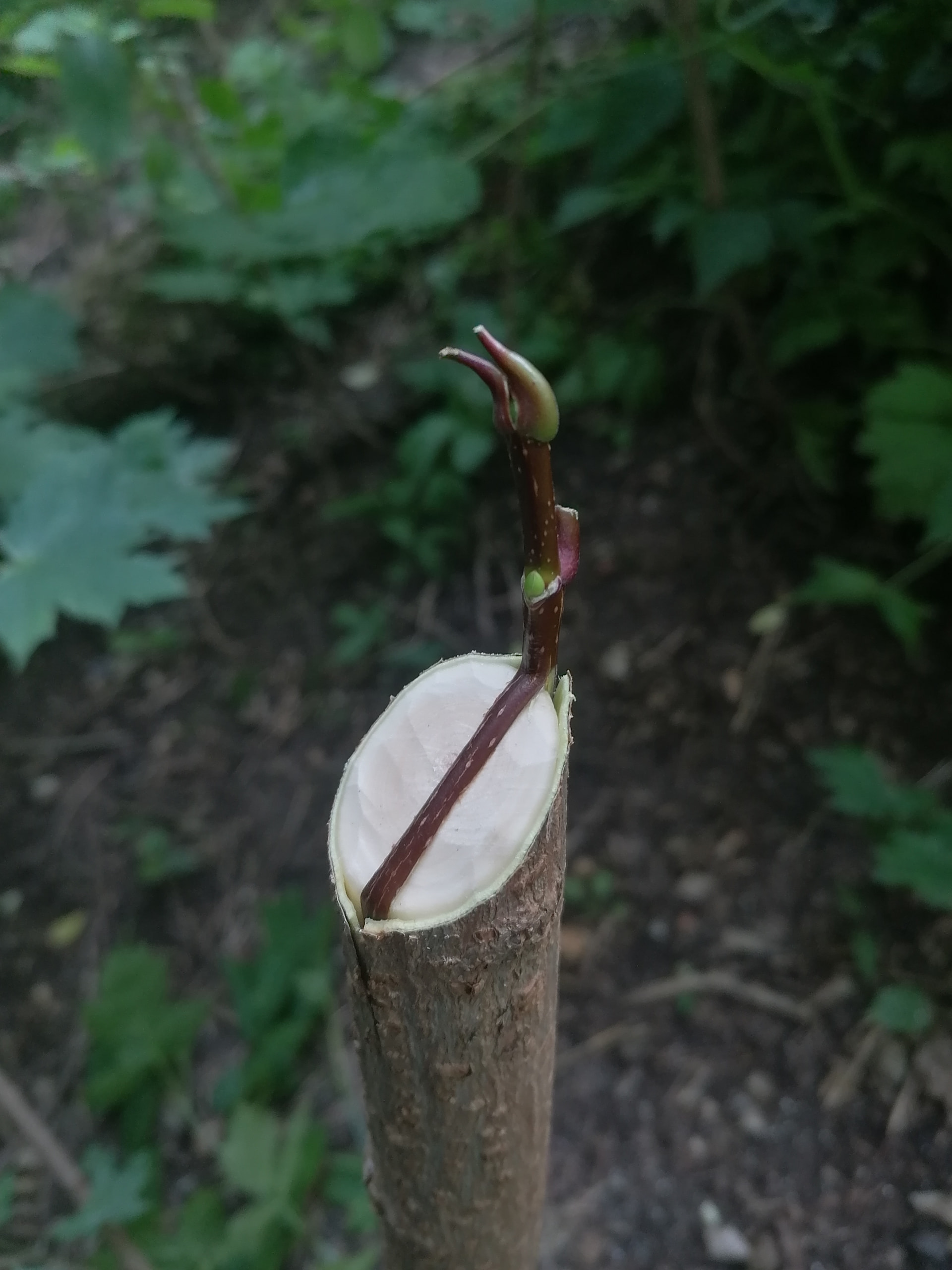
7 Likes
Update: here it is now. It’s 3½ seasons later and of course it’s fully healed over, even though I was gone my plan to make that one bud into a South facing branch worked, but the goldenrod seems to have a way of crowding and rotting things out, or maybe the fireblight got it, but anyway, here it is Clara Frijs took over just as I had planned, and yes that little side branch is from that little Asian pear graft.
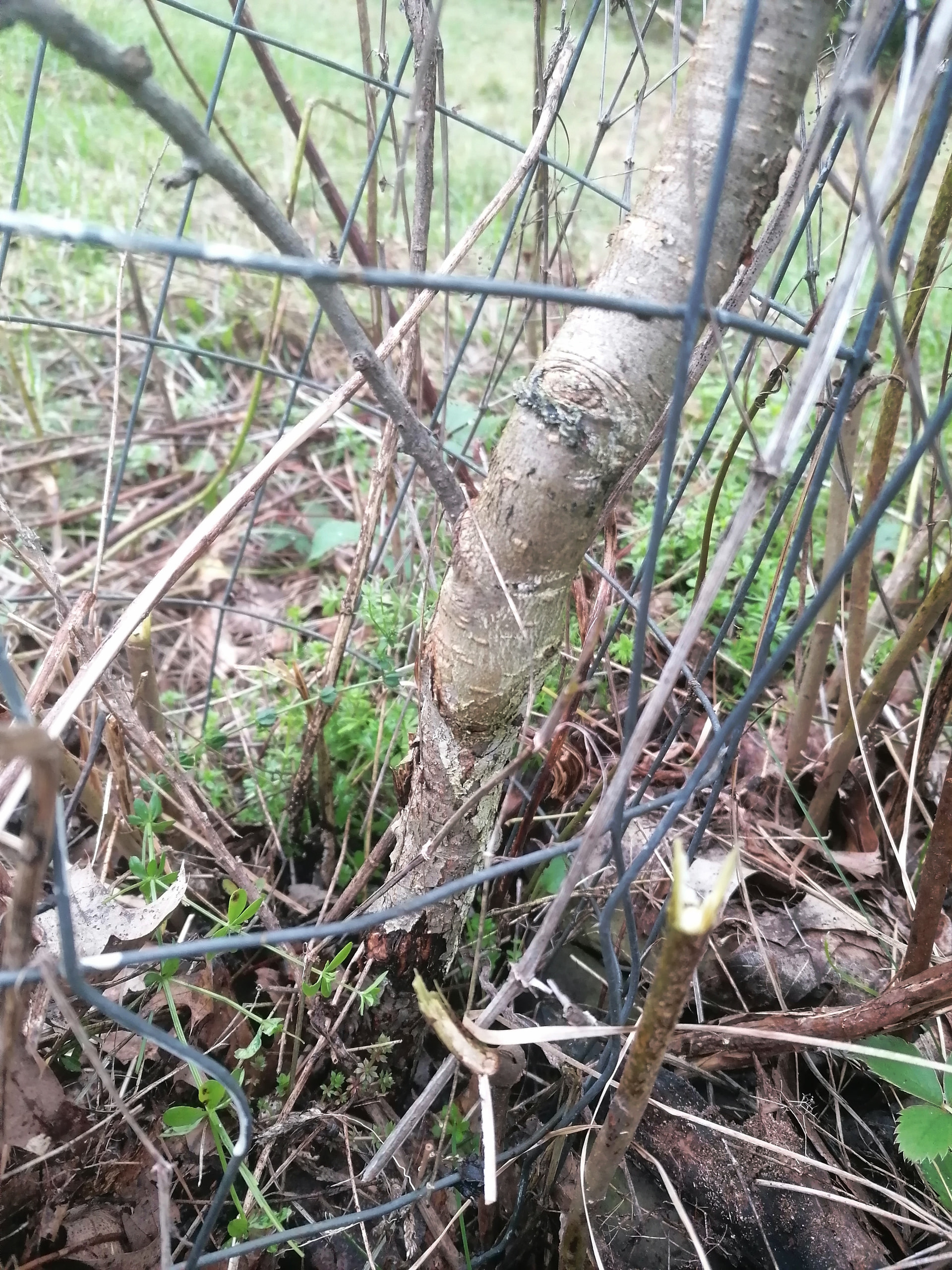
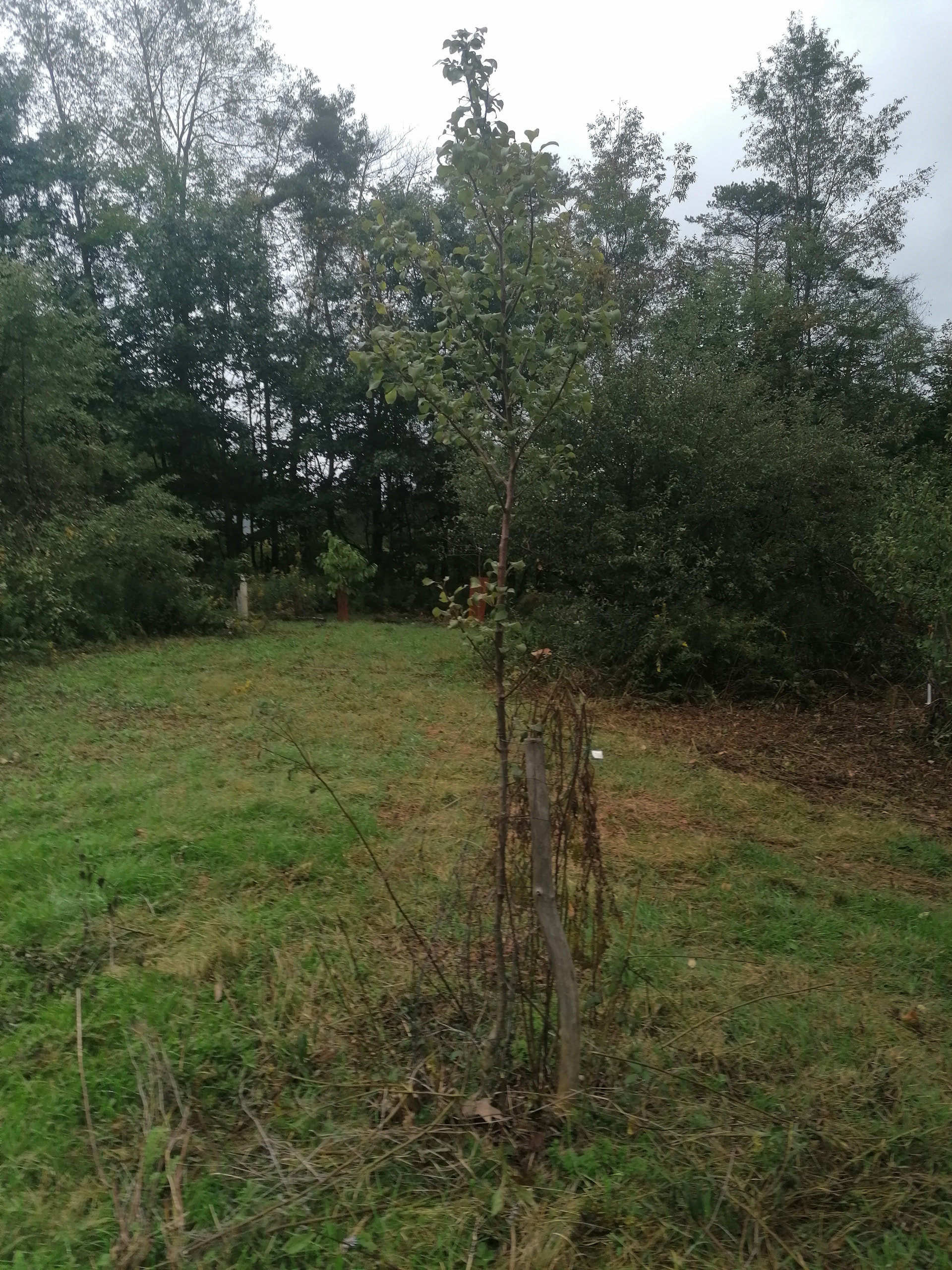
Unpruned, but I’ll fix that soon enough.
6 Likes
Here’s a thread I started about healing over large grafts, and the quick rule of thumb is that you need to basically fill the whole cleft graft or have two, even if it’s not larger, for large grafts you need 1 + another for every inch of diameter (two minimum), then braiding the shoots together or pruning most of them down to low growing branches is the next step.
1 Like